

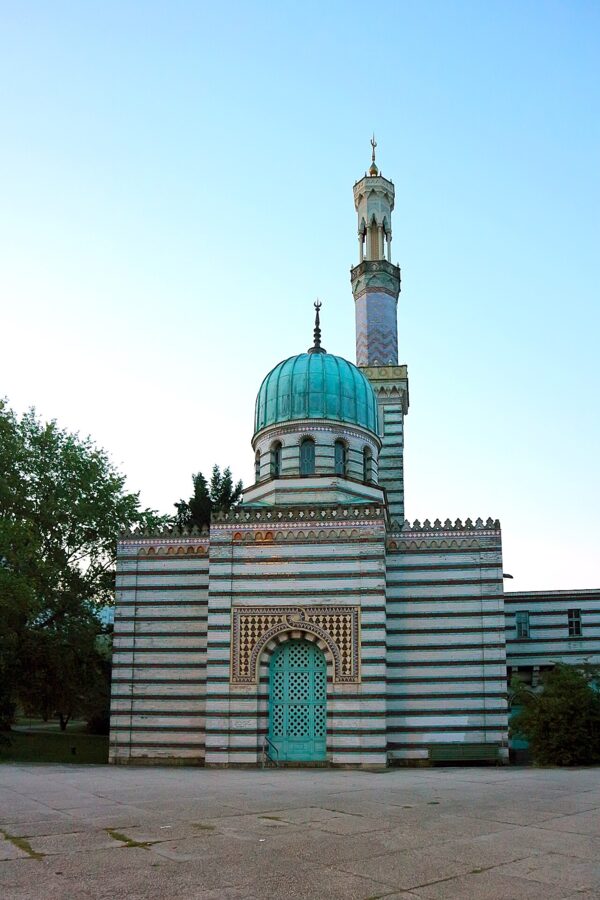
Stand at the foot of the vineyard terraces at Sanssouci on a summer morning and the Great Fountain behind you throws its jet 38 meters into the air. Frederick the Great (Friedrich II) saw a fountain play in his own park exactly once, on Good Friday 1754, after a wet winter had filled his hilltop reservoir. The jet you are watching arrived in 1842, pushed up by a steam engine that his great-grandnephew hid inside a pumping station dressed as a mosque. Almost everything worth your time in Potsdam is staged like that, and almost all of it can be walked.
This list is grouped by area so you can walk it rather than criss-cross it. With one day, give the morning to Park Sanssouci (one palace interior on a timed ticket, then west along the main avenue to the New Palace) and the afternoon to the old town: Brandenburger Straße, the Dutch Quarter, the Alter Markt and a museum that stays open until 19:00. With two days, spend the second in the north (the Neuer Garten, the Pfingstberg and Alexandrowka) or in the east (Babelsberg and the bridge where the spies were swapped), and end it on a boat.
Getting here is the easy part. The S7 and the regional trains run from central Berlin to Potsdam Hauptbahnhof, the main station, in well under an hour; trains, tickets and timings are laid out under a Potsdam day trip from Berlin.
Contents9 parts
Before you start: tickets, Mondays and the winter pattern
The parks are free. Park Sanssouci, the Neuer Garten and Park Babelsberg open daily from 08:00 until dusk, and you can see the outside of every palace on this list without paying a cent. What costs money is going inside, and the Prussian Palaces and Gardens Foundation (Stiftung Preußische Schlösser und Gärten, SPSG), which runs Potsdam’s palaces, sells it three ways.
- A single ticket for one palace: €14 for Sanssouci Palace or the New Palace’s Grand Tour, €8 for the smaller houses.
- The Flanierkarte, €10, which covers five of the small buildings around Sanssouci in one day: the palace kitchen, the New Chambers, the Picture Gallery, the Chinese House and Charlottenhof.
- The Sanssouci+ day ticket, €22 in 2026 and €24 from 2027, valid for every Potsdam palace in one day and booked with a fixed entry slot at Sanssouci Palace (and, if you like, a second at the New Palace).
Two big interiors on single tickets come to €28, so Sanssouci+ only pays once you add a third building, and in winter there often is none open. The real value of Sanssouci+ in summer is that it reserves your Sanssouci slot, which sells out.
Most interiors close one day a week, usually Monday. From April to October they run roughly 10:00–17:30; from November to March the small pavilions shut completely, the big palaces close at 16:30, and several houses drop to weekends only.
In winter, the short version is: Sanssouci Palace and the New Palace are open, the parks are open, and the rest of the list is a walk past closed shutters. Winter days here hover between freezing and the low single digits, roughly 0–5 °C (32–41 °F), so the walking costs more than it looks on a map.
Park Sanssouci
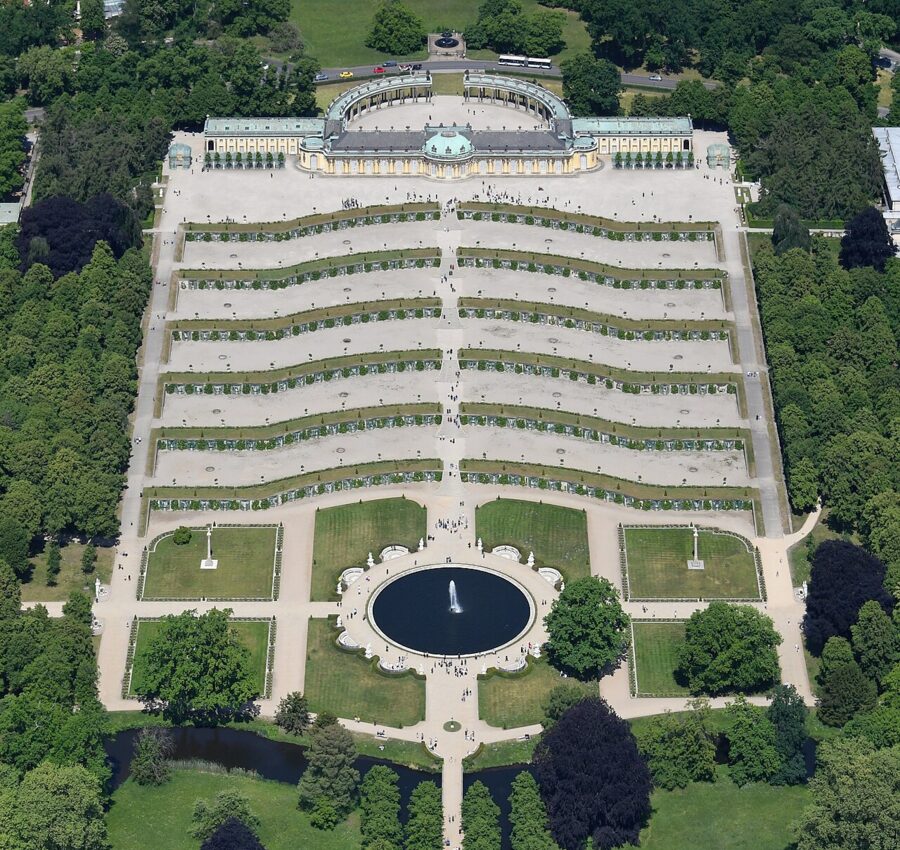
Allow a full morning and do not try to “do” the park. It covers about 300 hectares, its sculptures number more than 1,000, and the parterre at the foot of the terraces is replanted twice a year with over 230,000 flowers. Bus 695 and the X15 run from the main station to the stops Schloss Sanssouci and Neues Palais in about ten minutes; on foot it is about 20 minutes from the Brandenburg Gate.
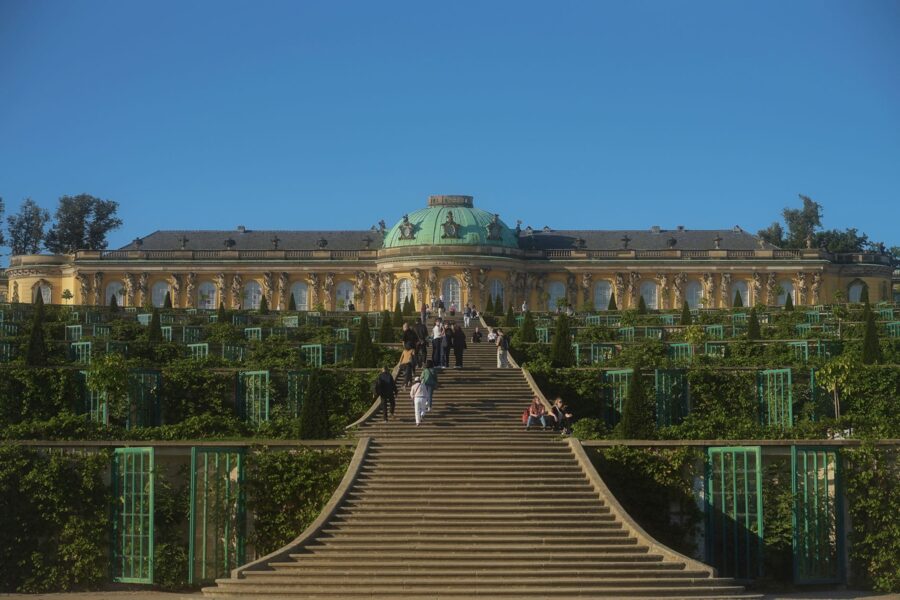
Sanssouci Palace and the vineyard terraces
Frederick planned this house and its terraces himself, and his architect, Georg Wenzeslaus von Knobelsdorff, built it in 1745–1747: one story, ten main rooms, a summer house for a king who wanted to be left alone with his books, his flute and his greyhounds. The name means “without worry,” and the foundation reads it as a wish rather than a description. Inside are the oval Marble Hall, the concert room, the library and the room where Voltaire is said to have stayed, all still fitted out as they were in the eighteenth century.
Entry is on a fixed time slot, €14, and the palace is closed on Mondays. Same-day tickets go on sale at the visitor center by the Historic Mill (Historische Mühle) 30 minutes before opening, but numbers are capped, so in summer book the Sanssouci+ ticket online, the only way to fix your Sanssouci Palace slot in advance, and take the earliest one. At 10:00 the terraces are still in shade on the steps and the coaches have not arrived. Count on 30–40 minutes inside.
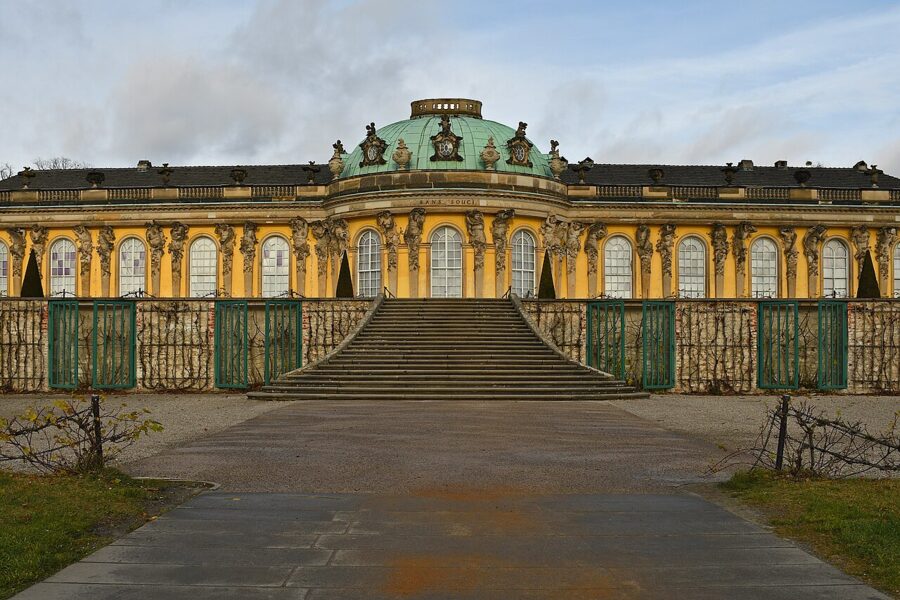
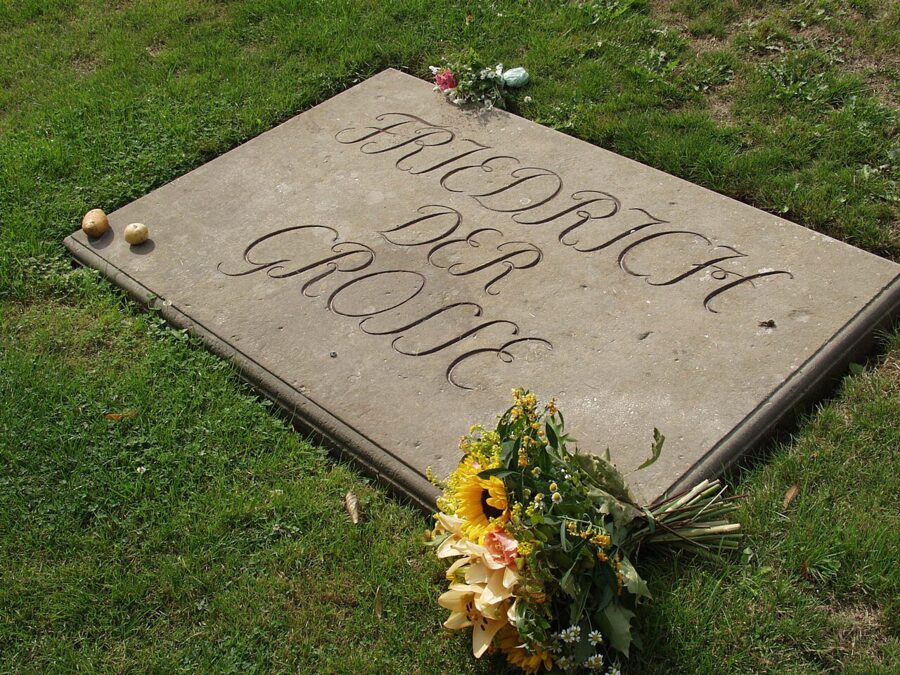
Before you leave, walk to the east end of the top terrace. Frederick asked to be buried there in a crypt next to his dogs, and his successor ignored him and put the coffin in the Garrison Church in town. It took until August 17, 1991, the 205th anniversary of his death, before he was finally laid where he wanted. People leave potatoes on the plain slab, a nod to the king who pushed Prussian farmers to grow them.
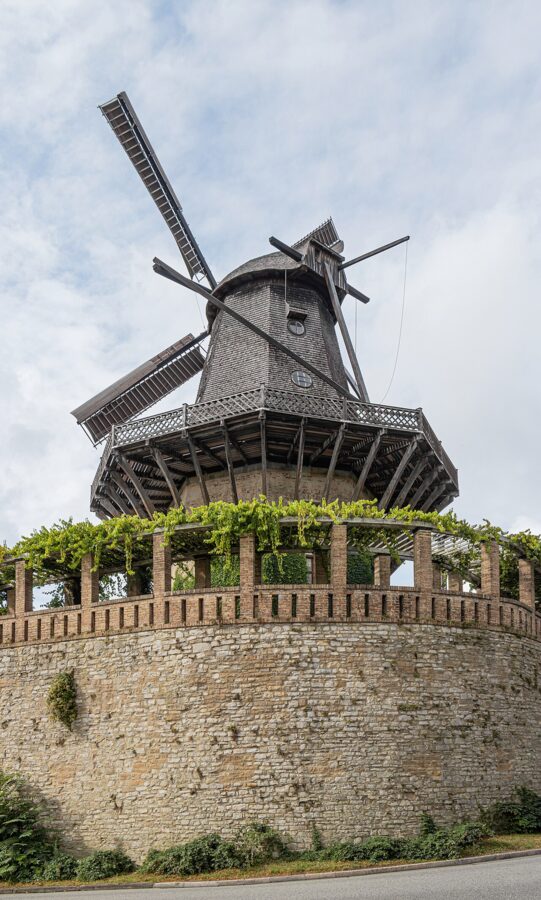
The windmill behind the palace has its own legend. The story goes that the king, annoyed by the clatter, ordered the miller to tear it down, and the miller threatened to take him to court and won. The tale is probably improved in the telling; the Historic Mill is open daily from April to October (€5) and on winter weekends except in December.
The Picture Gallery and the New Chambers
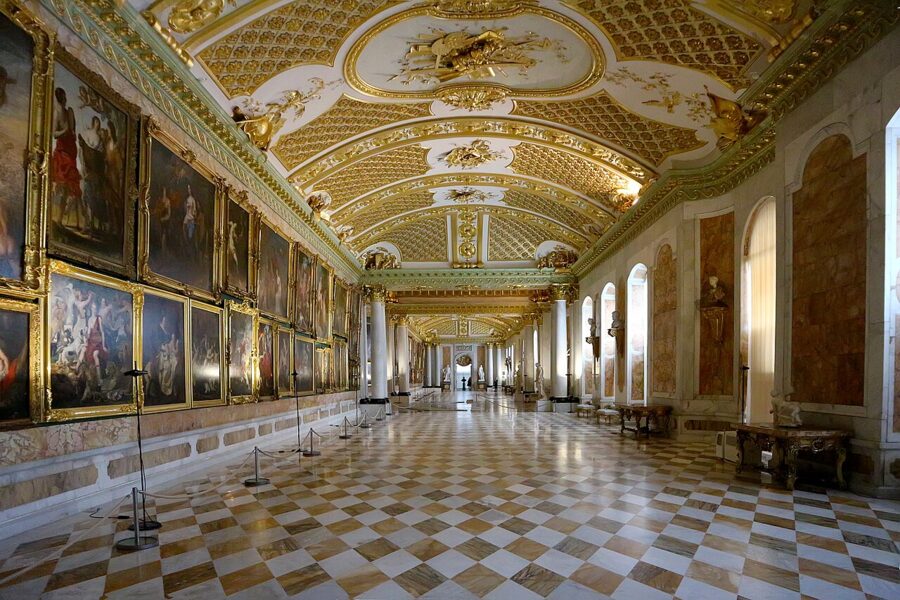
Flanking the palace are two long, low buildings that most people walk past, which in summer is a mistake. The Picture Gallery (Bildergalerie), built in 1755–1764, is the oldest surviving purpose-built gallery in Germany, and it still hangs more than 140 paintings in gilded frames, including Caravaggio’s Doubting Thomas and seven works by Rubens. The New Chambers (Neue Kammern) on the other side began as an orangery and became a guest house in the late 1760s; its Jasper Hall and the Ovid gallery with gilded reliefs are among the richest rooms in the park.
Both are on the €10 Flanierkarte and open from April to October, Wednesday to Sunday; from November they are shut.
The Chinese House
Walk south-west from the palace for about ten minutes, through the Rehgarten, and the trees open on a gilded tea pavilion. Johann Gottfried Büring built the Chinese House (Chinesisches Haus) for Frederick in 1755–1764, with life-size gilded figures of tea drinkers and musicians around a clover-leaf plan and columns shaped like golden palms. It shows nothing of China as it was and everything Europeans imagined it to be.
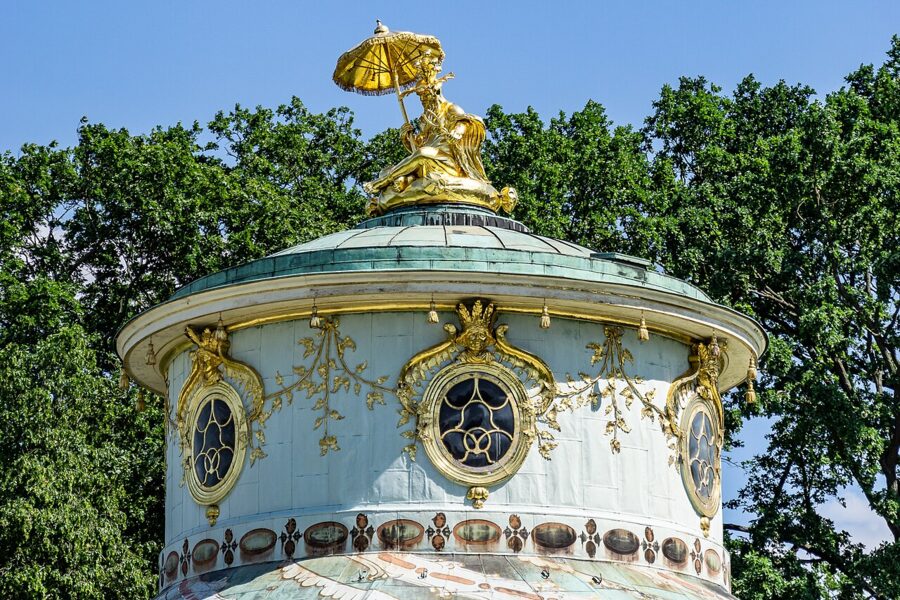
Inside is one small round room with porcelain on gilded brackets and a painted “Chinese” party on the ceiling. Go in if you hold a Flanierkarte or Sanssouci+, from April to October, Wednesday to Sunday 10:00–17:30; otherwise the Chinese House gives you most of what it has through the windows.
The New Palace (Neues Palais)
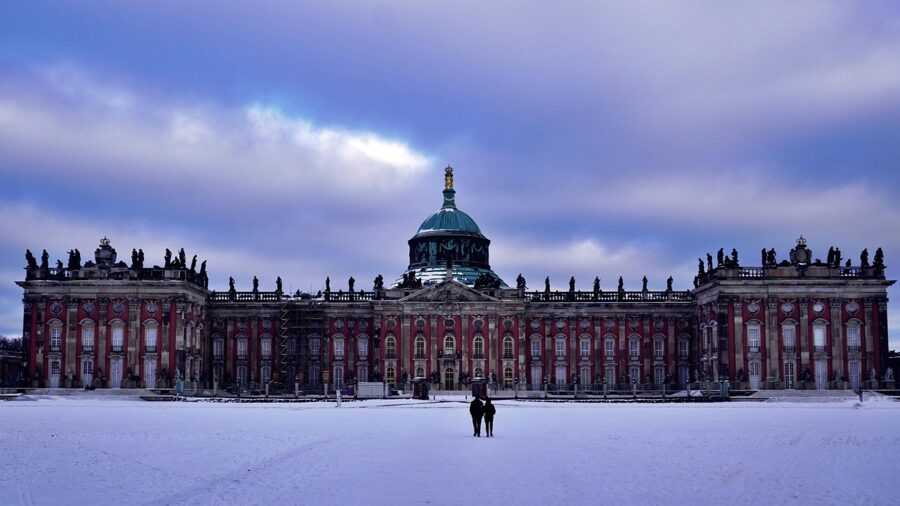
Follow the main avenue west and after about two kilometers it ends at a red and sandstone front about 220 meters long, with a green drum dome and some 400 statues on the roofline. Frederick built the New Palace in 1763–1769, right after the Seven Years’ War, to show Europe that Prussia was not broke; he called it a fanfaronade, a piece of bragging, and kept his own apartment in the south wing during the summer season while relatives and visiting princes filled the rest. William II (Wilhelm II), the last German emperor, later made it his favorite home.
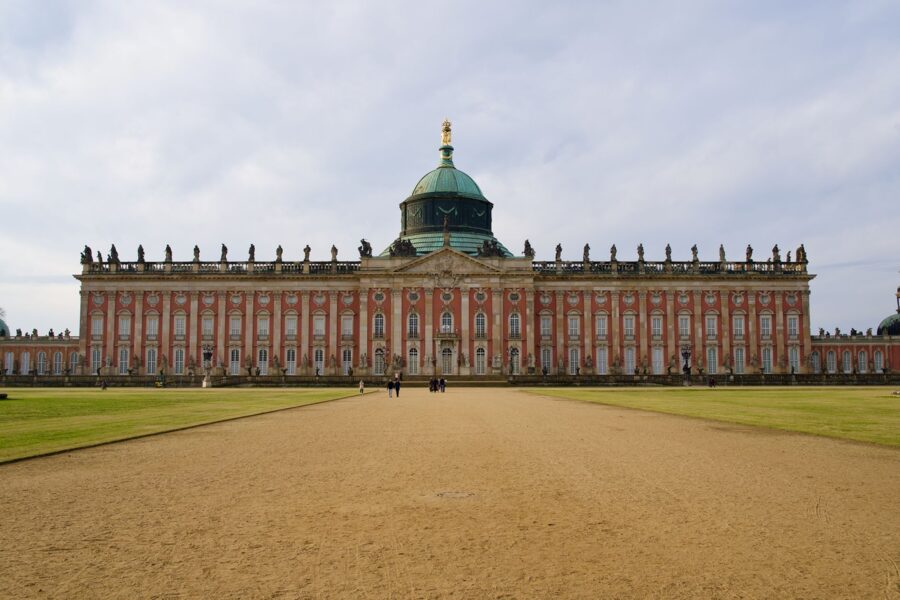
If you only go inside one palace in Potsdam, I would make it this one rather than Sanssouci. The rooms are bigger, the timed slots are easier to get, and the restored Grotto Hall, studded with shells, minerals and glass, is back on the route after years of work, along with the newly restored lower princely apartments. The New Palace Grand Tour costs €14 in 2026 and €16 from 2027, takes about an hour, and runs as a guided tour only from November to March. It is closed on Mondays from January to October and on Tuesdays in November and December.
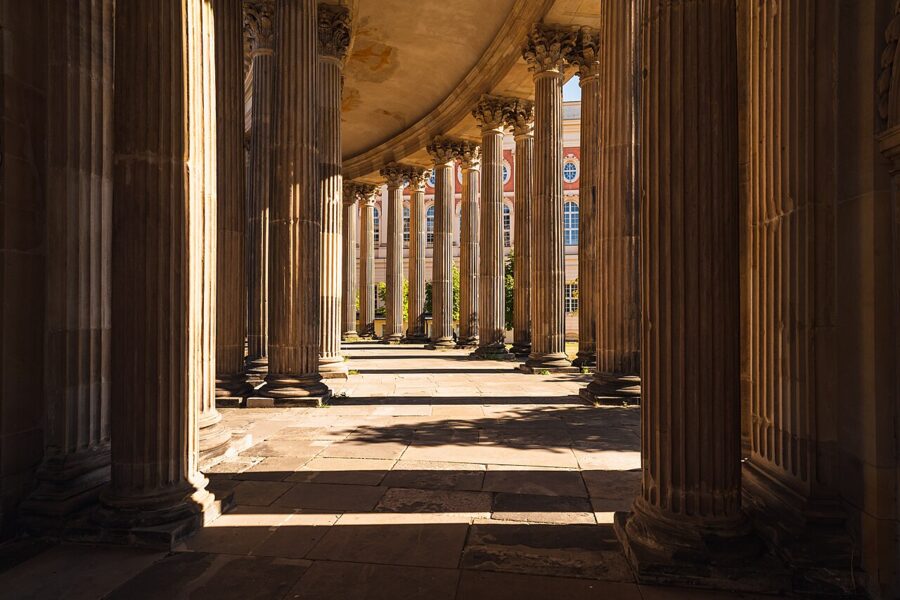
The visitor center at the New Palace (closed Tuesdays) sells same-day tickets, and its Café Caroline is the only place for a coffee at this end of the park. Bus 695 goes back to the main station from the stop Neues Palais.
The Orangery Palace
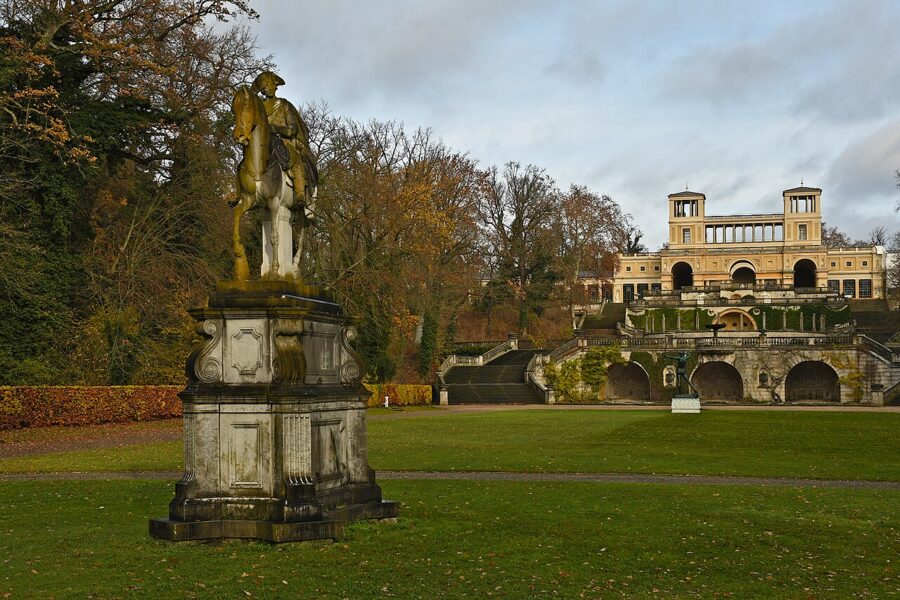
Halfway along the northern edge of the park, the Orangery Palace (Orangerieschloss) runs for more than 300 meters along a ridge, an Italian dream of towers, arcades and terraces built for Frederick William IV (Friedrich Wilhelm IV) in 1851–1864. Its Raphael Hall holds more than 50 nineteenth-century copies of Raphael. It is currently closed for restoration with no reopening date, so take the terrace steps for the view south over the park and keep walking.
The Ruinenberg view
Here is the reveal behind the fountain. On the hill north of Sanssouci, ten minutes’ walk from the palace across the road, Frederick had a round reservoir dug in 1748 to feed his fountains by gravity. Windmills were to pump water up from the Havel; they never managed it, and after 32 years and 168,490 thalers he gave up. To make the reservoir worth looking at from his terrace, he dressed its banks as a stage set of Roman ruins: three Ionic columns holding up a broken entablature, a round temple with a damaged dome, a pyramid and a theater wall.
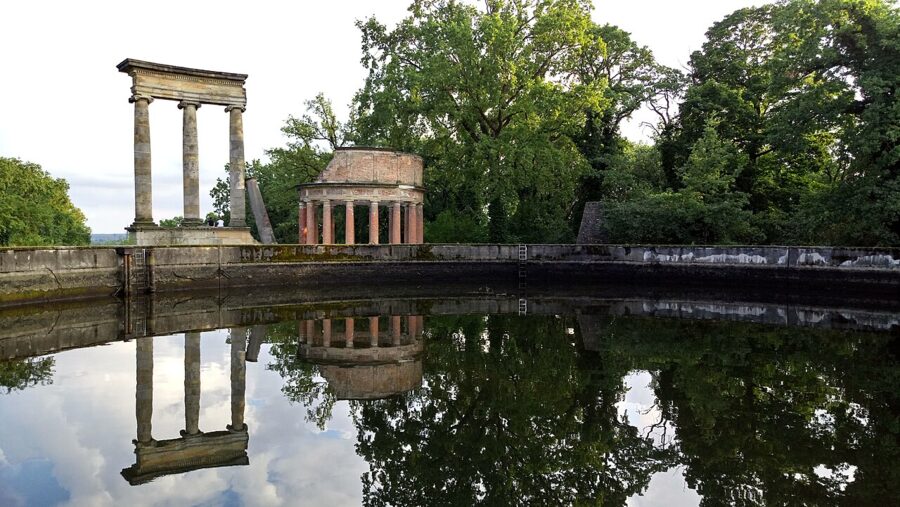
The ruins sit on an axis with the courtyard of Sanssouci Palace, and the view back from the basin explains the whole idea: from up here the park is a set, and you are standing in the wings. Frederick William IV added the 23-meter Norman Tower in 1846; it only opens for special events. The hill itself is free and always open.
Charlottenhof and the Roman Baths
The southern half of the park belongs to a different century and a different king. In 1825 the crown prince, later Frederick William IV, received a modest manor house south-west of Sanssouci from his father as a Christmas present, and he handed it to Karl Friedrich Schinkel and the garden designer Peter Joseph Lenné. What they made at Charlottenhof is small, classical and very personal: a Roman villa in a Prussian meadow, with a room fitted out as a blue-and-white striped tent.
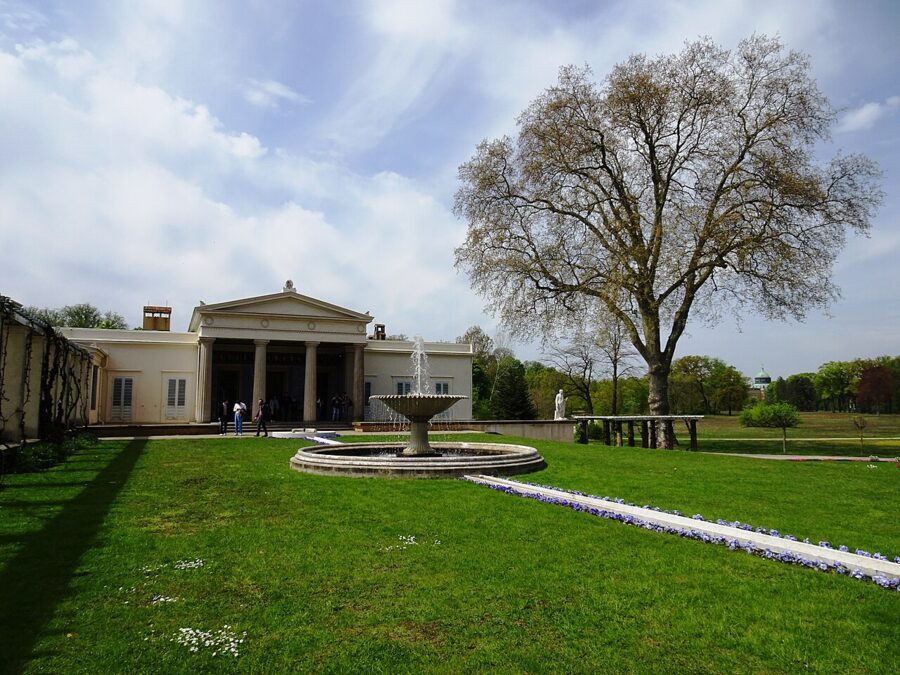
Charlottenhof Palace is shown on guided tours in German, from April to October, Wednesday to Sunday; it is on the Flanierkarte. A few minutes’ walk away, Schinkel and Ludwig Persius built the Roman Baths (Römische Bäder) as an Italian country house with pergolas on a pond. They are closed for restoration, but the outside, the vines and the view across the water are the point anyway.
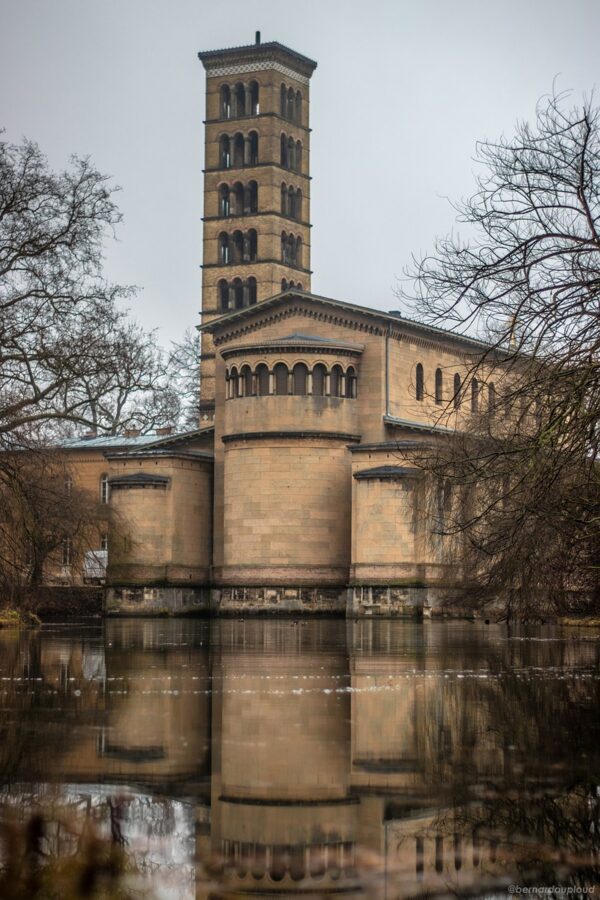
On your way back to the town gate, look into the Church of Peace (Friedenskirche) at the foot of the terraces. Frederick William IV began it in 1845, a hundred years after Sanssouci, as the court church the freethinking Frederick never had, and he is buried beneath it. In the apse is a genuine thirteenth-century mosaic from the church of San Cipriano on Murano. In winter it opens on weekend afternoons only; entry is by donation.
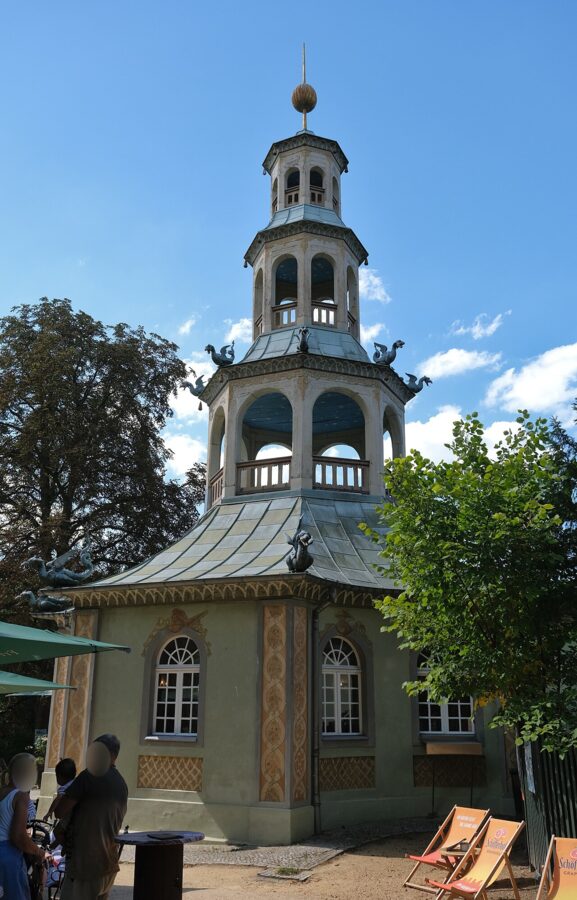
Between the Orangery and the Belvedere on the Klausberg stands the pagoda-roofed Drachenhaus, built in the early 1770s for the vintner of Frederick’s vineyard there. It is now a restaurant and café, open daily from April to October, 11:00–19:00, and in November, December and March from Thursday to Sunday, 12:00–18:00.
The old town and its quarters
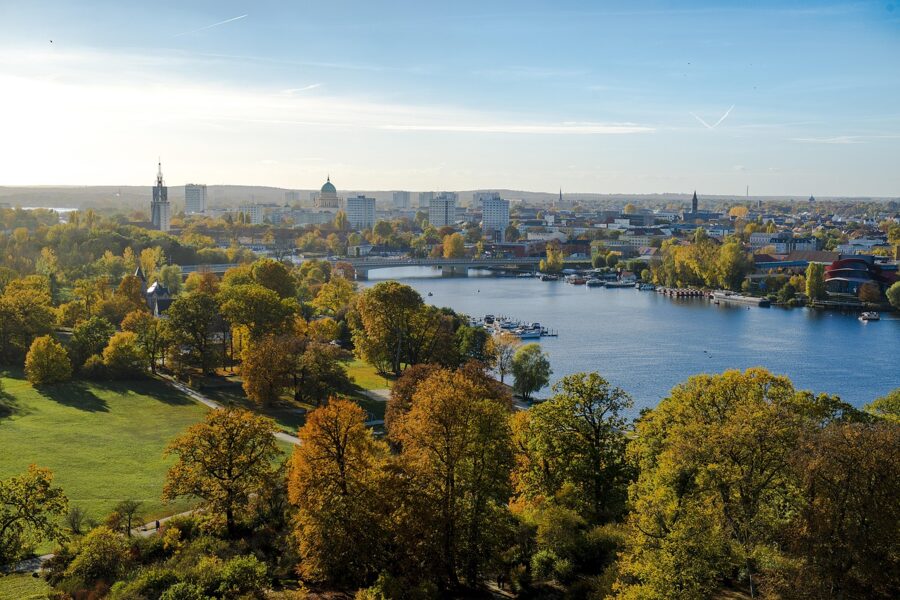
Potsdam’s center is a planned garrison town of the 1720s and 1730s, broken by the bombing of April 1945 and the GDR’s demolitions and rebuilt since 1990. It is compact. From the Brandenburg Gate to the Nauener Tor is 15 minutes on foot, and from there to the Alter Markt another 15.
Brandenburger Straße and Potsdam’s Brandenburg Gate
Potsdam’s Brandenburg Gate (Brandenburger Tor) on Luisenplatz is older than Berlin’s by almost two decades. Frederick had it built in 1770–1771 as a victory arch after the Seven Years’ War, modeled on the Arch of Constantine, and it has two different faces because it had two architects. Carl von Gontard designed the town side with flat pilasters and trophies; his pupil Georg Christian Unger designed the field side with paired Corinthian columns.
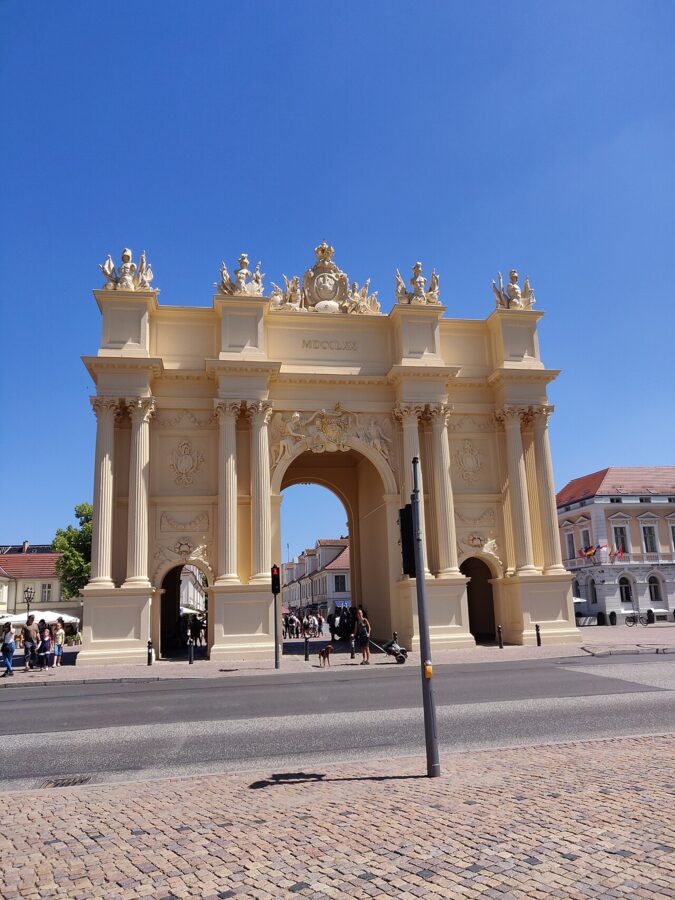
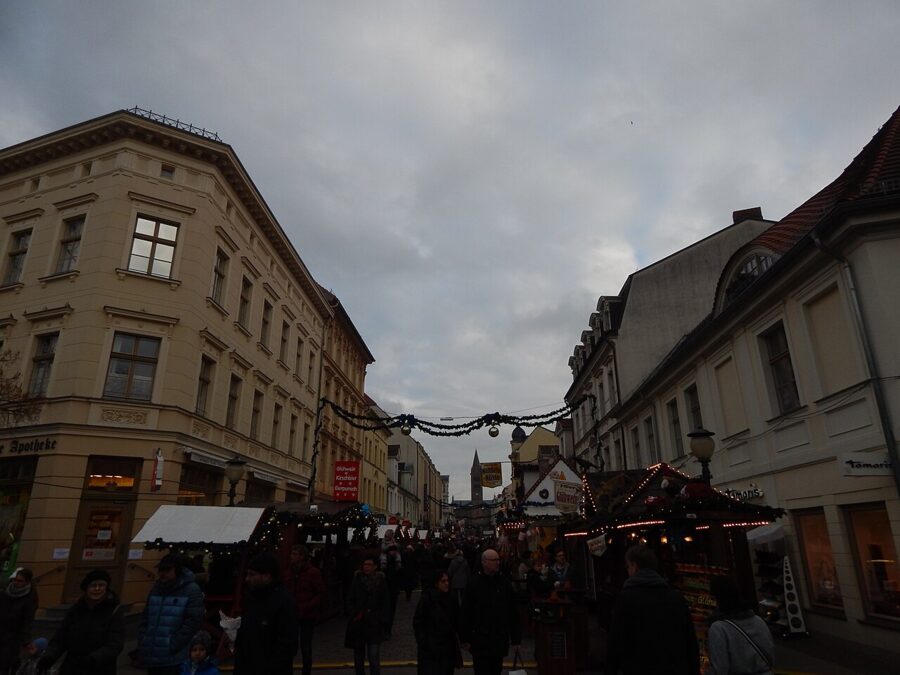
From the gate, Brandenburger Straße runs dead straight and car-free for about 700 meters to the twin-towered Catholic church of St. Peter and Paul on the Bassinplatz. It is the town’s shopping street, chain stores in eighteenth-century houses, and in Advent it carries the Christmas market. Walk it once and do not linger.
The Dutch Quarter
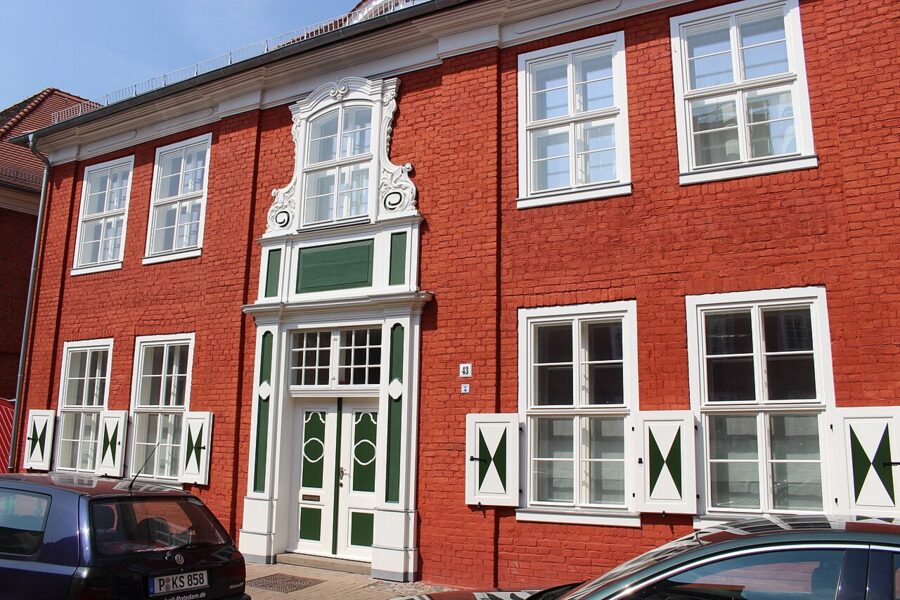
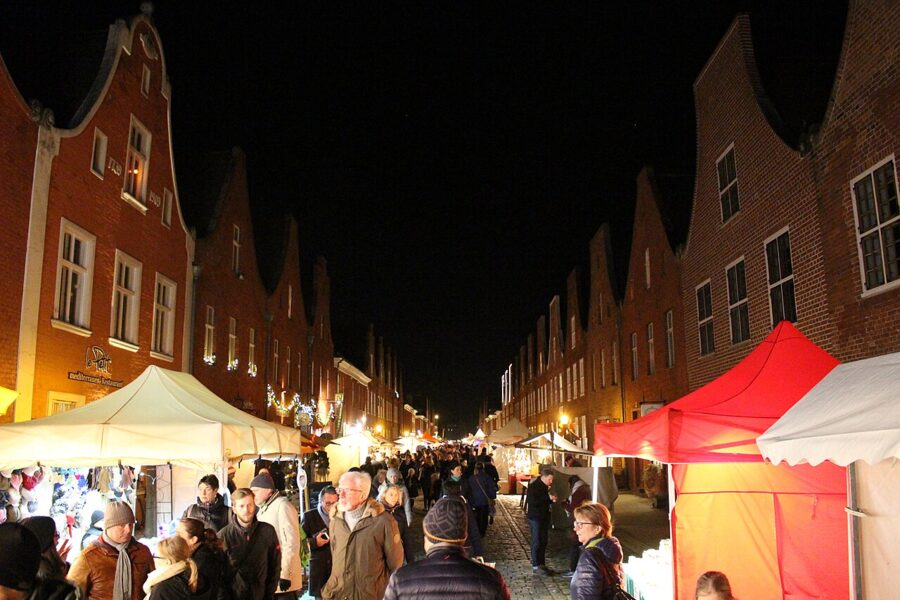
Two blocks north of Brandenburger Straße you step into 134 red-brick houses with white-pointed gables and green shutters, built in 1733–1742 under the Amsterdam master builder Jan Bouman. Frederick William I (Friedrich Wilhelm I), the “Soldier King,” wanted Dutch craftsmen to settle in his garrison town; the ground was marsh, drained into a basin that gave the Bassinplatz its name, and far fewer Dutch families came than he hoped. The name stuck anyway.
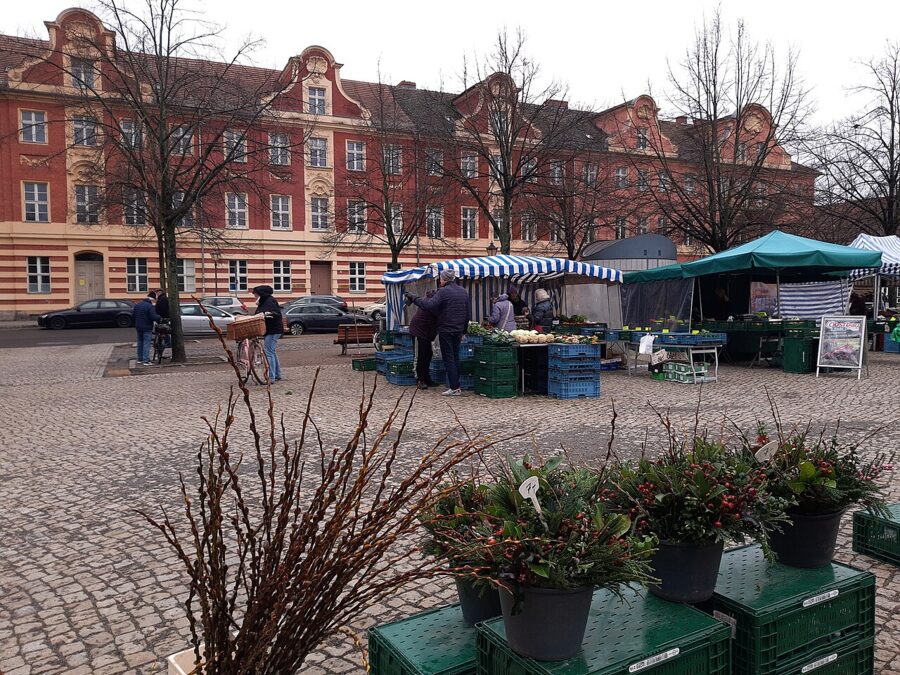
Walk Mittelstraße end to end, then Benkertstraße, and give it 30 minutes, longer if you stop for cake. The quarter is mostly cafés, galleries and small shops now. It holds a tulip festival in spring and a Dutch Sinterklaas market in December, and on those weekends it is shoulder to shoulder.
The Nauener Tor
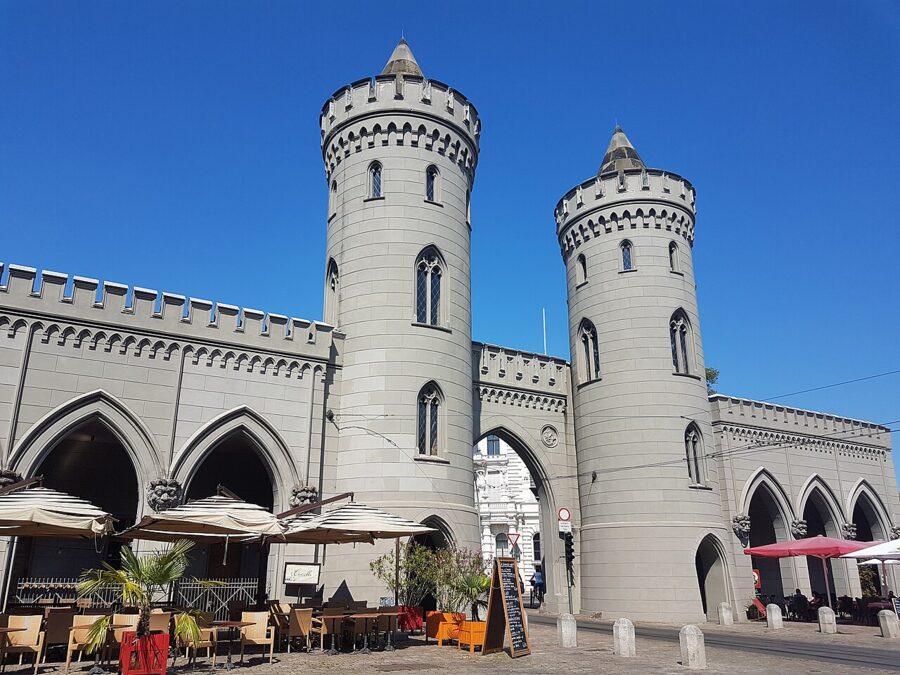
At the north-west corner of the Dutch Quarter stands a gate that looks as if it escaped from a Scottish castle. The Nauener Tor went up in 1754–1755, to a sketch by Frederick and plans by Büring, and it is counted as the first neo-Gothic building on the European continent, two decades before the style caught on. What you see is largely the remodeling of 1867–1869.
Alexandrowka
Fifteen minutes north along Friedrich-Ebert-Straße, past the Nauener Tor, the town suddenly turns into a Russian village. Frederick William III built Alexandrowka in 1826–1827 for the last twelve singers of a choir of Russian soldiers who had stayed in Potsdam since 1812, and he named it after his friend Tsar Alexander I. Lenné laid it out as a hippodrome with a St. Andrew’s cross through it; the timber houses with carved gables are Prussian builds in a Russian costume, and on the hill above, the little Alexander Nevsky church was consecrated in 1829.
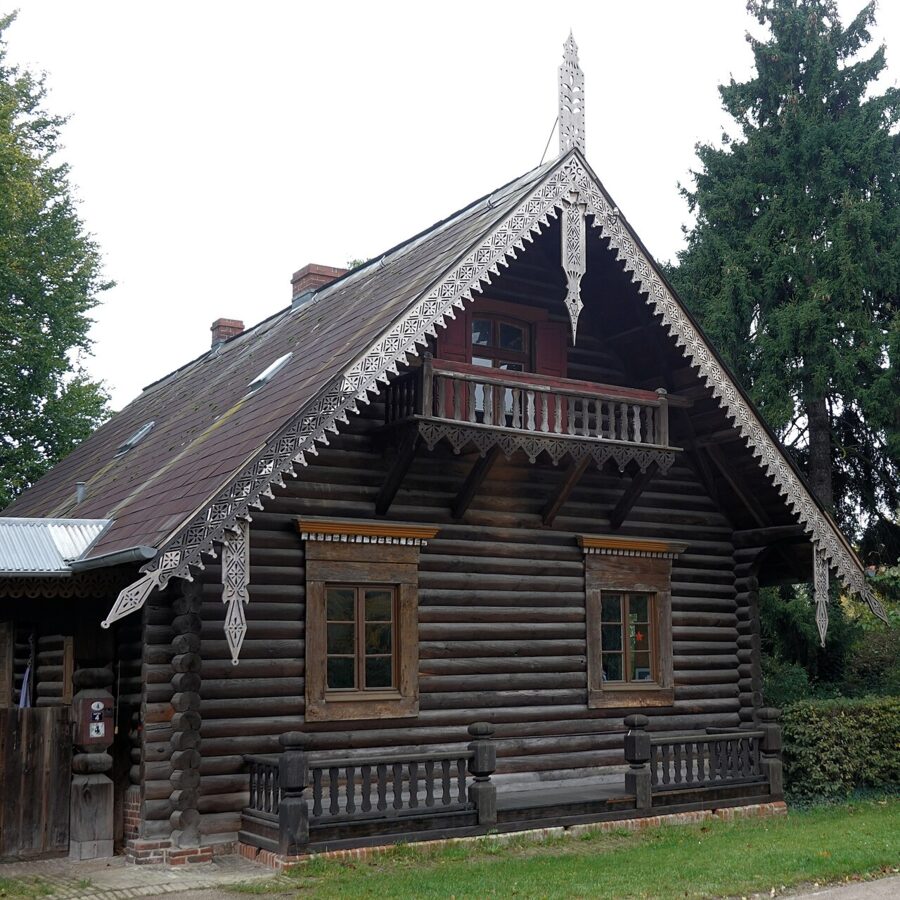
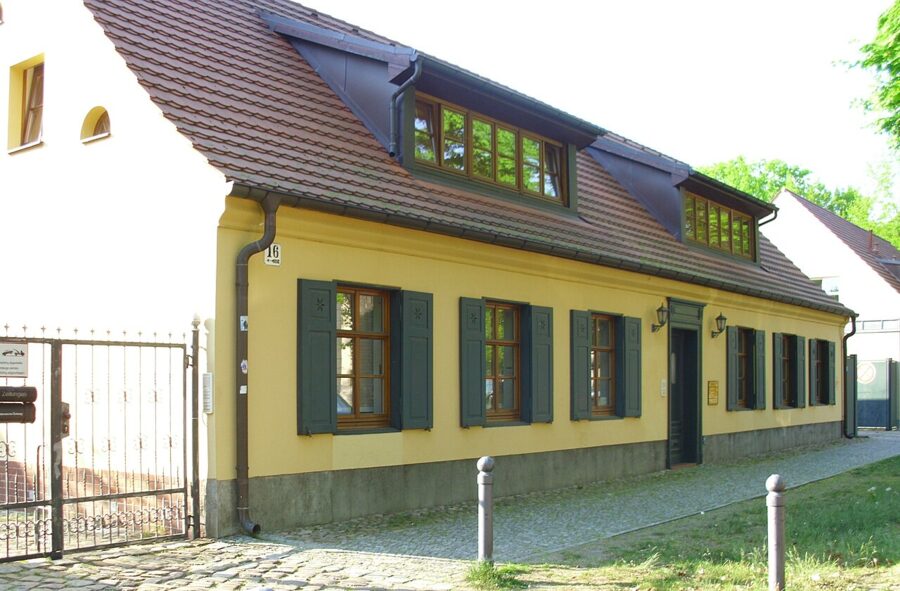
The Museum Alexandrowka in house no. 2 tells the choir’s story for €3.50, from April to October, daily except Wednesday, 10:00–18:00, with a garden café. In winter the colony is a quiet 20-minute loop.
The Alter Markt and Museum Barberini
Walk south from the Dutch Quarter down Friedrich-Ebert-Straße and the street ends at the town’s old heart, which the bombing of 1945 and the GDR nearly erased and which has been rebuilt piece by piece. The Alter Markt is now ringed by the rebuilt City Palace (Stadtschloss), which houses the Brandenburg state parliament behind its Baroque facade, by Schinkel’s St. Nicholas Church (Nikolaikirche) with its 77-meter dome, by the Old Town Hall, and by the Museum Barberini in a rebuilt copy of a Roman palazzo.
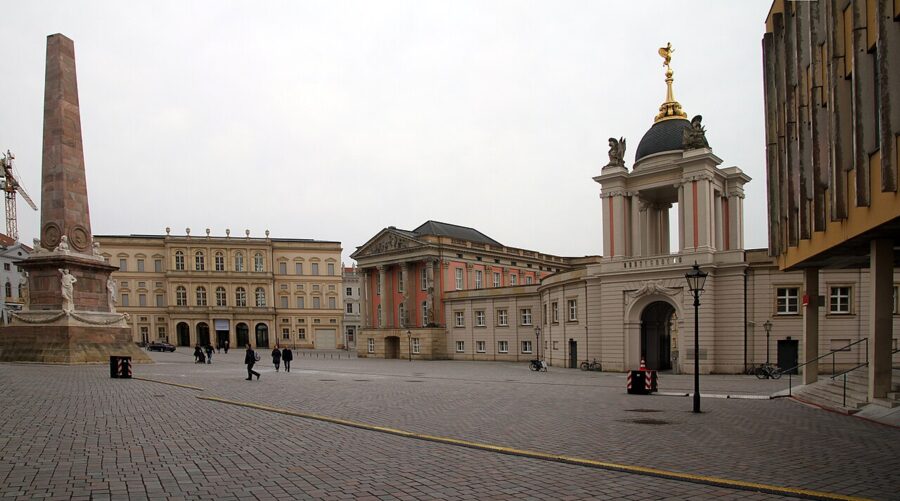
The Barberini, opened in 2017 by the software founder Hasso Plattner, is the best reason to stay in town until evening. It shows three changing exhibitions a year and, since 2020, a permanent display of more than 100 French Impressionist and Post-Impressionist paintings from Plattner’s collection, Monet heavily among them. The Barberini is open Monday and Wednesday to Sunday, 10:00–19:00, closed Tuesday; tickets are €16 on weekdays, €18 at weekends, and €10 after 17:30, which makes it the perfect last stop of a day trip. Book a time slot online, even a free one.
Next door, the Potsdam Museum in the Old Town Hall has a free permanent exhibition on the city’s history, Tuesday to Sunday 10:00–18:00 (see the museums section). For the view, climb the dome of the Nikolaikirche: the Nikolaikirche tower climb costs €7, runs daily 09:30–17:30 (from 12:00 on Sundays), and the colonnade around the drum looks straight down Friedrich-Ebert-Straße to the Nauener Tor.
The Garrison Church tower
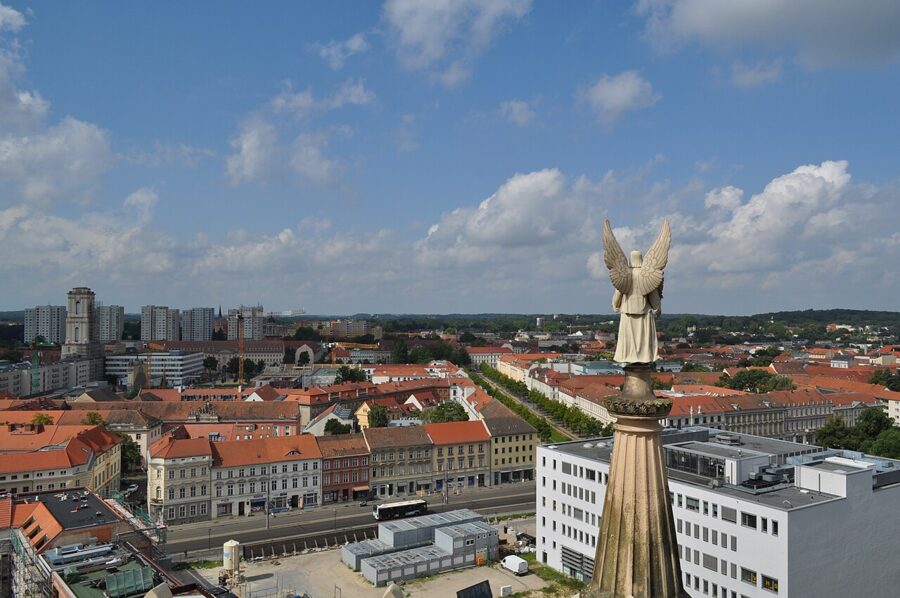
Two hundred meters west of the Alter Markt stands the most argued-over building in Potsdam. The Garrison Church (Garnisonkirche) was built in 1730–1735, its tower almost 90 meters high, and Frederick the Great’s coffin lay in its crypt for more than 150 years. On March 21, 1933, the “Day of Potsdam,” Hitler and President Hindenburg staged their handshake at the church to tie the new regime to the Prussian past. The church burned out in April 1945, and the GDR blew up the ruin in 1968.
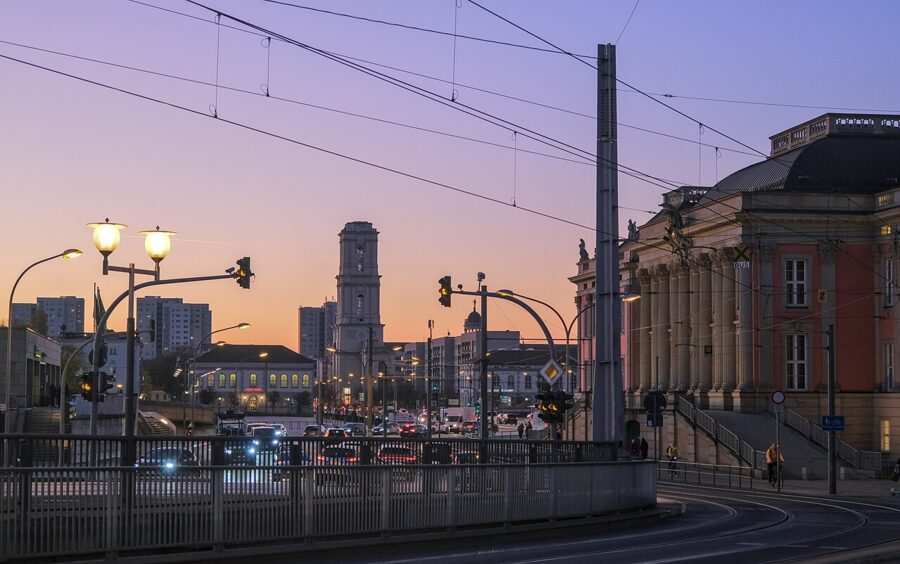
The tower has been rebuilt since 2017 as a place of remembrance and discussion, and many Potsdamers still think it should not have been. A chapel opened in it at Easter 2024, followed in August 2024 by an exhibition on the site’s history and a viewing platform at 57 meters, reached by lift. Tickets, sold at the tower, are €8 for the platform, €8 for the exhibition or €12 for both; it opens Monday to Friday 11:00–15:00 and at weekends 10:00–17:00.
I would do the exhibition first. It is frank about 1933, and the view means more afterward.
The Neuer Garten and the north
North of the old town, along the shores of the Heiliger See and the Jungfernsee, lies the landscape garden that Frederick William II (Friedrich Wilhelm II) began in 1787 as a deliberate break from his uncle’s formal Sanssouci. The Neuer Garten is free, open from 08:00 until dusk, and quieter than Sanssouci on any day of the year. The stop is Schloss Cecilienhof; from the Nauener Tor it is a 20-minute walk.
Cecilienhof
At the far north end of the garden stands the last palace the Hohenzollerns built: Cecilienhof, a half-timbered English country house of 1913–1917 for Crown Prince Wilhelm and Crown Princess Cecilie. The architect, Paul Schultze-Naumburg, grouped its 176 rooms around courtyards so that it never looks as big as it is. In the summer of 1945 Truman, Stalin and Churchill (then Attlee) met here for the Potsdam Conference, July 17 to August 2, and the red star planted in the courtyard dates from those weeks.
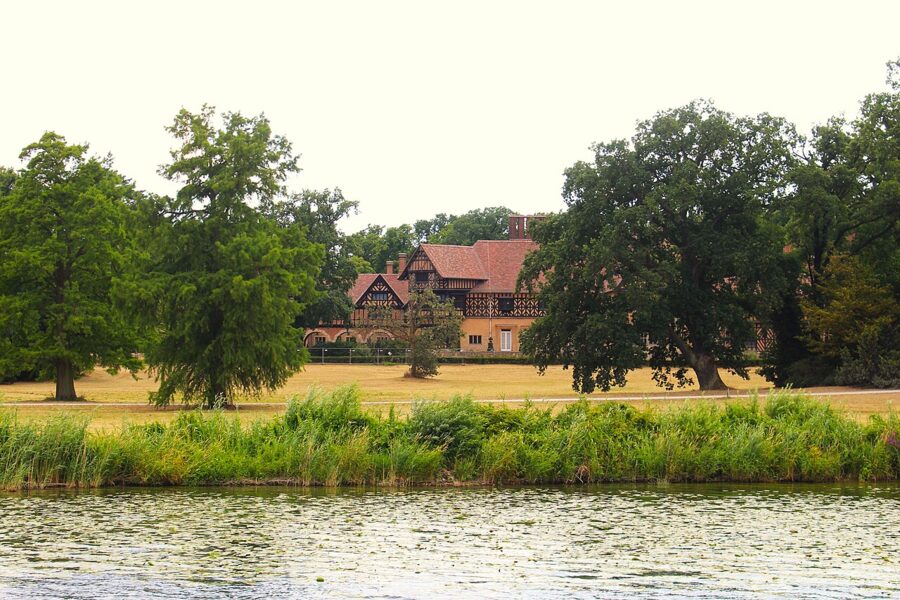
Plan around one hard fact: Cecilienhof is closed for restoration until further notice, and the conference rooms are not on view. You can still walk round the outside and the lakeside garden, and the foundation has put virtual tours of the interior online. If the conference is why you came, check before you travel.
The Marble Palace
Ten minutes’ walk south along the shore, the Marble Palace (Marmorpalais) sits on its own reflection in the Heiliger See. Carl von Gontard built it in 1787–1793 as Frederick William II’s summer retreat, faced in Silesian marble, the first and only royal palace in Prussia in the early neoclassical style. Inside are the marble vestibule, a grotto room at water level, a concert hall and a collection of Wedgwood, shown on guided tours.
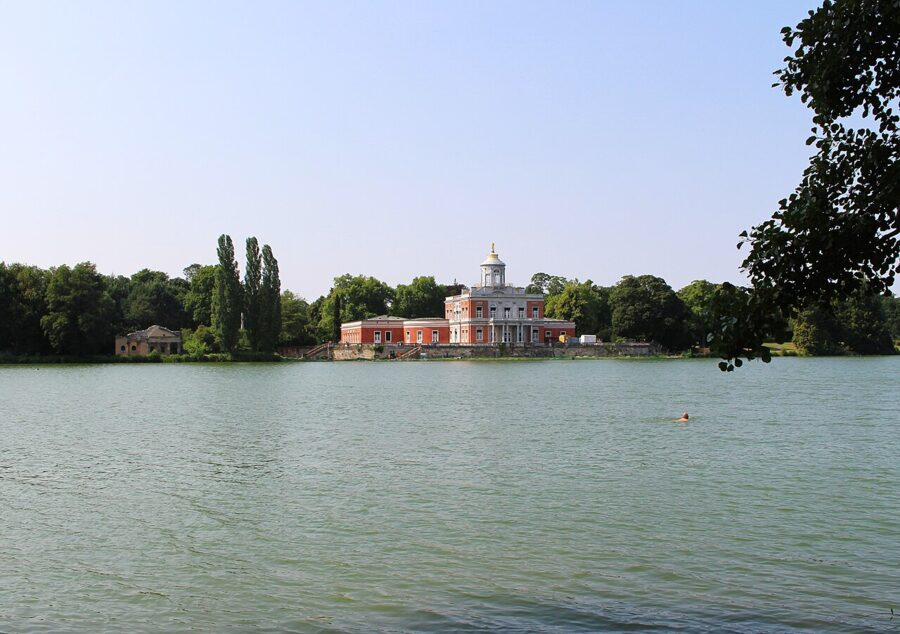
The Marble Palace costs €8 (€9 from 2027) and opens Wednesday to Sunday from April to October, and on weekends only, 10:00–16:00, from November to March.
The Pfingstberg and the Belvedere
West of the Neuer Garten, a hill rises above Alexandrowka with a twin-towered Italian villa on top. Frederick William IV loved the view from the Pfingstberg as crown prince and began his Belvedere here in 1847; it was finished in 1863, two years after his death, and it is nothing but a viewing platform dressed as a Renaissance palace. After 1945 the hill sat next to Soviet military sites and was closed; it fell to ruin, was restored with private donors’ money, and reopened in stages from 2001, with the restoration finished in 2003; a citizens’ association runs it still.
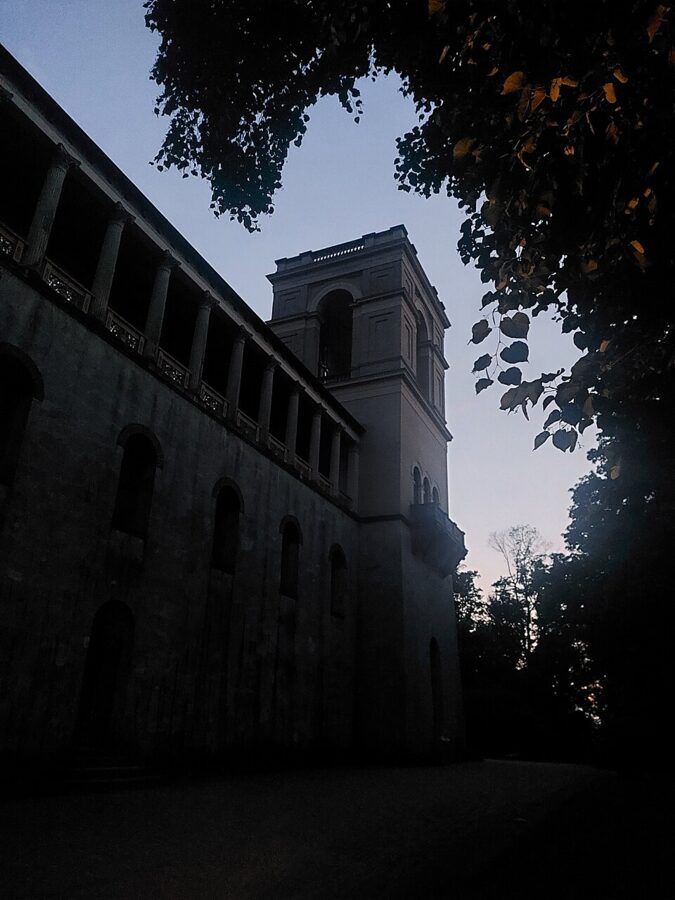
Entry is €8 (€6 with Sanssouci+), and it is open from spring to October, Tuesday to Sunday, with weekend evenings to 19:00 from July to September. The Belvedere on the Pfingstberg is closed for its winter break from November, apart from an Advent weekend (December 12–13, 2026) and a New Year’s Day concert. It is my favorite view in Potsdam, and the walk up from Alexandrowka takes ten minutes.
Babelsberg and the east
Across the Havel from the old town, Babelsberg is two places in one: a Gothic Revival park on a hillside above the water, and the film town that grew up after 1912 on the far side of the district. The park and the bridge are the ones to walk.
Park and Palace Babelsberg
From 1833 Prince William, later Emperor William I (Wilhelm I), and his wife Augusta built themselves a summer seat on this hill, with Lenné and then Prince Hermann von Pückler-Muskau shaping the park. Schinkel designed a small cottage-sized first palace in 1833–1835; when William became heir to the throne, Persius and Johann Heinrich Strack enlarged it into the turreted English-Gothic pile you see now. Its facade and terraces were restored by 2016, and the fountains around the palace play again from April to October.
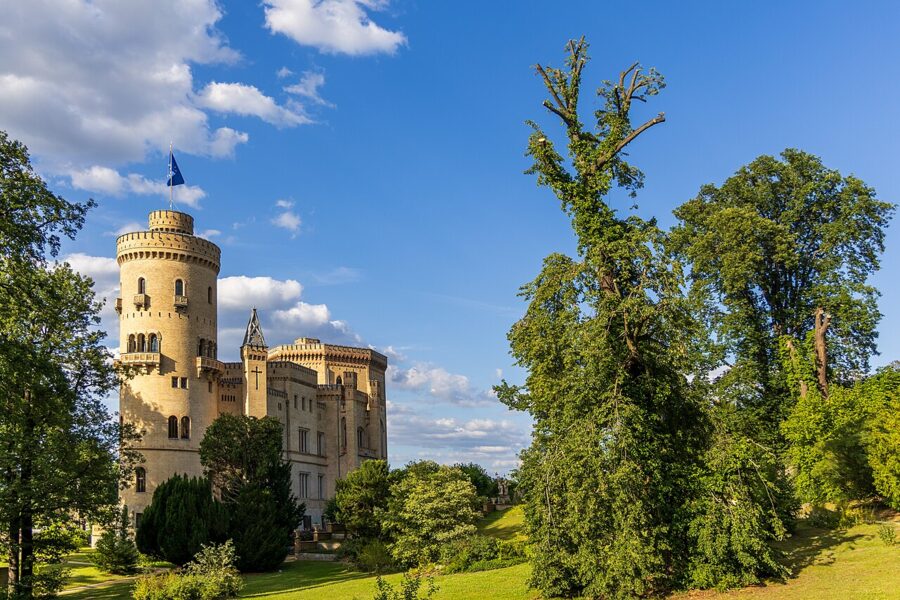
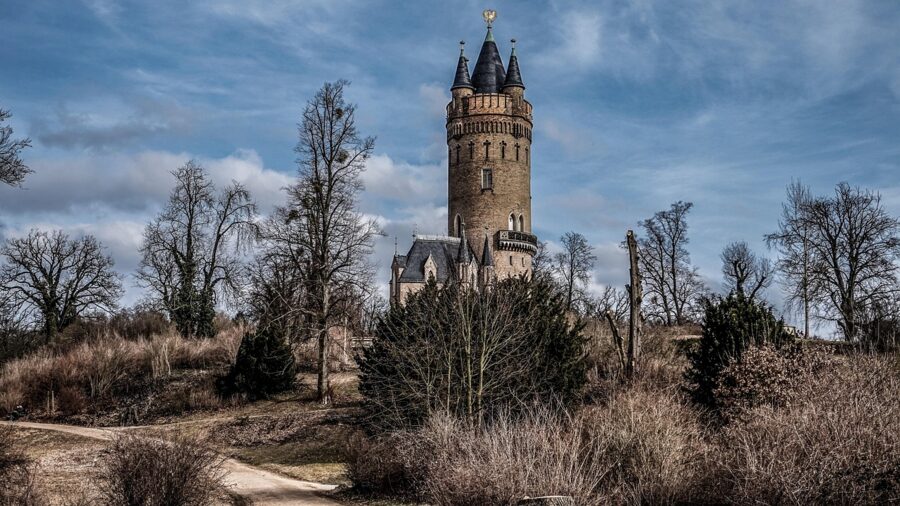
Park Babelsberg is free and open from 08:00 until dusk; the palace itself opens only for special events. The thing to do is walk the shore path from the stop Schloss Babelsberg toward the Glienicke Bridge, with the views over the Havel that Pückler engineered. The Flatow Tower opens on weekends from April to October, 10:00–17:30, for €5, and from the top platform you see the whole park fan out below. Some paths near the Havelhaus were closed for works in November 2026, with a detour by road.
Filmpark Babelsberg
On the other side of Babelsberg, Studio Babelsberg has been making films since February 1912, which makes it the oldest large film studio in the world. Metropolis was shot here, and so, much later, were Inglourious Basterds and The Grand Budapest Hotel. The working studio is closed to the public; Filmpark Babelsberg, next door, is the theme park built around its history, with shows, film sets and a western town.
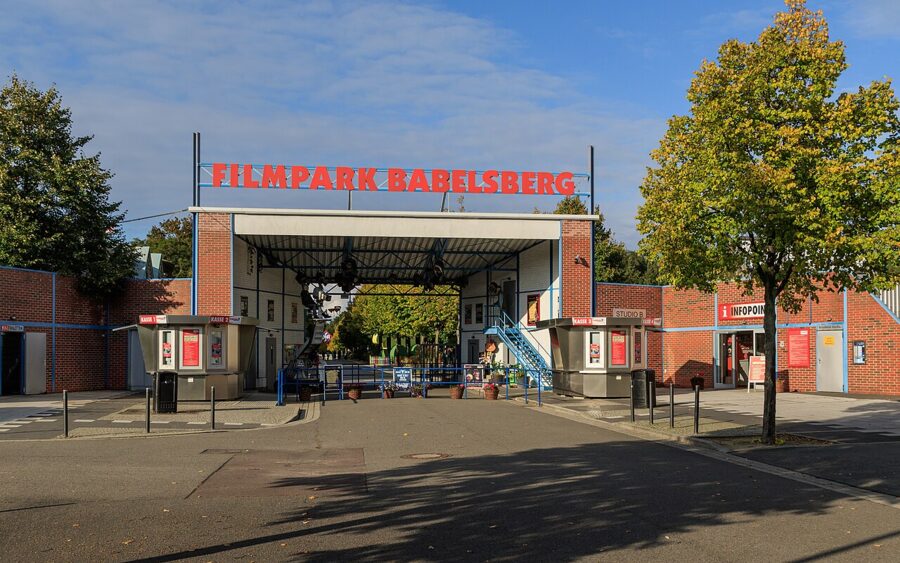
It is a family day out rather than a film museum. Tickets are €25 for adults and €18 for children in the online shop; the park is in its winter break now and has not yet published its 2027 dates.
The Glienicke Bridge
At the north-east tip of Park Babelsberg, the Berlin road crosses the Havel on a green steel truss bridge opened in 1907. During the division of Germany the border between East Germany and West Berlin ran across its middle, and three times, in 1962, 1985 and 1986, the two sides exchanged agents and prisoners on it, starting with the Soviet spy Rudolf Abel and the American pilot Francis Gary Powers on February 10, 1962. That is why it is the Glienicke Bridge to the world and the “bridge of spies” to the cinema.
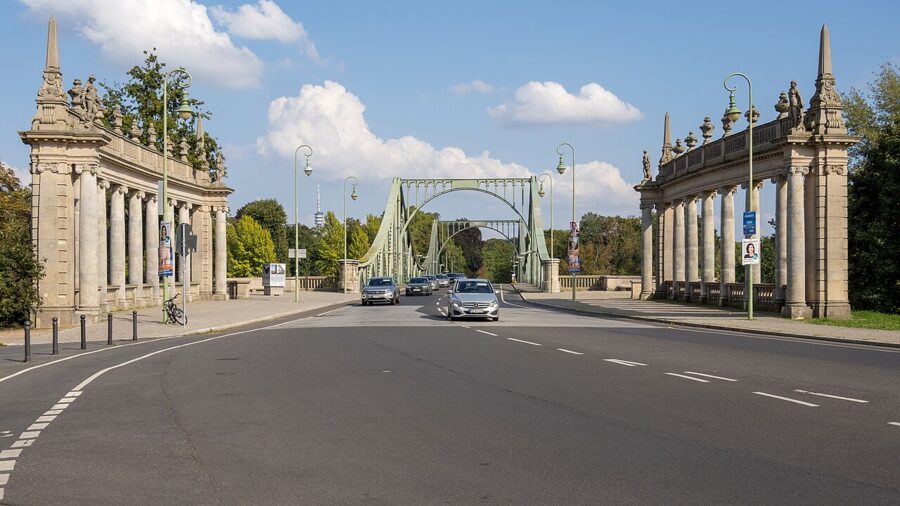
Walk out to the line in the middle that marks the old border. Tram 93 runs from the main station to its terminus at the stop Glienicker Brücke; the bridge is free and always open.
The Griebnitzsee shore
South of Park Babelsberg, the Griebnitzsee was a border lake: the Wall ran down its middle, and the villa gardens on the Babelsberg shore were sealed off as death strip. After 1990 the patrol road along the shore became an informal footpath, and since 2009 some lakeside owners have fenced their gardens again after winning in court, so the path is broken in places.
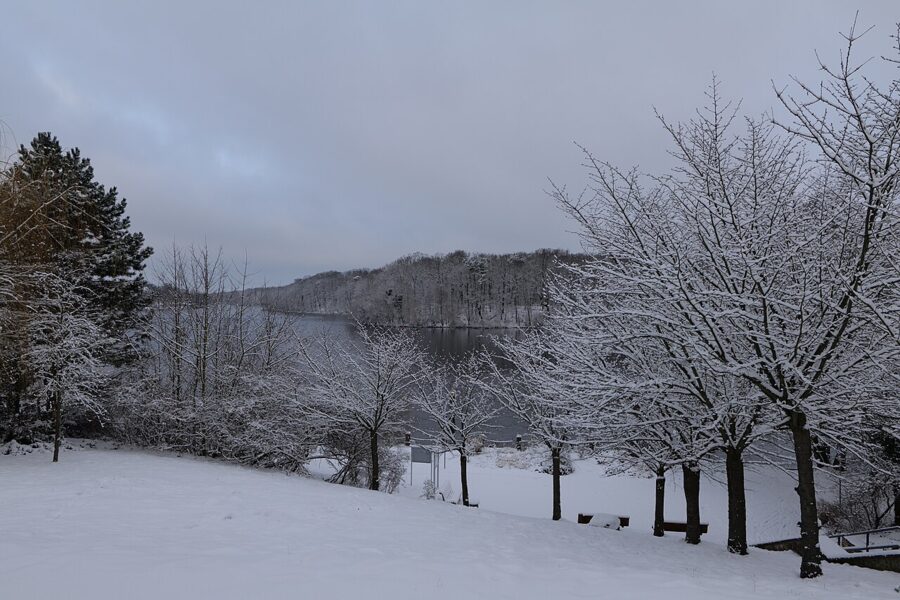
It is a quiet walk past villas where the 1945 delegations were housed, ending at S-Bahn station Griebnitzsee. Do it only after the bridge.
Science and museums
Potsdam’s museums are small, good and close together: what you do when it rains.
The Einstein Tower and the Telegrafenberg
On the wooded Telegrafenberg south of the main station, a hill named for the optical telegraph mast that stood on it from 1832, sits one of the strangest buildings in Germany. Erich Mendelsohn’s Einstein Tower (Einsteinturm), built in 1920–1922, is a solar observatory meant to test Einstein’s theory of relativity, and it looks poured rather than built. By the usual story, Einstein’s verdict on it was one word: “Organic.”
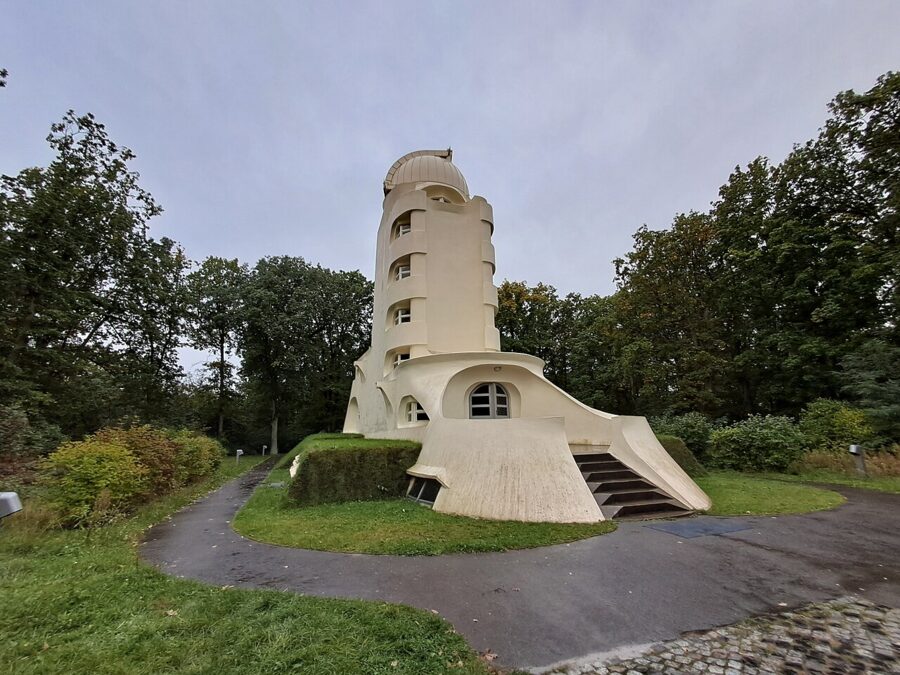
Because it is a lab and not a museum, you can only go inside on a guided tour. The Urania association runs a public tour of the science park and the Einstein Tower on the first Saturday of each month at 10:00, for €12, booked in advance by phone only; the December 5, 2026 tours were already full, with places left for January, February, March and April 2027. Bus 691 to Telegrafenberg runs on weekdays only, so on a Saturday you walk up from the main station in about 20 minutes.
The Filmmuseum
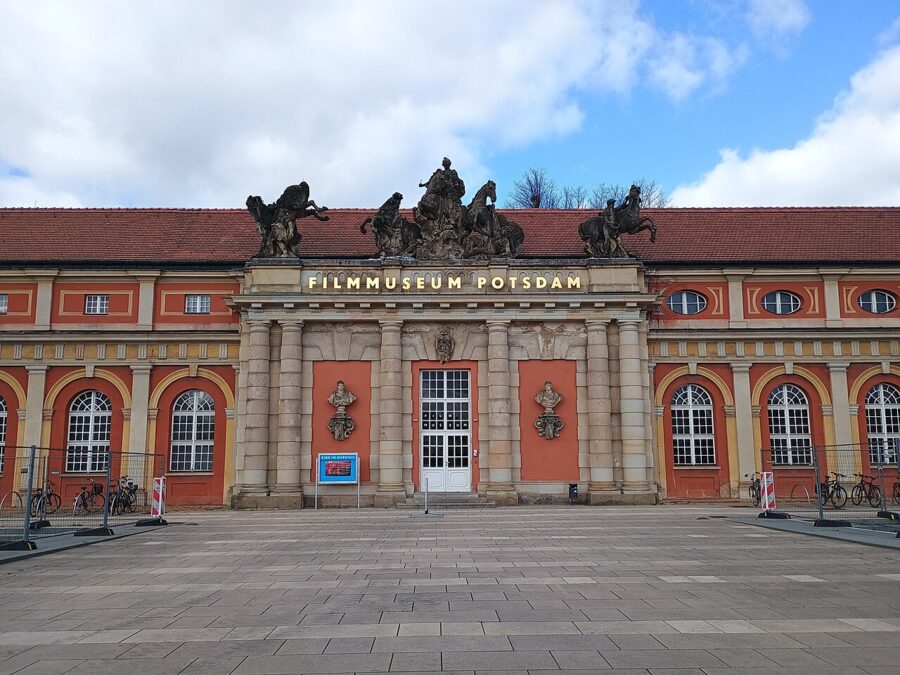
In the long former royal stables (Marstall) on Breite Straße, the Filmmuseum Potsdam tells the story of Babelsberg, from Asta Nielsen in 1912 through Ufa and the East German DEFA to the present. Founded in 1981, it counts as the oldest film museum in Germany with its own collection, and its cinema still accompanies silent films on a historic Welte organ. The Filmmuseum is open Tuesday to Sunday, 10:00–18:00; a museum ticket is €12, and under-18s go free. Give it an hour and a half.
The Potsdam Museum
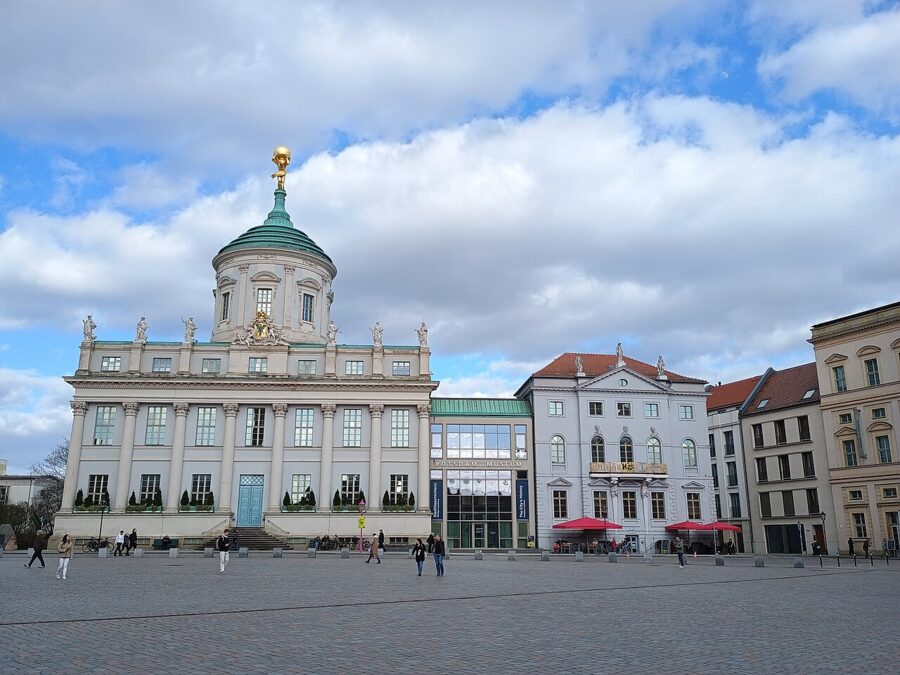
The Old Town Hall on the Alter Markt holds the city’s own museum, and its permanent exhibition, “Potsdam. Eine Stadt macht Geschichte,” is free. It explains how a small market town became a garrison, a residence, a ruin and a capital again. The Potsdam Museum opens Tuesday to Sunday, 10:00–18:00, and until January 3, 2027 it is showing an exhibition on plans for the Alter Markt since 1945, which is the right place to see it.
The Biosphäre
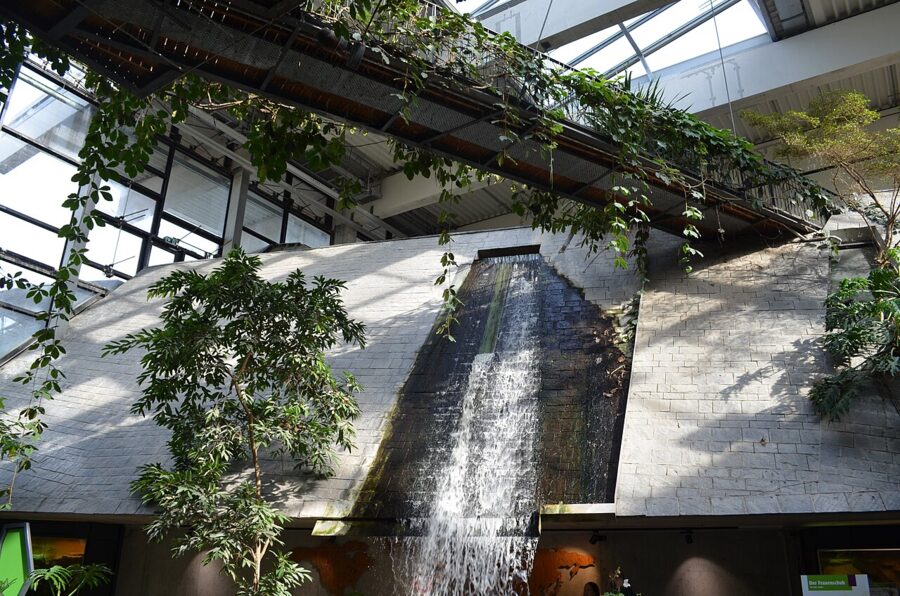
In the Volkspark on the old military ground of the Bornstedter Feld, a glass hall built for the 2001 federal garden show keeps a tropical rainforest of some 20,000 plants, with a butterfly house added in 2009. It is the one sight here built for children. It opens Monday to Friday 09:00–17:00 and at weekends 10:00–17:30, and Biosphäre tickets cost €20 for adults on the door.
What needs booking
| Sight | Book ahead? | Price (adult) |
|---|---|---|
| Sanssouci Palace | Yes, timed slot; sells out in summer | €14 |
| New Palace | Advised, timed slot | €14 (€16 from 2027) |
| Einstein Tower tour | Yes, by phone; first Saturday of the month | €12 |
| Museum Barberini | Time slot online, even for free entry | €16–18 |
| Garrison Church tower | No, tickets at the tower | €8–12 |
| Filmmuseum, Potsdam Museum | No | €12 / free |
Water and further out
The kings placed their houses to be seen from boats. A second day should include at least one of these.
A boat on the Havel
The Weisse Flotte runs its tour boats from the harbor at the Lange Brücke, a five-minute walk from the main station. The 90-minute Schlösserrundfahrt, a loop past the palaces on the water, costs from €23; the two-hour Wannsee round trip starts at €25; and the four-hour Große Inselrundfahrt, all the way round the island the city stands on, starts at €34. Some tours have English commentary.
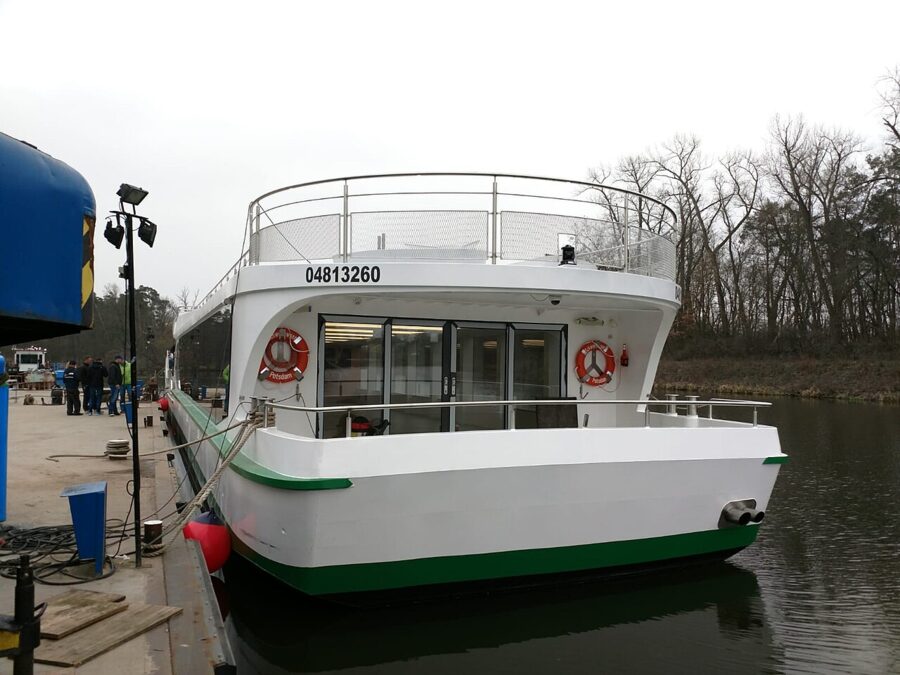
The main season opens with a parade of the fleet on April 18, 2027; in winter the company runs Advent and brunch cruises rather than the regular tours. With two days, take the Schlösserrundfahrt on the first afternoon; you will want to walk the rest of what you see the next morning.
Swimming lakes
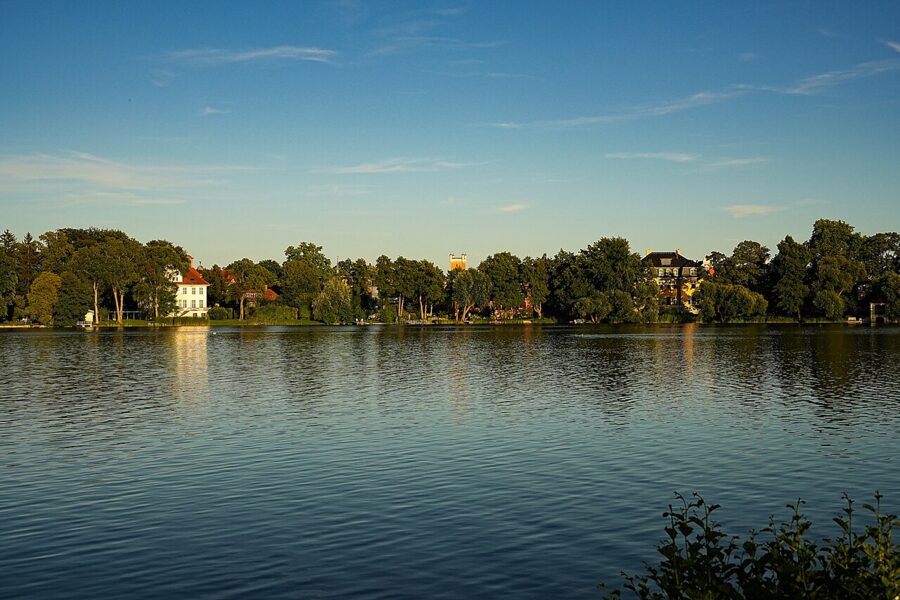
On a hot July afternoon, at 30 °C, Potsdam goes swimming. The Heiliger See along the Neuer Garten has a marked bathing area (swimming anywhere else in it is against the park rules), and the city’s lido at Park Babelsberg on the Tiefer See reopened rebuilt in 2025. Do as the locals do and swim after the palaces close.
Peacock Island (Pfaueninsel)
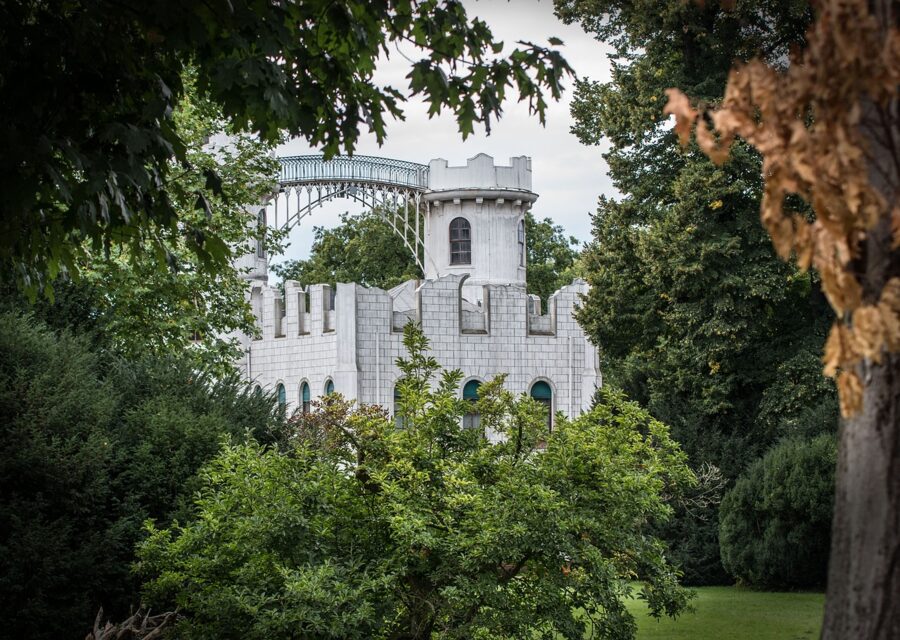
Strictly in Berlin, but part of the same World Heritage landscape, Peacock Island is a 67-hectare island in the Havel where Frederick William II and his companion Wilhelmine Enke built a small white palace in 1794–1797, made to look like a ruined Roman country house. Lenné turned the island into a landscape park, planted Berlin’s oldest rose garden in 1821, and the peacocks still wander between some 400 old oaks.
The only way on is the little Pfaueninsel ferry, €6, from the stop Pfaueninsel (Berlin); it runs daily, in November and December from 10:00 to 16:00, with the last crossing 45 minutes before closing. The palace inside is shown from April to October only (€8). Combine it with the Glienicke Bridge rather than Sanssouci.
Caputh
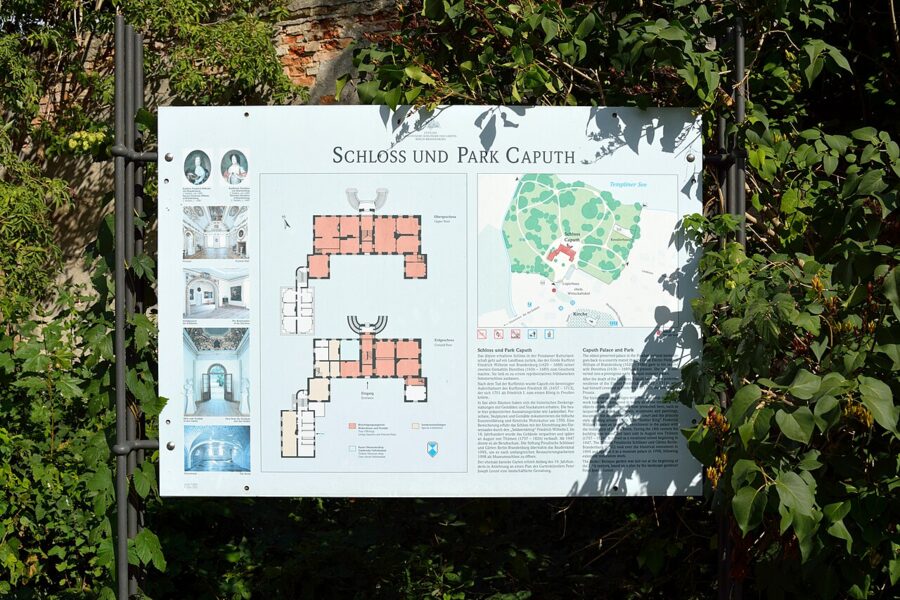
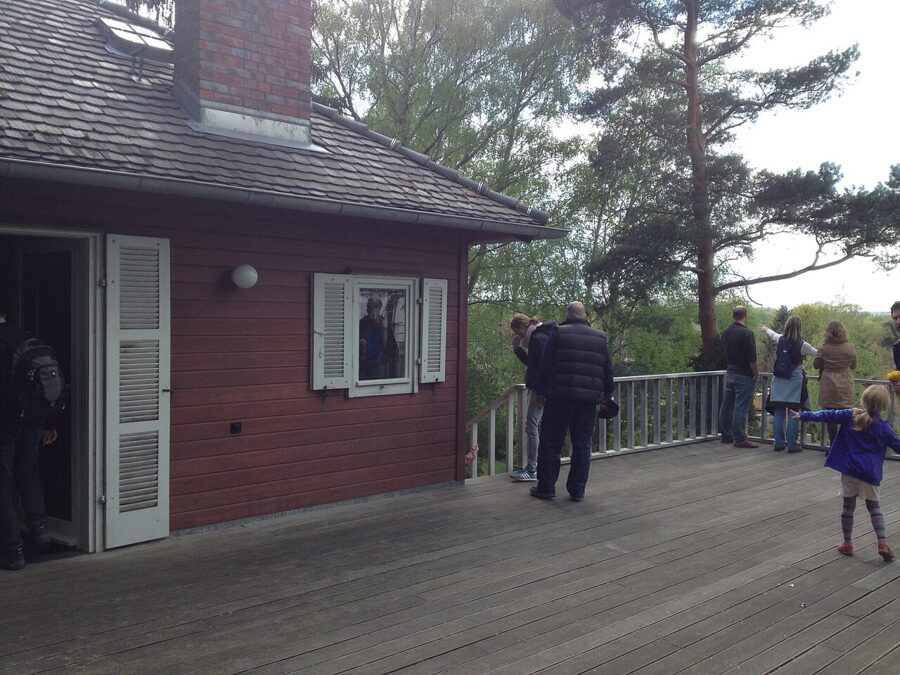
Six kilometers south of Potsdam on the Templiner See, the village of Caputh has two very different houses. Caputh Palace (Schloss Caputh) is the oldest surviving pleasure palace of the Great Elector’s era in the Potsdam landscape, with a summer dining room lined in about 7,500 Dutch tiles; it costs €8 and opens Wednesday to Sunday from April to October and on weekends in winter. Up the hill, the timber summer house that Konrad Wachsmann built for Albert Einstein in 1929 was the family’s retreat until 1932; the Einstein summer house opens on weekends and holidays from April to October, 10:00–18:00, for €5.
Werder
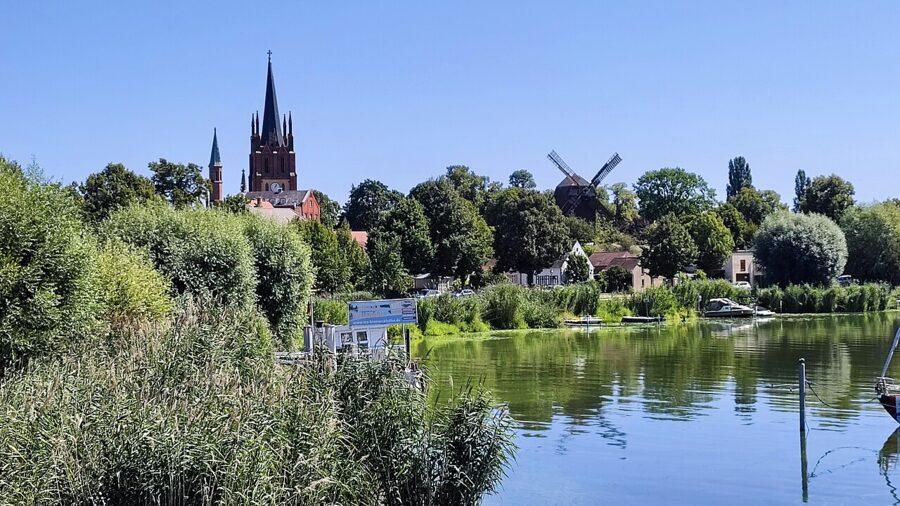
A short ride west of Potsdam on the RE1, Werder (Havel) is an old fishing town on an island, surrounded by orchards. For nine days each spring it is the Baumblütenfest, the blossom festival: the 148th runs from April 24 to May 2, 2027, with orchards and farmyards open throughout and the big street party in the old town from April 30. The Weisse Flotte runs extra boats from Potsdam harbor for the festival, from €14, and the train back is packed.
Potsdam by season
Spring is blossom and tulips: the Dutch Quarter’s tulip festival, the orchards of Werder at the end of April, and the parterre at Sanssouci freshly planted. The small palaces reopen in April and the boats start their season, so April and May give you the full list with fewer people than summer.
Summer is long evenings. The Barberini is open until 19:00, the Belvedere on the Pfingstberg stays open until 19:00 at weekends from July to September, and the lakes are warm. Do the park early and the town late.
Winter is short days and Christmas markets. The main one, the Potsdamer Weihnachtszauber, runs from November 23 to December 27, 2026, with some 250 stalls strung from Luisenplatz down Brandenburger Straße to the Bassinplatz, open 11:00–21:00 (to 22:00 on Fridays and Saturdays). The Böhmischer Weihnachtsmarkt on the Weberplatz in Babelsberg, in the old weavers’ quarter of Bohemian Protestant settlers, is smaller and more local, and the Dutch Quarter holds its Sinterklaas market in December.
What to skip if time is short
- Cecilienhof, for now. It is closed for restoration, and the outside alone does not justify the trip north on a one-day visit.
- Filmpark Babelsberg without children. It is a theme park; the Filmmuseum tells the same story better in a third of the time.
- A second big interior on the same day. After Sanssouci or the New Palace, the gilt starts to blur. Walk the park instead.
- Brandenburger Straße as a destination. Walk it once, between the gate and the Dutch Quarter, and move on.
- Peacock Island on a day trip. It is wonderful, but it is in Berlin and eats half a day; save it for a second visit.
And keep one thing on any list, however short. Go back to the foot of the vineyard terraces late in the day, when the palace is shut and the park is emptying. The fountain that Frederick never saw will be throwing its jet up against the yellow front, and now you know where the water was meant to come from, and where it actually does. The bus to the station leaves from the stop Schloss Sanssouci; if you would rather walk, the Brandenburg Gate is about 20 minutes away, straight down the line the king drew.