

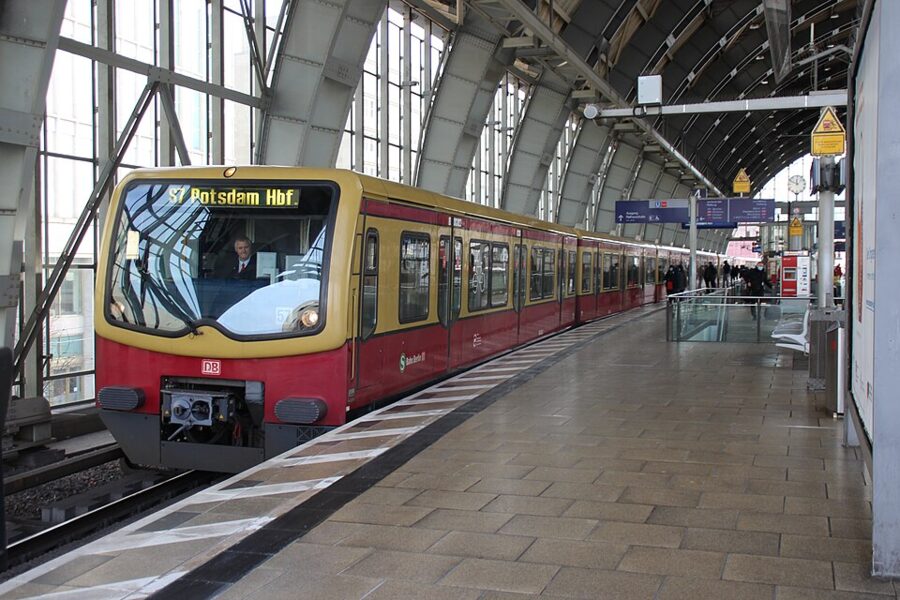
Every ten minutes an S7 leaves Berlin Hauptbahnhof with “Potsdam Hauptbahnhof” on its destination board, and 35 minutes later it lets you out a bridge away from a Prussian royal town. You need nothing more than a €5 ticket, a pair of shoes you trust and a plan that admits one thing up front: you will not see all of Potsdam in a day, and the people who try spend most of it walking between gates.

The town was built to be looked at. Frederick the Great (Friedrich II) put his summer house on a terraced vineyard, his successors lined the lakes with villas and temples, and the gardeners Lenné and Pückler pointed every avenue at something worth seeing. The result is spread across a lot of ground: Sanssouci alone covers about 300 hectares, and the parks, the old town and Babelsberg sit kilometers apart with water between them.

What follows is the practical part: which train, which station, which ticket and what it costs in late 2026 and from January 2027, how to get around once you arrive, what to book, and three one-day plans built around what you actually want from the day. The closures that catch people out are in here too.

Contents10 parts
- What fits into one day, and what does not
- Getting there from Berlin
- Tickets: zones, cards and what to buy
- Getting around Potsdam
- What to book ahead
- Plan one: palaces and parks
- Plan two: old town, Dutch Quarter and Alexandrowka
- Plan three: Babelsberg, the Glienicke Bridge and the lakes
- Where to eat
- How the day changes by season
What fits into one day, and what does not
The real unit of a Potsdam day trip is Sanssouci plus one more area. Sanssouci means the palace on the terraces and enough of the park around it to understand why it is there: the Historic Mill, the Picture Gallery, the Chinese House, perhaps the New Palace at the far western end. The “one more” is either the old town with the Dutch Quarter and the Russian colony of Alexandrowka, or Babelsberg with its palace, its park and the Glienicke Bridge. Trying to add the second area on top of the first turns the afternoon into transit.
The distances explain why. The park runs more than 2 km from east to west, and walking from Sanssouci Palace to the New Palace along the main avenue takes about 30 minutes before you have gone inside anything. From Potsdam Hauptbahnhof to the palace is about 3 km on foot; from the Dutch Quarter to the Neuer Garten, another 2 km; from the old town to Babelsberg Palace, across the Havel, about 3 km more. Each of those walks is pleasant, and each one costs you a palace interior.
There are also places a day trip should leave out on purpose. Cecilienhof, where Truman, Stalin and Churchill (then Attlee) met in July 1945, is closed for restoration until further notice, so the conference rooms are off the table and only the outside and the Neuer Garten around it can be seen. Babelsberg Palace opens its interior only for special events. Peacock Island (Pfaueninsel) belongs to Berlin and needs its own ferry and its own afternoon.
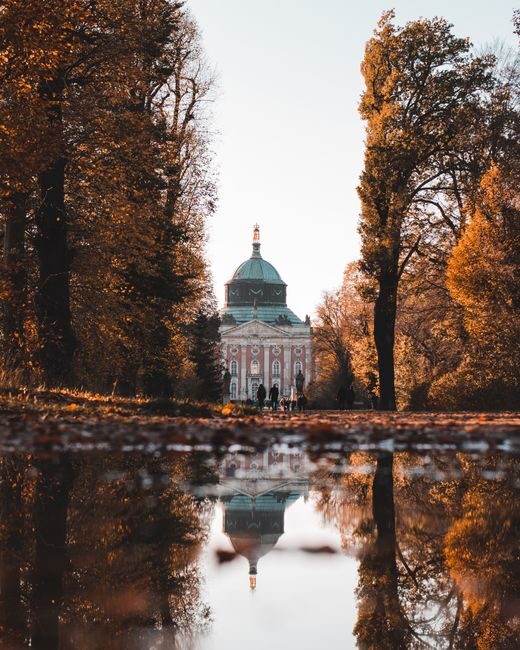
A second day pays when you want both Sanssouci and Babelsberg, when you want to go inside more than two palaces, or when you are coming in summer for the lakes and want an evening on the water. A night in Potsdam also pays in winter, when the palaces close at 16:30 and the light goes even earlier: you can take the last tour, eat in the old town and still have the morning terraces to yourself before the first train from Berlin arrives.
Getting there from Berlin
Potsdam sits in fare zone C of the Berlin network, about 25 km southwest of the center, and there are three ways in from Berlin. For most people the choice is between the S-Bahn, which is frequent and stops everywhere, and the regional train, which is faster and less frequent. A boat from Wannsee covers the same ground slowly and beautifully in the warm months.
S-Bahn S7
The S7 runs every ten minutes for most of the day along the Stadtbahn through central Berlin and on through Charlottenburg, Grunewald and Wannsee. In the November 2026 timetable it takes 35 minutes from Berlin Hauptbahnhof to Potsdam Hauptbahnhof, 38 from Friedrichstraße and 29 from Zoologischer Garten. It is the slow option only on paper: when you add the wait for a regional train, the S7 often arrives first.
The S7 also stops at the two Potsdam stations that matter for Babelsberg. Griebnitzsee, the first stop inside Potsdam, sits on the lake of the same name, and Babelsberg is the stop for the Bohemian weavers’ quarter, the film studios and the park. Both are a few minutes before Potsdam Hauptbahnhof.
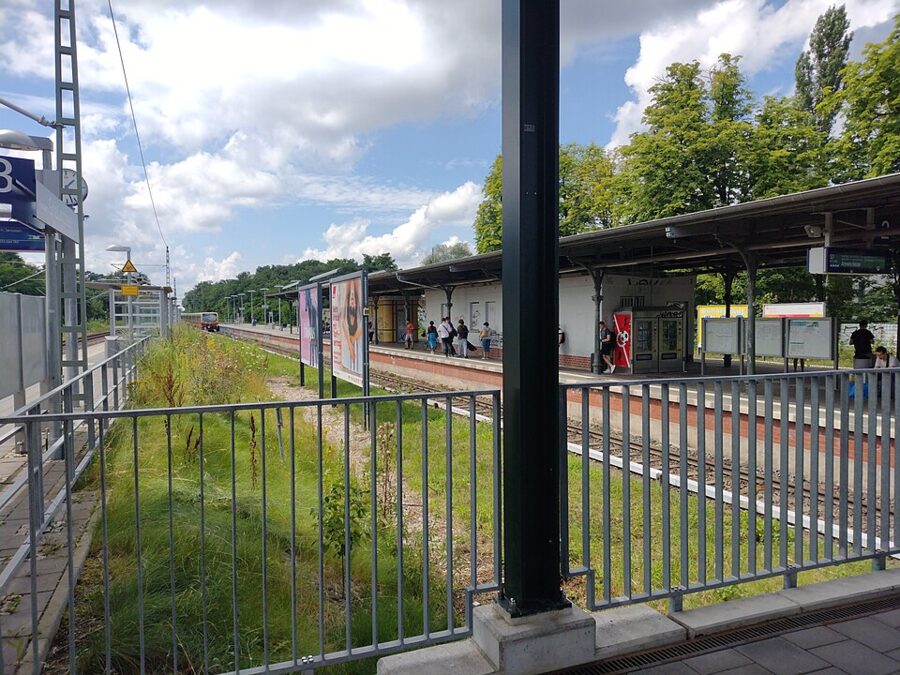

Regional trains: the RE1 and the short hop to the park
The regional express RE1 is the fast way. From mid-December 2026 it runs from central Berlin about three times an hour, stopping at Ostbahnhof, Alexanderplatz, Friedrichstraße, Hauptbahnhof, Zoologischer Garten, Charlottenburg and Wannsee; the timetable gives 28–29 minutes from Hauptbahnhof and 21 from Zoo. Once an hour an RE1 runs on beyond Potsdam Hauptbahnhof to Charlottenhof and Park Sanssouci, which puts you at the park’s western end without a change.
Until the timetable change in mid-December 2026, the RE1 starts at Charlottenburg rather than in the center. If you are traveling before then, take the S-Bahn to Charlottenburg and change there, or simply stay on the S7: the time saved disappears in the change.
From Potsdam Hauptbahnhof the regional lines RB21 and RB22 run on to Charlottenhof (two minutes) and Park Sanssouci (five minutes). This is the most useful train ride in Potsdam and the least used: it drops you beside the New Palace and saves a 45-minute walk across town. One warning: an ICE also runs between Berlin and Potsdam Hauptbahnhof, and a VBB ticket or the Deutschlandticket is not valid on it.
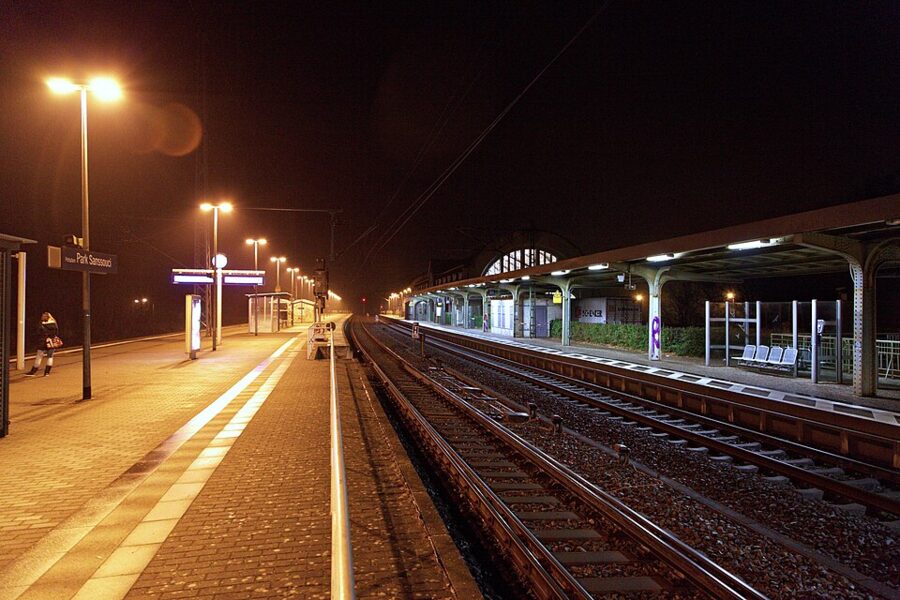

Which station to get off at
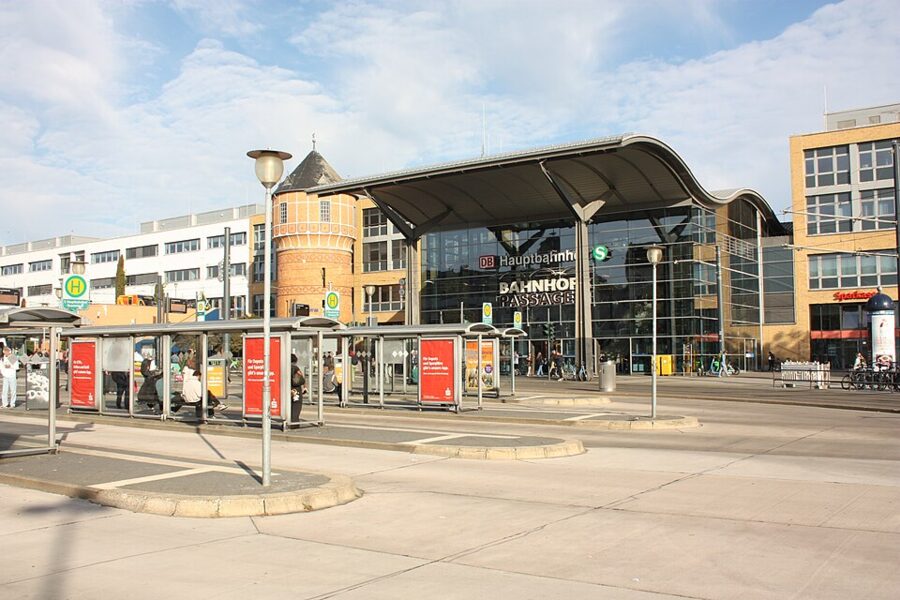
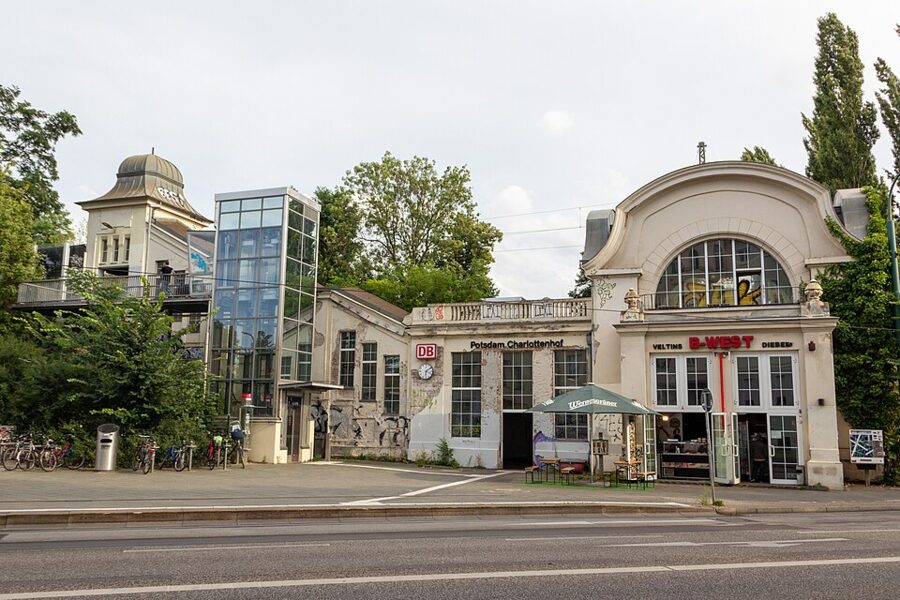
Potsdam Hauptbahnhof is the right stop for the old town, for the trams and buses to Sanssouci and the Neuer Garten, and for the boat landings by the Lange Brücke. Park Sanssouci is the right stop if your day starts at the New Palace and works east. Charlottenhof is the right stop for Charlottenhof Palace and the Roman Baths in the southern part of the park. Griebnitzsee and Babelsberg are the stops for the Babelsberg plan, and both lie on the S7 before Potsdam Hauptbahnhof.

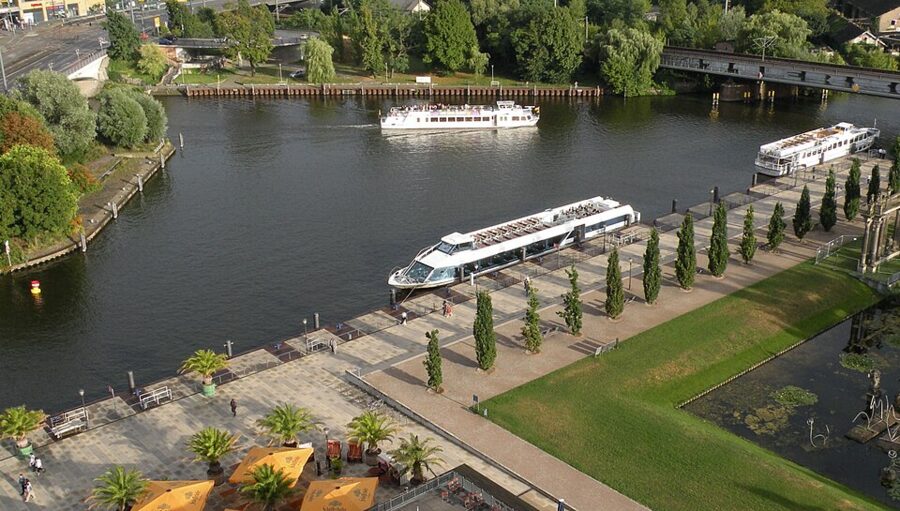
By boat from Wannsee
From late March to autumn, Stern und Kreis runs its World Heritage cruise from Wannsee (Weltkulturerbefahrt, line H2) from the landing at Kronprinzessinnenweg, a short walk from S-Bahn Wannsee. In the published 2027 timetable the boats leave Wannsee at 11:15 and 14:20, pass Peacock Island, the Church of the Redeemer at Sacrow, the Glienicke Bridge and Babelsberg Palace, call at the Cecilienhof landing after an hour and reach Potsdam’s Lange Brücke 1 hour 45 minutes after leaving.
The neat trick is to use it one way. Take the 11:15 boat out, spend three hours in the old town or the Neuer Garten, and catch the return from the Lange Brücke at 16:00, or take the S-Bahn back. The boats are not step-free, and you cannot bring your own food on board.

Tickets: zones, cards and what to buy
Berlin’s network is split into three fare zones. Zone A is the city inside the S-Bahn ring, zone B runs out to the city boundary, and zone C takes in about 15 km beyond it, including the city of Potsdam. A ticket for Berlin ABC therefore covers the S-Bahn and regional trains from Berlin and every tram and bus inside Potsdam. Fares rise on January 1, 2027, so here are both sets.
| Ticket | Until December 31, 2026 | From January 1, 2027 |
|---|---|---|
| Single ticket Berlin ABC (one direction, 120 minutes) | €5 | €5.20 |
| 24-hour ticket Berlin ABC | €12.90 | €13.20 |
| 24-hour small group ticket Berlin ABC (up to five people) | €37.70 | €39.10 |
| Extension ticket for zone C (added to an AB ticket) | €2.40 | €2.50 |
| Single ticket Potsdam AB (inside Potsdam only) | €3 | €3.10 |
| 24-hour ticket Potsdam AB (inside Potsdam only) | €6.30 | €6.60 |
| Berlin WelcomeCard ABC, 48 hours | €34.50 | not yet published |
| Deutschlandticket (monthly subscription) | €63 | €66.80 |
Single tickets or a 24-hour ticket
A single ticket Berlin ABC is valid for 120 minutes in one direction, changes included, but not for a return trip. Two of them, out and back, cost €10, and every tram or bus ride inside Potsdam would need another ticket on top. The 24-hour ticket Berlin ABC at €12.90 covers all of it for a full 24 hours from validation, and a regular-fare 24-hour ticket also carries up to three children aged 6 to 14. For a day trip it is the ticket I would buy.
Groups should look at the small group 24-hour ticket, which covers up to five people for €37.70; three adults already come out ahead of three separate day tickets. If you already hold a Berlin AB ticket, for instance a weekly pass, the zone C extension at €2.40 covers one trip into Potsdam. Buy tickets from the machines on the platforms or in the BVG and DB apps, and validate paper tickets before boarding.

The Deutschlandticket
The Deutschlandticket covers every S-Bahn, regional train, tram and bus in Germany, which includes the whole trip to Potsdam and everything inside it. It costs €63 a month until the end of 2026 and €66.80 from January 1, 2027. It is sold only as a monthly subscription, cancelable month by month, so it is worth buying for a Potsdam day only if you are staying in Germany long enough to use it elsewhere. It does not cover the ICE or the cruise boats.
The Berlin WelcomeCard, and the Potsdam Card that is gone
The Berlin WelcomeCard bundles a transport ticket with discounts at partners in Berlin and Potsdam. Only the ABC version reaches Potsdam: the 48-hour card costs €34.50 for zones ABC against €28.50 for AB, and an AB card cannot be extended into zone C. In Potsdam it brings reduced entry at the Museum Barberini, among others. It pays if you are also sightseeing hard in Berlin during the same 48 hours.
Older guides recommend a Potsdam Card. It is no longer on the tourist office’s list: its arrival advice for day-trippers now points to the Berlin WelcomeCard ABC, and its own card is a free stamp card for tours and boat trips booked at its counters. For most day-trippers the plain 24-hour ticket plus the palace ticket below is the cheaper pair.
Getting around Potsdam
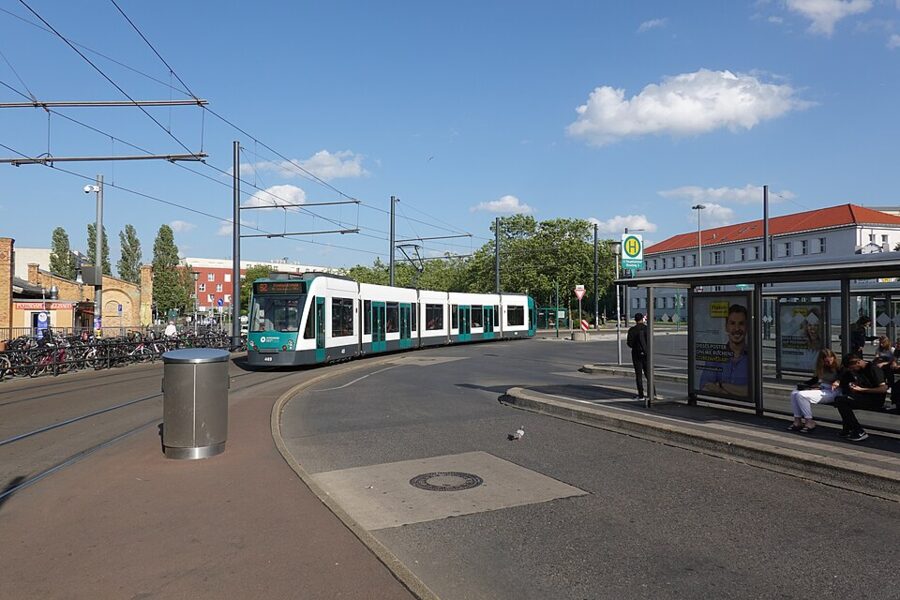
Potsdam’s trams and buses are run by ViP (Verkehrsbetrieb Potsdam) and nearly all of them start at Potsdam Hauptbahnhof. You need only a handful of lines, and the old town in between is small enough to walk.
Trams and buses
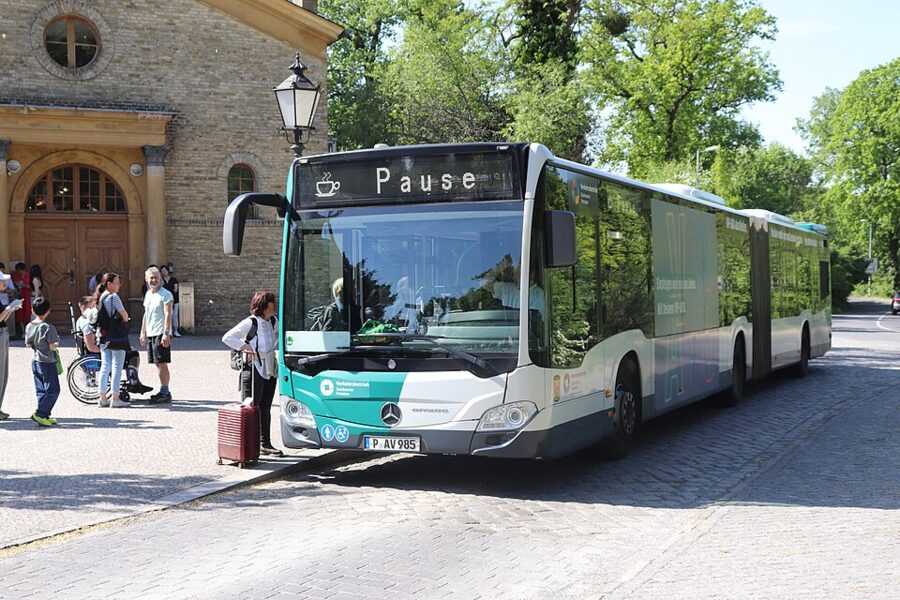
- Bus 695 to Sanssouci Palace: every 20 minutes from the station, 16 minutes to the “Schloss Sanssouci” stop, then on along the top of the park to the Orangery and the Dragon House (Drachenhaus).
- Bus 605 to the New Palace: every 20 minutes, 16 minutes to “Neues Palais”.
- Tram 91 to Luisenplatz-Süd/Park Sanssouci: 7 minutes, for the Brandenburger Tor, the Friedenskirche and the eastern gate of the park.
- Trams 92 and 96 north through the old town: 7 minutes to Nauener Tor at the edge of the Dutch Quarter, about 10 minutes to Puschkinallee in Alexandrowka.
- Tram 93 to the Glienicke Bridge: 12 minutes via Alter Markt/Landtag and Schiffbauergasse.
- Buses 601 and 690 to Filmpark Babelsberg: about 12 minutes from the station, 6 from S-Bahn Babelsberg.
- Bus 616 from S-Bahn Babelsberg to Babelsberg Palace: about 7 minutes.

On foot
Walking is the best way to read Potsdam, because the town was laid out on sightlines. From Potsdam Hauptbahnhof cross the Lange Brücke to the Alter Markt (about 600 m), go north past the Nikolaikirche and up to the Dutch Quarter (about 1 km), and turn west along Brandenburger Straße to the Brandenburger Tor (about 800 m more). From the gate the Allee nach Sanssouci leads to the park’s eastern entrance, and the palace sits about 1 km beyond it at the top of the terraces.
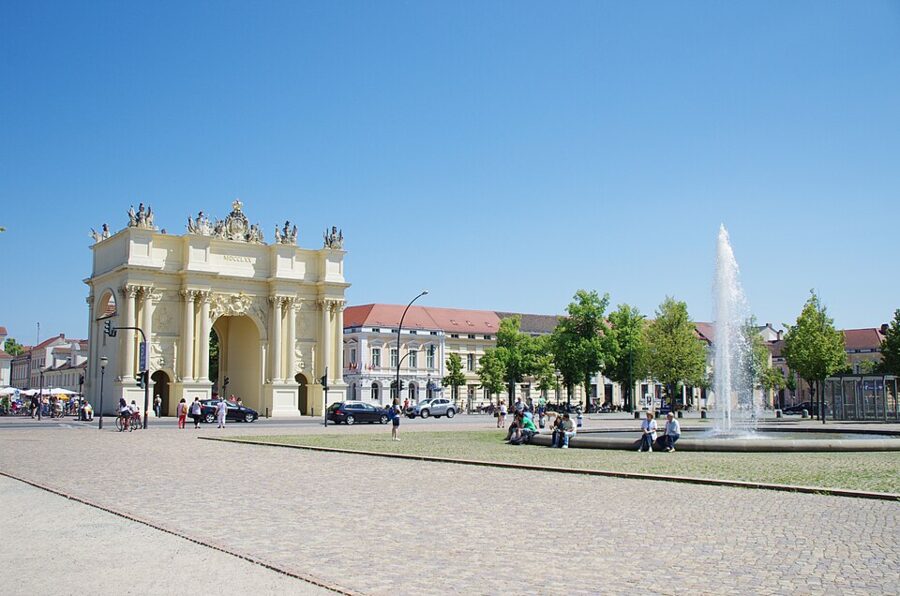

Count on roughly 40 minutes from the station to Sanssouci Palace on foot if you go straight, and much longer if you stop. Inside the park, the main avenue (Hauptallee) from the Great Fountain to the New Palace is about 2 km and takes half an hour.
Bikes
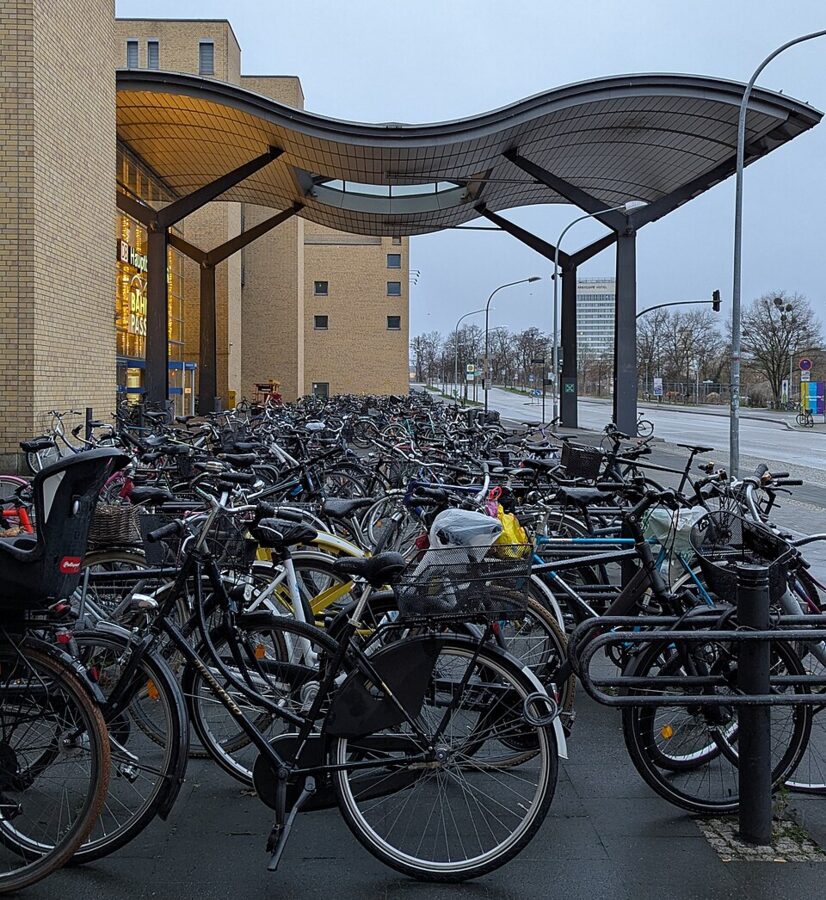
A bike changes the arithmetic for the Babelsberg plan, where the sights lie along the shore. The bike station inside Potsdam Hauptbahnhof and a second one at Griebnitzsee station rent bikes and run guided rides. In Park Sanssouci, though, cycling is allowed only on signed paths, and you may not even push a bike elsewhere, so a bike is for getting between areas rather than for touring the park.

What to book ahead
Most of Potsdam can be done on the day. Two things cannot, reliably: the timed entry to Sanssouci Palace, and, on weekends, the Museum Barberini.
Sanssouci Palace: timed entry
Entry to Sanssouci Palace runs on fixed time slots, and the number of tickets per day is limited. Same-day tickets go on sale 30 minutes before the palace opens at the visitor center by the Historic Mill (Historische Mühle), and on a busy summer day the good slots go early. A single ticket costs €14, reduced €10. The palace is closed on Mondays; from April to October it opens Tuesday to Sunday 10:00–17:30, from November to March 10:00–16:30, with last entry 30 minutes before closing.
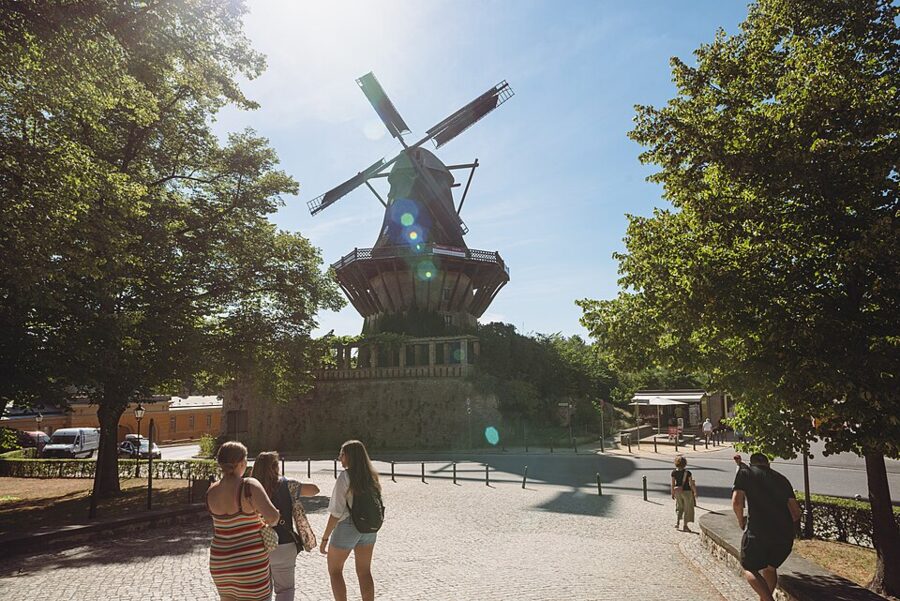

The single ticket is sold only on the day; the one way to fix a slot in advance is to book the Sanssouci+ ticket below online, worth doing if your day has a fixed shape, especially from May to October and at weekends. A morning slot is worth the effort: the terraces face south, and at 10:00 you see them in clean light before the tour groups arrive from Berlin. Around the holidays, the palaces close on December 24 and 25, close early (14:30) on December 31, and open at 11:00 on New Year’s Day.
The Sanssouci+ ticket
The Sanssouci+ ticket covers one visit, on one day, to each of Potsdam’s palaces run by the Prussian Palaces and Gardens Foundation (SPSG) that is open, with a timed slot at Sanssouci Palace and, if you want it, a second timed slot at the New Palace. It costs €22 (reduced €17) in 2026 and €24 (reduced €20) in 2027; a family version for two adults and up to four children costs €49. It excludes Sacrow Palace, the Jagdschloss Stern and special exhibitions.
Sanssouci Palace alone is €14 and the New Palace’s Grand Tour is another €14 in 2026 (€16 in 2027), so the combination already beats two separate tickets. Add a summer-only building or two and it is clearly the right buy. If you plan to go inside only Sanssouci Palace, buy the single ticket. Holders also get reduced entry at the Museum Barberini on the day before, the day of or the day after their palace visit.
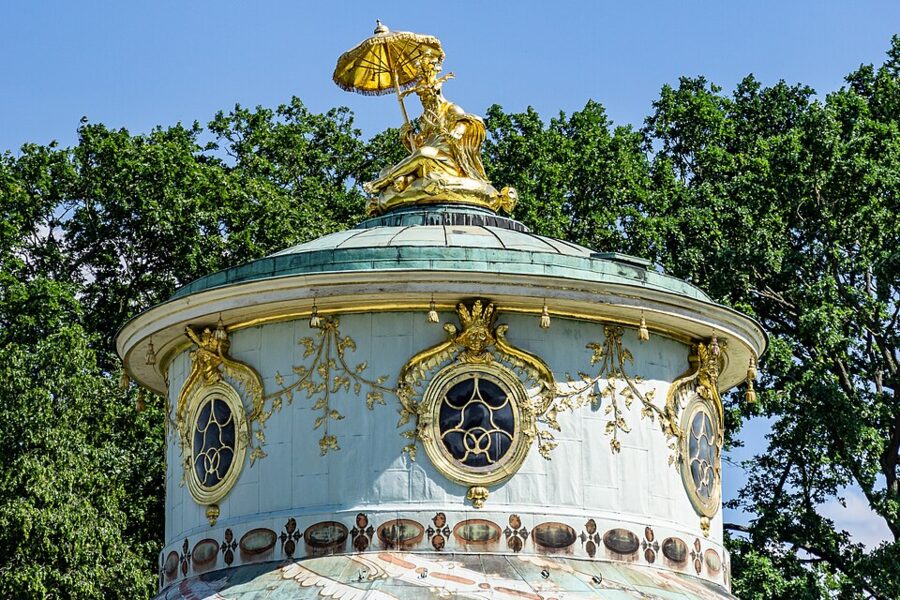

In the summer season a cheaper card, the Flanierkarte, covers the smaller houses of the park in one day for €10: the Palace Kitchen, the New Chambers, the Picture Gallery, the Chinese House and Charlottenhof Palace. All five open from April to October, Wednesday to Sunday, 10:00–17:30, and close entirely from November into April.
Museum Barberini
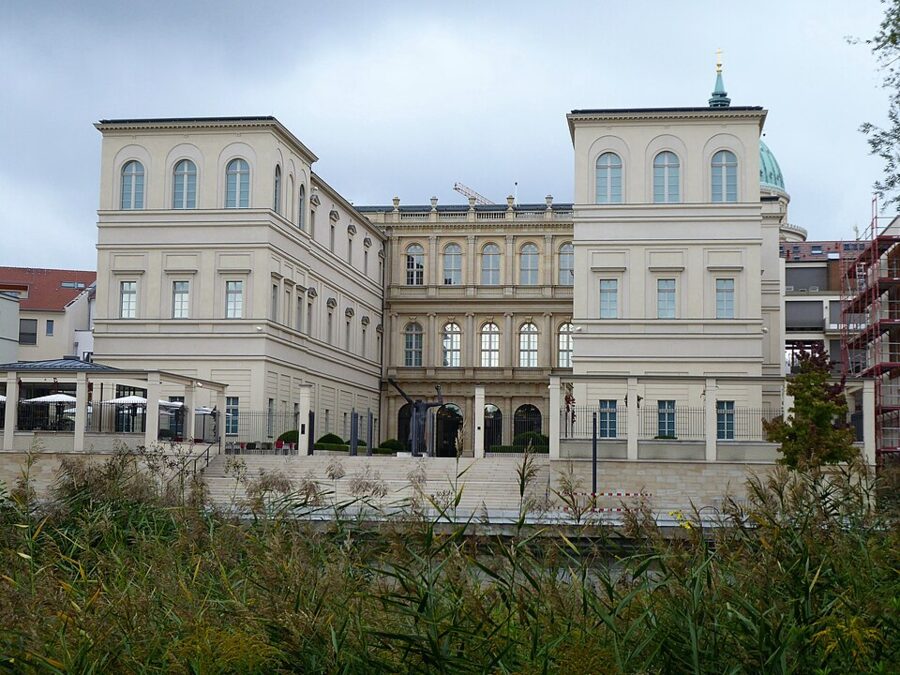
The Museum Barberini on the Alter Markt shows its Impressionist collection alongside changing exhibitions, and it controls numbers with time slots. Tickets cost €16 Monday to Friday and €18 at weekends and on public holidays, dropping to €10 after 17:30; under-18s go free but still need a free slot ticket. It opens 10:00–19:00 every day except Tuesday. Book a slot for a weekend or a popular exhibition, and plan on the bag check and the free cloakroom at the door.

Filmpark Babelsberg
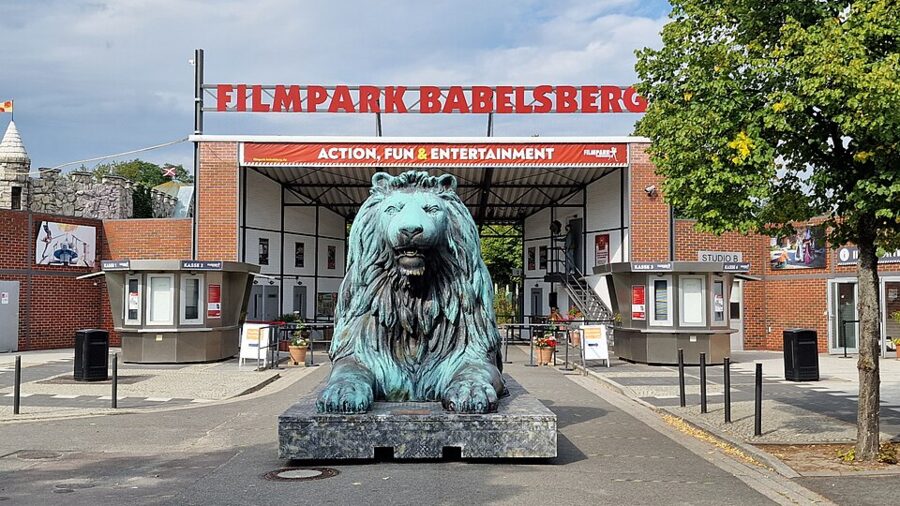
The Filmpark Babelsberg, the theme park beside the film studios, is seasonal: in 2026 it opened in spring and ran its last horror nights in early November, and it is closed through the winter apart from an indoor ice rink in the Metropolis hall from December 6, 2026 to February 6, 2027. In season it opens 10:00–18:00, and the tickets are €25 online against €30 at the gate (children €18 online).

Mondays, Tuesdays and winter
The closing days are where day trips go wrong. Sanssouci Palace closes on Mondays all year, and the Museum Barberini on Tuesdays. The New Palace normally closes on Mondays too, but in November and December 2026 it swaps to Tuesdays, with an extra opening on Tuesday, December 29.
So a Monday in winter can still include the New Palace and the Barberini, and a Tuesday still includes Sanssouci, but no day of the week is perfect for everything.
From November to March the summer houses close, and the New Palace is shown only on guided tours in German, with information in other languages. The Marble Palace (Marmorpalais) in the Neuer Garten opens only at weekends, 10:00–16:00, and the Historic Mill opens only at weekends and closes completely in December. The foundation’s holiday hours list the exceptions.
Plan one: palaces and parks
This is the classic day, and the one to choose if you will only ever come once. Take the S7 or RE1 to Potsdam Hauptbahnhof, then the regional train two stops to Park Sanssouci, and walk ten minutes through the western gate to the New Palace. Start there at opening time. The Grand Tour takes you through the four festival halls and the guest apartments, including the Grotto Hall, whose walls of shells, minerals and glass were restored and returned to the tour recently.
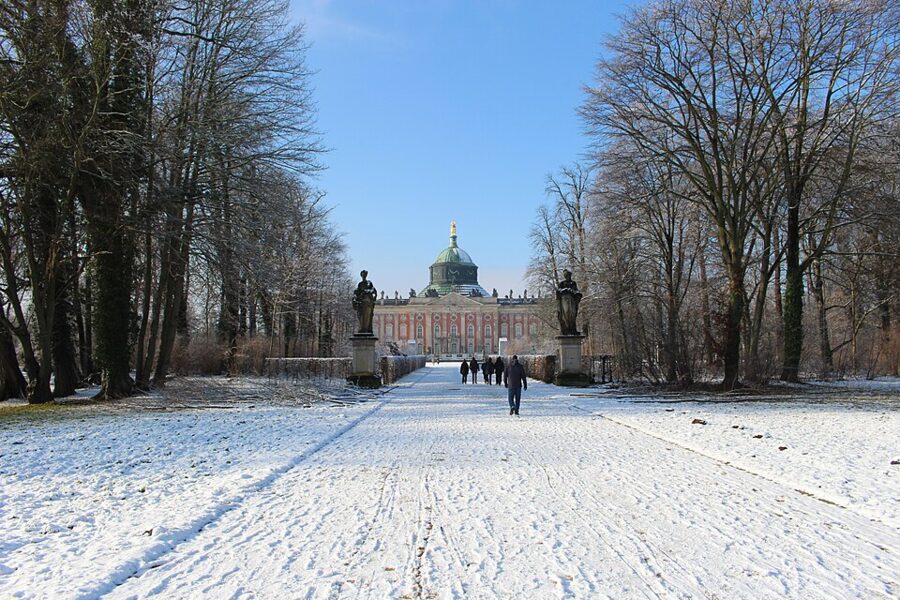

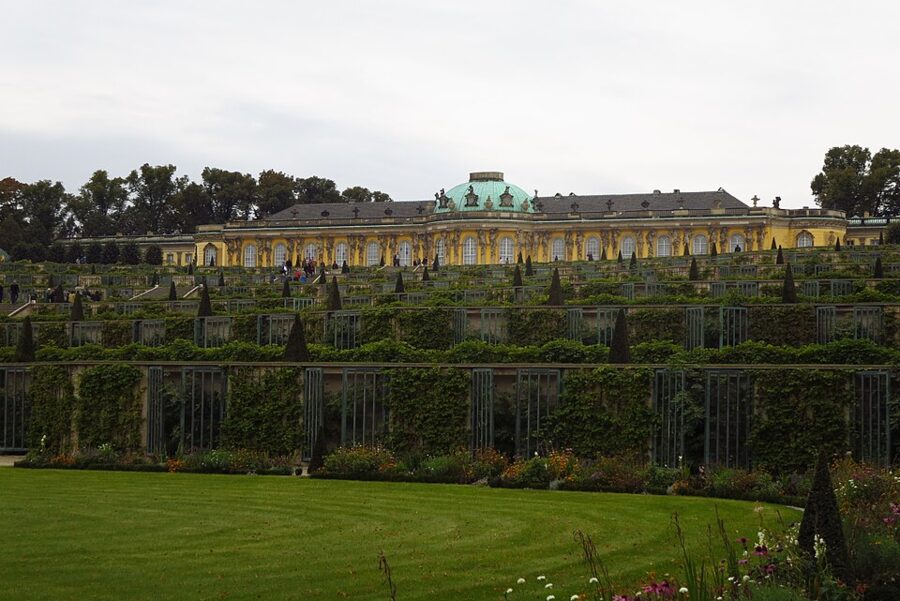
From the New Palace walk east along the Hauptallee, the main avenue, which runs dead straight for about 2 km to the Great Fountain. Halfway along, turn south for a look at the Chinese House, then come back to the avenue. The point of walking it in this direction is the reveal at the end: the avenue opens onto the fountain basin, and the vineyard terraces rise directly ahead with the palace on top.
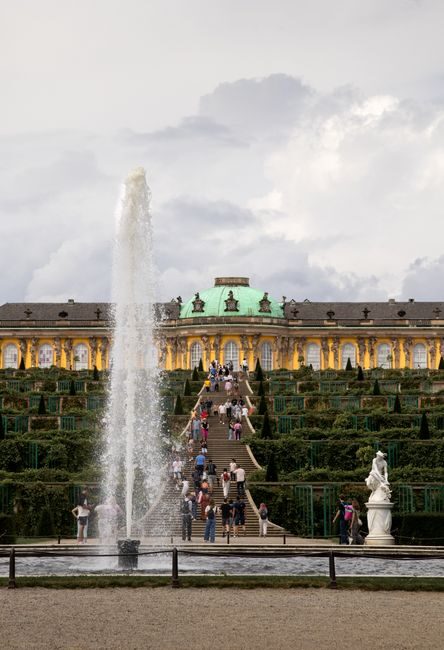
Climb the terraces to your timed slot at Sanssouci Palace. The palace is a single story and a short row of rooms, which is exactly what Frederick wanted: a summer house for himself, his books, his flute and his dogs, with Voltaire as a guest. Plan for a lunch break at the top of the park: the Dragon House is about 15 minutes’ walk west, past the Orangery, or two stops on bus 695.

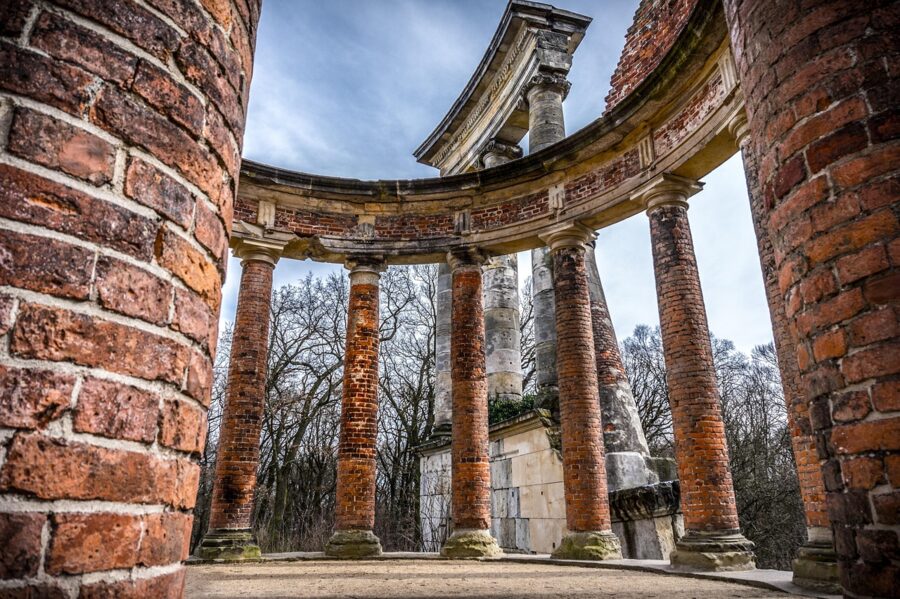
In the afternoon, walk east past the Picture Gallery to the park’s eastern gate, the Obelisk entrance, and follow the Allee nach Sanssouci down to the Brandenburger Tor. Tram 91 from Luisenplatz takes you back to the station in seven minutes; the S7 does the rest. In summer add the Chinese House or Charlottenhof on the Flanierkarte, and climb the Ruinenberg above the park for the view south over the terraces.
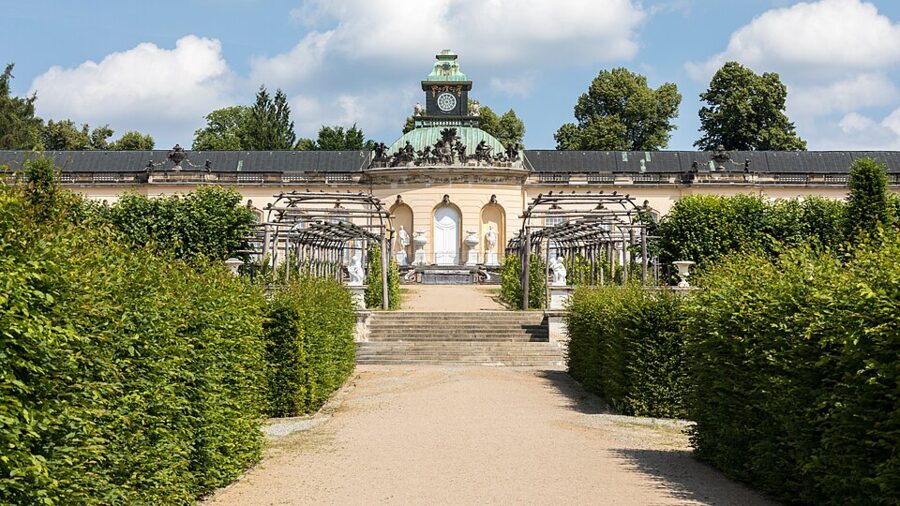

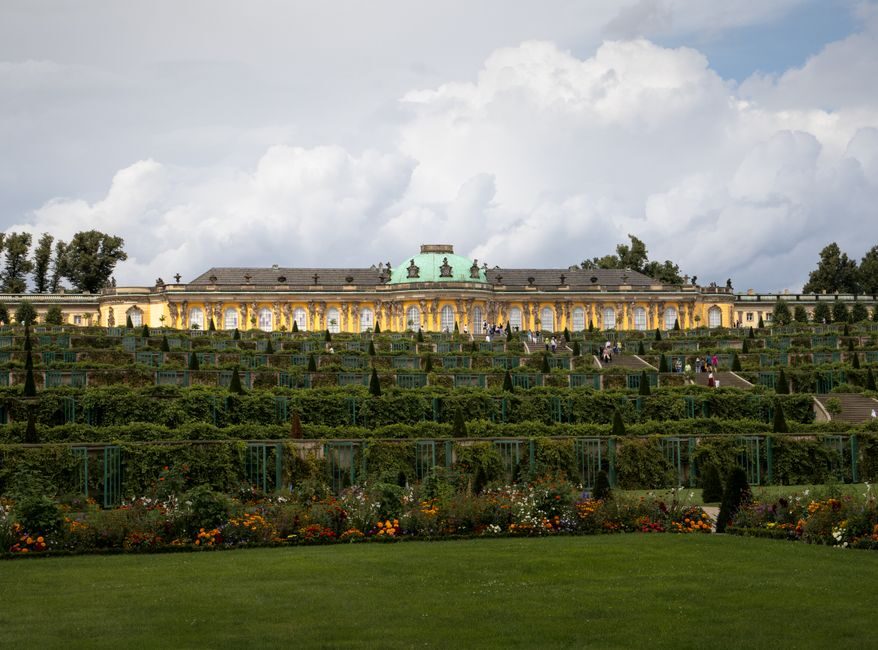
If you have time and energy for one more thing, the Historic Mill costs €5 to go inside. It opens daily 10:00–18:00 from April to October, only at weekends in November and from January to March, and not at all in December.
Plan two: old town, Dutch Quarter and Alexandrowka
This is the day for people who like towns more than palaces, or who have already seen Sanssouci. It suits winter well, because almost none of it depends on opening hours. Start at the station, cross the Lange Brücke and stand on the Alter Markt. Everything here is either old or rebuilt to look it: the domed Nikolaikirche by Schinkel’s plans, the Old Town Hall, the Barberini, and the Stadtschloss, rebuilt in 2010–2013 as the state parliament (Landtag) of Brandenburg.
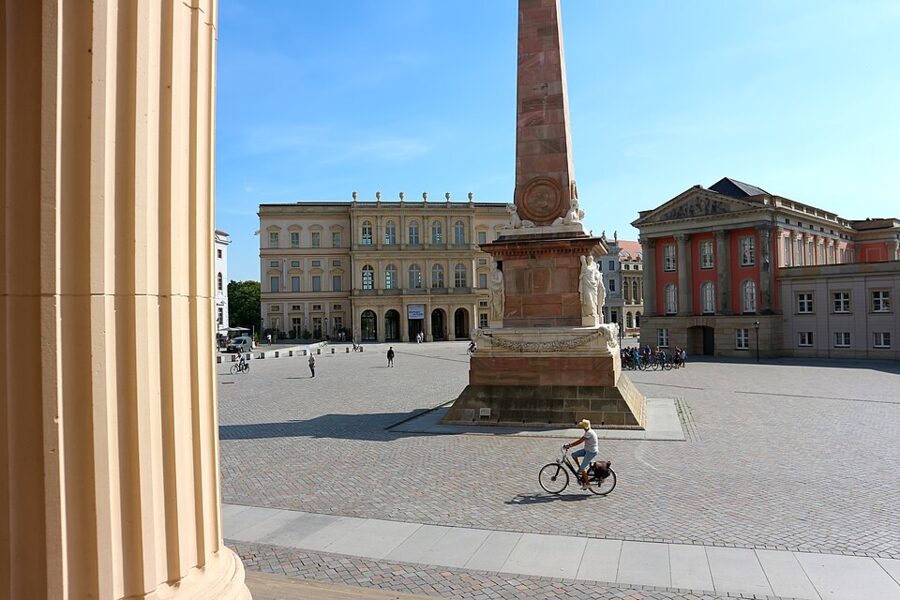

Go inside the Barberini at opening time if the current exhibition appeals; give it two hours. Then walk two blocks north to the Garrison Church, whose tower was rebuilt between 2017 and 2024. This is the church where Hitler and Hindenburg staged the “Day of Potsdam” in March 1933, which is why the rebuilding was so bitterly contested; the tower now holds an exhibition on that history and a viewing platform at 57 m.
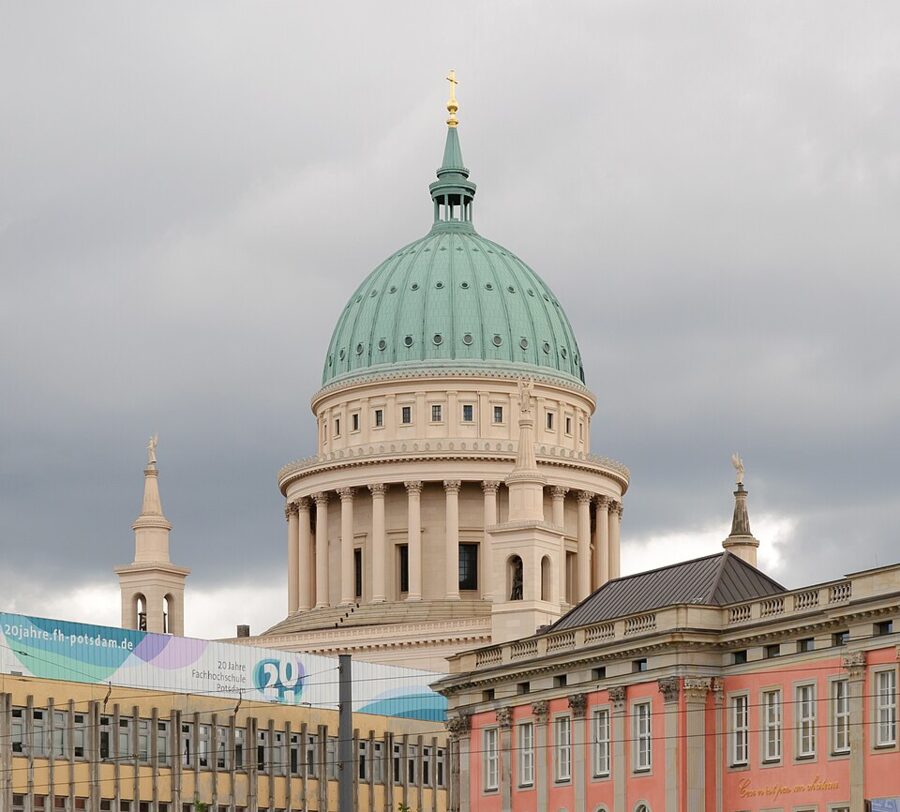

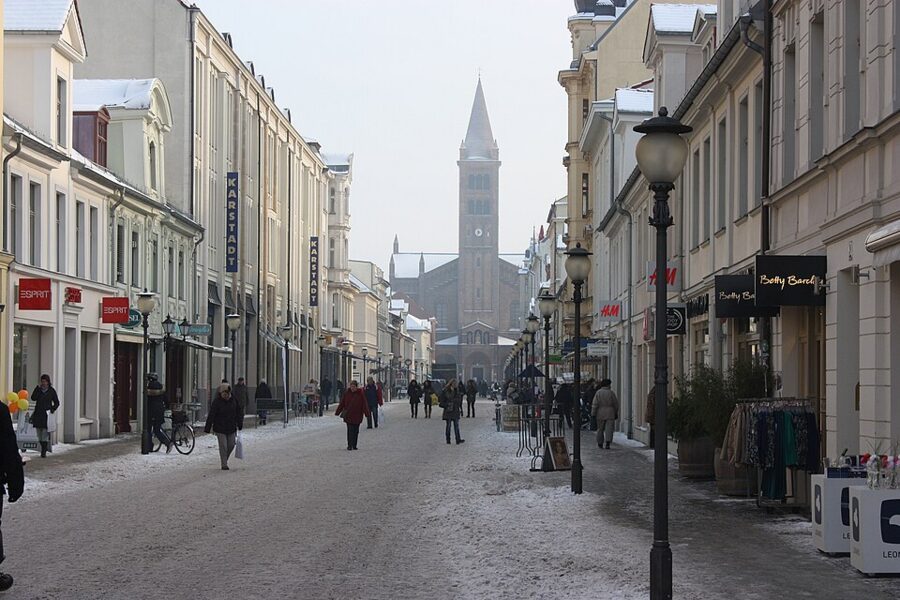
From the Garrison Church, walk north up Dortustraße or Lindenstraße to Brandenburger Straße, the pedestrian street that runs dead straight from the Brandenburger Tor to the church of St. Peter and Paul. Walk it east, toward the church, and turn north at its end into the Dutch Quarter. Its 134 brick houses were built between 1733 and 1742 under the Dutch master builder Jan Bouman for craftsmen the Soldier King hoped to lure from Holland; too few came, and traders, artists and soldiers moved in instead.

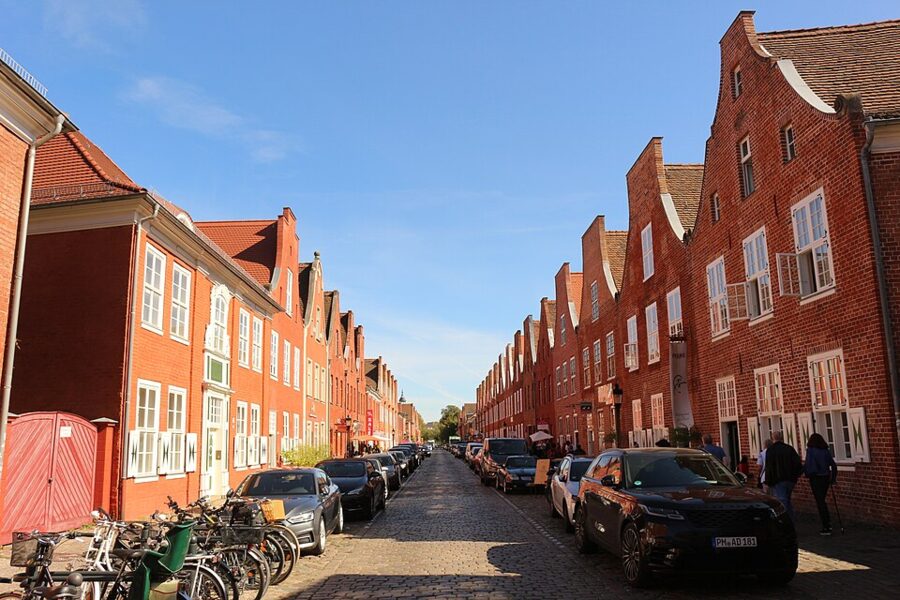

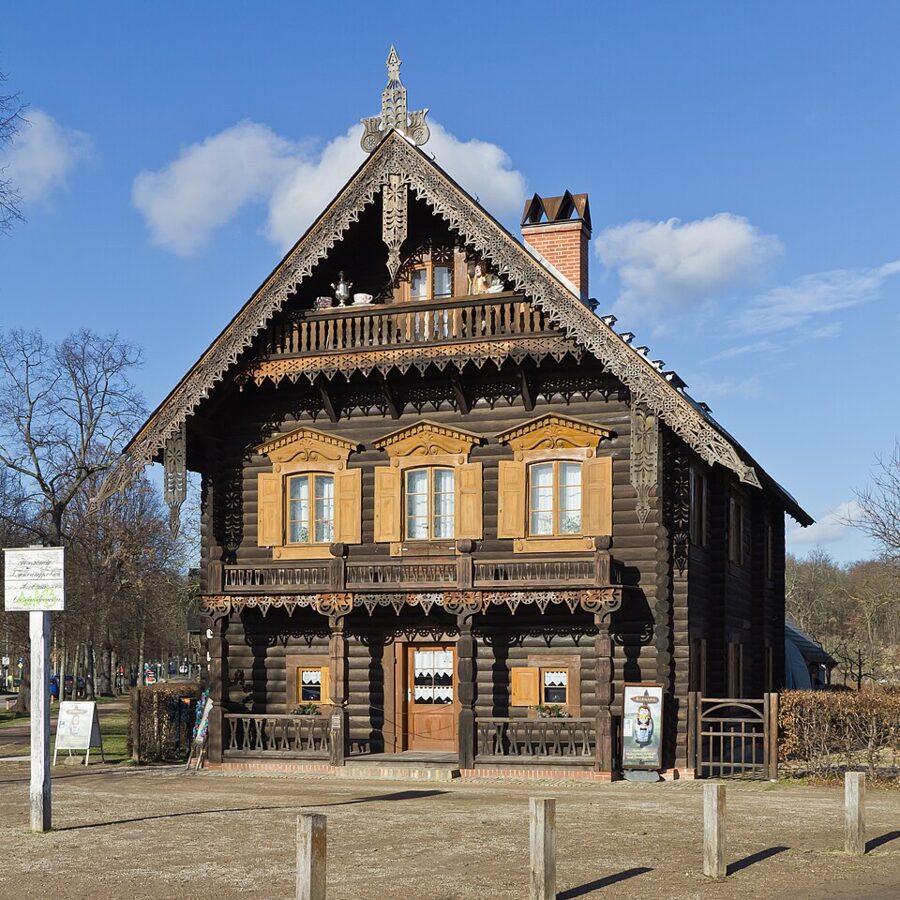
Lunch in the Dutch Quarter or at the Nauener Tor at its northwest corner, then take tram 92 or 96 two stops north to Puschkinallee, or walk the 1.2 km. Alexandrowka is a colony of twelve farmsteads laid out in 1826–1828 by Lenné as an oval racecourse crossed by a St. Andrew’s cross. King Frederick William III (Friedrich Wilhelm III) built it for the last twelve Russian singers of a soldiers’ choir left in Potsdam after the Napoleonic wars and named it for Tsar Alexander I; the Russian Orthodox church of Alexander Nevsky on the hill behind was consecrated in 1829.

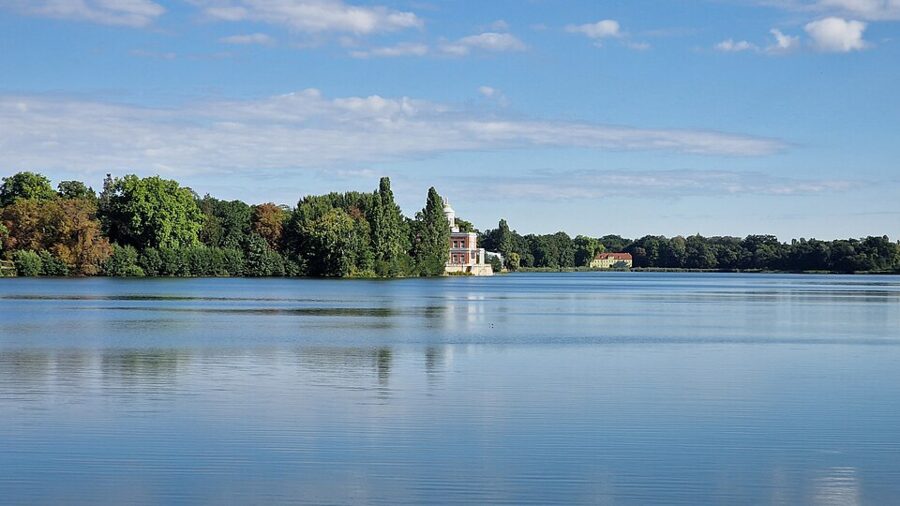
From Alexandrowka walk northeast about 2 km to the Neuer Garten on the Heiliger See. Cecilienhof is closed, but the garden is open, and the Marble Palace stands on the lake shore; in winter it opens at weekends, 10:00–16:00, and from April to October Wednesday to Sunday, for €8. Finish at the Meierei, the brewpub on the shore of the Jungfernsee at the north end of the garden, then take bus 603 back toward the center.

Plan three: Babelsberg, the Glienicke Bridge and the lakes
This is the day for people who like water, the Cold War and the nineteenth century, and the one that rewards a bike. Take the S7 to Babelsberg and bus 616 to Babelsberg Palace, or walk up through the park from the shore. The interior of the palace opens only for special events, but the terraces around it are the point: Pückler called them “palace rooms under the open sky,” and since the restoration of the facade and terraces was finished in 2016, the fountains around the palace run again from April to October for the first time in about a century.
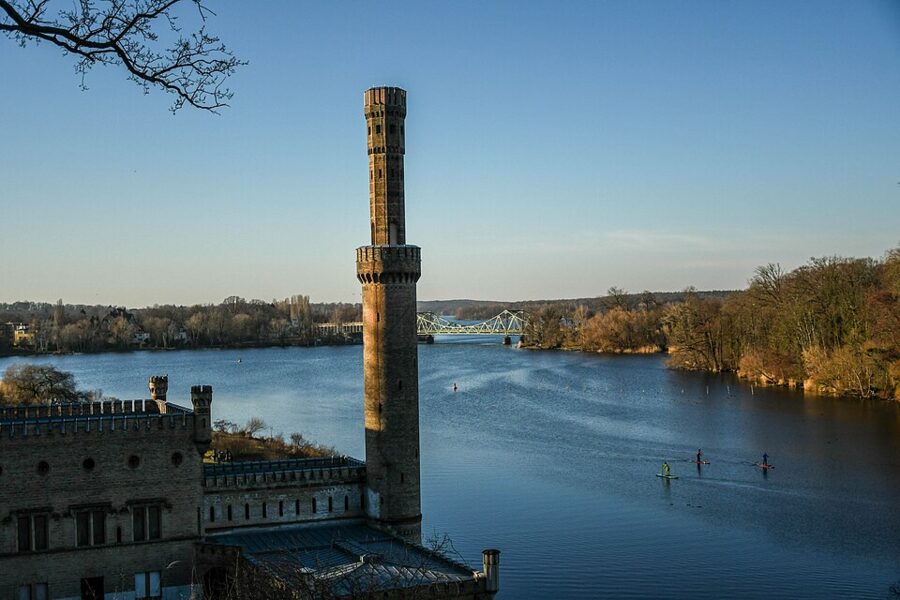

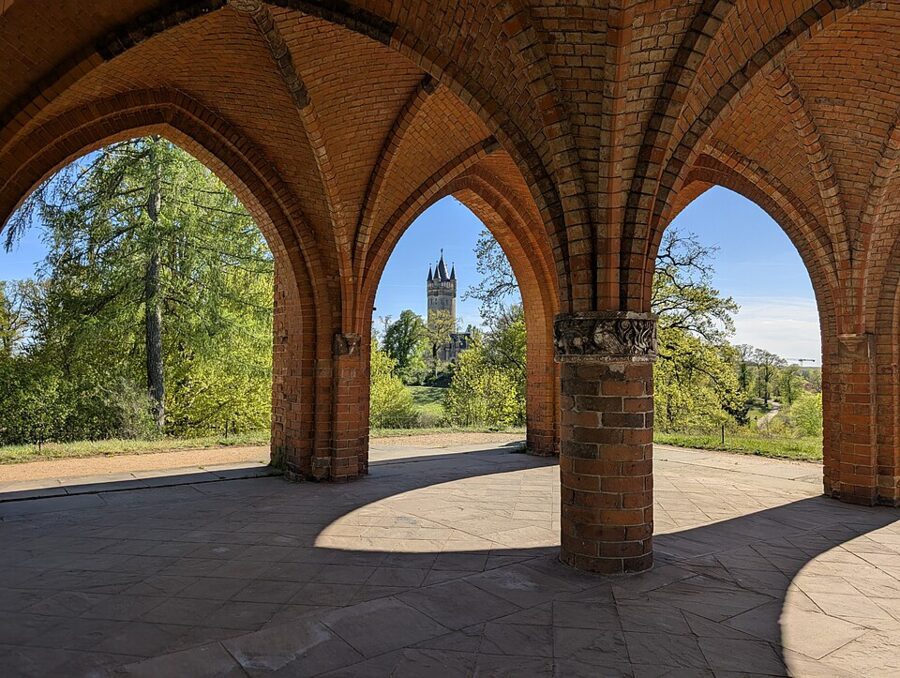
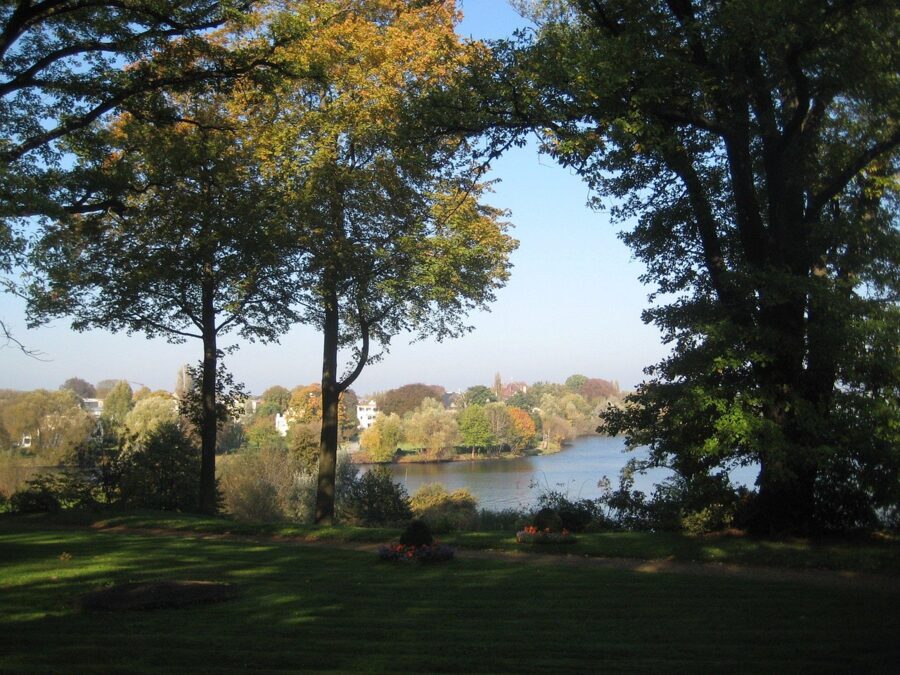
Babelsberg park climbs and dips along the shore of the Tiefer See and the Glienicker Lake, and it hides its buildings in the folds. Find your way uphill to the Flatow Tower, a 46 m neo-Gothic lookout built in 1853–1856; it opens only at weekends from April to October, for €5. The park’s paths let you look straight across the water to the Glienicke Bridge, and it was in this park, on September 22, 1862, that William I talked Bismarck into becoming his prime minister.

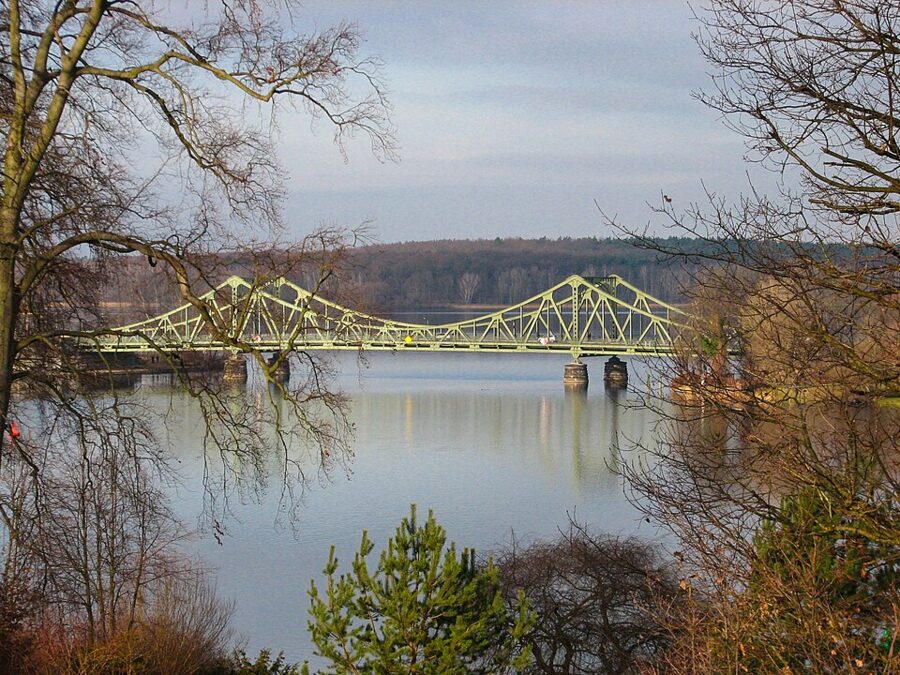
From Babelsberg, go to the Glienicke Bridge. Tram 93 runs there from the center, and the bridge stop is beside it. The steel truss bridge of 1907 carried the border between East Germany and West Berlin across its middle, and three exchanges of prisoners and agents took place on it: Rudolf Abel for Francis Gary Powers on February 10, 1962, a larger exchange on June 11, 1985, and the last on February 11, 1986.
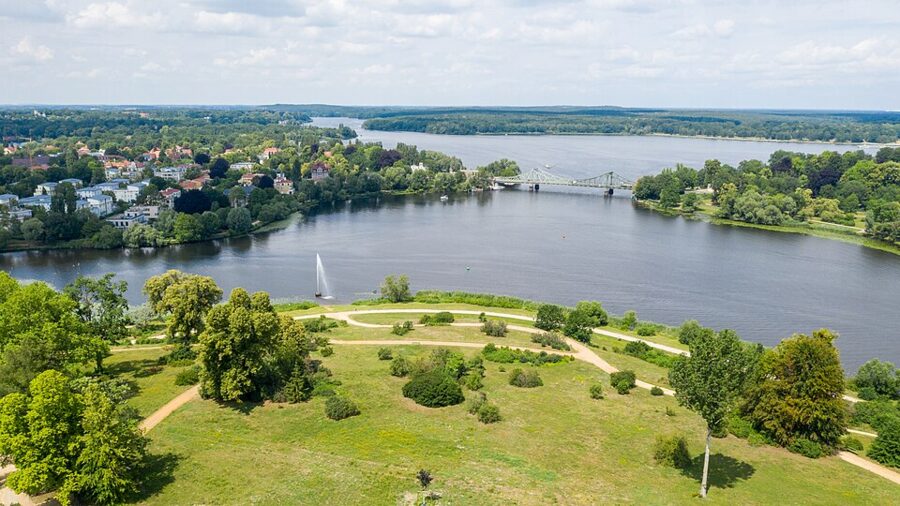

Walk across to the Berlin side and back; the old border, and today the boundary between Brandenburg and Berlin, runs across the middle. Then take tram 93 back toward the center, or, in summer, pick up the boat at the Lange Brücke for the loop past Babelsberg Palace and Peacock Island. If the Filmpark is open and you have children with you, swap the Flatow Tower for the Filmpark.

Where to eat
Potsdam’s eating is mostly a matter of being in the right place at lunch, because the parks are big and the cafés in them few. These are places I could show open in late 2026, with the hours they publish.
Lunch near Sanssouci
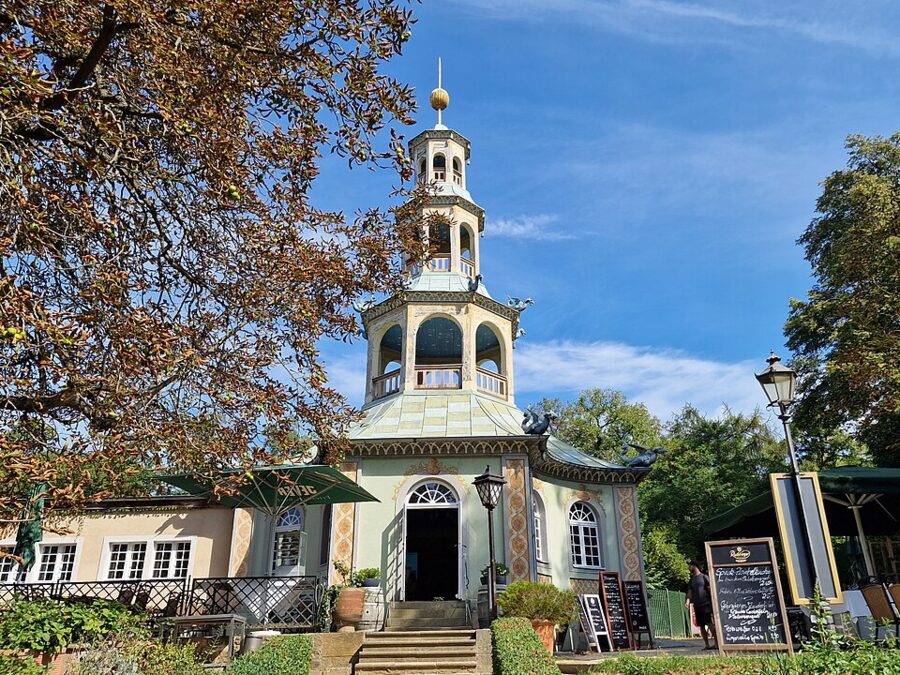
The Dragon House (Drachenhaus) is the restaurant inside the park, in a pagoda built in 1770 for the vintner of a vineyard on the Klausberg. It has two historic rooms and three sun terraces. From April to October it opens daily 11:00–19:00; in November, December and March Thursday to Sunday 12:00–18:00; in January and February only at weekends.

The old town and the Dutch Quarter
Café Heider has stood at the Nauener Tor, at the corner of the Dutch Quarter, since 1878. It roasts its own coffee and bakes its own cakes, opens daily 09:00–21:00, and serves hot food from 12:00 to 20:00, which makes it the easiest lunch on plan two. The Barberini’s café does light meals, quiches and cakes and, in summer, has tables in the courtyard over the Alte Fahrt arm of the Havel; it takes no reservations during museum hours.
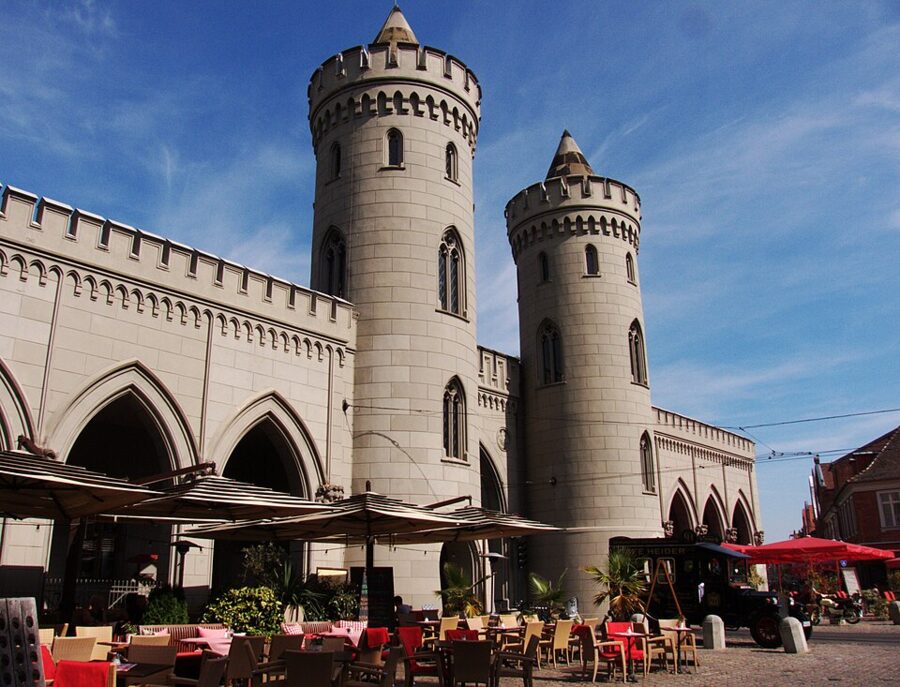

For the cafés of the Dutch Quarter itself, walk Mittelstraße and Benkertstraße and pick by the window: the quarter has more cake per square meter than anywhere else in town. Brandenburger Straße is the place for a quick bite rather than a long lunch. For the end of plan two, the Meierei in the Neuer Garten brews its own beer on the shore of the Jungfernsee and keeps shorter hours in the cold months, so check the day.

How the day changes by season
Potsdam is a different trip in each season, more so than Berlin, because so much of it is gardens, water and buildings that close for winter.
Spring
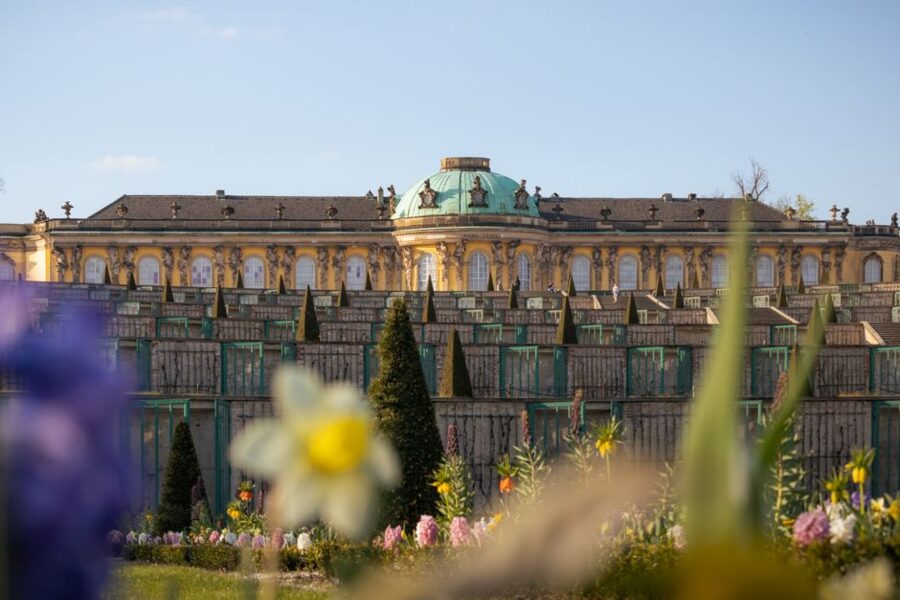
April is when the place reopens. The summer houses in Park Sanssouci, the Chinese House, the Picture Gallery and Charlottenhof open again in April, the Marble Palace returns to five days a week, and the fountains at Babelsberg Palace run from April. The parterre below Sanssouci is planted out twice a year with more than 230,000 plants; in spring the beds are fresh and the crowds still light.
Summer
Summer brings the fountains, the boats and the crowds. The Stern und Kreis cruises from Wannsee run, and the parks stay open until dusk, which in June means well after 21:00. The catch is Sanssouci Palace itself: book the timed ticket, and walk the park in the late afternoon when the tour buses have gone back to Berlin.
Autumn
Autumn is the best season for plan three. The trees in the Babelsberg and Sanssouci parks turn, the light comes in low over the water, and the summer houses stay open until the end of October. From November the pattern switches to winter, so a late-October day is the last chance to see everything open.
Winter and the Christmas markets
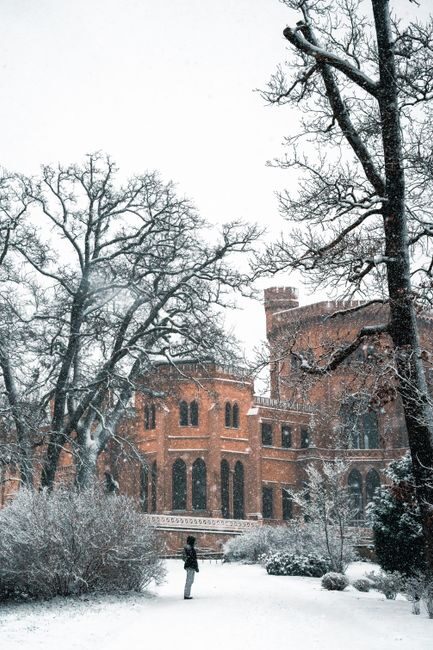
From November to March the palaces close at 16:30, the summer houses close entirely, and the park light is gone by mid-afternoon. On days near freezing (0 °C, 32 °F) the park is beautiful and nearly empty, and the snow on the New Palace’s dome is a sight in itself. Plan two works best in winter, with plan one cut down to Sanssouci Palace, the New Palace and the walk between them.
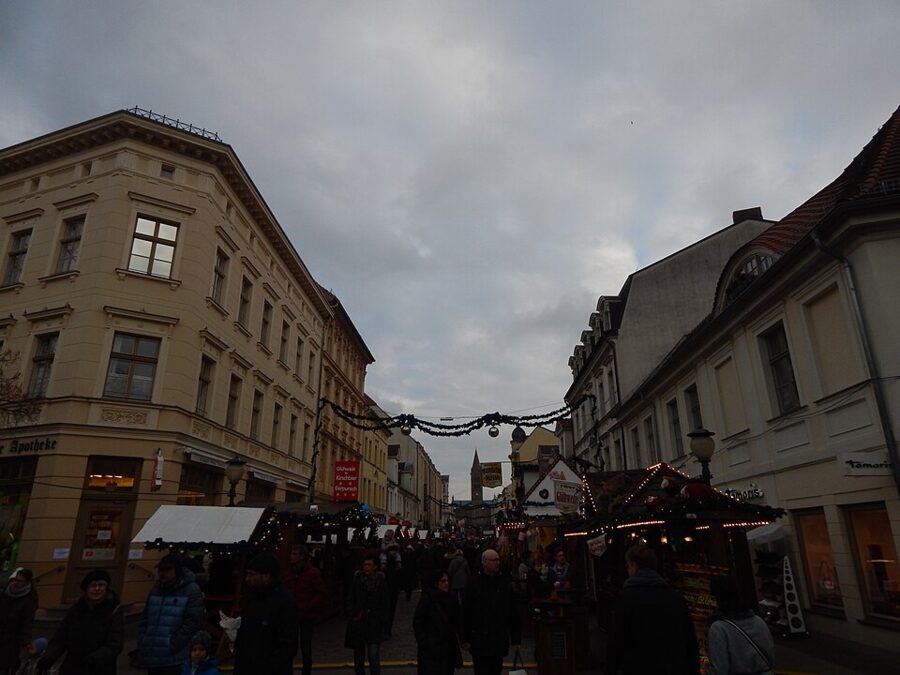

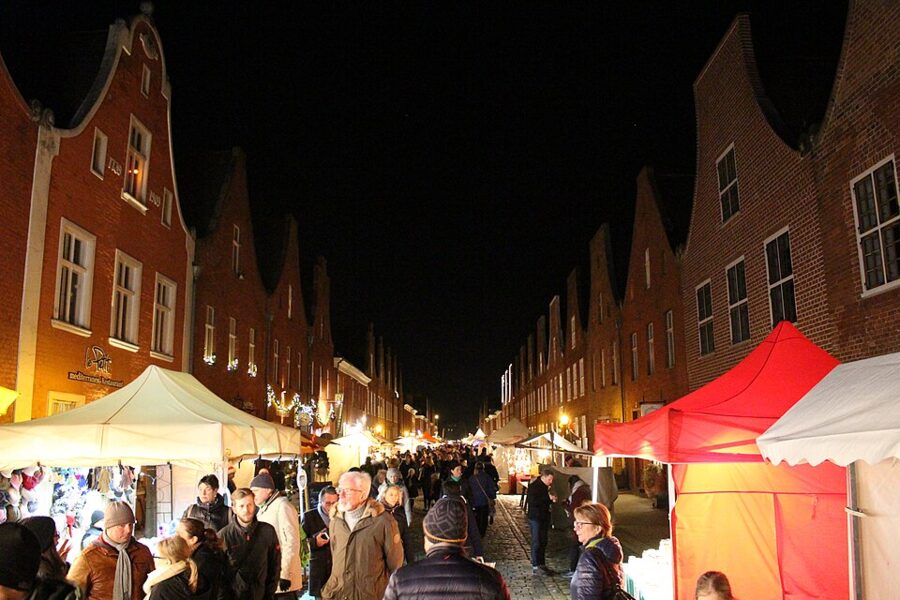
December changes the old town entirely. The Potsdamer Weihnachtszauber fills Brandenburger Straße with about 250 stalls from Luisenplatz to Bassinplatz, daily 11:00–21:00 and to 22:00 on Friday and Saturday evenings, from November 23 to December 27, 2026 (closed December 24). The Bohemian Christmas Market on the Weberplatz in Babelsberg runs over two weekends, November 27–29 and December 4–6, 2026, among the cottages of the Bohemian weavers who settled there in the eighteenth century.
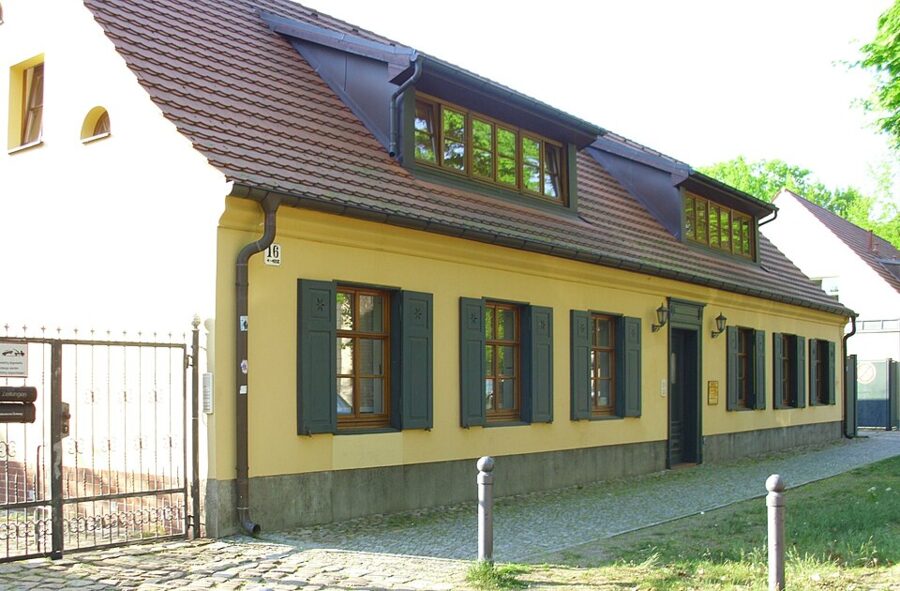

The Dutch Quarter holds its Sinterklaas festival on December 12–13, 2026, and the Potsdam Chocolate Market takes over the Alter Markt from December 4 to 20, daily 12:00–20:00. Smaller markets fill the gaps: a Polish Star Market in the courtyard of the Brandenburg Museum on December 4–6 (€3.50), an Advent village at the Krongut Bornstedt on December 5–13, and an Advent weekend at the Belvedere on the Pfingstberg on December 12–13. The tourist office’s Christmas calendar keeps the full list.

All of it sits inside the UNESCO World Heritage site of the Palaces and Parks of Potsdam and Berlin, listed in 1990, and the listing is the right way to think of the place: not one palace, but a whole made landscape that you can only ever sample. The park itself is free and open from 08:00 until dusk every day of the year, which is the best value in the region.
Whichever plan you pick, end it the way you started. Walk back over the Lange Brücke with the dome of the Nikolaikirche behind you and the Havel under your feet, the old town spread along the water the way its builders meant it to be seen. On the platform your 24-hour ticket is still valid, the S7 leaves every ten minutes, and there is no need to run.