

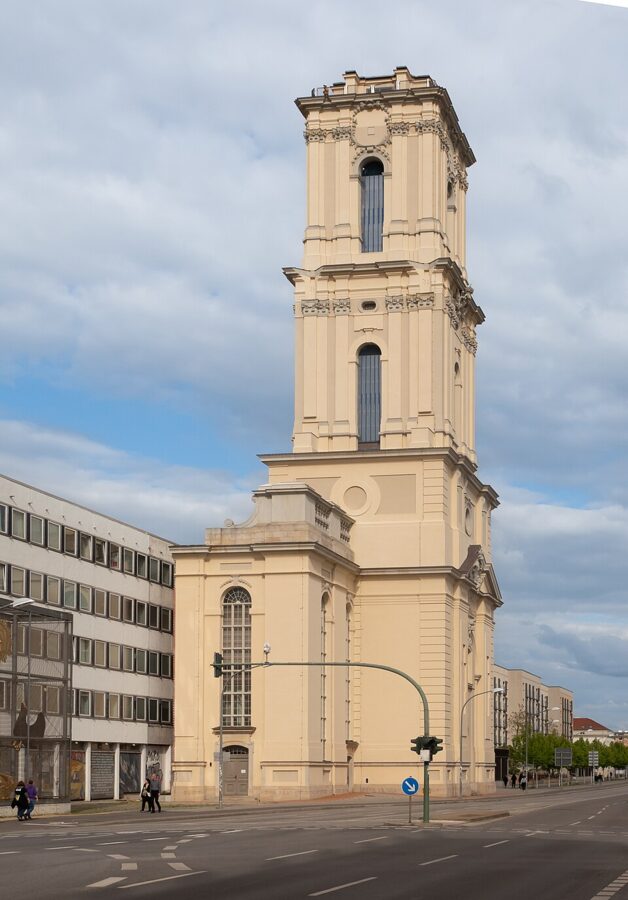
At the corner of Breite Straße and Dortustraße a pale tower stops short in mid-air. Its viewing platform sits 57 meters up, below the spot where a copper cap is due next summer, and less than two meters from its flank stands an East German office block with a glass mosaic about the conquest of space running round its base. The office block went up on the spot where the old church was blown up in 1968; the tower went up on the old church’s own foundations from 2017.
Stand there for a minute and you are looking at the hardest argument in Potsdam. The Garrison Church (Garnisonkirche) was the soldier king’s church, the tomb of two Prussian kings, the backdrop for Hitler’s bow to Hindenburg in March 1933, a burned-out shell after April 1945 and a gap in the street after Walter Ulbricht had it dynamited. Its tower is back, with a chapel, an exhibition that takes on the whole record and a lift to the top, and plenty of Potsdamers still wish it were not.
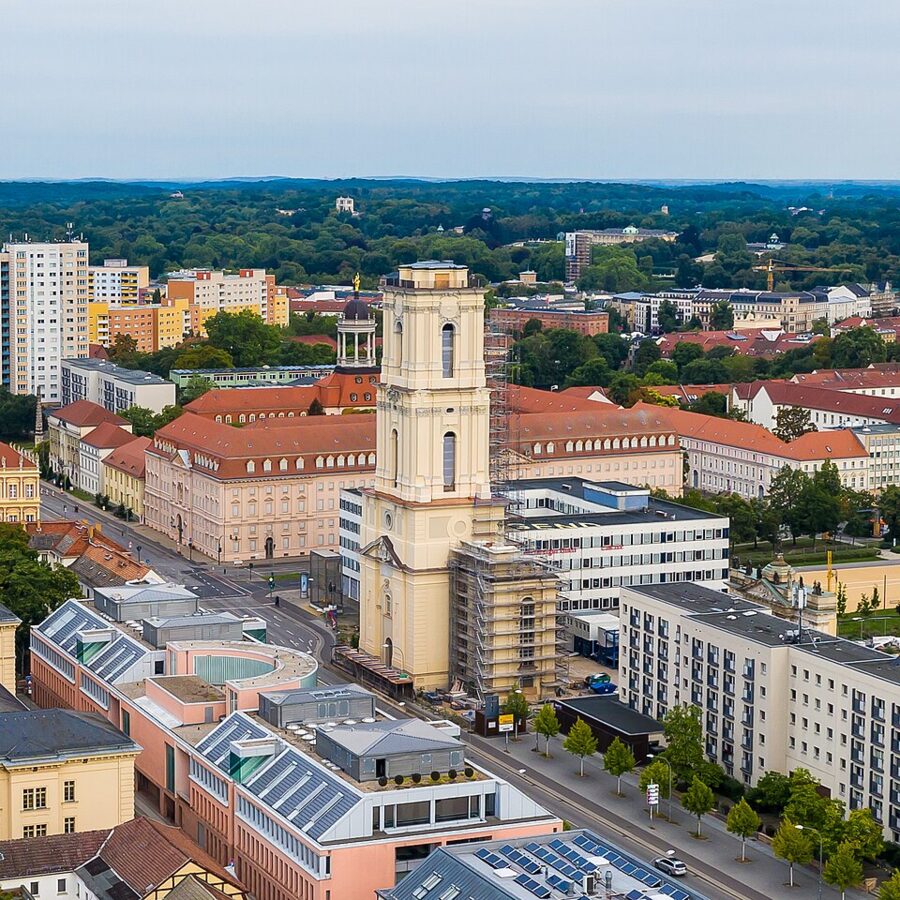

I’d give it two hours: the exhibition first, then the platform, then a slow walk round the outside to the carillon on the Plantage and the mosaic on the Rechenzentrum. Know the story before you go up, because the view from the top only makes sense with it; the hours, tickets, the walk from the station and a place to sit down afterward come at the end.
Contents8 parts
The soldier king’s church
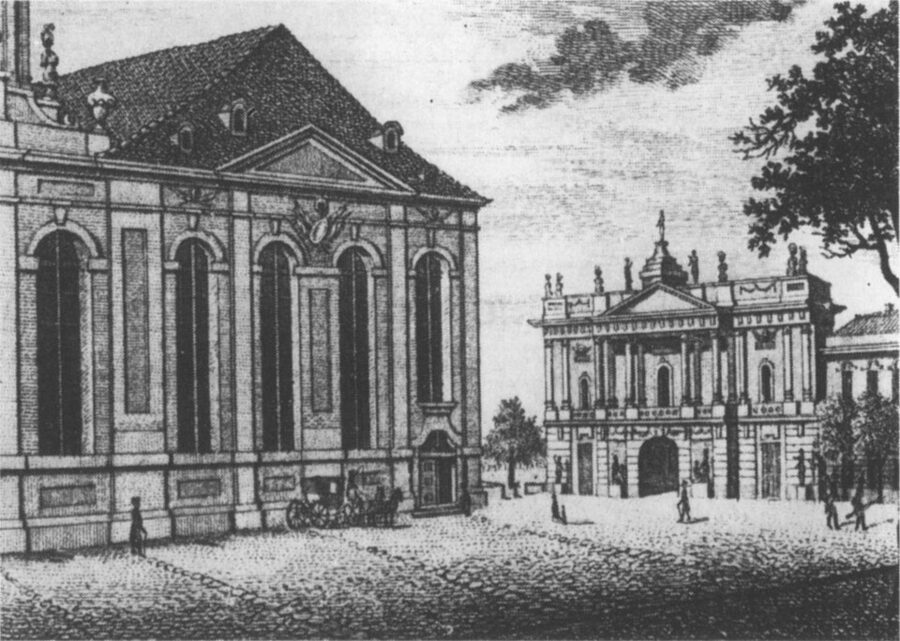
Frederick William I (Friedrich Wilhelm I) turned Potsdam into a garrison town in the 1720s, and his soldiers needed a church. The first one, a half-timbered square with a squat tower, went up beside the town canal in 1720–22 for the military congregation, chiefly his regiment of giants, the Lange Kerls (tall fellows), and a Reformed civilian parish. Potsdam is built on marsh, and within a few years the walls cracked and the building began to sink.
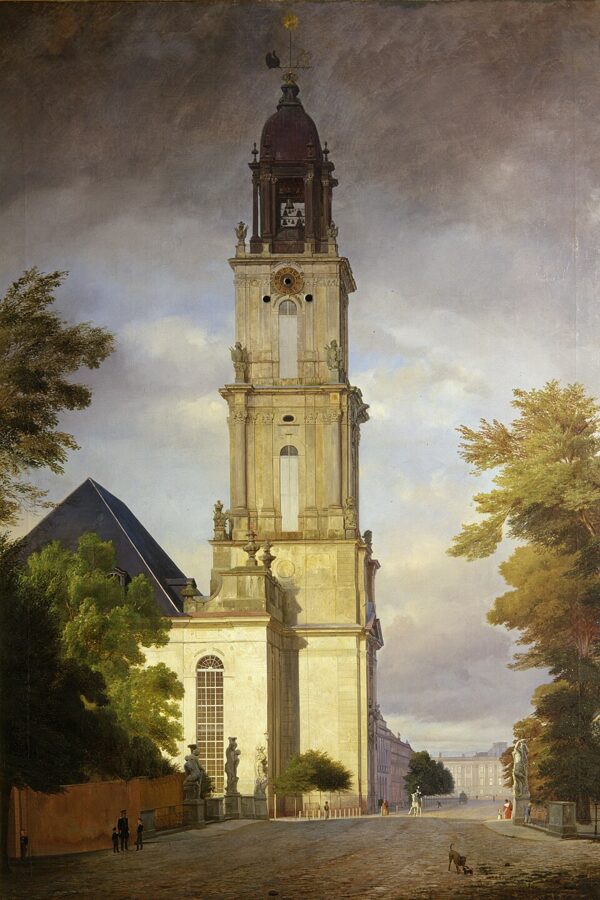
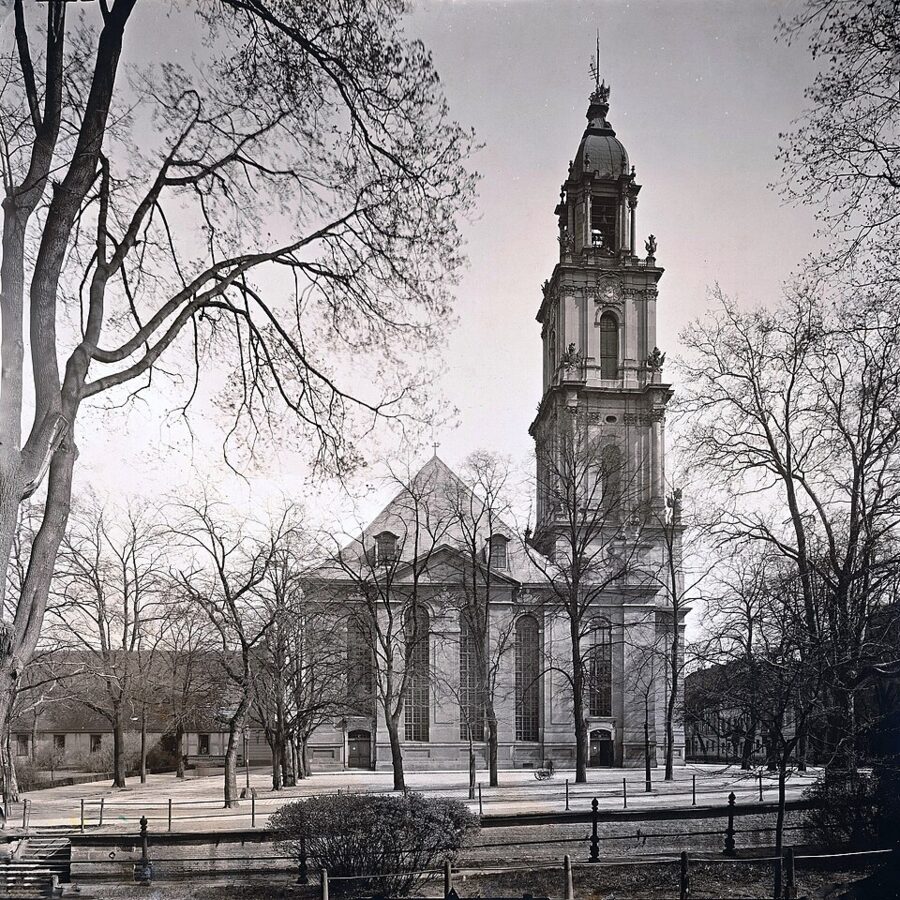
The king had it pulled down in 1730 and gave the job to Philipp Gerlach, his chief architect, who had already built the tower of the Parochialkirche in Berlin. Work started on the same plot in 1731, the nave was consecrated on August 17, 1732, and the tower was finished on August 2, 1735. On that day the king, just up from a serious illness, climbed all 365 steps to the top; his son, the future Frederick the Great, climbed them the next day.
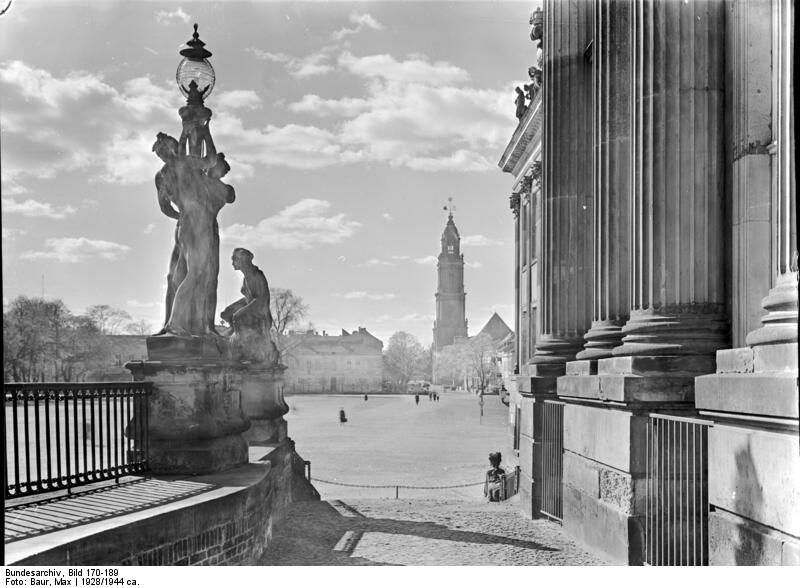

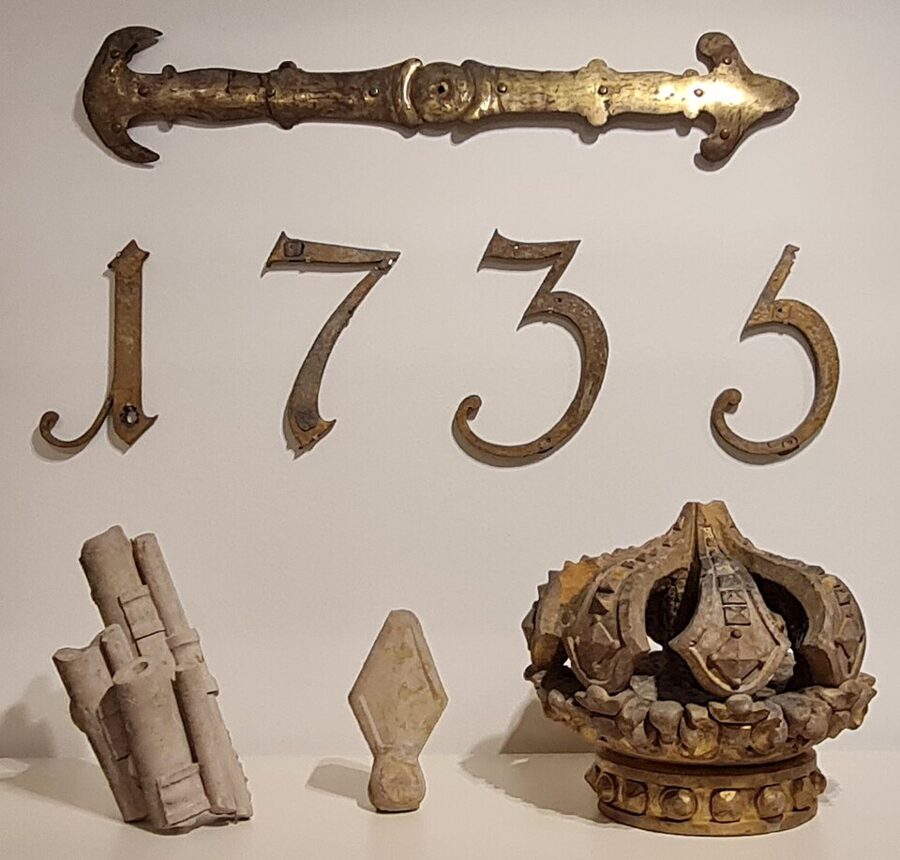
Gerlach gave the king what he admired in the Netherlands: a tall tower that tapered in stages to an oak lantern sheathed in copper, with a weather vane on top. A gilded inscription over the door to Breite Straße said that Frederick William, King in Prussia, had built the tower and the garrison church to the honor of God in 1735. Some of those letters survived everything that followed, and you can see the date in the exhibition today.
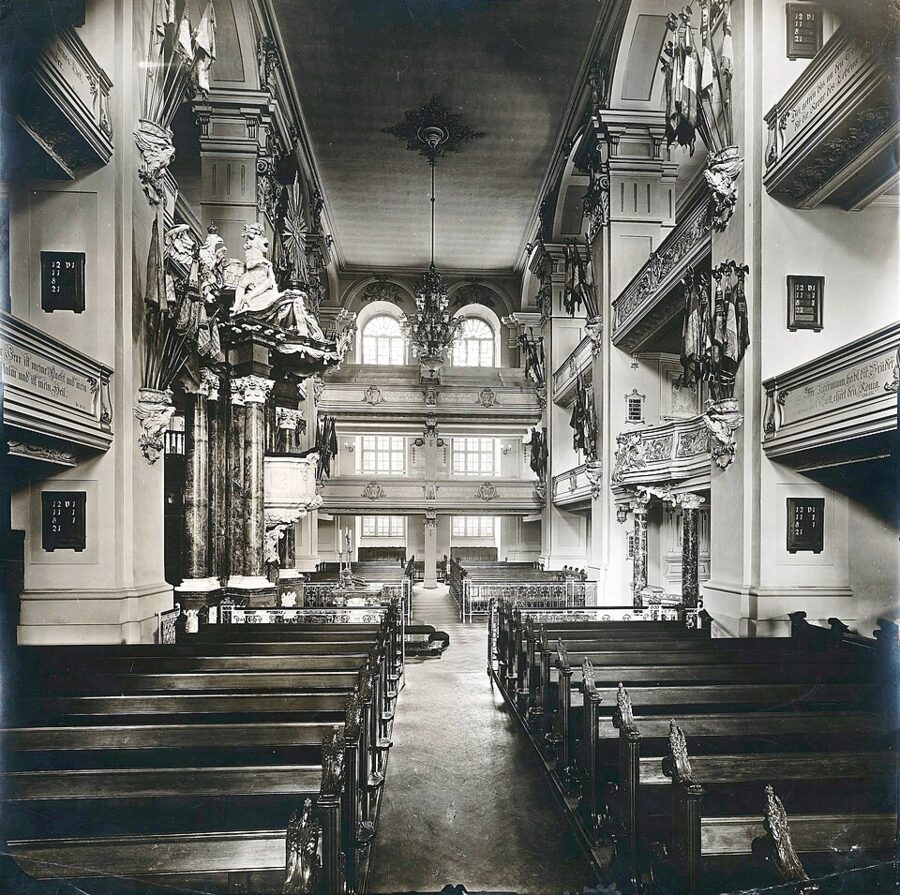
Inside, the church was as Reformed as its patron: bare walls, wooden benches, a simple wooden table for communion. Everyone could see who ran it, though. The king held the patronage in person, so both the military and the civilian congregation answered to him, and in 1735 he replaced the pulpit with a marble monument, built to his own instructions, that dominated the room.
The carillon and its two tunes
The thing Potsdam loved most about the church was its sound. The carillon (Glockenspiel) had 35 bells cast in Amsterdam by Jan Albert de Grave for the first church; when the new tower was ready they went back up, with five big bass bells added from Berlin, 40 in all. The Berlin writer Friedrich Nicolai called it in 1786 one of the finest in Europe, heavier than the carillon of the Parochialkirche.
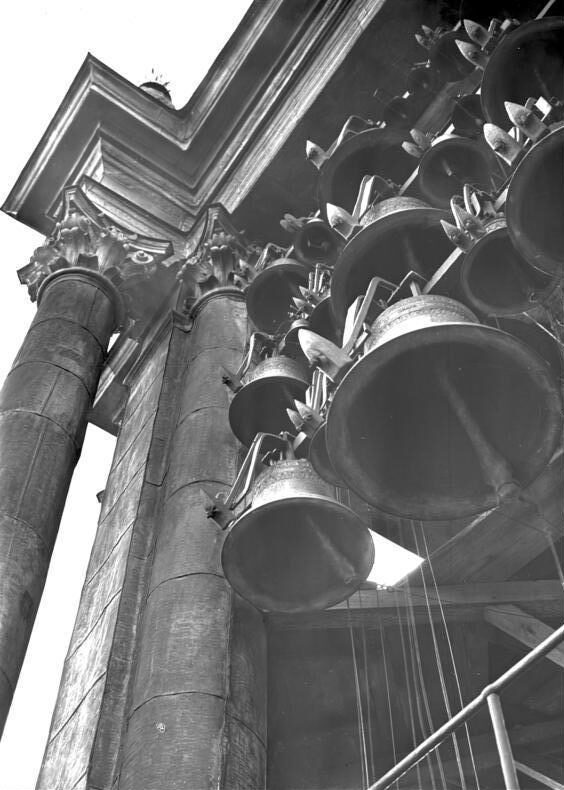

From 1797, at the wish of Queen Louise, as the story is usually told, the bells settled on two tunes that played for the next 148 years. On the hour came the hymn “Lobe den Herren, den mächtigen König der Ehren” (Praise to the Lord, the Almighty); on the half hour came “Üb’ immer Treu und Redlichkeit” (Always be loyal and upright), Ludwig Hölty’s poem set to a simplified version of Papageno’s aria from Mozart’s The Magic Flute. With short melodies in between, something sounded over the town every seven and a half minutes.
The second tune became the unofficial anthem of Prussian virtue, and that is part of the trouble. A hymn and a call to duty, played over a garrison town every half hour for a century and a half, is a fair summary of what the church stood for: throne and altar in one building.
Two kings in the crypt
The marble monument of 1735 was a pulpit altar with a small, ground-level vault behind it, built for the king and his wife. Christian Friedrich Feldmann designed it, Johann Georg Glume carved the figures of Mars and Bellona that flanked the door to the vault, and the top carried the Prussian eagle and the motto Nec soli cedit (He yields not even to the sun). Frederick William I died on May 31, 1740, and was laid in the crypt at the start of June.
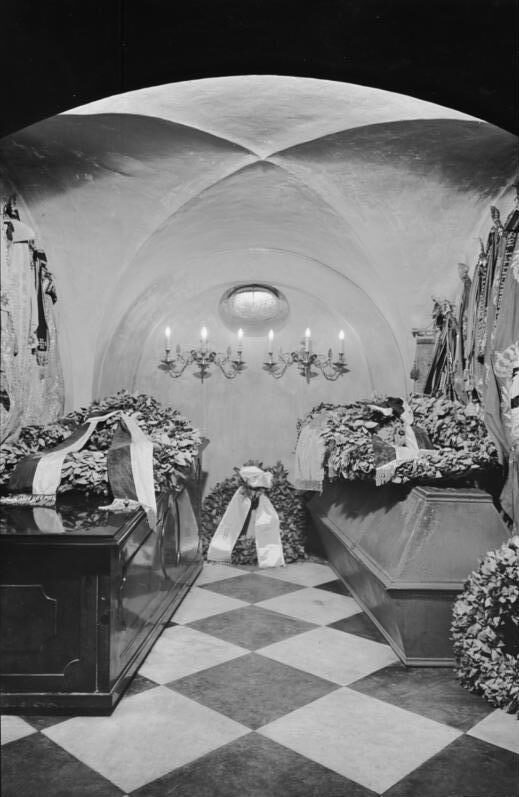

His widow, Sophie Dorothea, chose the Berlin Cathedral instead, so the second place stayed empty for 46 years. Their son, Frederick the Great (Friedrich II), wanted no part of it: his will asked for a grave on the top terrace at Sanssouci, next to his dogs. His nephew ignored it and put him in the Garrison Church beside his father on the evening after his death in August 1786, and there he stayed until the war. The full story of the king and his coffin is in my guide to Frederick the Great.
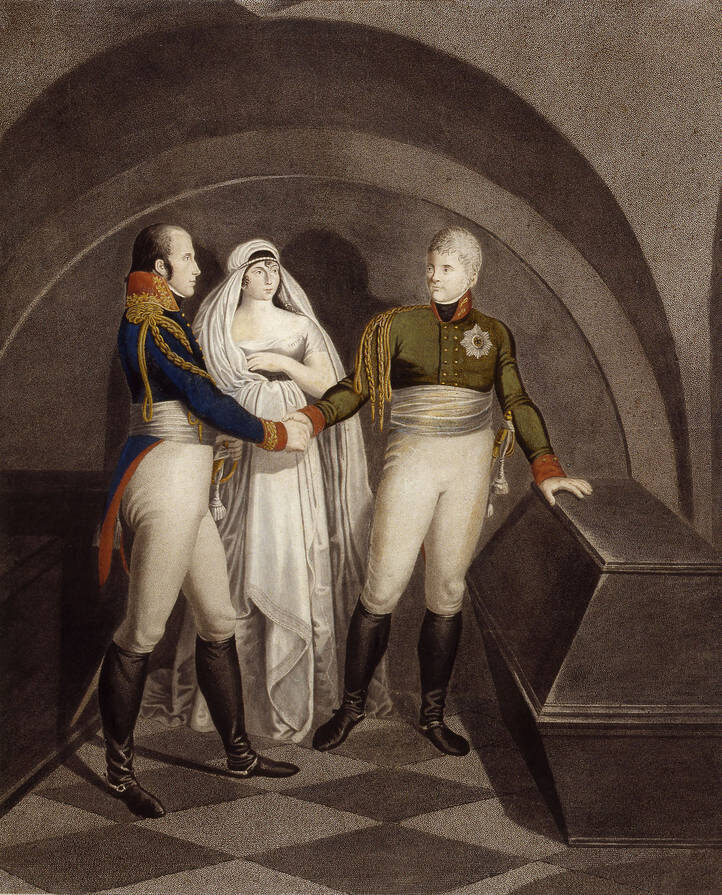
The tomb then made the church a stage. On the night of November 4, 1805, Frederick William III and Queen Louise took Tsar Alexander I into the crypt, and the three sealed their alliance against Napoleon at the coffin. Within months the scene was in print.
Within a year the alliance had failed. After beating the Prussian army at Jena and Auerstedt, Napoleon rode through Potsdam on October 25, 1806, and asked to see the crypt. The famous line about not being here if Frederick were still alive is usually set at the coffin, but it was most likely said somewhere else; what is certain is that he put the church under his personal protection while his cavalry used two other Potsdam churches as fodder stores.
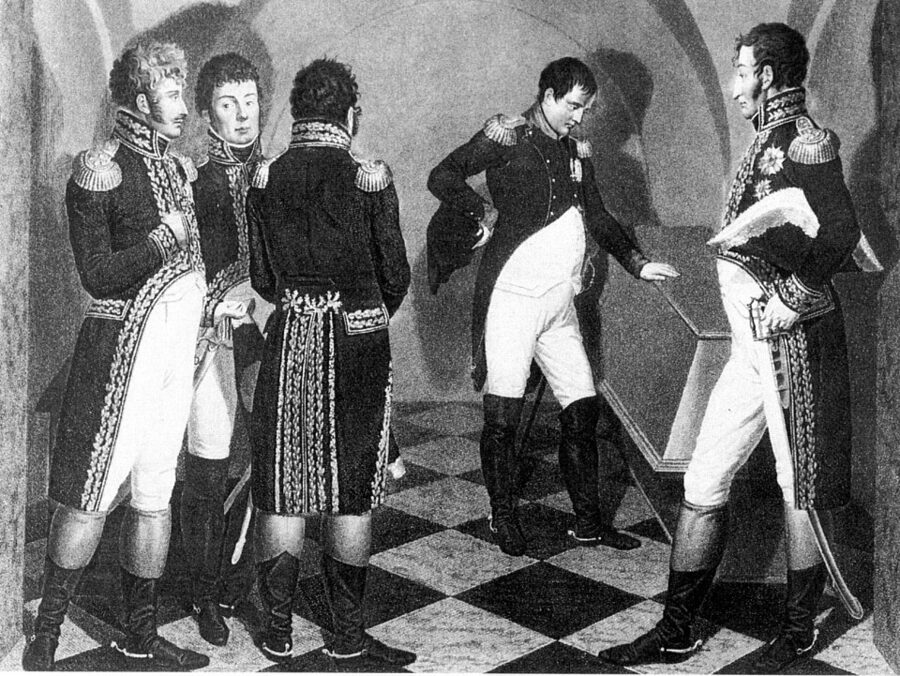
The church also saw better moments. In August 1809 the town’s first freely elected magistrate was installed there, a product of the reforms that followed the defeat, and on October 31, 1817, the three-hundredth anniversary of the Reformation, Lutherans and Reformed held their first joint service in it, the start of the Prussian Union of churches. Supporters of the rebuilding still point to both.
A Prussian hall of fame
Over the nineteenth century the church filled up with captured flags. After the wars of the 1860s and 1870–71 the nave held 117 French and 25 Danish flags and seven Austrian standards, and Wilhelm II paid for a lavish neo-baroque refit in 1897–99, with gilt galleries, new pews and a marble altar. The historian Martin Sabrow sums it up as the expression of a warlike alliance of throne and altar, from the day it was built to the day it went down.
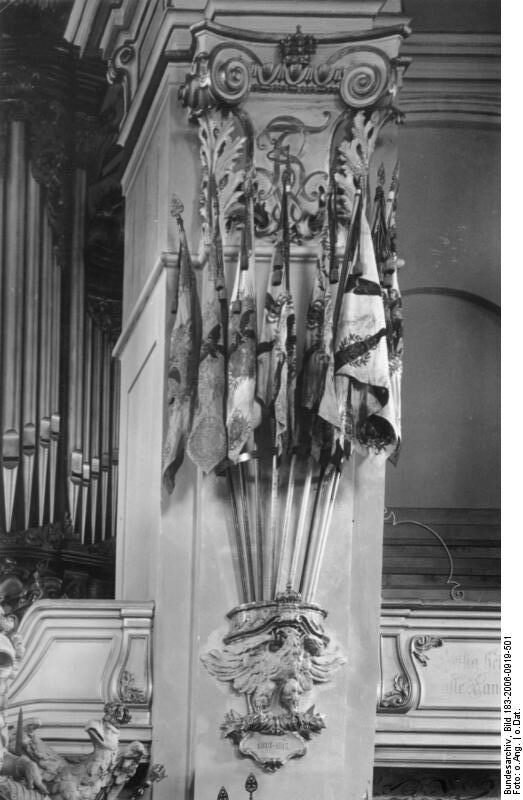

Defeat in 1918 made it a place of pilgrimage for everyone who hated the new republic. When the Treaty of Versailles required the French flags to go back to France, they vanished from the church in July 1919 and have never been found; the flags of dead Prussian regiments went up instead. On November 24, 1919, the national conservatives held a counter-rally to the new republic there, with Erich Ludendorff as the main speaker, and veterans’ leagues such as the Stahlhelm met under its roof.
The “spirit of Potsdam” was their phrase for it: obedience, the army, the kings, set against the “spirit of Weimar.” The same church also had its organist, Otto Becker, who played the organ of the Potsdam synagogue from 1915 until 1933, and a congregation that would later include about thirty of the officers and civilians behind the July 20, 1944, plot against Hitler, among them Henning von Tresckow. Critics of the rebuild answer that the plotters met in private houses, not in the church, and that its share in the resistance is not proven.

March 21, 1933: the Day of Potsdam
The Reichstag in Berlin burned on the night of February 27, 1933, a week before an election that left Hitler’s party still short of a majority. His cabinet decided to open the new parliament in Potsdam instead, with a ceremony that would please President Paul von Hindenburg, the army and the monarchists. The date was chosen with care: March 21, the first day of spring and the anniversary of the opening of the first Reichstag of the empire in 1871.
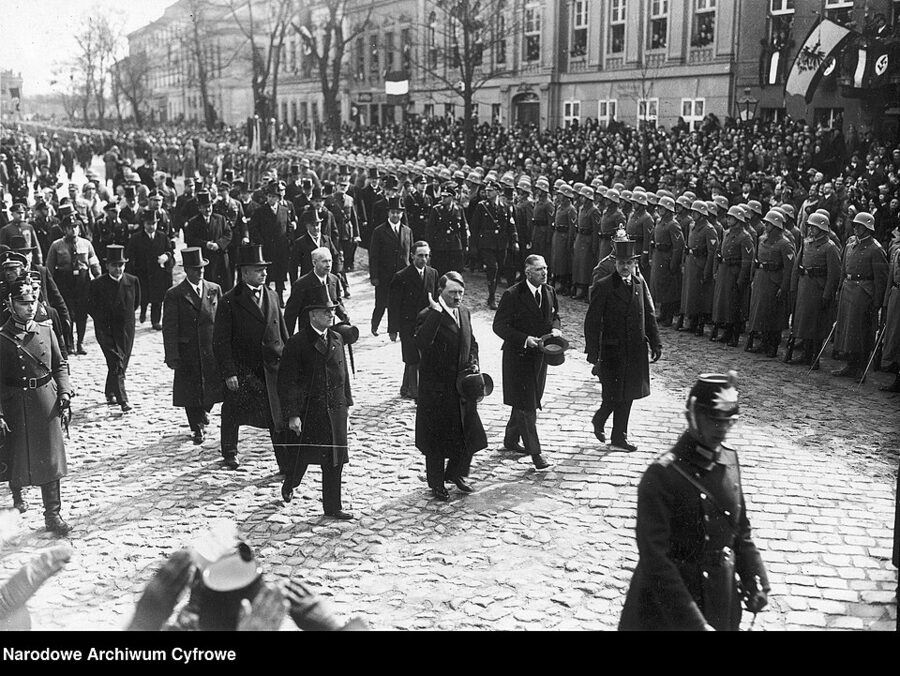
Church leaders and Hindenburg himself objected to holding a political session in a church, so the plan was split. The services came first, then a state ceremony in the Garrison Church, and the actual opening sitting moved back to the Kroll Opera in Berlin that afternoon. The Social Democrats stayed away; the Communists’ seats had already been voided under the emergency decree that followed the fire.
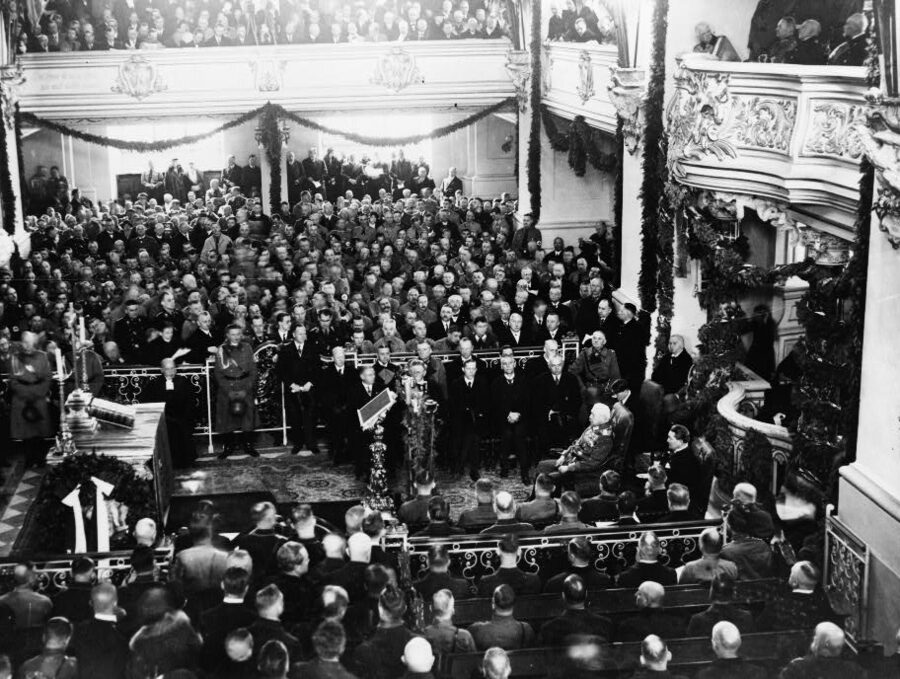
Hindenburg spoke briefly, then Hitler gave a long and deliberately moderate speech, promising to respect the president, the parliament and the states, and ending with a eulogy of the old field marshal. He then walked over and shook his hand. While the organ played, Hindenburg went to the crypt, laid wreaths at the two coffins and stood there in silence as guns fired outside.
The picture everyone knows was taken later, outside on the street, as the dignitaries took their leave. Theo Eisenhart, working for the New York Times, caught Hitler in a tailcoat bowing low over Hindenburg’s hand. Historians still argue over it: Martin Sabrow calls it a snapshot that the party found embarrassing and hardly used, while Christoph Raichle and others point out that it appeared the same day in a Berlin illustrated paper and soon on Nazi magazine covers.
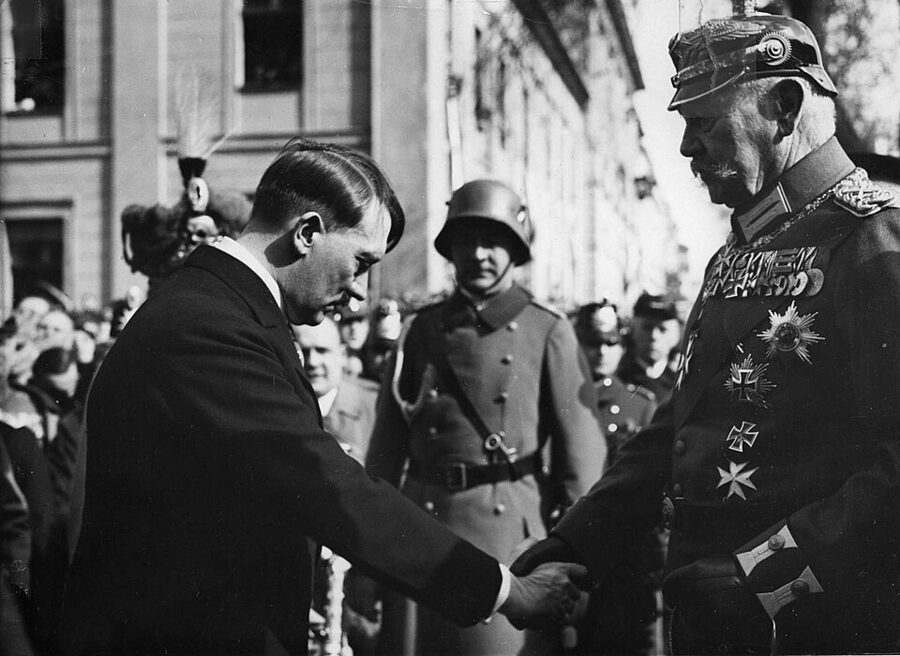

Whatever the photo meant to those who took and printed it, the day did its work. The same day the cabinet passed a decree that made criticism of the government a crime, and the concentration camp at Oranienburg opened; two days later the Reichstag passed the Enabling Act, which let Hitler govern without it. The French ambassador André François-Poncet called the ceremony the “Potsdam comedy.”
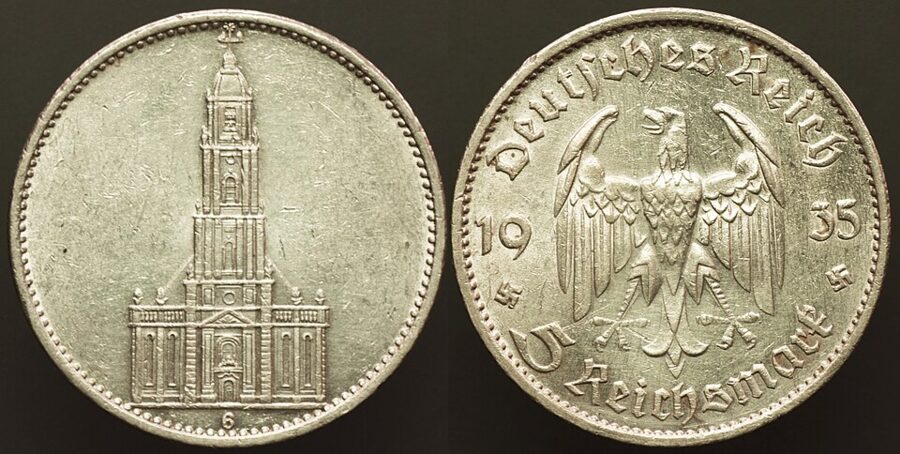
The regime put the church on its coins. Two- and five-Reichsmark pieces of 1934–35 carried the tower and the nave, some with the date of the ceremony stamped beside them, and they still sell cheaply at coin dealers. For anyone who argued, after 1990, that the church should come back, this is the image they had to get past.

April 1945 and the explosions of 1968
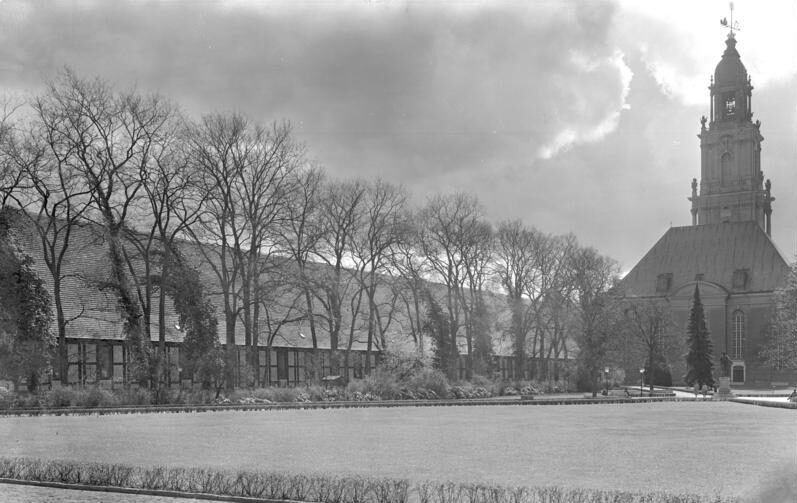
The church came through most of the war untouched. On the night of April 14–15, 1945, the Royal Air Force bombed the center of Potsdam for about twenty minutes, and at first the church seemed to have escaped. Then the Langer Stall, the long drill hall next door, caught fire, sparks blew in through the shattered windows, and the wooden galleries, the roof and finally the tower burned, from the top down, while the broken water mains gave the fire brigade nothing to fight with.
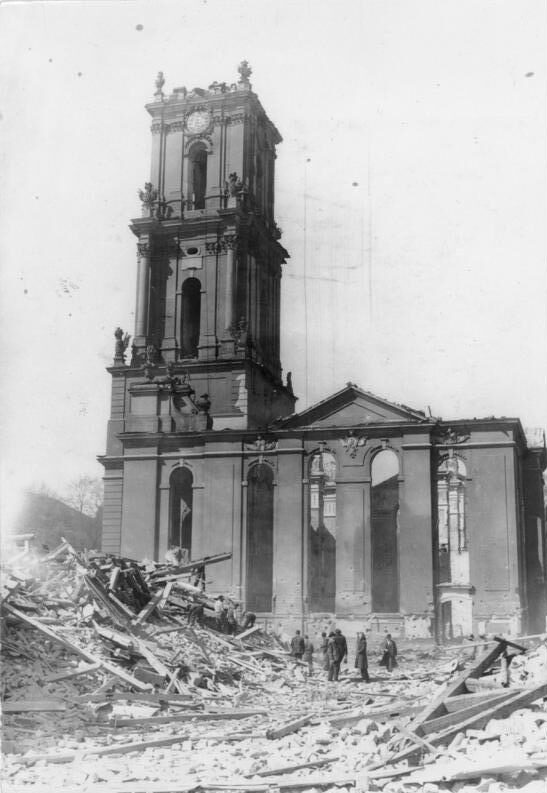

One by one the bells broke loose and fell almost 80 meters, and the oak lantern came down after them. Potsdam tells the story that the carillon played “Üb’ immer Treu und Redlichkeit” over and over as the tower burned until it crashed to the ground; it is a good story, and nobody can prove it. The kings were not there to see it: their coffins had been moved in 1943 to a bunker at Wildpark-West, and they went on a long journey that ended at Sanssouci in 1991. By the time Truman, Stalin and Churchill arrived that July for the Potsdam Conference, the church was a shell.
It did not stay empty. In 1949 the parish renamed itself the Holy Cross congregation, to shed the military name, and in 1950 moved into a chapel built inside the stump of the tower, with two new bells; you could climb the 60-meter ruin if you asked the sexton. In the 1960s work began on new floors inside the tower, until the regional party leadership stopped it in 1966.
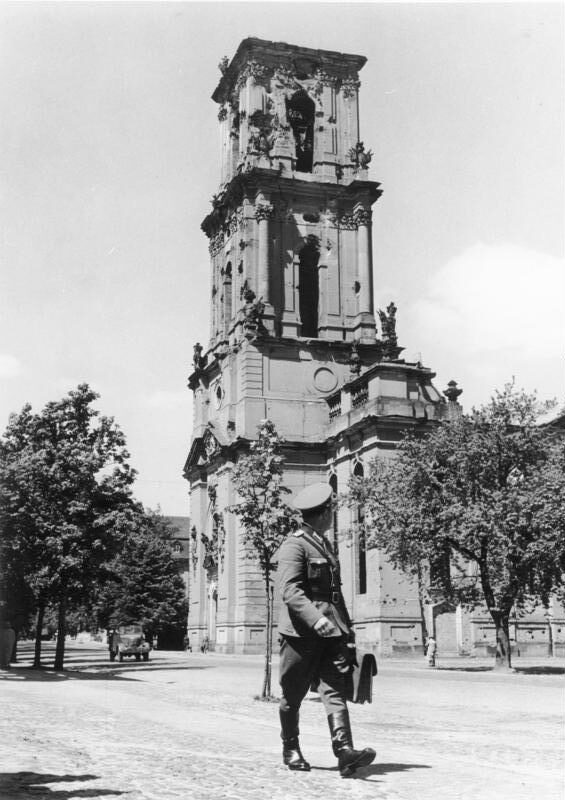

The city itself wanted to keep the tower and restore the carillon. In August 1966 the party’s district leadership quietly decided on demolition, and in 1967 Walter Ulbricht, on a visit to discuss the new socialist center, asked what the ruin was still doing there. The culture minister, Klaus Gysi, argued for the tower at the city’s request and lost.
On April 26, 1968, despite protests from churchmen, conservationists, architects and citizens in East and West, the city council voted for demolition, with four votes against, which was unheard of in a GDR council. The nave was blown up in stages from May 14. The first charge under the tower, on June 19, left half of it standing; the second, on Sunday, June 23, brought it down, and a GDR teaching film later claimed the two-stage demolition had been planned that way.
On part of the site rose the Rechenzentrum, a computing center for the district, built in 1969–71 by a team under Sepp Weber, with three Robotron 300 computers inside. The rest of the church plot became roadway and grass, and for years only a granite plaque in the pavement said what had stood there.
The rebuild and the argument
The idea of bringing the church back started in the West, and with a soldier. In 1984 Max Klaar, a lieutenant colonel of the West German army, began collecting money for a copy of the carillon, which went up in stages on the parade ground of the Winkelmann barracks in Iserlohn; by June 1987 it had all 40 bells. His Traditionsgemeinschaft Potsdamer Glockenspiel (Potsdam Carillon Tradition Society) meant it for Potsdam if Germany were ever reunited.
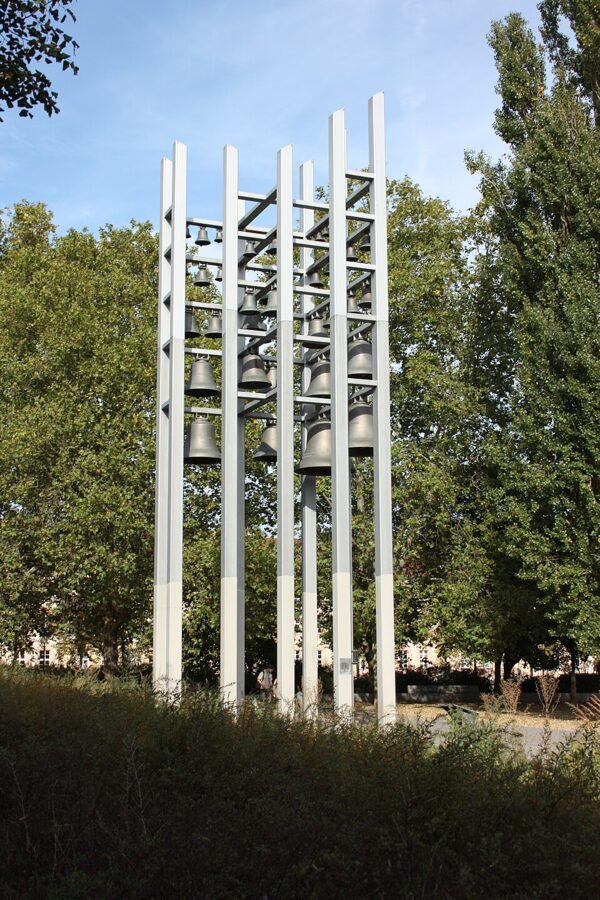

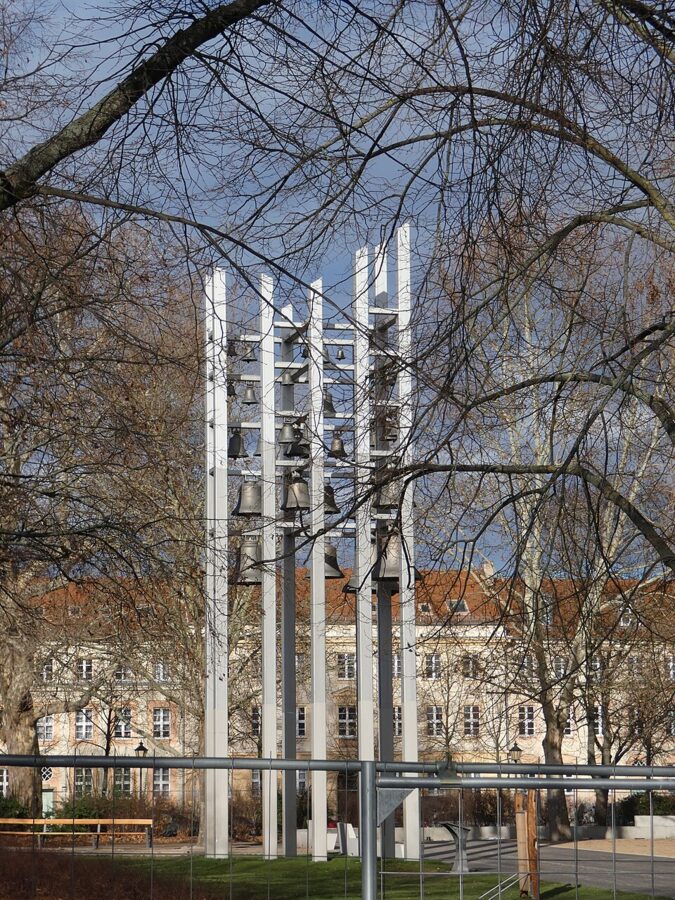
On April 14, 1991, the anniversary of the raid, the society handed it over to Potsdam before 10,000 guests, and it went up on the Plantage behind the old church site. Klaar then started collecting for the church itself, and the money came in. He also had firm ideas about what the church would be for, and they were not the regional Protestant church’s: he and the society rejected its plan for a parish church with a center for peace and reconciliation, and in 2005 he stopped the collection and dissolved the society.
Klaar later chaired the Verband deutscher Soldaten, a veterans’ association the West German army barred its units from working with in 2004 because of its extremist ties. That origin has followed the project ever since. The bells themselves carry inscriptions chosen by donors, and critics read some of them as revisionist and militarist; in September 2019 the mayor had the playing mechanism switched off, and I could find no sign that it has played since.

The rebuild that actually happened came from another direction. On January 15, 2004, more than a hundred prominent people, led by Bishop Wolfgang Huber, Brandenburg’s premier Matthias Platzeck and its interior minister Jörg Schönbohm, signed the “Call from Potsdam” (Ruf aus Potsdam) for a rebuilt church as an open city church and a center of peace and reconciliation. A support association followed in February, and on April 14, 2005, the sixtieth anniversary of the raid, a symbolic foundation stone was laid on Breite Straße.
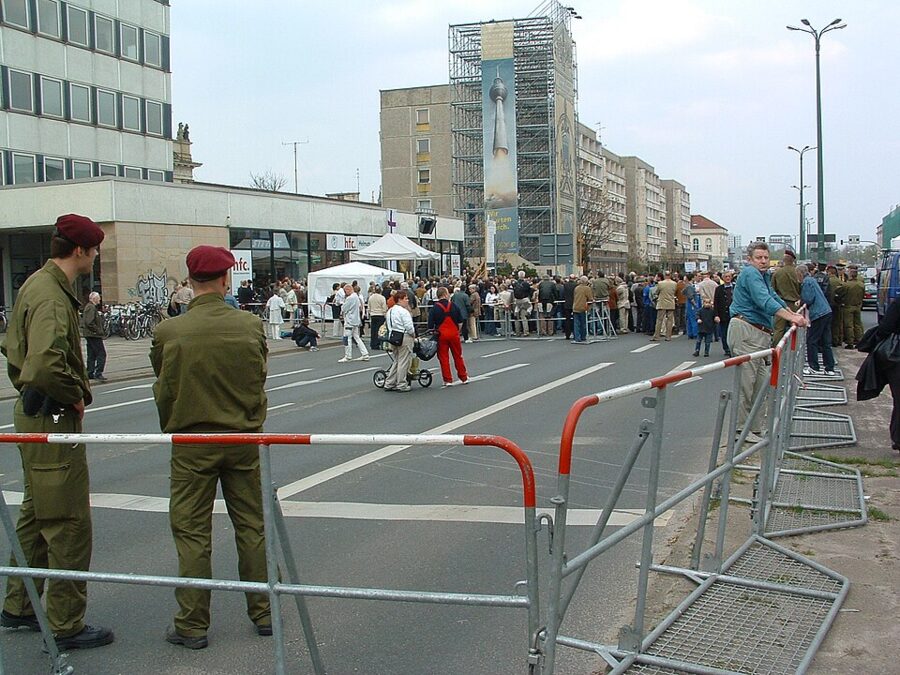

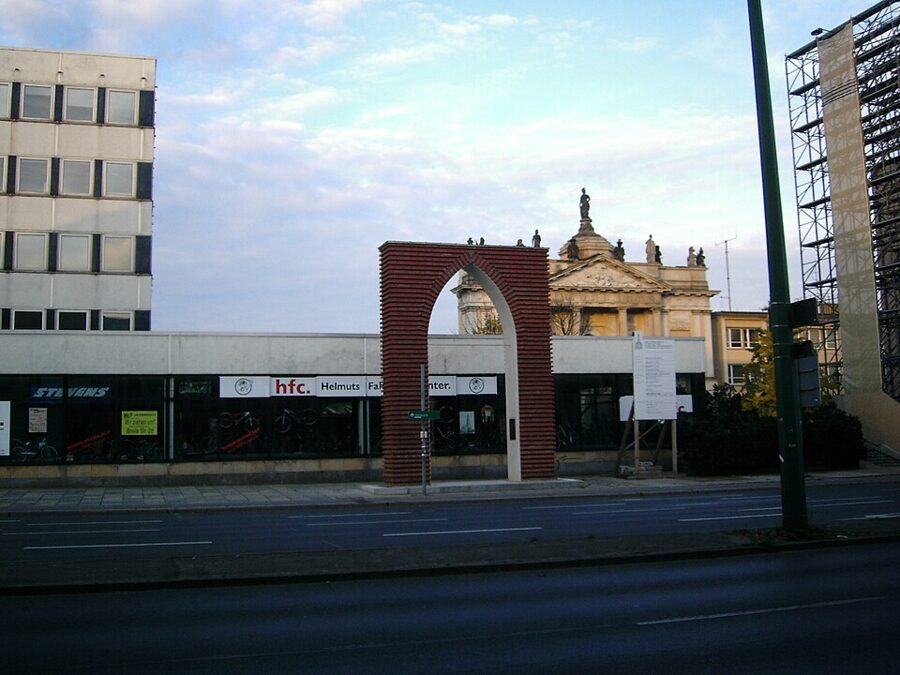

The church foundation, the Stiftung Garnisonkirche Potsdam, was set up on June 23, 2008, forty years to the day after the tower fell. The parish joined the international Community of the Cross of Nails, the reconciliation network that grew out of the bombed cathedral in Coventry, and from 2011 met in a temporary chapel behind the site. The city council backed the project with the votes of the Social Democrats, the Christian Democrats and the Greens, and passed the zoning plan it needed.
Opposition grew alongside. A citizens’ petition in 2014 gathered 14,285 valid signatures calling on the city to work for the foundation’s dissolution, and the city council adopted it with eight votes in favor and many abstentions; the mayor dutifully moved the motion on the foundation’s board, where it failed. The same year church members launched a campaign called “Christians don’t need a Garrison Church,” and in 2015 the Martin Niemöller Foundation, named after the pastor who resisted Hitler and since merged into the Bonhoeffer-Niemöller Foundation, joined it.
In June 2020 that foundation and the University of Kassel set up the Lernort Garnisonkirche (Garrison Church learning site), which publishes the critics’ side: the sermons preached from its pulpit, the blessing of troops for colonial wars, the far-right roots of the project. Their argument is that the church stood from the start for dynasty, obedience and army, and that rebuilding it dignifies that. Brandenburg’s chief conservator, Detlef Karg, put the professional objection in 2012: it is not the job of conservation to raise a lost building again, and a church on the site could just as well speak today’s architectural language.
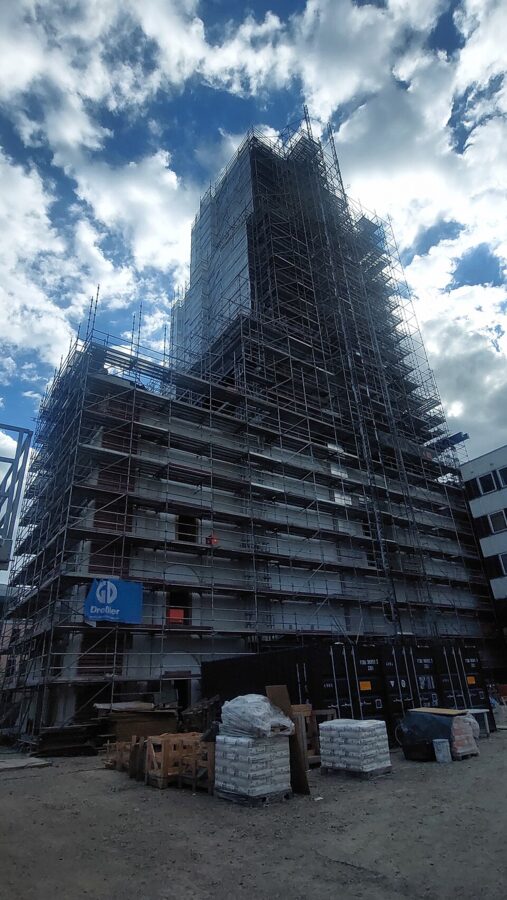

Money was the other fight. Construction began on October 29, 2017, two days before the five-hundredth anniversary of the Reformation, after the federal government confirmed a €12 million grant; the old foundations defeated the drilling rigs, the base was finished only in spring 2020 and the shell in spring 2022. The bill rose from €40.5 million to more than €42 million, the federal government added two more grants for a total of €24.75 million, the regional church lent €5 million interest-free, and donations fell well short of the original promise that private money would pay for it. In 2021 the federal audit office criticized both the culture ministry’s handling of the grants and the foundation’s lack of transparency.

The Rechenzentrum next door
The building that stands in the nave’s way is a five-story concrete block from 1969–71, the only part of the old computing center still standing after its canteen went in 2010 and the computer hall in 2019. Round its base runs Fritz Eisel’s glass mosaic “Der Mensch bezwingt den Kosmos” (Man conquers the cosmos) of 1972, 18 panels and about 60 meters long, a hymn to socialist science and space travel on the very spot where the Prussian church had stood. The mosaic has been a listed monument since 1977; the building is not.
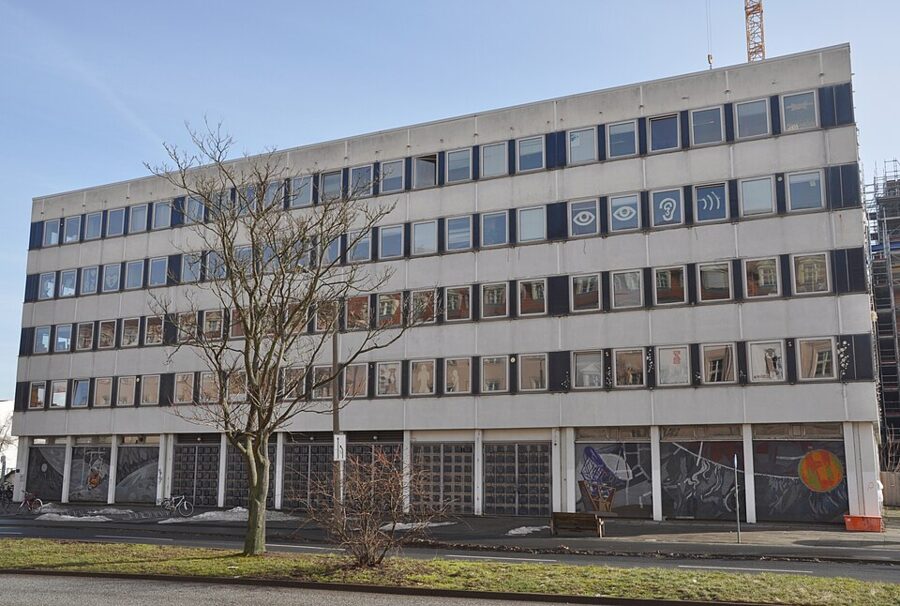

Since 2015 the block has been a house for artists, studios and small cultural groups, run on the city’s behalf, with about 5,000 square meters over five floors, and it is the critics’ stronghold: the Lernort has its rooms there. In 2022 the city council backed the then mayor’s compromise, a “house of democracy” for council chambers and the Potsdam Museum in place of the nave, built together with the Rechenzentrum. Nothing of it has been built.
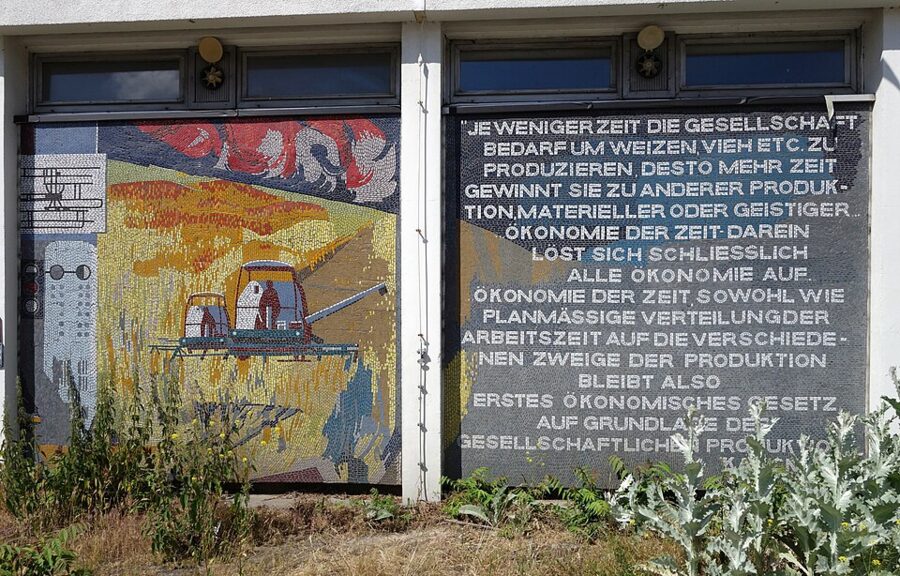
The building’s permission to be used was due to run out at the end of July 2026. In June the city, the church foundation and the operator agreed a compromise, and on July 1, 2026, the council voted to let the Rechenzentrum carry on until July 31, 2033, with the users paying the church foundation, by the critics’ count €268,000 over the seven years, and the official plan still to clear the site for a square afterward. The Lernort called it a scandalous deal and still wants the building kept for good. Whether the nave will ever be rebuilt, nobody has said.
Inside the tower today
The chapel opened first, on Easter Monday, April 1, 2024, and President Frank-Walter Steinmeier, then the project’s patron, opened the tower on August 22, 2024, while about a hundred protesters stood across Breite Straße. In his speech he said the road to the rebuild had been long and complicated and remained contested. The tower opened to the public the next day, and in 2025, its first full year, it sold about 30,000 tickets, half the number the foundation had hoped for.

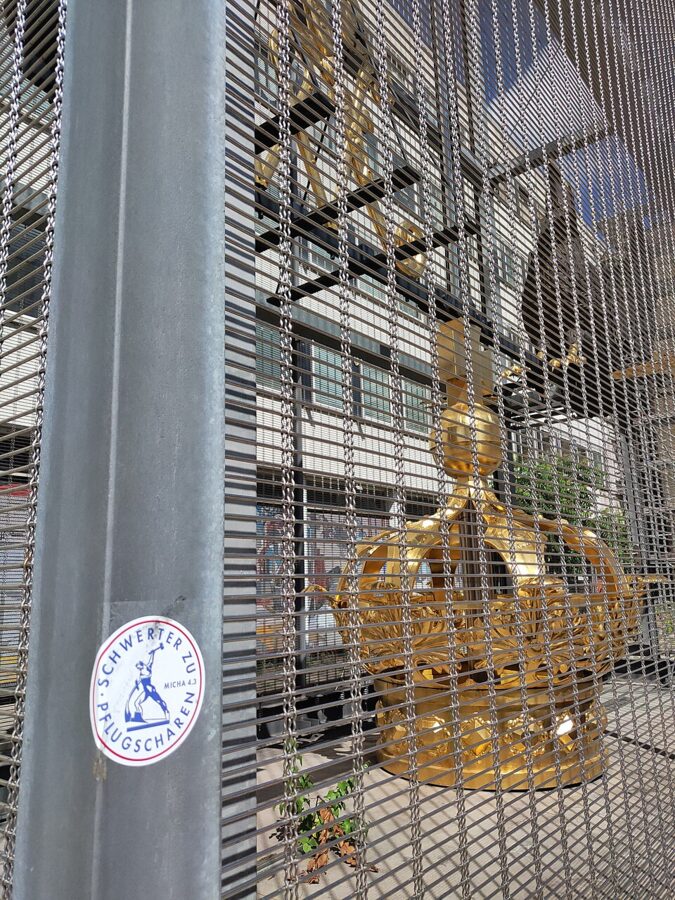
The exhibition, “Glaube, Macht und Militär” (Faith, power and the military), fills the middle floors, with texts in German and English. It does not tiptoe round 1933: it shows how church and state worked together in Prussia and under the Nazis and how soldiers went to war with the church’s blessing, and it sets the Day of Potsdam inside that longer story. Even the gilded weather vane waiting outside gets its context explained. The critics at the Lernort still say it paints too kind a picture; my advice is to read it and then read them.

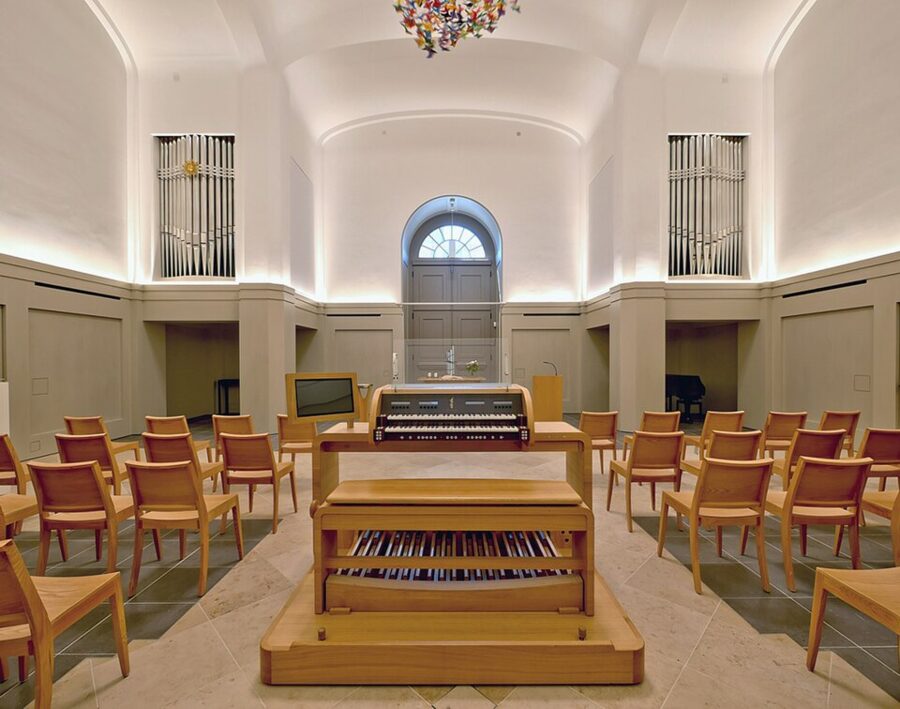
The Chapel of the Cross of Nails (Nagelkreuzkapelle) on the ground floor has about 100 seats, plain pale walls and a Schuke organ of 2024 with a console on wheels, so that the organist can sit among the congregation. It is free to enter outside services and holds morning prayers, peace prayers and memorial services. Its one disputed object is the old wooden altar table from 1800, saved from the fire in 1945 and used for generations as a field altar at army parades; the Lernort calls it a blood altar and wants it handed to the German Historical Museum instead.

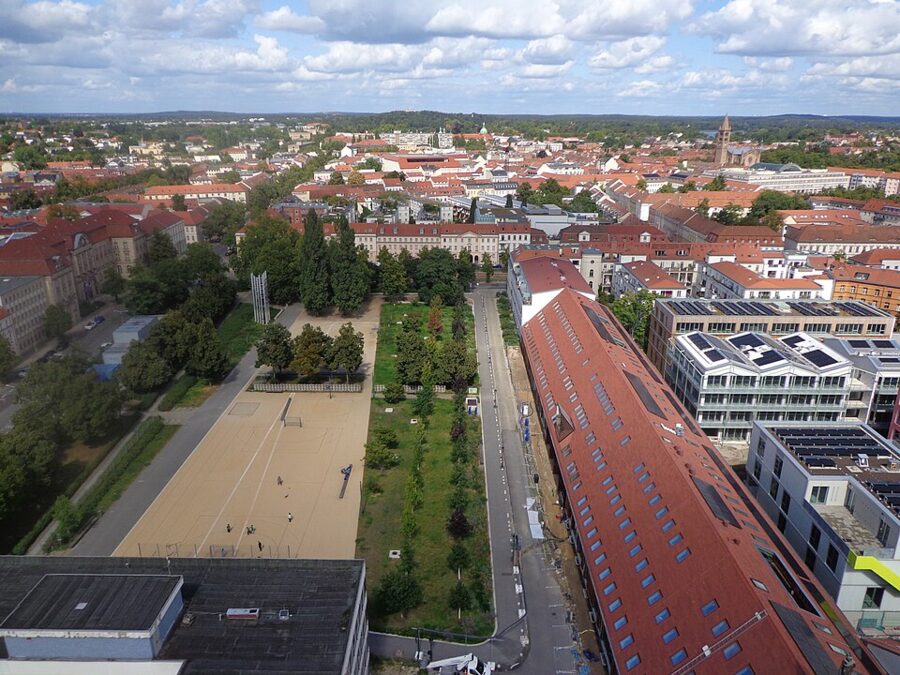
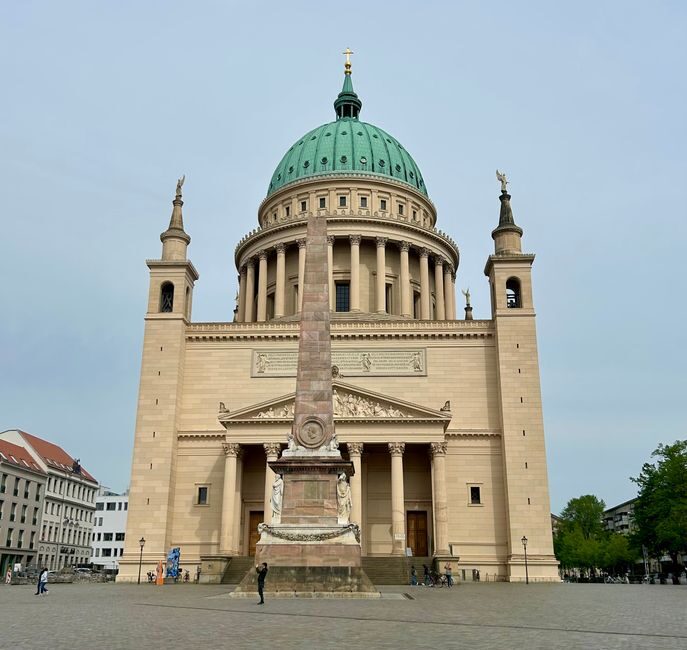
The platform, “Potsdam Panorama,” is 57 meters up, reached by a lift with glass walls or by 365 steps, the same number the soldier king climbed in 1735. From up there you can see the whole made town at once: the dome of the Nikolaikirche and the Landtag to the east, the Plantage and the restored front of the Langer Stall to the north, the Havel, and on a clear day the towers of Berlin. The lift and the platform close in strong wind; the foundation tells you at the door, or you can phone ahead.
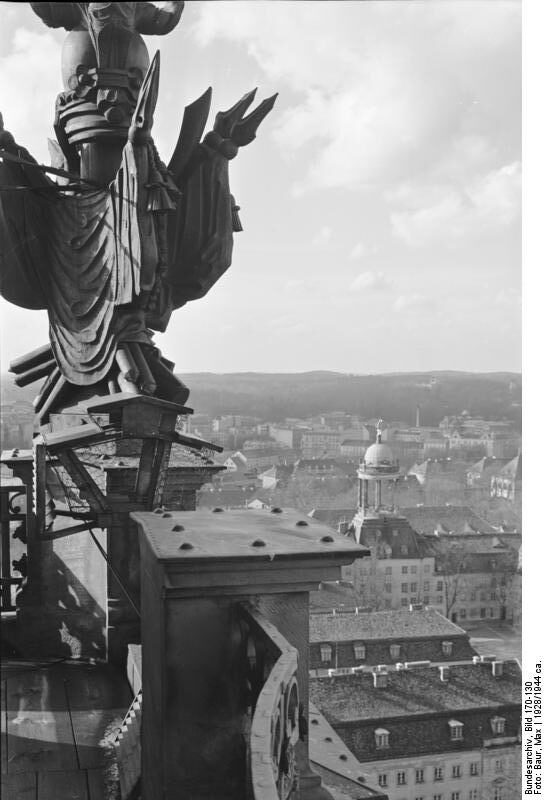


The cap is the last piece. The foundation gave the contract for the cap to a Potsdam firm of restoration builders, BDP Baudenkmalpflege Potsdam, in January 2025: almost 32 meters of steel columns and timber under copper, made in workshops and pre-assembled beside the tower, with the weather vane turning on top. The foundation’s most recent word, in September 2026, is that a crane will lift it on in summer 2027, which would make the tower almost 90 meters high again and the tallest building in Potsdam.
Hours, tickets and when to go
As of late 2026 the tower opens Monday to Friday 11:00–15:00 and Saturday and Sunday 10:00–17:00, and tickets are sold only at the desk in the foyer. The view costs €8 (reduced €6), the exhibition €8 (reduced €6), and the combined ticket €12 (reduced €9); a family combined ticket is €20, children up to 6 go free, and holders of the Berlin WelcomeCard pay the reduced price. The desk takes cash, cards and phone payments, larger bags go in lockers, and dogs other than assistance dogs are not allowed.
Check the Garrison Church’s visit page before a weekday visit. The foundation has announced that from 2027 it will use the tower on weekdays mainly for school classes and youth groups, and it has not yet published the public hours that will go with that. Weekends are the safe bet.
Buy the combined ticket. The exhibition is the half that stays with you, and the view means more once you know what you are looking at; go up last, in the hour before closing, when the low sun lights the Nikolaikirche dome. The whole building is step-free, with lifts to the platform and a step-free toilet on the first floor.
Getting there and what is nearby
From Berlin, take the S7 or the regional train RE1 to Potsdam Hauptbahnhof (main station); a single ticket Berlin ABC costs €5.00 in 2026 and €5.20 from January 1, 2027, and the 24-hour ticket €12.90, rising to €13.20. My guide to the Potsdam day trip from Berlin has the trains and tickets in detail. From the station, cross the Lange Brücke over the Havel to the Landtag and walk west along Breite Straße; the foundation reckons ten minutes, and I would allow fifteen. Trams stop at Alter Markt/Landtag if you would rather ride across the bridge.
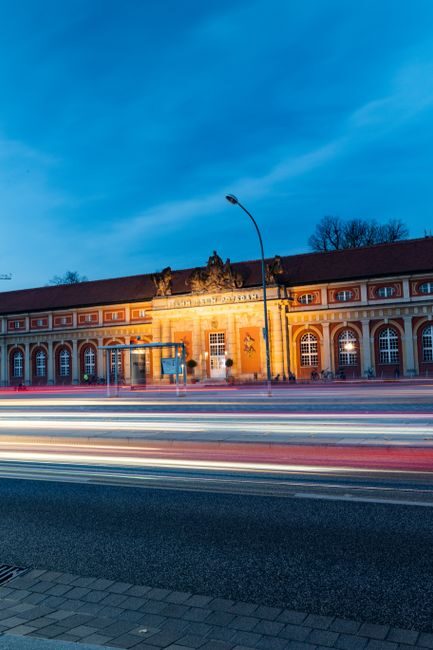
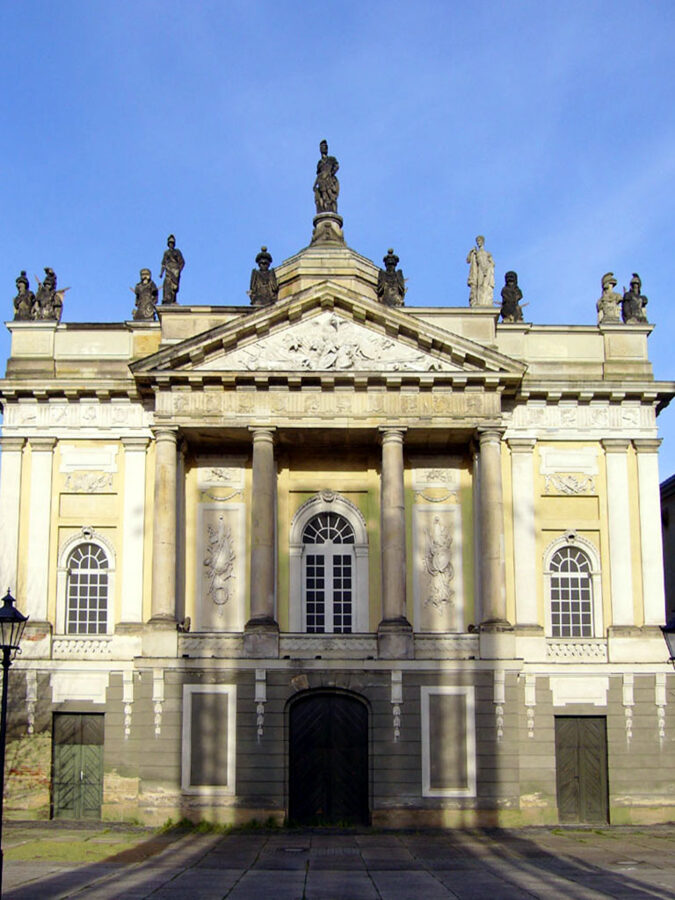
Breite Straße is a four-lane road, not a strolling street, but this stretch is worth walking slowly. Coming from the Alter Markt you pass the Marstall, the royal stables that now house the Filmmuseum Potsdam, then the tower, with the Rechenzentrum behind it and the Breite Straße wing of the Great Military Orphanage across the road. Walk round the Rechenzentrum to see the mosaic at pavement level, then cut through to the Plantage for the silent carillon and the pillared front of the Langer Stall, a facade of 1781 with nothing behind it but new buildings.
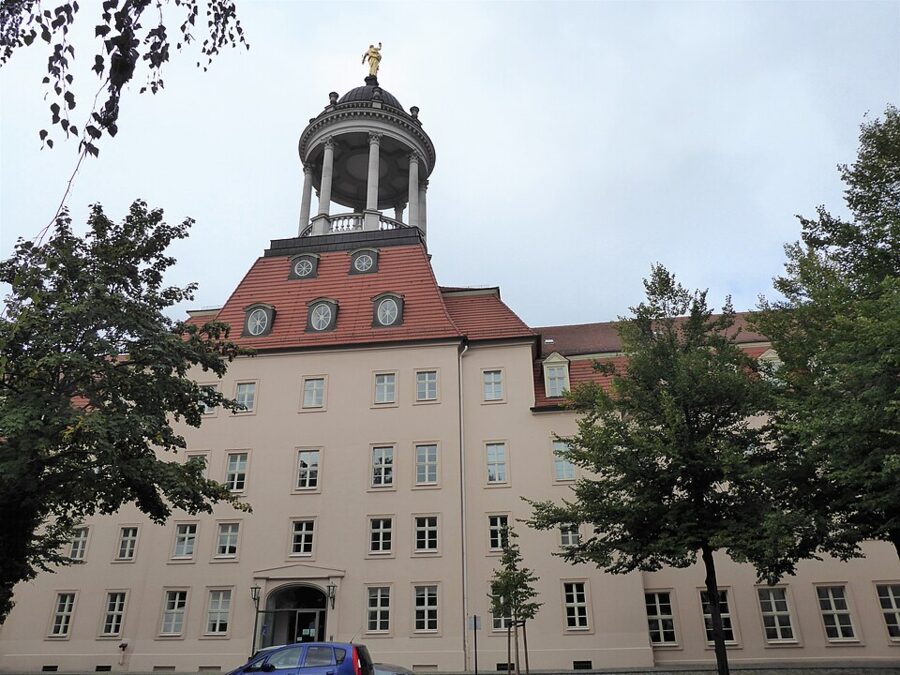

For a coffee, Le Petit Café at the foot of the tower serves quiche, croques, salads and cake, inside or out front. The Rechenzentrum’s own café, LAIKA, opens Wednesday to Friday 13:00–17:00 with coffee, cake and art on the walls, which is the obvious place to hear the other side of the argument. For a proper meal, my list of Potsdam restaurants covers the Alter Markt, Brandenburger Straße and the Dutch Quarter, all within fifteen minutes.
The rest of the old center is a short walk east: the Alter Markt with the Nikolaikirche, the Landtag in the rebuilt City Palace and the Museum Barberini, the last two rebuilt in the 2010s under the same policy of recovering the historic center, which my guide to Potsdam’s old town walks through street by street. Brandenburger Straße and the Brandenburg Gate are about ten minutes north-west, and in the run-up to Christmas the Potsdam Christmas market fills Brandenburger Straße. If you want more indoor stops for a cold day, my guide to the museums in Potsdam sets them side by side, and the full list of things to do in Potsdam covers the palaces and parks.
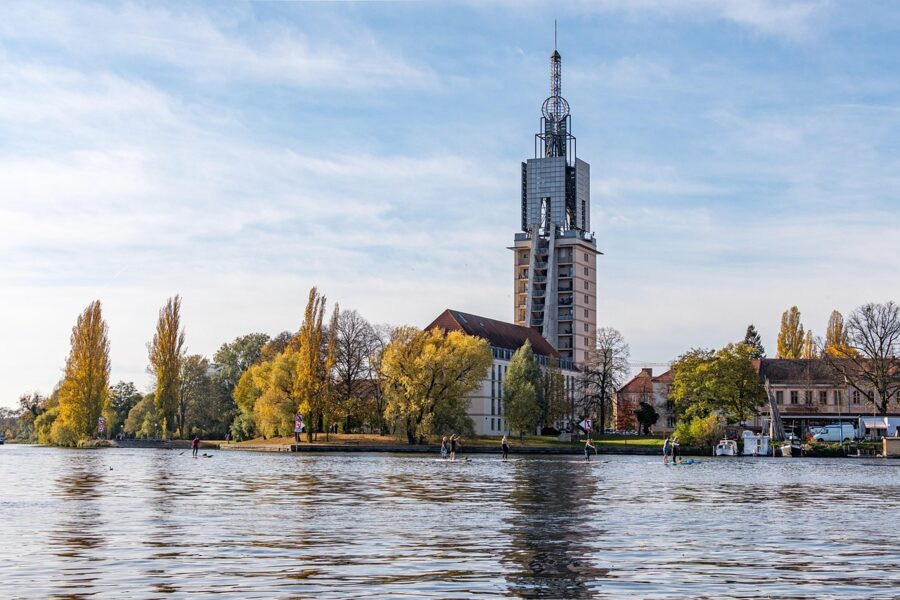
On the way back to the station, stop again at the corner of Breite Straße and Dortustraße. The tower that stops short at 57 meters will have its cap by the end of next summer, if the foundation keeps to its date, and the mosaic will still be there beside it until at least 2033. Between them is the space where the nave stood, and where Potsdam has not yet decided what belongs.