

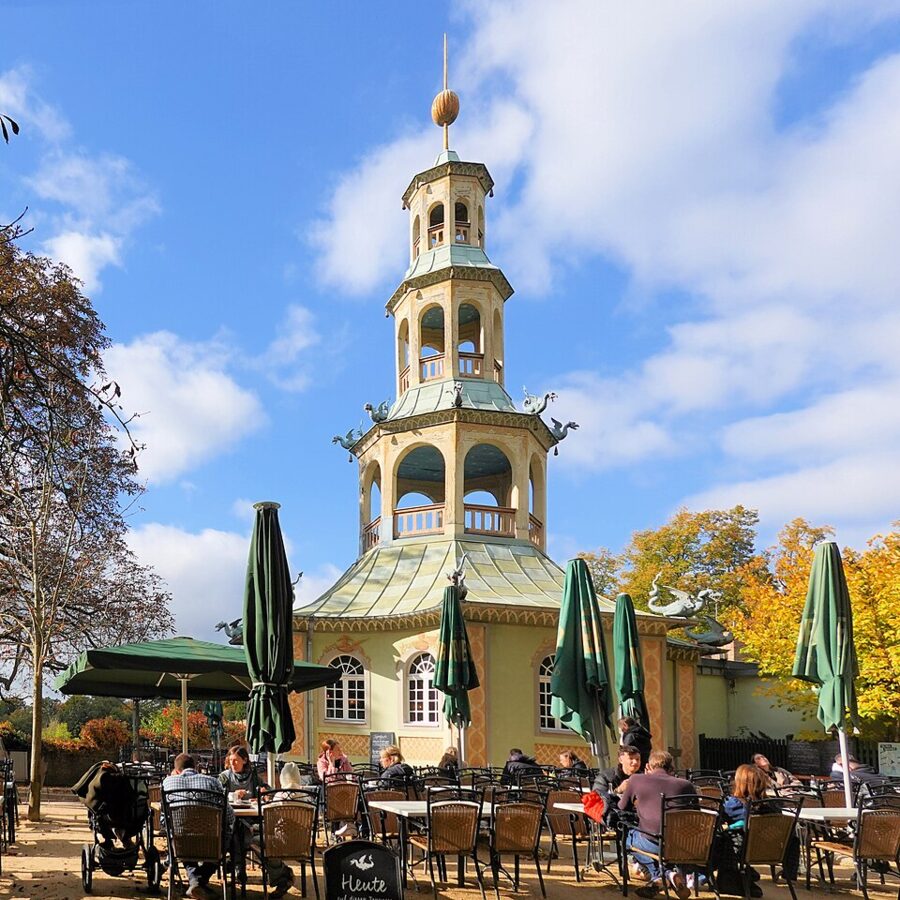
The vineyard Frederick the Great (Friedrich II) had terraced into the Klausberg in 1769 never produced a wine worth pouring. The pagoda built for its grower, hung with sixteen gilded dragons, has done better: early in the twentieth century a tenant opened a coffee counter in it, and today the Drachenhaus serves soljanka, schnitzel and cake from the old court confectioner Rabien to anyone who climbs the 75 steps. In November its kitchen takes the last orders at 17:00, half an hour after the New Palace, a short walk away, has closed its doors.
That half hour is the whole art of eating in Potsdam. The palaces and the restaurants keep separate calendars, and the best tables close on different weekdays. Plan lunch around the park you are in, and dinner around the quarter you will be walking back through, and the day works.

The town divides by where you will be standing when you get hungry: inside and around Park Sanssouci, in the old town and the Dutch Quarter, up in the north around the Neuer Garten, across the Havel in Babelsberg, and on the lakeshores. Then there is the regional food itself, the zander, asparagus, sour beer and fruit wine, and where in and around town to find it.
Contents8 parts
- How eating works around the sights
- Park Sanssouci and its edges
- The old town: Brandenburger Straße, the Alter Markt and the Neuer Markt
- The Dutch Quarter
- The north: Alexandrowka, the Pfingstberg and the Neuer Garten
- Babelsberg and the Griebnitzsee
- Lakeshore tables and beer gardens
- Regional food: what to look for, and where
How eating works around the sights
Start with the closing days, because they decide everything else. Sanssouci Palace (Schloss Sanssouci) closes on Mondays all year. The New Palace (Neues Palais) closes on Mondays from January to October and switches to Tuesdays in November and December. Many of the restaurants near them take their own rest day on Monday or Tuesday, and a few close two days a week, so a Monday in Potsdam needs more planning than a Saturday.
Winter is the second filter. From November to March the park cafés shorten their hours or open only on weekends, the beer gardens fold up their tables, and two places I would otherwise send you to, the Meierei brewpub and Bill’s Kitchen near Charlottenhof, are closed for the month or the season as I write. In exchange, goose season runs from St. Martin’s Day, November 11, until Christmas, and several kitchens carve one at the table.
Booking matters for dinner and for the set feasts, rarely for lunch. Maison Charlotte asks you to reserve in good time, the Drachenhaus takes online bookings only for its indoor rooms, and the goose at Kades and the duck menu at the Theaterklause are by advance order; a beer hall at 13:00 on a Wednesday needs nothing. Payment is mixed: Café Heider and Anna Amalia take cards only, Café Repin takes cash only, and the Drachenhaus accepts cards from €20.
Getting here is the easy part: the S7 or the RE1 from Berlin runs to Potsdam Hauptbahnhof, the main station, on a Berlin ABC single ticket at €5.00 in 2026 (€5.20 from January 1, 2027), and my Potsdam day trip from Berlin sets out the full day. The table below is the short version of the rest days for the places that keep regular hours.
| Where you are | Place | Closed | Good for |
|---|---|---|---|
| Park Sanssouci | Drachenhaus | Mon–Wed in Nov, Dec and March; weekdays in Jan and Feb | Lunch, cake on the terrace |
| Park Sanssouci | JOHO Broiler Bar at the mill | Open daily | Quick lunch, beer garden |
| New Palace end | Alt Bayern in the Bürgerbahnhof | Open daily from 12:00 | Lunch after the New Palace |
| Grünes Gitter | Theaterklause | Open daily, short hours at weekends | Weekday lunch, tarts |
| Old town | Café Heider | Open daily | Breakfast, cake, schnitzel |
| Old town | Der Butt | Sun, Mon | Fish dinner |
| Old town | Juliette | Mon, Tue | French dinner |
| Dutch Quarter | Zum Fliegenden Holländer | Only December 24 | Lunch or dinner, goose |
| Dutch Quarter | Maison Charlotte | Sun | Oysters, French menus |
| North | Alexandrowka1 | Mon | Russian lunch |
| North | Kades am Pfingstberg | Tue, Wed | Brandenburg cooking, view |
| North | Kongsnæs | Mon | Fish by the Glienicke Bridge |
| Babelsberg | Otto Hiemke | Weekday lunch (opens 17:00 Mon–Thu) | Old-style dinner |
| Templiner See | Anna Amalia | Wed; weekday lunch | Lake-view dinner |
Park Sanssouci and its edges
Park Sanssouci is long, green and almost entirely without food. The Prussian Palaces and Gardens Foundation (SPSG) keeps a short list of the places to eat in and around the park, and it is worth knowing them by position: one on the northern ridge, a cluster by the windmill and the palace gate, one at each end of the main avenue. Between them lie long gravel walks and nothing to eat.
The Drachenhaus on the Klausberg
The pagoda is the only restaurant set deep inside the park, and it is the one I would plan a day around. You reach it from the Orangery terraces, from the Belvedere along the ridge, or up the 75 steps from the Maulbeerallee; inside are two painted rooms with 90 seats, outside three terraces. The Drachenhaus hours are daily 11:00–19:00 from April to October, Thursday to Sunday 12:00–18:00 in November, December and March, and weekends only in January and February.
The winter card is German and seasonal: a terrine of soljanka for €9.50, schnitzel, stuffed peppers, duck leg with red cabbage, and mains from about €22 to €33. From November 11 to Christmas a whole roast goose for four, carved at the table, costs €195. Fish comes from local fishermen, and the cakes come from Rabien, once confectioner to the Potsdam court. Order cake at 15:00 on a weekday and the terrace is at its quietest.
By the windmill and the palace gate
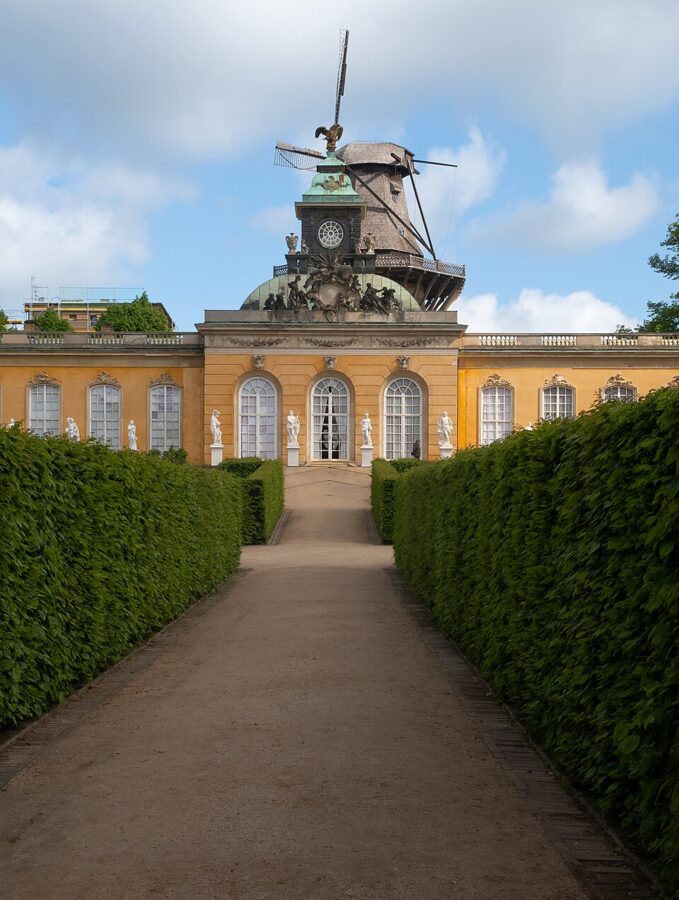
The cluster by the Historic Mill (Historische Mühle) is where most people end up, because it sits on the way from the bus to the palace. The restaurant beside the mill is now the JOHO Broiler Bar “Zur Historischen Mühle”, open daily 11:30–20:00, with a beer garden that serves until 18:00. Broiler is the eastern German word for a spit-roast chicken, and the house specialty is a table loaded with chicken and sides to share; it is fast, filling and exactly what a family needs after the terraces.

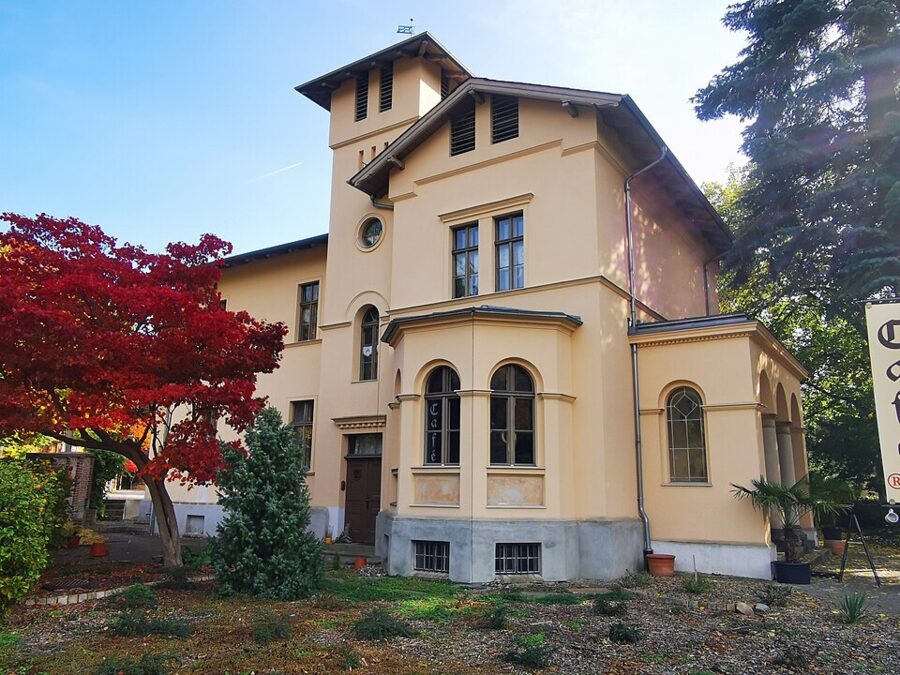
A few steps outside the park fence, Café Repin serves homemade cakes in the salons and on the terrace of a tower villa at Gregor-Mendel-Straße 24, right by the palace entrance. It opens only on Saturdays, Sundays and holidays, 13:00–18:00, and takes no cards. If you are at the palace on a weekend afternoon it is the gentlest coffee stop in Potsdam.

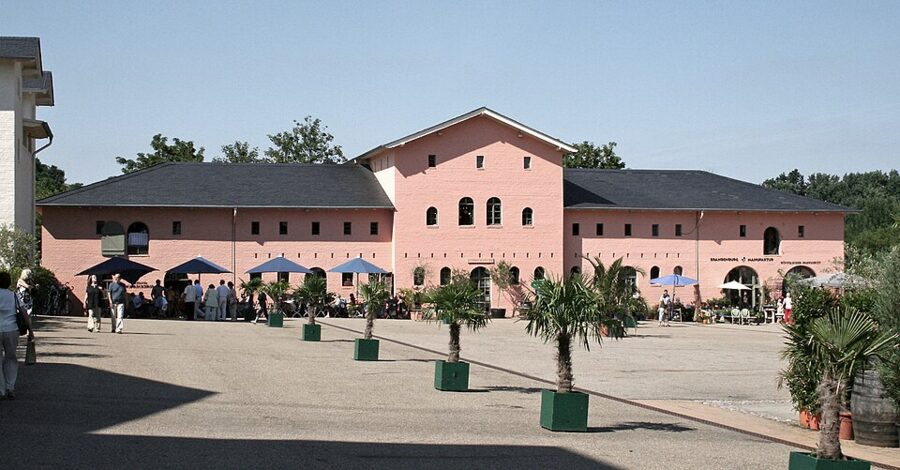
Five minutes beyond the mill, the Krongut Bornstedt was the model farm of the crown prince who became Frederick III and his English wife Victoria, built in an Italian style on the Bornstedter See and nicknamed the belly of Sanssouci for what it sent to the palace kitchens. The Krongut HofBrasserie serves sheet cakes, its own roasted coffee and soups on Fridays, Saturdays and Sundays, 10:00–17:00, in its autumn 2026 schedule. Its rooms in the former court bakery are being rebuilt, so the café is working from a temporary space on the estate until the enlarged brasserie opens, expected over the winter. The estate’s brewery restaurant is closed for now; skip the walk if you were counting on a full meal there.

The New Palace end
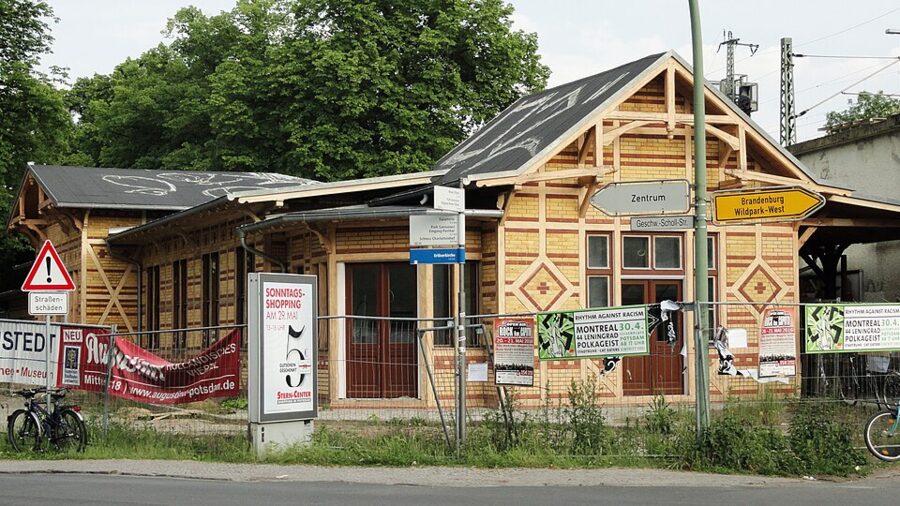
At the western end of the park the New Palace leaves you a long way from town at lunchtime, and the answer is the station. The Bürgerbahnhof at Potsdam Park Sanssouci station, the public building next to the Kaiserbahnhof that served the emperor, now holds Alt Bayern in the Bürgerbahnhof, open daily from 12:00 with the kitchen running all afternoon. The card is Bavarian beer-hall cooking with a Berlin accent: Berlin potato soup with marjoram for €8.50, a pair of Weißwürste for €7.50, crackling roast pork for €15.90 and schnitzel for €18.50.

Near Charlottenhof, the garden kitchen called Bill’s Kitchen at the Lottenhof serves tacos at €9 for two and burritos at €16.50 in the warm months. Its site currently reads end of season, temporarily closed, so treat it as a summer stop and check before you walk over.
The Grünes Gitter end
The eastern entrance, the Grünes Gitter by the Friedenskirche, is closest to town, and the best lunch near it hides behind an old theater front. The Theaterklause on Zimmerstraße kept its name and facade when the Hans Otto Theater moved out; the building behind now holds research, archive and restoration rooms, and the restaurant has run here in its present form since 2017. It opens Monday 10:00–18:00, Tuesday to Friday 10:00–22:00 and at weekends 12:00–18:00, with a weekday lunch that changes daily and tarts and layer cakes from its own pastry kitchen.
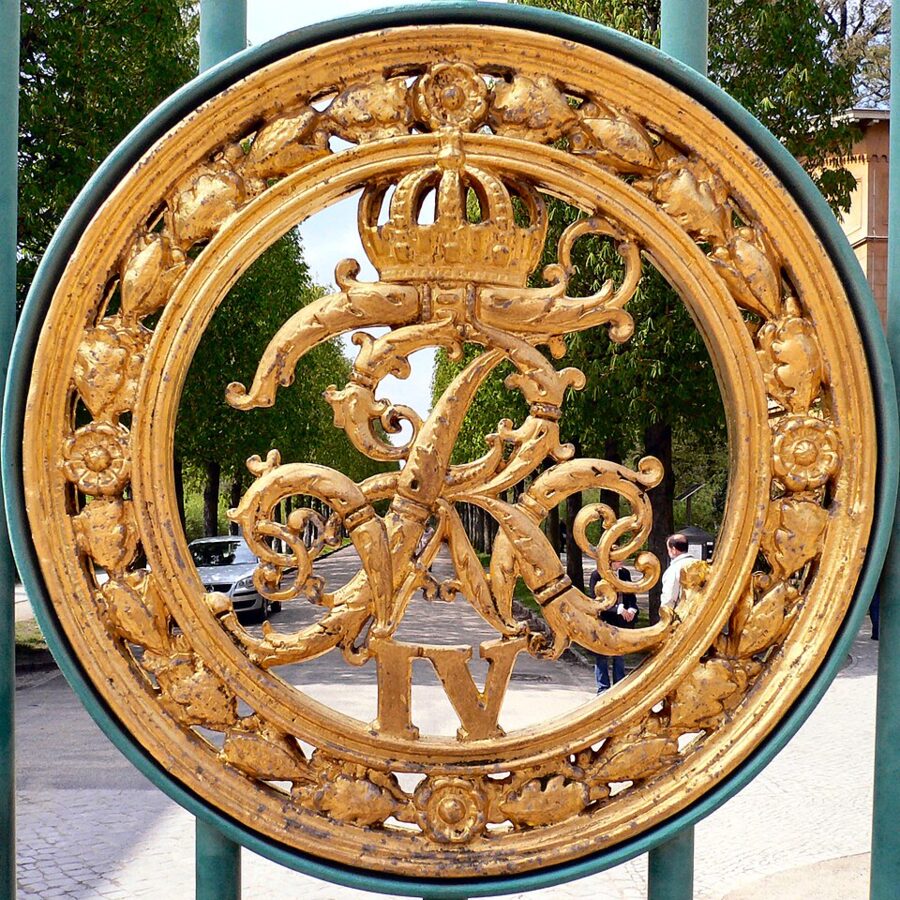

The Theaterklause cooks with Brandenburg suppliers and says so: duck from a farmer in Derwitz for its winter duck menu at €50 a head (two people minimum, three days’ notice), and a Sunday Advent brunch at €37.50 that runs to smoked trout, game ham from the Fläming and Baruth cheese. It renewed its Slow Food listing in 2026. If you only eat one lunch near the park, I would make it this one.
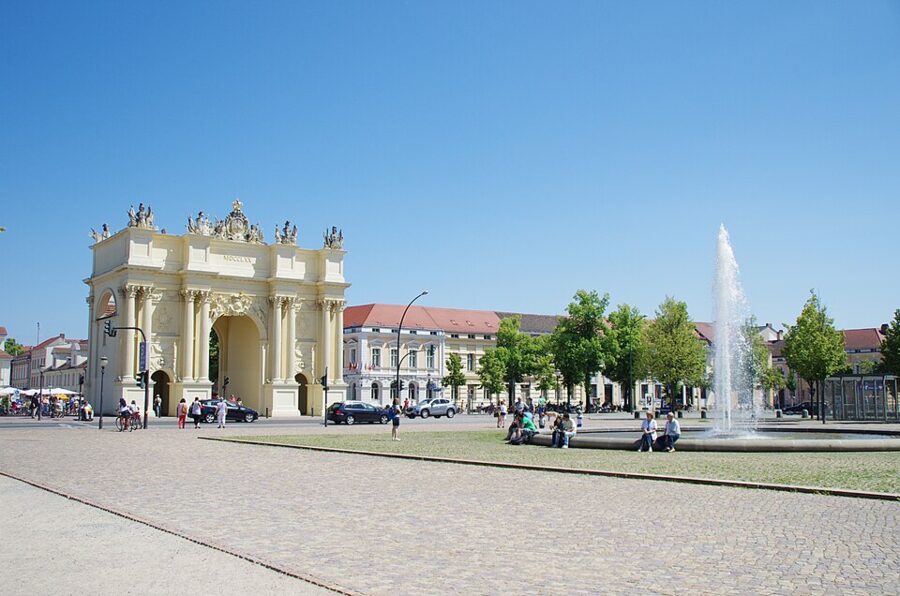
A few minutes further, on Luisenplatz by Potsdam’s own Brandenburg Gate, Assaggi cooks Italian in an open kitchen from 12:00 until late, closed on Wednesdays. It is the reliable fallback when the Theaterklause has finished lunch.

The old town: Brandenburger Straße, the Alter Markt and the Neuer Markt
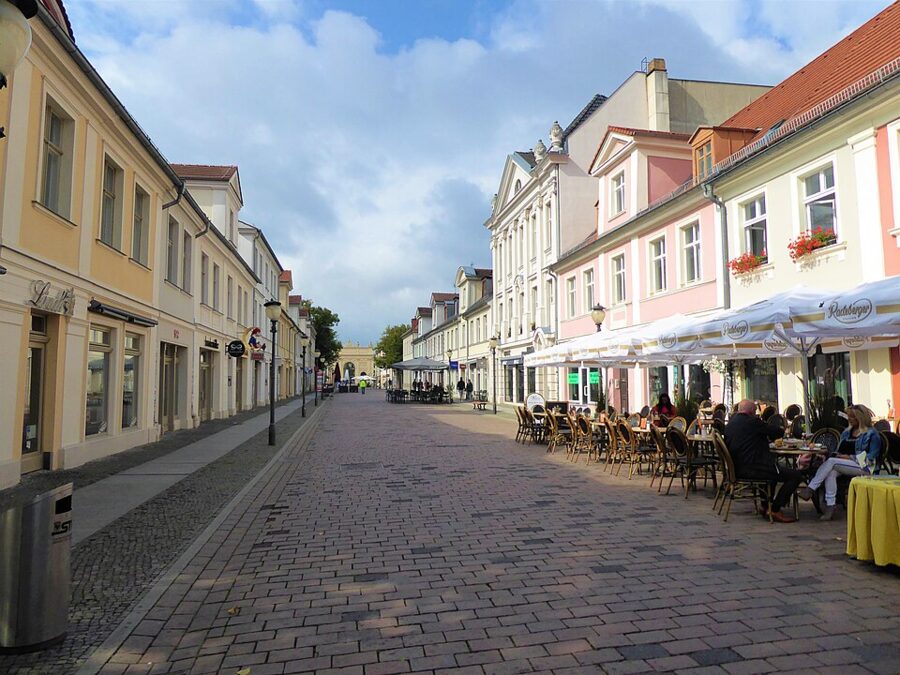
The baroque old town between the Brandenburg Gate and the Nauener Tor is where you will most likely eat at least once. Brandenburger Straße, the long pedestrian street, is lined with shops; the tables I would choose are on its side streets and at its ends.

Coffee, cake and lunch
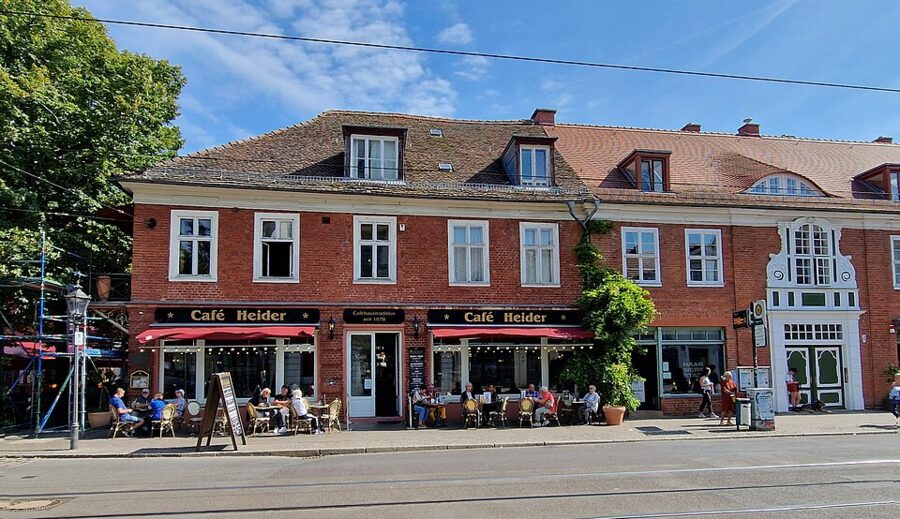
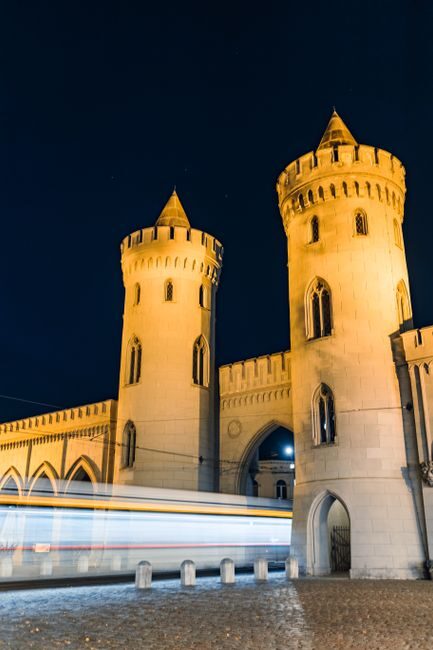
At the Nauener Tor, the gateway into the Dutch Quarter, Café Heider has been a coffee house since 1878, as a pastry shop at first, taken over by the confectioner Karl Heider in the 1960s and rebuilt in 1995 on an old Berlin model. It opens daily 09:00–21:00 with hot food from 12:00 to 20:00, roasts its own coffee, bakes its own cakes and makes its own ice cream. The daily breakfast buffet costs €16.90 with hot drinks, payment is by card only, and in goose season the roast leg comes with apple and cinnamon red cabbage, kale and Thuringian dumplings.

Up on the roof at Brandenburger Straße 30–31, Loft is an elevator ride above the shopping street, with two terraces over the old town. It opens Tuesday to Saturday 12:00–23:00 and closes on Sundays and Mondays. The house dish is a Prussian goulash with potato dumplings for €24.90, and an entrecôte runs €29.90; come for a late lunch in good weather, when the view is half the bill.
On Breite Straße beside the Neuer Markt, the Genusswerkstatt serves Italian-leaning plates all day, Tuesday to Sunday, 09:00–22:00. A vegetable quiche costs €14.90, tomato soup €8.10, a lemon risotto with house-cured salmon €20.30. It is the best all-day option on the south side of the old town.
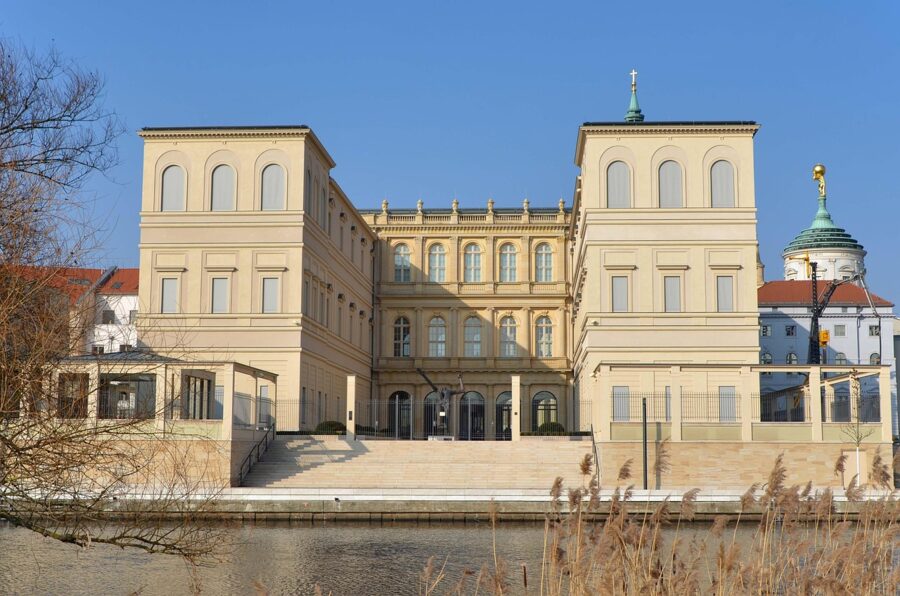
On the Alter Markt, the café and restaurant of the Museum Barberini serves small dishes, quiches, salads and cakes during the museum’s hours: Monday and Wednesday to Sunday, 10:00–19:00, closed on Tuesdays. It takes no reservations while the museum is open. I would see the paintings first and eat here afterward, rather than queue for a table at noon.
Dinner in the old town
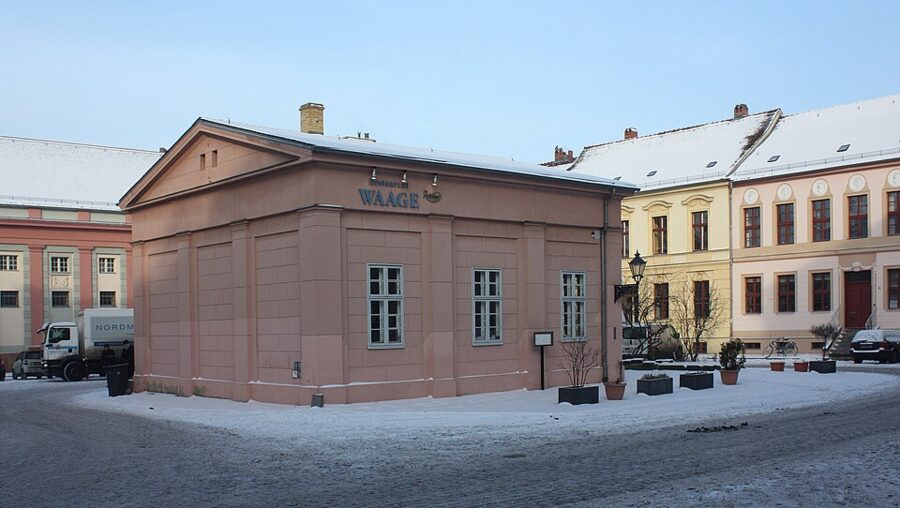
On the Neuer Markt, the small baroque square behind the Alter Markt, Restaurant Waage cooks Italian and Mediterranean food in the old town weigh house. It opens Tuesday to Saturday 17:00–23:00 and Sunday 12:00–22:00, closed on Mondays. The thing to order is whatever is on the weekly card: fish, seafood, beef fillet or game.

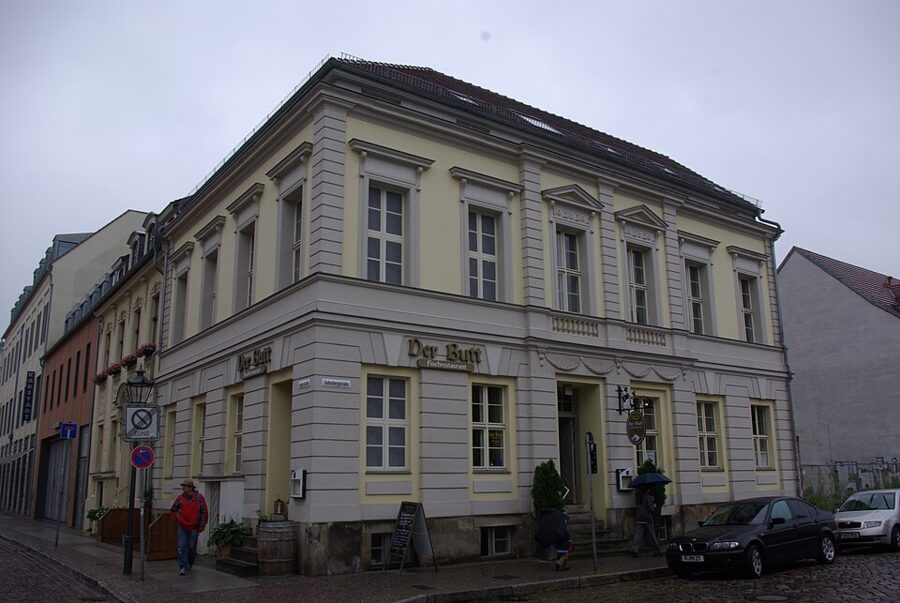
For fish, go to Der Butt on Gutenbergstraße, which calls itself the only fish restaurant in Potsdam. A tavern has worked the ground floor of this corner house since 1842, and the name is a royal joke: Frederick William IV (Friedrich Wilhelm IV) was nicknamed der Butt, the flounder, from his youth for his round shape and short neck, took it with good humor and used it to sign some of his drawings. Freshwater fish comes from a fishery in Werder, the beer from the Potsdam Braumanufaktur and the white wine from Werder’s Wachtelberg. It opens Tuesday to Thursday 16:00–22:00 and Friday and Saturday 12:00–22:00, closed Sunday and Monday.

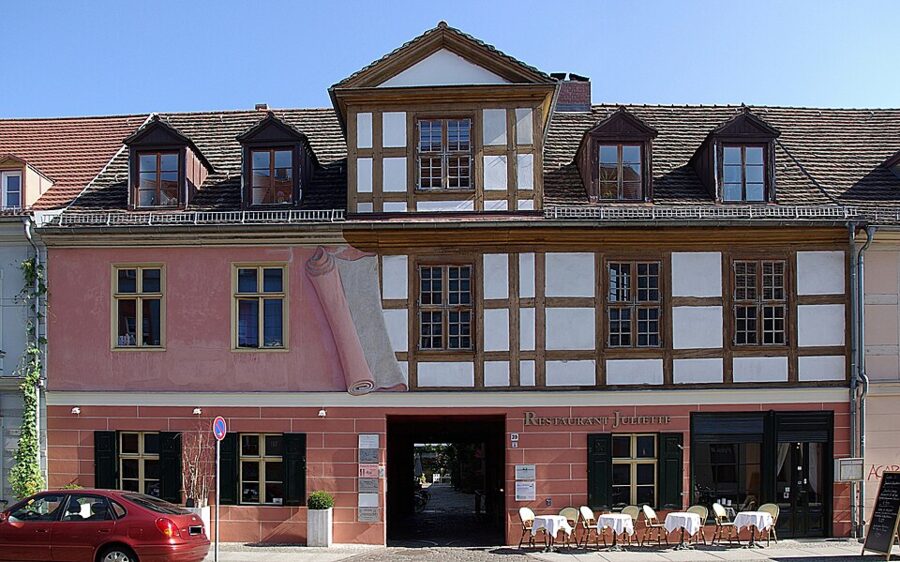
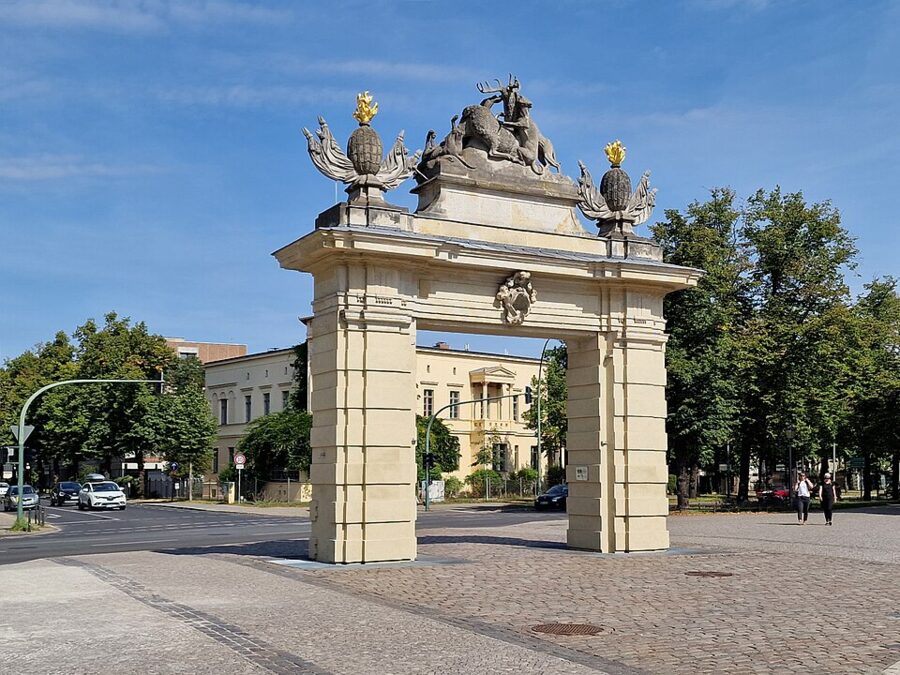
At the Jägertor end of town, Restaurant Juliette serves classic French cooking with the chef Carsten Rettschlag’s own ideas in a listed seventeenth-century half-timbered house with 50 seats and a wine list of more than 120 French and German bottles. It opens Wednesday to Sunday 17:00–22:00, kitchen until 21:00. Over the holidays it closes on December 23 and 24 and on New Year’s Day, and on December 25 and 26 it also opens for lunch, 12:00–15:00. This is the dinner I would book first.

Round the corner at the Jägertor, Café à la Russe cooks Russian, Ukrainian and Caucasian home food Tuesday to Thursday 13:00–20:00, Friday and Saturday until 21:00 and Sunday until 18:00, closed on Mondays. Note its winter break: closed December 24 and 25 and from December 31, 2026 to January 3, 2027.

The Dutch Quarter
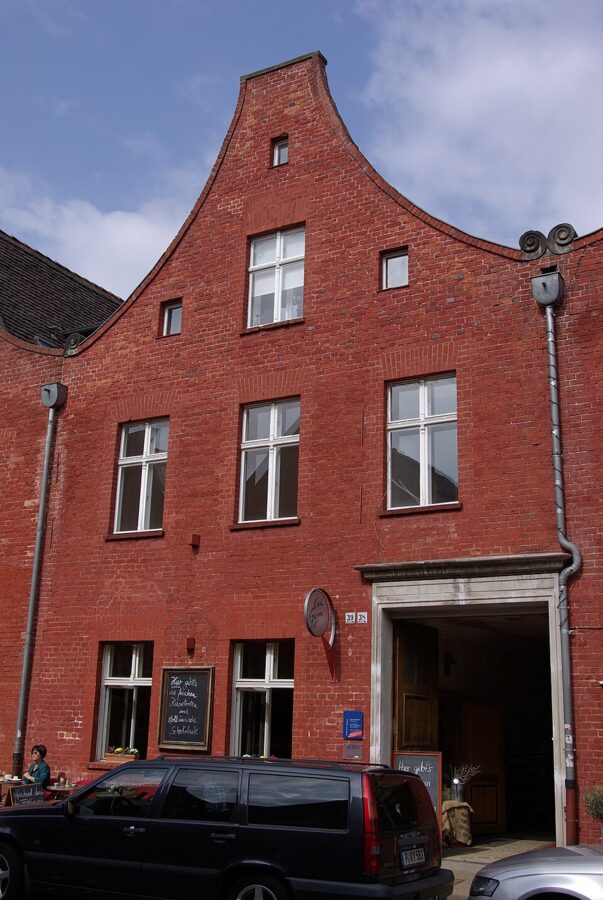
Frederick William I (Friedrich Wilhelm I), the soldier king, had the Dutch Quarter built between 1733 and 1742 under the Amsterdam builder Jan Bouman: 134 brick houses in four blocks, divided by Mittelstraße and Benkertstraße. The same red brick and gables now front cafés, restaurants and small shops, and the four blocks are small enough to walk in ten minutes. That makes it the easiest place in town to decide on the spot.
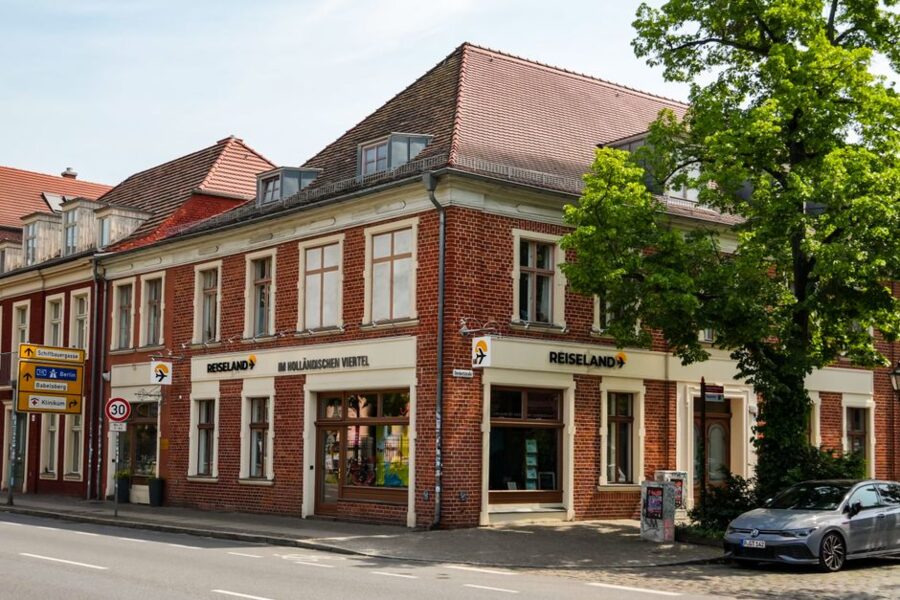
Zum Fliegenden Holländer at Benkertstraße 5 is the quarter’s big house: several rooms upstairs and down, 120 seats on two terraces, open Monday to Saturday 12:00–23:00 and Sunday 12:00–21:00 with the kitchen open until 21:00, and closed only on Christmas Eve. The cooking is German with European touches. In goose season a leg costs €36.50 and a whole goose carved at the table €169; half a farm duck is €32.
Across Mittelstraße, Augustiner im Holländischen Viertel at number 18 pours Augustiner beer from Munich in a set of small rooms around a courtyard beer garden under a large walnut tree. In winter it opens Monday to Friday from 16:00 and at weekends and on holidays from 12:00. The winter card runs to duck consommé for €13.90, kale with two Knacker sausages for €16.90 and half a farm duck for €26.90, with zander fillet in lemon butter on the standing menu.
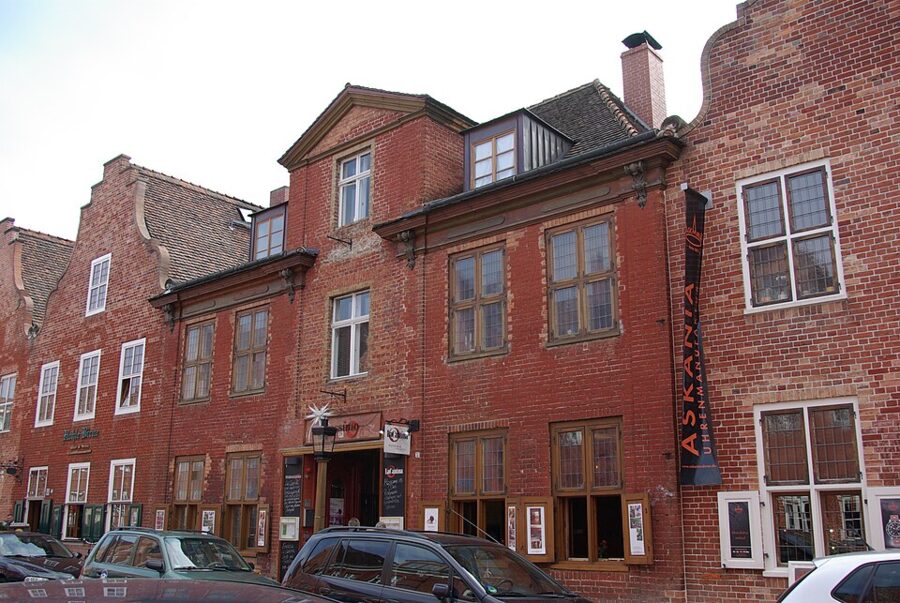

Next door at Mittelstraße 20, Maison Charlotte is a French country restaurant with tiled floors, Normandy plates and oysters every day: three fines de claire for €13.50. Flammkuchen comes from the stone oven and the Breton fish soup is the house classic. The autumn four-course menu costs €63 or €68, and it opens Monday to Saturday 12:00–15:00 and 16:00–22:00, closed on Sundays; book ahead.
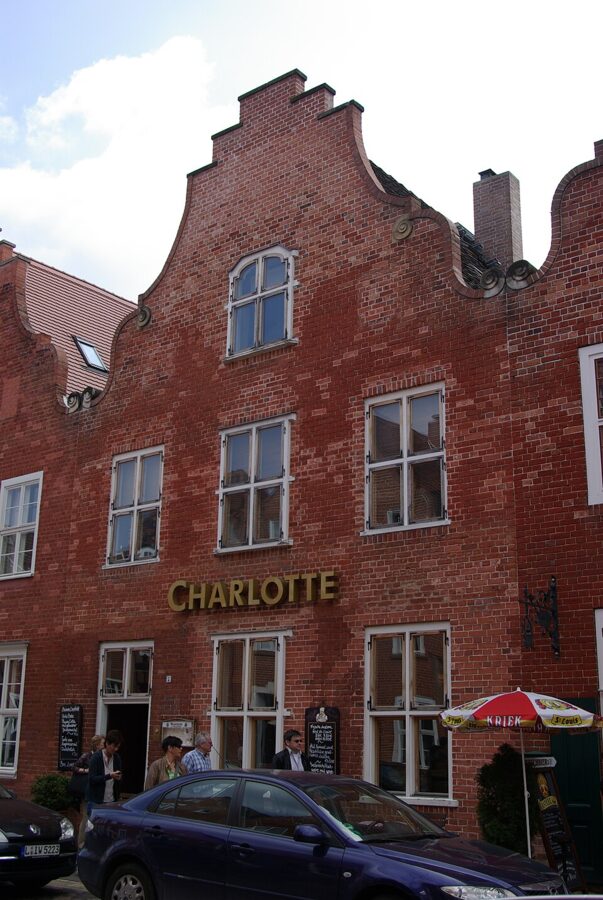

For cake, walk to the far end of Mittelstraße. Café Guam at number 39 is a cheesecake specialist: thirty recipes from its own confectioner, eight to ten of them on the counter on any day, open daily 11:00–19:00. It is the stop I would make between the quarter and the walk out to the Neuer Garten.

The north: Alexandrowka, the Pfingstberg and the Neuer Garten
North of the Nauener Tor the town thins into villas, parks and lakes, and the restaurants are fewer and further apart. They are also some of the best placed in Potsdam, and most of them sit on the route you would take anyway from the Russian colony up to the Belvedere and down to the water.
Alexandrowka
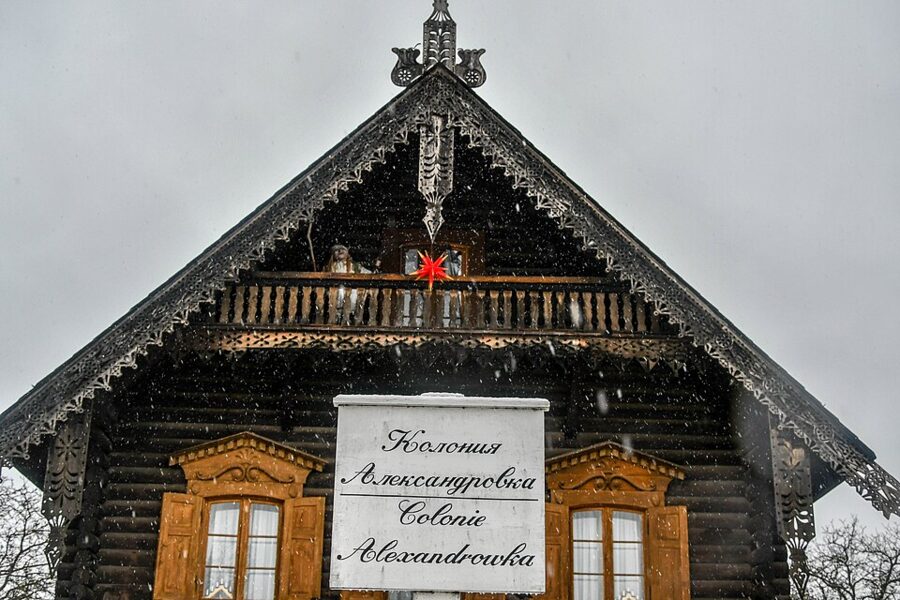
In the Russian colony, house number 1 holds Alexandrowka1, which opened on April 1, 2003 and serves Russian cooking in the timber house: zakuski, blini, borscht, shchi, solyanka and ukha, with tea from the samovar and imported kvass and birch sap. It opens Tuesday to Sunday 12:00–21:00 all year, with the last food orders at 19:45, and closes on Mondays unless a holiday falls on one. Tram 92 or 96 stops at Puschkinallee/Kolonie Alexandrowka, a few steps away; my Alexandrowka article tells the story of the colony itself.

The Pfingstberg
Above the colony, Kades Restaurant am Pfingstberg has been run by the Kade family since they signed the lease on August 1, 1990, in what had been a garden kiosk. Its 2026 hours are Thursday and Friday 12:00–21:00, Saturday and Sunday 12:00–16:00 and 17:00–21:00, and Monday 12:00–21:00, closed on Tuesdays and Wednesdays, with the kitchen closing about an hour earlier. The menu leans to Brandenburg: Potsdam pork knuckle (Potsdamer Eisbein) for €19.90, braised ox cheeks for €26.90, and from November 1 to December 20, 2026 a goose dinner at €45 a head, by advance order only.
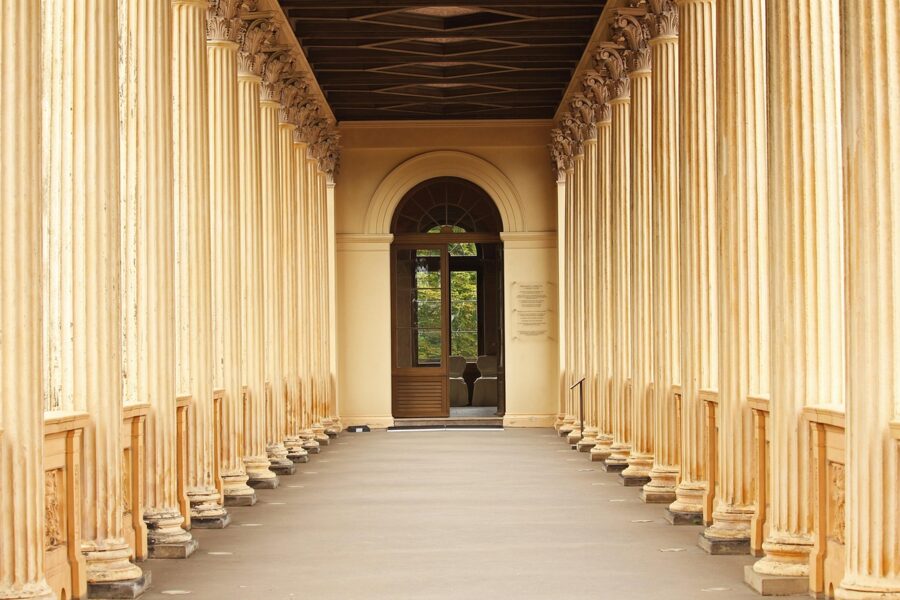
Kades works well as the reward for the climb to the Pfingstberg. The hill rises about 50 m above the town, and since 2011 a winter garden has kept the view open in the cold months. The family started in the summer of 1990 by selling drinks, snacks and the odd homemade apple cake to Berliners who could finally ride out to Potsdam, and the chef still buys nearly everything from Brandenburg, down to asparagus grown without plastic film even if it arrives two weeks later.
Around the Heiliger See and the Neuer Garten
On the Heiliger See, Höfts in the Villa Kellermann serves German cooking in one of the grand lakeside villas, with a terrace that looks across the water to the Marble Palace and the Neuer Garten. It opens Wednesday to Friday 12:00–23:00, Saturday 10:00–23:00 and Sunday 10:00–22:00, closed Monday and Tuesday, with a champagne brunch every Saturday and Sunday and a lunch card and afternoon tea in winter. For a long weekend lunch with a view, this is my pick in the north.

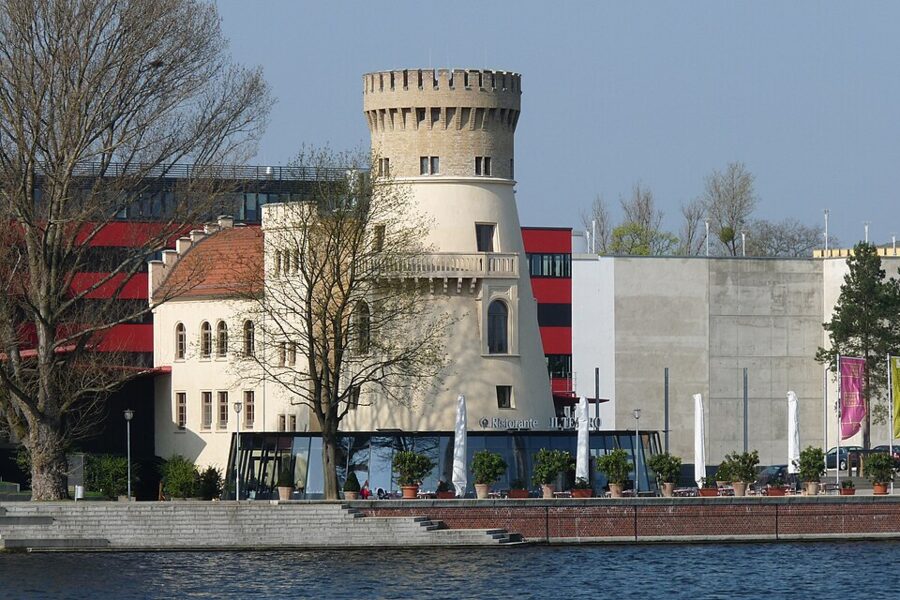
At the northern tip of the Neuer Garten, the Meierei brews its own beer in a building with more lives than most. Carl Gotthard Langhans designed it as a dairy for the court in 1790–1792, Ludwig Persius added a second floor and a battlemented tower for Frederick William IV in 1843–1844, and after 1861 it gained a pump house with a tall chimney. That pump fed the reservoir hidden inside the Belvedere on the Pfingstberg, so the folly on the hill was also the garden’s water tank. The building was still a burned-out ruin when the Wall went up in 1961; it was restored from 1991 and has brewed beer since 2003.
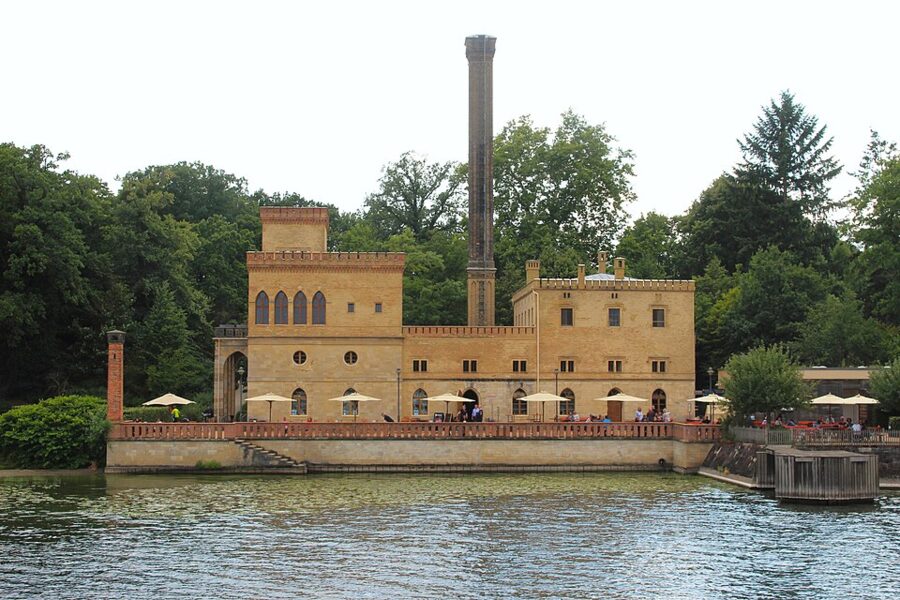

The Meierei is closed for the whole of November 2026. Its regular hours are Wednesday 15:00–21:00, Thursday 13:00–21:00, Friday 13:00–22:00, Saturday 12:00–22:00 and Sunday 12:00–21:00, closed Monday and Tuesday, and the kitchen stops at 19:00. Drink the house Hell at 5.2 percent, or the bottle-conditioned Weisse described below.
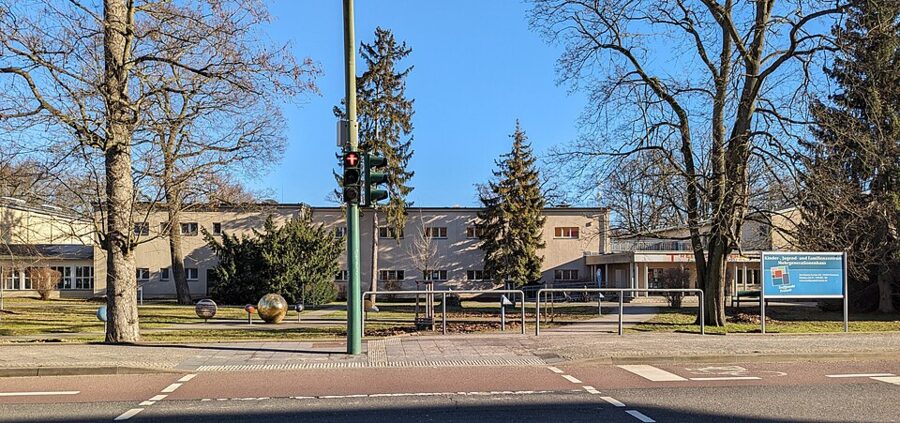
Near the southern entrance to the park, the Café Midi in the Treffpunkt Freizeit, a former Pioneers’ house, is the other café SPSG lists for the Neuer Garten. It opens Monday to Friday 09:00–18:00 and at weekends 10:00–18:00, posts a changing lunch plate each day, lately at €7.50 to €9.50, and is run by the same people as the Theaterklause. With children it is the easiest stop on this side of town.

Kongsnæs by the Glienicke Bridge
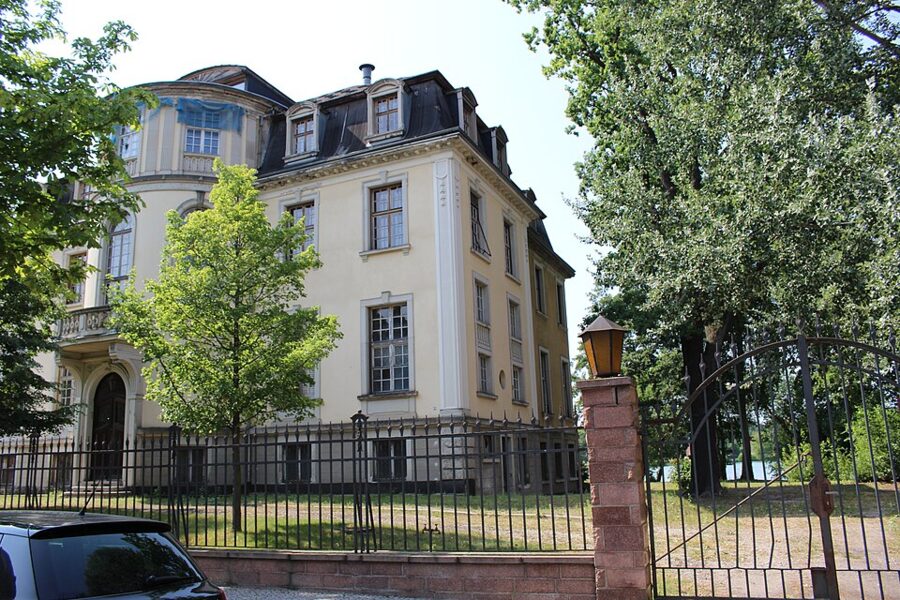
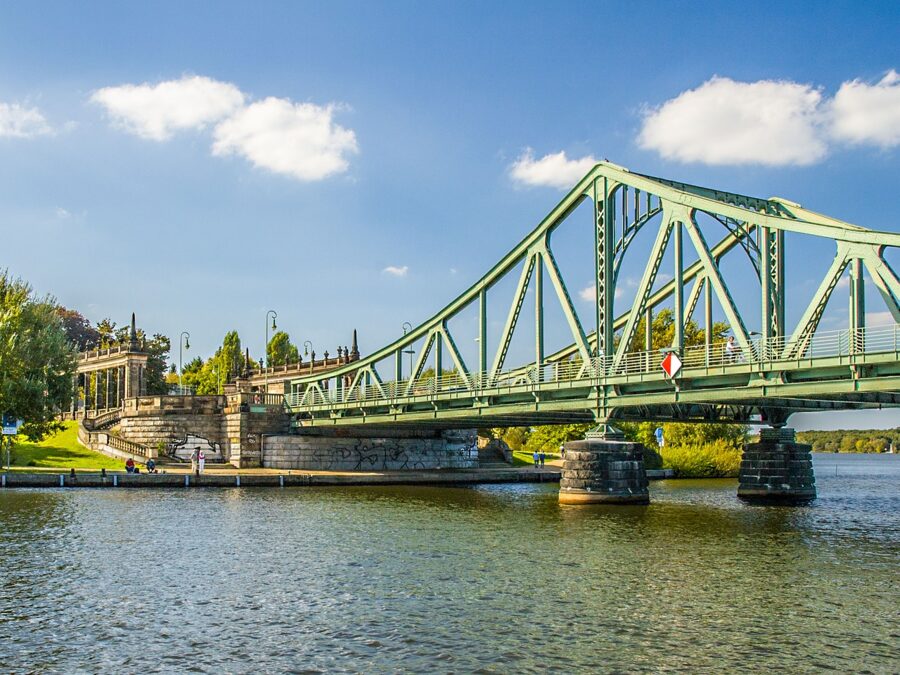
Where the Schwanenallee meets the Jungfernsee, a few hundred meters short of the Glienicke Bridge, Wilhelm II had a landing station for the royal boats built in 1891–1895 in Norwegian dragon style to plans by Holm Hansen Munthe. The reception hall burned at the end of the war, and the Wall along the shore cut the site in two for decades. Rebuilt with private money over more than ten years, the hall now holds the Kongsnæs restaurant.
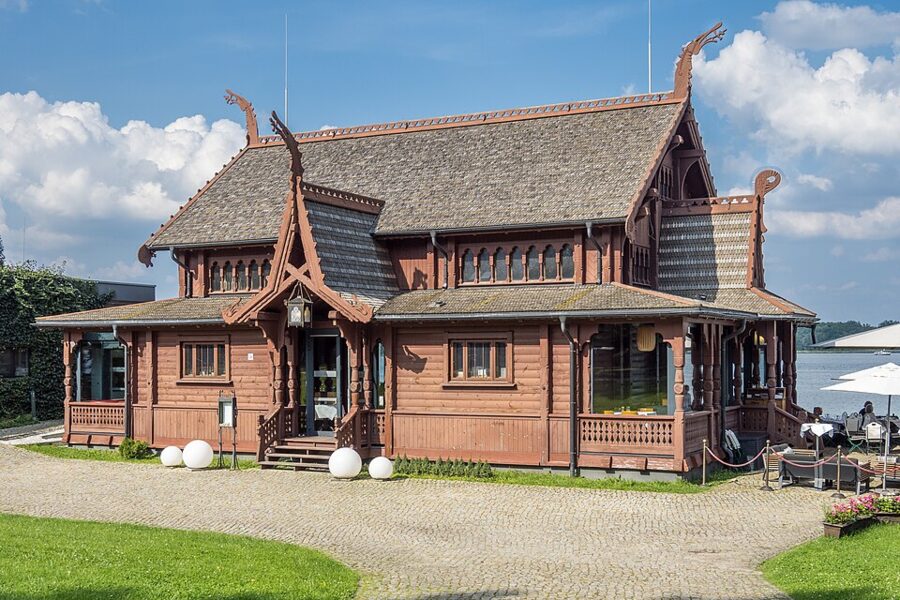

The kitchen leans to fish: the house bouillabaisse costs €29.50 in a small bowl and €45 in a large one, and Wiener schnitzel of milk-fed veal is €34.50. It opens Tuesday to Sunday from 12:00 with the kitchen running through the afternoon, closed on Mondays. It also closes for private events on December 4 and 12, 2026 and January 19, 2027. Across the bridge in Berlin lies Glienicke Palace, which makes this the natural lunch for a walk between the two.
Babelsberg and the Griebnitzsee
Across the Havel, Babelsberg feels like a separate small town of weavers’ houses, villas and film studios, and its restaurants are neighborhood places rather than destinations. That is their charm. If you have spent the morning in Park Babelsberg or at the Filmpark Babelsberg, eat here rather than going back into town.
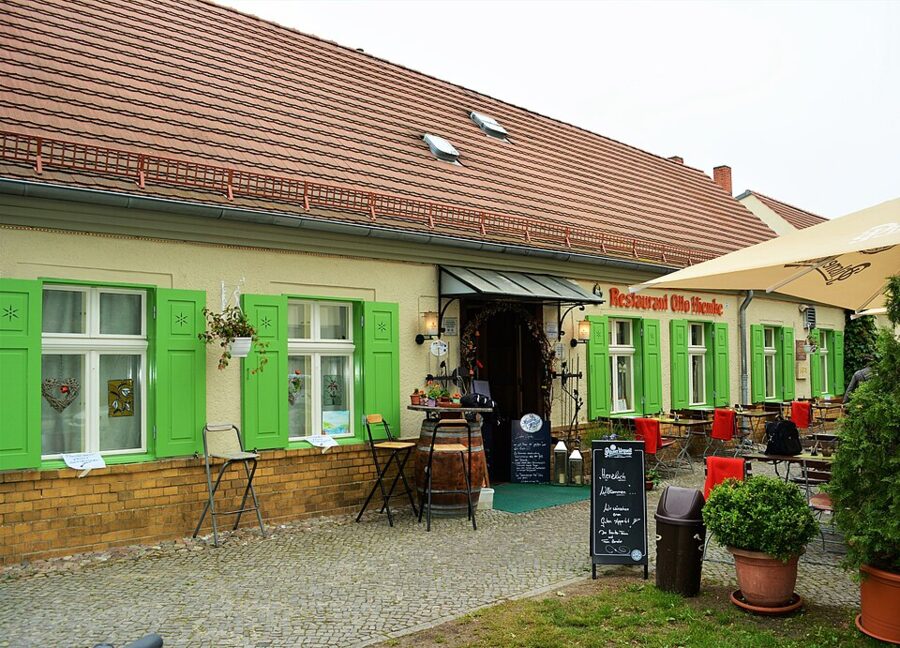
Restaurant Otto Hiemke on Karl-Gruhl-Straße has been in one family since at least 1896 and celebrated 130 years this year. It has a tiled stove for winter and a beer garden for summer, and a changing menu of home cooking. It opens Monday to Thursday 17:00–23:00, Friday and Saturday 12:00–23:00 and Sunday 12:00–22:00, with the kitchen closing at 20:30, so plan an early dinner rather than a late one.

In the weavers’ quarter on Alt Nowawes, AL Dente serves Italian food at cream tablecloths and on a terrace, Tuesday to Sunday 11:30–23:00, closed on Mondays. At lunchtime the neighbors come in for pasta; it is the dependable choice near the Weberplatz.
The Griebnitzsee is a walk rather than a meal. The lakeside path past the Truman villa and along the old line of the Wall has no restaurant I could confirm as open, so eat in the weavers’ quarter before or after; my Potsdam lakes article covers the shore itself.
Lakeshore tables and beer gardens
Potsdam is ringed by Havel lakes, and a meal facing water is the thing people remember. The catch is the calendar: most lakeside terraces are summer rooms, and from November the tables move indoors or the doors close. These are the ones with posted hours for the coming months.
On the Templiner See, at the end of the Pirschheide south-west of the center, Anna Amalia cooks regional and seasonal food by a fireplace in winter and on a lake-view terrace in summer: asparagus from Kremmen in spring, chanterelles in summer, game, goose, duck, ox cheeks and beef roulades in autumn and winter. It opens Monday, Tuesday, Thursday and Friday 17:00–22:00 and at weekends and on holidays 12:00–22:00, closed on Wednesdays, with the kitchen closing at 21:00. Payment is by card only, and the staff ask for tips in cash.
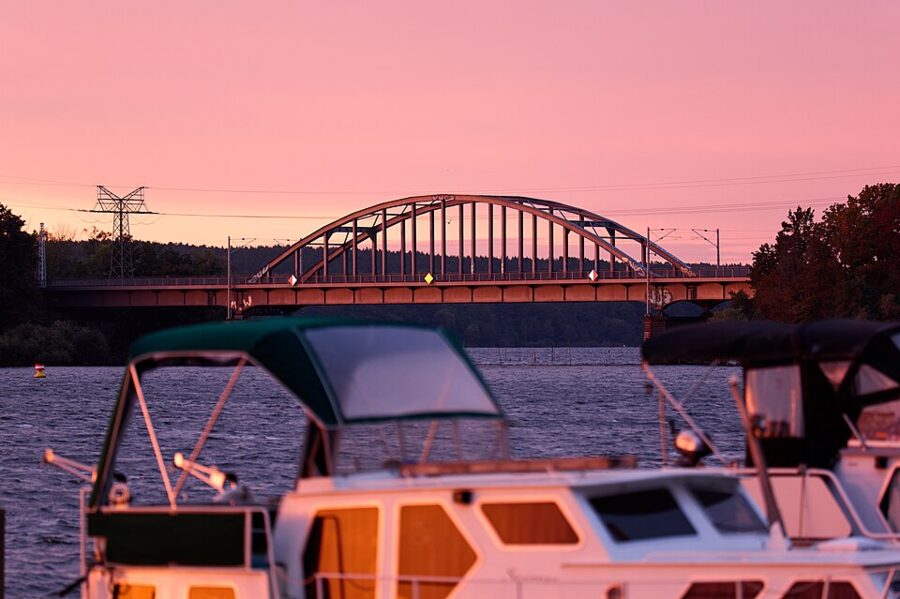
On the Tiefer See, in the old industrial yard of the Schiffbauergasse, the restaurant ship John Barnett is moored at Havel kilometer 26.3 with a view over the lake to Park Babelsberg. It opens Wednesday to Friday from 16:00 and at weekends and on holidays from 12:00, and from December 23 to 31 it opens every day. Go at sunset in summer. The ship itself no longer sails; for a trip on the water, the Potsdam boat tours leave from the Lange Brücke in the center.

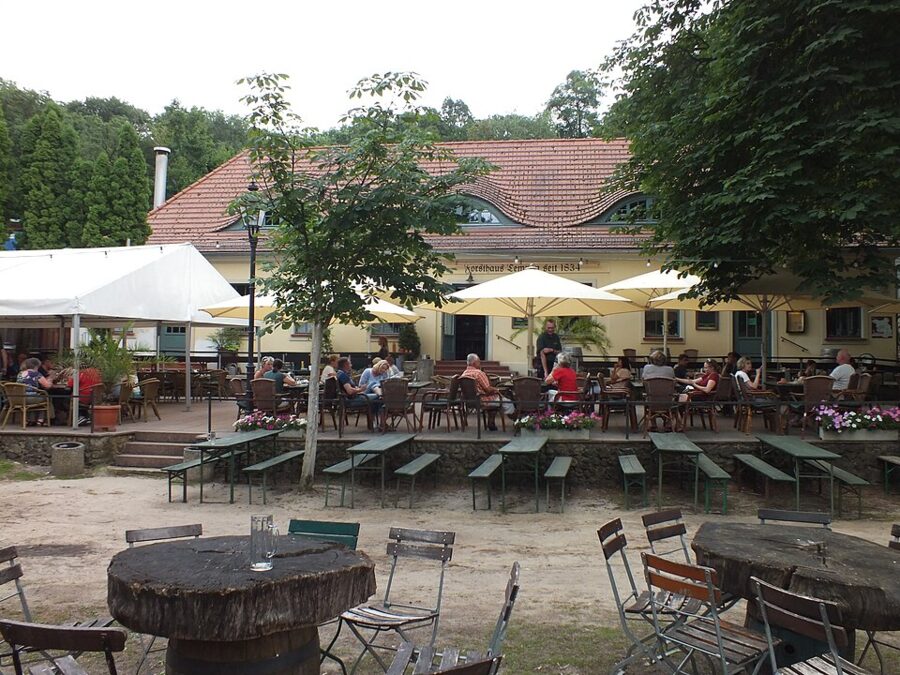
The best beer garden in Potsdam is in the woods on the Templiner See’s far shore. The Braumanufaktur at Forsthaus Templin has brewed organic, unfiltered beer since 2003 in an old forester’s inn, and serves it under old chestnut trees with a playground for children. Its summer schedule runs until December 27, 2026: Wednesday and Thursday 12:00–21:00, Friday 12:00–22:00, Saturday 11:00–22:00 and Sunday 11:00–21:00. It then closes until February 4, 2027 and reopens from February 5 on Thursdays to Sundays.

Closer in, the beer garden of the JOHO Broiler Bar by the Historic Mill serves daily until 18:00, the Meierei’s garden runs along the Jungfernsee once it reopens, and the Kongsnæs terraces face the same lake a little further east.
Regional food: what to look for, and where
Brandenburg cooking is lake fish, field vegetables and orchard fruit, and Potsdam’s menus change with them. Three things deserve a detour: Havel fish, Beelitz asparagus and Werder fruit wine. The fourth, a sour wheat beer, travels better than you might expect.
Havel fish
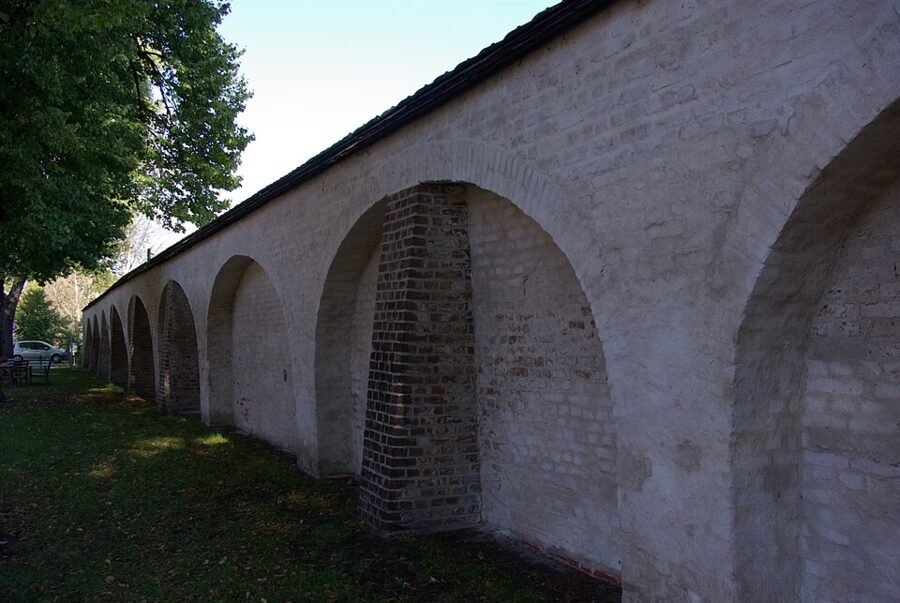
Behind the remains of the baroque city wall on Große Fischerstraße, the Fischerhof Potsdam is, by its own account, the only working fishery left in the city. From mid-October to March its nets on the Havel run from Lindwerder to the Pirschheide for zander, carp, pike and perch, and from March to November eel is in season, sold fresh or smoked. It smokes fish early in the morning, sells fish rolls, offers fish soup in winter and takes orders for Christmas and New Year’s carp by phone. For the Christmas weeks it opens Thursday 12:00–16:00, Friday 11:00–17:00 and Saturday 10:00–13:00.

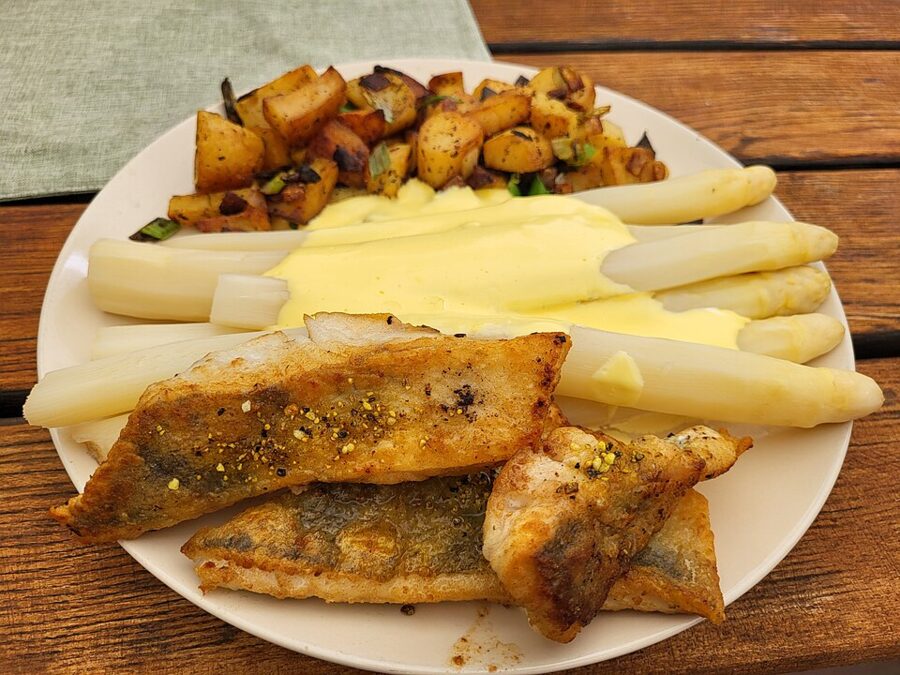
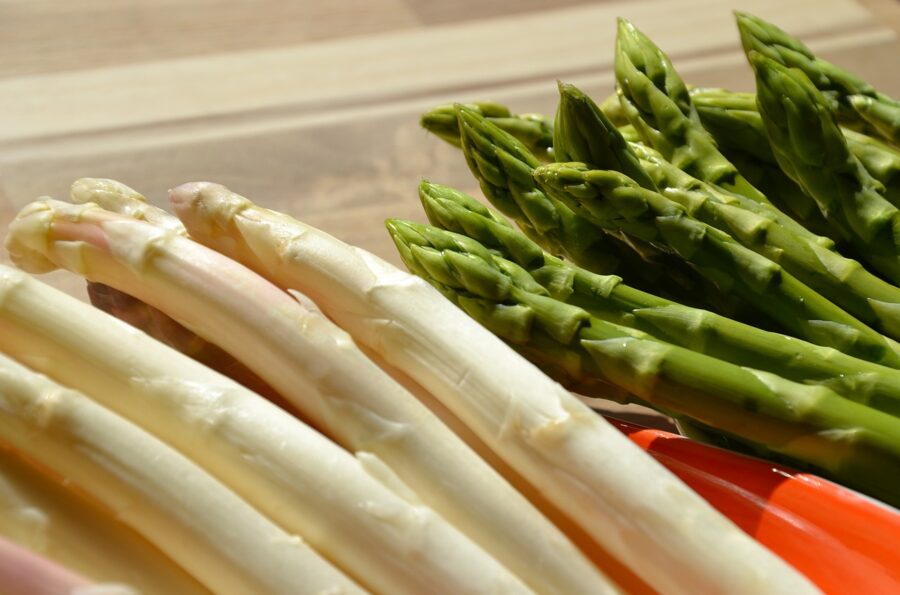
On a restaurant menu, look for zander (pike-perch), pike and eel. Der Butt buys its freshwater fish from a fishery in Werder, the Drachenhaus from local fishermen, and the Augustiner in the Dutch Quarter keeps zander fillet in lemon butter on its standing card. In late spring, zander with white asparagus, potatoes and hollandaise is the regional plate to order.

Beelitz asparagus
Beelitz, south of Potsdam, sits on the meltwater sands that made it the center of Brandenburg’s largest asparagus district. The first field-scale planting there dates to 1861, and since May 2013 the town has called itself Spargelstadt, asparagus town, on its own entrance signs. The season runs from late March or April into June, and Kongsnæs, for one, buys from Beelitz and Kremmen growers from the end of March.
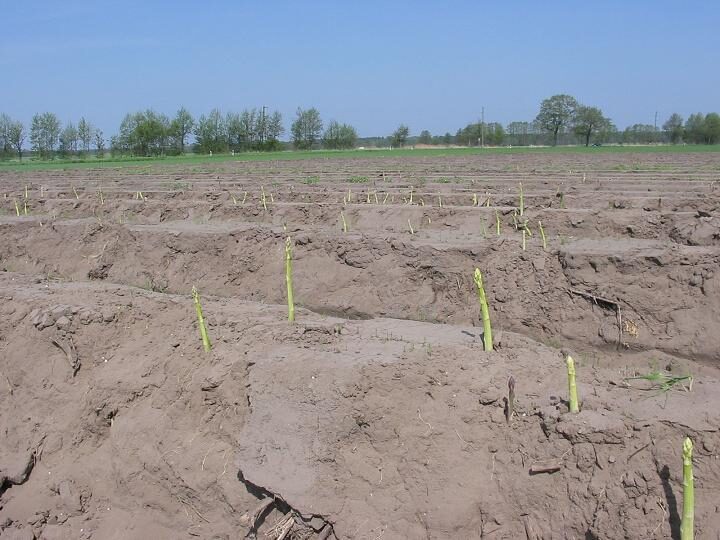

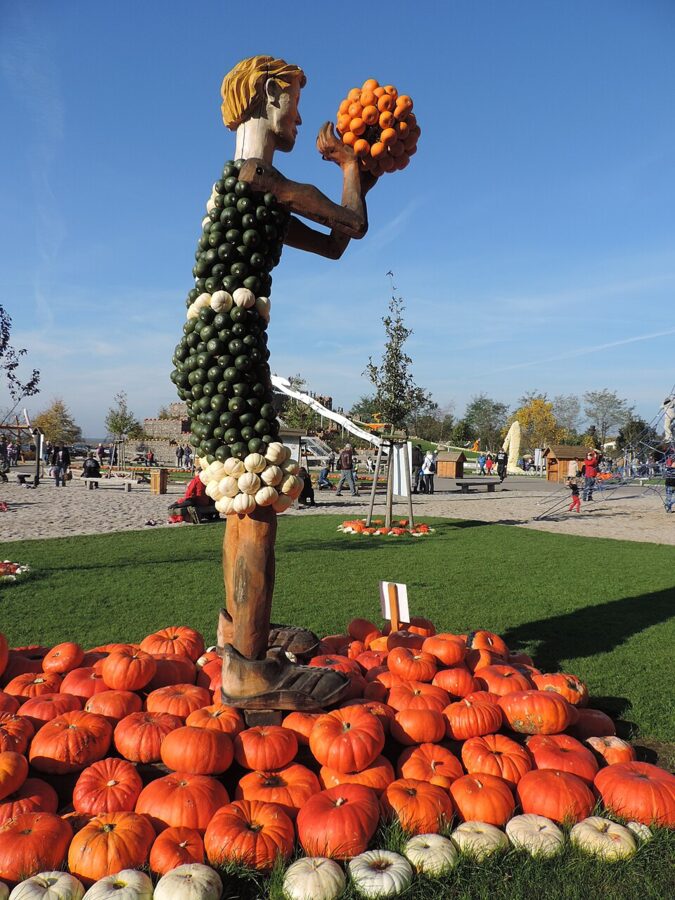
To see where it grows, the Spargelhof Klaistow near Beelitz is the best-known farm, busy well beyond the season with pumpkins in autumn and Advent brunches on November 29 and December 6 and 13, 2026. In Potsdam itself, Anna Amalia cooks Kremmen asparagus in spring and Kongsnæs runs an asparagus menu.

Berliner Weisse and the old local beers
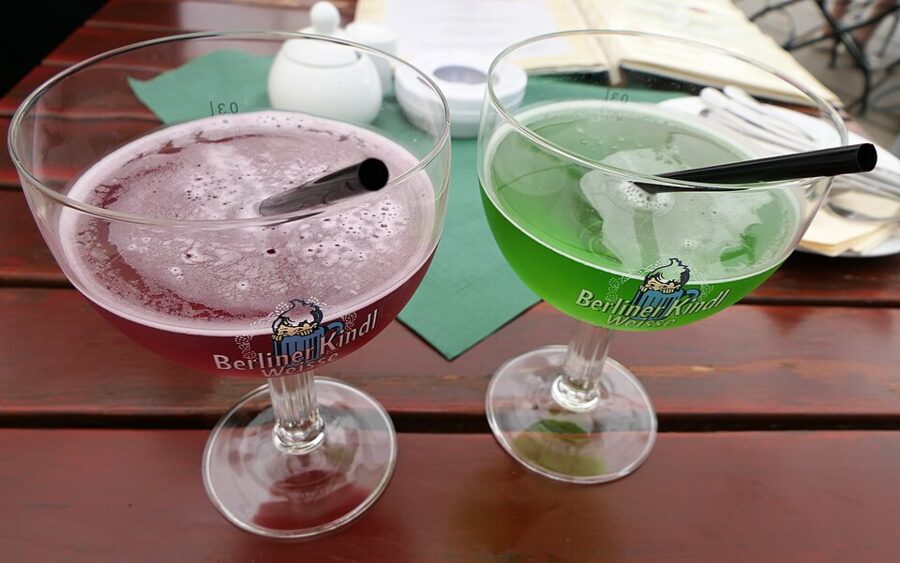
Berliner Weisse is a light, sour, top-fermented wheat beer of about 3 percent, fermented with yeast and lactic bacteria, and Napoleon’s soldiers are supposed to have called it the champagne of the north. The name itself is protected for Berlin brewers, so Potsdam’s versions go by other labels. The Meierei bottles its own, called simply Die Weisse, at 4.2 percent and conditions some of it in the bottle.

The Braumanufaktur at Forsthaus Templin brews the other old regional styles: the Potsdamer Stange, which it says has been brewed in the area for 200 years, a Weisse in the Berlin manner and the Werdersche. Der Butt pours the Braumanufaktur’s organic beer on draft, so you can taste it in the old town without the trip to the woods.
Werder fruit wine
West of Potsdam, the island town of Werder (Havel) is fruit country, and in 1879 its fruit growers’ association began announcing the peak of the blossom in the Berlin papers. The first special train of guests arrived on May 10, 1879, and the Baumblütenfest, the tree blossom festival, still fills the town in the week around May 1. It grew out of fruit wine and cake sold in the growers’ own gardens, and the dates are announced each spring.
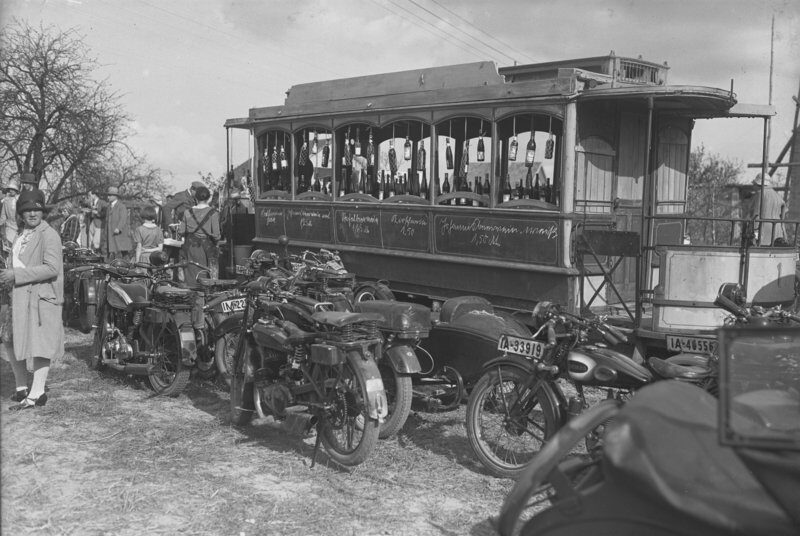

For a bottle to take home, the Obsthof Lindicke in Werder sells its own award-winning fruit wine, juices and preserves in its farm shop, open Wednesday to Friday 09:00–18:00, Saturday 09:00–16:00 and Sunday 10:00–16:00. It closes for the holidays from December 24, 2026 to January 19, 2027. In Potsdam, Der Butt pours white wine from the Wachtelberg vineyard in Werder and spirits from the Siedlerhof there.
The winter plate
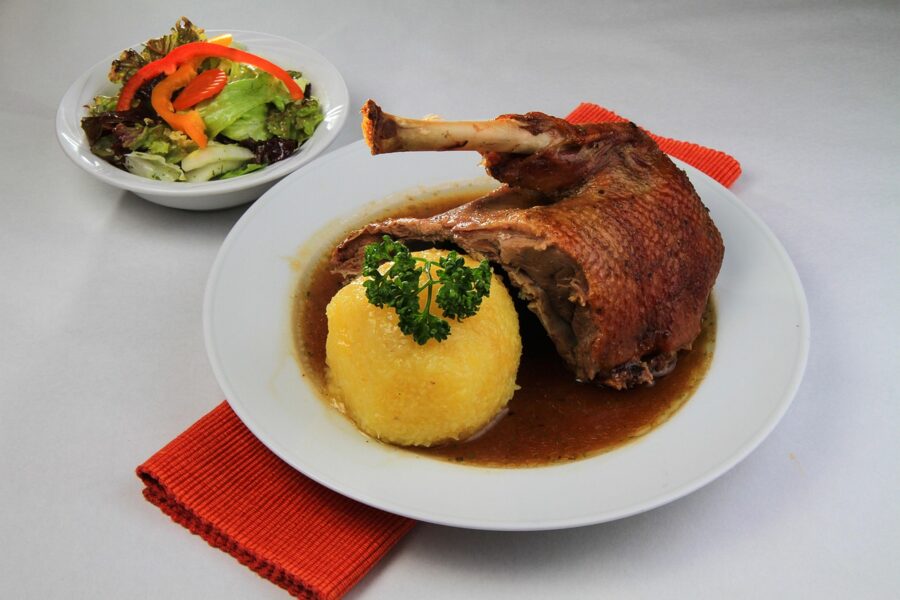
From November the menus converge on goose, duck, kale and red cabbage, and the Brandenburg habit is to share. A whole goose for four costs €195 at the Drachenhaus and €169 at the Fliegender Holländer; Kades serves a portion for €45 by advance order. Order kale with Knacker at the Augustiner, solyanka at the Drachenhaus or Alexandrowka1, and finish with whatever cake Café Heider has decided on that morning.
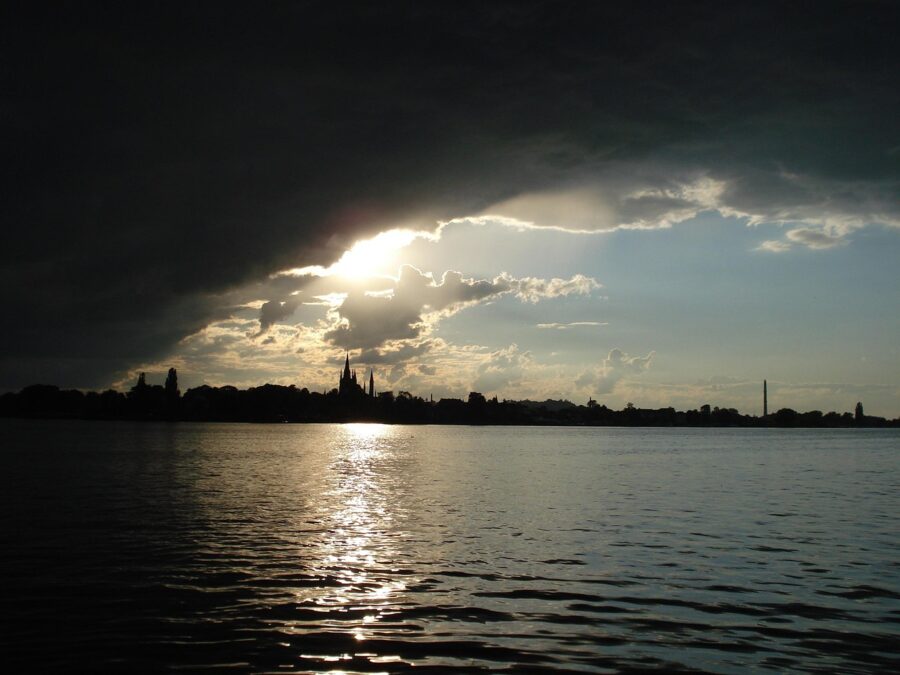
Then go back up the Klausberg if the day allows. In November the Drachenhaus kitchen still takes orders until 17:00, the New Palace has closed half an hour earlier, and the terrace is nearly empty. Order the soljanka and a slice of Rabien’s cake, watch the light go off the Belvedere, and leave in time to walk down to Park Sanssouci station before the park goes dark.