

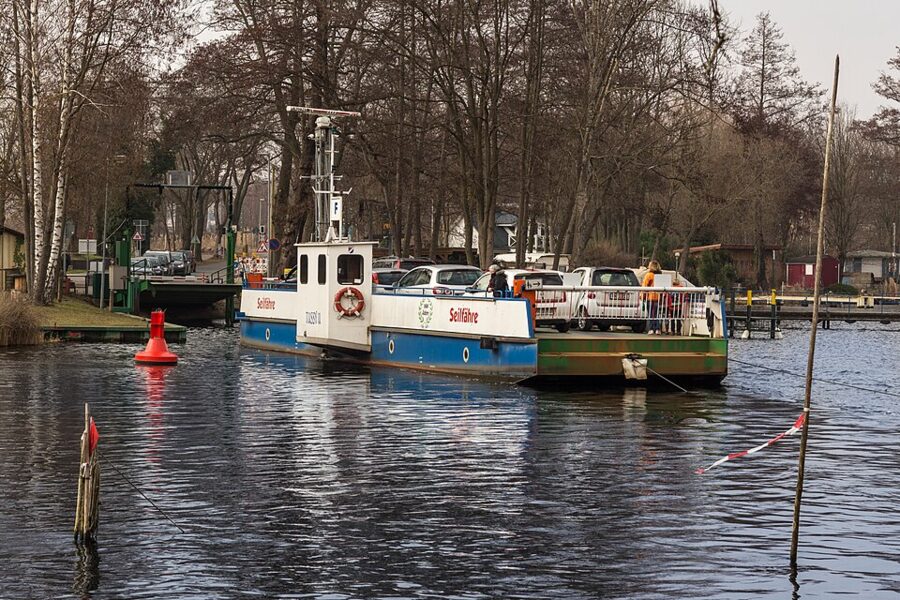
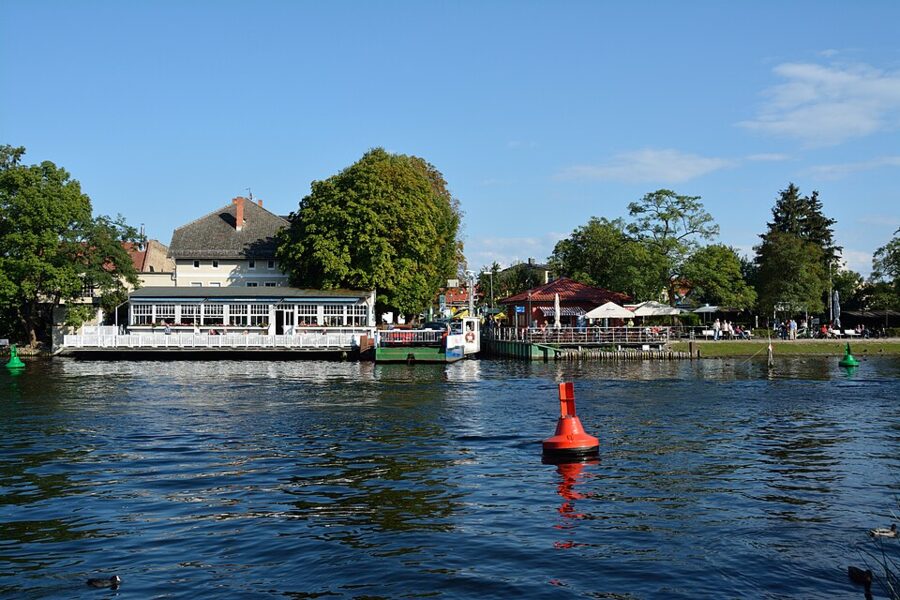
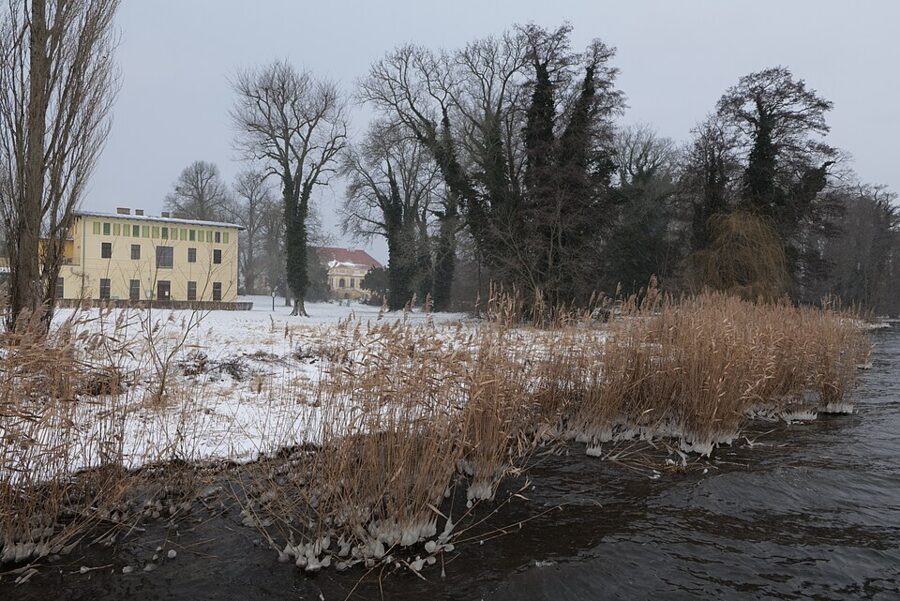
At Caputh the Havel squeezes out of the Templiner See through a channel about 50 m wide, and a small ferry hauls itself across it on steel cables for 50 cents a head. A ferry has worked this crossing since February 1853. Stand on the village bank and you can see most of what Caputh has to offer from one spot: the water that made it rich, the road that runs back to an electress’s summer palace, and, up behind the roofs, the pine woods where Albert Einstein built the one house he ever had made to his own wishes.
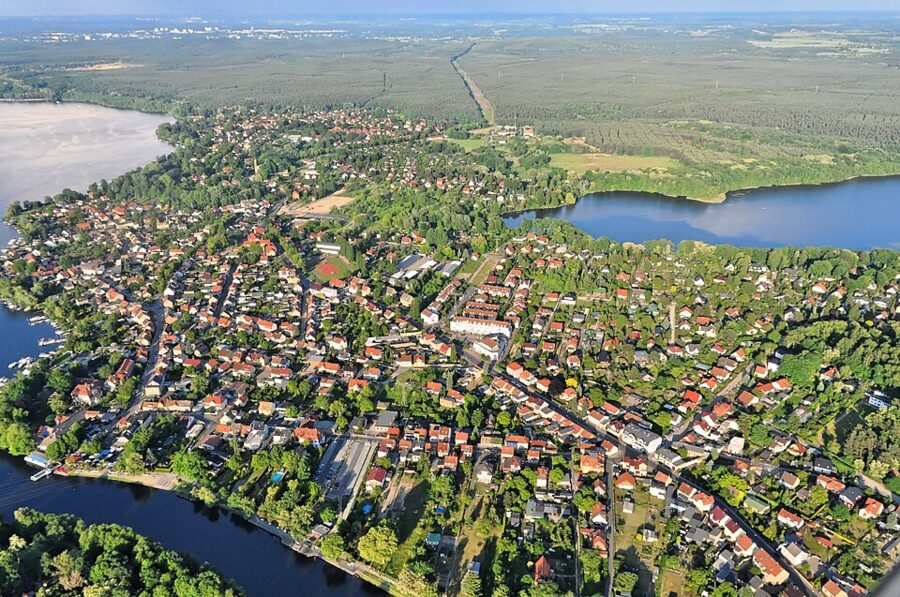
Caputh sits on the southern edge of Potsdam, about 7 km from the main station, where the Havel turns from one lake into the next. It is a village of about 4,900 people, part of the municipality of Schwielowsee since 2002, and it holds two houses you can visit that have nothing in common except the view. One is Caputh Palace (Schloss Caputh), the only palace in the whole Potsdam landscape that survives from the time of the Great Elector, with a basement hall lined in 7,500 Dutch tiles. The other is a timber summer house finished in September 1929 for a physicist who had just turned down a birthday present from the city of Berlin.
My advice is simple. Come on a Saturday or Sunday between April and October, when both houses are open, and give it the whole day: the palace in the morning, cake and the ferry at midday, Einstein’s house in the afternoon, and a swim or a boat back to Potsdam at the end. In winter Caputh still works as a half-day, with a guided tour of the palace at the weekend and the ferry running until 20:00, but the Einstein house is shut.
Contents7 parts
The narrows and the village
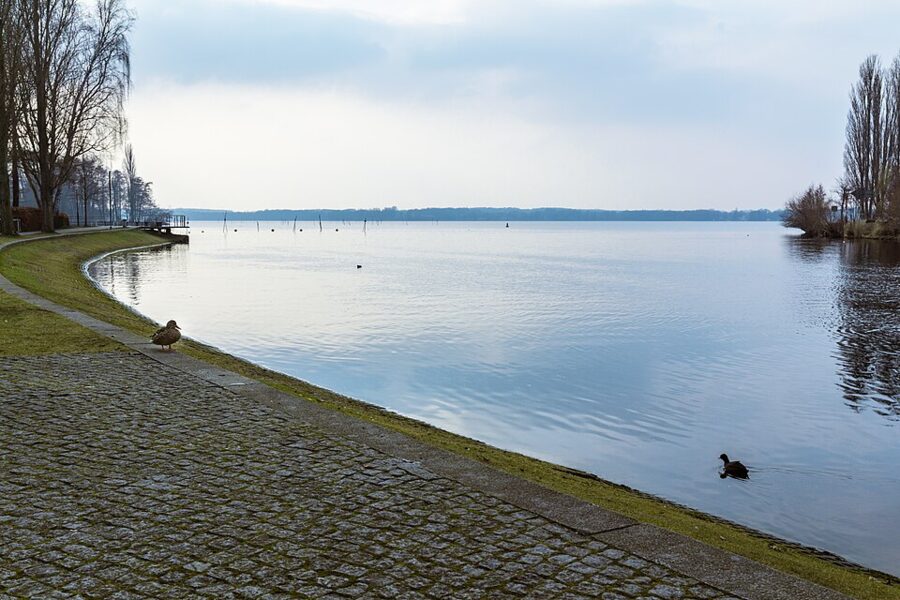
The Havel does not flow through this part of Brandenburg so much as pool in it. From Potsdam it widens into a chain of lakes, and at Caputh the Templiner See pinches shut into the Caputher Gemünde, a few hundred meters of river that open again into the Schwielowsee. For centuries that pinch was the traffic jam of the region: until the Sacrow-Paretz canal opened in the 1870s, every barge between Berlin and Brandenburg an der Havel had to pass through it, and the bends were tricky enough that boats took on a pilot here. If you want the wider picture of these waters, the Potsdam lakes guide has it; Caputh is where two of them meet.
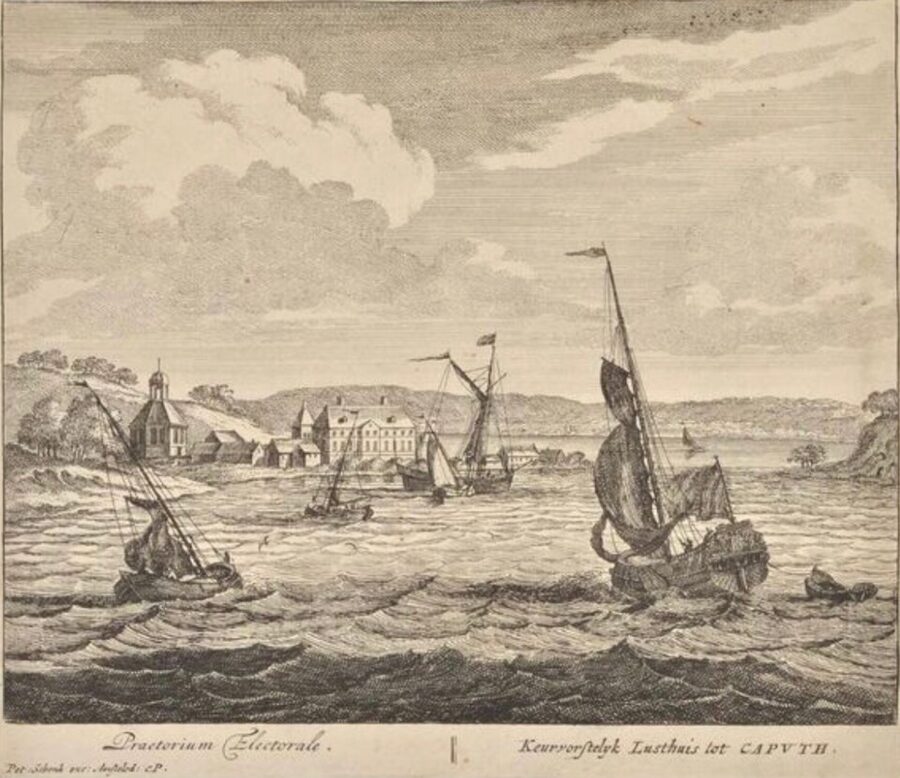
The village is old. A document of Margrave Waldemar mentions “Capputh” on April 5, 1317, and the name is usually traced to a Slavic word, kopyto, a hoof, for the horseshoe shape of the little Caputher See behind the village. What strikes me in the village chronicle is how poor the place stayed for so long. The people of Caputh had no fishing rights on the lakes that surrounded them, so they worked as day laborers, tar burners and brickmakers, and the village stayed small.
The river eventually paid. In the nineteenth century, with Berlin growing, Caputh’s men built barges and shipped bricks from the brickworks around Glindow to the city; in 1801 the village already counted 41 boatmen. When the brick trade faded, the families turned to fruit, and cherries, strawberries and currants from Caputh went to Berlin markets until the Wall cut them off in 1961. Meanwhile wealthy Berliners discovered the hill above the Schwielowsee, the Krähenberg, and built summer villas there from 1902, followed by better roads and, in 1923, a station of their own.
The palace explains why the electors cared. Electress Katharina bought the estate from the von Rochow family in 1594 and made it a summer seat with vineyards, ponds and gardens, and the foundation that runs it today, the Prussian Palaces and Gardens Foundation (Stiftung Preußische Schlösser und Gärten, SPSG), counts its little park among the ring of electoral gardens that grew around the pleasure garden of the Potsdam palace in the seventeenth century. It was a short boat ride from Potsdam, out of sight of the court and in view of the water. When the Great Elector took it back in 1671, one account has him giving up an estate of about 2,600 hectares in the Memel delta in East Prussia for it.
Caputh Palace
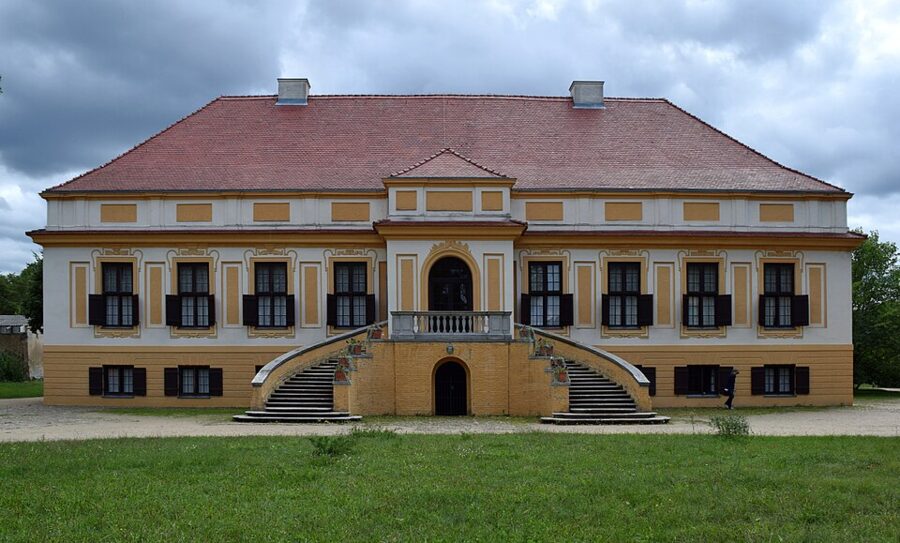
Of all the Potsdam palaces, this is the oldest still standing and one of the smallest, a low country house in pale yellow with ochre trim. It looks modest from the street. Inside, the ceilings, the stucco and a good part of the paintings date from the 1680s and 1690s, and the foundation counts it among the few palaces that came through three centuries of leases, sales and schools almost unchanged. That survival is the reason to go in.
A quartermaster’s house and an electress’s palace
The Thirty Years’ War left Katharina’s summer seat in ruins, and in 1662 the Great Elector, Frederick William of Brandenburg, gave the site to his quartermaster Philippe de la Chièze, who also appears in the records as Philip de Chiese. The gift came with the expectation that he would rebuild at his own cost, and he did: a country house nine windows wide under a hipped roof, which still gives the palace its basic shape. By 1671 the estate was back in the elector’s hands. Sources tell the handover differently: one account has the elector trading the East Prussian land for it, the foundation’s park history has it falling back to him after Chièze’s death, and the village archivist admits nobody knows why Chièze gave it up so soon.
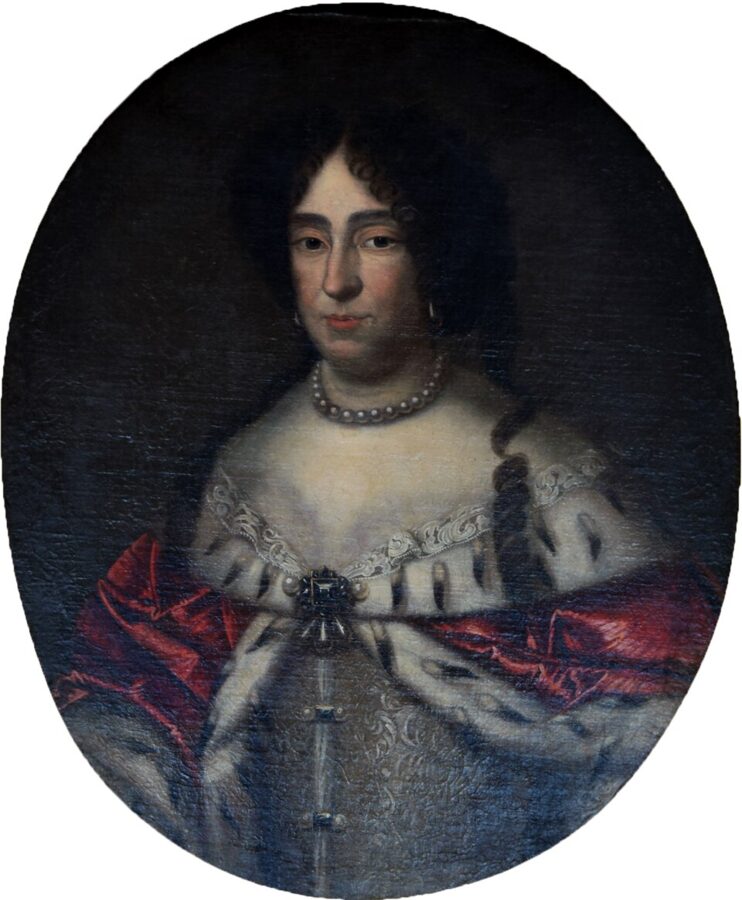
The elector gave the house to his second wife, Electress Dorothea, and she is the person Caputh really belongs to. Between 1673 and 1684 she turned it into a three-winged summer palace with a raised center and the double staircase on the lake side, and furnished it until her death in 1689. She was also a shrewd businesswoman who put her money into land: she laid out the Dorotheenstadt in Berlin, which still carries her name, and bought and rebuilt the palaces at Schwedt and Wildenbruch. After the elector died in 1688, Caputh was the house she preferred.
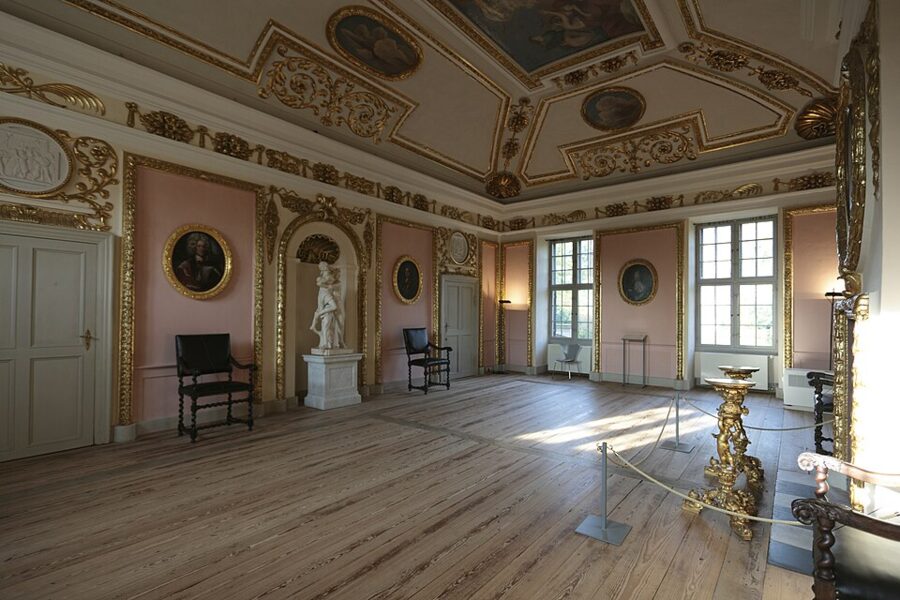
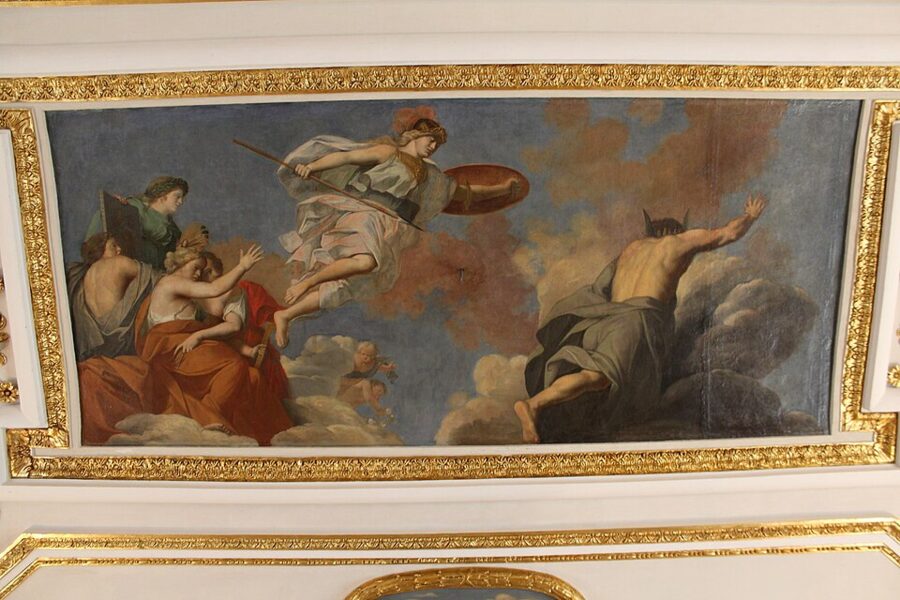
Her ceilings are the best thing in the house, and they have a sense of humor. In the banqueting hall, Minerva, patron of the arts, drives away a male figure of Stupidity, and the painters had him flee in the direction of the elector’s apartment. The allegories in Dorothea’s bedroom and cabinets are female or show Juno; the elector’s rooms get putti. The court painters Samuel Theodor Gericke and Augustin Terwesten worked here, and the only signed and dated ceiling in the house, by Gericke in 1687, is in the elector’s antechamber.
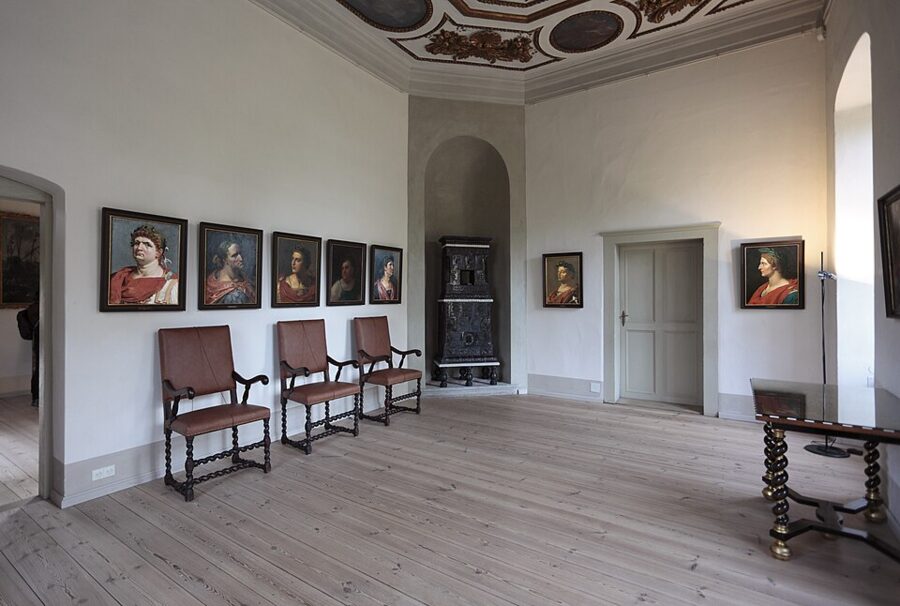
The antechamber also holds a set of portraits of the first twelve Roman emperors, painted between about 1616 and 1625 by several Dutch and Flemish artists, probably for Johann Moritz of Nassau-Siegen. The collection as a whole, more than a hundred paintings of the 300 once here, leans Dutch and Italian. That taste came from the Great Elector’s first marriage, to Louise Henriette of Orange, and it set the style of the whole court.
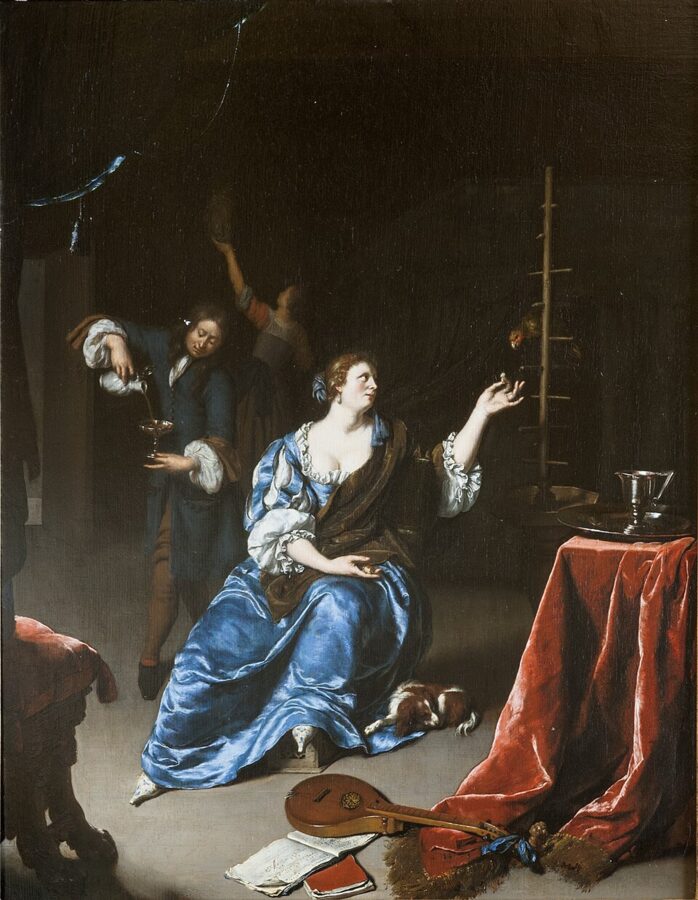
One painting has a story worth knowing before you see it. Willem van Mieris’s small Lady with a Parrot was the most valuable picture Dorothea left; she bought it in 1689, just after it was painted. After the Second World War it was taken by British soldiers from the hunting lodge at Grunewald in Berlin, surfaced in the 1980s under a different attribution, and was offered back to the foundation in 2002. Since 2004 it has hung in the cabinet next to the electress’s hall.
The porcelain chamber and what its ceiling says
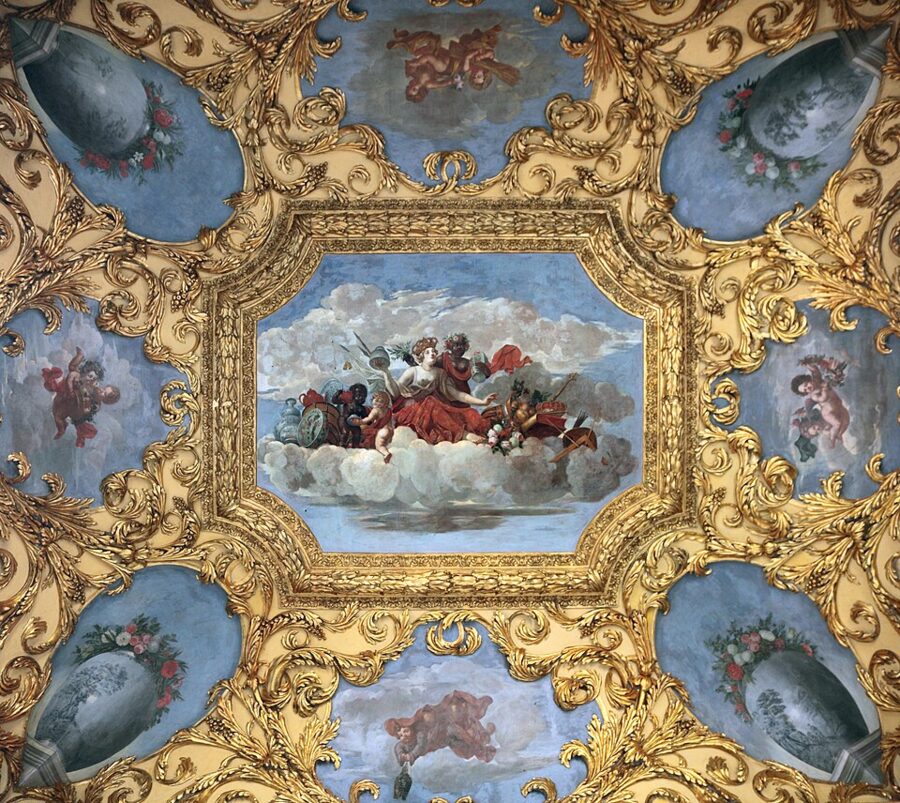
In the western corner pavilion Dorothea set up a porcelain chamber, the second of its kind in Brandenburg after the one made for Louise Henriette. Asian porcelain was the luxury good of the age, and rooms like this, with dozens of pieces on gilded brackets, were a way of showing that you belonged to the world that traded in it. Look up, though. The foundation has researched the ceiling painting of around 1685 as part of its work on colonial contexts, and its reading is not comfortable.
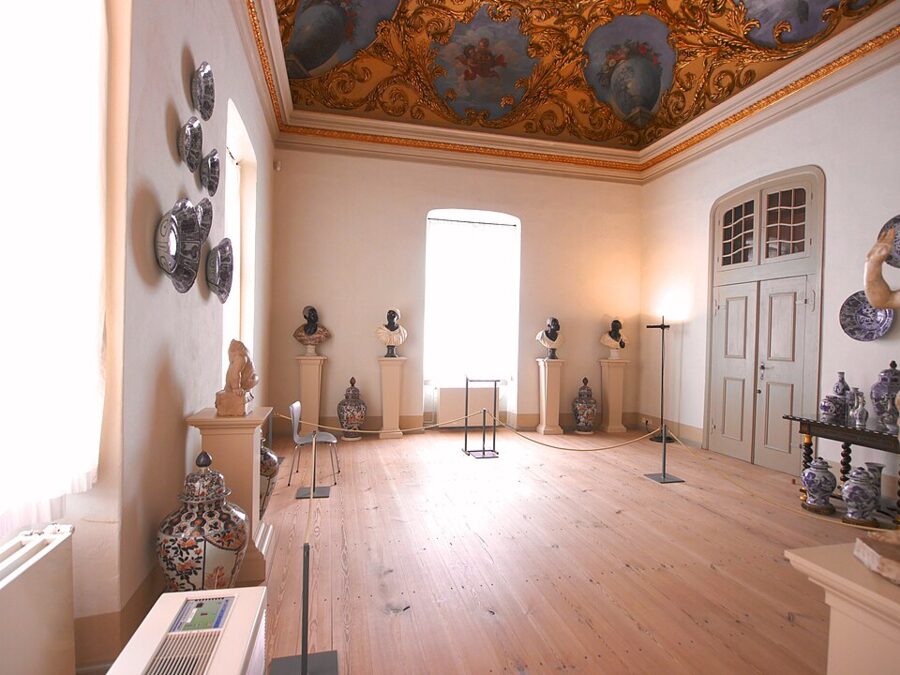
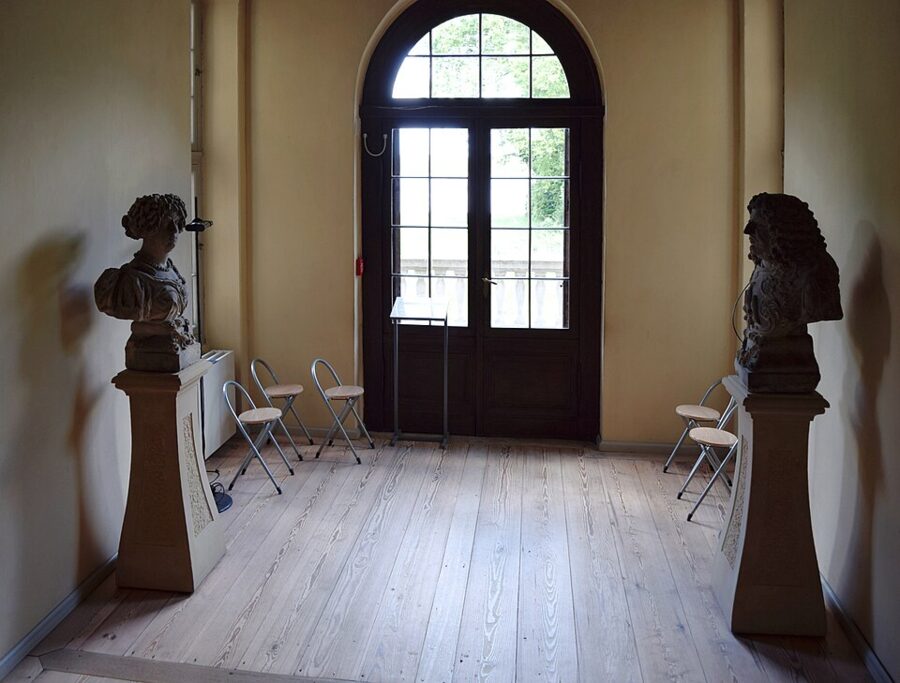
At the center of the porcelain chamber’s ceiling painting sit a crowned white woman and a Black woman wearing a wreath of flowers, surrounded by symbols of power, porcelain and learning. The foundation reads it as an allegory of Europe’s supposed superiority over the other continents, and ties it to a current event that Dorothea followed closely: in 1683 Brandenburg had set up a trading post on the coast of West Africa, in what is now Ghana. The palace also now holds four stone busts of Black men and women that once stood in the park at Sanssouci, brought indoors to protect them.
A king’s parties and the meeting of three kings
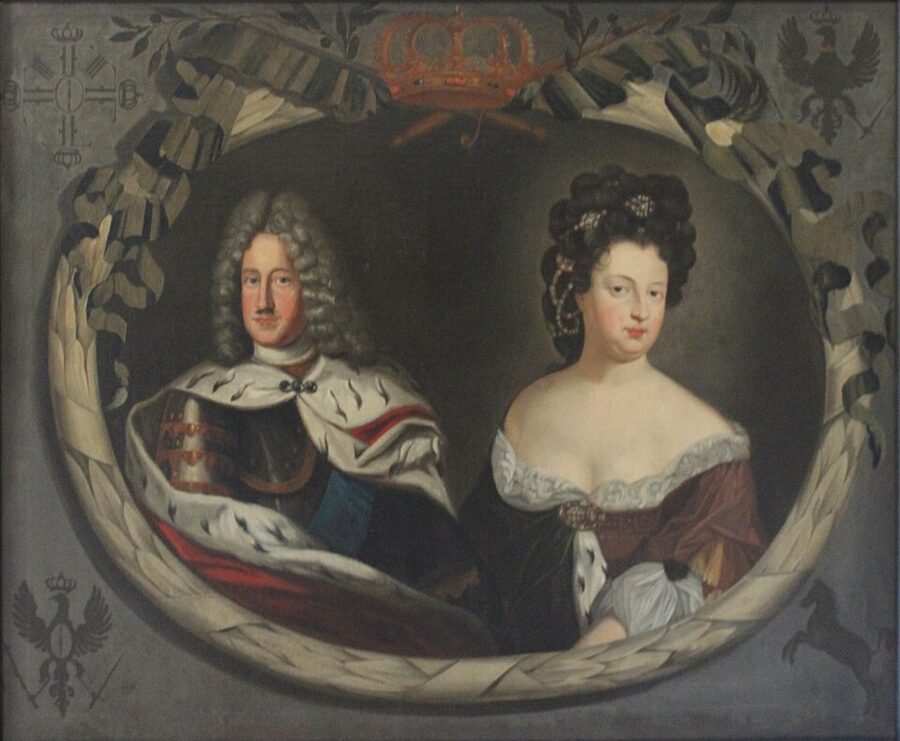
After Dorothea died, her stepson, Elector Frederick III, bought Caputh back from his half-siblings and gave it to his wife, Sophie Charlotte, in 1690. She handed it back four years later, because she was busy with her own palace at Lietzenburg, the one later called Charlottenburg. Frederick, who crowned himself King Frederick I in Prussia in 1701, made Caputh his favorite place for feasts and hunting parties, changed the furniture and renewed some of the stucco with heavy acanthus leaves.
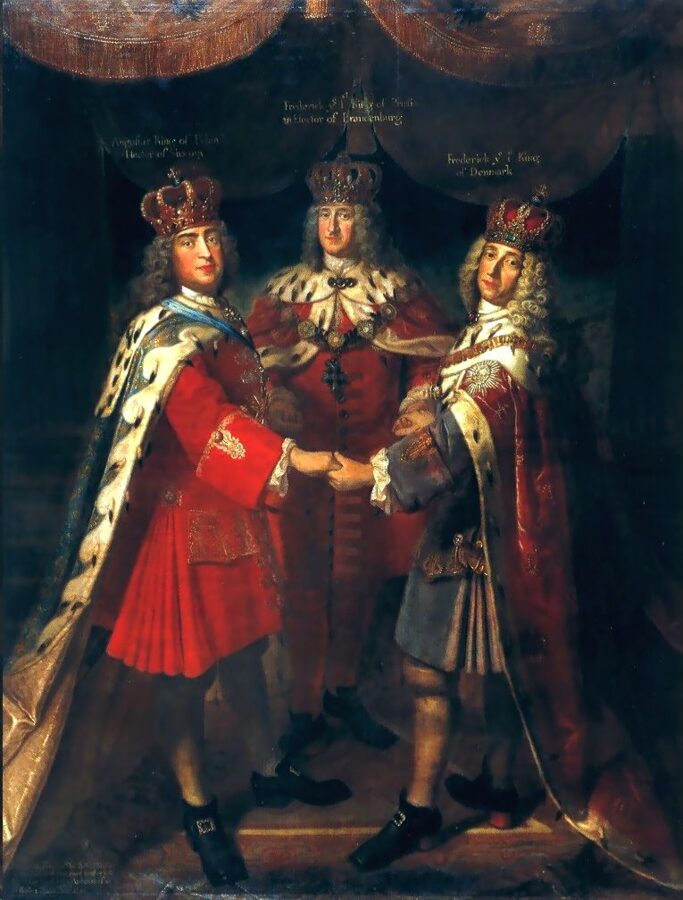
Caputh’s moment on the European stage came on July 8, 1709, when Frederick hosted Frederick IV of Denmark and Augustus the Strong, Elector of Saxony and King of Poland, who arrived by state barge. The three kings were talking about an alliance against Sweden, as part of a meeting that ran from July 2 to 17 across Potsdam and Berlin. The friendship pact they signed a few days later came to very little, but a painting of the three kings hangs in the porcelain chamber.
The tile hall
Then came the soldier king. Frederick William I (Friedrich Wilhelm I), the same king who built Potsdam’s Dutch Quarter (Holländisches Viertel), used Caputh as a stopover on hunting trips, and around 1720 he had a basement room lined, walls and vaulted ceiling, with roughly 7,500 blue-and-white Dutch faience tiles. It served as a summer dining room for his hunting parties, cool when the rest of the house baked. After the tile hall at Oranienbaum near Wörlitz it is the oldest in Germany, and because of the tiled vaults probably the most important.
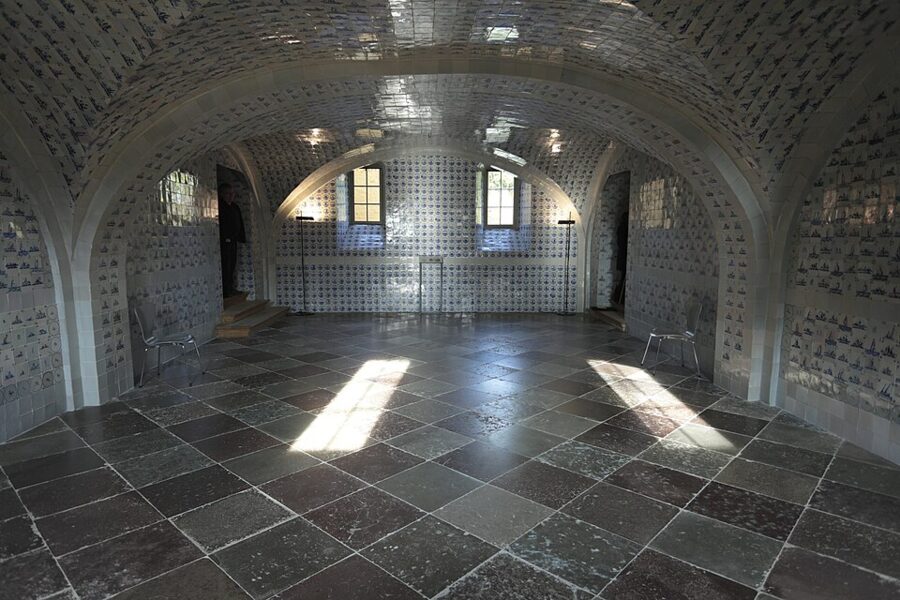
Each tile is about 13 cm square, from the mass-produced Dutch tile trade after 1700, and the motifs fall into a handful of groups that you can learn to spot: sailing boats, landscapes with windmills and lighthouses, shepherds and shepherdesses, animals in circles, and small scenes of daily life, including children’s games. Contemporaries read hoop-rolling, skipping and blowing bubbles as images of wasted effort and passing time. In this room nobody was meant to read them one by one, though. The effect is the whole skin of glaze catching the light from the low windows, slightly different in every tile.
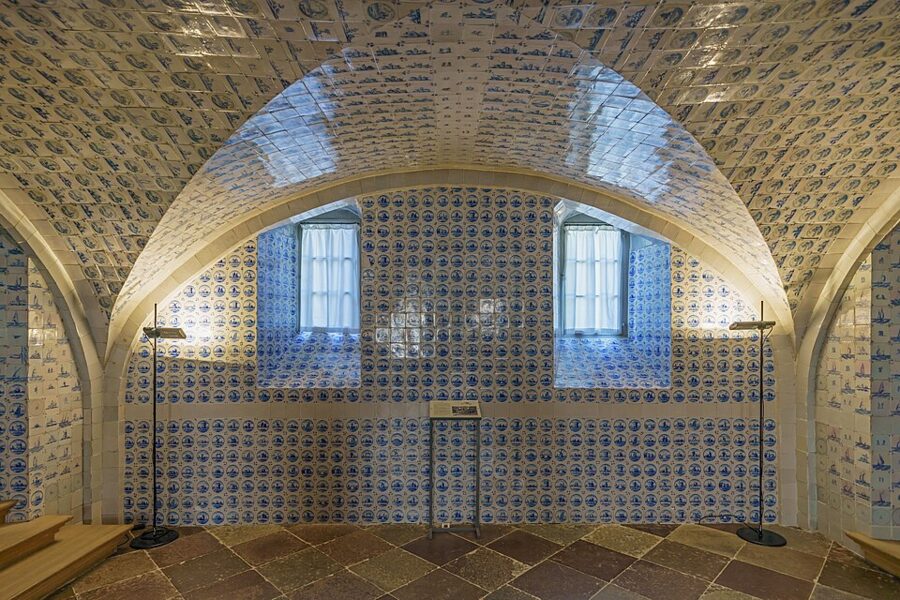
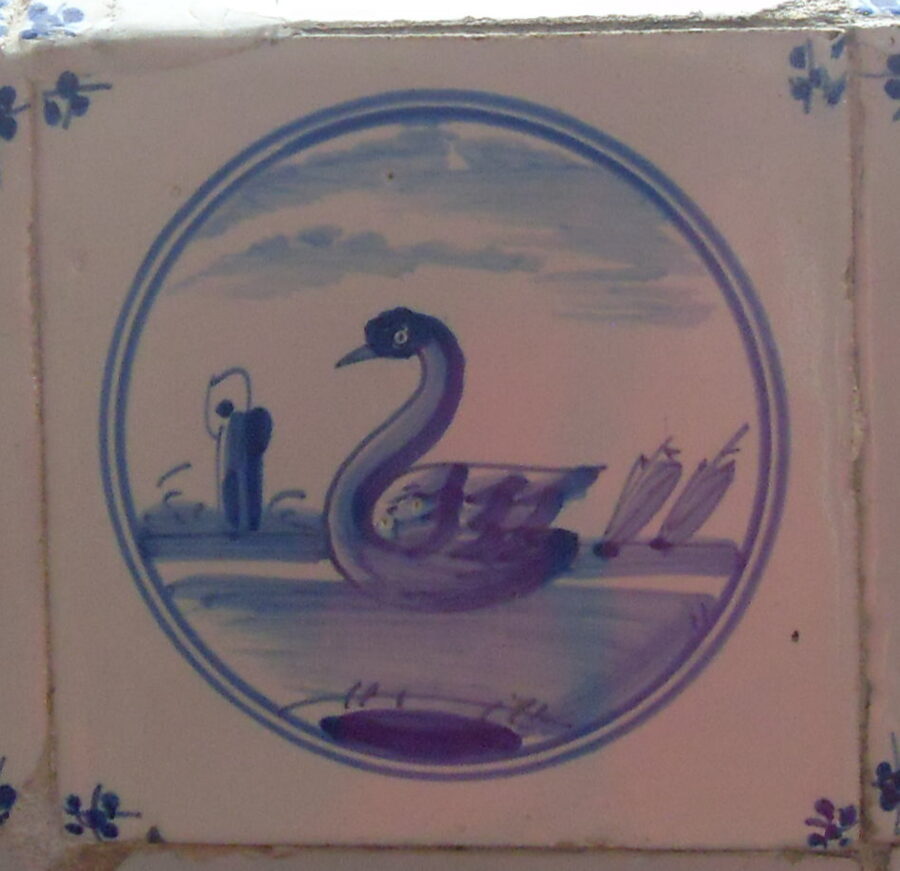
The foundation’s essay on the tile hall and its Dutch tiles also clears up a common slip: these are usually called Delft tiles, but Delft was a tile center only briefly, and the big producers of the period were elsewhere in Holland and in Friesland. It is the kind of correction I enjoy, because it sends you back into the room to look at the tiles as a trade good rather than a souvenir.
Leased, sold, schooled and restored
Frederick the Great (Friedrich II) had no use for his grandfather’s country house and leased it out to a dye works for Turkish yarn and a weaving shop. Toward the end of the eighteenth century the garden became a fruit-tree nursery, one of the most productive of the royal nurseries. In 1813 the state sold the estate, and in 1820 it went to August von Thümen, a 63-year-old retired general who had commanded the fortress at Spandau.
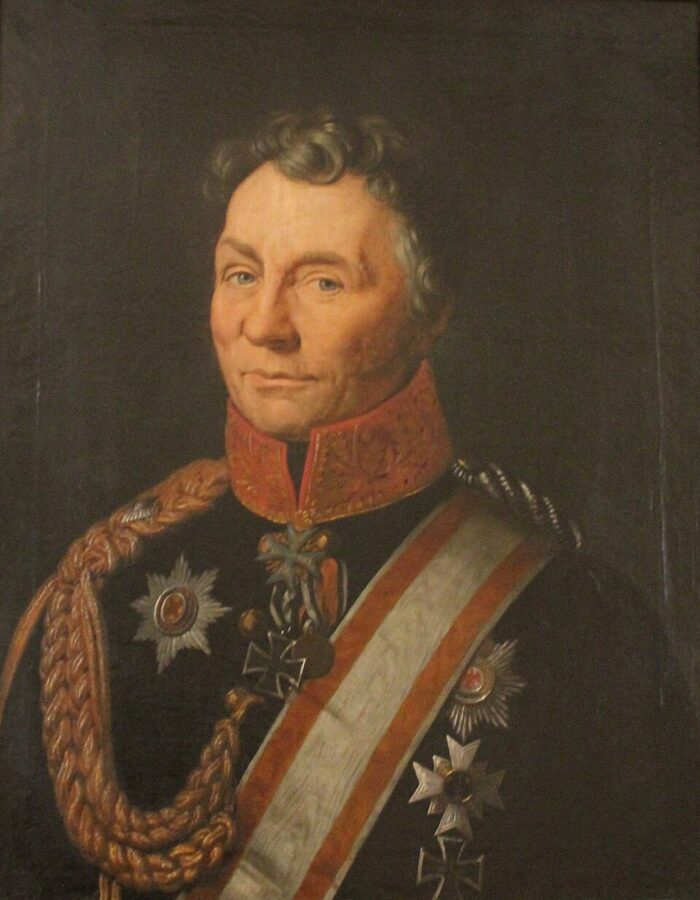
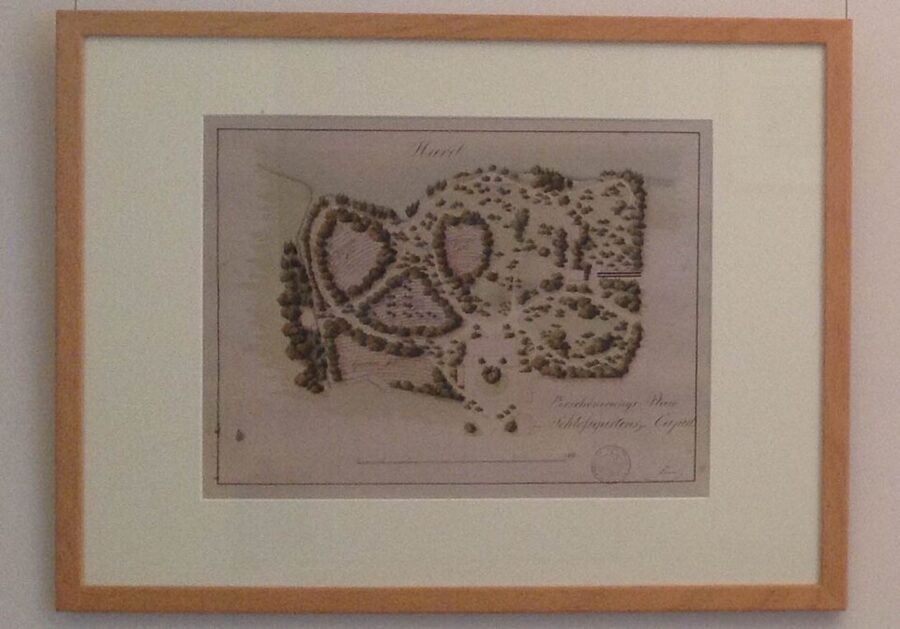
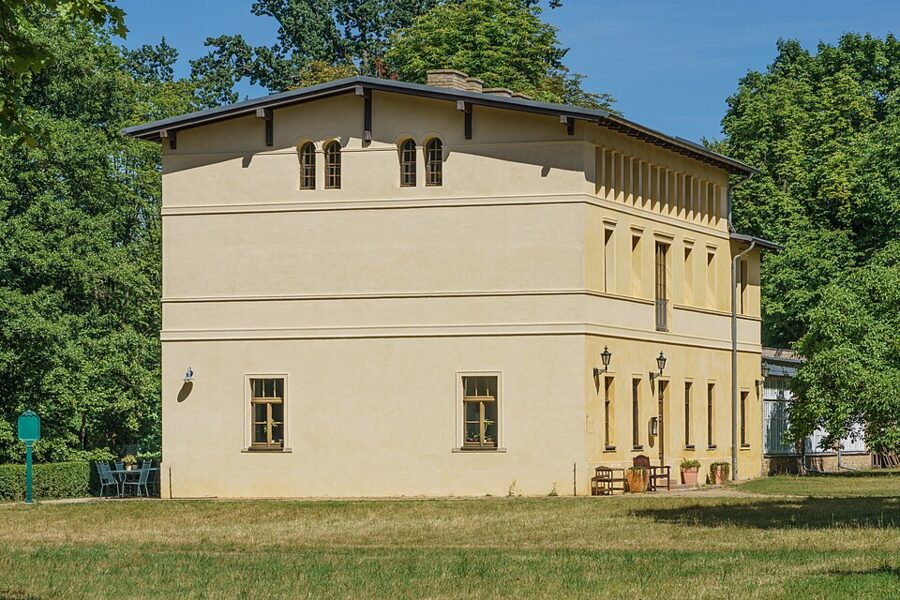
The Thümens remade the garden. Following an improvement plan by Peter Joseph Lenné, the baroque terraces were knocked down and filled into soft, rolling ground, trees were set loosely between the house and the river, and the family added the Kavalierhaus, a villa in the Italian country style, between the palace and the Havel. Through inheritance the estate passed in 1908 to the von Willich family, who added the southwest wing in 1908 and 1909 and lived here until 1945.
After the war the land reform took the estate, and from 1947 the palace was a vocational school, in the GDR years for photographers and florists. The foundation took it over in the mid-1990s and restored it between 1995 and 1999 for about 9.5 million marks, with help from the Cornelsen Kulturstiftung. In 1999 Caputh opened as a palace museum, the first time in its long history that the public could simply walk in.
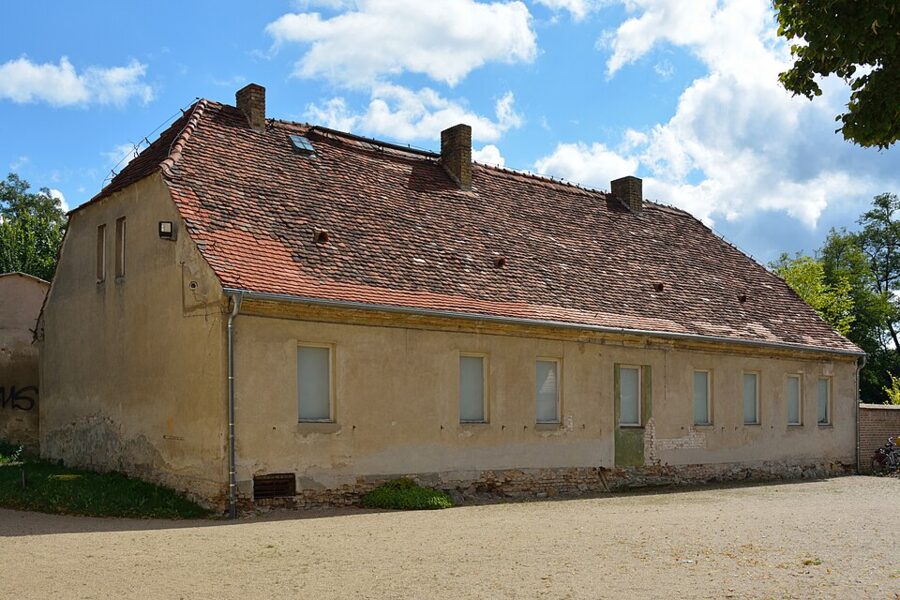
One find from the restoration years is on show in the visitor center. During work on the Logierhaus next to the palace, archaeologists found a fine sandstone torso of a woman in a classical gown in a trench dug in GDR times. The foundation’s account of the headless beauty dates it to about 1680 to 1700 and weighs two sculptors, the Berlin court sculptor Michael Döbel and the Fleming Gabriel Grupello, without settling on either; she may be Flora, goddess of flowers. An inventory of 1713 listed 74 statues in the garden, and she is very likely one of them.
Visiting the palace
The opening times on the foundation’s Caputh Palace page are short, so plan around them. From April to October the palace is open Wednesday to Sunday, 10:00–17:30, and closed on Mondays and Tuesdays; from November to March it opens only on Saturdays and Sundays, 10:00–16:00. Last admission is 30 minutes before closing, and public holidays follow the weekend hours. Over the 2026 holidays it is closed on December 24, 25 and 31, open on December 26, and opens at 11:00 on New Year’s Day.
From May to October you walk round on your own; from November to April you go in with a guided tour in German, with information in other languages, and you may have to wait for the next group. A ticket costs €8 (reduced €6) in 2026 and €9 (reduced €6) in 2027, and a family ticket for two adults and up to four children costs €16, rising to €19 in 2027. The route covers the tile hall, two cavaliers’ rooms, the banqueting hall, the apartments of the elector and electress and the porcelain chamber, with a film and photo display on the restoration in the basement.
A few practical points. The rooms are not accessible by wheelchair, strollers are not allowed inside, and you cannot leave luggage in the entrance; there are a limited number of lockers for small bags. The palace is one of six country palaces in the foundation’s Landschloss-Pass, a free booklet that gives a reduced ticket from the second palace onward, worth picking up if you plan to see Paretz or Oranienburg as well.
The park around it is free and, according to the foundation’s Park Caputh page, open daily from 08:00 until dusk. It covers about 3.5 hectares between the palace and the Templiner See. Walk down past the double staircase to the shore and turn round: the palace was built to be seen from exactly there, by someone arriving by boat.
Einstein in Caputh
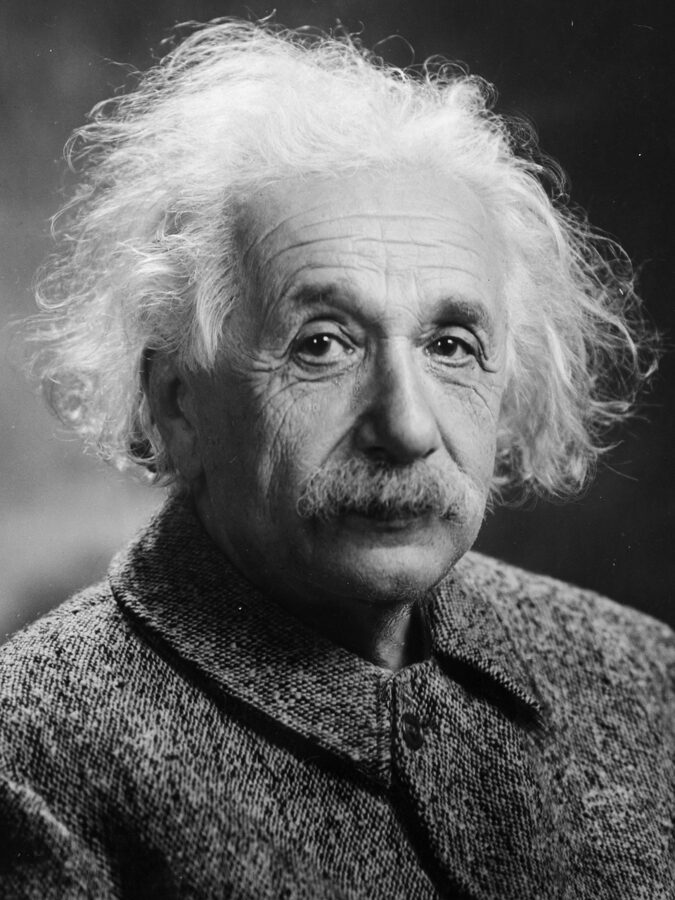
In early 1929 Berlin’s mayor, Gustav Böß, came to Albert Einstein with an offer. For the physicist’s fiftieth birthday, the city wanted to give its most famous scientist a house by the water. What followed was a small municipal farce that ended with Einstein paying for a house himself, and it is told in detail on the Einstein House’s own history of the build.
Berlin’s birthday present
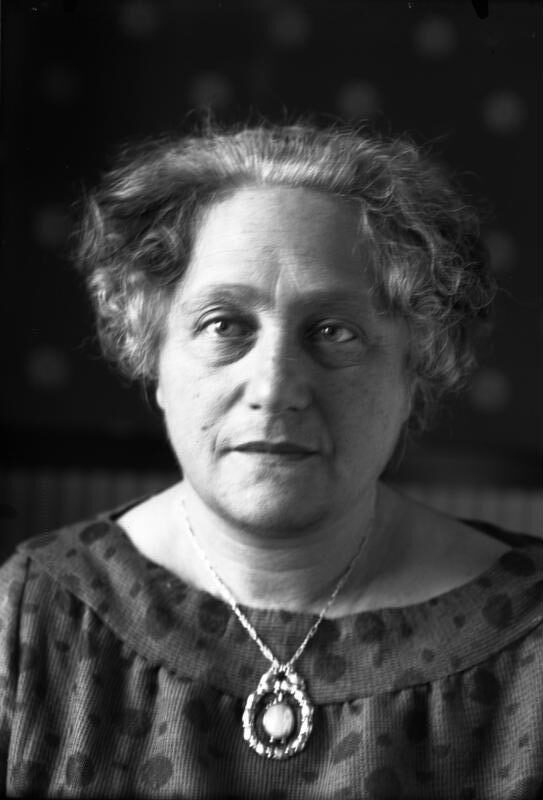
The first house the city offered turned out to be occupied. When Elsa Einstein went to look at it, the tenant told her she was trespassing; the former owner had kept the right to live there. Böß offered to throw the tenants out, and Einstein refused. The city then proposed more than a dozen plots of land, which were too noisy, too small, too remote or, in one case, reachable only through a neighbor’s shed.
Meanwhile the offer shrank: the city could buy the land, but the house would be the Einsteins’ own expense. When the purchase money needed a vote in the city council, the gift turned into a political fight, with an ugly undertone about whether a Jewish professor should receive it. In May 1929 the Berlin papers reported that Einstein had declined, for the second time. Life was too short, he wrote, and the affair of his birthday present had already taken too long.
By then the Einsteins had found their own plot through friends: a slope at the edge of the woods in Caputh, on what was then Waldstraße, looking down to the Templiner See and ten minutes’ walk from the boat landing. The house built there is now known by the address Am Waldrand 15–17.
Wachsmann’s timber house
The architect found Einstein, not the other way round. Konrad Wachsmann, 27 years old and chief architect at Christoph & Unmack, a big maker of timber houses in Niesky in Lusatia, read a newspaper item saying Einstein wanted a wooden house and took the next train to Berlin. He talked his way past Elsa at the door of the apartment on Haberlandstraße, started drawing on the train home, worked through the night and came back the next day with a full set of plans, so complete that the Einsteins grew suspicious. When he admitted how he had done it, Einstein burst out laughing.
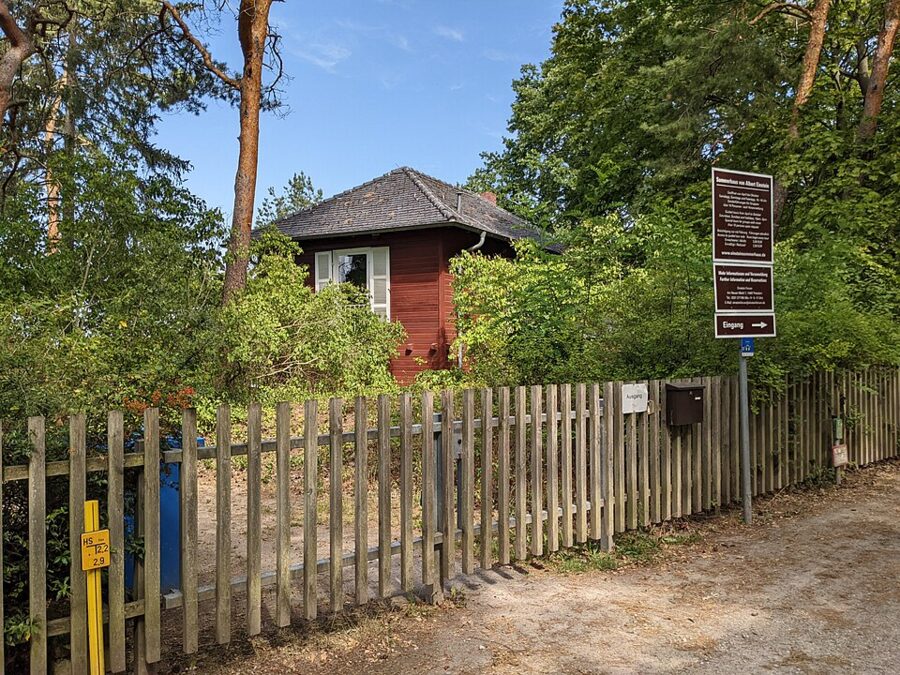
The design that won is a compromise you can still read on the outside. Einstein wanted timber and a pitched tiled roof; Wachsmann wanted modern flat roofs and big windows. The house has both: a tiled main block whose crossbeam ends stick out of the facade to look like a log cabin, although they do not actually run through, and a flat-roofed cube whose roof became a large terrace. Einstein reportedly asked whether anyone could imagine a cathedral with a flat roof.
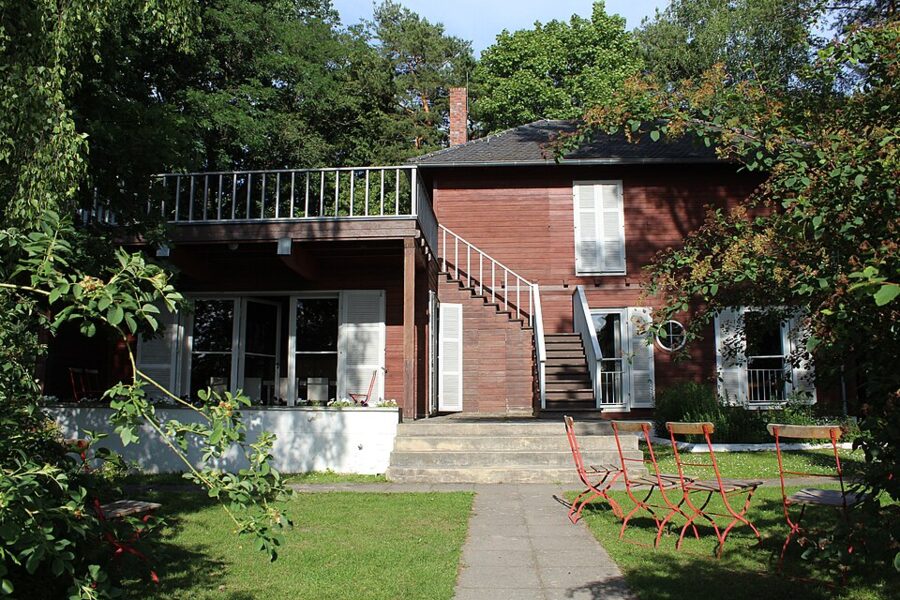
The frame was put together in July 1929 in one of the company’s factory halls in Niesky, checked, taken apart and shipped. On site, the shell and cladding took two weeks and the interior another two, and in September the family moved in. Four weeks later Einstein wrote to his sister that he loved the new little wooden house “despite the bankruptcy it caused”, and called the sailing boat, the distant views, the lonely autumn walks and the relative quiet a paradise.
Inside, almost everything is pine. Two beams of Douglas fir, each nine meters long, run the length of the living room and out over the terrace, leading the eye to the lake. The three bedrooms upstairs are none bigger than 11 square meters, with built-in sleeping niches, cupboards and washbasins, and a kitchen cupboard doubles as a serving hatch into the living room. Einstein’s own room was downstairs, apart from the others: he needed quiet to work, and the family needed quiet from his snoring.
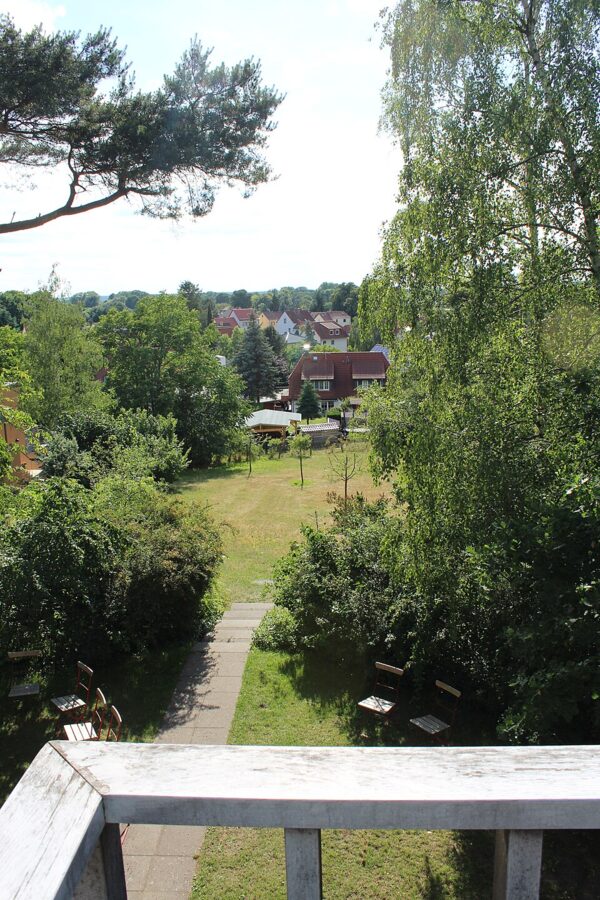
Wachsmann asked the young Bauhaus designer Marcel Breuer for furniture, and Einstein turned the designs down because they reminded him of a workshop or an operating room. The Einsteins, broke after the build, brought furniture they no longer needed in Berlin. Only the desk, its chair and a bookshelf were made for the house, to Einstein’s spare brief, and all of it was lost after 1933.
Three summers on the water
The Einsteins used the house from spring until the cold set in, roughly April to November, and he left it only for lectures and public appearances. Friends had given him a sailing boat for his birthday, a 20-square-meter dinghy cruiser called the Tümmler, and he took it out on the Templiner See and the Schwielowsee as often as he could, although he never learned to swim. Guests used to the formality of the Prussian Academy found him barefoot and shirtless, and he refused to have a telephone.
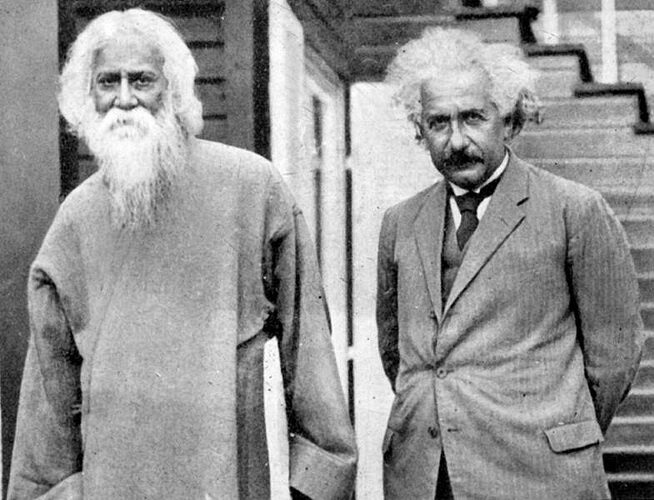
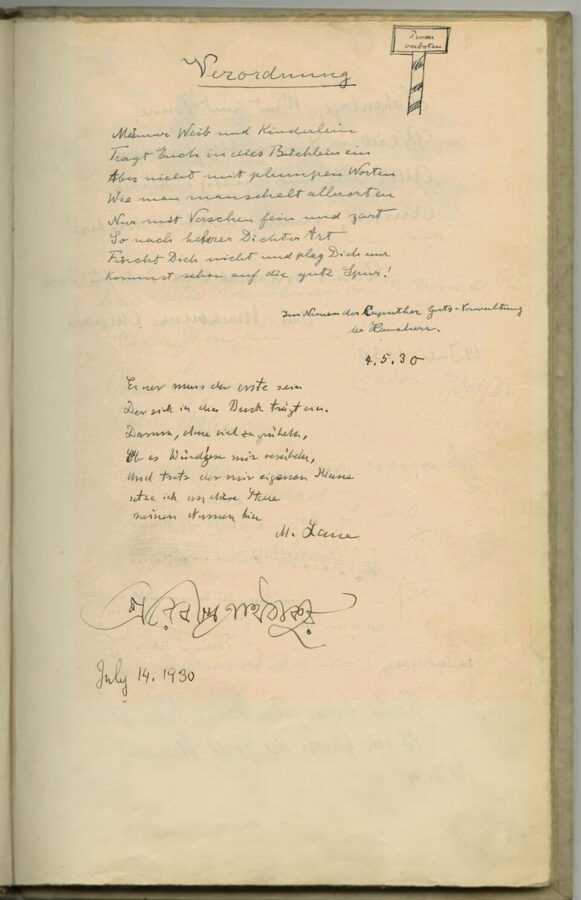
People came anyway, and many were welcome. The painter Max Liebermann, the critic Alfred Kerr, the conductor Erich Kleiber and the writer Arnold Zweig all visited, and in 1932 Heinrich Mann and Käthe Kollwitz came to ask him to sign an appeal for a united front against the Nazis. From Caputh he wrote to Sigmund Freud in July 1932 in the exchange later published as Why War?, and in 1931 he sent his son Eduard an invitation in verse that ended with the line still quoted all over the village: Komm nach Caputh, pfeif auf die Welt, come to Caputh and forget the world.
The last summer and after
On December 6, 1932 the Einsteins locked up and left for Pasadena, where he was to lecture at the California Institute of Technology for two months. A well-known story has him telling Elsa to take a good look at the house, because she would never see it again. The Einstein House’s account of the departure and exile calls that anecdote unproven: two weeks earlier he had bought the neighboring plot with a garden house, and he was still sorting out his Academy salary for 1933.
Then Hitler came to power. In March 1933 word reached Einstein that the Caputh house had been raided in a hunt for hidden weapons; the Einstein House’s history says the report proved false, while other accounts record a search that month. On arriving in Antwerp on March 28 he gave up his German citizenship.
The Nazis confiscated his bank accounts and the Tümmler. The house survived longer because the deed was in his stepdaughters’ names, and a lawyer friend rented it to the Jewish children’s home nearby.
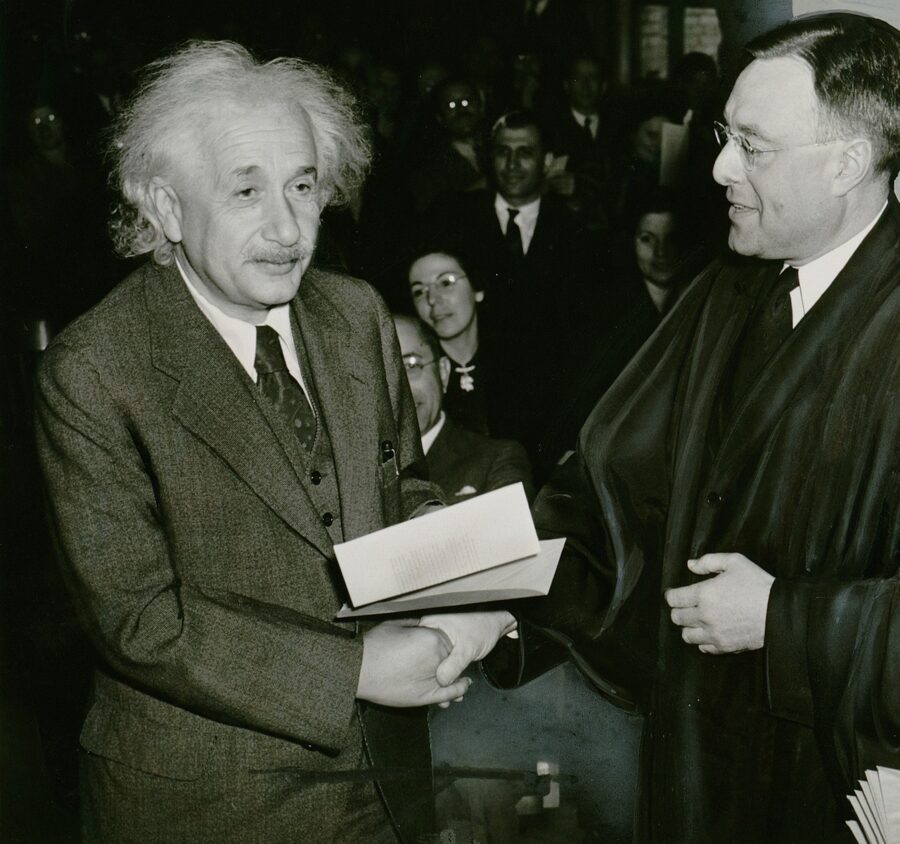
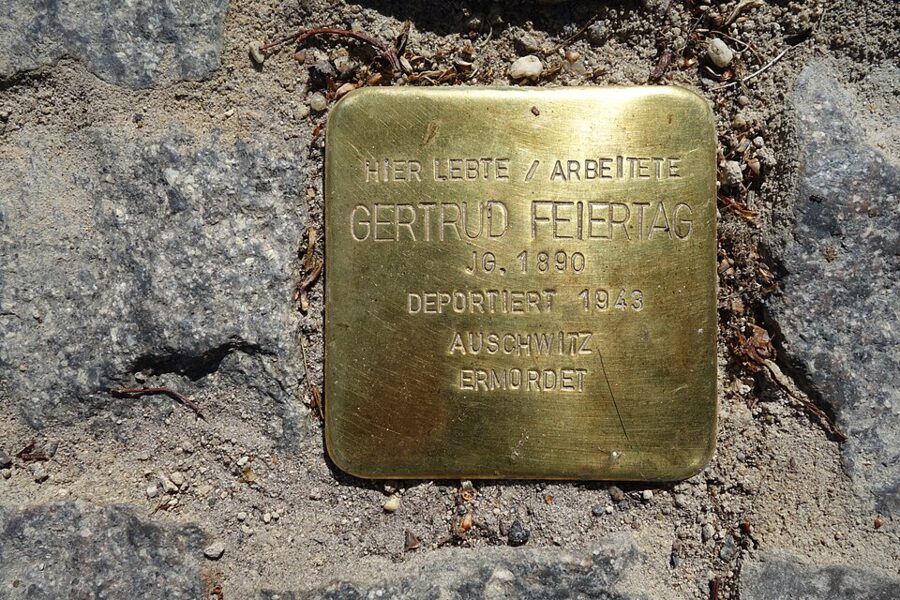
That home was the Jewish Children’s and Country School Home run since 1931 by the educator Gertrud Feiertag on Potsdamer Straße, which grew as Jewish children were pushed out of German schools and rented rooms in ten private houses in the village, Einstein’s among them. On January 10, 1935 the house was seized and the children evicted, and Caputh bought it for 5,000 marks, less than a fifth of what it had cost. The school held on until it was attacked and wrecked on November 10, 1938, the morning after the pogrom night. Gertrud Feiertag was deported to Auschwitz and murdered there in 1943.
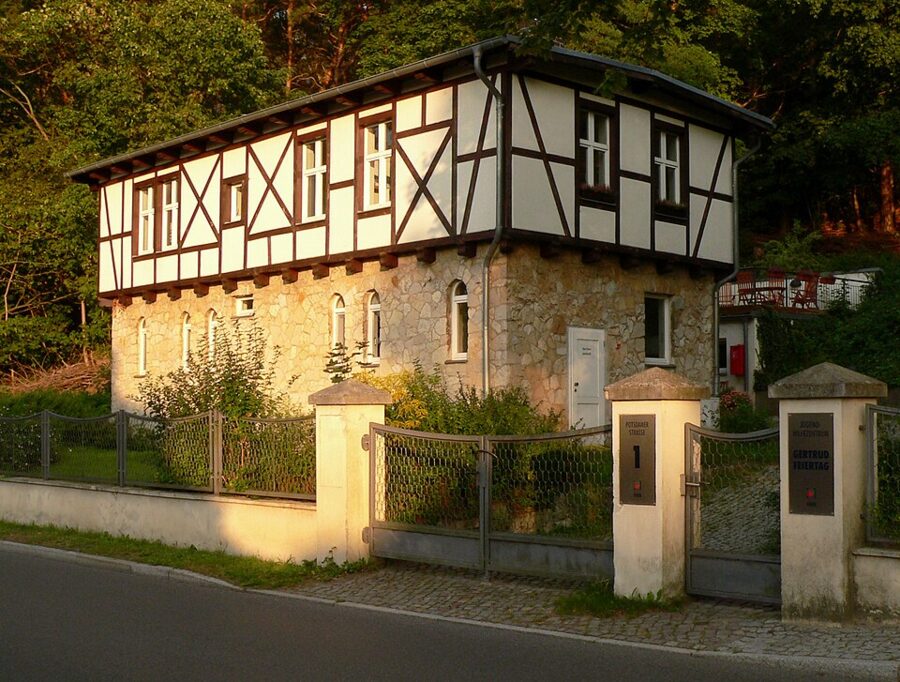
After the war the house was rented out as a home, at one point to the village mayor, who moved in himself while asking the GDR Academy of Sciences to fund its preservation. The Academy restored it for Einstein’s hundredth birthday in 1979, with Wachsmann flying in from Los Angeles for the reopening and privately unhappy with the dark stain on the walls. After reunification a long dispute over ownership ended in 2004 with eleven heirs entered in the land register, the Hebrew University of Jerusalem holding about 70 percent.
Visiting the Einstein House
The Einstein Forum, which has managed the house since the early 1990s, closed it in 2001 because of damp in the roof and reopened it on May 22, 2005 after a careful restoration by the Potsdam architects Kühn-von Kaehne & Lange, paid for largely by the Cornelsen Kulturstiftung and the federal government. Einstein left instructions that his house should never become a museum, and the Forum has kept to the spirit of that: the rooms are furnished sparely with modern pieces by the Potsdam designer Jörg Hundertpfund, plus a 1979 copy of the desk, and the house is used for workshops and visiting scholars.
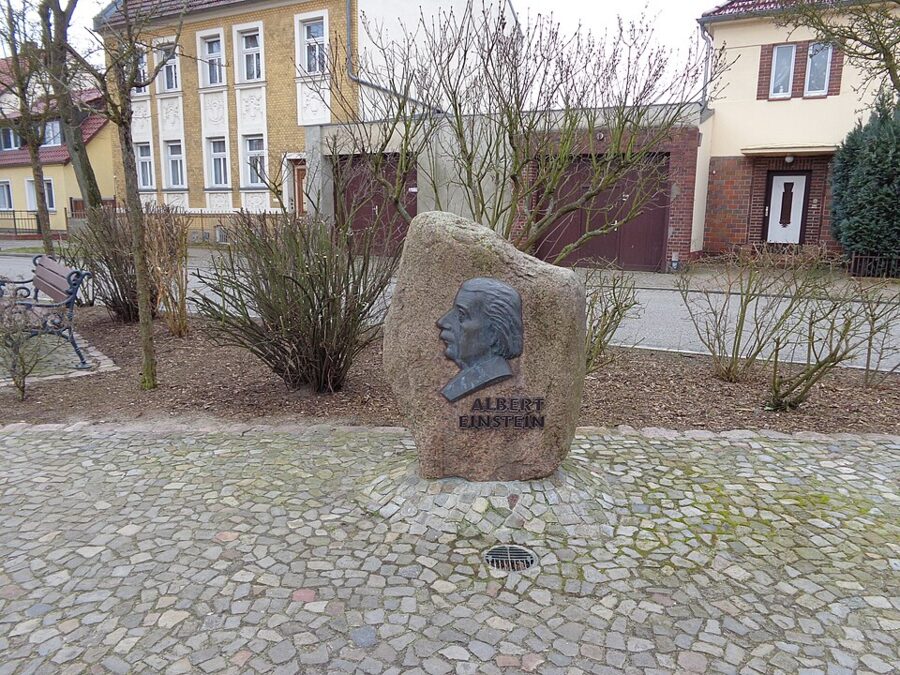
According to the Einstein House visitor information, it opens from April to October on Saturdays, Sundays and public holidays, 10:00–18:00, and admission is €5 (reduced €2.50). Guided tours in English can be booked by contacting the Forum in advance. From the palace it is about 1.2 km on foot, east through the village, 15 to 20 minutes; from the bus, get off at Caputh, Schumannstraße, follow Schumannstraße, turn left into Rosenstraße and left again into Am Waldrand, 10 to 15 minutes in all.
The museum Einstein did not want exists anyway, in the village center. The exhibition Einsteins Sommer-Idyll in Caputh, run by a local association on the first floor of the Bürgerhaus at Straße der Einheit 3, opposite the palace and the church, has models, documents and photographs, a facsimile of the guest book and a recording of Einstein’s voice. It opens 11:00–16:00 (last entry 15:00), Tuesday to Sunday between April and October and at weekends in the winter months, and costs €5; the entrance is at the back of the building. In winter it is the only way to see the Einstein story in Caputh.
The ferry, the church and the lakeshore
From the palace, Straße der Einheit runs west through the old village for about 1.3 km to the ferry, a 20-minute walk. The village is not large, but the archivist reckons a proper stroll through it takes nearly an hour.
Tussy II and her predecessor
Before the cable ferry, a boatman called Andreas Mahlow rowed people across by hand from a spot on the Caputh bank remembered as Mahlow’s Ecken. In 1843 the landowner von Thümen applied for a proper ferry, the boatman Wilhelm Bastian applied to run it himself, and after a decade of haggling the ferry started on February 20, 1853. It was a wooden barge moved with oars, poles and clubs hooked into a guide rope, motorized only in 1928. At the end of the Second World War retreating German troops blew up the ferry, and for a while a rowing boat had to do again.
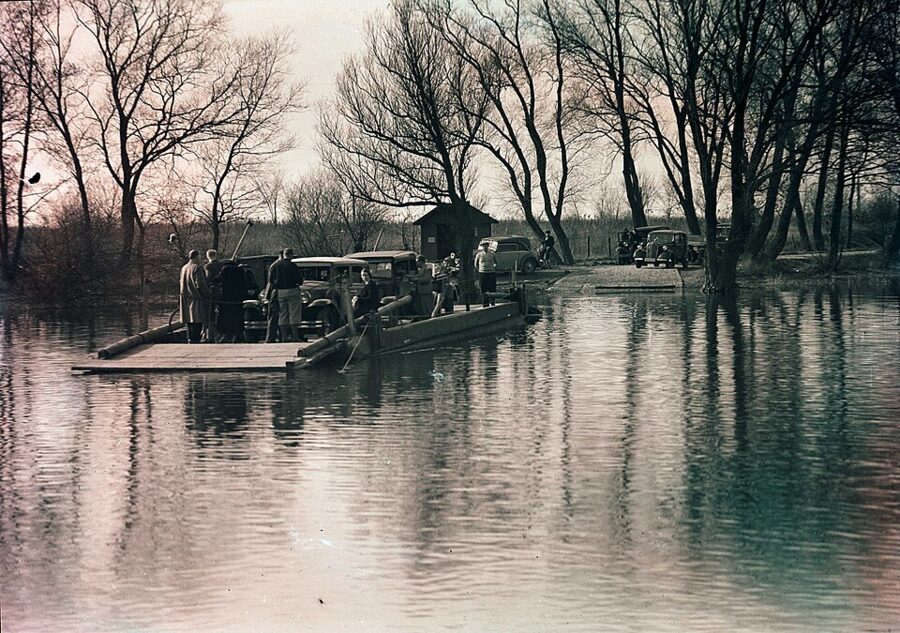
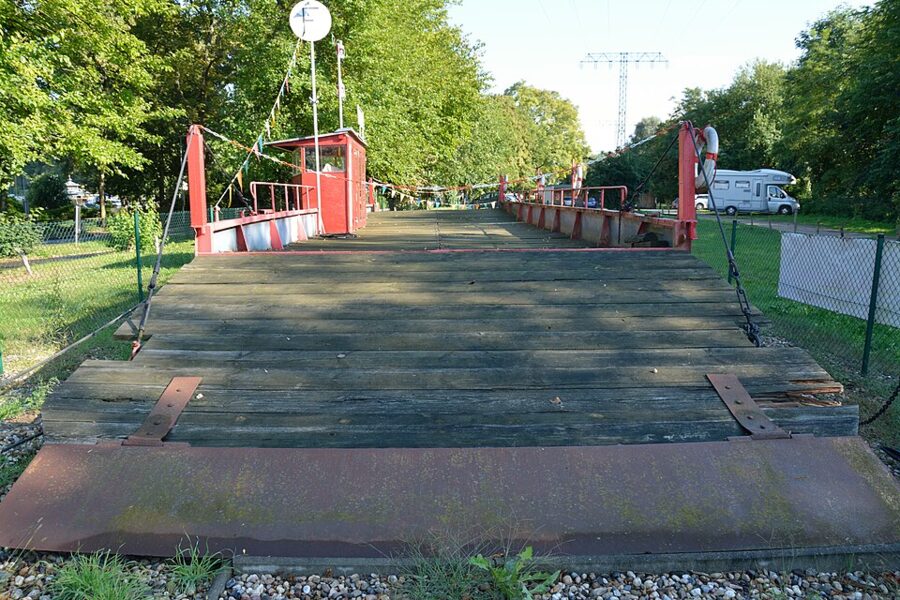
The steel ferry Tussy, built in 1940 at the Wiemann yard in Brandenburg an der Havel, had gone into service in 1942; repaired at a yard in Genthin after war damage, she ran until June 28, 1998. Since 2007 she has stood on dry land beside the western landing as a technical monument, 17.40 m of steel you can walk round. Her successor, Tussy II, has worked the crossing since 1998, pulling herself over on three steel cables with hydraulic, radio-controlled ramps at each end.
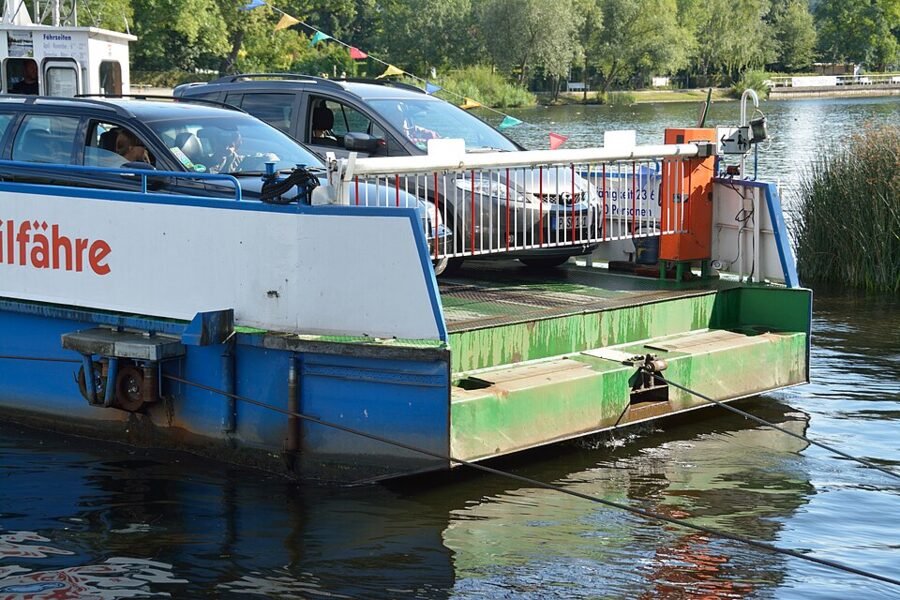
The Caputh ferry’s timetable and fares are as simple as the boat. From April to October it runs Monday to Friday 06:00–22:00 and at weekends 07:00–22:00; from November to March it stops at 20:00. A crossing costs €0.50 on foot, €1 with a bicycle and €2.50 by car, children up to 10 ride free, and there is no service in storms, fog, or very high or low water. The ferryman, Karsten Grunow, has run it since August 1998.
The village likes to tell one story about it. In December 1998 a driver from Hamburg trusted his navigation system, which did not know about the ferry, and drove straight into the Havel at night. If the ferry is not running, walkers can cross the Gemünde on the footpath of the railway bridge about 600 m to the south, open since 1949.
The village church
Back toward the palace, the village church stands on the corner of Straße der Einheit and Seestraße, behind a wall of yellow brick. Frederick William IV (Friedrich Wilhelm IV) took a personal interest in it: in 1846 the Potsdam building inspector Christian Heinrich Ziller submitted plans to rebuild the old, cramped church, the king rejected them, and Friedrich August Stüler was asked for a new design. Ziller then supervised the building from 1850 to 1852, and the king came to consecrate it on February 8, 1852.
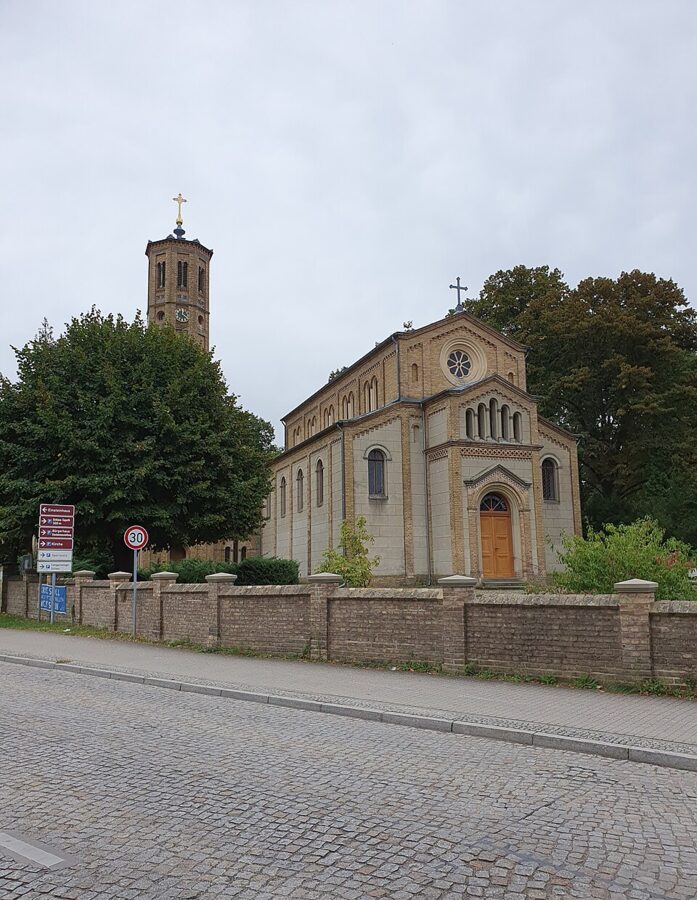
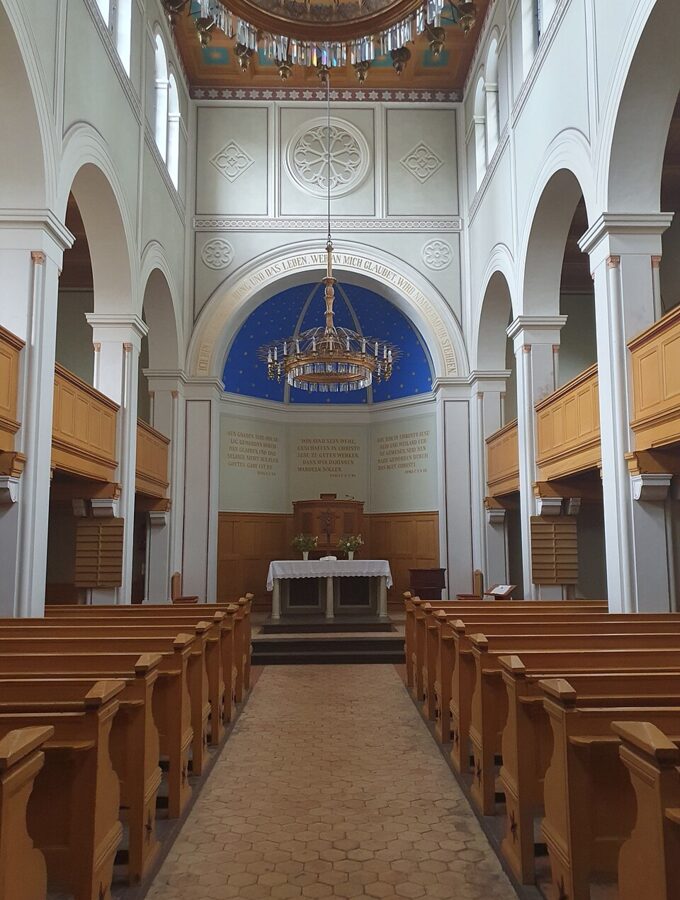
It is a basilica in the round-arched style that Frederick William IV favored, plastered and framed in pale brick, with a large rose window. The roof and the coffered ceiling of the nave were renewed in 1914, and the church was restored in the 1980s and again in 1999 and 2000. The Thümen family graves are in the churchyard, so the general who bought the palace lies a short walk from it.
The Krähenberg and the views
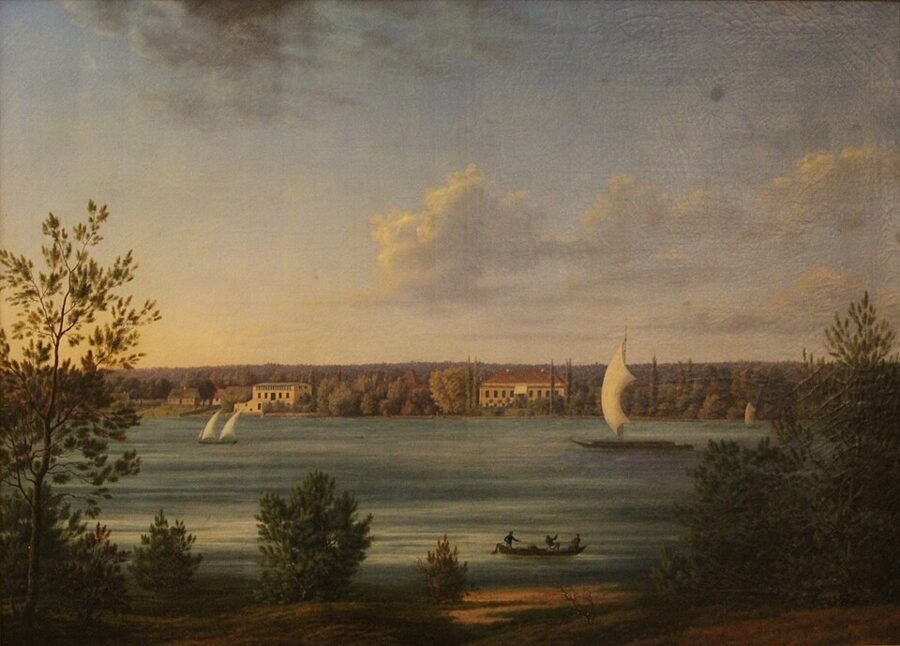
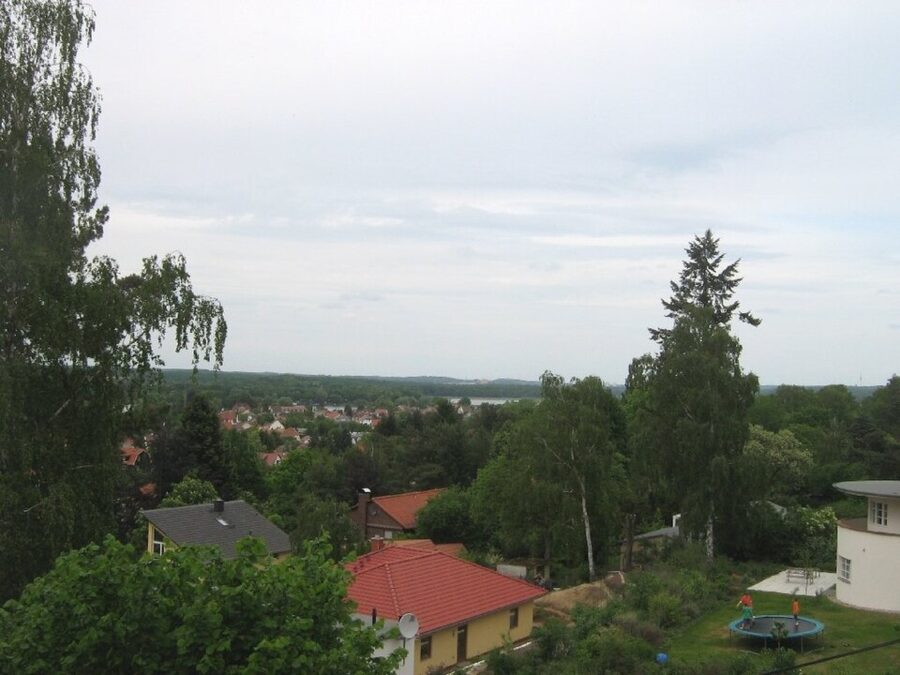
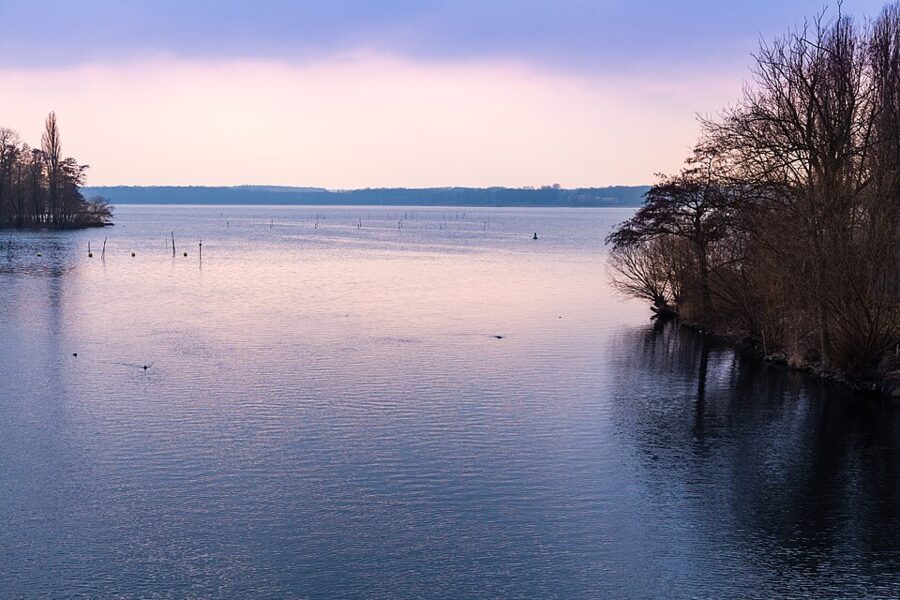
Caputh’s other way of seeing the water is from above. The Krähenberg, the wooded rise behind the village above the Schwielowsee, became a villa colony from the 1890s and saw its first villa in 1902, but painters had found it long before. Johann Heinrich Hintze painted the view from the Krähenberg in 1835 and 1836, looking northeast to Potsdam with the mast of the optical telegraph on the Telegrafenberg, the hill where the Einstein Tower (Einsteinturm) went up less than a century later, and looking northwest toward the Baumgartenbrücke and Werder.
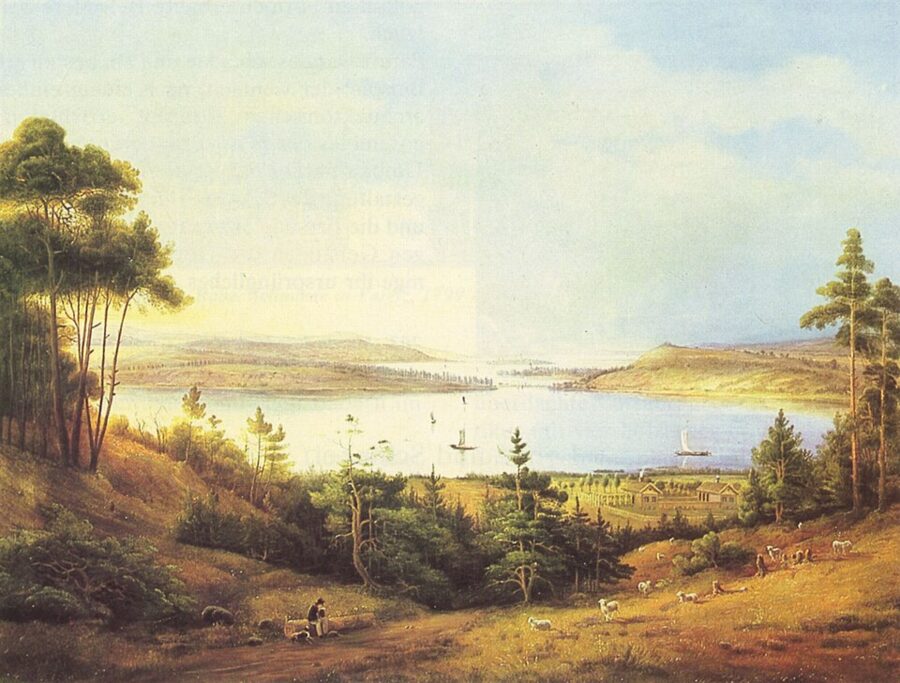
Today the Krähenberg is a quiet residential hill, and the streets that climb it open views between the villas over the rooftops toward the Schwielowsee. Walk up in the late afternoon, when the low sun comes across the lake from the west, and you get a version of what Hintze saw, with fewer sails.
Eating and swimming in Caputh
Caputh is not a place for a big restaurant meal, and I would not plan the day around one. What it does well is cake, a terrace by the water and a beer at the ferry. For a proper dinner, the Potsdam restaurants are 15 minutes away by bus.
The obvious stop is Zucker & Salz at Straße der Einheit 52, a small café halfway between the palace and the ferry. It is open Thursday to Sunday, 13:00–19:00 or later, with homemade cakes and tarts from 13:00 and savory food and drinks from 17:00. On a palace morning that means you should take your coffee at the end, not at the start.
At the ferry, the Fährhaus Caputh at Straße der Einheit 88 is the classic inn of the Gemünde, with a terrace right above the landing. It opens daily from 12:00 between April and October, and at weekends 12:00–20:00 in March, November and December; nothing is listed for January and February, so do not count on it then. Next to the palace, the visitor center in the Logierhaus sells drinks and regional products, enough for a drink on the palace courtyard.
On Sundays the Kavalierhaus in the palace park lays on a brunch buffet, 11:00–15:00, from €35 a head without drinks, with higher prices for the Advent and Christmas brunches; booking ahead by phone or email is expected. According to the Kavalierhaus restaurant page, the rest of the week it opens only for weddings and private events, having given up à la carte service in 2022.
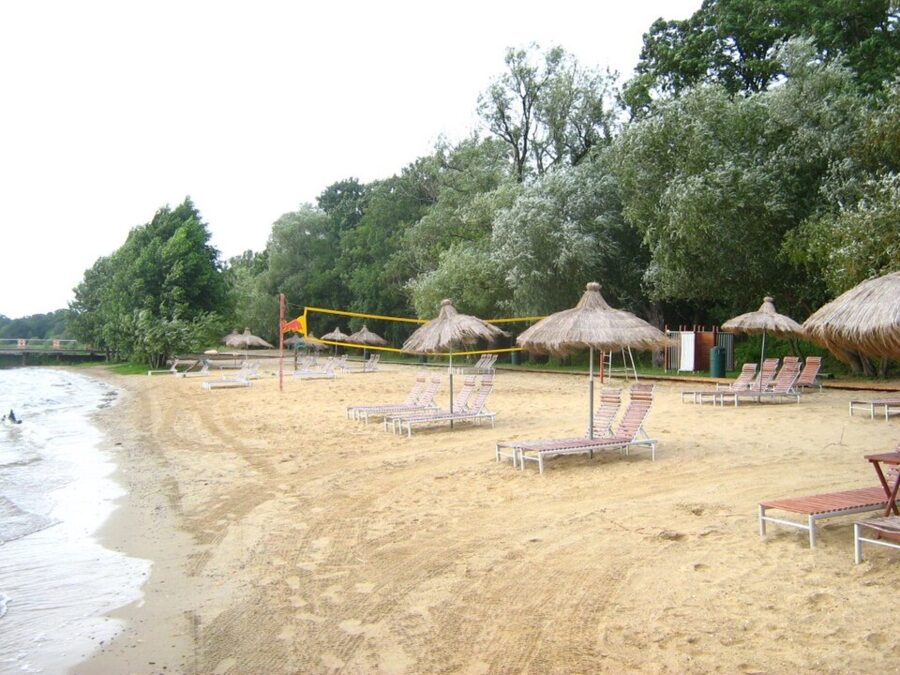
For a swim, the village beach lies on the spit of land between the Havel and the Schwielowsee and is run today as the Seebad Caputh, with white sand, a pier and loungers to rent. On its price list, a day on the beach costs €8.50 for adults and €3.50 for children up to 12, and stand-up paddleboards rent for €15 an hour; opening depends on the weather, so it is a summer plan. Its café, the Ufergalerie, opens from 11:00 for coffee, pizza and drinks.
Getting there
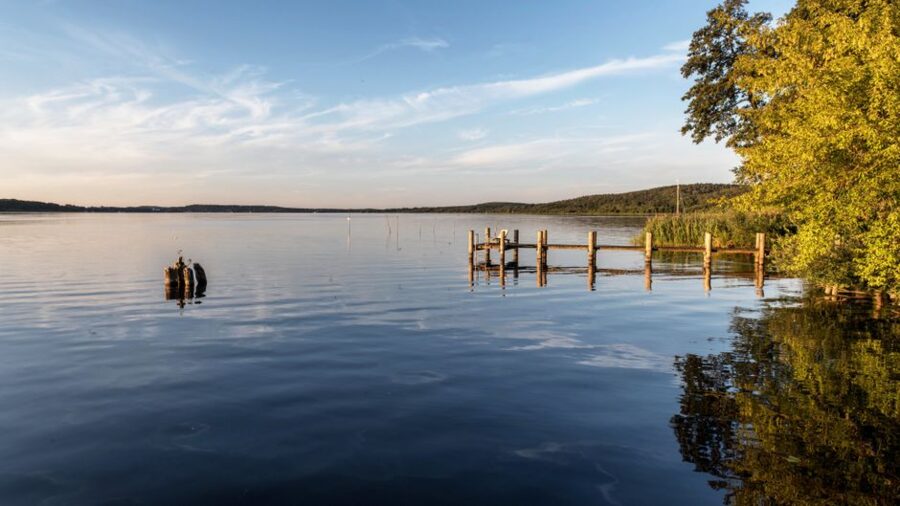
Caputh is easy to reach from Potsdam Hauptbahnhof, the main station, and fits neatly into a day trip from Berlin: take the S7 or a regional train to Potsdam Hauptbahnhof and change there. Coming from Berlin, a single ticket Berlin ABC covers the whole journey to Caputh, at €5.00 in 2026 and €5.20 from January 1, 2027; a 24-hour ticket Berlin ABC costs €12.90, rising to €13.20 in 2027. From Potsdam, a single Potsdam ABC ticket costs €3.70 in 2026, and the Deutschlandticket is valid on the buses and trains. The BVG page on the fare zones explains the A, B and C rings.
By bus. Bus 607 leaves from Potsdam Hauptbahnhof toward Ferch and reaches the stop Caputh, Schloss, right by the palace and the church, in about 15 minutes. On weekday mornings it runs roughly twice an hour and on Saturdays hourly; for the Einstein House, stay on to Caputh, Schumannstraße. In summer some buses continue past Ferch toward Werder.
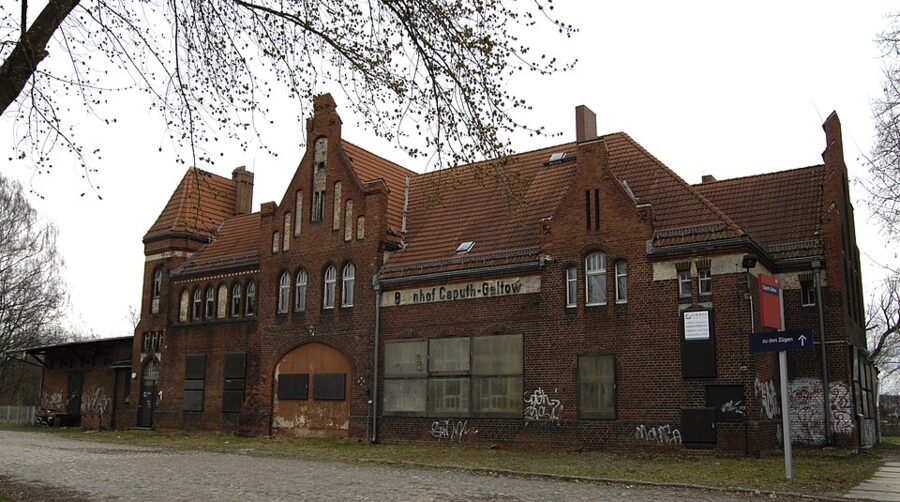
By train. The regional train RB33 toward Jüterbog takes about 12 minutes from Potsdam Hauptbahnhof to Caputh-Geltow and runs hourly. Be aware that Caputh-Geltow station sits on the Geltow side of the Gemünde: from the platform it is a short walk down to the ferry, and the ferry is your way into the village, about 25 minutes on foot to the palace. The next stop, Caputh-Schwielowsee, is on the village side, about 20 minutes’ walk from the palace.
By boat. In season the Weiße Flotte’s Havel lakes round trip (Havelseenrundfahrt) leaves from Potsdam’s Lange Brücke and stops at two landings in Caputh, Caputh Schloss below the palace and Caputh Gemünde by the ferry, on a route of about three and a half hours that continues to Werder. Adult tickets start at €29, you can get off and catch a later boat, and the first sailings of 2027 are listed for late March. The other routes and prices are in the guide to Potsdam boat tours; arriving by water is how the electresses came, and the palace makes most sense that way round.
By bike. From Potsdam Hauptbahnhof it is about 7.6 km to the palace, along Leipziger Straße and Templiner Straße and then down the shore of the Templiner See, roughly half an hour at an easy pace. The lakeside road follows the line Lenné drew for it in his plans for beautifying the Potsdam countryside, and it is the prettiest way in. The ferry takes bikes for €1, so you can carry on through Geltow and round the lakes to Werder (Havel), the island town of orchards and the blossom festival.
By car. Visitor parking for the palace is on Michendorfer Chaussee, and for the Einstein House the Forum points drivers to the car park on Waldstraße, just after you enter the village from Potsdam.
A day in Caputh
Here is how I would spend a summer Saturday. Take the 607 from Potsdam Hauptbahnhof to Caputh, Schloss and be at the palace when it opens at 10:00, before the groups; start in the tile hall if the route allows and finish in the porcelain chamber. Walk down through the park to the Templiner See and look back at the double staircase from the shore. Then cross the road to the Bürgerhaus for half an hour with the Einstein exhibition, which opens at 11:00.
At 13:00 Zucker & Salz starts serving cake; or walk on along Straße der Einheit to the Fährhaus Caputh for lunch on the terrace above the landing. Ride the ferry across and back for the sake of it, look at the old Tussy on the far bank, and walk out onto the railway bridge for the view down the Schwielowsee. In the afternoon, climb to Einstein’s house at Am Waldrand, which stays open until 18:00.
On a weekday from April to October the palace is open Wednesday to Sunday but the Einstein House is not, so do the palace, the exhibition, the ferry and a swim at the Seebad instead. In winter, come on a weekend for the guided palace tour, the exhibition and a walk along the reeds, and be back at the bus stop before dark. Either way, the last good move of the day is the same.
Go back down to the Gemünde in the evening and wait for the ferry. Tussy II crosses until 22:00 in summer, the light goes gold over the Schwielowsee, and the narrows that once held up every barge between Berlin and Brandenburg are just a strip of water you can cross for 50 cents, with the 607 back to Potsdam leaving from the palace a 20-minute walk away.