

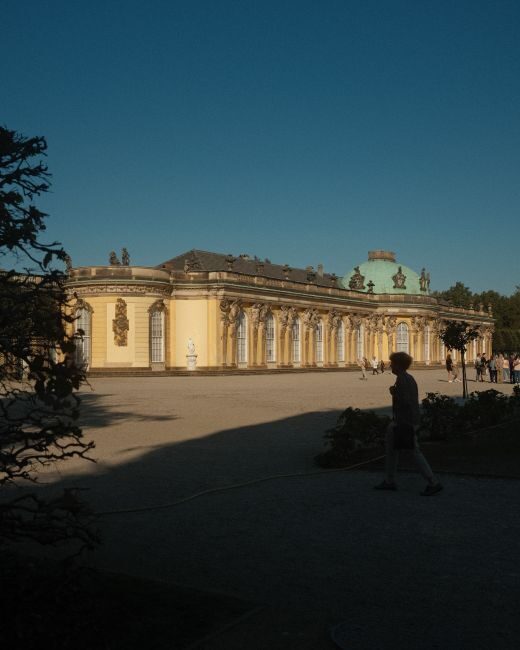
Sanssouci Palace lets in its first timed visitors at 10:00, and the hour before that is the best one in the park. The gardeners are on the vineyard terraces, the Great Fountain has nobody standing at its rim, and the day-tour coaches from Berlin are still somewhere on the motorway. You only get that hour if you slept within walking distance, which is the whole argument for a night in Potsdam.
Plenty of people take the hint. By the city’s count, Potsdam’s 57 hotels had about 7,800 beds in 2025, and that year set a record of just over 1.5 million overnight stays, with guests staying 2.4 days on average. The town is small enough that almost any bed is a tram ride from a palace, but the parts of town differ more than the map suggests: a baroque street with shops below your window, a quiet villa road at the edge of a park, a tower block over the station, a lake with a sauna at the water’s edge.

This guide goes area by area: the old town and the Dutch Quarter, the streets around Park Sanssouci, the station, Babelsberg and the Griebnitzsee, and the lakes as far as Werder. Each area gets a handful of hotels, guesthouses and apartments that were taking bookings in late 2026, with what they are like and roughly what a room costs. The tax, the parking and the trains come at the end.

Contents7 parts
Why spend a night in Potsdam
A day trip from Berlin works, and my guide to Potsdam as a day trip from Berlin covers the trains, tickets and three one-day plans. The trouble with a day trip is the shape of the day. You arrive at 10:30 with everyone else, you queue for the palace slot that is left, and you leave as the light gets good.
The hour before the palace opens
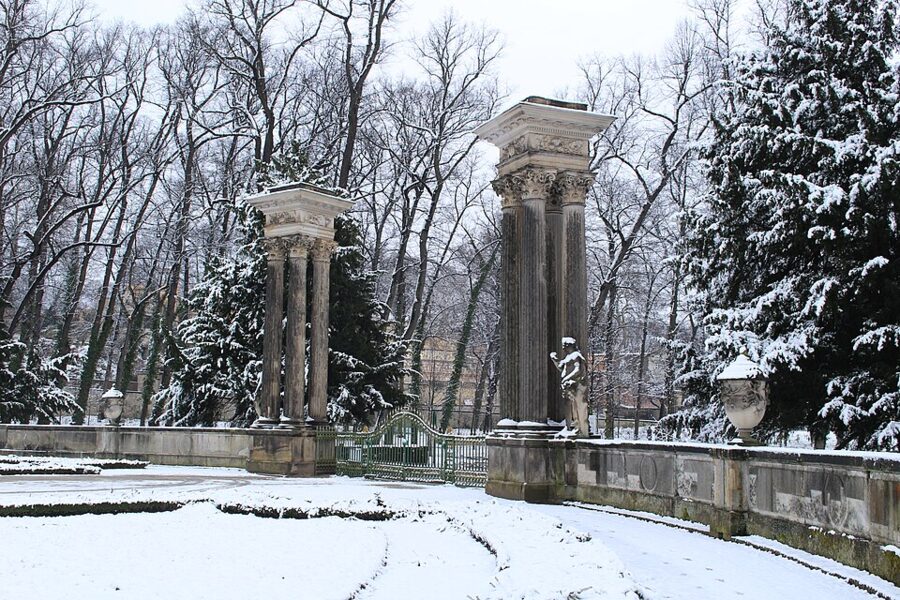
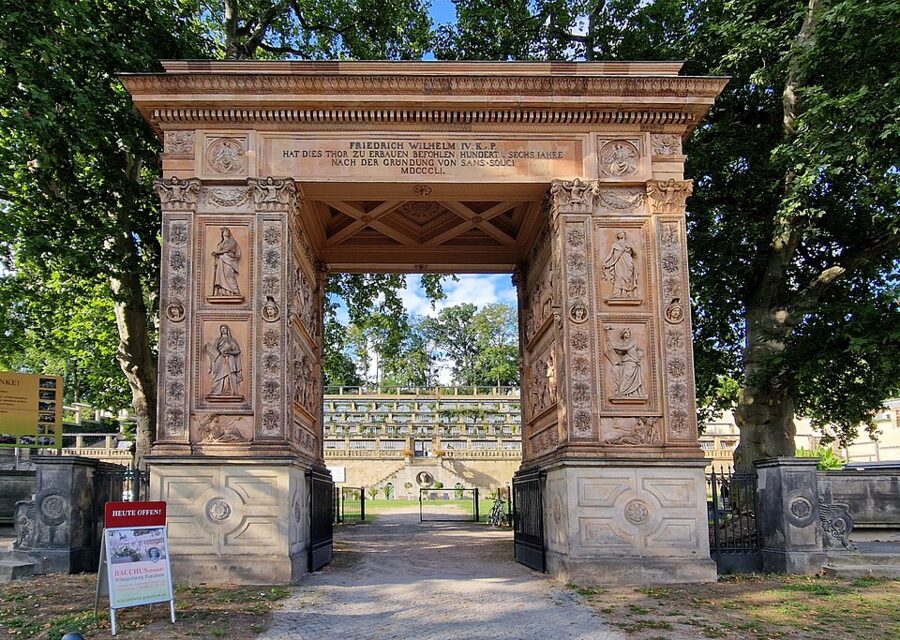
Park Sanssouci opens every day at 08:00 and stays open until dark, free of charge. Sanssouci Palace itself opens Tuesday to Sunday at 10:00 on timed tickets, until 17:30 from April to October and until 16:30 from November to March, and the number of tickets per day is limited. Sleep in the old town or by the park and you can walk in through the Obelisk Portal at 09:00, climb the terraces in front of an empty palace, and be at the door for the first slot. How the timed tickets and the Sanssouci+ ticket work is in my guide to Sanssouci tickets.

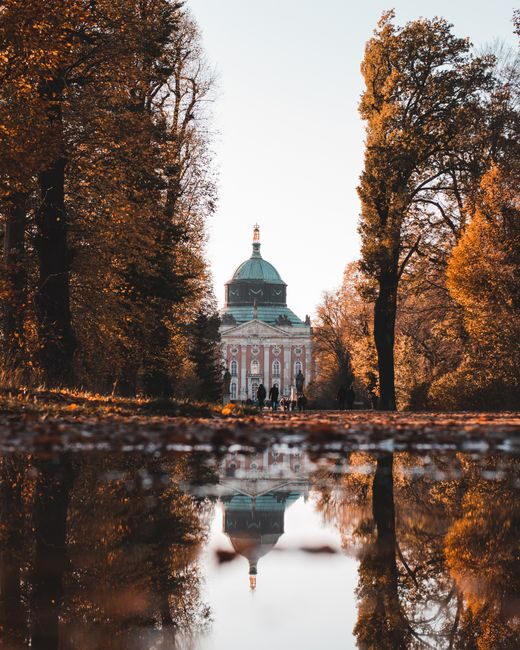
The same applies to the New Palace at the far western end of Park Sanssouci. It closes on Mondays from January to October and on Tuesdays in November and December, so a two-day stay is the easy way to fit it in on whichever day it is open.
Evenings when the parks empty
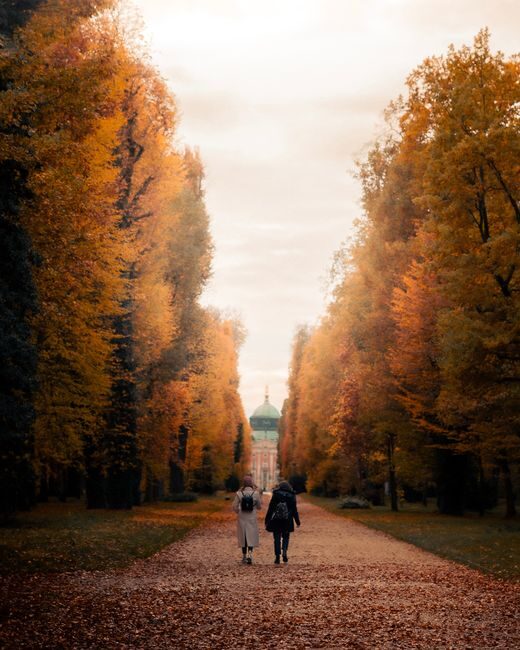
The second reason is the end of the day. The parks stay open until dusk, which in midsummer means well into the evening, and by then the coaches have gone back to Berlin. The long avenue from the Obelisk Portal to the New Palace, the shore of the Heiliger See in the Neuer Garten, the paths of Park Babelsberg above the Havel: all of them belong to dog walkers and joggers after 18:00.
Then there is dinner without a train to catch. Potsdam’s restaurants are mostly in the old town and the Dutch Quarter, with a few by the lakes, and my guide to Potsdam restaurants picks them out by area. Staying the night turns them from a hurried lunch into an evening.
A two-day plan
Arrive around midday and drop your bags. Spend the afternoon in the old town: Brandenburger Straße, the Dutch Quarter, the Alter Markt and the Museum Barberini. Walk into Park Sanssouci in the early evening, when the low sun is on the palace front, and eat in town.
On the second morning, be on the terraces at 09:00 and inside Sanssouci Palace at 10:00. Walk west through the park to the New Palace and its Grand Tour, and give the afternoon to Charlottenhof in the southern park, the Neuer Garten, or a boat on the Havel (Potsdam boat tours has the routes). The Sanssouci+ ticket covers every open foundation palace in Potsdam on a single day: €22 (reduced €17) in 2026 and €24 (reduced €20) in 2027.
Three things to plan around. Cecilienhof, the Orangery Palace and the Roman Baths are closed for restoration until further notice, so their gardens are as close as you get. Babelsberg Palace opens only for events. And from November to March the palaces close at 16:30, so a winter stay leans harder on the mornings.
When Berlin is the better base
If Potsdam is one day inside a longer Berlin trip, stay in Berlin. Moving hotels for one night costs you a morning, and the S-Bahn S7 and the regional train RE1 run from central Berlin to Potsdam Hauptbahnhof (main station) in about half an hour. Berlin also wins if you want nightlife, or if your evenings are booked at Berlin concerts and theaters.
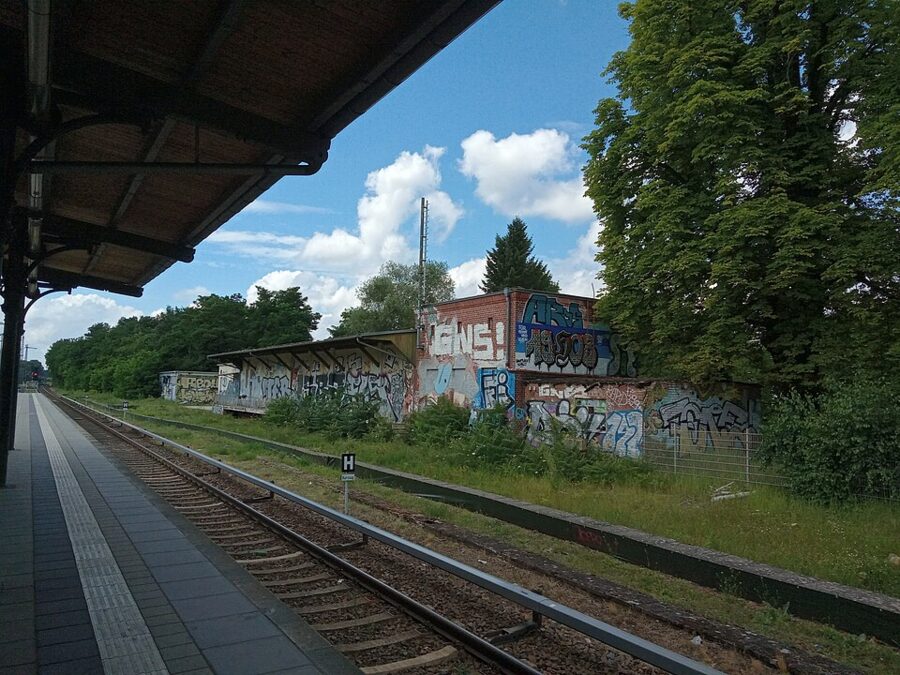
If you want to split the difference, the S7 stops at Griebnitzsee and Babelsberg, Potsdam’s two eastern stations, on its way into the city. A hotel near either one puts you a few stops closer to Berlin without leaving Potsdam. Berlin has its own city tax on hotel stays, so the tax is no reason to choose one over the other.

| Area | Best for | Rooms from about | Getting around |
|---|---|---|---|
| Old town and Dutch Quarter | First visit, evenings out, walking to Sanssouci | €92–€180 | On foot; tram from the station |
| Near Park Sanssouci | Early starts at the palaces, quiet nights | €75–€145 | On foot to the park; bus 695 |
| Potsdam Hauptbahnhof | Late arrivals, short stays, day trips onward | €55–€140 | S7, RE1, trams |
| Babelsberg and Griebnitzsee | Berlin and Potsdam on one trip, budgets, families | €25 (hostel bed)–€120 | S7 to Berlin; tram into Potsdam |
| Lakes and Werder | A slow weekend, saunas, swimming, cycling | €60–€155 | Bus, tram or regional train; a bike helps |
The figures are the lowest room rates I found for late November 2026, from the hotels’ own price lists where they publish them and from live rates for a midweek night where they do not. Summer weekends and December run higher.
The old town and the Dutch Quarter
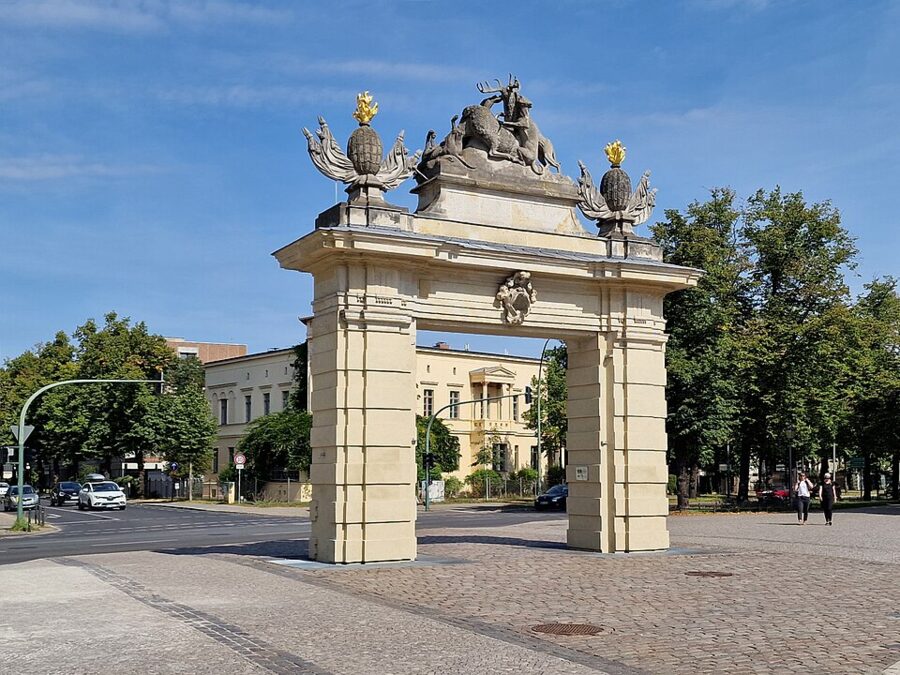
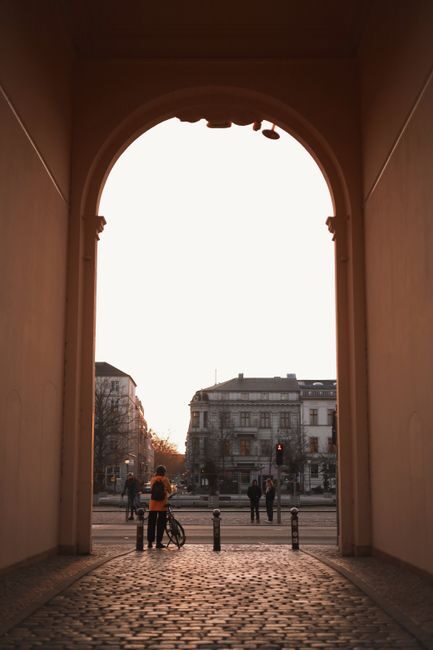
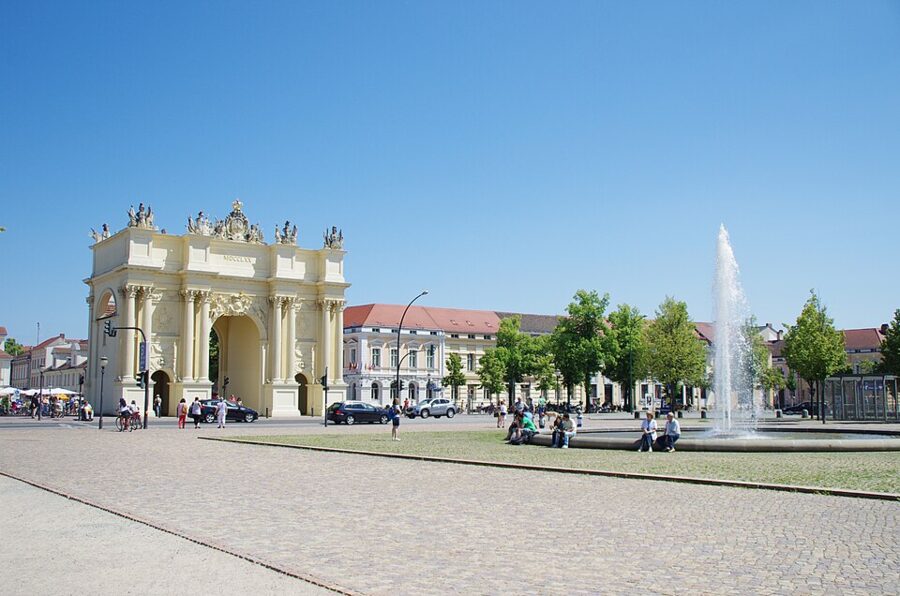
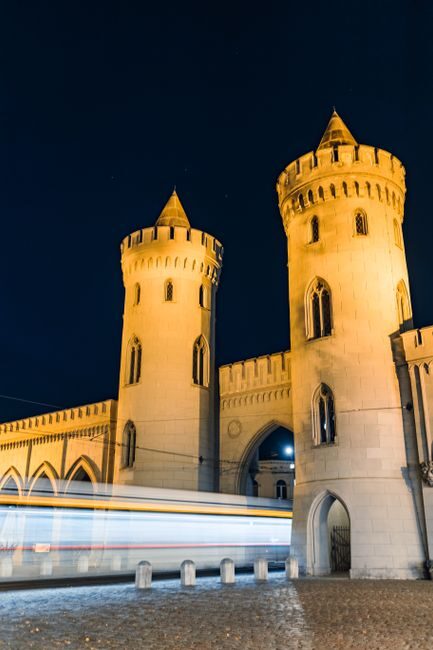
The old town is the baroque grid that Frederick William I (Friedrich Wilhelm I) laid out for his soldiers and craftsmen in the 1720s and 1730s, between the Brandenburg Gate (Brandenburger Tor) at Luisenplatz in the west and the Nauener Tor in the north. Brandenburger Straße, a pedestrian street, runs straight through it to the church of St. Peter and Paul.
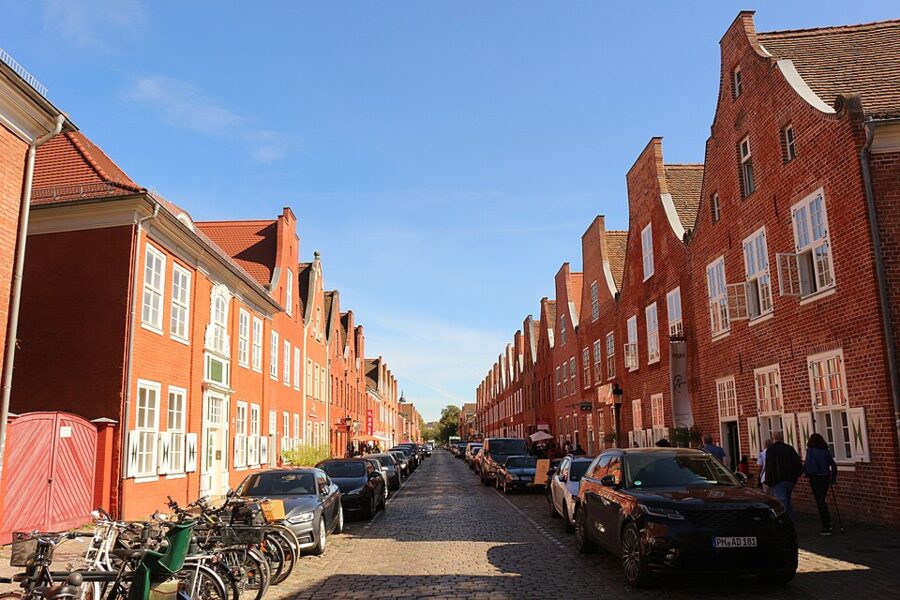
The Dutch Quarter fills four blocks just north of it. Stay here for a first visit: you can walk to the Sanssouci gate in a few minutes from Luisenplatz, and to the Alter Markt and the boats in about 15.
Hotel Am Jägertor
Hotel Am Jägertor sits on Hegelallee directly across from the gate it is named after. The building went up in the late nineteenth century, after the town wall was pulled down and the boulevard laid out in its place, and began life as a care home for army officers. It was a small guesthouse before the Second World War and a state travel-agency hotel in GDR days; it reopened in its present form in August 2000.
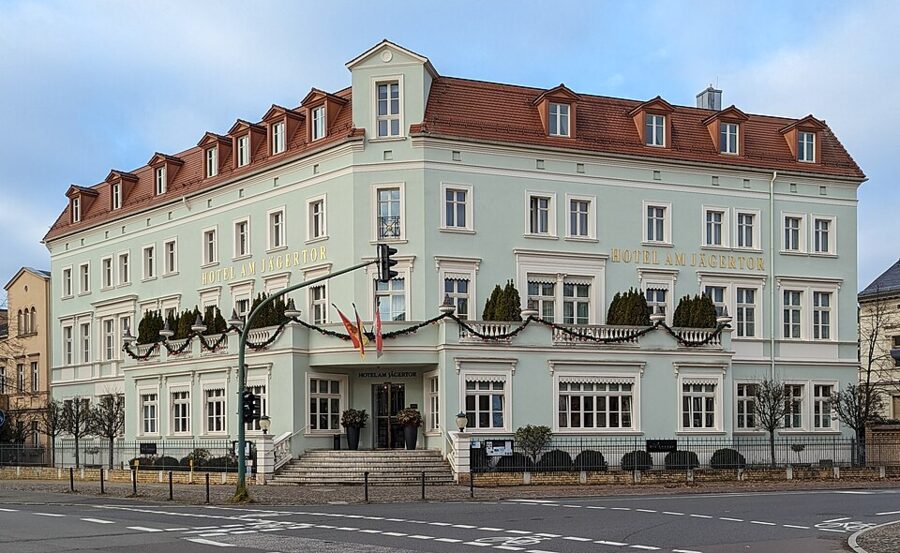

There are 62 air-conditioned rooms and suites facing either the gate or the hotel’s own garden terrace, where breakfast is served in summer (06:30–10:30). Rooms start at €101 for a single and €111 for a standard double on the hotel’s own site, rising to €166 for a junior suite with a private terrace. Dogs are welcome. If you want street life outside the window, ask for a gate-side room; if you want sleep, ask for the garden.
Hotel Brandenburger Tor and Luisenplatz
At the other end of Brandenburger Straße, Hotel Brandenburger Tor occupies a complex of buildings put up between 1736 and 1785, when the gate marked the western edge of town and Luisenplatz outside it was still a timber yard. In 1785 the king had his building officer Manger put up a manor house on the site. After 1945 it sheltered bombed-out Potsdamers and refugees, stood empty for years after reunification, and opened as a hotel on August 20, 2010, after a five-year restoration under the monument rules.
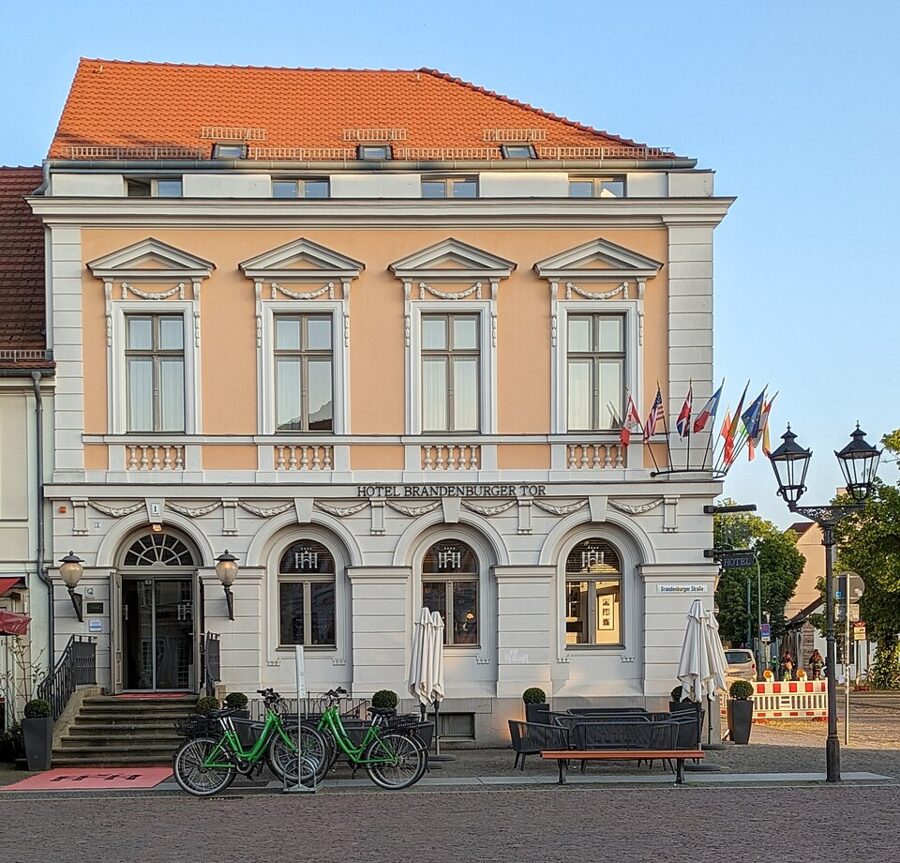

It is a boutique hotel with four room types (superior, deluxe, suites and apartments) and a small bar named for Voltaire. Live rates for a November weeknight started at about €97. Parking on the hotel’s forecourt costs €18 a day when there is space, and the public garage under Luisenplatz charges €15 a day, which the hotel will put on your bill.
Across the square, Hotel am Luisenplatz (Luisenplatz 5) has old-building rooms it calls “Palais” doubles, several looking straight at the gate, plus a sauna and family rooms with two bedrooms. Rooms ran from about €121 on the same dates. Next to the gate, on Allee nach Sanssouci, the MAXX Hotel Sanssouci is the large modern option: 137 rooms themed on German film history, some deluxe rooms facing the gate, and a garage.

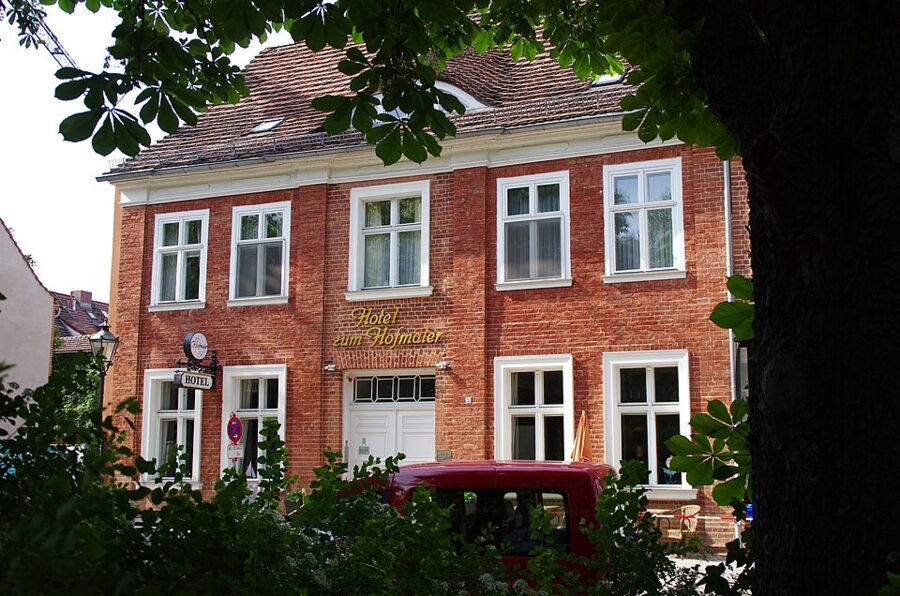
Hotel zum Hofmaler, in the Dutch Quarter
If you want to sleep in the Dutch Quarter itself, Hotel zum Hofmaler is at Gutenbergstraße 73, in one of the listed brick houses built between 1740 and 1742, with a modern wing added in 2007. The 18 rooms split between the two: baroque rooms, comfort rooms and fireplace rooms in the old house, some with extra-long beds, and 11 brighter rooms with balconies or terraces in the new part. Standard rooms are a compact 18 m². Live rates started at about €117.

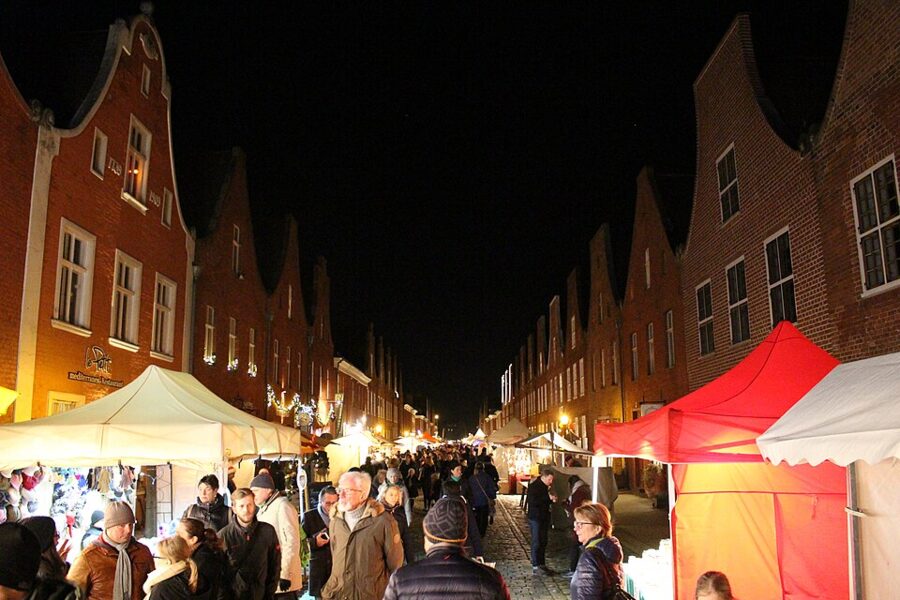
The quarter is lively. On tulip-festival and Christmas-market weekends it is shoulder to shoulder until late, which is wonderful if that is why you came and less so if you are up at 08:00 for Sanssouci.
Hotel am Großen Waisenhaus
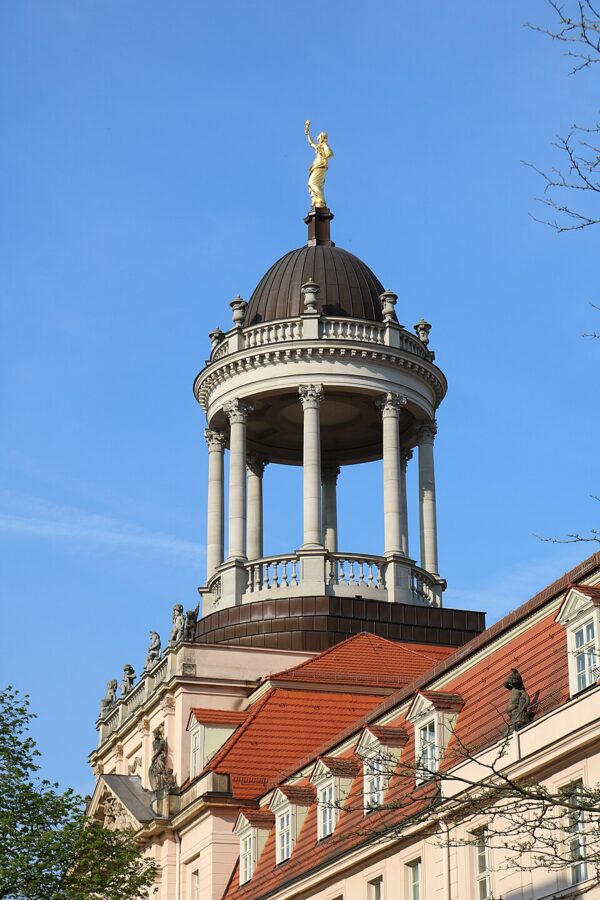
Two blocks south of Brandenburger Straße, Hotel am Großen Waisenhaus (Lindenstraße 28/29) has occupied part of the Great Military Orphanage since 2011. Frederick William I founded the orphanage in 1724 for the children of dead or impoverished soldiers, and Frederick the Great had Carl von Gontard rebuild it from 1771 to 1778, with a round temple 26 m high over the main stair. The hotel has five room types and a breakfast buffet, and it ran from about €92 on a November weeknight, the lowest of the old-town hotels.

Le doux Souvenir, by the Nauener Tor
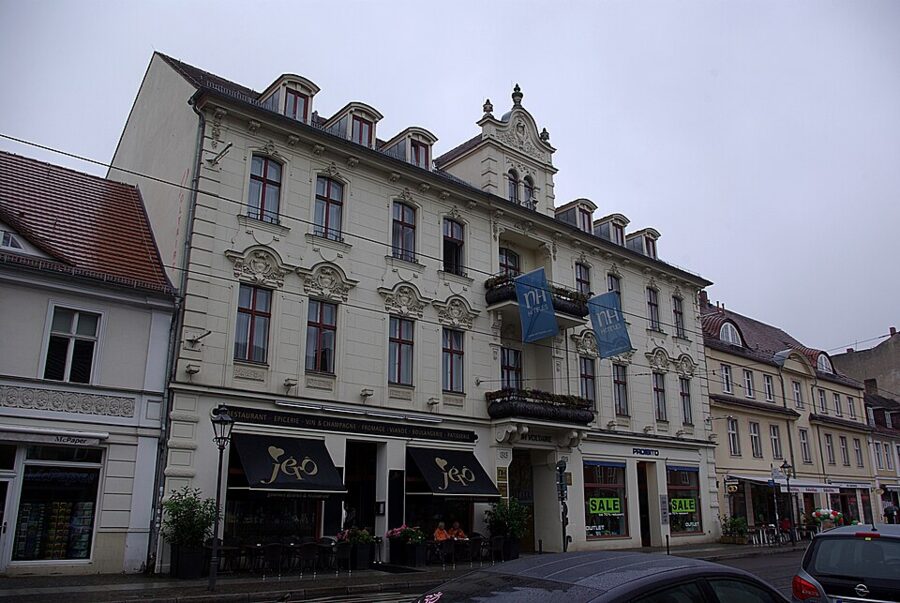
The newest hotel in the old town is Le doux Souvenir, in Marriott’s Tribute Portfolio, which opened in 2026 in the former Hotel Voltaire at Friedrich-Ebert-Straße 88. The core of the building is a listed baroque town palace, the Palais Brühl, a minute from the Nauener Tor and the Dutch Quarter. Live rates for late November started at about €178, which makes it the old town’s most expensive bed. I could not open its own pages to check the rooms, so treat this as the address to look up, not a recommendation.

Near Park Sanssouci
North and west of the old town, the streets climb toward the park through the Jägervorstadt and Bornstedt, villa suburbs with gardens and very little traffic. Stay here if the palaces are the point of the trip. You lose the evening bustle of the old town, but the park gates are minutes away and the nights are quiet.
Villa Monte Vino, on the Winzerberg
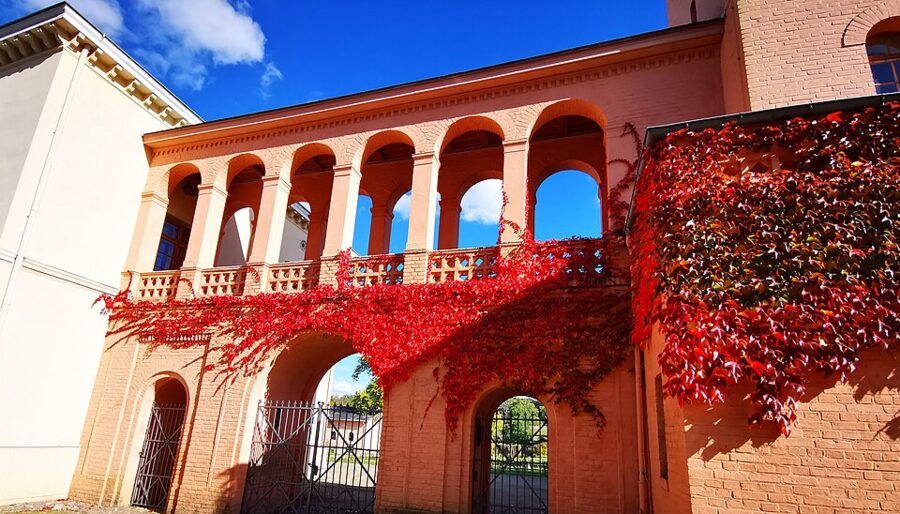
Villa Monte Vino is a listed villa on Gregor-Mendel-Straße at the foot of the Winzerberg, the terraced vineyard Frederick the Great laid out opposite Park Sanssouci from 1763. The hotel puts Park Sanssouci 300 m away and the old town about 750 m. There are 27 rooms in five categories, all air-conditioned, and every room rate includes the sauna and, from March to October, a Berlin ABC transit ticket.

Rooms on the hotel’s own site run from €89 to €179, and booking direct is €10 a night cheaper than through the portals. Breakfast is €18, parking in the yard €15 a day, and there is no restaurant, only a bar with wine from the royal vineyard in Potsdam. Every room is up a flight of stairs and there is no lift. From the station, bus 695 to the Brentanoweg stop takes about 15 minutes.
Dorint Hotel Potsdam
On Jägerallee, the avenue that runs north from the Jägertor, the Dorint Hotel Potsdam is the big conventional option: 309 rooms and suites, an indoor spa with a pool (€7.50 per stay for hotel guests), air conditioning, and rooms from €89 for the basic category up to €289 for a suite on its own price list. The underground garage costs €28 a night and dogs €15 a day. It suits families and anyone who wants a pool after a day of walking.
Hotel am Katharinenholz, in Bornstedt
Further out, at the edge of the Katharinenholz woods north of the park, Hotel am Katharinenholz is a family-run house with 17 rooms, the ground-floor ones with their own terrace onto a garden of old oaks. Breakfast is €10, every room has a free parking space, and there is a sauna cabin in the garden. Live rates started at about €106.
From November 1 to December 18, 2026, it sells five nights for €495 with breakfast, parking and a transit ticket for Potsdam and Berlin, which is the best winter offer I found. For dinner, the hotel points guests to the restaurants in Bornstedt.

Apartments by Charlottenhof station
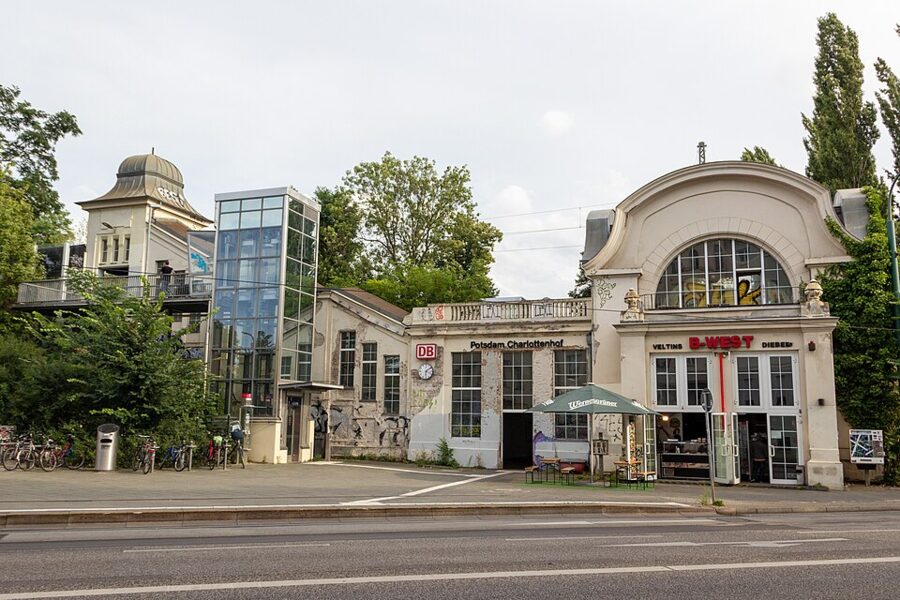
For a kitchen and more space, Elisapart rents furnished apartments at Zeppelinstraße 143, beside Charlottenhof station on the south side of the park. They come with one to three rooms, from €75 to about €210 a night, and pets are allowed for a cleaning fee of €15 a night. The regional trains from here reach Potsdam Hauptbahnhof in one stop and Park Sanssouci station, by the New Palace, in one stop the other way.

West of the park, in the university village of Golm, the Landhotel Potsdam has rooms renewed in 2017 and its own restaurants; Slavic and later Swiss settlers lived here long before the university and the research institutes moved in. Live rates were about €144. It suits drivers and cyclists better than anyone relying on trams.
By Potsdam Hauptbahnhof
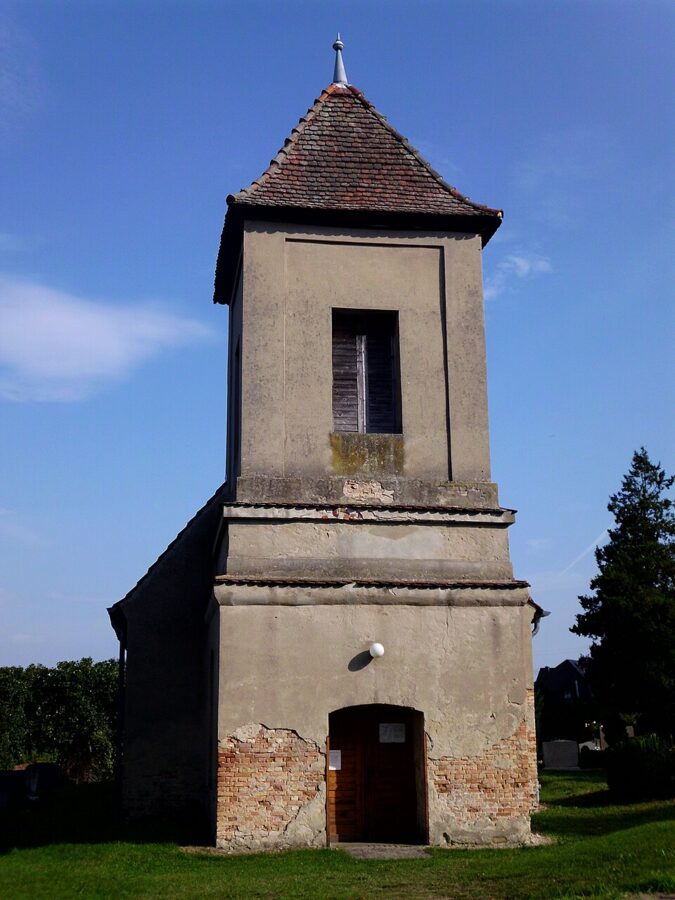
The main station sits on the south bank of the Havel, across the Lange Brücke from the rebuilt Stadtschloss and the Alter Markt. It is not pretty, but it is practical: the S7 and the RE1 from Berlin end or stop here, the trams leave from the door, and the old town is about 600 m away over the bridge. Stay here for a late arrival, a short stay, or a base for trips further out.
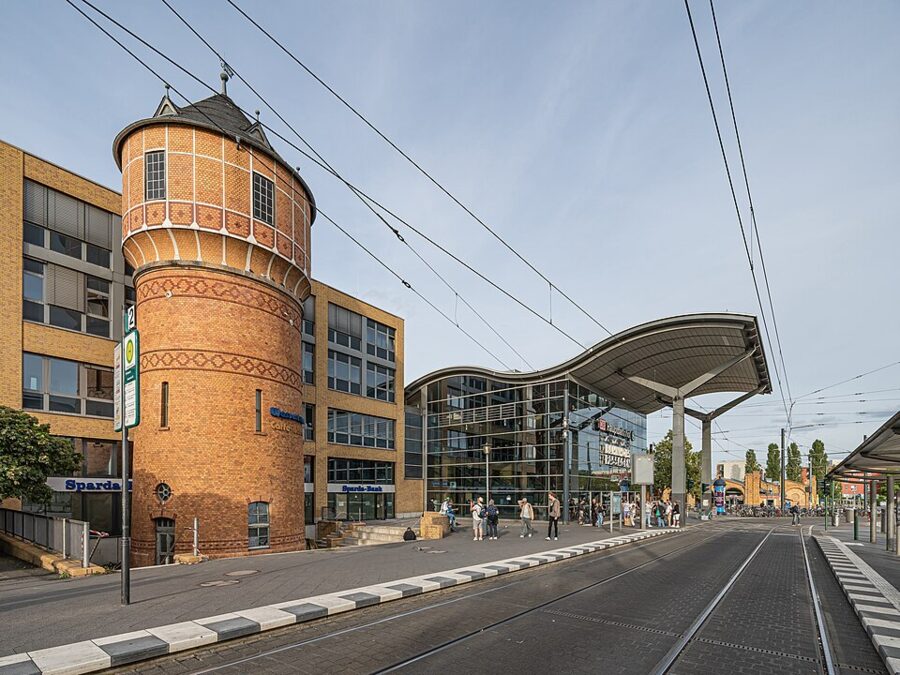

Holiday Inn the niu, Amity is 200 m from the platforms on Leipziger Straße, just south of the Freundschaftsinsel (Friendship Island), a modern hotel done up as a lodge in leather, rope and green, with a 24-hour gym. Parking is €20 a day. Live rates ran from about €140, high for a station hotel. The cheapest bed in this part of town is the B&B Hotel Potsdam on Babelsberger Straße, about 100 m from the station, with air-conditioned rooms from about €55 and breakfast at €13.90.
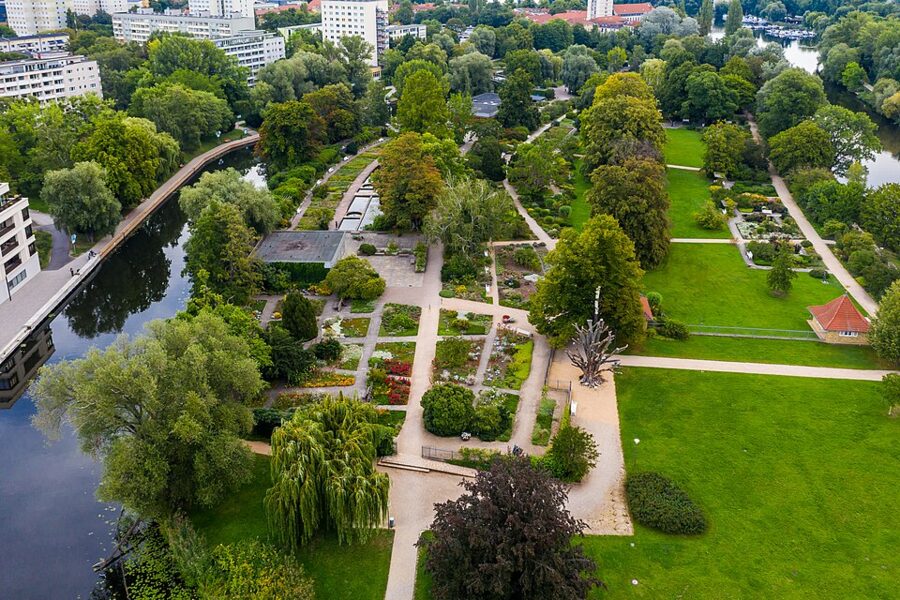

Across the river, the Holiday Inn Express & Suites on Am Kanal is a ten-minute walk from the station and closer to the old town: free breakfast, suites with kitchenettes, parking at €30 a day. It is the station-area hotel I would pick for a first visit, because the Barberini and the Dutch Quarter are both a short walk.
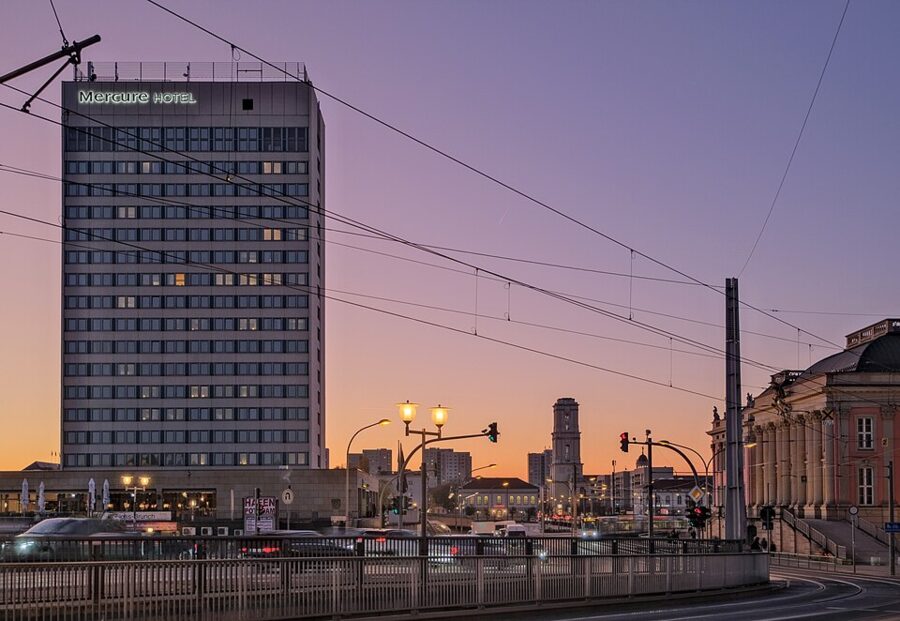

You cannot miss the tower at the end of the Lange Brücke. The Mercure Hotel Potsdam City opened in 1969 as the Interhotel Potsdam, a 60 m prestige block that Walter Ulbricht wanted as a “socialist city crown”, built on part of the baroque Lustgarten.
Since the Stadtschloss went back up next door as the state parliament, the city has argued about tearing the tower down, and since 2021 it has been under review as a monument instead. It is still a hotel: in August 2026 the Odyssey Hotel Group took over its management, and live rates ran from about €61. Ask for a high floor: from up there you look down on the Stadtschloss and out over the Havel.
Babelsberg and the Griebnitzsee
East of the Havel, Babelsberg is Potsdam’s largest district: the Bohemian weavers’ colony of Nowawes, the film studios, Park Babelsberg on the water, and the villa colony of Neubabelsberg along the Griebnitzsee, where Truman, Stalin and Churchill lodged during the Potsdam Conference in July 1945. It has two S7 stations, Babelsberg and Griebnitzsee, which makes it the best place to stay if you are dividing your days between Potsdam and Berlin.

On the lake
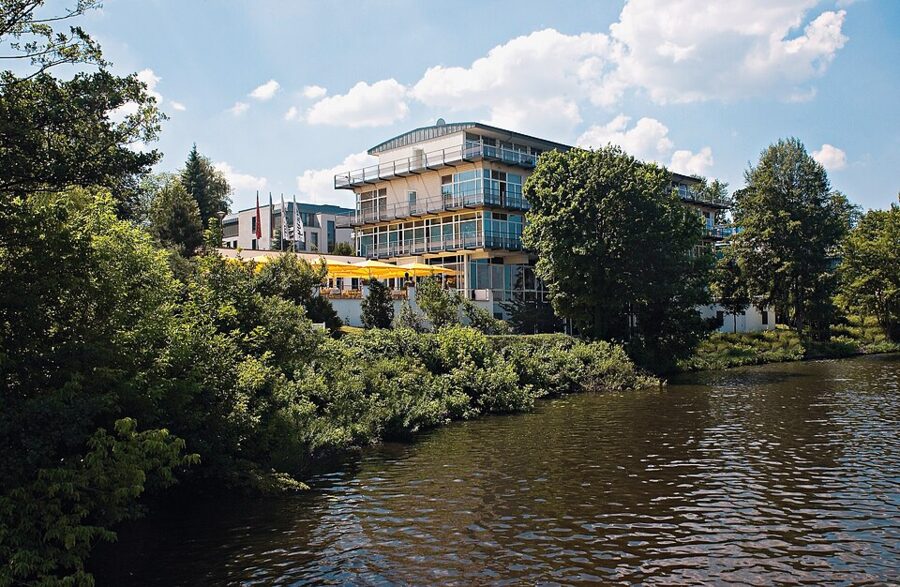
The Seminaris Sunday Hotel Potsdam Babelsberg stands right on the Griebnitzsee at Rudolf-Breitscheid-Straße 190, with 87 rooms and suites, balconies, and lake views from some of them. Griebnitzsee S-Bahn station is a few minutes’ walk, and parking costs €14 a night. Seminaris runs it as a conference hotel as well as a leisure one, and live rates for a November weeknight started at about €52.
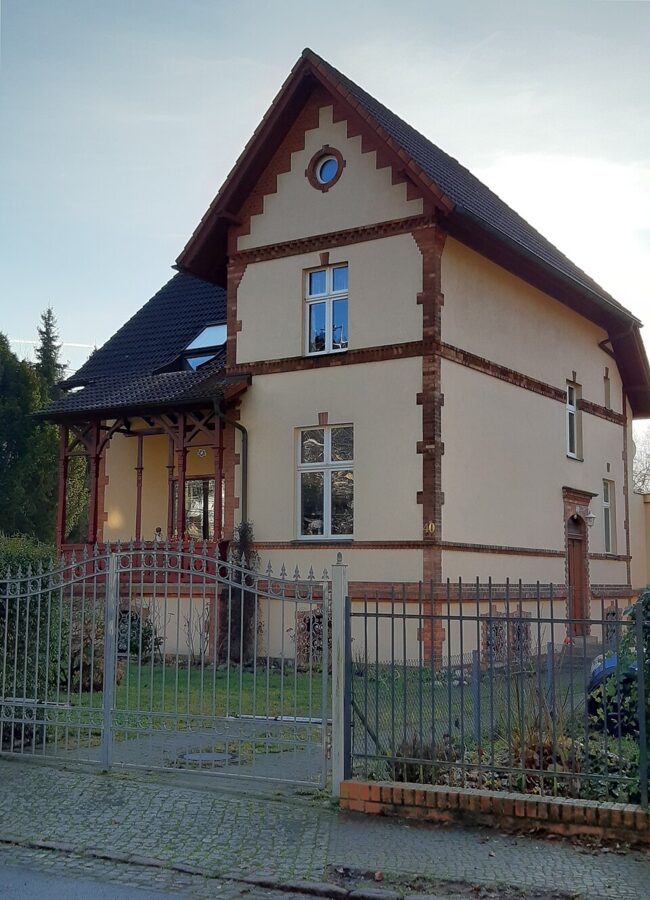
A few streets inland, the Anno 1900 Hotel Babelsberg (Stahnsdorfer Straße 68) is a family-run bed-and-breakfast hotel in a house built around 1900 in the villa quarter. The S-Bahn is about ten minutes’ walk, the tram eight, and the Filmpark Babelsberg, the film university and the university campus are all on foot. Live rates were about €119.
Near the film studios
Around the studios, two simpler places. The Filmhotel Lili Marleen on Großbeerenstraße has 65 rooms and suits families heading for the Filmpark; live rates started at about €69. Further down the same street, the Pension am Filmpark publishes plain prices: a single from €70 for one night, falling to €62.50 a night for six or more, a double from €95, falling to €80, and beds in shared rooms from €25. Those prices already include the city’s overnight tax, which is rare and useful.
The youth hostel
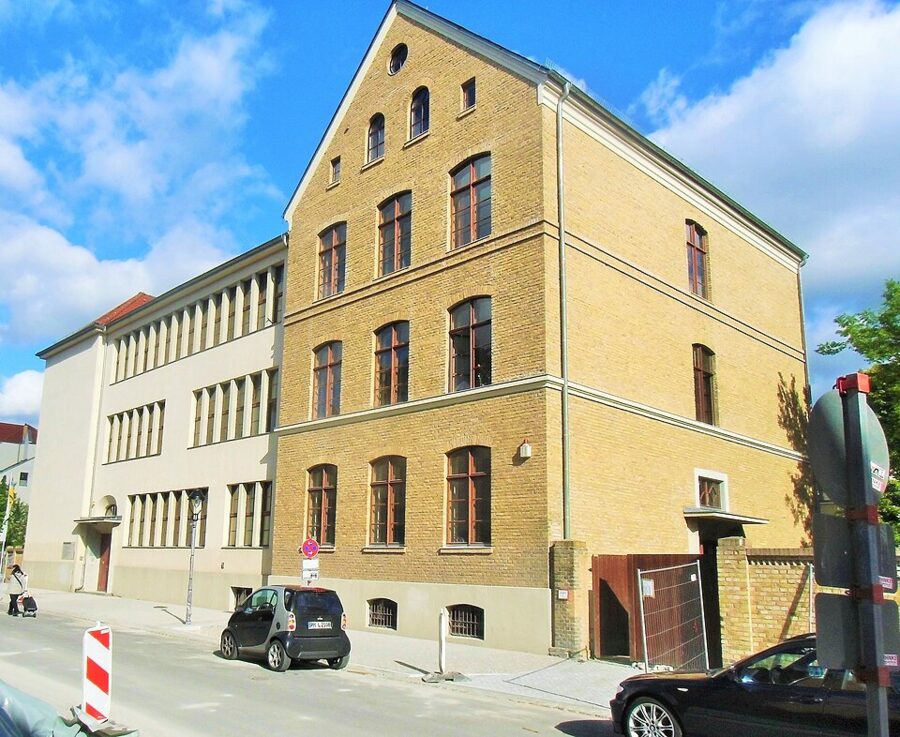
The DJH youth hostel at Schulstraße 9 has 154 beds in 45 rooms, including family rooms with their own shower and four wheelchair-accessible rooms, from €25 a night. It is the cheapest bed in Potsdam, and Babelsberg S-Bahn station is 300 m away.

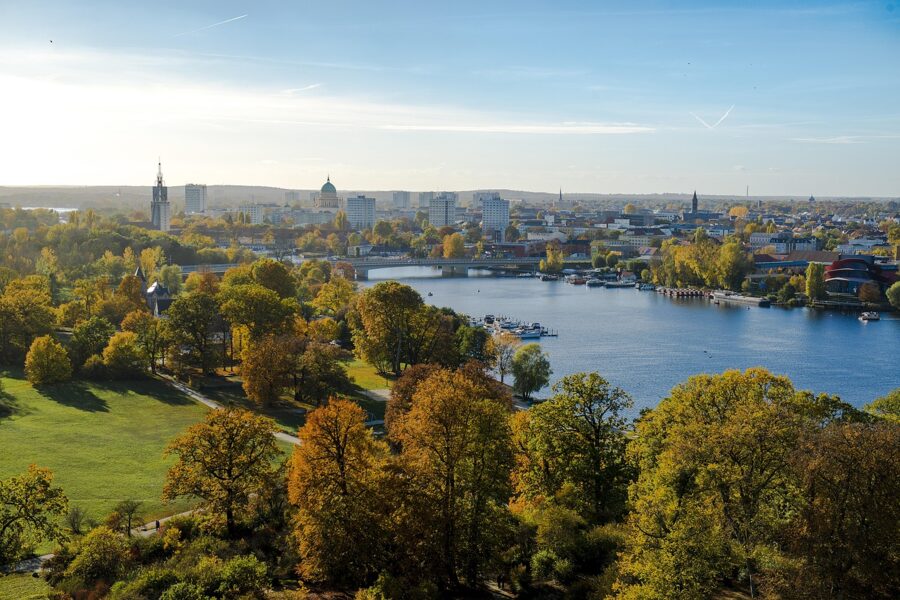
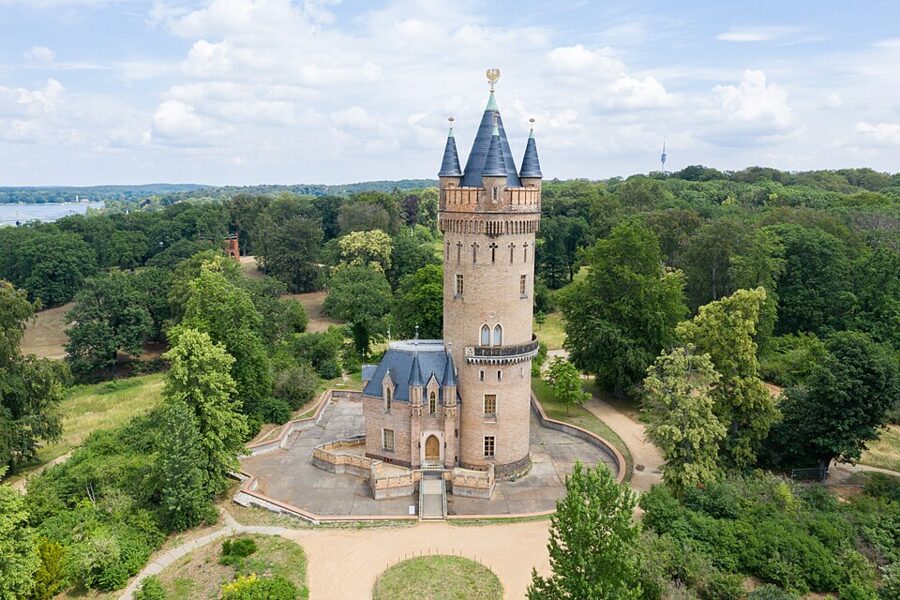
Park Babelsberg, with the Flatow Tower and the long view over the Havel, is the district’s own back garden, and the Glienicke Bridge is just beyond its northern end. Trams run into the center, and the district has its own cafés and restaurants, so you are not stranded in the evenings.

On the water: the Templiner See, Hermannswerder, the Tiefer See and Werder
Potsdam is ringed by the Havel’s lakes, and several hotels sit right on them. Stay here for a slow weekend with a sauna, a swim or a bike, not for a sightseeing sprint. Most are a bus or tram ride from the center.
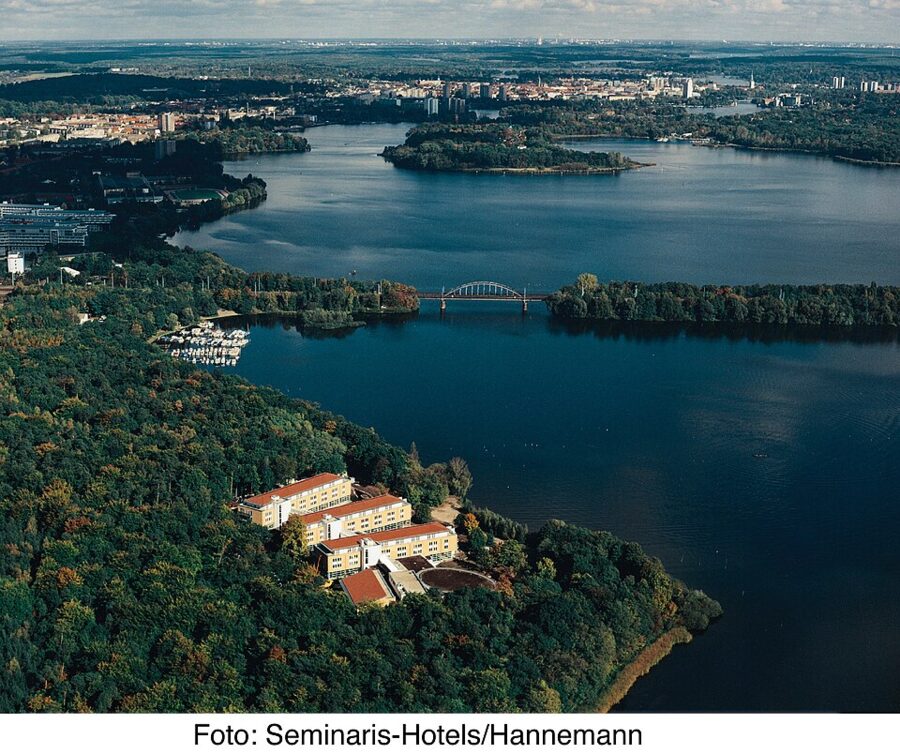

Kongresshotel, at the airship harbor
The Kongresshotel Potsdam, at Am Luftschiffhafen 1, stands where Count Zeppelin built airships. He bought the land on the Templiner See in 1910, landed the LZ 10 Schwaben here on September 9, 1911, and by November 1912 had the largest airship hangar in Germany on the site; the Treaty of Versailles had it torn down in 1920. The present buildings went up in the early 1990s as a savings-bank academy and became a hotel in 2004.
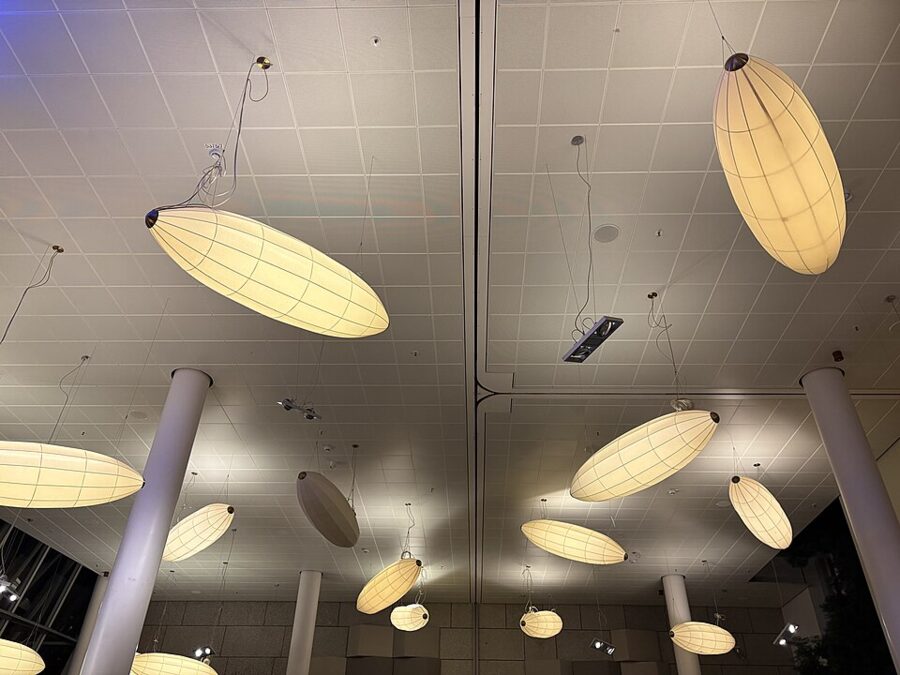
It is a large place, more than 400 rooms in three buildings, with restaurants and a sauna looking over the lake, and it is a sports hotel too: the Olympic training center is next door. Live rates started at about €77. A little further along the shore, in the Pirschheide woods, the Seminaris Sunday SeeHotel (An der Pirschheide 40) has 225 rooms and suites, an indoor pool and two saunas, with parking at €16 a night; live rates ran from about €59. Tram 91 runs out to the Pirschheide, the stop for both.
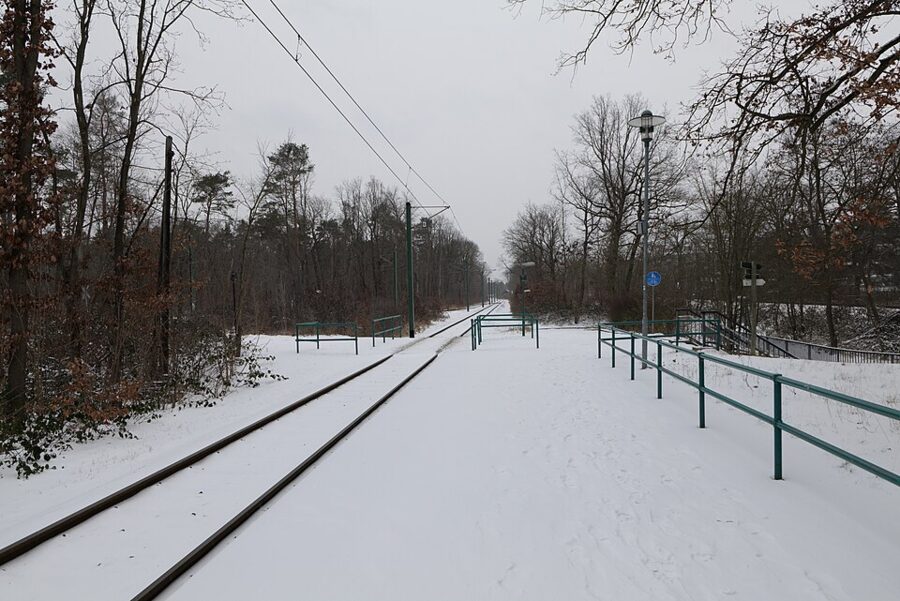
Inselhotel, on Hermannswerder
Across the lake, Hermannswerder is an anvil-shaped peninsula, cut off by a channel so that it is technically an island, named after Hermann Hoffbauer, whose Protestant foundation still owns much of it and runs a school and care homes there; the island church was consecrated in 1911. The Inselhotel Potsdam-Hermannswerder opened here in 1996 and celebrated its 30th year in May 2026. It has 88 doubles and suites, pools, and a sauna right by the water, and live rates were about €153.
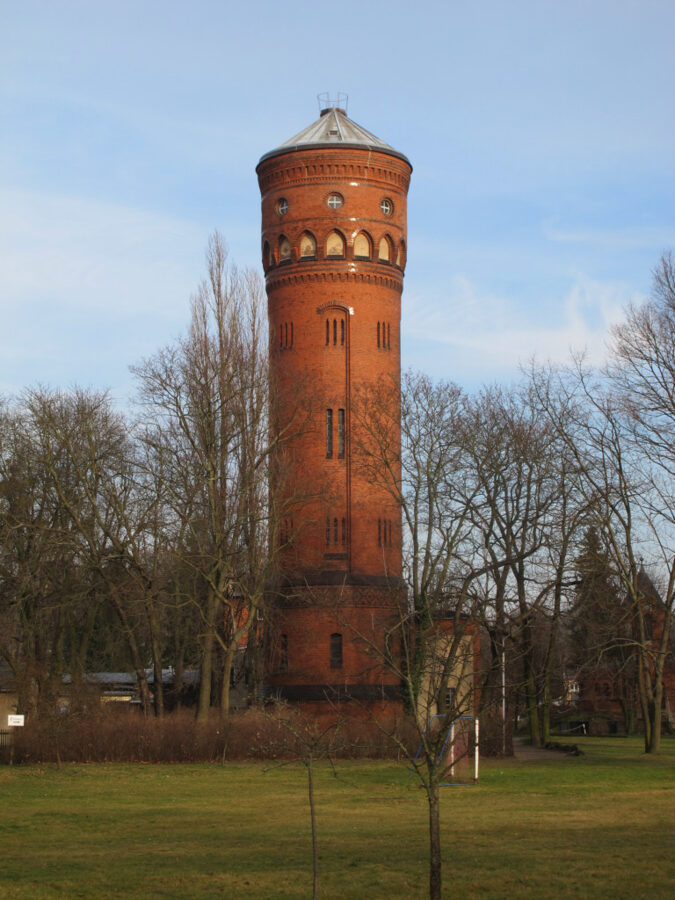

Schiffspension Luise, on the Tiefer See
For something odder, the Schiffspension Luise is a traditional ship from 1907, moored on the Tiefer See off Berliner Straße and converted into a guesthouse with single and double cabins. The cabins are heated and insulated, with their own bathrooms, and there is a 120 m² sun deck and a fireplace for winter evenings. Cabins cost €99 to €109 a night, and breakfast is a buffet served on board. The view across the water is of Park Babelsberg, and the Glienicke Bridge is a walk along Berliner Straße.
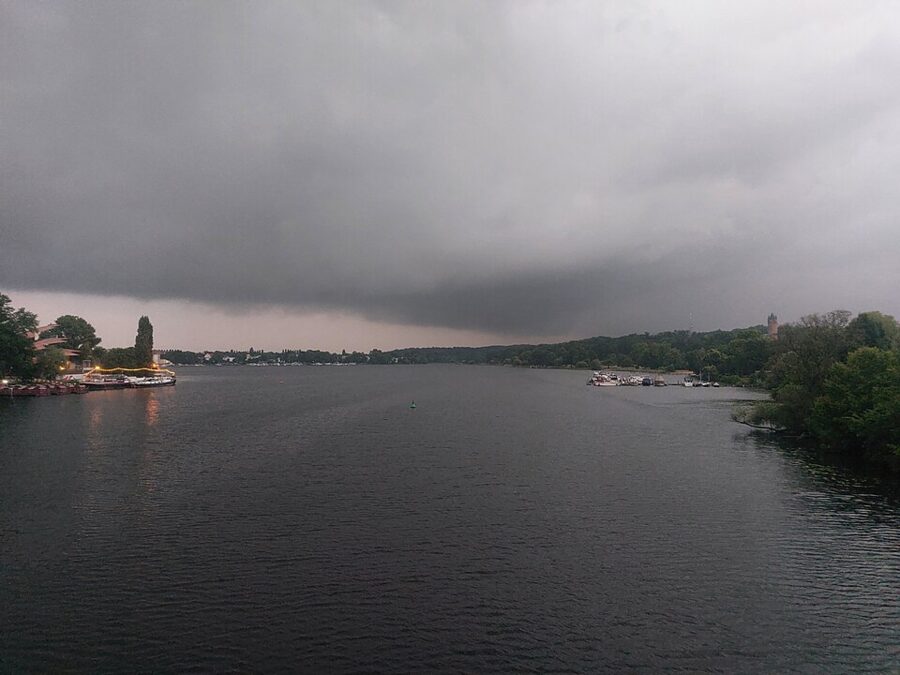

The lakes have their own guide, Potsdam’s lakes, with the beaches, the swimming spots and the walks along the shore.
Werder, the island town
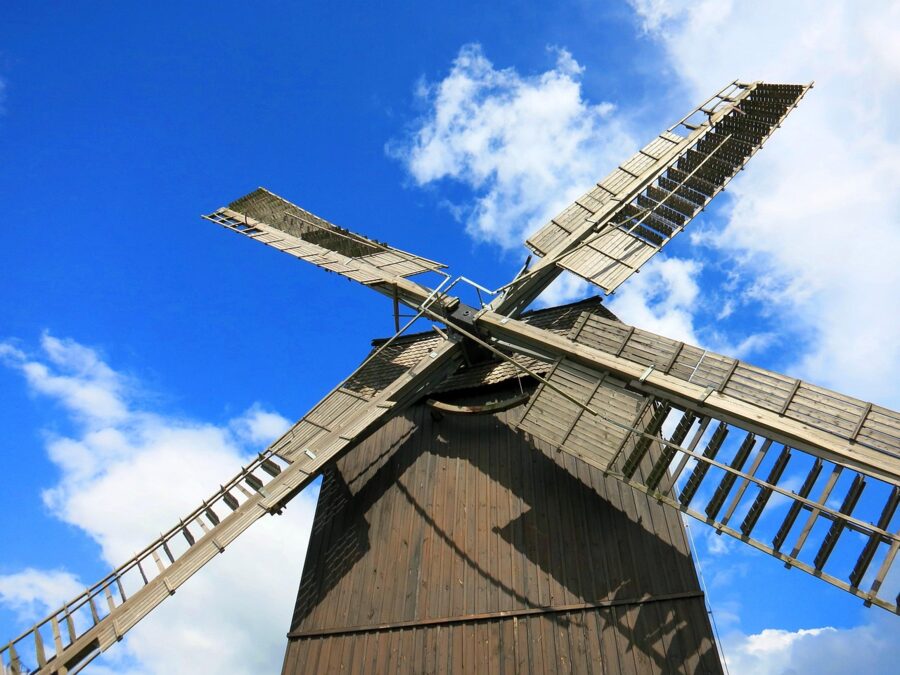
About 10 km southwest, Werder (Havel) has its old town on an island in the river, joined to the mainland by a single bridge, with fishermen’s houses, a post mill and orchards all around. It is the place for the April and May blossom, and the RE1 runs on from Potsdam to Werder station on the mainland side, about 40 minutes from Berlin Hauptbahnhof.
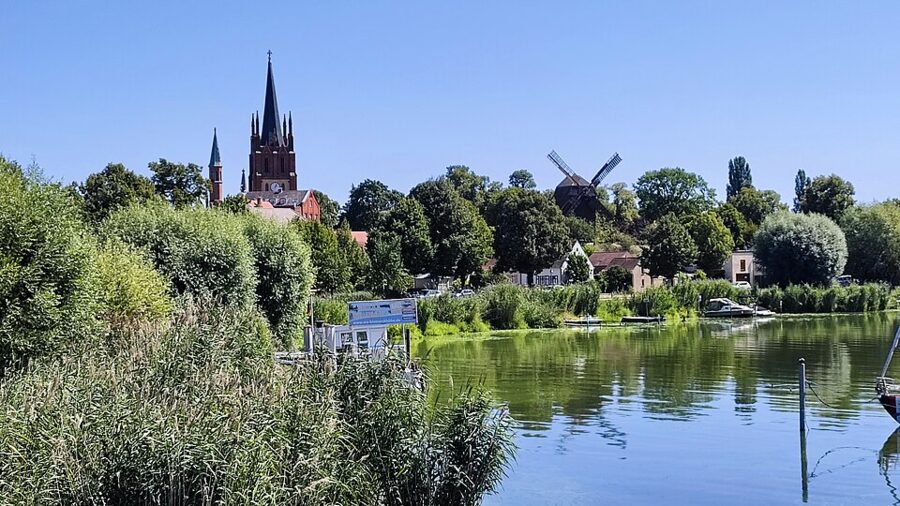
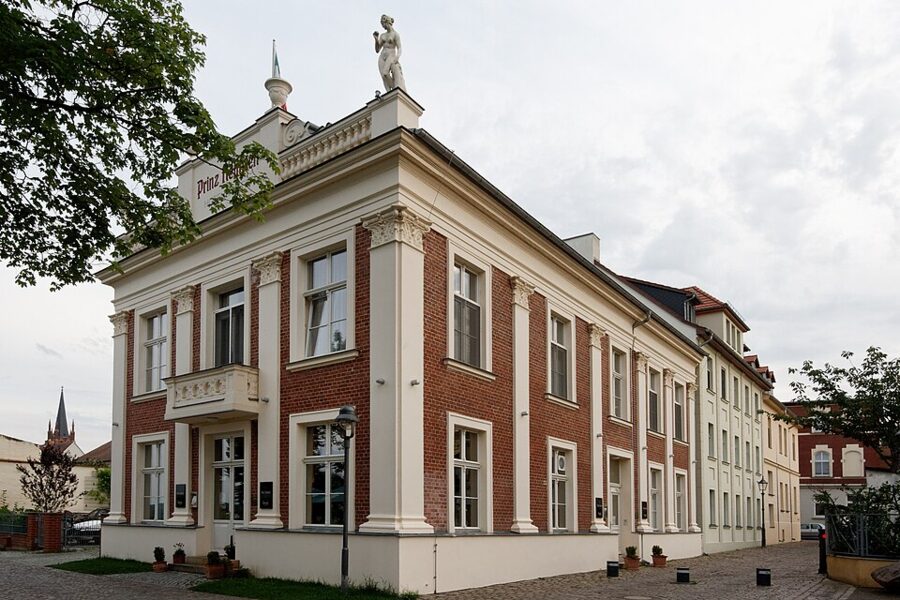
Hotel Prinz Heinrich on the island’s waterfront took its name, probably in 1922, from Prince Henry, Frederick the Great’s younger brother, and once advertised itself as the hotel by the Wildpark ferry, with its own landing stage. It closed in 1994, was restored, and has been run by a Werder-born host since 2018, with a café garden on the water and coffee from his own roastery. Doubles cost from €139 facing the church or the roofs and from €149 facing the Havel.

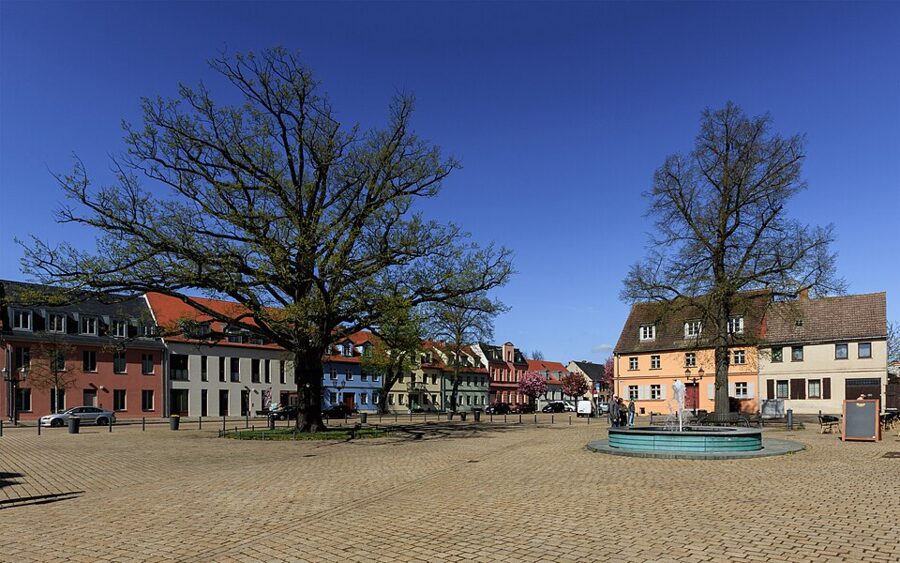
On the market square, the family-run Hotel zur Insel has 49 rooms, including a cyclists’ annex added in 2011, with singles from €105 and doubles from €130 including breakfast, a romantic room with a water bed from €140, and parking in the yard. Werder is a recognized resort town and charges a resort tax (Kurtaxe) of €1.50 per person per night instead of Potsdam’s overnight tax.

Tax, booking, parking and arriving
The overnight tax
Potsdam charges an overnight tax (Übernachtungsteuer) of 7.5 percent of the room price before VAT, up from 5 percent since April 1, 2025. On a €120 room that comes to about €8 a night. Check whether the rate you are quoted already includes it; Pension am Filmpark is one of the few places that says so in its posted prices. In Werder you pay the resort tax instead.
Booking
Book direct where the hotel offers it. Villa Monte Vino is €10 a night cheaper on its own site than through the portals, Hotel am Katharinenholz and Hotel Am Jägertor both promise their best price on their own pages, and direct bookings are usually easier to change. Summer weekends, the tulip festival in the Dutch Quarter, the Christmas markets in December and Werder’s blossom festival in spring fill the town early; winter weekdays are the cheapest time to come.
Be wary of messages asking you to pay. In September 2026 the Inselhotel warned its guests that booking details had been taken through a weakness in a hotel software link and could be used in convincing payment requests. The hotel says it never sends payment requests by message; you pay while booking or at the hotel. That is a sound rule for any booking.

Parking
Budget for a garage if you drive. Hotel Brandenburger Tor charges €18 a day on its forecourt and points guests to the Luisenplatz garage at €15; Villa Monte Vino charges €15, the Holiday Inn the niu €20, the Dorint €28 and the Holiday Inn Express €30. The Seminaris hotels charge €14 in Babelsberg and €16 at the SeeHotel. Hotel am Katharinenholz is the rare one with free parking, a space per room.
Arriving by train
From Berlin, take the S7 or the RE1 to Potsdam Hauptbahnhof. Potsdam is in fare zone C, so you need a single ticket Berlin ABC, €5.00 in 2026 and €5.20 from January 1, 2027, or a 24-hour ticket Berlin ABC at €12.90, rising to €13.20; the Deutschlandticket covers everything. Villa Monte Vino includes a Berlin ABC ticket with its rooms from March to October, and the Hotel Am Jägertor packages include a day ticket, which takes care of the trip in.
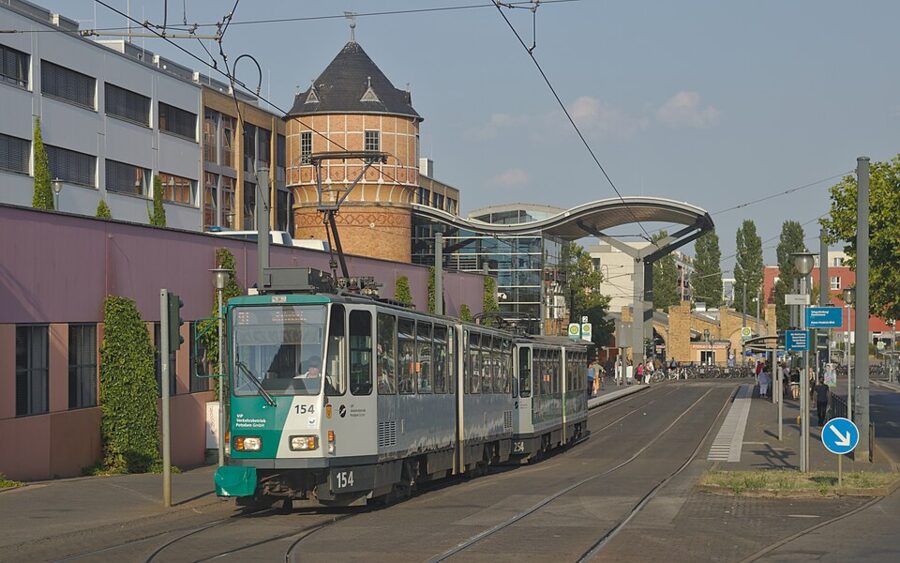

From the station, tram 91 or bus 605 to Luisenplatz/Süd serves the hotels around the Brandenburg Gate in about ten minutes, bus 695 runs along the north side of Park Sanssouci, and the S7 continues one or two stops back toward Berlin for Babelsberg and Griebnitzsee. The rest of what to see, from the palaces to the observatories, is in my guide to things to do in Potsdam.
Which brings it back to the terrace. Pick the area by what you want from the edges of the day: the old town for the evenings, the streets by the park for the mornings, Babelsberg if Berlin is calling too, a lake if you want neither. Then set an alarm for 08:30, walk in through the Obelisk Portal, and climb the terraces while the gardeners have them to themselves.