

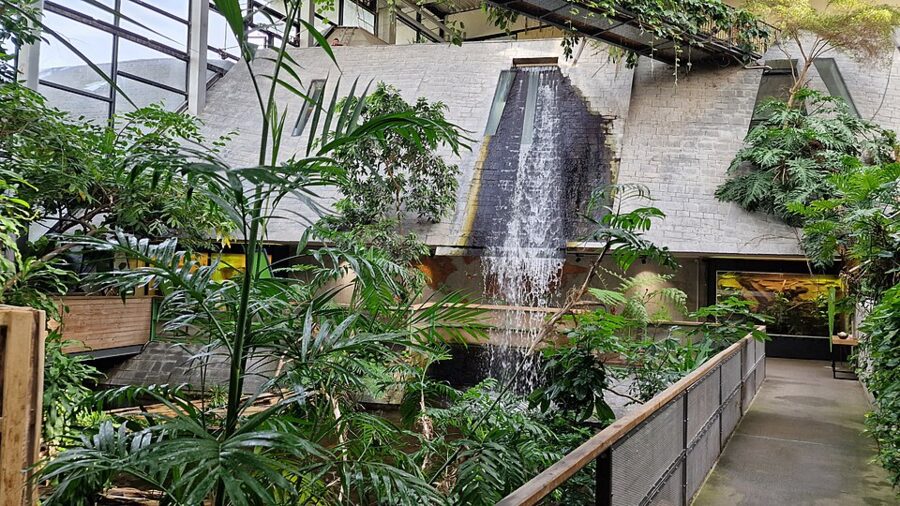
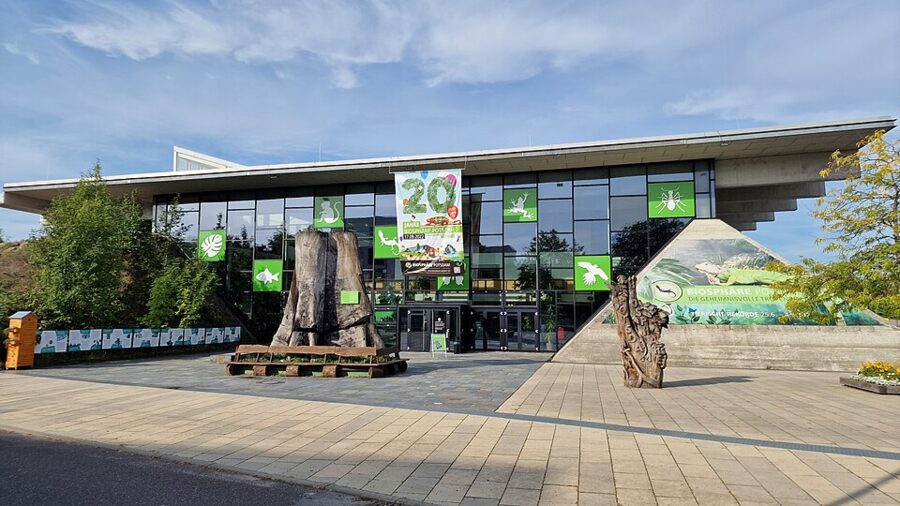
Tram 96 stops at Volkspark, and the Biosphäre is the long glass hall across the road, its flat roof running out over the forecourt. Behind the doors it is 22–28 °C (72–82 °F) every day of the year, the air is wet enough to feel, a waterfall drops into a pond, and about 20,000 tropical plants fill a hall of 5,000 square meters. On a grey November afternoon in Potsdam that is a very good trade for €20.
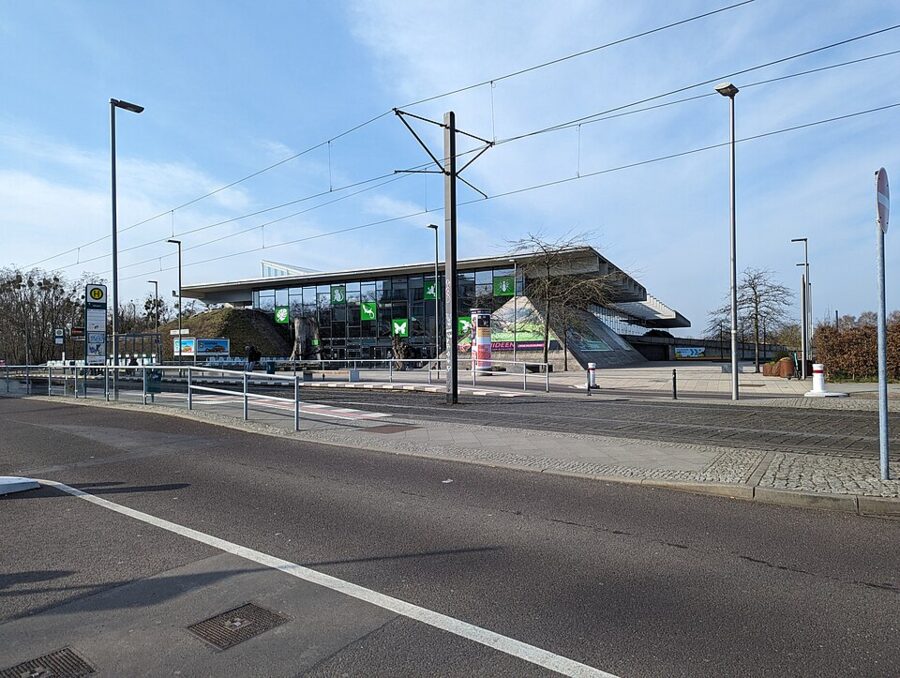
Most of Potsdam is made for dry weather: palace terraces, lake paths, avenues that point at temples. The Biosphäre Potsdam is the one big sight built for rain, for cold and for children, and I’d plan it exactly that way. Keep the palaces for the bright day and bring the family here when the forecast turns.
It is not a botanical garden in the classic sense, and it doesn’t pretend to be one. It was built as the flower hall of a garden show, turned into a walk-through rainforest with a butterfly house, an aquarium wing dressed as a submarine and a changing program of exhibitions, feedings and evening events. Allow two hours for the hall alone, three if you want lunch and a feeding, and longer if the weather lets you out into the park around it.
Contents8 parts
A garden show hall on an old parade ground
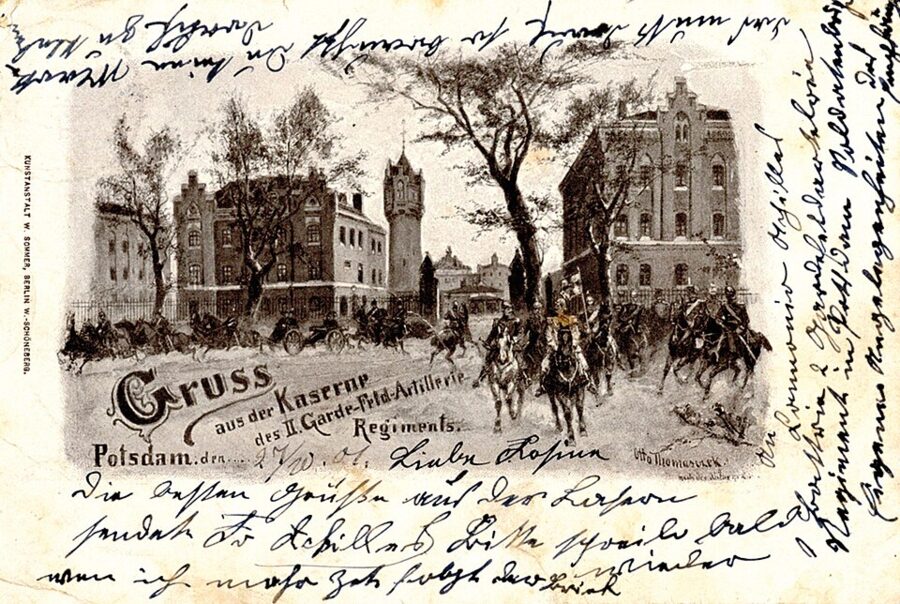
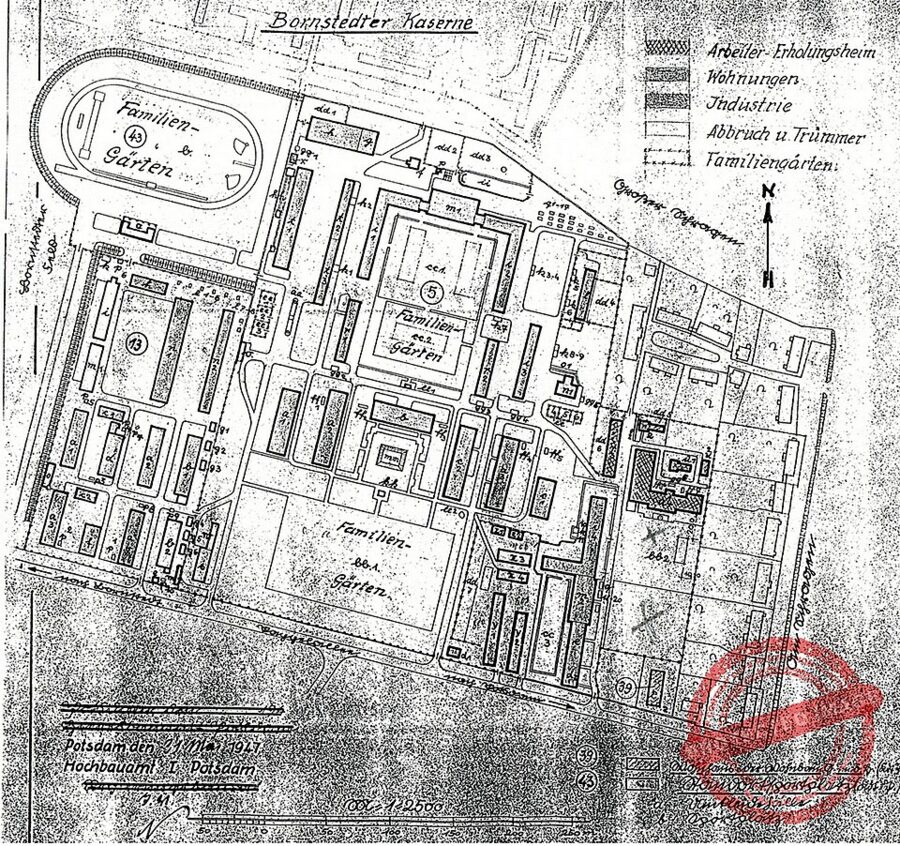
The ground under the Volkspark has spent most of its history being marched on. In the 1740s Frederick the Great (Friedrich II) released deer and partridges on the fields north of Sanssouci, and a square copse planted then as cover for game, the Viereckremise, still stands in the north of the park. Around 1750 he made the open field a drill ground, mostly for his cavalry. Barracks crept around its edges through the nineteenth century, among them the Rote Kaserne in red brick in the 1890s, and more were added in the 1930s.
From 1947 the Soviet army held the whole area and fenced it. For more than four decades the Bornstedter Feld was closed to the people who lived next to it, and when the troops withdrew in the early 1990s they left behind ground contaminated with munitions, fuel and lubricants. On December 4, 1991 the city decided to build a new district on the roughly 300 hectares of abandoned military land, with housing, offices and a large park at its center.
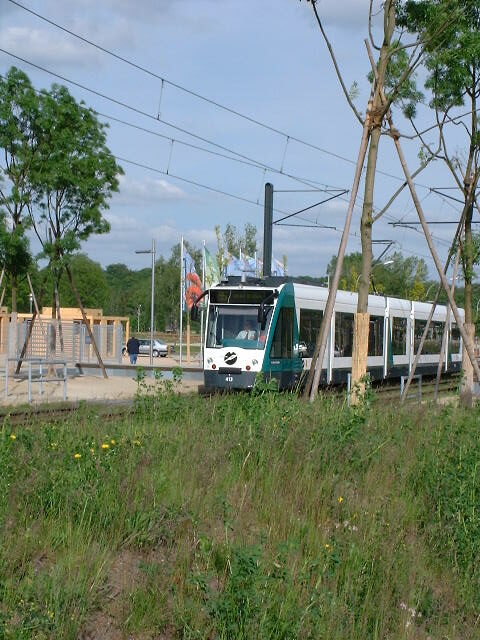
The park came first. Potsdam hosted the federal garden show, the Bundesgartenschau, in 2001, and the Bornstedter Feld became its main site from April 21 to October 7 of that year. Even the trams were extended for it, in 1999 and then to the main gate on April 7, 2001, two weeks before the show. Near the Am Schragen stop the line swings south in a wide curve around a copse where the rare great capricorn beetle lives, and locals call that bend the Käferkurve, the beetle curve.
Why a people’s park got a glasshouse
The planners looked at Potsdam’s historic parks and noticed that each one has its building: the Neuer Garten has Cecilienhof, Park Sanssouci has the New Palace (Neues Palais), and Park Babelsberg has its palace. A new park for everyone, they decided, deserved something of the same weight, and so the Volkspark got a hall of glass.
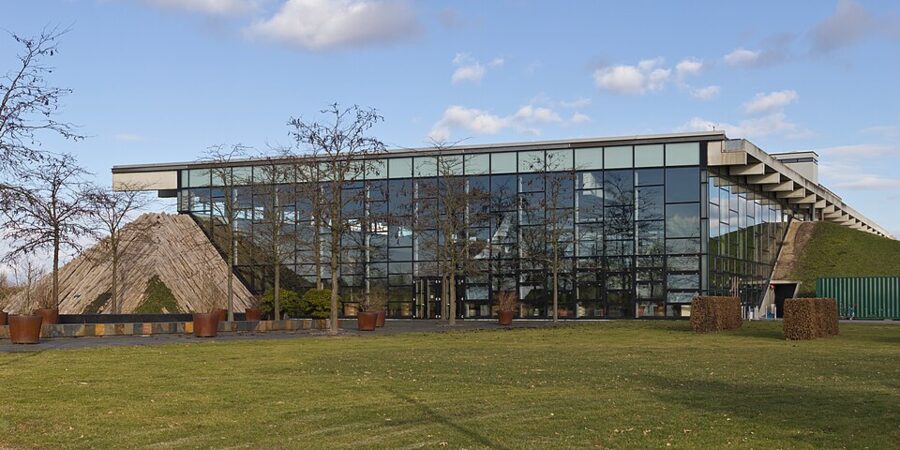
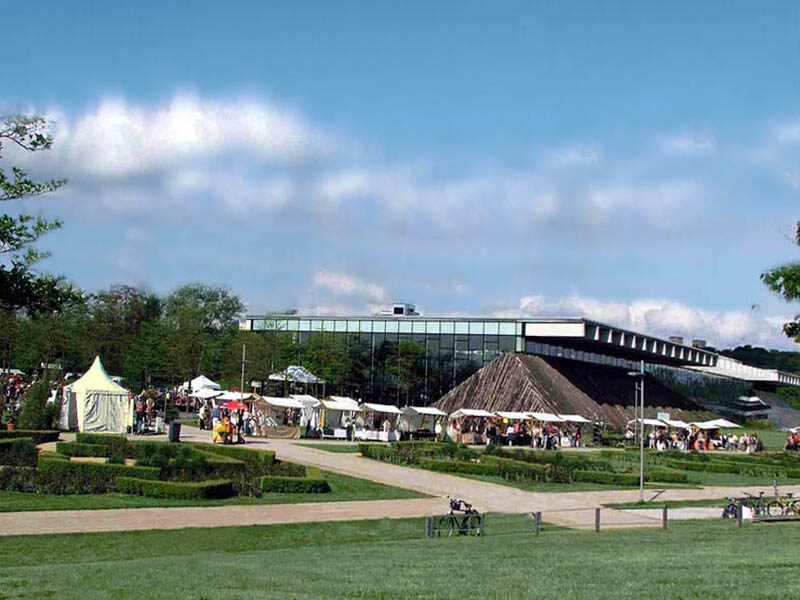
The design came from the Berlin practice Barkow Leibinger. It went up as the garden show’s Blumenhalle, the flower hall, for short-lived displays of plants and floristry, and cost €29 million, €21.5 million of it from the state of Brandenburg on condition that it served as a tourist facility until 2016. From the park it reads as a long, low glass box under a flat roof, with grass banks rising against its ends.
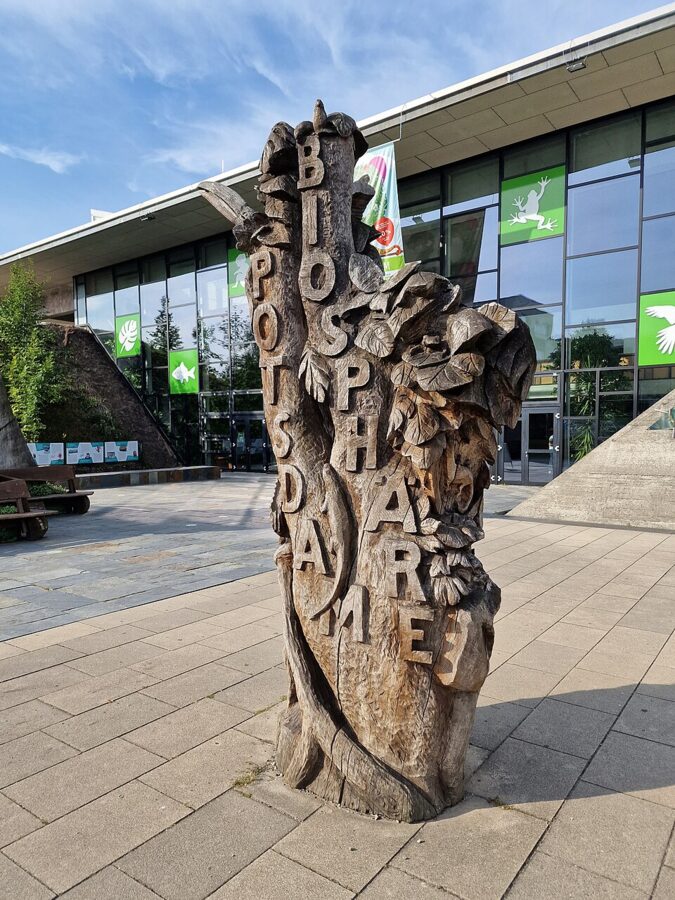
After the show the interior was rebuilt as a tropical landscape on several levels, and it reopened as the Biosphäre on September 14, 2002, according to the Biosphäre’s own history. The butterfly house followed in 2009, the same year the hall counted its millionth guest; the Aquasphäre wing opened in 2013, the butterfly house was enlarged in 2018, and the three-millionth guest came through in 2024.
A hall that keeps nearly closing
The Biosphäre has never paid for itself, and Potsdam argues about it every few years. The city subsidized it with €1.7 million a year in 2010 and 2011, and in July 2016 it announced the hall would close at the end of November 2017; by April 2017 it had backed down and gone looking for an operator instead. In 2019 the council voted to turn it into a place of learning, which explains the exhibitions on recycling and floods you now walk past between the palms.
In the 2025 budget round the hall was on the savings list again, and the council kept it open. The city-owned ProPotsdam group runs it today together with the Volkspark, and the company’s mission statement puts environmental education at the center. I’d read the whole saga as a reason to go while it is there, not as a warning.
Inside the rainforest hall
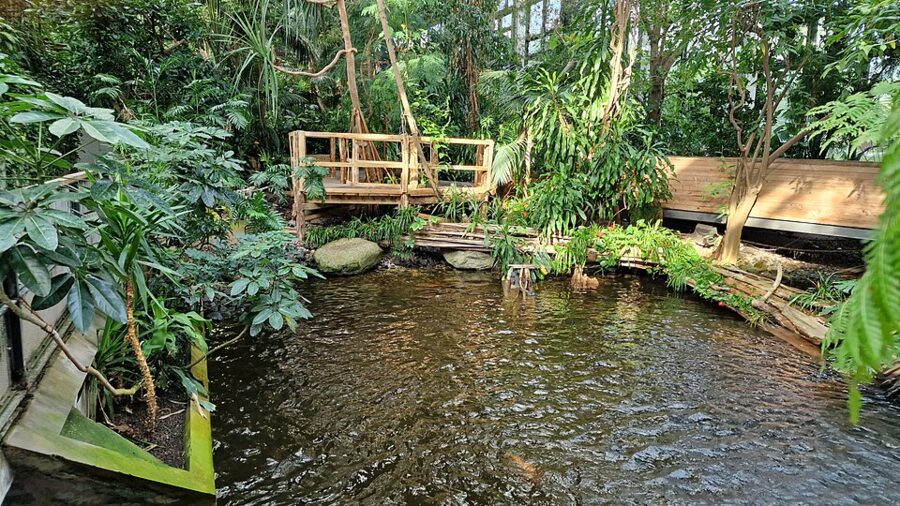
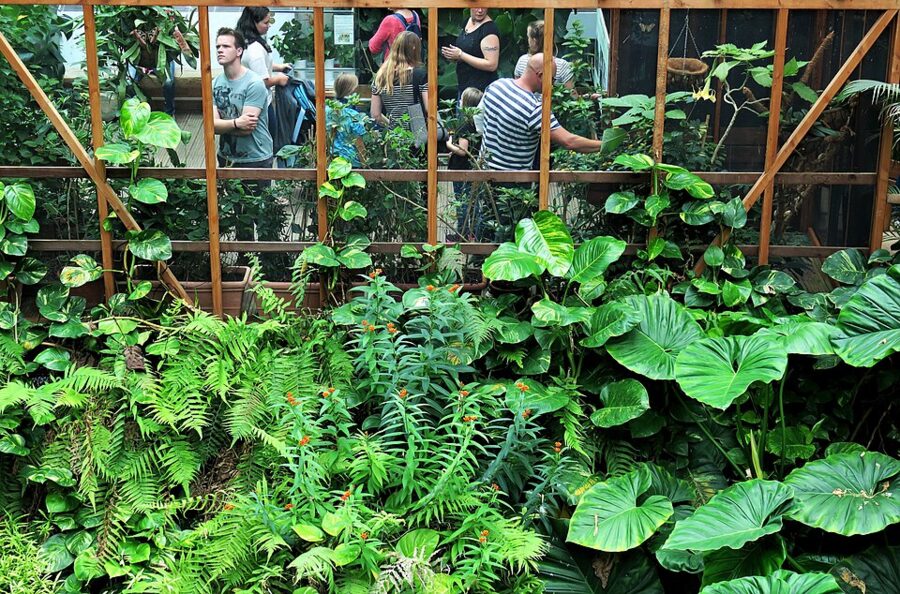
The hall is warm, damp and louder than you expect: birds, a waterfall, children. According to the operator’s description of the tropical hall, paths wind through 5,000 square meters of planting under trees several meters high, with interactive stations along the way. There is no set route, but the feeding meeting points make a rough map: the bird aviaries, an upper pond and a lower pond by the waterfall, the jungle lake with Café Tropencamp, the terrariums just after the underwater world, and the butterfly house. The restaurant terrace looks out over the whole jungle.
Wear layers you can take off. At 22–28 °C a winter coat is unbearable within ten minutes, and there are lockers in the entrance hall for a €1 deposit. Glasses fog when you walk in from a cold day; give them a minute.
The plants worth finding
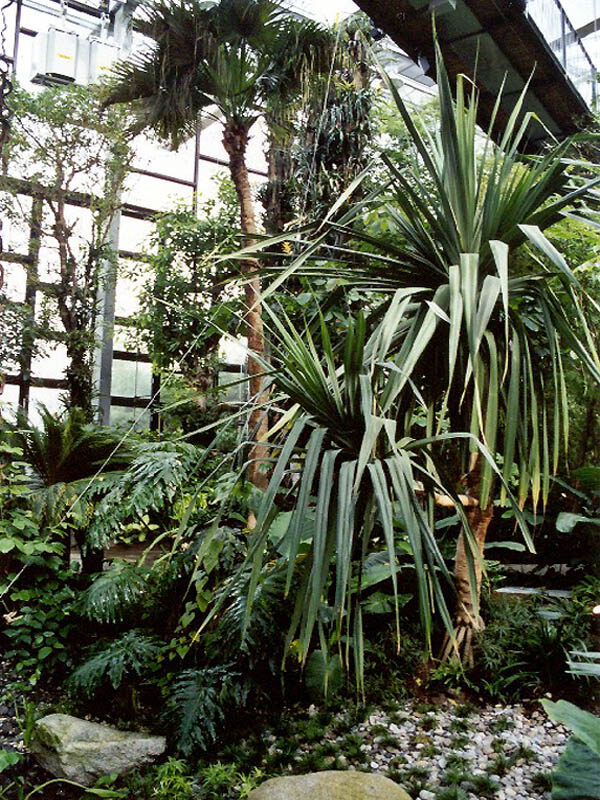
More than 20,000 plants grow here, in about 350 species by one count. Climbers wind up the trunks and hang out of the crowns, bromeliads sit in the green like dabs of paint, and the useful plants are the ones children recognize: bananas, coconut palms, coffee and the cacao tree.
The Biosphäre’s plant pages pick out a handful worth looking for. The Panama hat plant (Carludovica palmata) has nothing to do with the shape of a hat: Panama hats are woven from its dried leaf fibers. The screw pine (Pandanus utilis) from Madagascar has ringed, spiraling bark that is said to have given Leonardo da Vinci the idea for his double spiral staircase, a story the hall tells and I repeat with the same shrug.
Look for vanilla too, a climbing orchid and the only orchid grown as a crop; it went into the Aztec cacao drink with chili and pepper and reached Europe with the Spanish in the sixteenth century. The banana plants look like trees but have no wood at all, only tightly rolled leaf bases. The coffee shrubs take three or four years to flower, then set the red “cherries” that hold two beans each.
The animals, free and behind glass
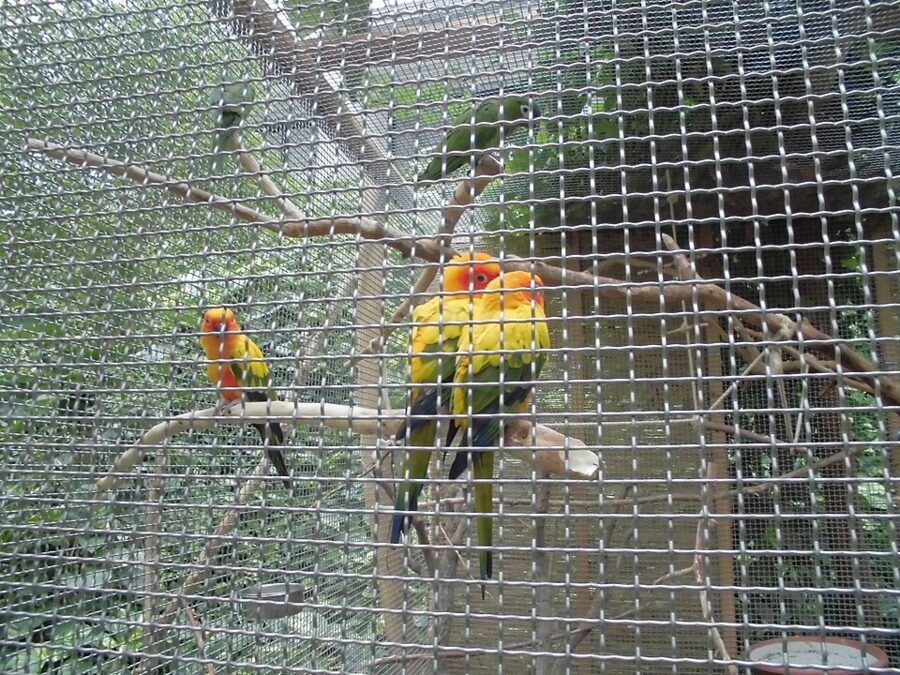
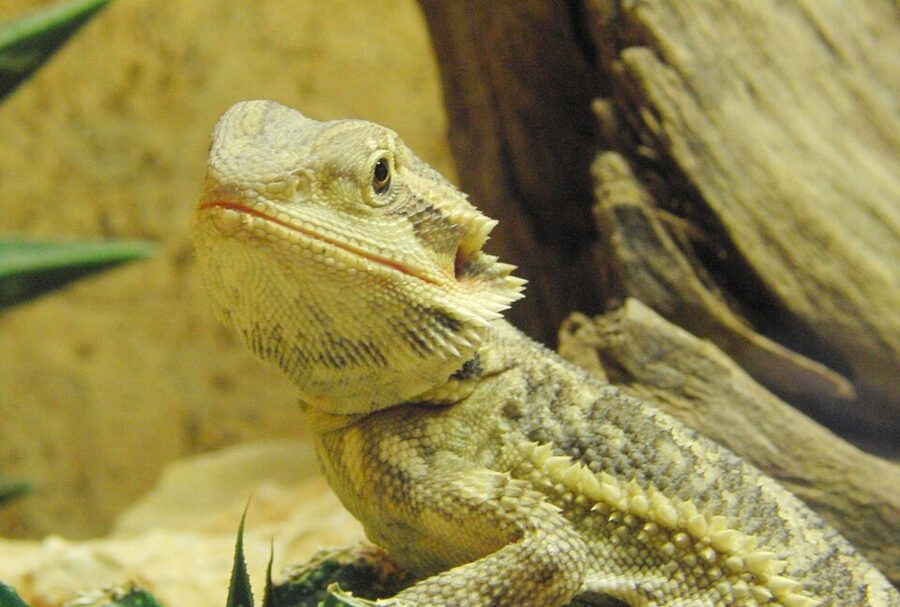
The animal count depends on which page of the operator you read: about 100 species on one, more than 100 on another, around 140 on the company profile. What matters on the day is that a lot of them are loose. Birds fly through the hall, whistling ducks and turtles share the ponds, and water dragons climb onto warm stones; the rest live in terrariums, aquariums and aviaries along the path.
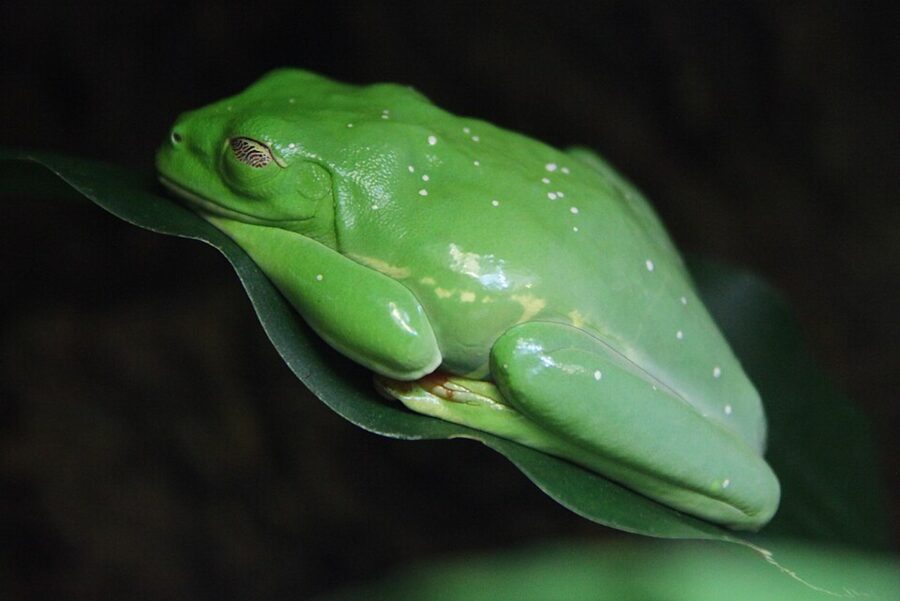
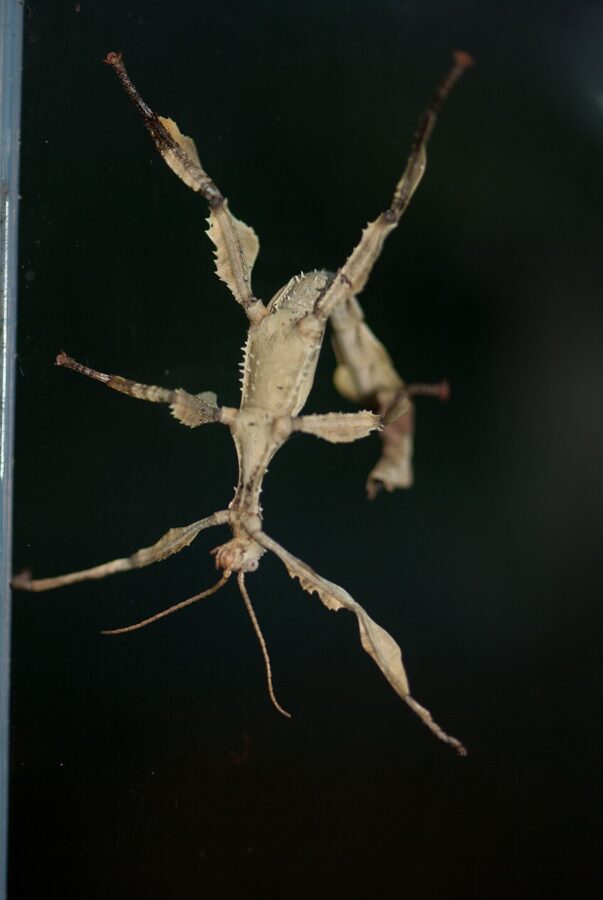
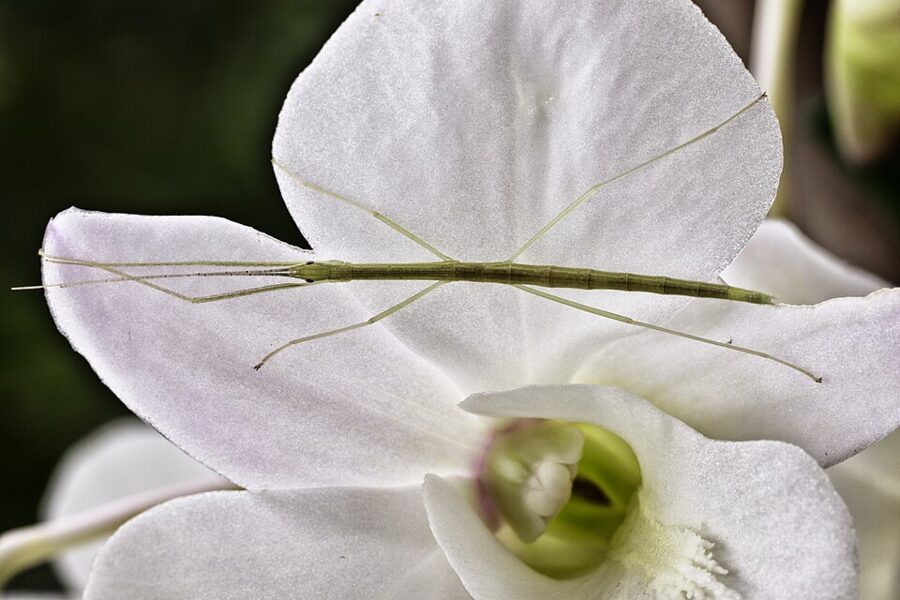
The animal pages are fun to read before you go, because they tell you what to look for. The red-eyed tree frog sleeps through the day with its lids closed, so its eyes look gold rather than red; it wakes, sheds its skin and hunts at night. The giant leaf insect is so good at looking like a leaf that the keepers admit you have to search the terrarium for it, and the ball python, at about 1.20 m, is the smallest of the pythons despite its royal German name, Königspython.
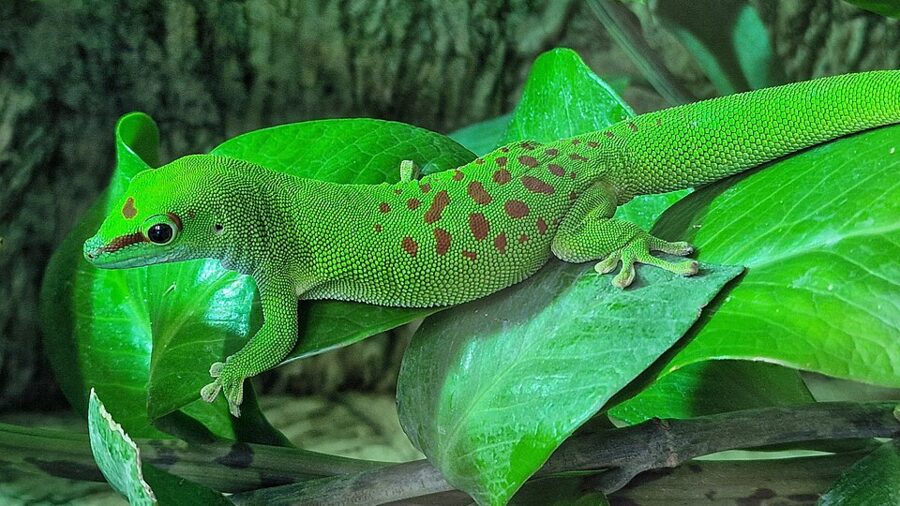
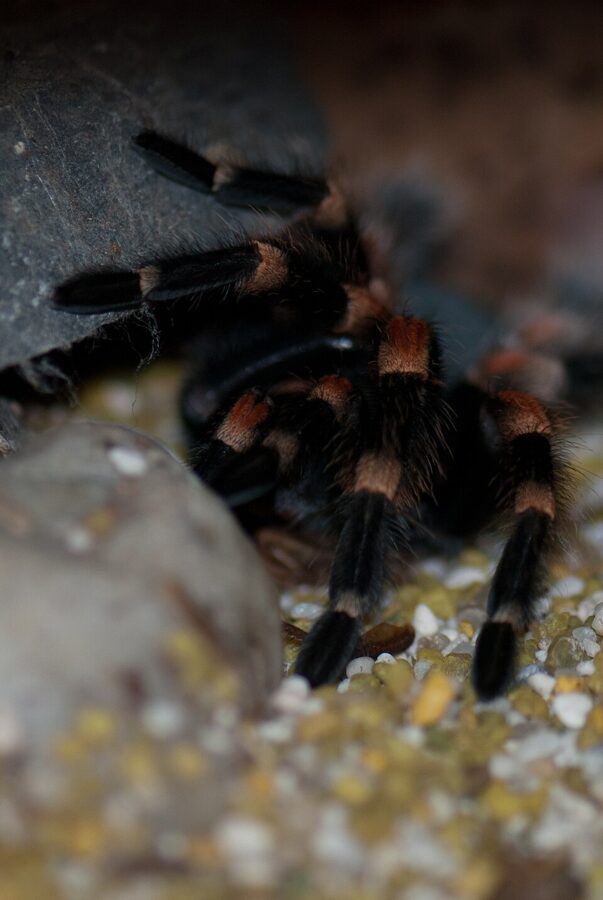
There are chameleons, a large ant colony, poison frogs, crested geckos from New Caledonia and a Prevost’s squirrel from Southeast Asia, about 24 cm long with a tail just as long again. The superb starling in the aviary copies other birds’ warning calls to scare rivals off food. In 2019 a pair of common marmosets moved in, and the hall’s history records their names as Manfred and Marianne.
The Aquasphäre
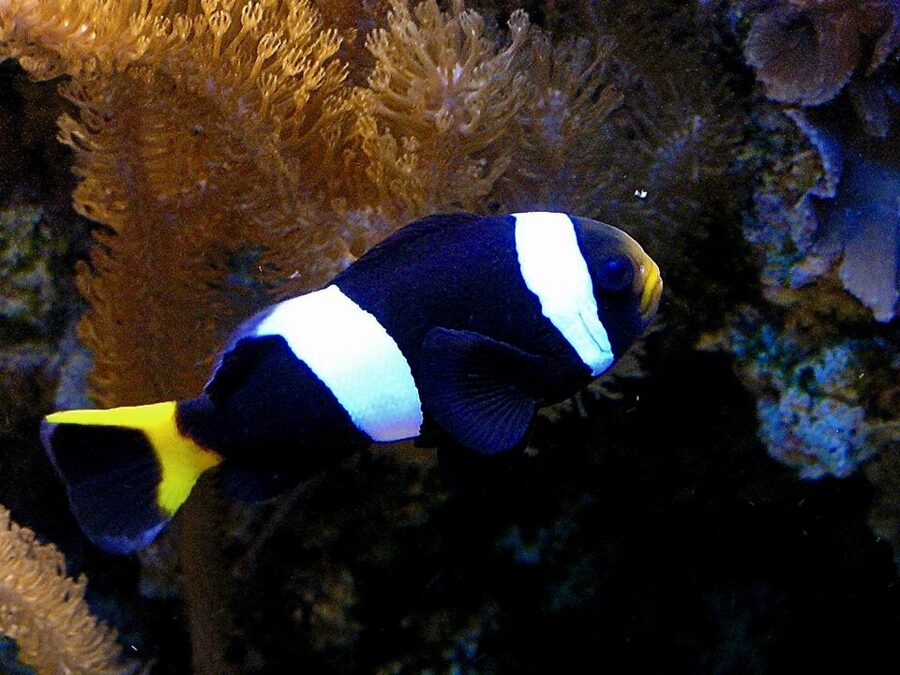
Partway round, a mock-up submarine takes you into the Aquasphäre, the hall’s underwater wing since 2013. The point it makes is a good one: the tropics are seas as well as forests. You walk through a mangrove section, the halfway world between land and ocean, then down into a darkened deep-sea room with glowing fish, past clownfish, surgeonfish and coral tanks.
The clownfish signs explain the deal between the fish and its anemone: the anemone’s stinging tentacles protect a poor swimmer, and the fish defends the anemone in return. The surgeonfish get their name from a blade-sharp spine at the base of the tail. Small children like this wing more than the plants; it is dark, it is blue, and the fish move.
The butterfly house
The butterfly house (Schmetterlingshaus) is a netted room of about 60 square meters inside the hall, opened in 2009 and enlarged in 2018. Up to 20 species fly free at any one time, mostly from Asia and South America. You walk in through a double door and they land on the plants, the rails and occasionally on you.
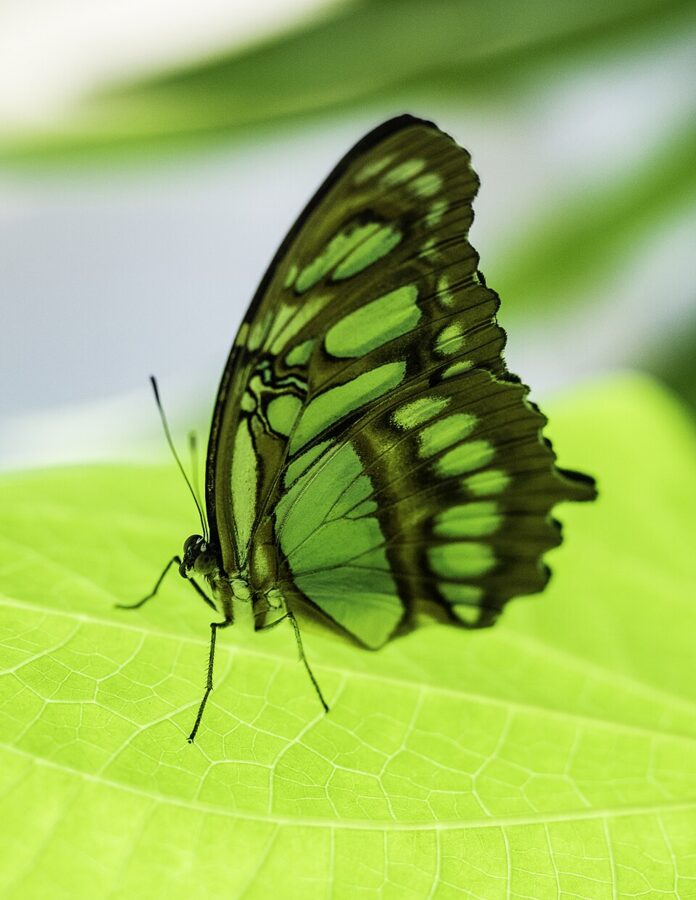
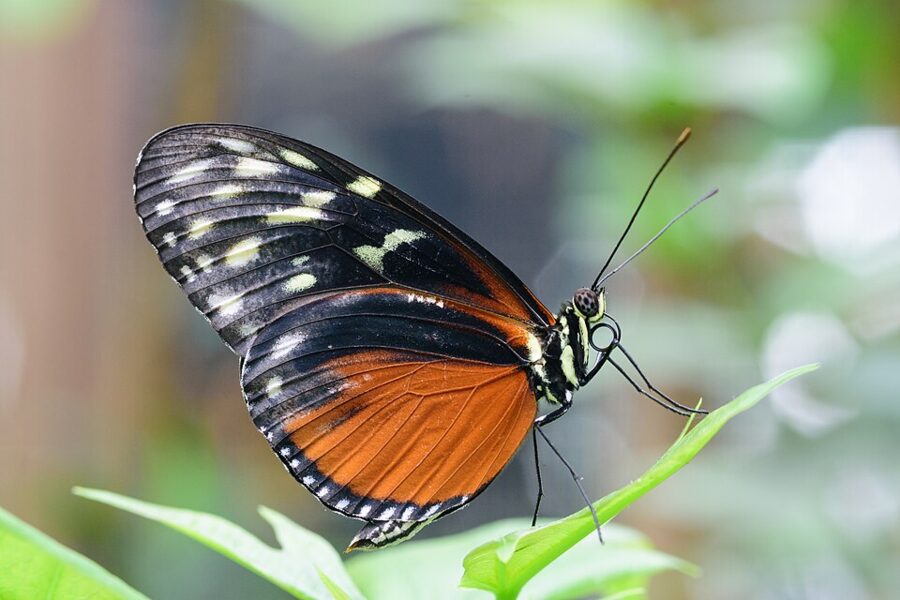
The keepers name the stars. The atlas moth is enormous; the blue morpho, the Himmelsfalter or “sky butterfly”, flashes blue on top and shows plain brown with eyespots underneath, and its color comes from microscopic scales that reflect only blue light. There are green-and-black malachites and the small “postman”, a longwing butterfly.
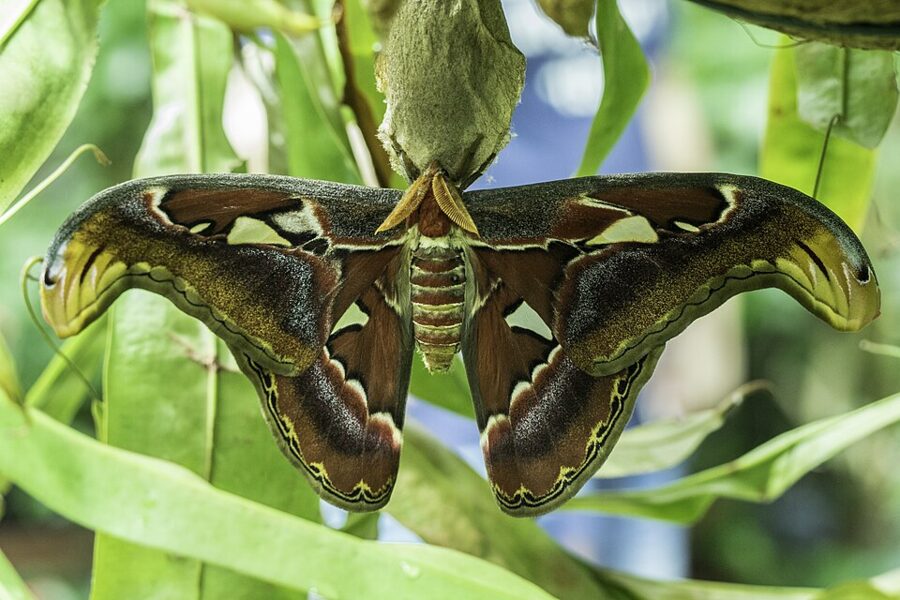
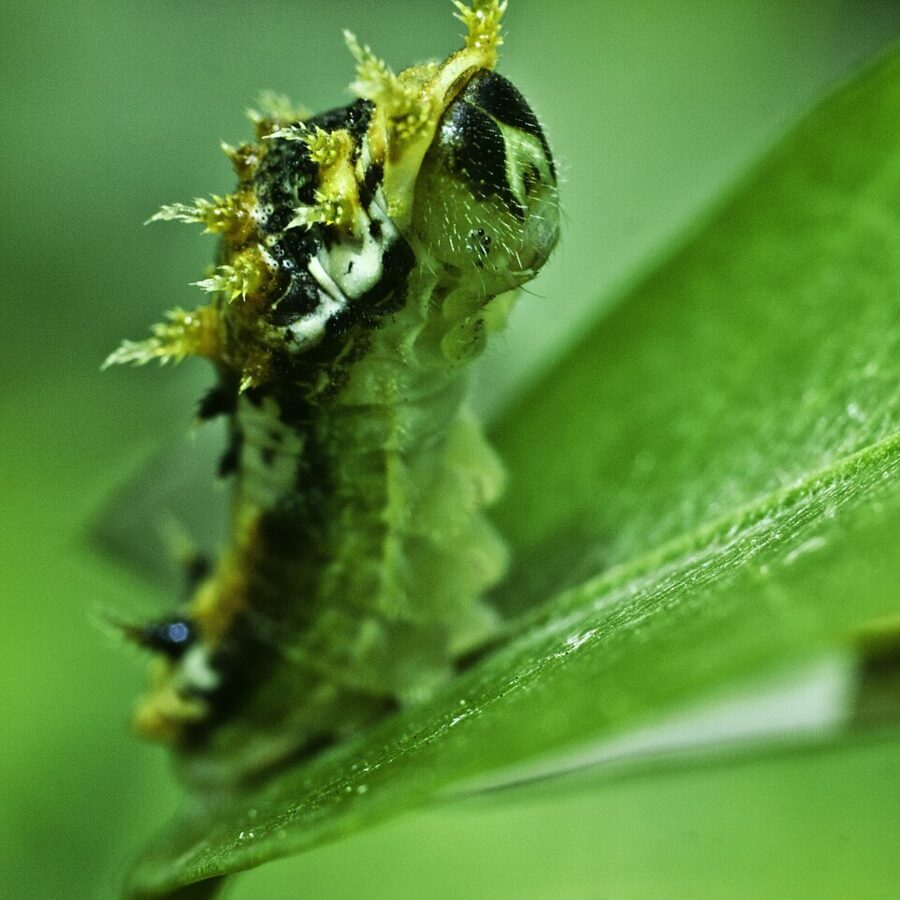
Show cases near the door hold pupae and cocoons, so the whole life cycle is on view: eggs, caterpillars eating their way through leaves, chrysalises, and with luck a butterfly pulling itself out of its case. The butterfly keepers are in the room to answer questions, and they are the best-informed people in the building; use them.
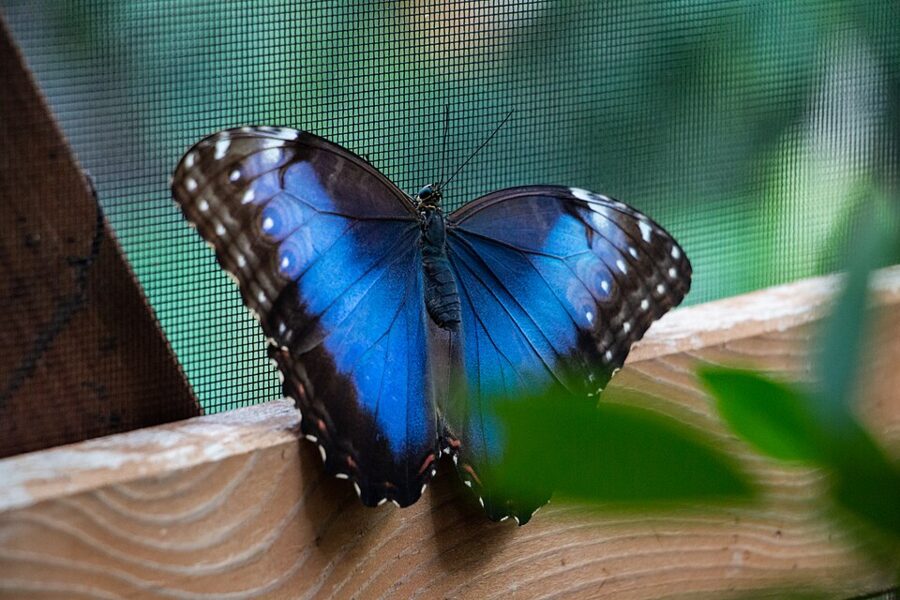
Mind the clock. Last entry to the butterfly house is 16:40 on weekdays and 17:10 on weekends and holidays, earlier than the hall itself. It is also closed during the evening events, because the butterflies fly by day and need the dark to rest.
Feeding times, guided tours and the extras
The free public feedings are the best way to structure a visit, and they are included in the ticket. Each day has one, at 11:00 or 15:00, at a fixed meeting point, according to the Biosphäre’s feeding timetable:
| Day | Time | Animal | Where |
|---|---|---|---|
| Monday | 11:00 | Crested gecko | Terrariums just after the underwater world |
| Tuesday | 11:00 | Prevost’s squirrel | By the bird aviaries |
| Wednesday | 11:00 | Three-striped poison frog | Upper pond |
| Thursday | 11:00 | White-faced whistling ducks | Lower pond |
| Friday | 15:00 | Butterflies | Butterfly house |
| Saturday | 15:00 | Cichlids and koi | Lower pond, beside the waterfall |
| Sunday | 15:00 | Oscars and other fish | Jetty on the jungle lake by Café Tropencamp |
The holiday program lists a chameleon instead of the gecko on Mondays, so the Monday animal may change. The Friday butterfly session is not really a feeding: the keepers mix the nectar and set out fruit on feeding tables while explaining why some species never drink at all. If you only have a weekend, the Saturday and Sunday fish feedings at 15:00 suit a late-morning arrival with lunch first.
Guided tours and workshops
Public themed tours run on set dates, at 12:00 on two Sundays in November 2026, and are booked through the operator’s ticket shop. Groups of ten or more can book a 90-minute tour on their own date, in English if asked, through the tours and workshops page, with a butterfly, useful-plants or Aquasphäre focus; the Aquasphäre tour is pitched at children from ten. A two-and-a-half-hour chocolate workshop follows the cacao bean from pod to bar. Smaller parties pay the price for ten.
Phones, dinosaurs and a VR headset
An augmented-reality trail, developed with the University of Potsdam, uses QR codes at some stations to lay digital animals over the real hall; it is free with the ticket and needs only a phone. A Dino-Rallye sends children from station to station along fossil footprints with a worksheet, €2 at the ticket desk.
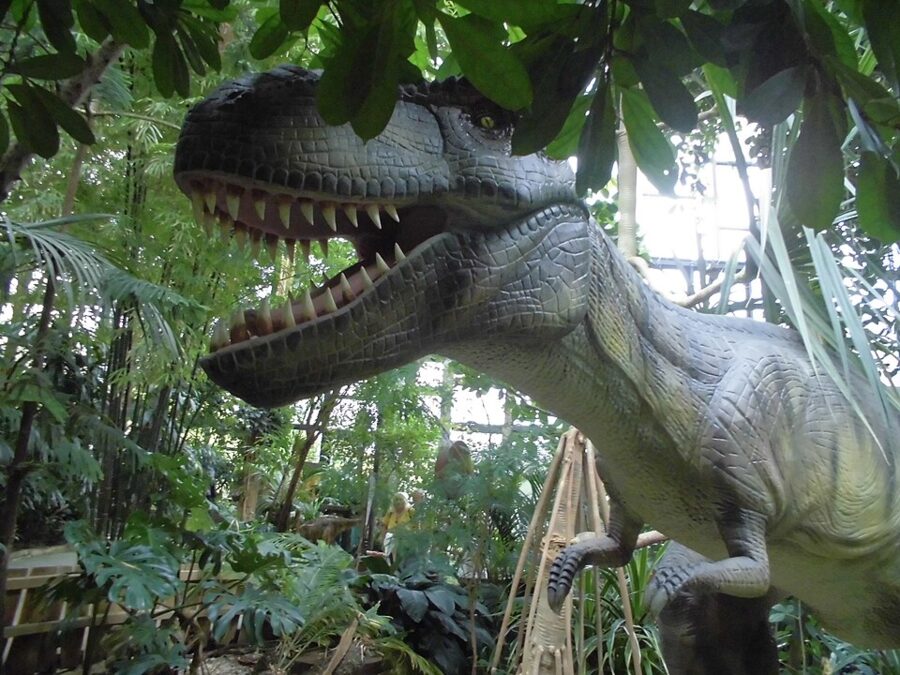
Since summer 2026 the hall has also run a dinosaur virtual-reality ride with the VR company TimeRide: about eight minutes in a headset with a Tyrannosaurus, a Triceratops and a Mosasaurus, recommended from age six. It costs extra, alone or as a combined ticket. Dinosaurs are nothing new here; earlier themed shows put life-size models among the palms, and the hall’s first follow-up exhibitions after the garden show had titles like Dinotopia.
Bringing children
This is where the Biosphäre earns its keep. Children under three get in free, and the paths are wide enough for strollers, with lifts between levels. Toddlers are happy with the birds, the fish, the waterfall and the painting corner; school-age children get the most from the feedings, the rallye and the exhibitions.
By age, I’d do it like this. Under five: the ponds, the Aquasphäre and the butterfly house, with a feeding as the fixed point of the day. From six: add the Dino-Rallye or the VR ride. From ten: join a public themed tour if the dates fit, or let them read the animal signs to you.
The house rules from the Biosphäre’s FAQ are worth knowing. Children under twelve must come with a parent or guardian; from twelve they may go alone with a signed note giving the child’s name, a guardian’s name and phone number and the date. No food in the exhibition areas because of the free-flying animals, though you may bring your own soft drinks, and photographs are fine for private use as long as you don’t use a flash on the animals.
Night in the jungle
The best children’s event of the winter is Nachts im Dschungel, a torchlit trail through the darkened hall with activity stations about nocturnal animals. The next dates are November 27, 2026 and January 29 and February 12, 2027, from 17:30 to 20:00; tickets are sold online in advance and at the door on the evening. On November 27 the hall opens only at 12:00, the café closes at 19:30 on event nights, and the butterfly house stays shut.
Birthdays and school holidays
A children’s birthday here costs €30 per child including entry, for groups of five to ten from age six, starting at 11:00 or 14:00 any day of the week. You choose between a rainforest expedition and a dinosaur trail, both of them puzzle hunts, and get a separate room. A snack bag adds €10 per child and a guide €80 per group, but the adults stay responsible for supervision.
In school holidays the hall runs themed programs: an egg hunt and an Easter brunch from March 26 to April 12, 2026, and a summer trail on rainforest raw materials, “Tropische Schätze”, from June 25 to September 13, 2026. The next programs are posted on the holiday page shortly before each break. During the Christmas, winter and Easter holidays the breakfast buffet runs every day, not just at weekends.
Exhibitions and events through the year
The calendar changes with the seasons, and the permanent jungle gets a temporary layer on top. In late 2026 three exhibitions are included in the ticket. The Greenpeace Flutwohnung (“flood apartment”), on show since mid-October, is a walk-in flat furnished with real furniture recovered after the floods in the Ahr valley in 2021, where more than 130 people died, and in the Italian region of Emilia-Romagna.
It is a sober thing to meet between tropical plants, and I think it works. The other two are lighter: BananaRama, on banana research and the plantain as a staple food, and an exhibition by the city’s waste company on recycling, which pairs the rainforest’s closed nutrient cycle with Potsdam’s bins.
The fixed point of the year is the orchid show, from February 11 to March 8, 2027, with an Orchideen-Café in the hall’s rainforest classroom where the gardeners answer questions about keeping orchids at home. If you are in Potsdam in late winter, that is the month to come.
For adults there is an after-work evening with a DJ on December 3, 2026, 18:00–23:00 (€15 early bird, €20 regular, plus a booking fee), and a classical concert with a three-course dinner on March 12, 2027, part of the Brandenburgische Sommerkonzerte festival, at €149 without drinks. The doors open at 17:15, guests go into the hall at 18:00 and the evening ends around 22:00. Since 2019 the hall has also been an outpost of the Potsdam registry office, so you may share the jungle with a wedding party.
The Tropenbrunch runs on selected Sundays from 10:15 to 14:00 and in Advent 2026 falls on November 29 and December 6, 13 and 20, with a festive brunch on December 26. It costs €59 for adults and €36 for children aged 6–13 including entry, €69 and €46 for the festive dates, and must be booked ahead. Combine an Advent Sunday here with the Christmas market in town and you have a whole December day out of the cold.
Tickets, opening hours and food
The hall is open Monday to Friday 09:00–17:00 and on Saturdays, Sundays and public holidays 10:00–17:30, according to the Biosphäre opening hours. Last entry is an hour before closing. In 2026 it closes completely only on December 24 and 31, and opens as usual on Christmas Day, December 26 and New Year’s Day.
Day tickets on the door, from the Biosphäre ticket page:
- Adults €20; reduced €16 (pupils, students, trainees, the unemployed, people with a disability of 50% or more, volunteers in the federal volunteer service)
- Children aged 6–17: €13; children aged 3–5: €9; under 3: free
- Family (two adults with up to three children) €42
- Combined day ticket with the Volkspark €21, on the door only
- Annual pass: adults €70, family €160, combined with the Volkspark €79
Online prices look lower, but a 6% booking fee goes on top. That puts an online adult ticket at about €20.15, a few cents more than the door, while children’s tickets still come out slightly cheaper online; the fee buys guaranteed entry on full days. I’d buy at the door except on wet weekends in the school holidays.
Mondays are senior days: guests over 60 pay the reduced price and get a hot drink and a slice of cake for €4.80 all day. A registered companion of a person with a severe disability gets in free. Dogs are not allowed in, because so many animals live loose in the hall.
Eating in the hall
There are two places to eat, and their hours are narrower than the hall’s. On the timetable for late 2026, Restaurant Urwaldblick, whose terrace looks out over the jungle, opens Monday, Tuesday and Thursday 10:00–16:30 and at weekends 10:00–17:00, and you can eat there without an entry ticket. Café Tropencamp, down by the jungle lake, opens only on Fridays 12:00–16:30 and Sundays 11:00–17:00. On a Wednesday the timetable shows neither of them open, so check the food and drink page before you count on lunch.
Breakfast is the hall’s party trick. Frühstück unter Palmen, breakfast under the palms, runs Monday to Friday with a start between 10:30 and 11:30 and costs €35 with entry or €19 without; children aged 6–13 pay €25 with entry. The weekend and holiday buffet runs 10:15–12:00 at €35 for adults and €25 for children, entry included, and a €5 drinks flat rate covers tap water, filter coffee, tea and one juice for two hours. Both must be booked by 14:00 the day before.
For anything more than breakfast, my pick of restaurants in Potsdam starts in the old town, a short tram ride south.
Access
The building was designed to be step-free, and according to the accessibility page ramps and lifts make the full circuit possible in a wheelchair. Wheelchairs can be borrowed for free, the paths are paved and wide, and the café, restaurant, tickets and toilets are all reachable without steps. There is no tactile guidance system or audio guidance, and the lift has raised buttons but no spoken floor announcements, so blind guests are advised to bring a companion.
The Volkspark around it
The Biosphäre sits on the edge of the 65-hectare Volkspark, which Potsdamers still call the BUGA-Park after the garden show it was built for. Where the royal parks forbid bicycles, skates and ball games, this one was designed for them: it is the city’s modern park, laid out in sections called In den Wällen (the earth walls around the events area), the Kleiner and Großer Wiesenpark, the Remisenpark and the wooded Waldpark. I’d give it an hour after the hall in any season, and half a day with children in summer.
Adults pay a small fee, which surprises people who know the free royal parks. A day ticket is €1.50 between March 1 and November 30 and €0.50 in December, January and February, sold at machines at most gates and through the moBiLET app; everyone under 18, students, and people with a disability of 50% or more get in free. The park is open daily 05:00–23:00 through 25 gates, all on the Volkspark visitor information page, and you can walk in with a dog on a lead, though barbecues are not allowed.
Gardens and old trees
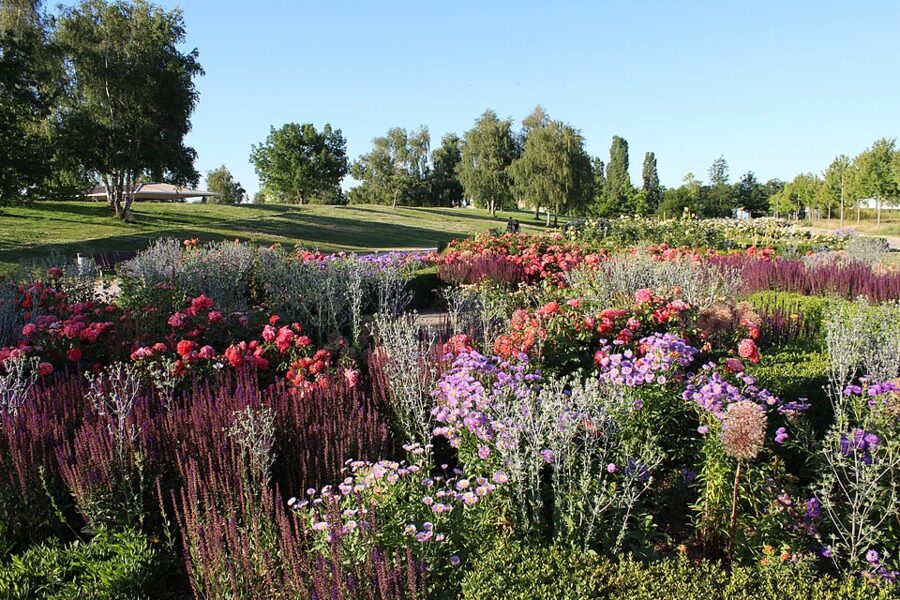
The main entrance opens with the rose garden, more than 6,000 roses in over 100 varieties planted as nine giant rose blossoms edged in low box. Beyond it the Pyramidengärten are 52 tilted dry-stone walls of shell limestone planted with silver-leaved perennials from the Mediterranean, and the earth walls turn purple with sage in June and with lavender in July. In October the Virginia creeper on the wall slopes goes red.
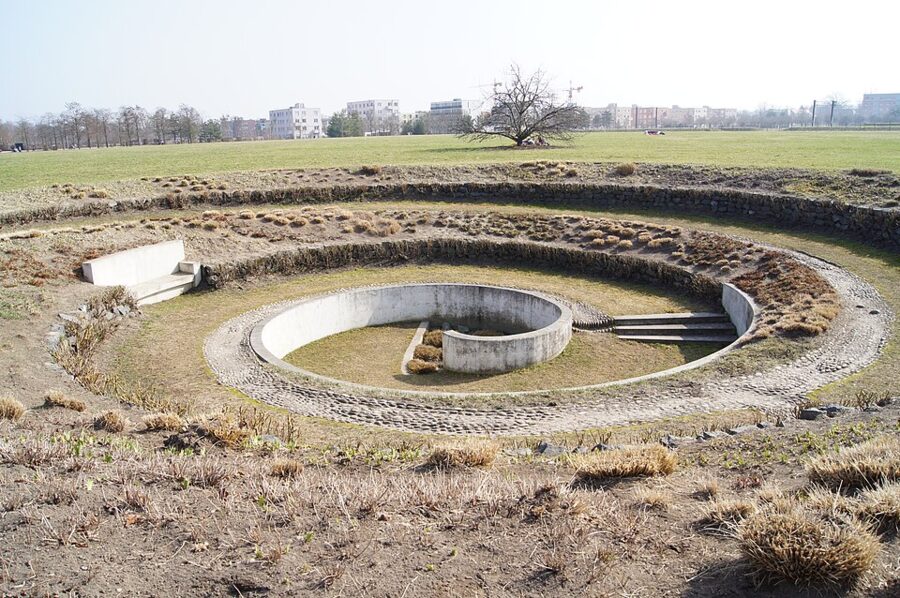
Read the park’s own nature notes and the military past keeps surfacing in the planting. The rhododendron grove in the Waldpark, more than 200 shrubs and at its best in May, grows in hollows that were dug as hiding places for tanks. Of the park’s roughly 8,000 trees, about 2,200 were planted between 1998 and 2000, while the oldest, in the Viereckremise, are more than 200 years old.
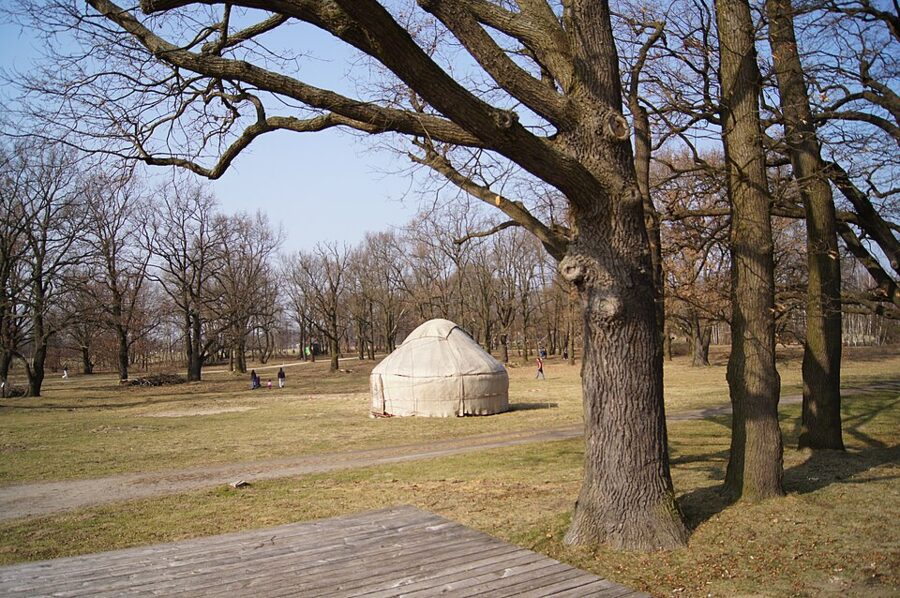
Two patches of old oaks, the Großer Schragen and the Viereckremise, about four hectares each, are protected under European habitat law for the great capricorn beetle. That is the same beetle that bent the tram line. In the north of the Remisenpark an orchard of 115 old fruit trees in 33 varieties flowers in spring and fruits in autumn.
Art left over from the garden show
For 2001 six artists made works on the theme of camouflage and unmasking, and four remain, described on the park’s art page. Der Zaun (The Fence) by Igor Sacharow-Ross stands where Soviet soldiers once trained for hand-to-hand combat, a garden handed back to nature inside a fence. Fritz Balthaus put a giant letter K on a plinth, the map symbol for “art” turned into the art itself.
The basketball court by the Berlin group Inges Idee rises and falls with the ground and can actually be played on. Annette Wehrmann gutted a former watchtower and lined it with mirrors, so a building made for watching now shows you only yourself; at weekends in the summer season you can borrow the key against a deposit at the information pavilion by the main gate.
Playgrounds and sport
Children head for three places, according to the park’s sport and play page. The water playground has a 900-square-meter pool with wooden rafts, a sand beach, water-spitting fish and a lighthouse; in late 2026 the pool is out of service for repairs, with the rest of the playground partly usable. In the Waldpark a 12-meter slide tower sends tube slides out like octopus arms, with a climbing wall on its back, and the ZickZack playground under old oaks has rope climbing, a grotto and a swing nest big enough for a family.
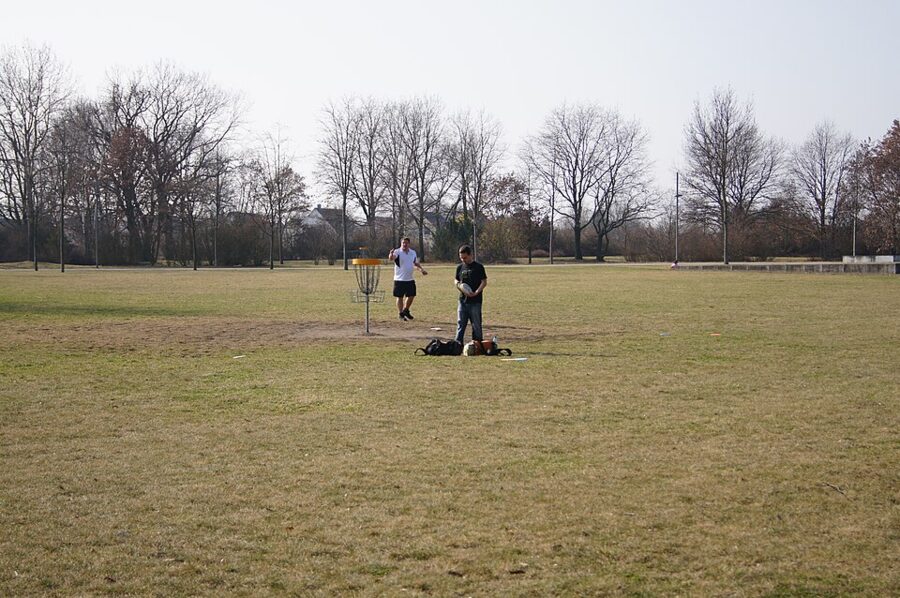
There are four trampolines, a new skate park opened in April 2026, a five-meter horseshoe-shaped bouldering wall, five beach volleyball courts and a 15-basket disc golf course that is free to play. A paved 4 km loop suits bikes, scooters and inline skates. The minigolf course runs from late March to the end of October, and from April to September the information pavilion rents out handcarts, balls and disc golf sets, a handcart costing €3 for up to three hours.
Summer and winter
Summer is the park’s season. The big events are the International Kite Festival (its 37th edition was on September 26–27, 2026), the Potsdam environment fair in the Großer Wiesenpark (September 13, 2026, with about 100 exhibitors and the next one in September 2027), a knights’ festival and an autumn festival; some of them charge a separate entry. In 2026 the park turned 25 and marked the 25th of every month with a small event, ending on November 25 with mulled wine and potato soup around a fire bowl at the main gate, 17:00–19:00.
Winter is quieter and plainer. The information pavilion closes from November until March 2027, the water features are switched off, and five of the seven toilet blocks close from mid-November to early March, leaving those in the events area and at the Stadtplatz in the Remisenpark. For an outdoor plan in the cold, the park’s four phone-guided Actionbound trails through the Remisenpark and Waldpark work year-round.
Cafés in the park
The café “das haus im park” by the water playground serves waffles, cake and snacks, and in winter opens only at weekends in November and not at all in December, with daily opening again from spring, according to the park’s food and drink page. Dorf Potsdam, a beer garden behind the main gate, opens in the afternoons and evenings from Wednesday or Thursday to Sunday; the park’s pages give two different timetables, so treat the hours as a guide. Wok King, an Asian food stall in the Wallkreuz, runs from February to the end of November and closes on Mondays.
Getting there
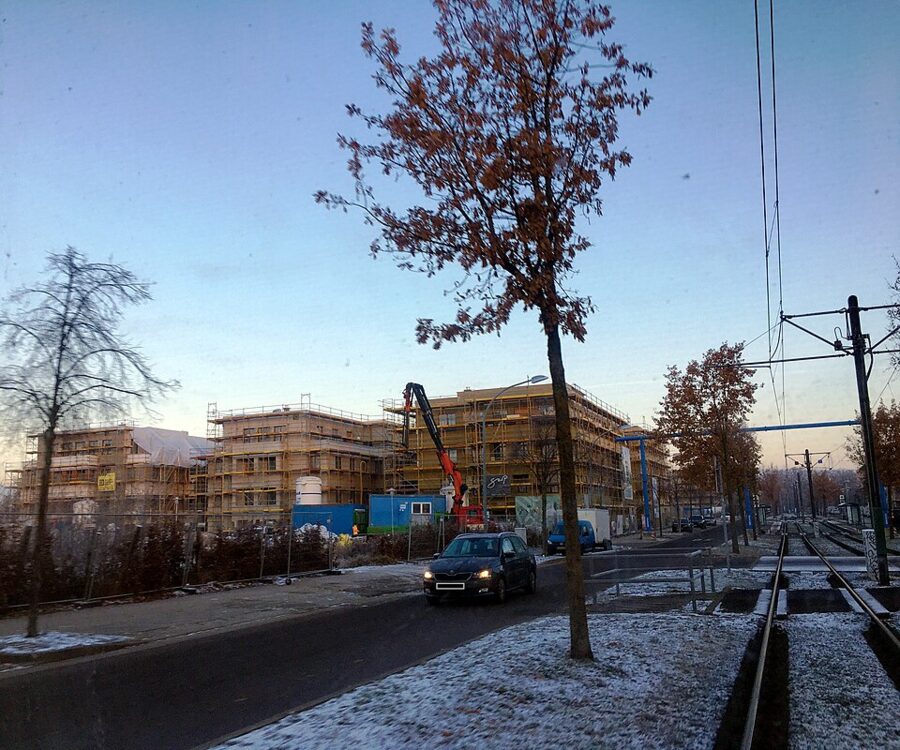
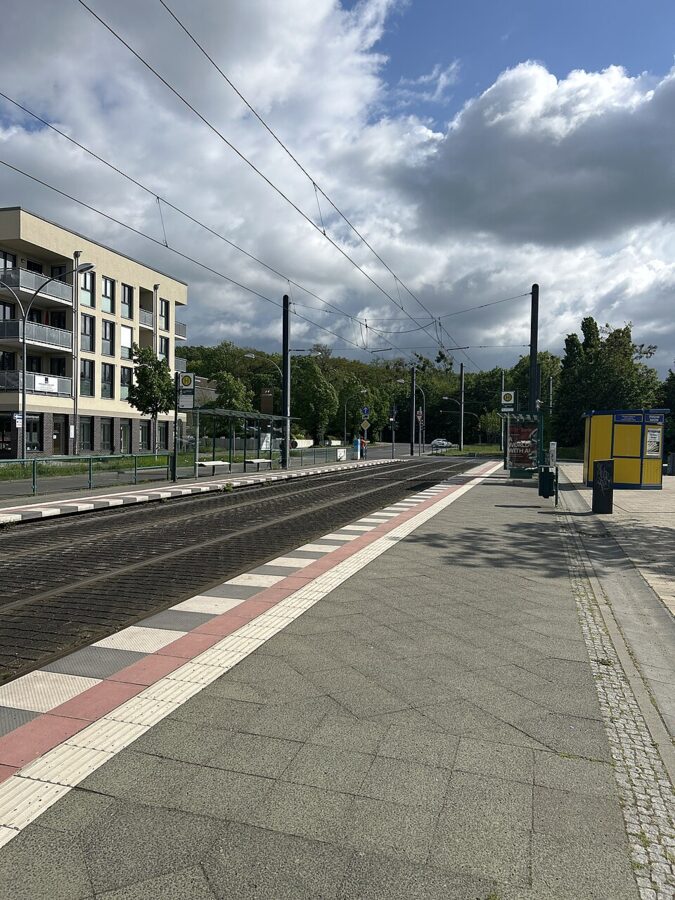
From Potsdam Hauptbahnhof, the main station, take tram 96 toward Campus Jungfernsee to the Volkspark stop, which the Biosphäre’s directions put right in front of the hall; the ride is about a quarter of an hour. Tram 92 toward Kirschallee also works: get off at Campus Fachhochschule and walk 300 m. The Volkspark’s own timetable note has the 96 running every ten minutes on weekdays from about 05:30 to 20:30.
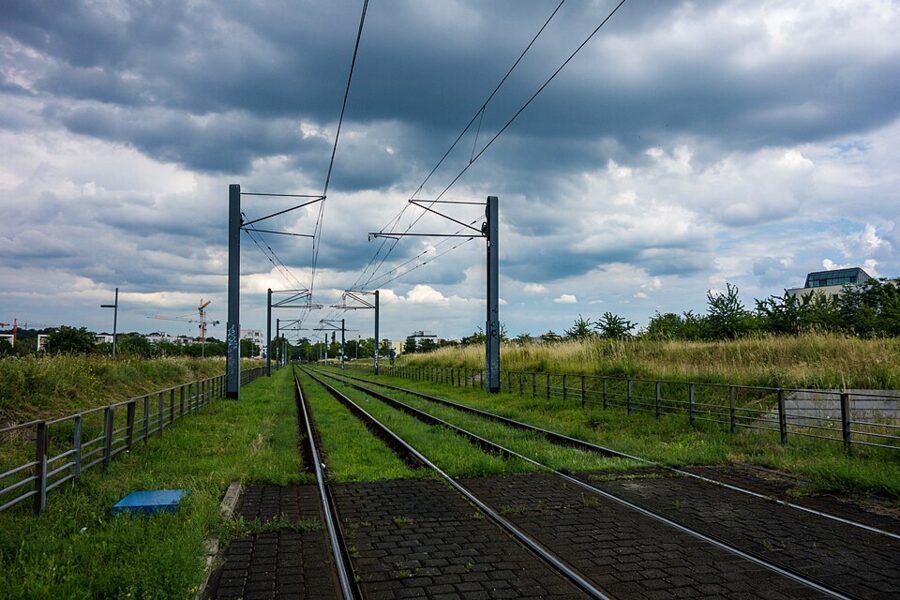
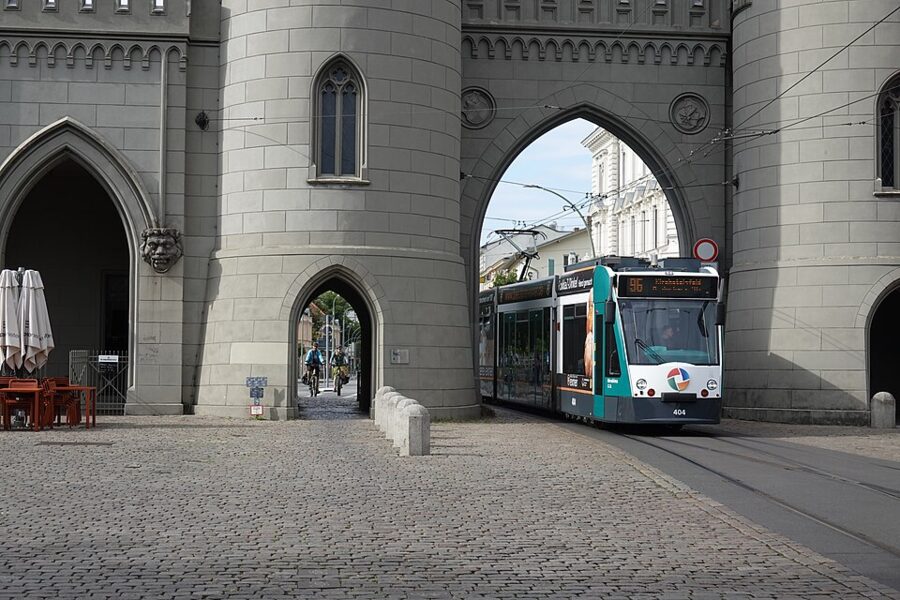
Both lines run north from the station through the old town, past the Dutch Quarter (Holländisches Viertel) and out through the Nauener Tor, which is why the local transport company sells them as its Volkspark line. From Berlin, take the S7 or the RE1 to Potsdam Hauptbahnhof; a single ticket Berlin ABC costs €5.00 in 2026 and €5.20 from January 1, 2027, and a 24-hour ticket €12.90, then €13.20. The Deutschlandticket covers the whole trip, and my day trip from Berlin guide has the train detail.
Drivers can follow the city signs for BUGA-Park or Biosphäre to a car park of 160 spaces next to the hall. The first two hours cost €3, each further hour €1.50 and a full day €8; a camera reads your plate, you pay at the machine or by phone before leaving, and the Biosphäre ticket desk takes €1 off. Bike racks at the main entrance are free, and you can ride through the Volkspark itself.
Walking in from Alexandrowka or Bornstedt
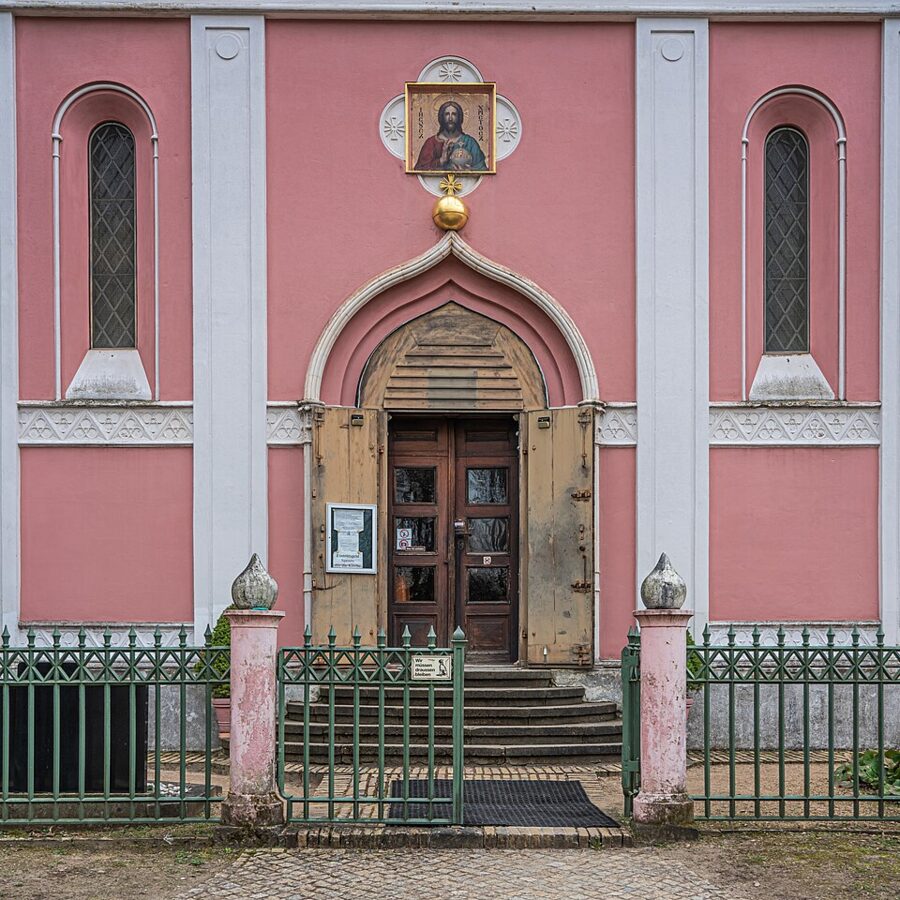
If you are already north of the old town, walk. From Alexandrowka, follow the tram tracks north past the Kapellenberg, where the onion domes of the Alexander Nevsky church rise above the trees, and on past the Am Schragen and Campus Fachhochschule stops to the hall, about 1.5 km or 20 minutes. From the Krongut in Bornstedt, head north to the Johan-Bouman-Platz tram stop and cross the Großer Wiesenpark eastward to the Biosphäre, about 2 km or half an hour, paying the park fee at a gate machine.
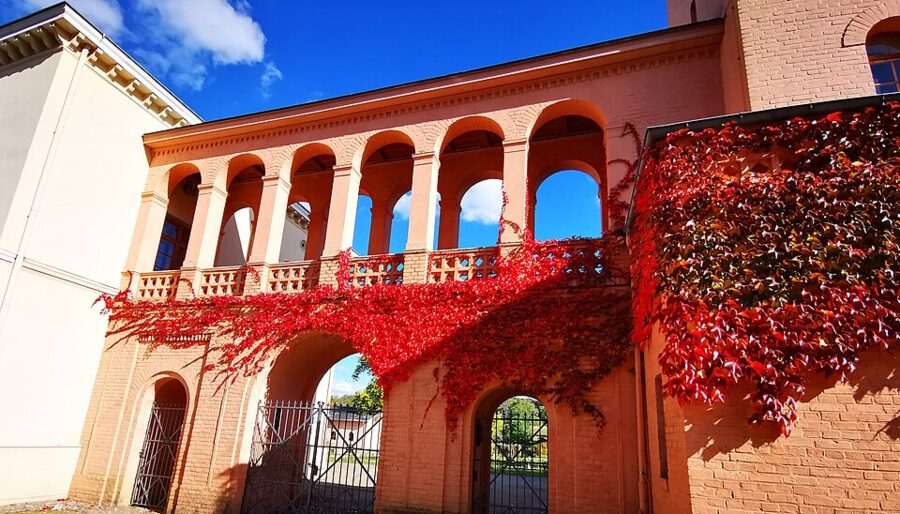
The longer version starts at Sanssouci: climb the Ruinenberg behind the palace, drop down to the Pappelallee and walk into the Volkspark from the south, a good way to fit a palace morning and a jungle afternoon into one day. The Belvedere on the Pfingstberg is about 15 minutes’ walk east of the Volkspark, worth adding on a clear evening for the view over the lakes.
If the rain has set in for the whole day, the museums in Potsdam are the other half of a wet-weather plan, and my full list of things to do in Potsdam sorts the rest by season.
At 17:00 in November it is dark outside when the doors let you back out, and the cold lands all at once after an afternoon at 25 degrees. The tram stop is across the road, the 96 comes every ten minutes, and a quarter of an hour later you are back at the station with the warm, wet smell of the hall still on your clothes.