

On a Monday in January the doors of Sanssouci Palace stay locked, the Picture Gallery beside it has been shut since the end of October, and the Museum Barberini on the Alter Markt is open until 19:00. That is the first thing to know about the museums of Potsdam: they run on a different calendar from the palaces, and on the days the palaces fail you, they are where the town still opens its doors.
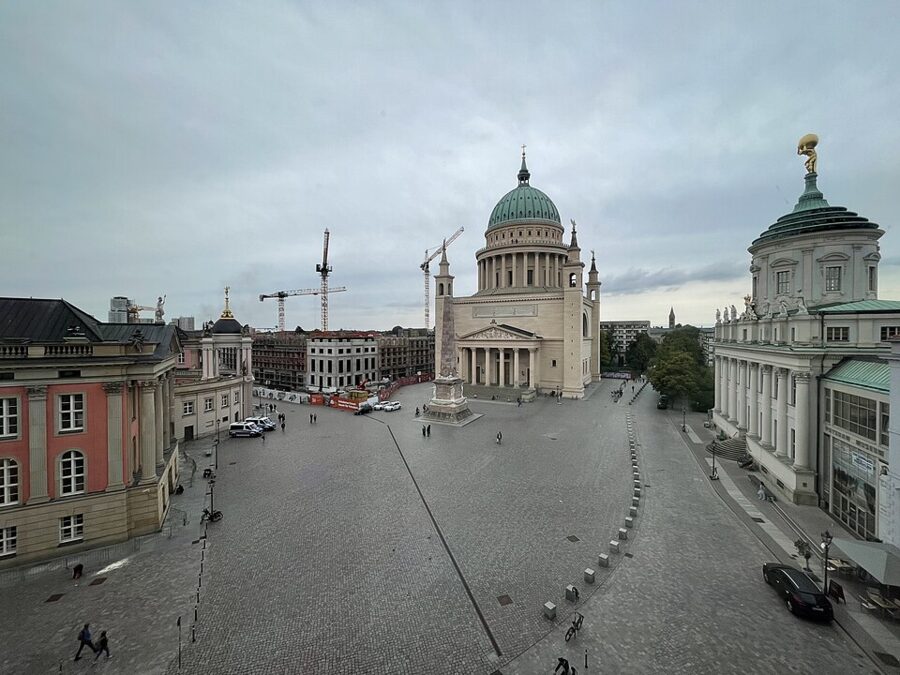
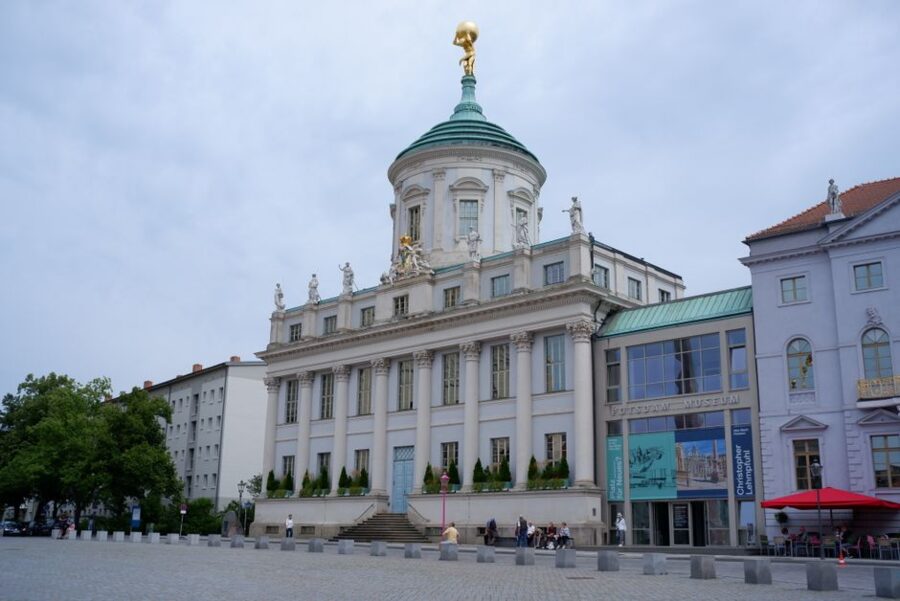
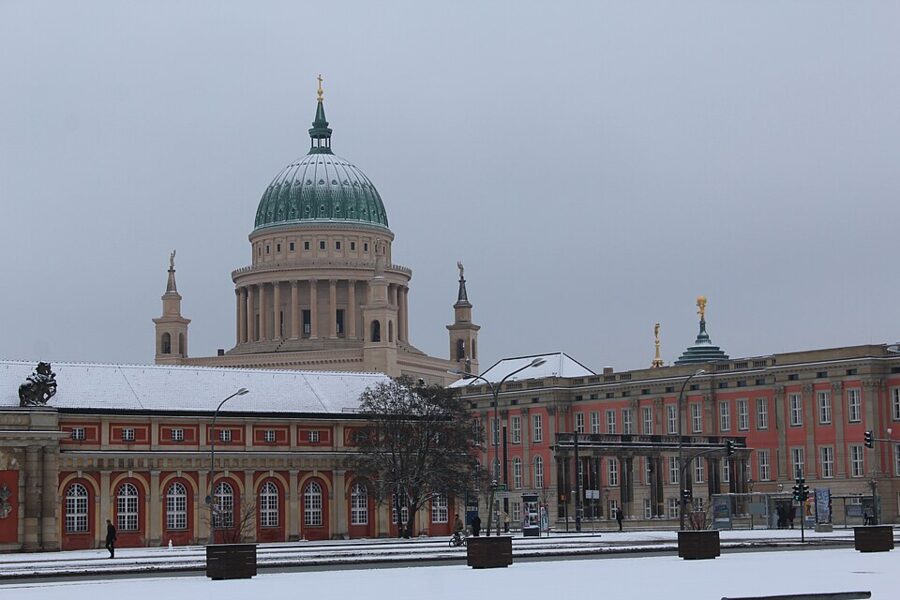
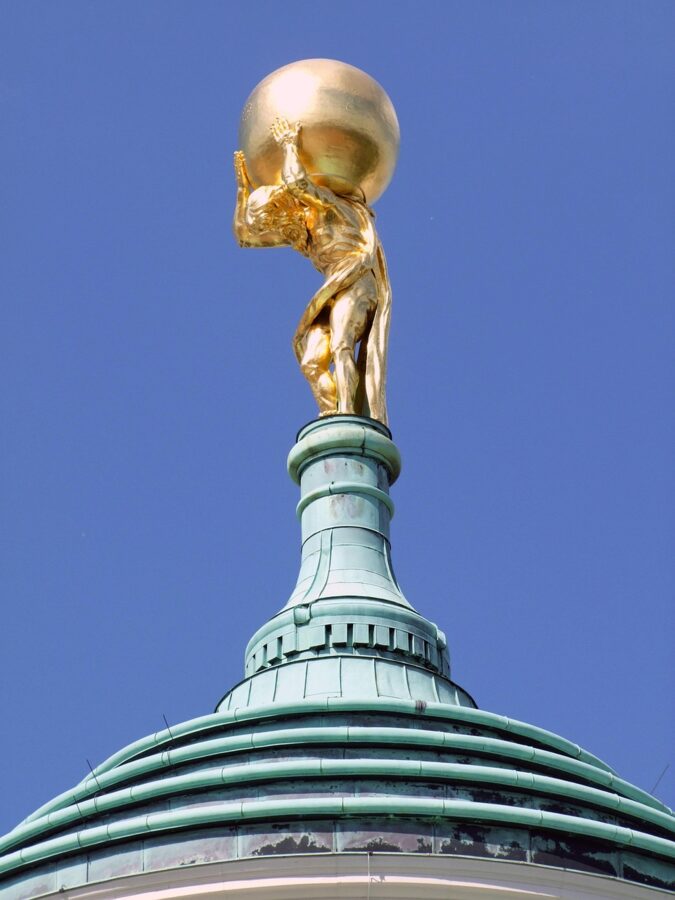
Stand by the obelisk in the middle of the square and you can see two of them without turning your head. The Old Town Hall, with a gilded Atlas carrying the world on its dome, holds the Potsdam Museum, whose city history exhibition costs nothing. Across the cobbles the rebuilt Palast Barberini holds Hasso Plattner’s Impressionists. Behind the pink bulk of the Landtag, the long baroque stable block on Breite Straße is the Filmmuseum, and a few minutes further on are the Brandenburg Museum in the old royal carriage stable and the Natural History Museum with its aquarium of native fish.
Further out the set gets stranger and better: a 1970s East German terrace restaurant turned art museum on the hill above the station, a Soviet counterintelligence prison kept almost exactly as it was left, a gable house in the Dutch Quarter with a carpenter’s roof you can climb into, the wooden house where Albert Einstein spent his summers, and a telescope from 1899 that still opens its dome on winter nights. Some of these are worth a morning. Some are worth twenty minutes on the way to something else. A few you can skip, and I will say which.
Contents7 parts
- Before you go: Mondays, winter and free days
- Art: the Barberini, DAS MINSK and the royal pictures
- Film: the Filmmuseum in the Marstall
- Town and history: from the Old Town Hall to the KGB prison
- Small house museums: the Dutch Quarter, Alexandrowka and Caputh
- Science and nature: the Telegrafenberg and the Biosphäre
- Plans: a rainy day, a Monday, a day with children
Before you go: Mondays, winter and free days
Most of Potsdam’s museums close on Monday, and the ones that do not are worth knowing by heart. The Museum Barberini and DAS MINSK, its sister house for art from East Germany, both close on Tuesday instead and open on Monday from 10:00 to 19:00. The Jan Bouman Haus in the Dutch Quarter opens on weekday afternoons from 13:00, the Garrison Church tower opens daily, and the Biosphäre’s tropical hall never closes for a weekday. The Natural History Museum opens on the first Monday of each month as a Museumsmontag (museum Monday), at a reduced price.
The palace interiors of the Prussian Palaces and Gardens Foundation (SPSG) mostly close on Monday too. The exception that catches people out in a useful way is the New Palace: it closes on Mondays from January to October, but on Tuesdays in November and December, so in the last two months of the year it is one of the few big interiors open on a Monday.
Winter is the other filter. The Picture Gallery in Park Sanssouci opens only from April to October. So does the Einstein summer house in Caputh, and then only at weekends.
The Museum Alexandrowka posts its winter hours as it goes, Villa Schöningen shortens to Friday to Sunday, 11:00–17:00, and the Leistikowstraße memorial opens an hour earlier and closes an hour earlier from November to March. Against that, the science sites come into their season: the Einstein Tower tours run from September to May and the Great Refractor’s observing evenings only in the winter half of the year.
Money goes further than you might expect. The city history exhibition in the Potsdam Museum is free, the Brandenburg Museum asks you to pay what you like between €0 and €10, and the Leistikowstraße memorial is free. Everyone under 18 gets into the Barberini, DAS MINSK, the Filmmuseum and the Potsdam Museum for nothing. DAS MINSK is free for everyone on the last Sunday of each month, and the museum FLUXUS+ on the first Sunday.
Four museums in the historic center (the Potsdam Museum, the Brandenburg Museum, the Filmmuseum and the Natural History Museum) sell a joint card, the MUSEUM Kombikarte, for €14 since June 2026. It covers one adult and two children for one visit to each house within a year, and on four Fridays a year all four open for free; the last of 2026 is December 18. The Brandenburg Museum’s admission page sets out the card and the pay-what-you-wish rule. For the art houses, a €20 combined ticket covers the Barberini and DAS MINSK on two consecutive opening days, and a Sanssouci+ ticket (€22 in 2026 and €24 in 2027) brings both down to their reduced price within a day either side of the palace visit.
| Museum | Open on Monday? | Winter | Adult ticket (late 2026) |
|---|---|---|---|
| Museum Barberini | Yes (closed Tuesday) | Same hours all year | €16 weekdays, €18 weekends, €10 from 17:30 |
| DAS MINSK | Yes (closed Tuesday) | Same hours all year | €10 |
| Potsdam Museum | No | Same hours all year | Free (special shows €6) |
| Brandenburg Museum | No | Same hours all year | Pay what you wish, €0–10 |
| Filmmuseum Potsdam | No | Same hours all year | €12 |
| Natural History Museum | First Monday of the month | Same hours all year | €4 |
| Garrison Church tower | Yes | Weekdays 11:00–15:00 | €8 view or exhibition, €12 both |
| Leistikowstraße memorial | No | 13:00–17:00 | Free |
| Jan Bouman Haus | Yes, from 13:00 | Same hours all year | €3 |
| Museum Alexandrowka | Yes, April–October | Hours announced by the museum | €3.50 |
| Villa Schöningen | No | Friday–Sunday only | €8 |
| Einstein summer house, Caputh | No | Closed November–March | €5 |
| Biosphäre | Yes | Same hours all year | €20 at the desk |
Art: the Barberini, DAS MINSK and the royal pictures
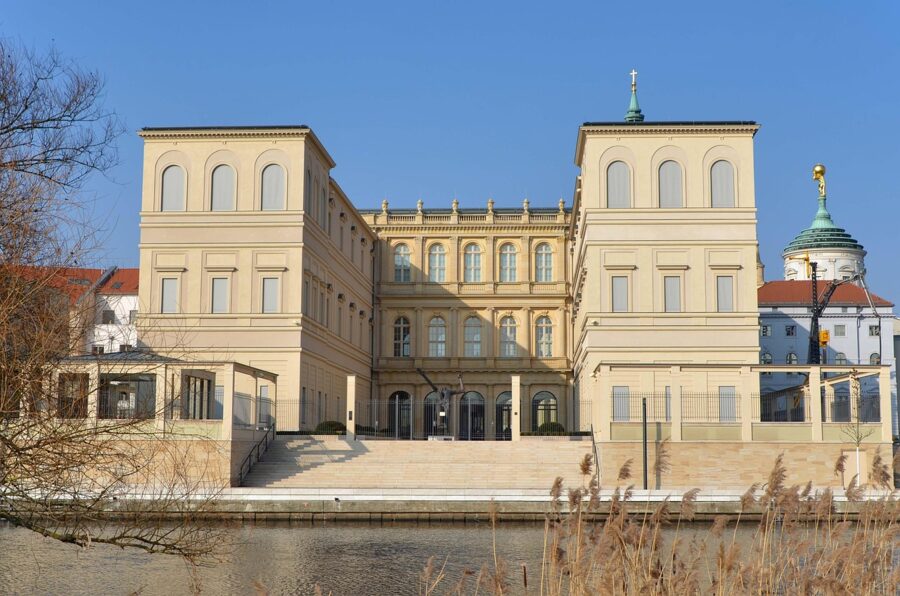
Museum Barberini
The Museum Barberini is the one art museum people come out from Berlin for, and it deserves its reputation. Behind a rebuilt 1770s facade copied from a Roman palace, it shows the Impressionist collection of the software founder Hasso Plattner (Monet above all) alongside three loan exhibitions a year. Until February 21, 2027 the loan show is “The Impressionists: Monet, Morisot, Renoir, and Their Network”, and the museum’s exhibition program has Barcelona Moderna, from Gaudí to Picasso, lined up for March 20 to June 20, 2027.
It opens 10:00–19:00 every day except Tuesday, with the last tickets sold at 18:15, and the hours do not shrink in winter. Adult tickets are €16 on weekdays and €18 at weekends and on holidays, and any ticket from 17:30 is €10, which I think is the best buy in Potsdam: ninety minutes is enough for the collection, and by then the galleries are emptying.
Under-18s and school pupils go free, and anyone under 25 gets in free on Thursdays from 14:00, but everyone, free or not, needs a timed slot. The Barberini’s visit page has the holiday hours (10:00–15:00 on December 24 and 31, 13:00–19:00 on January 1, 2027). Bags and coats go into free lockers before you enter.
DAS MINSK
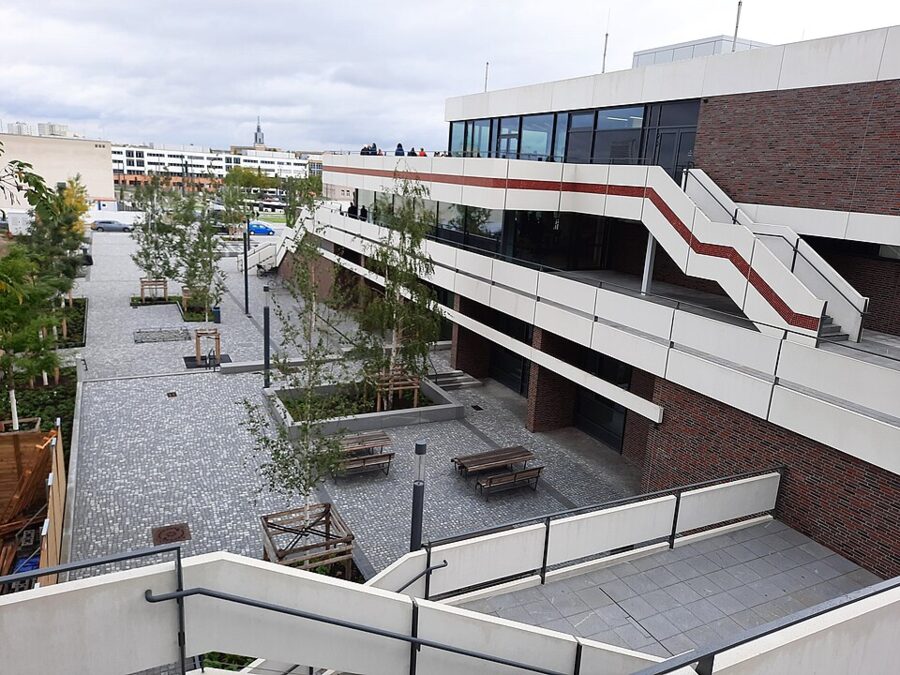
Five minutes’ walk uphill from Potsdam Hauptbahnhof (the main station), on the slope of the Brauhausberg, a white pavilion stands on terraces above Max-Planck-Straße. Karl-Heinz Birkholz and Wolfgang Müller designed it as the terrace restaurant Minsk, built from 1971 to 1977 and run as a Belarusian restaurant, the product of a partnership between the district of Potsdam and the region around Minsk. It closed for good in 2000, sat empty for years, narrowly escaped demolition in the mid-2010s, and was restored by Plattner’s foundation, which opened it as an art museum on September 24, 2022.
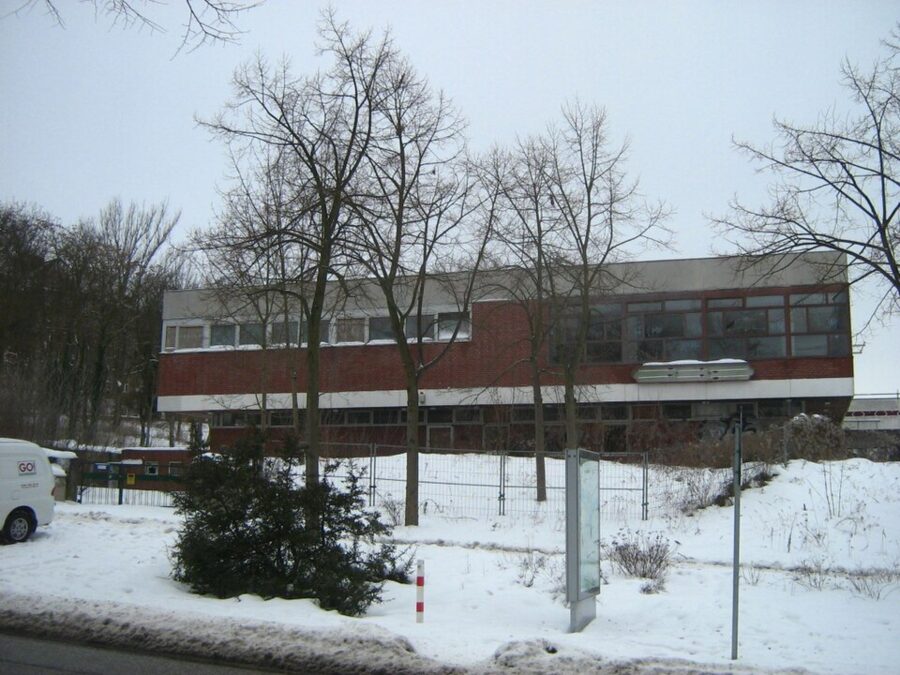
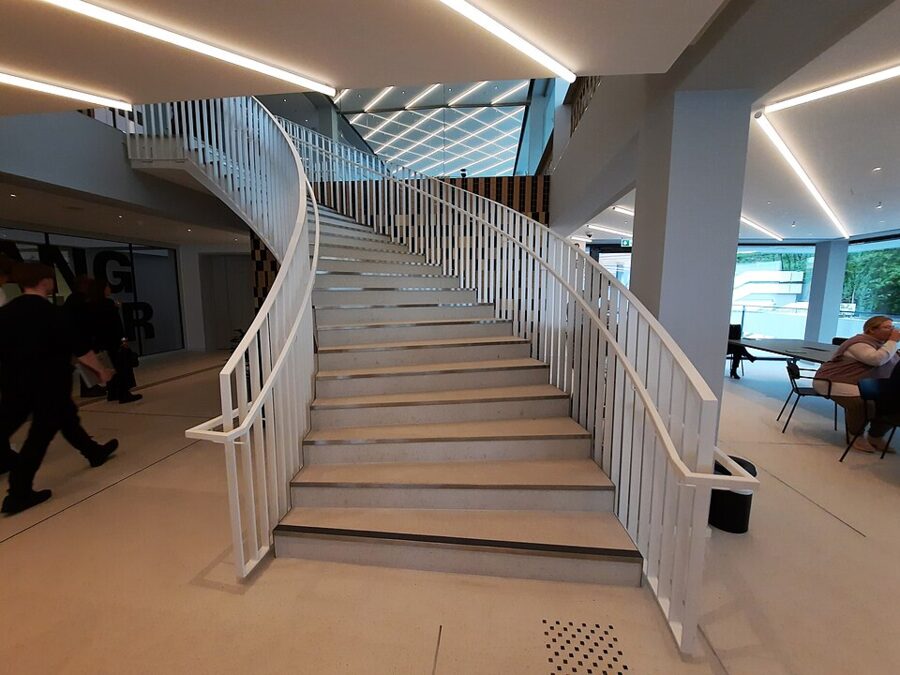
The house’s own history describes its subject as art from the former GDR in Plattner’s collection, shown next to contemporary work, and this is what makes it more than the Barberini’s annex. Until February 7, 2027 the main show is “Bruch ist in der Welt”, on the painter Annemirl Bauer, with a cabinet show on the ceramics workshop of Wilfriede Maaß. The galleries are small, two column halls with about 450 square meters between them, so an hour is plenty.
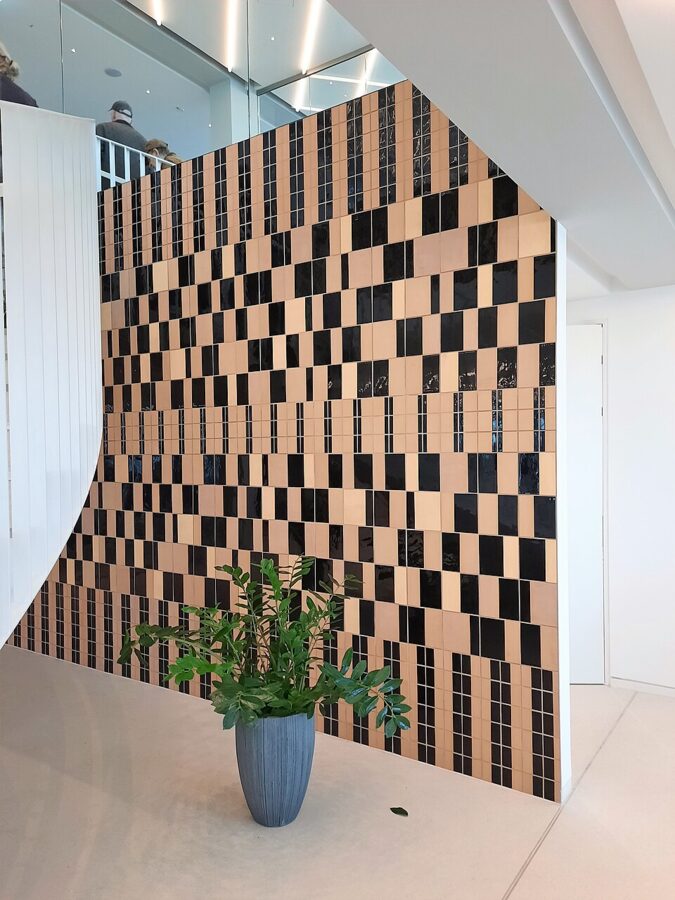
DAS MINSK opens Wednesday to Monday, 10:00–19:00, and closes on Tuesday. A house ticket is €10 (€8 reduced), under-18s go free, and on the last Sunday of each month, the MINSKDAY, it is free for everyone, though even a free visit needs a booked time slot, as the MINSK’s visitor page explains. Of the two Plattner houses, I would choose the Barberini for a first visit and DAS MINSK for a second, and on a Monday I would do both: the €20 combined ticket is valid on consecutive days.
FLUXUS+ and the palace picture galleries
For a sharper taste, the museum FLUXUS+ sits in former hussar stables in the Schiffbauergasse arts quarter on the Tiefer See. It opened in April 2008 around a private collection of work by Wolf Vostell, an early member of the Fluxus group of the 1960s, with artists from his circle and some younger painters. It opens Wednesday to Sunday, 13:00–18:00; a day ticket is €7, and on the first Sunday of every month entry is free, according to FLUXUS+’s price list. It is for people who already like Fluxus; it will not convert anyone.
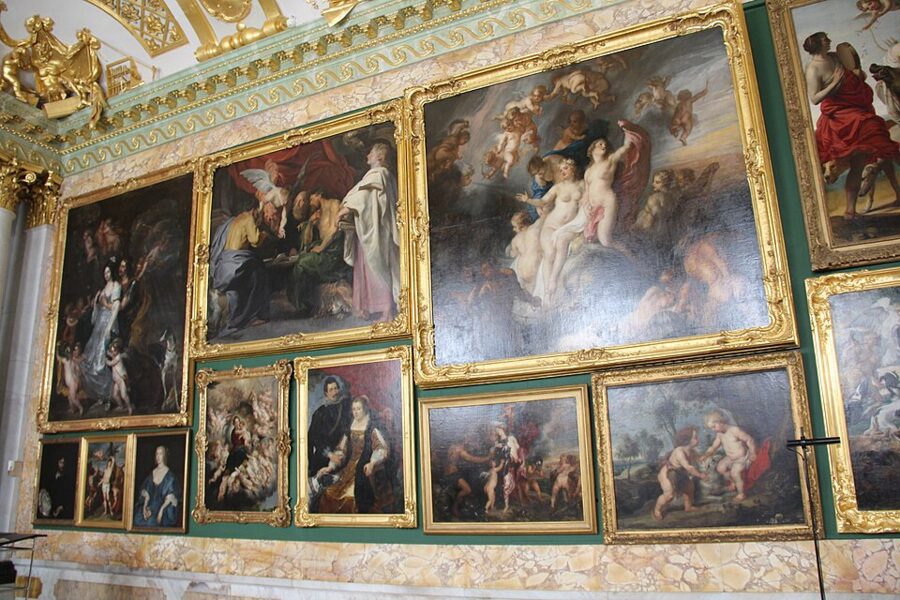
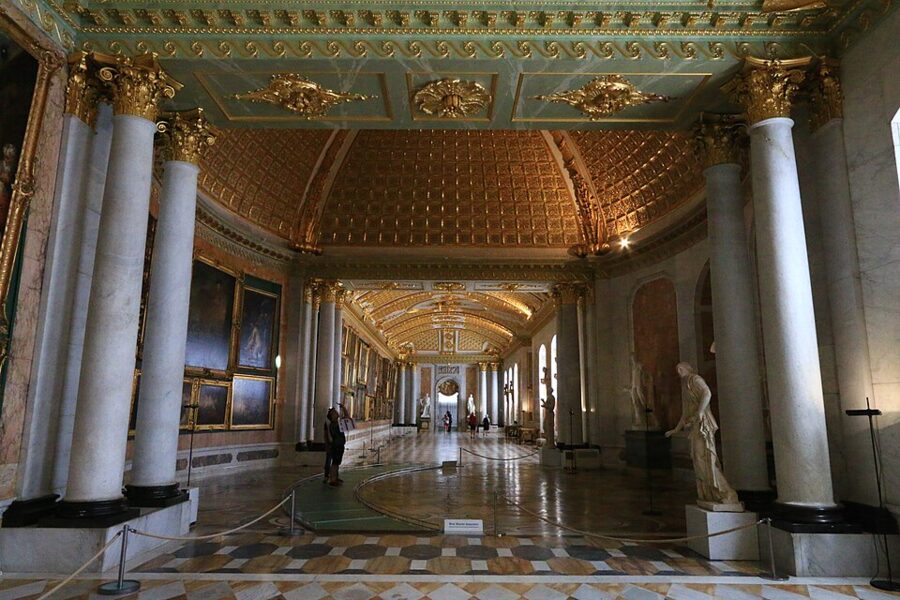
The oldest art museum in town belongs to the palaces. Frederick the Great (Friedrich II) built the Picture Gallery next to Sanssouci between 1755 and 1764 for his collection, and the foundation’s page on the Picture Gallery calls it the oldest surviving purpose-built gallery in Germany; Caravaggio’s Doubting Thomas hangs there. It opens from April to October only, Wednesday to Sunday, 10:00–17:30, and is covered by the Sanssouci+ ticket and by the €10 Flanierkarte, which also opens the New Chambers, the Chinese House and Charlottenhof on the same day.
Film: the Filmmuseum in the Marstall
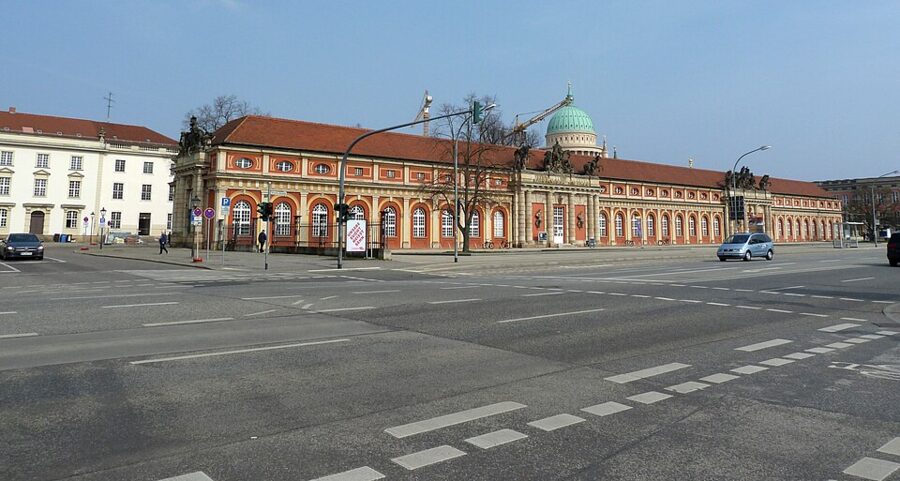
Potsdam’s film history happened in Babelsberg, but its museum is in the old town, in the long baroque stable block on Breite Straße. Johann Arnold Nering built the Marstall in 1685 as an orangery for Frederick William, the Great Elector; Frederick William I (Friedrich Wilhelm I), the Soldier King, turned it into a stable for the royal riding horses in 1714, and Georg Wenzeslaus von Knobelsdorff stretched it to 33 window bays in 1746. After the monarchy fell it became a garrison museum, and in 1981, restored after war damage, it reopened as the Film Museum of the GDR. Renamed in 1990, the Filmmuseum Potsdam counts as the oldest film museum in Germany with its own collection.
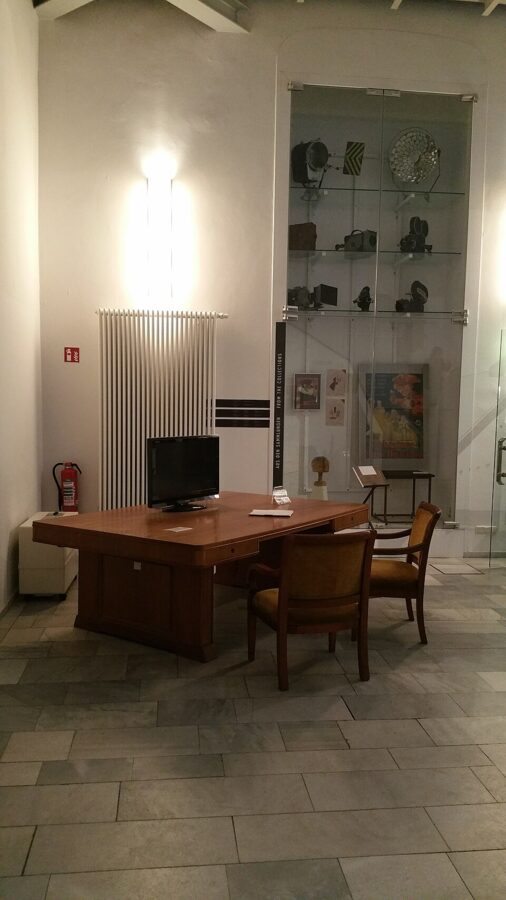
The permanent exhibition, “Traumfabrik” (dream factory), tells a hundred years of film in Babelsberg: the silent studio, UFA and the Nazi years, the East German DEFA and Studio Babelsberg after 1990. In the foyer, free to enter, stands historic film equipment and the museum’s “special object”, the Bioscop of the Skladanowsky brothers. Give it an hour and a half, and if you can, stay for the cinema: it plays from 17:00 Tuesday to Sunday, and silent films are accompanied live on a restored Welte cinema organ for €14.
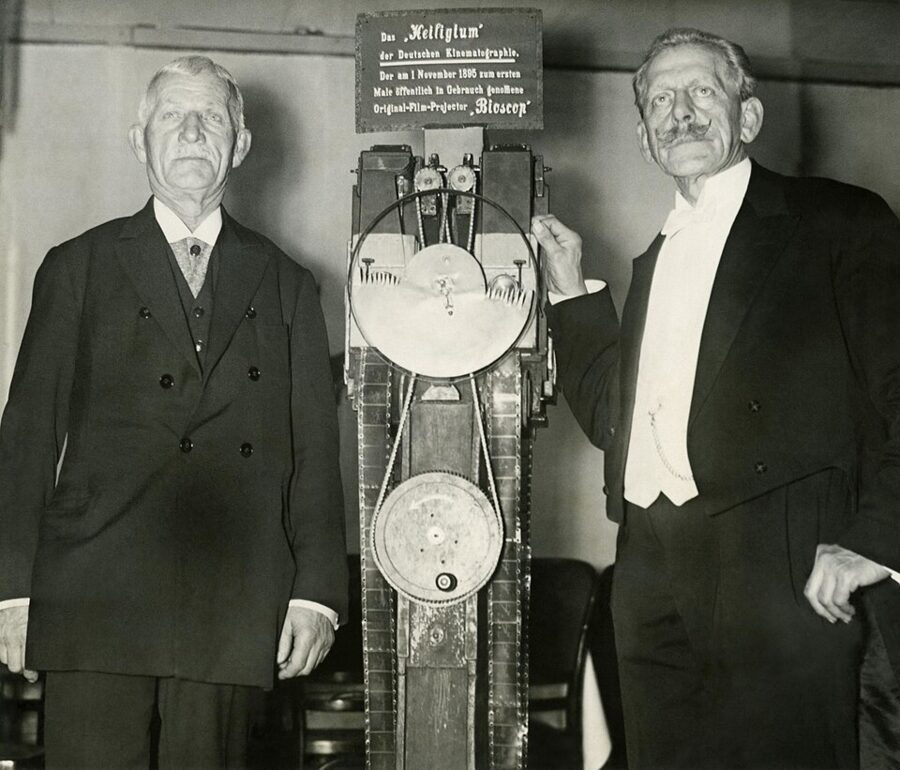
The exhibitions open Tuesday to Sunday, 10:00–18:00. The museum ticket costs €12, or €8 reduced, and children and teenagers under 18 go free, according to the Filmmuseum’s hours and prices. A second site, the Schaudepot study store in the Medienstadt Babelsberg, opens for booked one-hour slots on Thursday afternoons and Sundays for €6. Both sites close on December 24, 25, 26 and 31 and January 1.
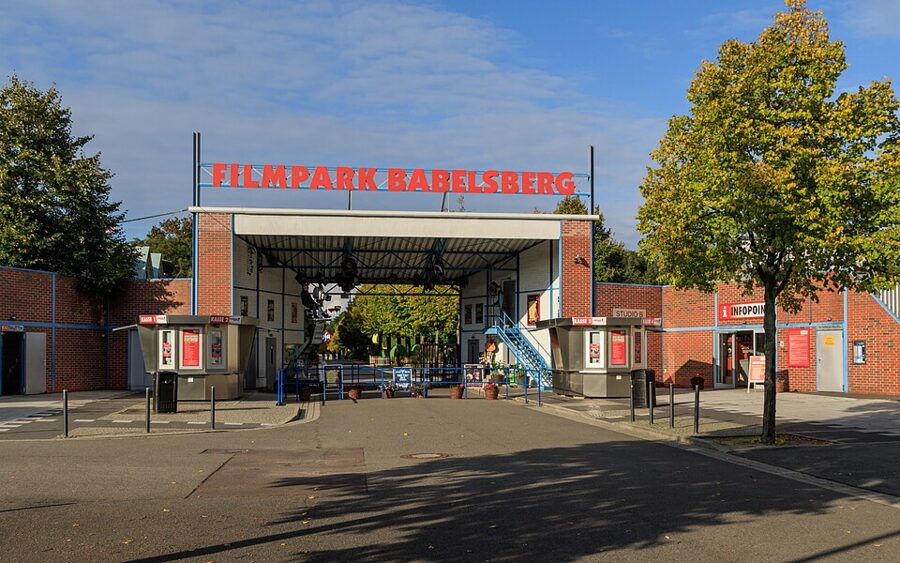
The Filmpark Babelsberg is a different animal: a seasonal theme park on the old studio lot in Babelsberg, with a stunt show in an artificial volcano and sets you can walk through, open from about Easter to the end of October. Children love it. If you want the history of the studios rather than the spectacle, the Filmmuseum tells it better in a third of the time and a third of the price.
Town and history: from the Old Town Hall to the KGB prison
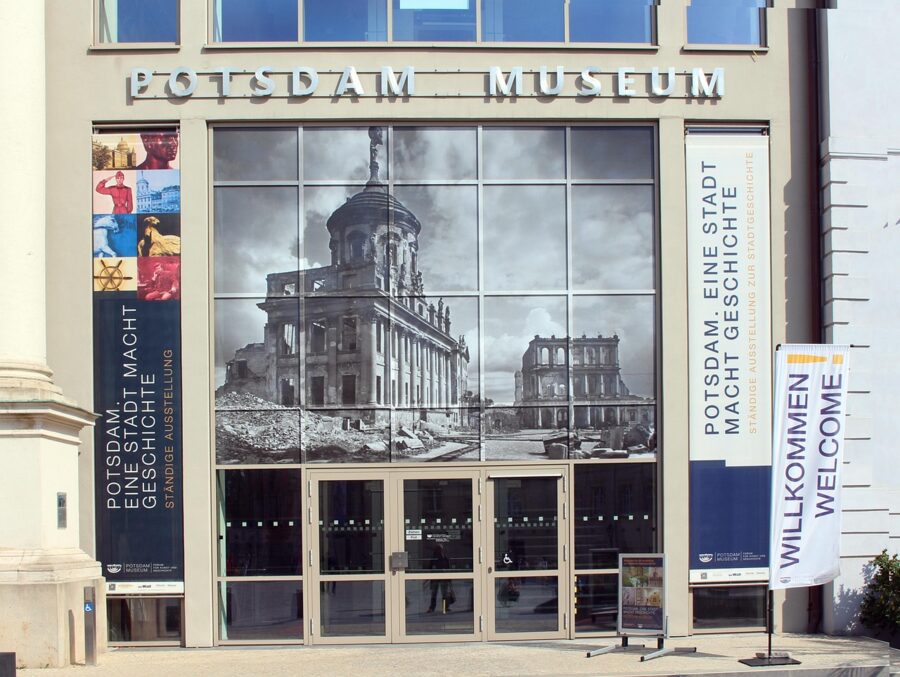
Potsdam Museum in the Old Town Hall
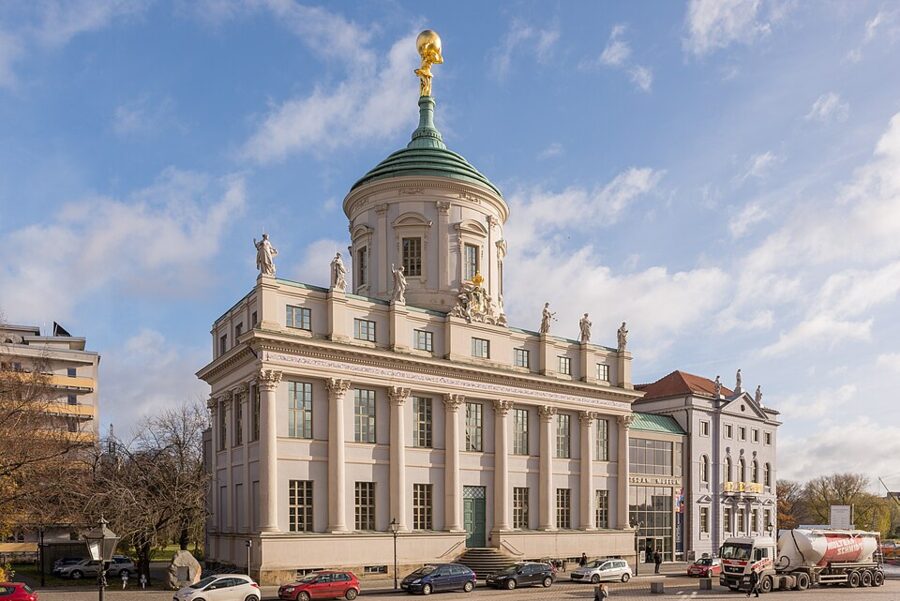
If you see one museum in Potsdam that is not about art, make it this one, and not only because it is free. The city’s own museum was founded by its citizens in 1909, owns more than 250,000 objects, and since 2012 has been back in the building where it began, the Old Town Hall that Jan Bouman and Christian Ludwig Hildebrandt built for Frederick the Great in 1753–1755. The model was a palazzo that Palladio drew for Vicenza and never built, which tells you most of what you need to know about Frederick’s idea of a market square.
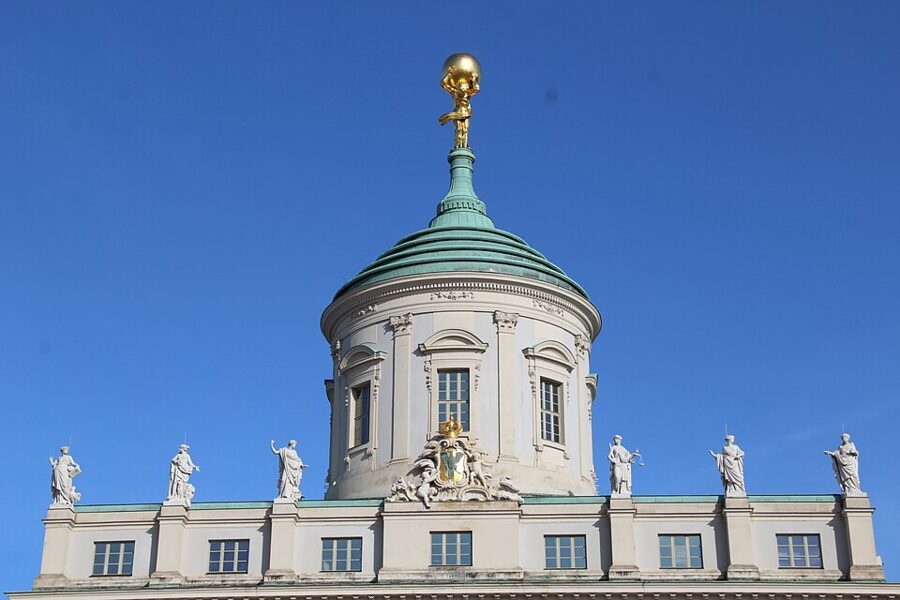
The permanent exhibition, “Potsdam. Eine Stadt macht Geschichte” (a city makes history), opened in 2013 and uses some 500 original objects to walk from the medieval settlement to the present. The questions it asks are the right ones: what Frederick wanted to hear from the guards at his town gates, why mulberry trees still grow here, how Casanova and Alexander von Humboldt saw the place, why Hindenburg and Hitler chose Potsdam to open the Reichstag in March 1933, and where the Soviet army sat until the 1990s. The museum’s page on the permanent exhibition lists the themes.
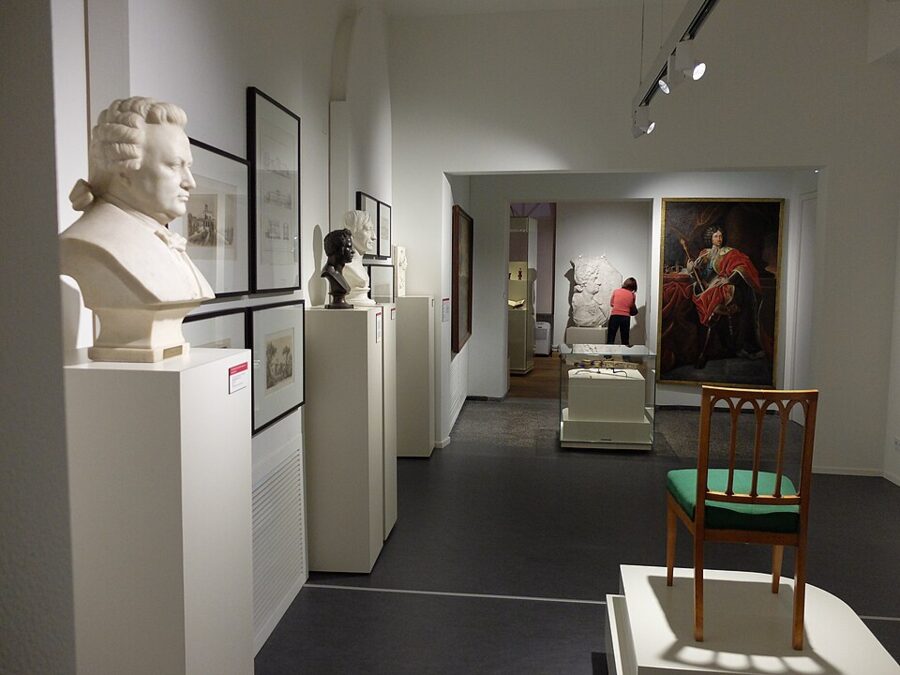
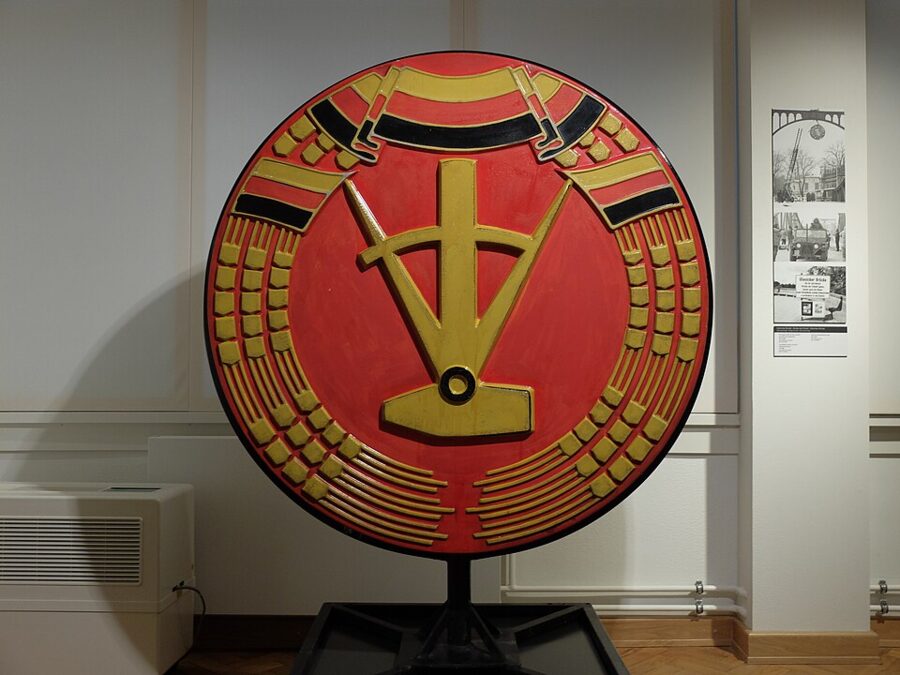
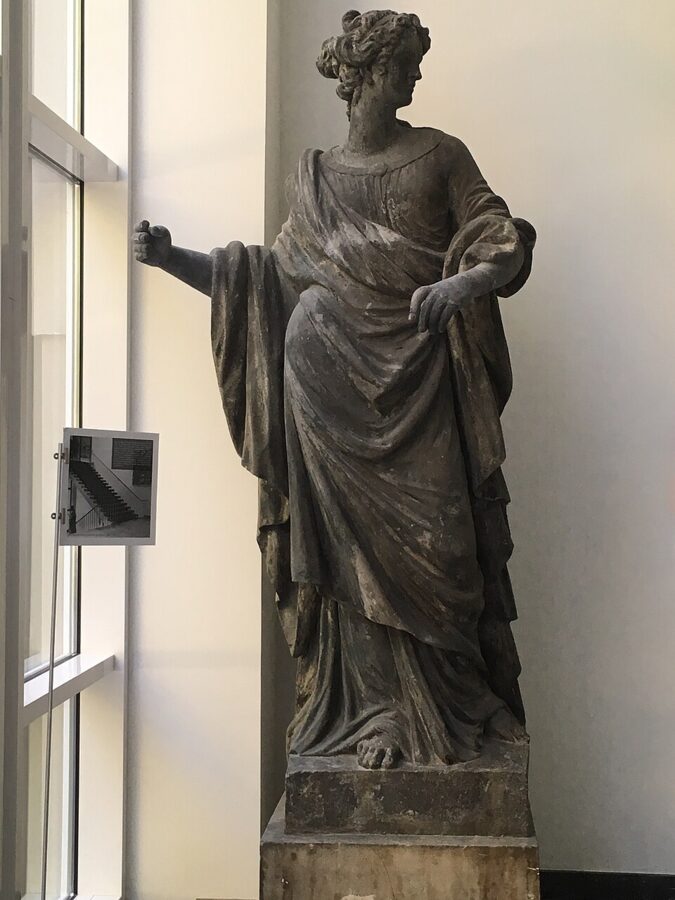
Look out for three things. On the staircase stands the last original sandstone figure from the roof, Commerce, carved by Gottlieb Heymüller in 1753; the six on the attic today are copies. A new case shows baroque glass from Potsdam’s own glassworks, including the deep red gold-ruby glass made around 1700 under Johann Kunckel. And there is the East German state emblem that was bolted to the Potsdam arch of the Glienicke Bridge in 1965 and taken down by the city fire brigade on June 1, 1990.
Two paid special exhibitions run until January 3, 2027, and both are about the square outside the windows. “Platz____für Neues?” lays out eight decades of plans for the Alter Markt after its destruction in 1945, the years when it was rubble, a car park and a lawn, with drawings you can spread out on worktables; the exhibition’s page shows the competition designs of 1960 and 1969.
The second shows Christopher Lehmpfuhl’s paintings of the same square. Each costs €6, both together €9, and under-18s go free.
The Potsdam Museum’s visitor page gives the hours: Tuesday to Sunday and on public holidays, 10:00–18:00, closed on December 24 and 31, and 12:00–18:00 on January 1, 2027. Allow an hour and a half for the permanent exhibition, more with a special show. Café Central on the ground floor serves coffee, lemonade and cake. On the Advent Sundays of 2026, brass players give short concerts from balconies around the square at 17:00 (16:00 on December 20), one of them from the museum’s own Knobelsdorffhaus on December 6.
Brandenburg Museum in the Kutschstall
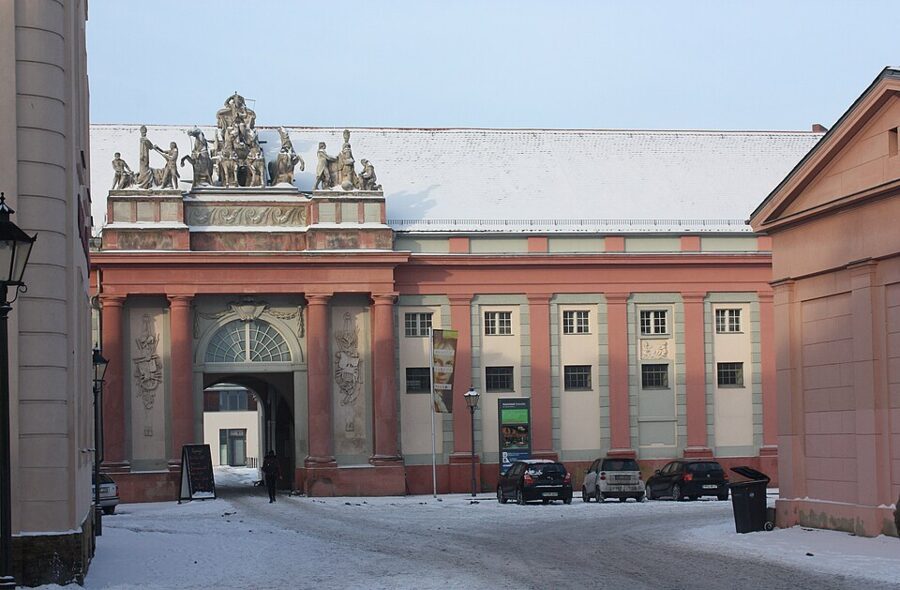
A few minutes’ walk from the Alter Markt, the Neuer Markt is a small square of eighteenth-century houses, and one side of it belongs to the royal Kutschstall (carriage stable). The horses for the court’s coaches lived here until 1918; after that it served as police stables, garages, a tennis hall, a furniture store and a fruit and vegetable wholesaler. Since 2001 it has been the state’s history museum, until 2024 under the name House of Brandenburg-Prussian History (Haus der Brandenburgisch-Preußischen Geschichte). In June 2024 it took its current name, the Brandenburg Museum for Future, Present and History (Brandenburg Museum für Zukunft, Gegenwart und Geschichte), and most people just say Brandenburg Museum.
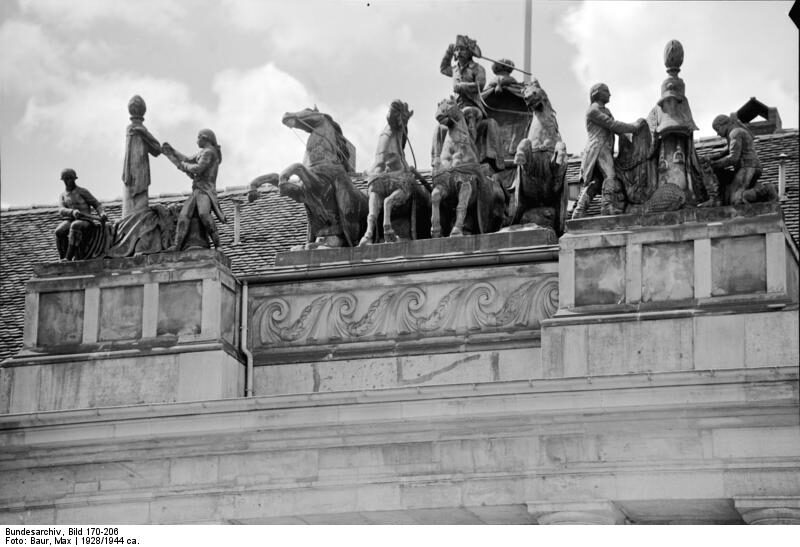
Look up at the sculpture over the gate before you go in. The coach and four, by Johann and Michael Wohler, is driven by an ordinary man in a coachman’s coat, flanked by stable hands at work. Potsdam calls him Pfund, after Frederick the Great’s coachman of many years, but the museum’s history of the Kutschstall points out that Johann Georg Pfund died in 1784, years before the stable was built.
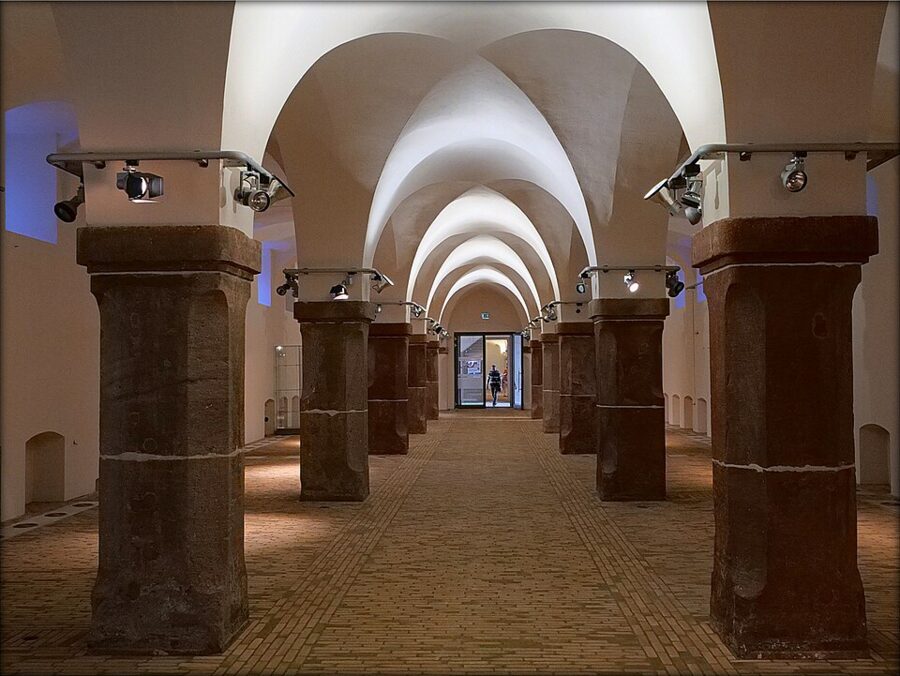
The permanent “Brandenburg-Ausstellung”, open since April 2022, covers ten centuries of the state around Potsdam, and it opens, oddly and well, with photographs of clouds taken in 1896 for the International Cloud Atlas, because Potsdam was already a center of climate research. From there it argues with the clichés about Brandenburg, from the “sandbox of the Holy Roman Empire” to modern tourism slogans, and claims both the thumbtack and the paper plate as Brandenburg inventions. A multimedia guide, which you can call up on your phone, covers 30 objects. It is better for someone who already knows a little German history than for a first-timer, and I would put it after the Potsdam Museum, not before.
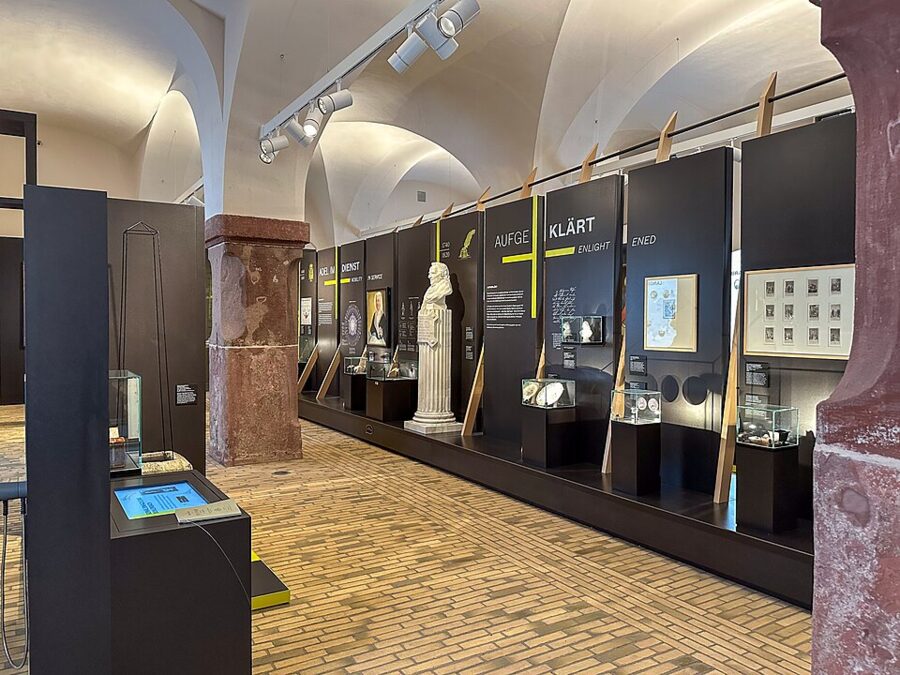
There is no fixed price for the permanent exhibition: you pay what you like, with €0–10 suggested. The photography show “Ach, Brandenburg … Fotografie im Dialog 1996 | 2026” runs until March 14, 2027 for €8 (€5 reduced), and a public overview tour costs €7. The museum opens Tuesday, Wednesday and Friday to Sunday 11:00–18:00, and on Thursday until 20:00, the latest opening of any museum in town, if only once a week. It closes on Mondays and on December 24 and 25 and January 1, and opens 11:00–16:00 on New Year’s Eve.
The Garrison Church tower
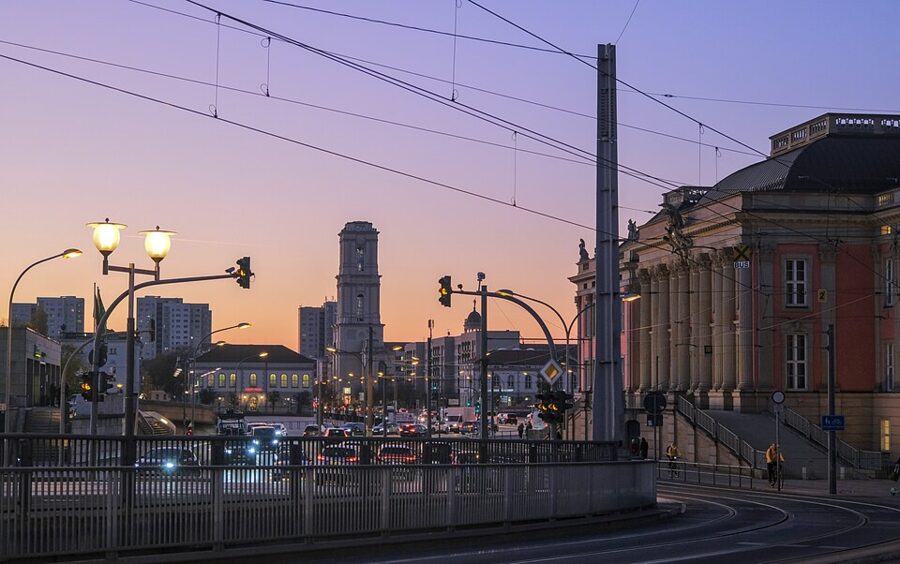
No building in Potsdam has been argued over as hard as the Garrison Church on Breite Straße. It was the church of the Prussian army and the place where Hindenburg and Hitler staged the opening of the new Reichstag in March 1933; it burned in April 1945, and the East German state blew up the ruin in 1968. The rebuilt tower, which still divides the town, now holds a lift, a viewing platform and an exhibition called “Glaube, Macht und Militär” (faith, power and the military) that takes the place’s history head on rather than politely.
The tower opens Monday to Friday 11:00–15:00 and at weekends 10:00–17:00, and tickets are sold only at the desk inside: €8 for the view, €8 for the exhibition, €12 for both, €20 for a family, with children up to 6 free and the reduced price for Berlin WelcomeCard holders. You can take the lift or the 365 steps. The Chapel of the Cross of Nails is free to enter. Check the Garrison Church’s visit page before you go, because the weekday hours are short; if you have to choose, the exhibition is the half that will stay with you.
Leistikowstraße memorial: the Soviet prison
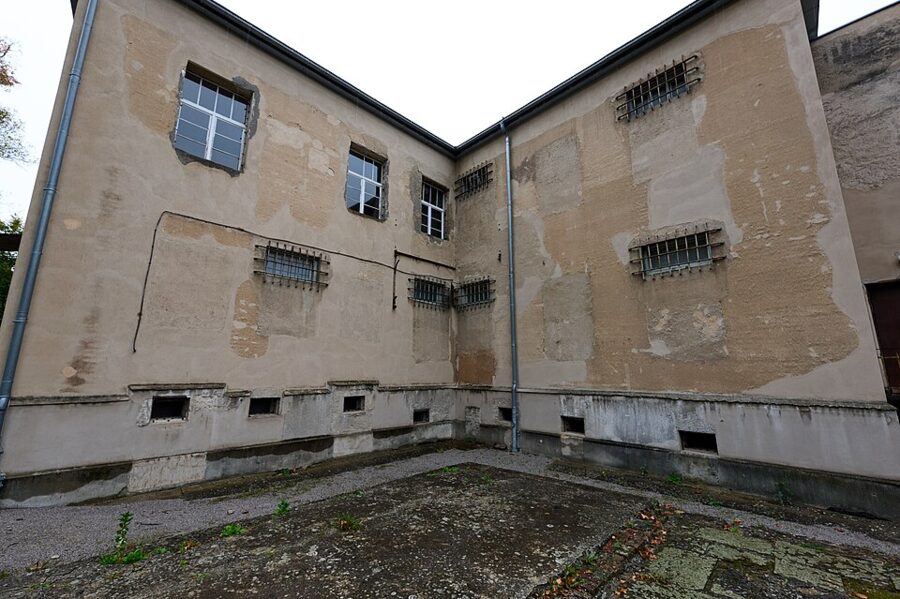
On the edge of the Neuer Garten, about eight minutes’ walk from the car park at Cecilienhof, where the Potsdam Conference met in 1945, a plain villa on Leistikowstraße was the central remand prison of Soviet military counterintelligence from 1945 to 1991. It stood inside “Militärstädtchen Nr. 7”, a closed Soviet intelligence town that was one of the KGB’s most important bases in the Cold War. Thousands of people passed through the cells: Soviet soldiers and civilians, Germans, Nazi perpetrators, alleged spies, deserters and people who had done nothing at all.
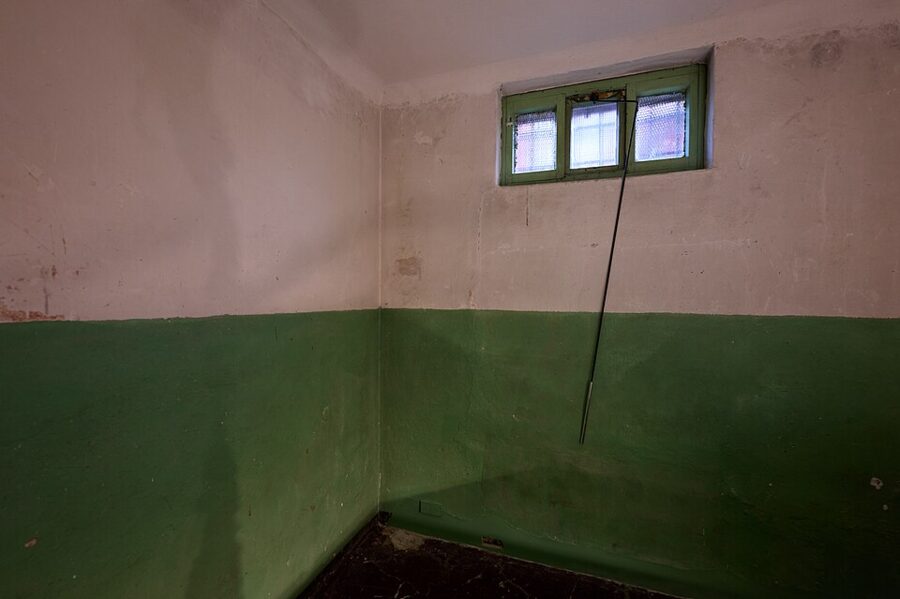
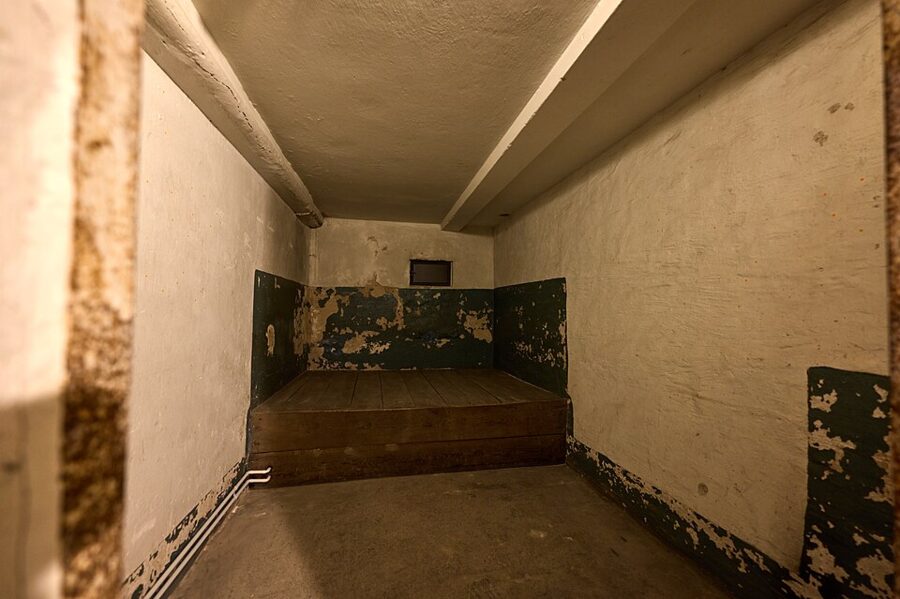
Since 2008 it has been a memorial and museum, and the building itself is the main exhibit. The memorial’s permanent exhibition fills all three floors, with fifty prisoners’ biographies, interviews with survivors and, most affecting of all, the inscriptions that prisoners scratched into the cell walls. Outside, a trail of 13 information posts in German and English leads through the old intelligence town, with a free audio guide by QR code.
Entry is free. From April to October it opens Tuesday to Sunday 14:00–18:00, and from November to March 13:00–17:00, closed on Mondays; in 2026 it closes from December 22 to 31 and opens from 11:00 on January 1–3, 2027, according to the memorial’s hours and directions.
Take tram 92 or 96 from the station to Puschkinallee/Alexandrowka and walk about 10 minutes; there is no parking at the door. Allow at least an hour, and dress warmly in winter: the old prison is barely heated. I would put it ahead of any palace interior for anyone interested in the twentieth century.
Villa Schöningen at the Glienicke Bridge
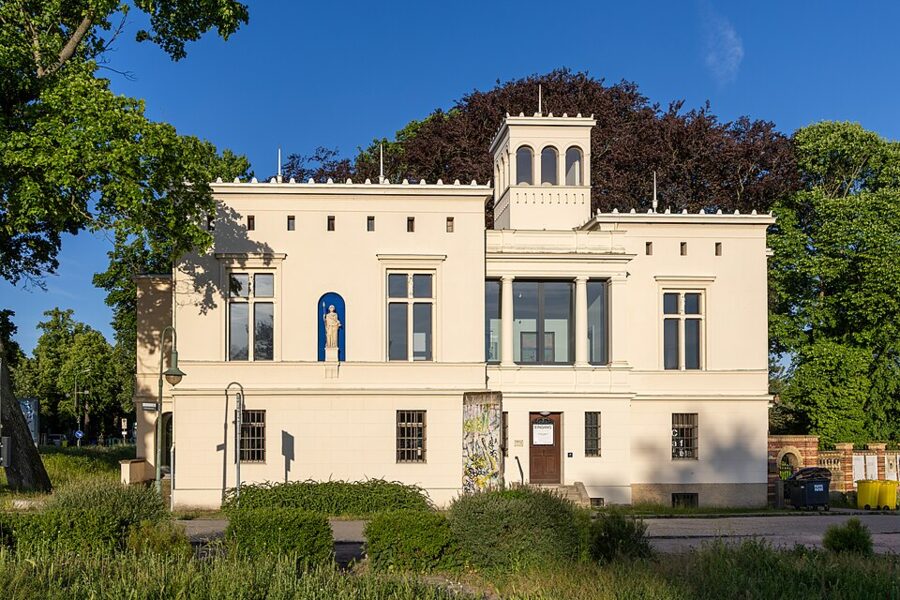
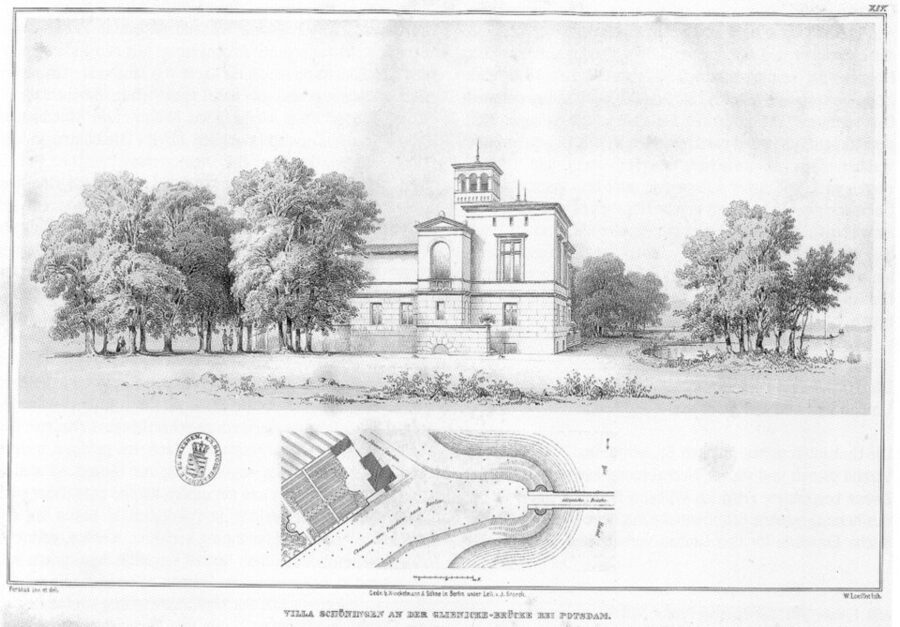
At the Potsdam end of the Glienicke Bridge stands Villa Schöningen, an Italianate house with a tower that Ludwig Persius drew in 1843 at the request of Frederick William IV (Friedrich Wilhelm IV). After 1945 it changed hands several times and fell into decay. The publisher Mathias Döpfner and a partner bought the ruin in 2007 and restored it, and it opened in November 2009 as an exhibition house. Today it shows exhibitions of contemporary art, with short tours on the history of the house, and a slab of the Berlin Wall stands on the grounds.
It opens Friday to Sunday only, 12:00–18:00 in summer and 11:00–17:00 in winter. Admission is €8, or €5 reduced, and under-18s go free; according to the Villa Schöningen’s visit page.
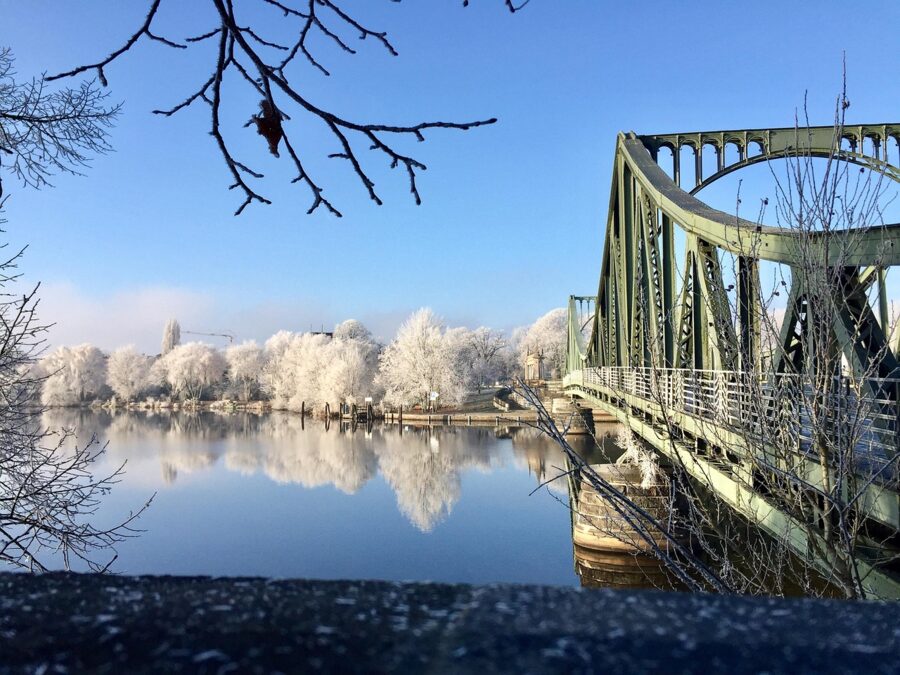
The café, run by Pedales, opens on the same winter days and Tuesday to Sunday in summer. Tram 93 from the station runs to the Glienicker Brücke stop at the door. Come for the house and the setting, and for the bridge itself; the art is the part you can take or leave.
Small house museums: the Dutch Quarter, Alexandrowka and Caputh
Jan Bouman Haus
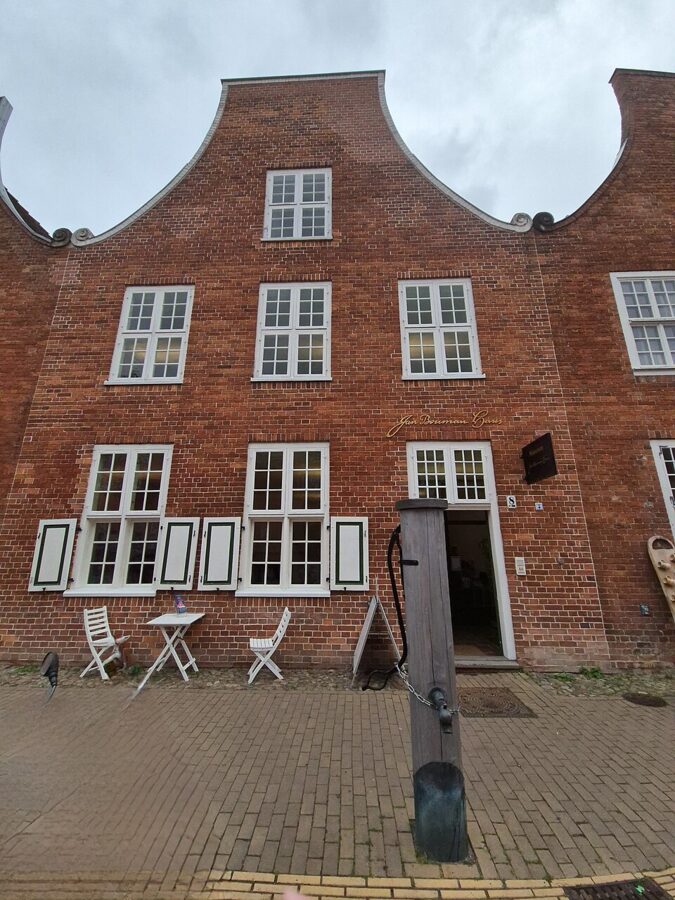
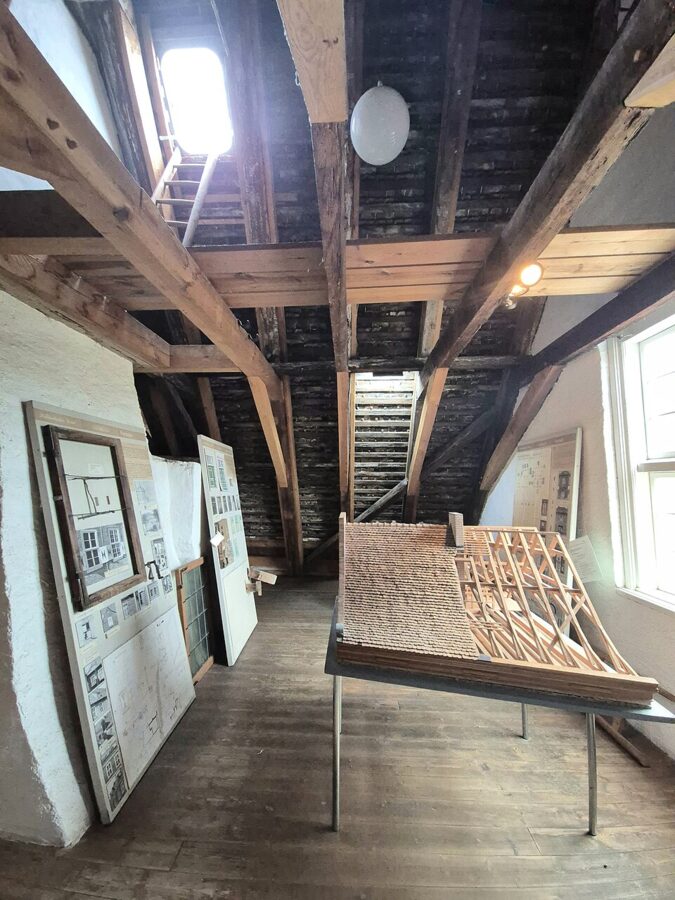
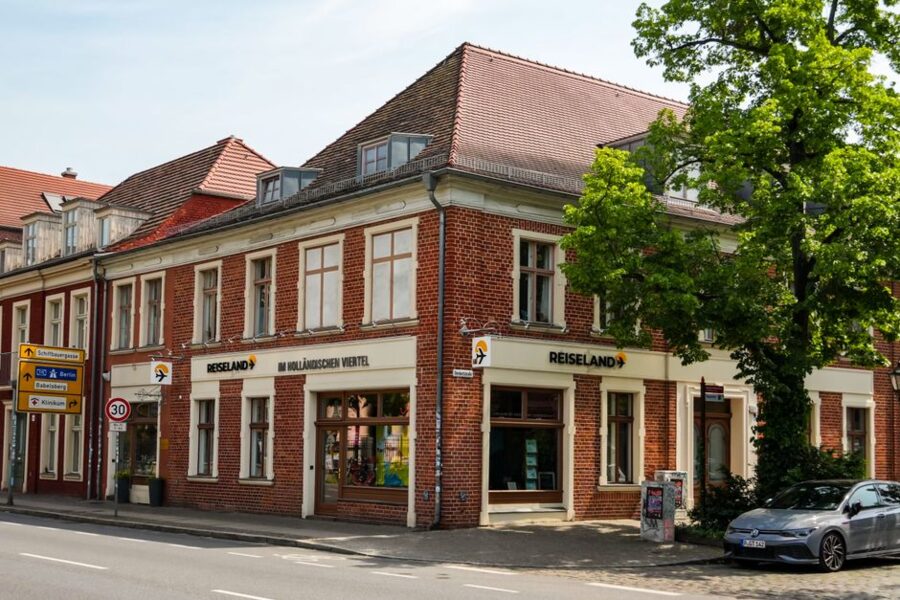
The Dutch Quarter was built in the 1730s for Dutch craftsmen whom Frederick William I hoped to lure to Potsdam, and its builder was an Amsterdam carpenter, Jan Bouman, the same man who later built the Old Town Hall. Mittelstraße 8 is the house kept as a museum, with period rooms, a tiled stove, a model of the whole quarter, a small garden at the back and an attic where you can see how a Dutch carpenter put a roof together.
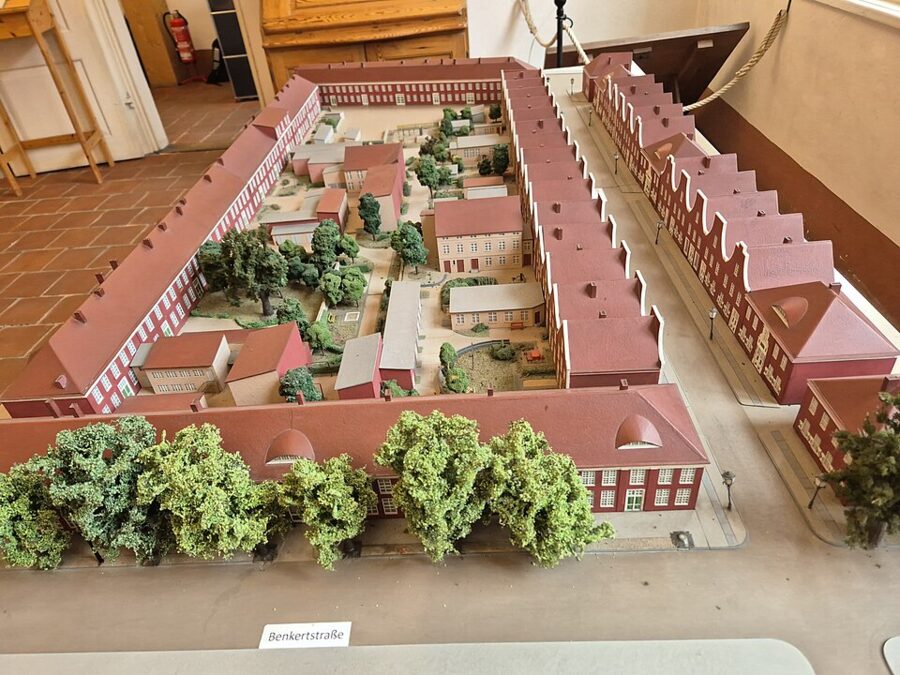
For the 250th anniversary of Bouman’s death, the house is showing a special exhibition, “Jan Bouman 1706–1776: Vom Zimmerermeister zum Baumeister zweier Könige” (from master carpenter to builder for two kings), from November 6, 2026 to April 12, 2027, as the museum’s exhibition page describes.
It opens Monday to Friday 13:00–18:00 and at weekends and on holidays 11:00–18:00, closed on December 24, 25 and 31. Admission is €3 (€2 reduced) and free for children under 16, according to the Jan Bouman Haus visit page. Take a tram or bus to the Nauener Tor stop. Forty-five minutes is enough, and the weekday afternoon hours make it a good Monday stop.
Museum Alexandrowka
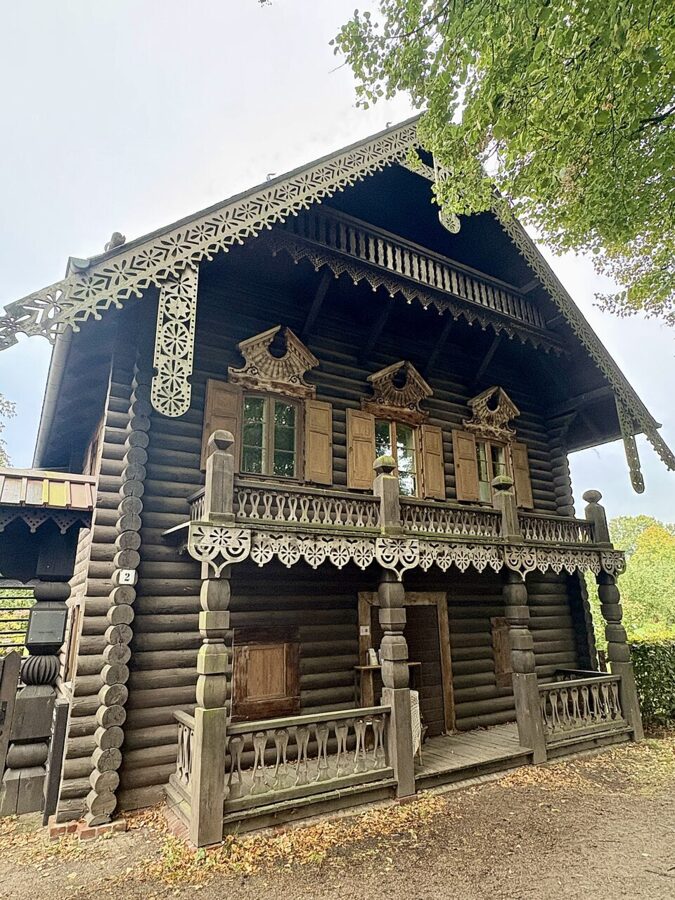
North of the old town, Alexandrowka is the colony Frederick William III (Friedrich Wilhelm III) built in 1826–1827 for the Russian singers of his guard, a cross of avenues in an oval with log-faced houses in gardens. House 2 is the Museum Alexandrowka, opened in 2005 by a private foundation, with rooms on the colony and its singer families. Admission is €3.50, or €3.00 reduced, with children under 14 free in their parents’ company.
The Museum Alexandrowka’s hours page gives the 2026 season as April 1 to October 31, daily 10:00–18:00 except Wednesday; outside that season the hours change and are announced by the museum, so check before a winter visit. In season it pairs naturally with the Belvedere on the Pfingstberg a short walk uphill. Thirty to forty-five minutes covers it, and the garden café behind the house is the reason to linger.
Einstein summer house in Caputh
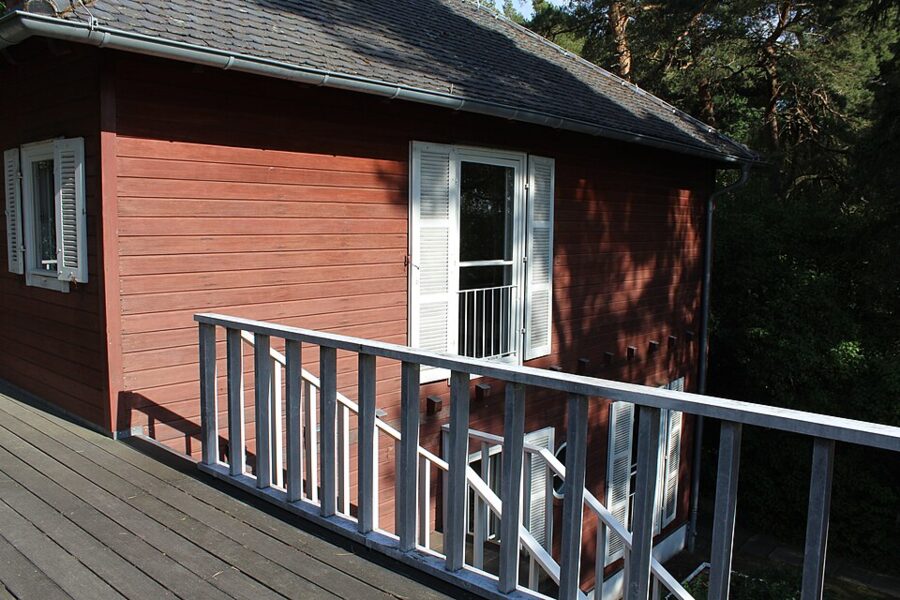
About six kilometers south of Potsdam, in the lakeside village of Caputh, stands the wooden house Albert Einstein and his wife Elsa had built in 1929 and used every summer until they left Germany in 1932. The young architect Konrad Wachsmann got the job by walking into their Berlin flat with plans he had drawn overnight. The house is small, and its story is the point: a few rooms, a terrace above the Templiner See and the last place in Germany where Einstein was at home.
It opens from April to October only, on Saturdays, Sundays and holidays, 10:00–18:00, for €5 (€2.50 reduced), with tickets online, according to the Einstein summer house’s own site. From Potsdam Hauptbahnhof take bus 607 to Caputh Schumannstraße and walk 10–15 minutes, as the summer house’s directions describe. Make a half day of it with Caputh’s palace and the ferry; on its own it is too far for an hour’s visit.
Natural History Museum
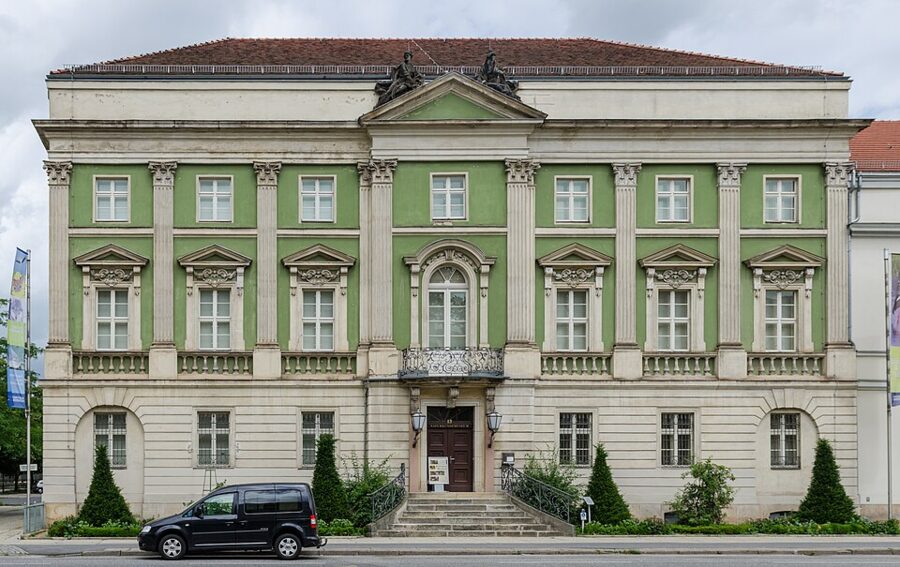
The Natural History Museum (Naturkundemuseum Potsdam) on Breite Straße began as part of the same city museum as the Potsdam Museum in 1909, and went its own way in 2001. It is about the animals of Brandenburg, on four floors: insects, birds, hedgehogs, a stuffed elk, a brown bear called Tapsi in the foyer, and a cold-water aquarium with about 40 native fish species, from roach to wels catfish. It is cheap, compact and good with children, and in winter it is the warmest hour in town for €4.
It opens Tuesday to Sunday 9:00–17:00, and on the first Monday of every month, the Museumsmontag, at the reduced price. Tickets are €4 for adults, €3 reduced and €2 for ages 6 to 18, and the Natural History Museum’s visitor page lists the holiday closures: December 24, 25, 28 and 31, and January 1, 2027, with January 4 open as the next museum Monday. Bus 695 or 605 stops outside at Naturkundemuseum. One small surprise: the shop sells Havel fishing permits.
Science and nature: the Telegrafenberg and the Biosphäre
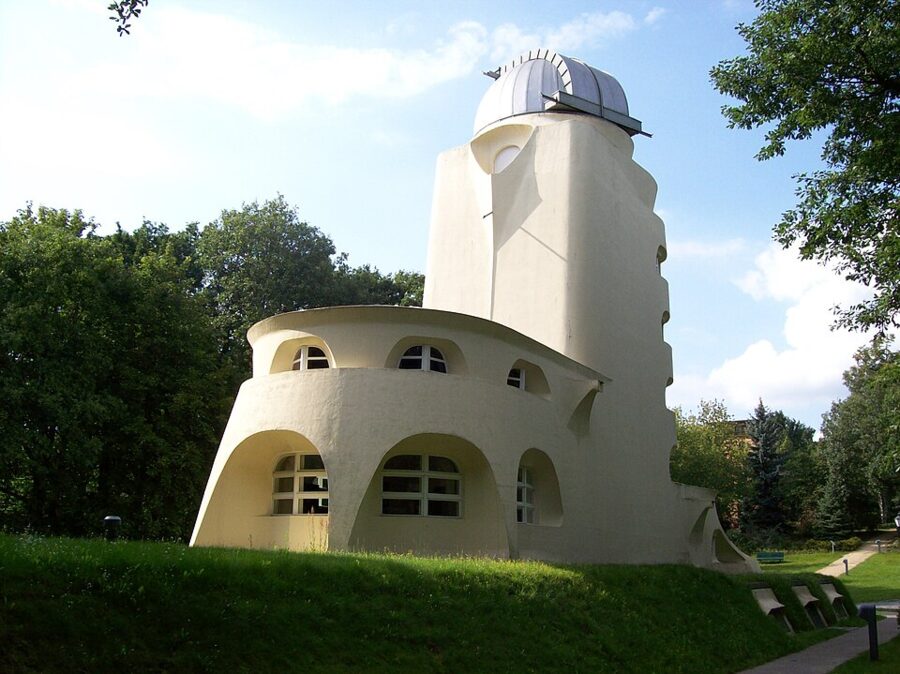
The wooded hill south of the station, the Telegrafenberg, holds the Albert Einstein science park, and two of its buildings can be visited. The Einstein Tower, Erich Mendelsohn’s curved solar observatory, is not a museum and opens only on guided tours. Urania Potsdam, a local science society, runs them with the astrophysics institute from September to May on the first Saturday of each month, 10:00–11:30, for €12 (€10 reduced), with tickets sold in advance only; the Urania listing for the December 5 tour has the details, in German.
The Great Refractor’s observing evenings
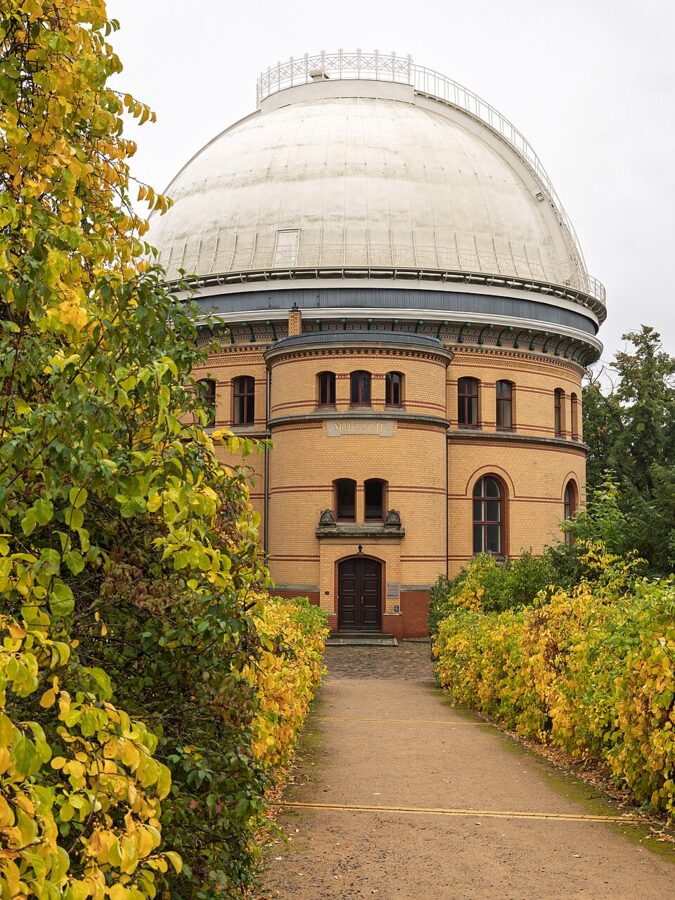
The other is the Great Refractor (Großer Refraktor), a double lens telescope of 1899 under a dome at the far end of the park, which the Leibniz Institute for Astrophysics describes as the fourth-largest lens telescope in the world and still in working order. In 1904 Johannes Hartmann used it to discover the gas between the stars. Observing stopped in 1968; a friends’ society founded in 1997 got it working again, and in winter it opens for free observing evenings.
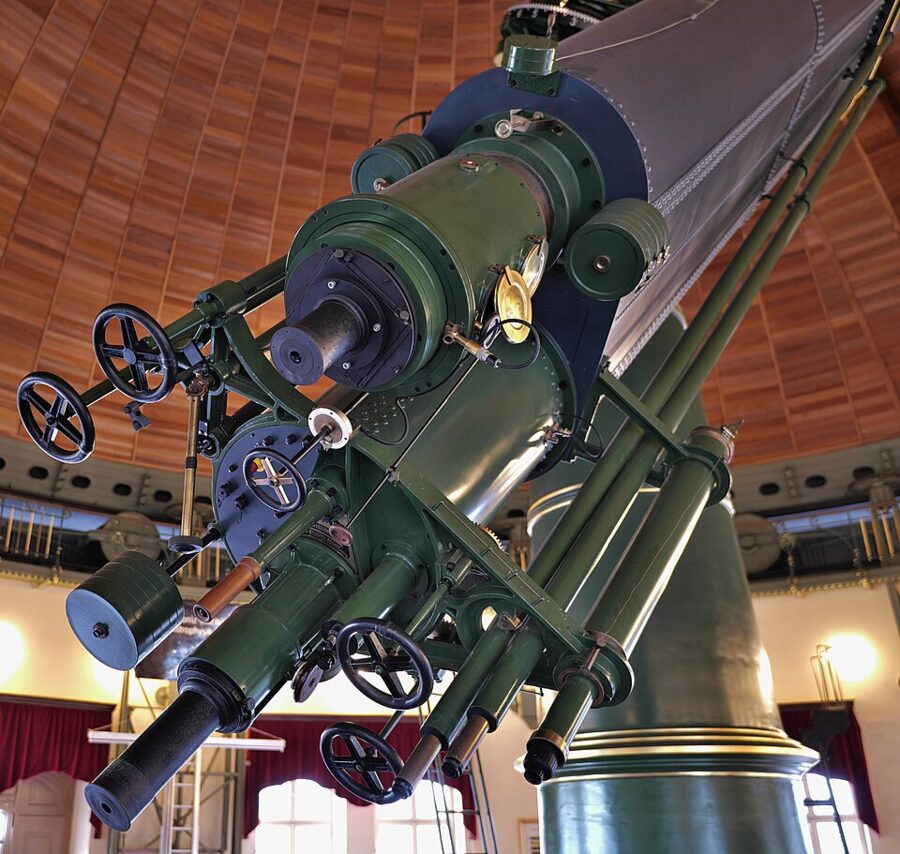
The evenings are free but need registration, and the institute’s observing-evening page opens the form two weeks ahead at 12:00, and warns that places go within minutes. The dates for the season are December 8, 2026 at 19:00, January 18, 2027 at 19:00 (a Monday), February 12 at 19:00 and March 9 at 19:30. You look through the telescope only if the sky is clear. From the park gate it is a 10-minute walk of about 500 meters to the dome, and a donation to the society that keeps it running is welcome.
Biosphäre Potsdam
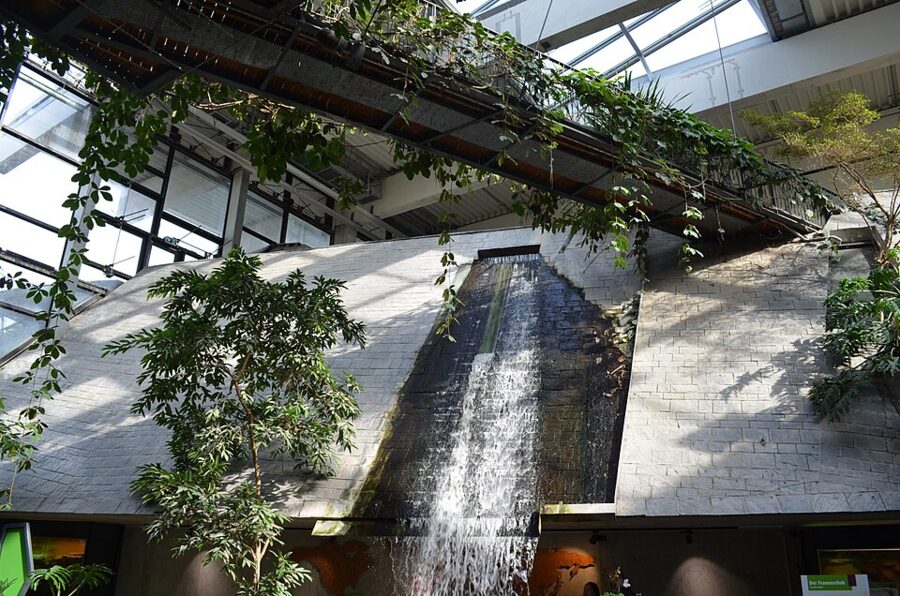
In the Volkspark in the north of the city, the Biosphäre Potsdam is a tropical hall under glass with a rainforest, a waterfall and a butterfly house. It is not a museum, but on a cold or wet day with children it does the same job. It opens Monday to Friday 9:00–17:00 and at weekends and on holidays 10:00–17:30, with last entry an hour before closing; the butterfly house takes its last visitors at 16:40 on weekdays and 17:10 at weekends, as the Biosphäre’s opening hours show.
Tickets are €20 for adults at the desk (€19.01 online, plus a 6% booking fee), €13 for children aged 6 to 17 and €42 for a family of two adults and up to three children, according to the Biosphäre’s ticket page. That is the most expensive ticket on this list, so go for the morning and make it the main event rather than a filler.
For younger children who want to press buttons, the NANO science center on Am Kanal, which used to be called Extavium, is a hands-on exhibition about science, environment and climate. Families can visit Tuesday to Thursday 9:00–13:00 and Friday to Sunday 9:00–17:00, and during the Christmas school holidays it opens daily 9:00–17:00 except December 24–26 and December 31–January 1, according to NANO’s opening hours. It closes on Mondays.
Plans: a rainy day, a Monday, a day with children
A rainy day in the old town
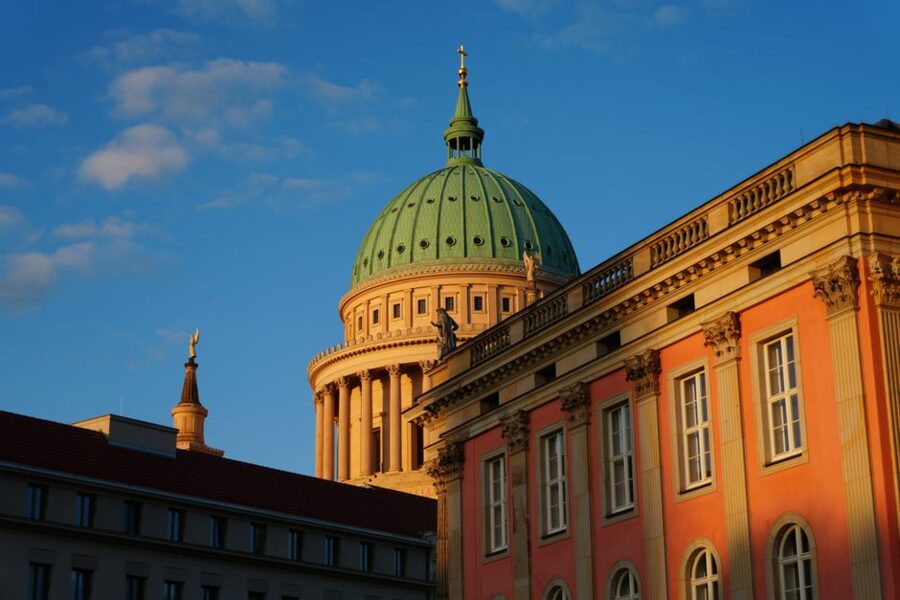
From Potsdam Hauptbahnhof, cross the Lange Brücke to the Alter Markt, about eight minutes on foot. Start at the Potsdam Museum at 10:00, give it an hour and a half, and leave the special shows for another time unless the square’s postwar history grips you. Book the Barberini for an early afternoon slot and have lunch in between, close to the square. After the Barberini, walk round the Landtag to the Filmmuseum on Breite Straße for the last hours before 18:00, and if the program has a silent film with the Welte organ that evening, stay for it.
On a Thursday, swap the Filmmuseum for the Brandenburg Museum, which stays open until 20:00. Either way the walking between doors is short enough to do under an umbrella, and every stop on this route stays open in winter.
A Monday
Begin at DAS MINSK at 10:00, five minutes from the station, then cross the river to the Barberini; with the €20 combined ticket you can also split them across Monday and Wednesday. From 11:00 the Garrison Church tower is open for its exhibition and the view.
After lunch, walk north up Friedrich-Ebert-Straße to the Dutch Quarter, where the Jan Bouman Haus opens at 13:00. In November and December, a Monday afternoon is the time for the New Palace in Park Sanssouci, which is open that day; on the first Monday of the month, the Natural History Museum opens too. From April to October, add the Museum Alexandrowka, which closes on Wednesday rather than Monday.
A day with children
Under-18s are free at the Barberini, DAS MINSK, the Filmmuseum and the Potsdam Museum, which helps, but the museums children actually like are the cheap ones. Start at the Natural History Museum at 9:00 for the aquarium and the elk, walk a few minutes to the Filmmuseum, which has a children’s cinema at 15:00 on Saturdays and Sundays, and spend the afternoon at the Biosphäre or, on Friday to Sunday, at the NANO. Between April and October the day belongs to the Filmpark instead, and its stunt show is the thing they will talk about on the train home.
Leave the Leistikowstraße memorial for teenagers: the memorial itself recommends 12 as the minimum age for the cellar cells. With the MUSEUM Kombikarte at €14, one adult and two children can do all four museums of the center in a year for less than one adult Barberini ticket.
The museums near each other on foot
Potsdam’s center is small enough that most of these museums make one walk. From the station, DAS MINSK is five minutes up the Brauhausberg; from there, the Lange Brücke takes you over the Havel to the Alter Markt, with the Potsdam Museum and the Barberini facing each other. The Neuer Markt and the Brandenburg Museum are a few minutes away, and Breite Straße runs west past the Filmmuseum, the Garrison Church tower and the Natural History Museum. North from the Alter Markt, Friedrich-Ebert-Straße runs through the old town to the Dutch Quarter and the Jan Bouman Haus at Nauener Tor.
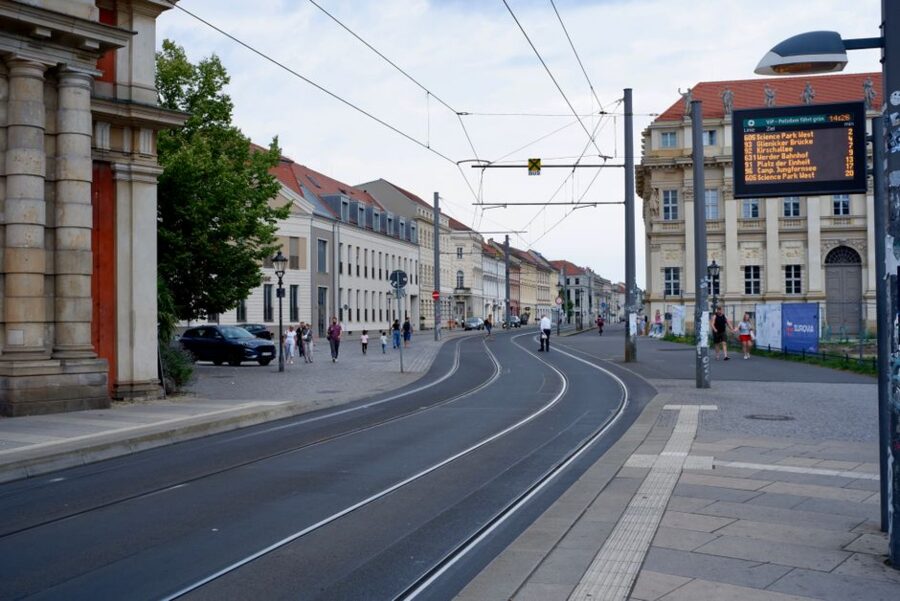
Beyond that you need a tram: 92 or 96 to Puschkinallee/Alexandrowka for the colony museum and the Leistikowstraße memorial, 93 to the Glienicke Bridge for Villa Schöningen. The Telegrafenberg is a walk uphill south of the station, and Caputh is a bus ride on the 607. A single ticket Berlin ABC from Berlin costs €5.00 in 2026 and €5.20 from January 1, 2027, the price the VBB single ticket page sets, and a 24-hour ticket Berlin ABC (€12.90 in 2026 and €13.20 from 2027) covers the trams and buses in Potsdam too. For the rest of the town, see the full list of things to do in Potsdam and the plan for a day trip from Berlin.
Come back to the obelisk on the Alter Markt at 18:00, when the Potsdam Museum locks its doors. The lights are still on in the Barberini across the square, and the €10 tickets went on sale half an hour ago; there is time for the Monets before the 19:00 close and the eight-minute walk back over the Lange Brücke to the train.