

The most famous building on this lot is the one your ticket will not open. In 1926 UFA put up a hall 14 meters high so that Fritz Lang could build a whole city for Metropolis inside it, and it is still a working sound stage, rented out to productions as recent as John Wick: Chapter 4. It stands on the far side of a fence from Filmpark Babelsberg, where a stunt crew sets cars alight inside an artificial volcano at 14:00 on most days of the season.
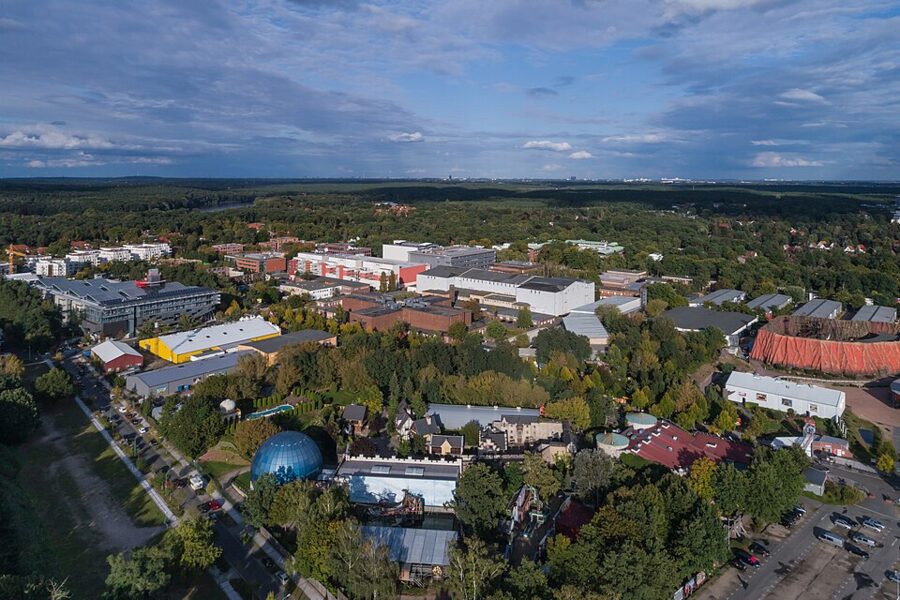
That fence is the thing to understand before you go. Studio Babelsberg is the oldest large film studio in the world still in business, and since 1912 it has made films under five political systems. The Filmpark is a separate company that grew up on part of the old studio ground after 1990, a seasonal theme park built from leftover sets, props and the people who know how to use them. You get the stories, the shows and a sight of the halls, but not the inside of them.
Contents8 parts
- Bioscop, UFA, DEFA: the studio before the park
- What you can and cannot see of the working studio
- The park: sets, props and a lot of children
- The shows, and how to build the day around them
- Tickets, season and opening days
- Eating, prams, rain and getting around the park
- Getting there
- Who it suits, and who should skip it
Bioscop, UFA, DEFA: the studio before the park
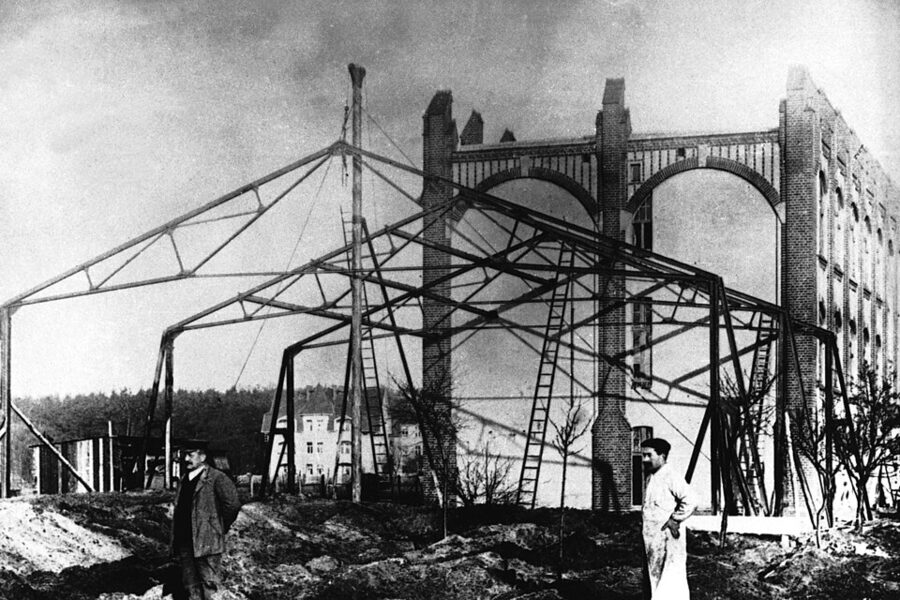
Film came to this patch of sandy pine country because Berlin’s fire brigade wanted it out of the city. In 1911 the Deutsche Bioscop company was shooting in a loft studio in central Berlin, with hot lamps, painted cardboard sets and highly flammable nitrate film, and the fire department asked it to leave. Its cameraman and technical director, Guido Seeber, went looking for land and found an empty factory and a stretch of waste ground beside the railway at Neubabelsberg. The company took the site in November 1911.
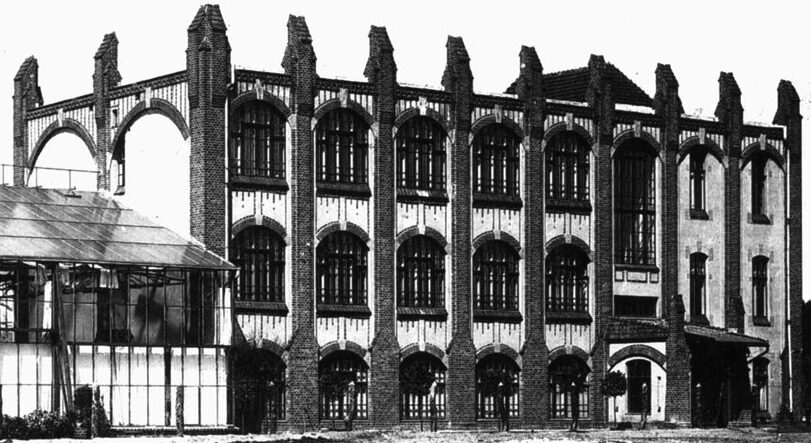
Bioscop and the glass house, 1912
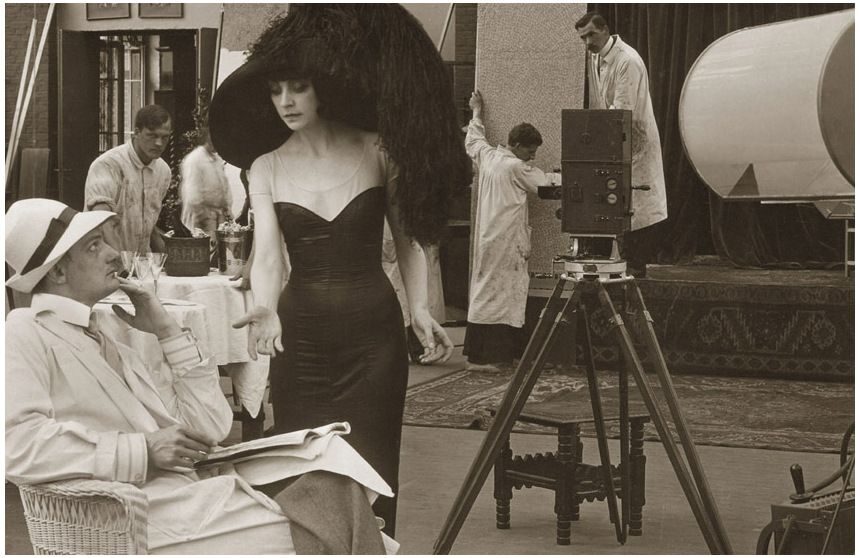
Seeber built a stage of glass, about 15 by 20 meters, so that daylight could do the work of lamps. On February 12, 1912, the Danish director Urban Gad started shooting Der Totentanz (The Dance of Death) there with Asta Nielsen, the biggest screen actress in Europe at the time, and that date is the one the studio counts as its birthday. The Student of Prague (1913) and Der Golem (1915) followed, both full of camera tricks.
UFA, Metropolis and the coming of sound
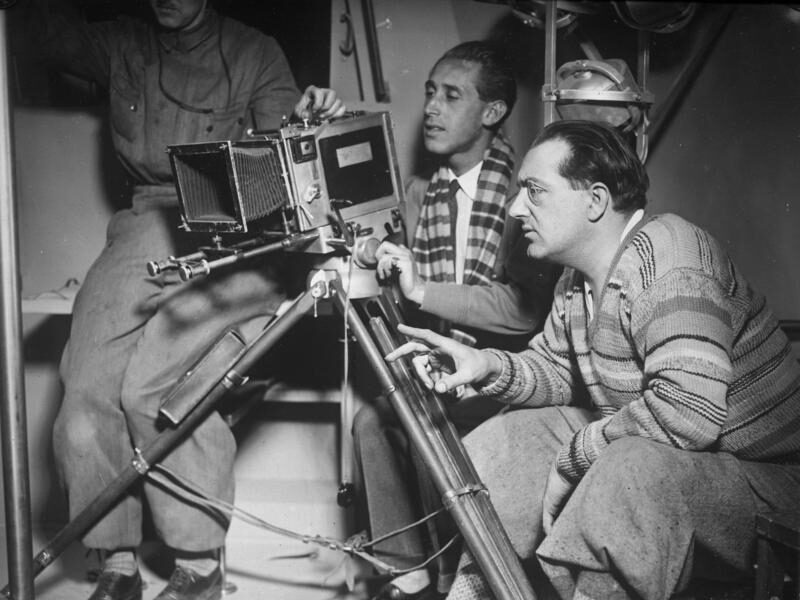
After the First World War, Bioscop merged with the German arm of the French company Éclair to form Decla-Bioscop, and in 1921 that firm was folded into UFA (Universum Film AG), which was on its way to dominating German film. UFA’s producer Erich Pommer turned Neubabelsberg into the most inventive studio in Europe. Friedrich Wilhelm Murnau shot The Last Laugh here in 1924 with a camera that moved freely through the set, and a young Alfred Hitchcock, sent from London to work as art director on The Blackguard, spent his spare hours watching Murnau work.
One name gets attached to Babelsberg more often than it should. The Cabinet of Dr. Caligari was a Decla production of 1920, and the Filmpark’s history hall is named after it, but its crooked painted sets were shot in Decla’s smaller studio in Berlin-Weißensee, before the merger brought the company here. It is part of the family history rather than the address.
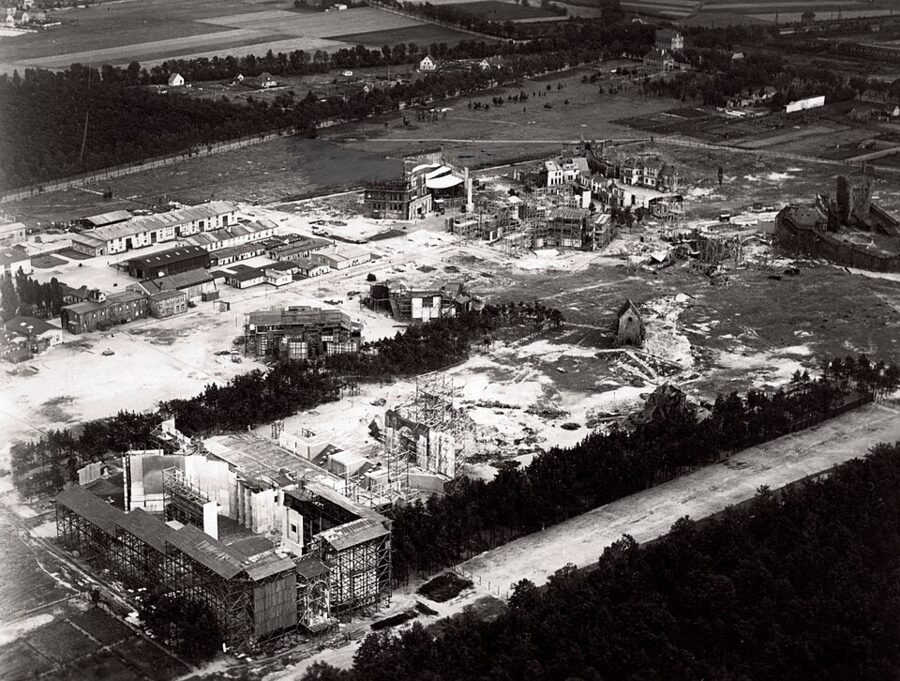
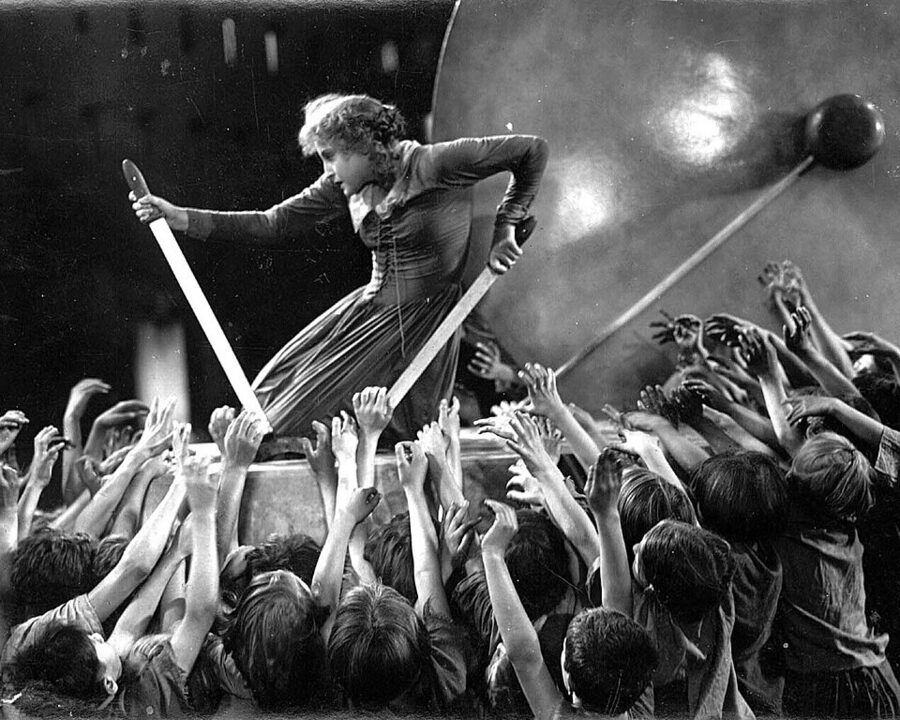
Then came Metropolis. Lang shot it over 17 months in 1925 and 1926 at a cost of more than five million Reichsmarks, and UFA built Europe’s biggest studio hall to hold its sets. In 2001 the restored film became the first film entered on UNESCO’s Memory of the World register. The hall now carries Marlene Dietrich’s name, and the studio dates the Marlene-Dietrich-Halle to 1926 and the Lang shoot.
The sources do not quite agree. The Filmmuseum Potsdam‘s chronicle describes the great hall of 1926 being divided when sound arrived, with a “middle hall” built beside the new sound stage and renamed for Dietrich only in 1995. Either way, the building has served Lang, Dietrich and a long run of Hollywood productions.
Sound arrived late and then all at once. UFA’s sound engineers had been moved off the lot in the mid-1920s because the noisy Metropolis shoot disturbed their experiments, and Hollywood got there first. In 1929 UFA opened the Tonkreuz, a windowless brick building with four stages arranged in a cross, and the first full-length German sound film, Melodie des Herzens, premiered that December. The Tonkreuz is still a working stage complex, where The Grand Budapest Hotel and Dark were shot.
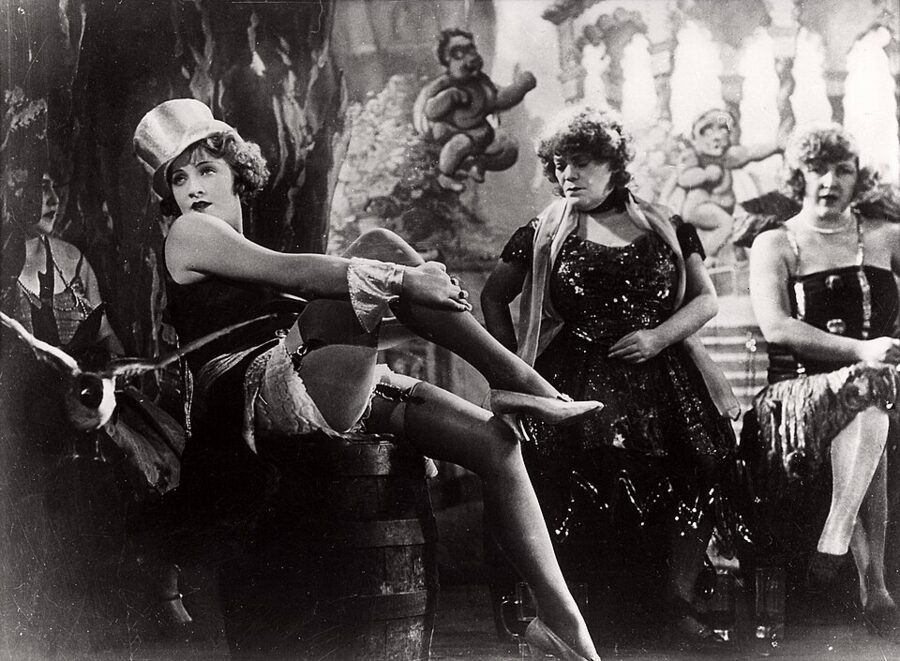
In 1929 Lang also invented the countdown, for the rocket launch in Woman in the Moon, and Josef von Sternberg directed The Blue Angel, which made Dietrich a star. In 1930 UFA built a scaled-down copy of the facade of Sanssouci on its backlot for Das Flötenkonzert von Sans-souci, one of a run of patriotic films about Frederick the Great. The real palace was a few kilometers away; the copy was cheaper to light.
The Nazi years
By 1933 UFA belonged to Alfred Hugenberg’s right-wing press empire and needed little pushing. Within months of Hitler taking power, Jewish and politically suspect staff were dismissed, and Lang, Pommer and Peter Lorre were among the first to emigrate; Billy Wilder, who had written scripts here, was gone too. The Propaganda Ministry under Joseph Goebbels controlled production, and the studio made both the open propaganda, such as Veit Harlan’s antisemitic Jud Süß (1940), and the polished entertainment meant to keep audiences cheerful, from the color fantasy Münchhausen (1943) to Die Feuerzangenbowle (1944).
The town around the studio was renamed in the same spirit. In 1938 the old weavers’ village of Nowawes, whose name was Slavic, was merged with the villa colony of Neubabelsberg into a new town called Babelsberg, which joined Potsdam a year later. Late in the war, prisoners from a nearby forced labor camp worked on the productions. Filming carried on into the spring of 1945, partly to keep staff out of the army, until the Soviet army reached Babelsberg at the end of April.
DEFA in the GDR
In July 1945 the Allies used the empty studio for an intelligence unit supporting the Potsdam Conference, held a few kilometers away at Cecilienhof. The Soviet administration then moved fast to restart German film under its own supervision: Wolfgang Staudte shot The Murderers Are Among Us, with Hildegard Knef, in 1946, the first German feature after the war, and DEFA (Deutsche Film AG) was founded on May 17 of that year. Sources give different start dates for the shoot, March or May 1946, because it began before DEFA formally existed.
For the next 44 years this was East Germany’s only feature studio. DEFA made fairy tale films that are still shown on German television every Christmas, among them Das kalte Herz (1950), The Story of Little Muck (1953) and The Singing Ringing Tree (1957), and a run of “Indian westerns” starring the Yugoslav actor Gojko Mitić that filled cinemas for more than a decade. It also lived under censorship. After a party plenum in December 1965, more than half of that year’s films went into the vault, among them Spur der Steine, which ran in a few cinemas after its 1966 premiere in Potsdam before it was withdrawn, and was not shown again until the autumn of 1989.
The good films still got made. The Legend of Paul and Paula (1973) became a cult romance, Jacob the Liar was the only GDR film ever nominated for an Academy Award, and Solo Sunny won Renate Krößner a Silver Bear in 1980. How many films DEFA made in all depends on who is counting: the Filmmuseum gives about 700 features and 540 television films, while the studio’s own history says more than 1,200. Coming Out, the only GDR feature centered on a gay love story, premiered on the night the Berlin Wall opened.
After 1990: Hollywood on the old UFA ground
Reunification nearly finished the place. The Treuhand, the agency selling off East German state companies, took over DEFA in 1990, and hundreds of the 2,400 staff were laid off. In 1992 it sold the studio to the French group Compagnie Générale des Eaux, later Vivendi, which put the director Volker Schlöndorff in charge and invested heavily. Two Munich investors bought it in 2004, and since 2022 it has belonged mainly to a TPG real estate fund, as part of the Cinespace group.
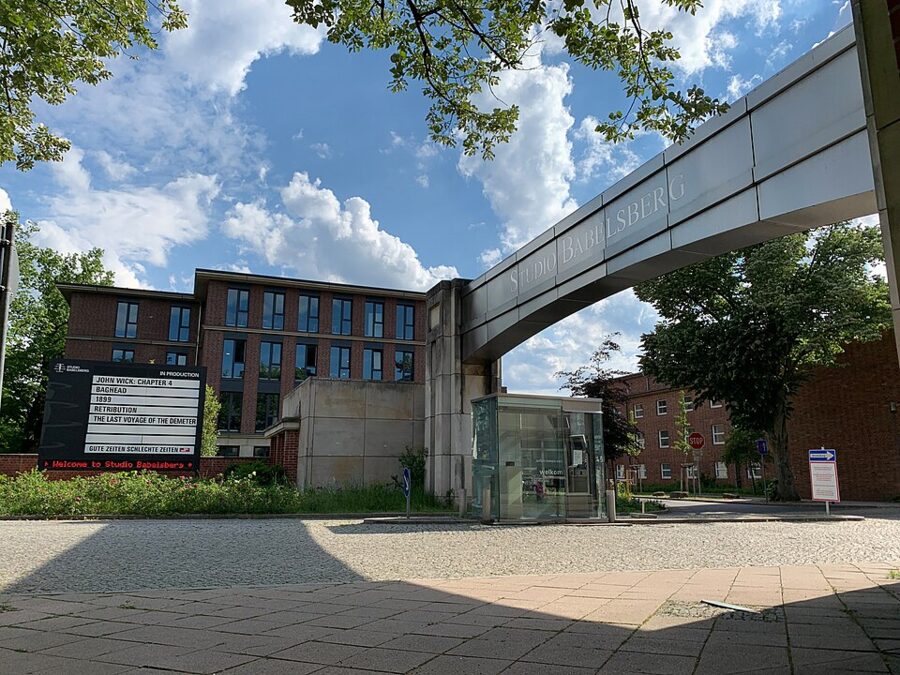
The international work came in a rush: Roman Polanski shot The Pianist here, then came V for Vendetta, The Bourne Ultimatum, The Reader and Quentin Tarantino’s Inglourious Basterds, followed by The Grand Budapest Hotel, the Hunger Games films and Steven Spielberg’s Bridge of Spies, which also filmed on the real Glienicke Bridge. Since Homeland moved its fifth season here in 2015, television has been half the business: Babylon Berlin, Dark, 1899.
What you can and cannot see of the working studio
The plain answer, from the Filmpark itself: the stages and workshops of Studio Babelsberg cannot be visited, and you cannot watch a shoot. There is no studio tour of the kind Universal runs in Los Angeles. The Filmpark began in 1991 as a tour of the old DEFA lot, but the two businesses have long been separate.
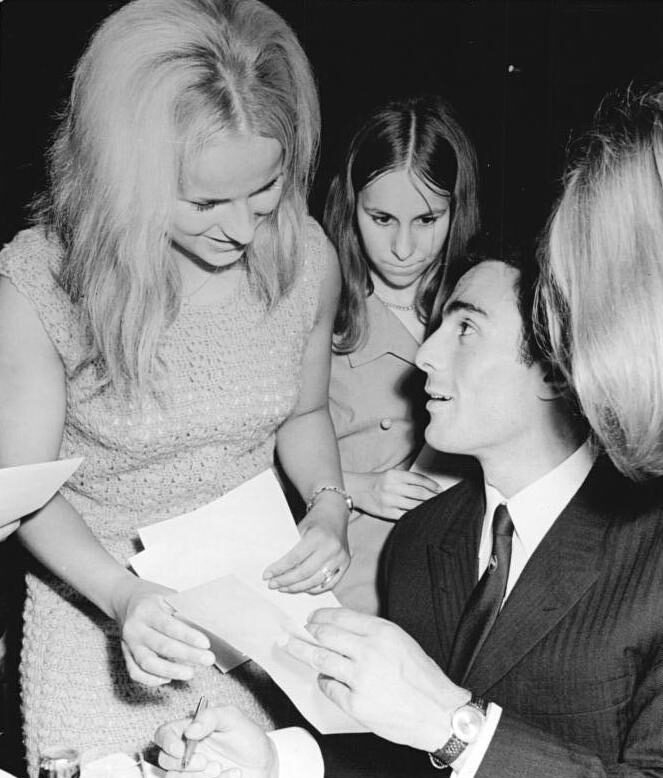
The long-running soap Gute Zeiten, schlechte Zeiten used to be the exception. Its outdoor street was on Filmpark ground for more than 15 years, and fans came for autograph sessions; the set has since moved to a part of the lot closed to the public, and the autograph sessions have stopped.
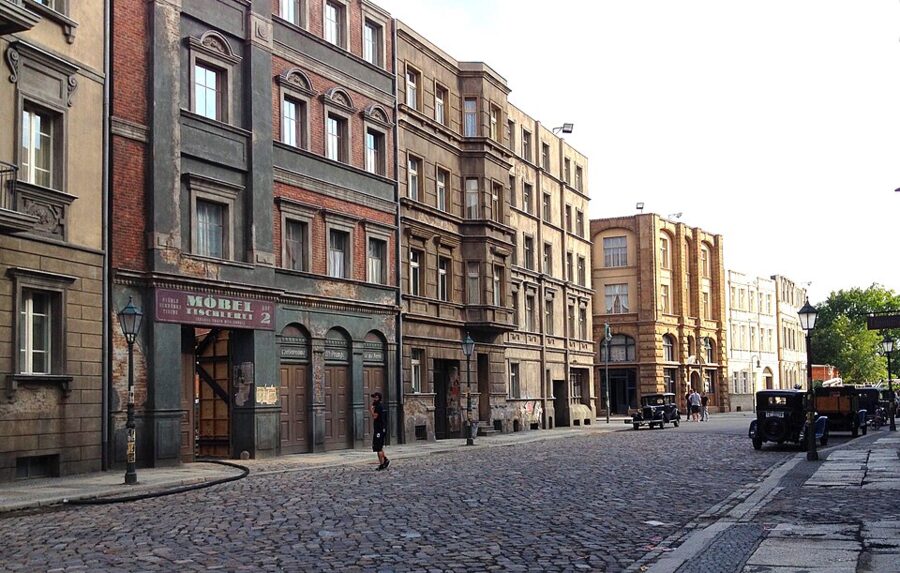
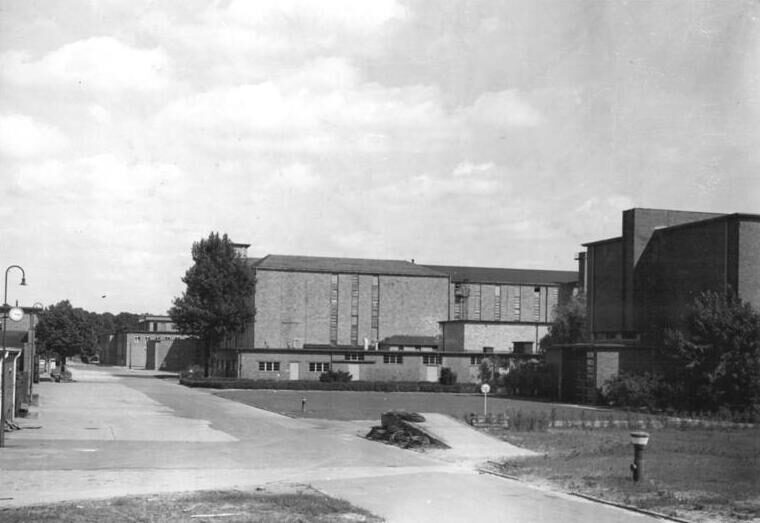
What you can see is the outside. From the Filmpark’s back end, around the Caligari Halle, the big studio halls rise beyond the boundary, and the Marlene-Dietrich-Halle and the Tonkreuz are the two to pick out: the first a huge high-roofed block, the second dark red brick. The Metropolitan Backlot, the 15,000-square-meter set of city streets built for Babylon Berlin and opened in 2016, lies inside the studio grounds and is hidden from the park.
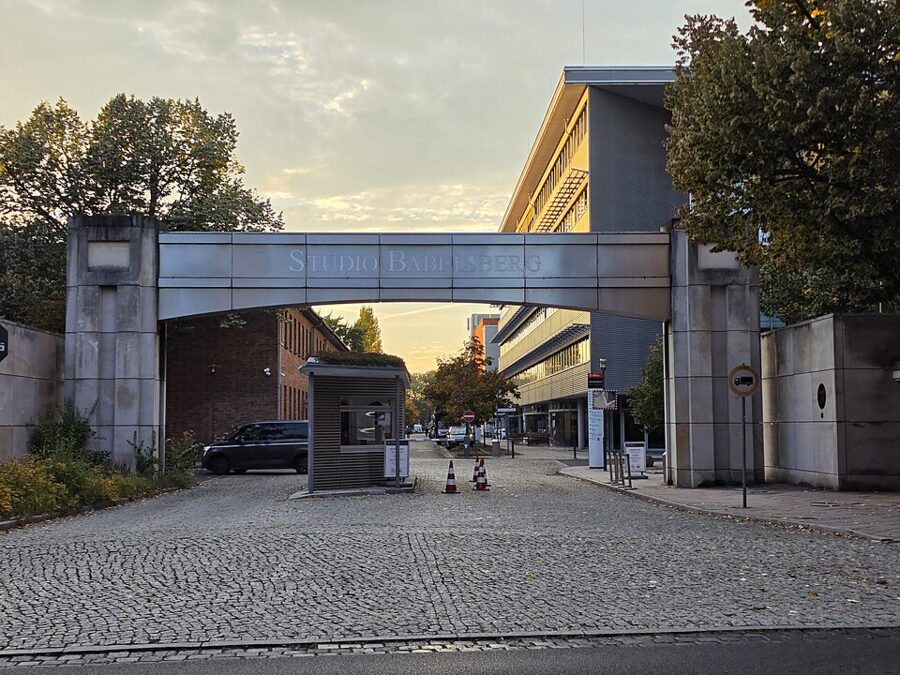
To get closer to the studio’s history, go to the Filmmuseum Potsdam, which keeps its archive. The museum’s study collection, the Schaudepot, here in the Medienstadt, opens for booked one-hour visits on Thursday afternoons and Sundays.
The park: sets, props and a lot of children
The Filmpark opened on August 15, 1991, as a “film and TV experience” on the DEFA lot, put together by a Treuhand working group that needed something to do with a famous name and a vast prop store. The stunt show and a studio tour followed in 1993, the mascot Flimmy in 1996, the Panama children’s area in 1998 and the volcano arena in 1999; around the turn of the millennium the park had its best year, with 570,000 visitors.
Its purpose has not changed much: showing families how film is made, with enough playgrounds and shows to fill a day. The park advertises more than 20 attractions, and I would split them into three kinds: real film sets you walk through, shows and rides with a fixed start time, and play areas built around German children’s television. The first are what make this place different; the last are what make it work for families.
Straße der Giganten and the history hall
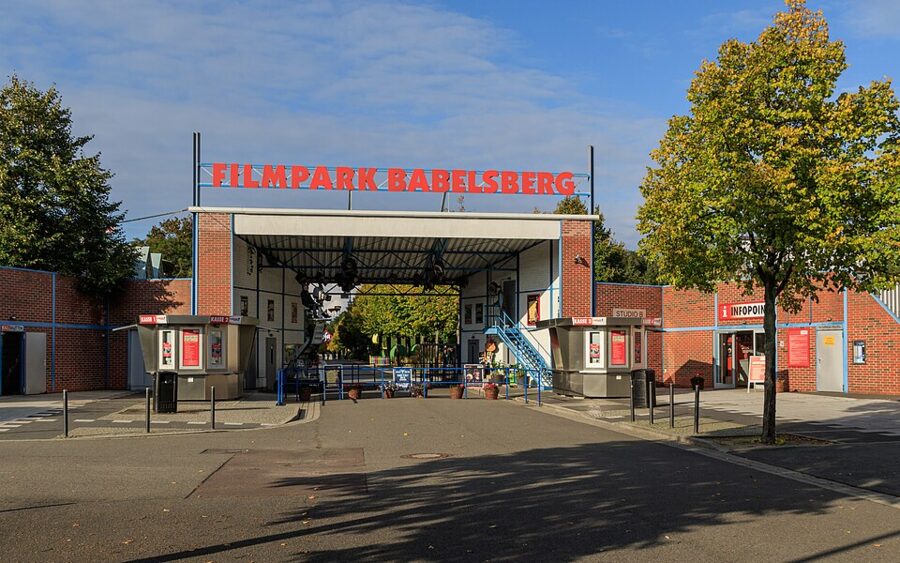
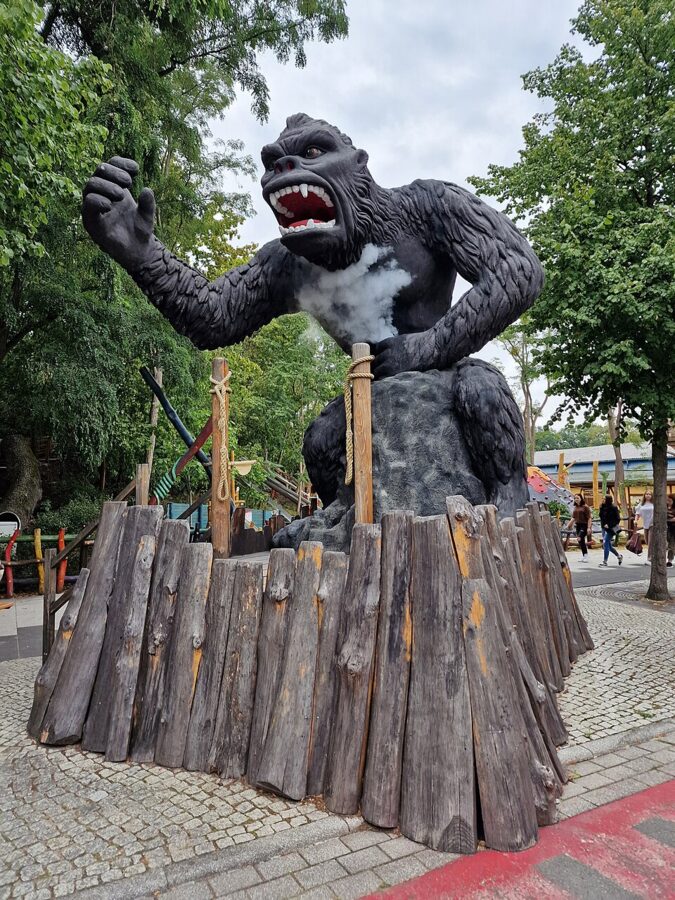
Inside the gate, the Straße der Giganten (Street of Giants) is a parade of outsized film figures: King Kong’s feet, the dragon Frau Mahlzahn from Jim Button and Luke the Engine Driver, the Rockbiter’s son from The NeverEnding Story III, which was shot at Babelsberg in 1994, and Baron Münchhausen riding his cannonball, a nod to the 1943 UFA film.
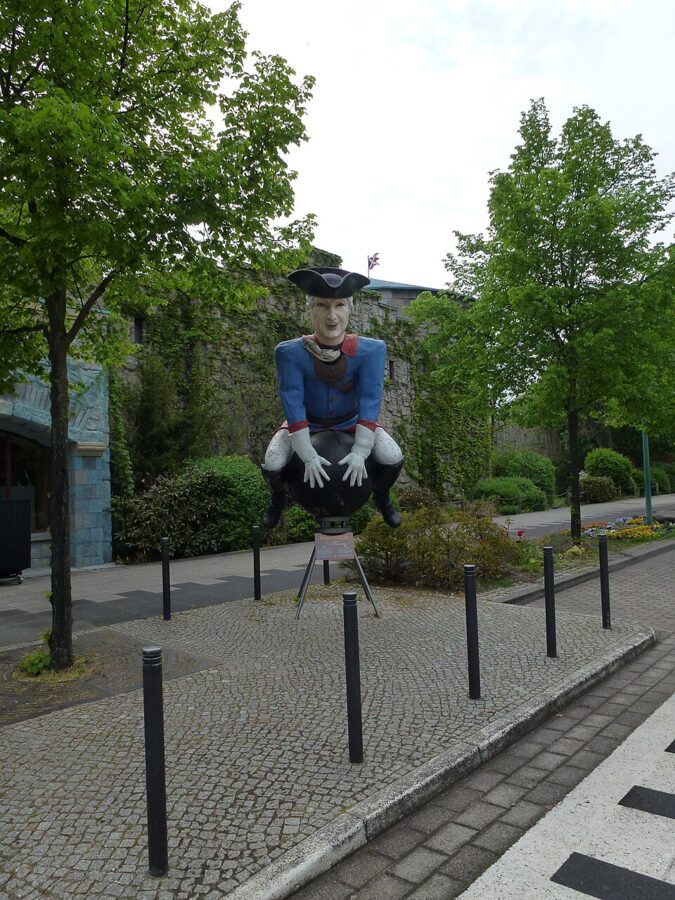
At the end of the street is the Caligari Halle, and this is the stop I would put first on a film fan’s list. The guided indoor tour of the Caligari Halle takes about 45 minutes in groups of around 30 and walks through the studio’s history from UFA to DEFA to the Hollywood years, with rebuilt sets, original props and a costume gallery. The star objects are Falkor, the luck dragon from The NeverEnding Story III, and props from the Lummerland of the Jim Button films.
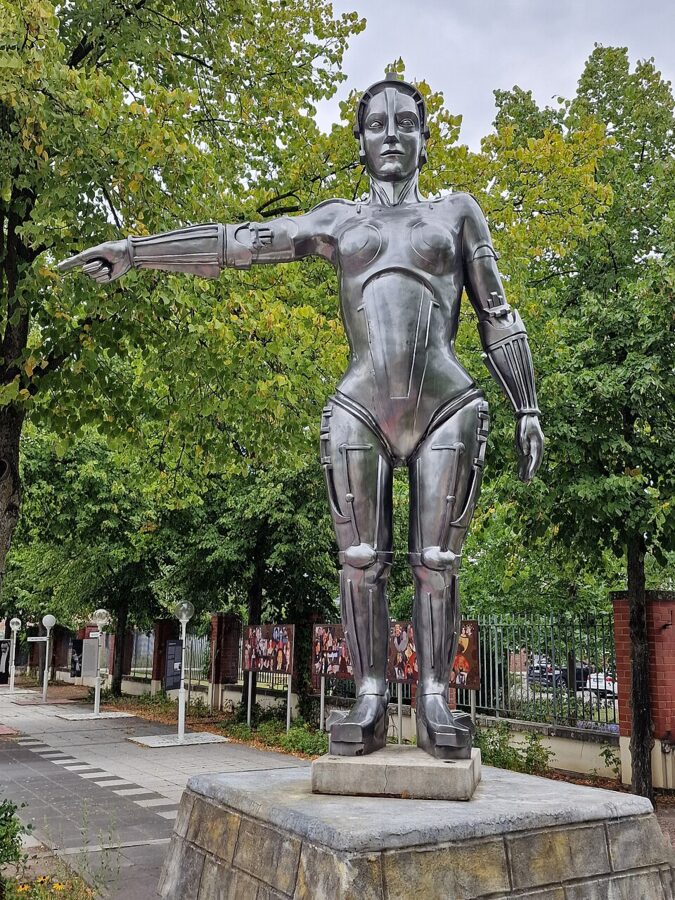
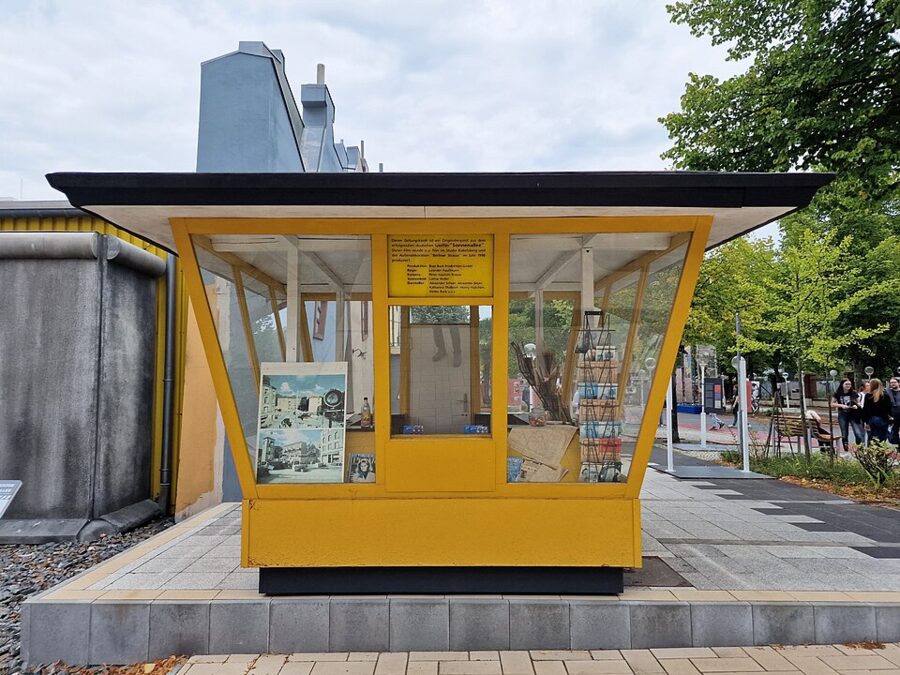
Outside the hall, set pieces from later films stand in the open: a newspaper kiosk from Sonnenallee (1999), and props from The Baader Meinhof Complex and The Monuments Men. Look up from here, too, because this corner is where the studio halls beyond the fence are easiest to see.
The medieval town, the Wild West and Little Muck’s garden
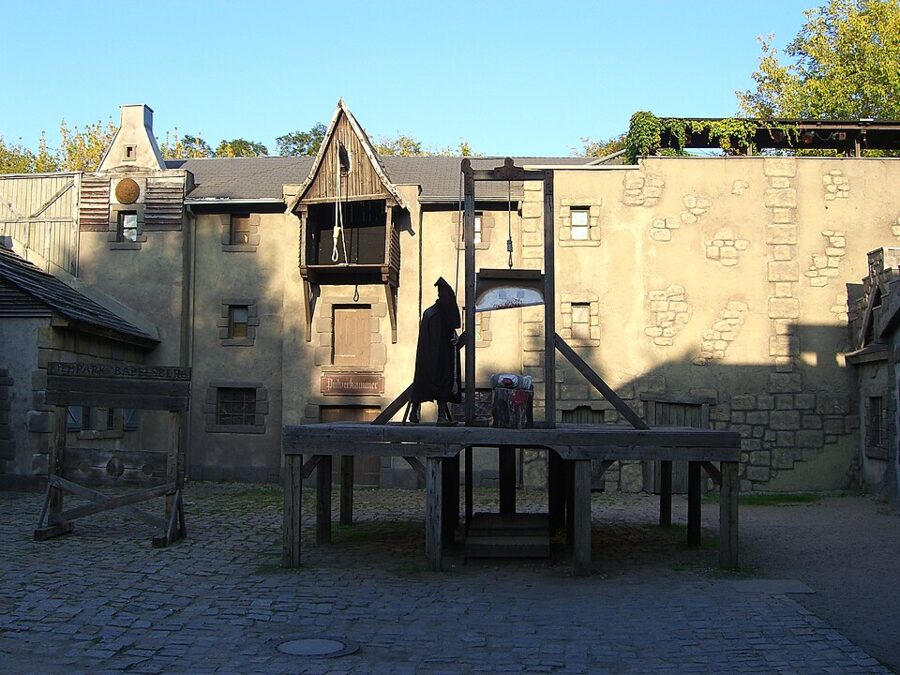
The Mittelalterstadt (medieval town) is the biggest real set in the park, and the park calls it the oldest outdoor film set still standing in Europe. It was built for the GDR television film Aufstand der Fischer von St. Barbara, shot in 1988, and you cross a wooden bridge through a town wall into a market square of crooked half-timbered houses. It is dressed for ghosts these days, and children who discover the gold-panning stream by the big rock will be here a while.
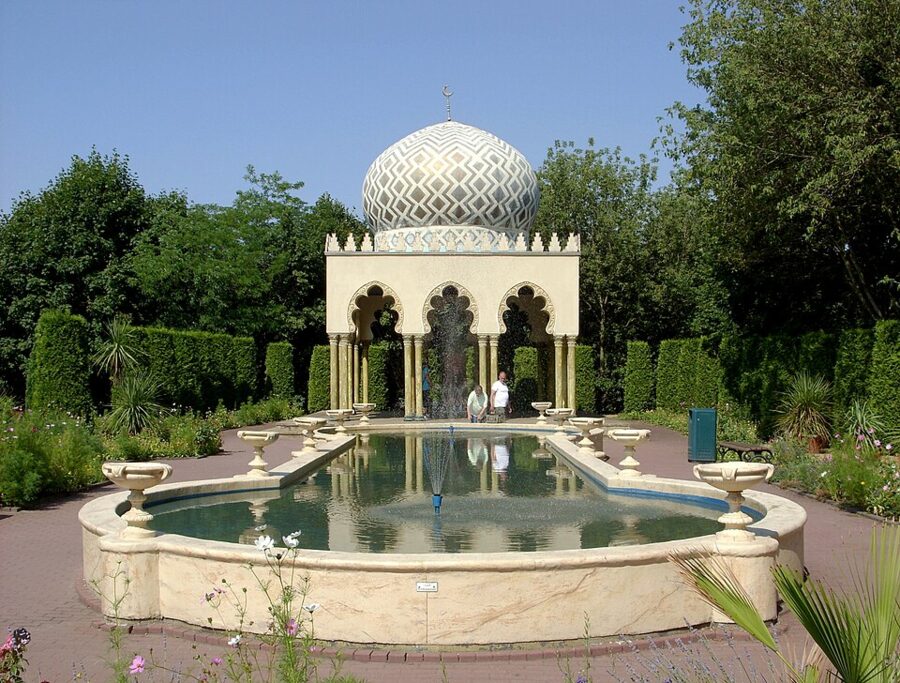
Little Muck’s garden is the opposite mood. The Gärten des kleinen Muck rebuild, from the original plans, the Arabian court of DEFA’s 1953 fairy tale The Story of Little Muck: a long pool, fountains and a domed white pavilion. It is the one quiet corner in the park, with benches and shade, and the place I would send a tired parent while the children are in the playground.
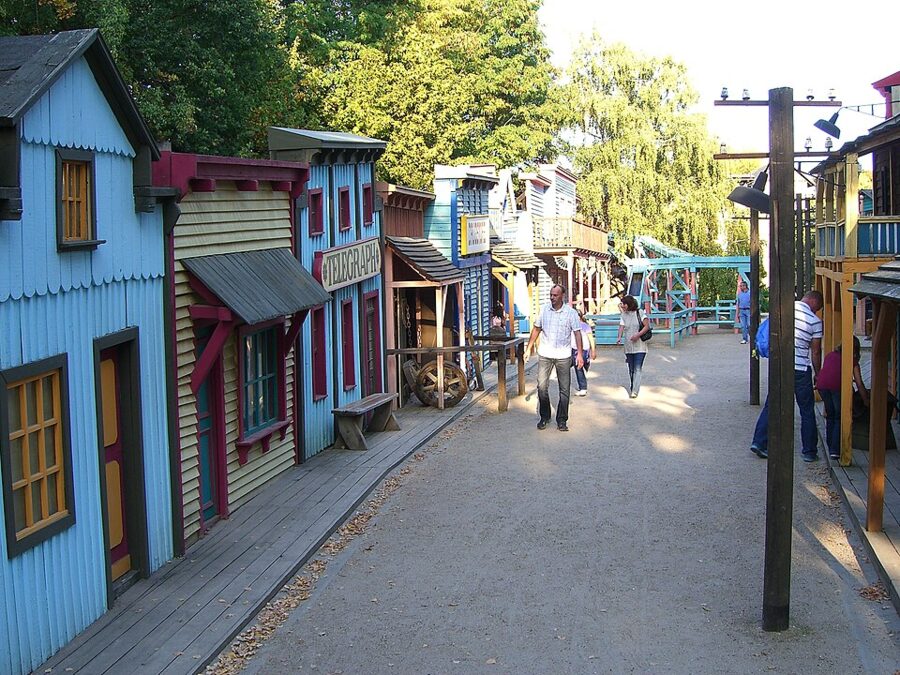
The Westernstadt (western town) is the park’s tribute to the DEFA westerns and Gojko Mitić, with a saloon, the Hudson Bay grill and the stand where the morning show plays.
Panama, Jim Button and the children’s television corner
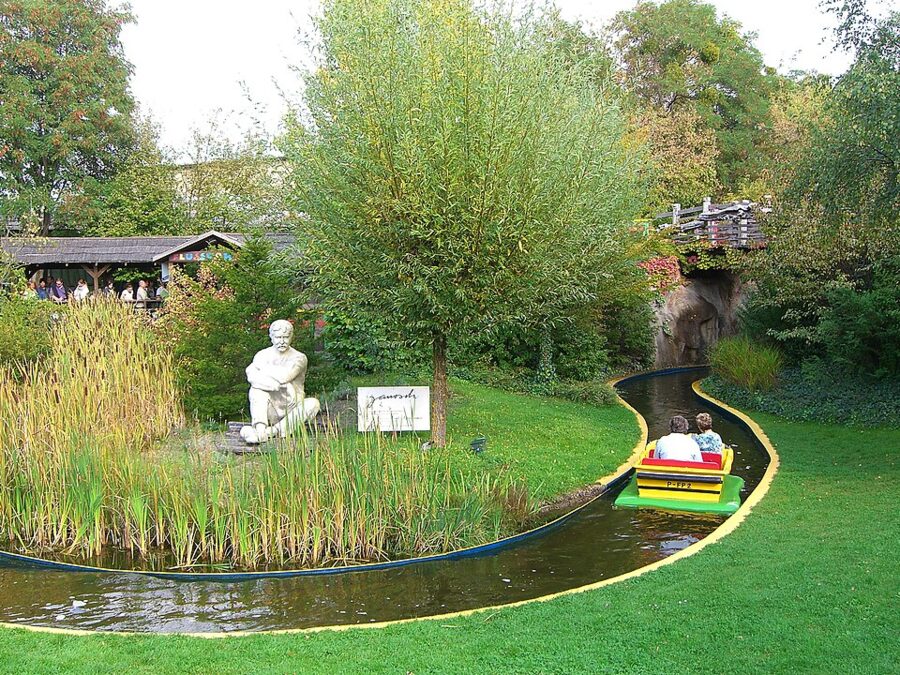
For anyone under ten, this is the heart of the park. Panama, Janosch’s Traumland (Janosch’s Dreamland), opened in 1998 with Janosch himself involved in the design, and takes its name from his picture book Oh, wie schön ist Panama, about a little bear and a little tiger setting out to find the perfect country. You ride through it in small boats past animated scenes, and a statue of the artist watches from an island in the pond.
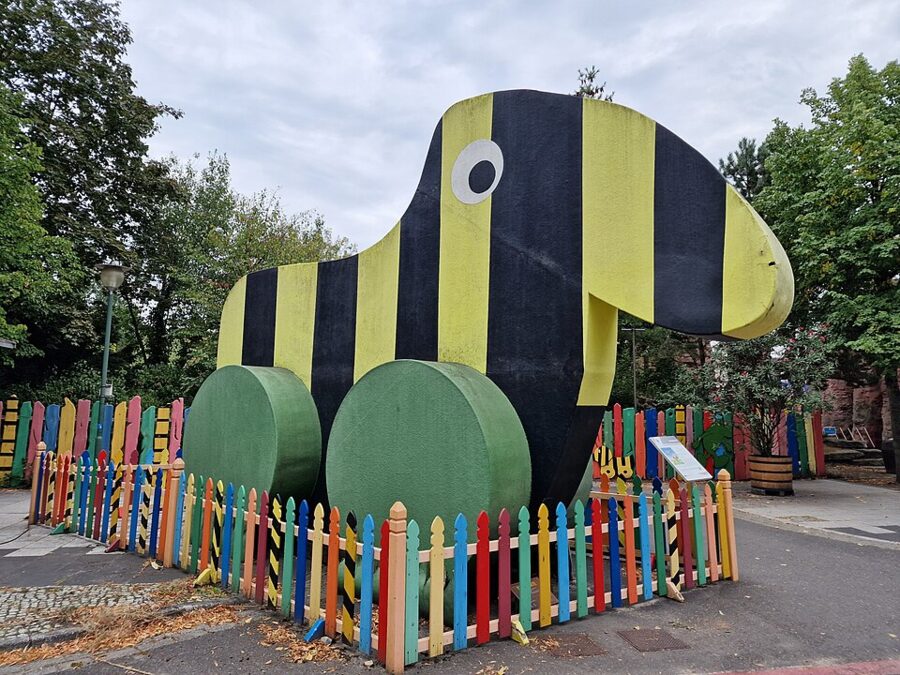
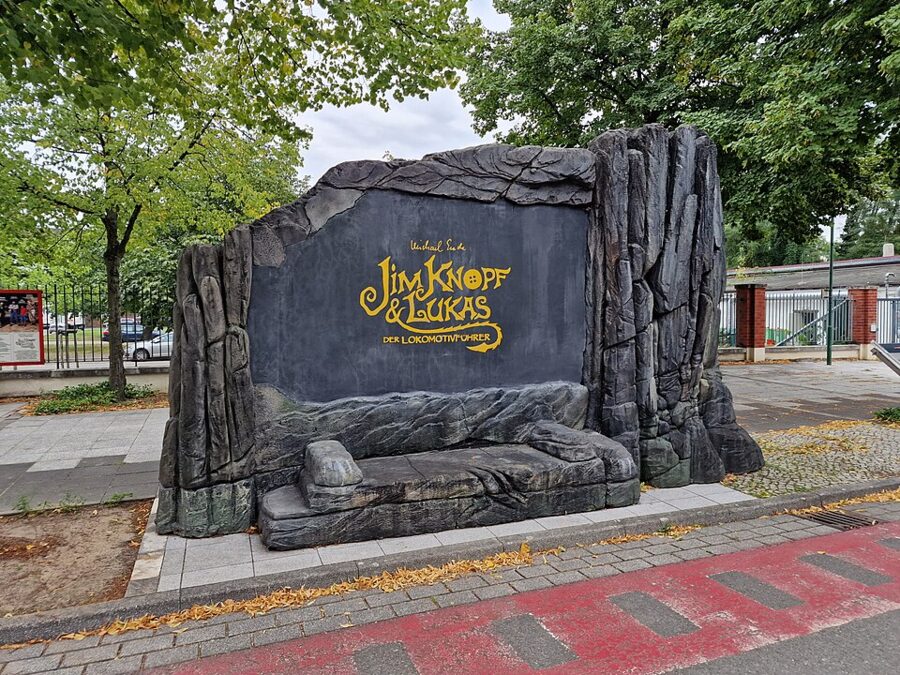
Next door is the Jim Knopf Abenteuerspielplatz, the adventure playground opened in 2021 and themed on the Lummerland of the two Jim Button films that Studio Babelsberg made in 2017 and 2020. There are big slides, climbing frames, a toddler area with a mini locomotive Emma and a water playground, which on a 30 °C (86 °F) July afternoon is the busiest corner of the park. Pack a change of clothes.
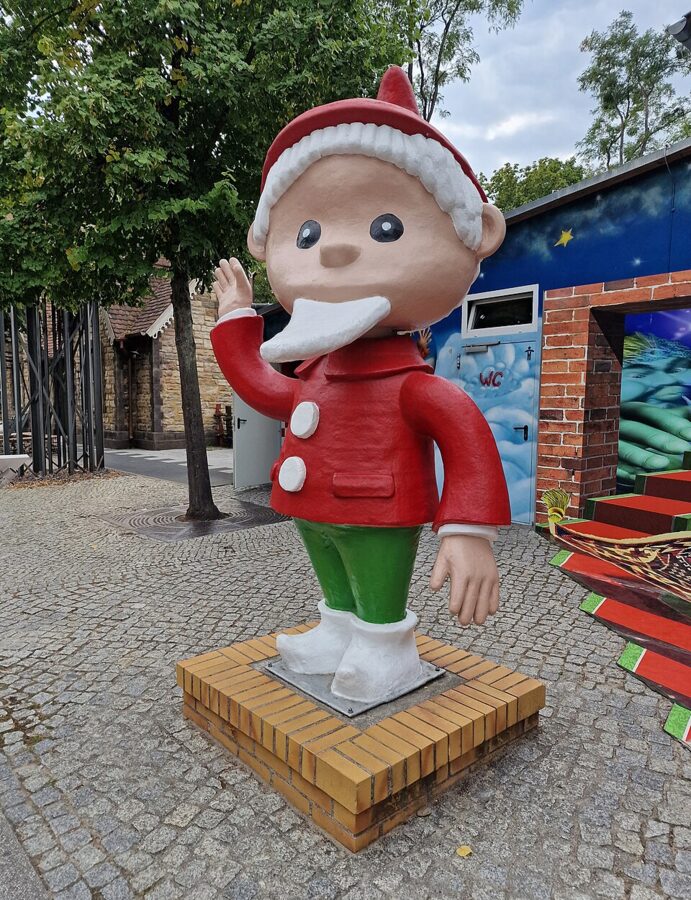
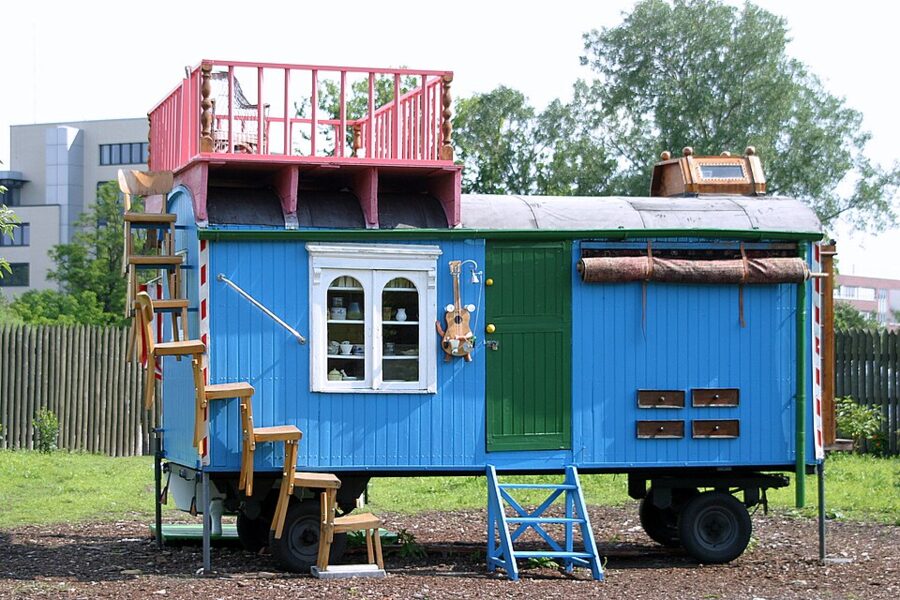
The rest of this corner is German childhood television, which means more to German parents than it will to you. The Sandmann-Haus is a small exhibition on the Sandmännchen, the bedtime puppet of East German and then all German television, with his rocket, his ship and a green screen for photos. Peter Lustig’s original blue trailer from the science show Löwenzahn sits in a wildflower garden, complete with bathtub. The witch’s gingerbread house from the 2012 ARD film of Hansel and Gretel was taken apart after shooting near Ferch and rebuilt here.
The shows, and how to build the day around them
The park’s day hangs on two live shows, and in 2026 they ran at fixed times: the western show at 11:30 and the stunt show at 14:00. Times can shift with weather or filming, so check the show times on the day; seats cannot be reserved. Arrive at the 10:00 opening and you have time for one indoor attraction before the first show.
The stunt show in the Vulkan
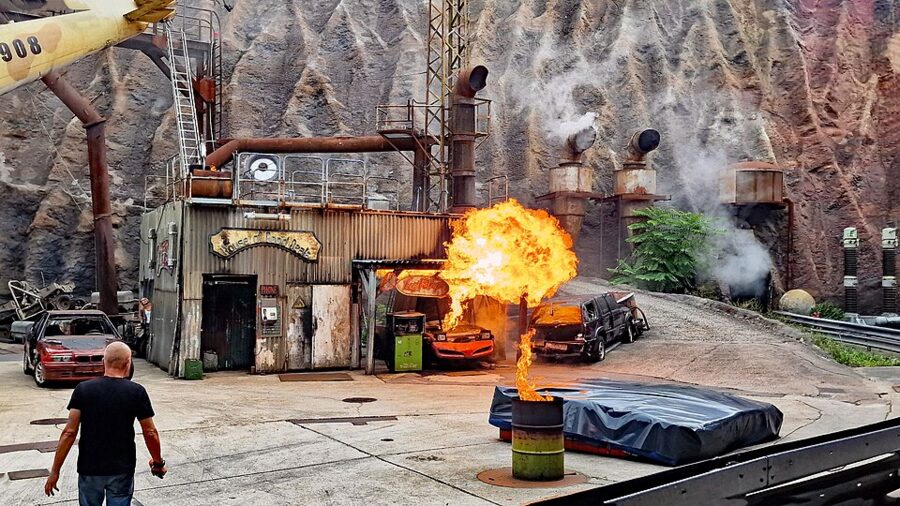
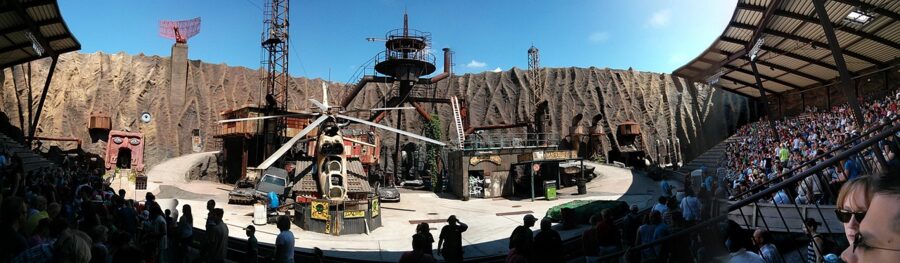
This is the show worth planning the day around. The Vulkan, an artificial volcano 15 meters high built in 1999, wraps around an open-air stage, with up to 2,500 seats under cover. Inside, the Babelsberg stunt crew plays out a story of special forces against an alien invader, which has played since the 2023 season, with car chases, fire stunts, explosions and falls from great height. The story is thin and the stunts are not: this crew also works on film sets.
Two warnings. It is loud, and the park says plainly that the stunt show is not suitable for small children; dogs are allowed but not advised. And in high season the good seats go early, so be in the arena by 13:30. In the 2026 summer holidays the stunt crew also ran a 60-minute stunt workshop for children aged six and up on several Fridays, included in the ticket.
The western show
The western show, in the western town at 11:30, is the one for small children. It is set in 1865 in a sleepy frontier village with two problems, bandits and litter, and solves both with slapstick, horses and a moral about tidying up. About 500 seats sit under a roof in the open, and doors open about 15 minutes ahead. Adults without children can skip it with a clear conscience.
Stage 69, the action cinema and the rest
Between the two shows, fill the time with the indoor attractions. Stage 69 is a mock film set where staff pull people from the audience into three short scenes in front of a green screen, as lead actor, extra, lighting double or the person working the wind machine; it repeats several times a day, so you can go back. The 4D Actionkino shakes, tilts and blows wind at you through short action films, and children need to be at least 1 meter tall. The Snapshot Factory is a hall of lit photo sets, from a red carpet to a prison cell.
The blue dome is the Dome of Babelsberg, and its history is better than its contents. It was the “Blue Globe” that stood on Breitscheidplatz in West Berlin, and it moved here in 2011. Today it houses a Hologate virtual reality game in which you hunt ghosts with Ghostbusters gear, rated for ages 12 and up and paid for separately at the old mill.
Tickets, season and opening days
The Filmpark is a summer park. In 2026 the gates opened on April 1 and the last regular day was October 31, the children’s Halloween, with the evening Horror Nights running on Fridays and Saturdays from October 9 to November 7. In 2024 the season began on March 30 and in 2025 on April 12, so expect the 2027 season to start around Easter; the 2027 calendar and prices had not been published by late November 2026.
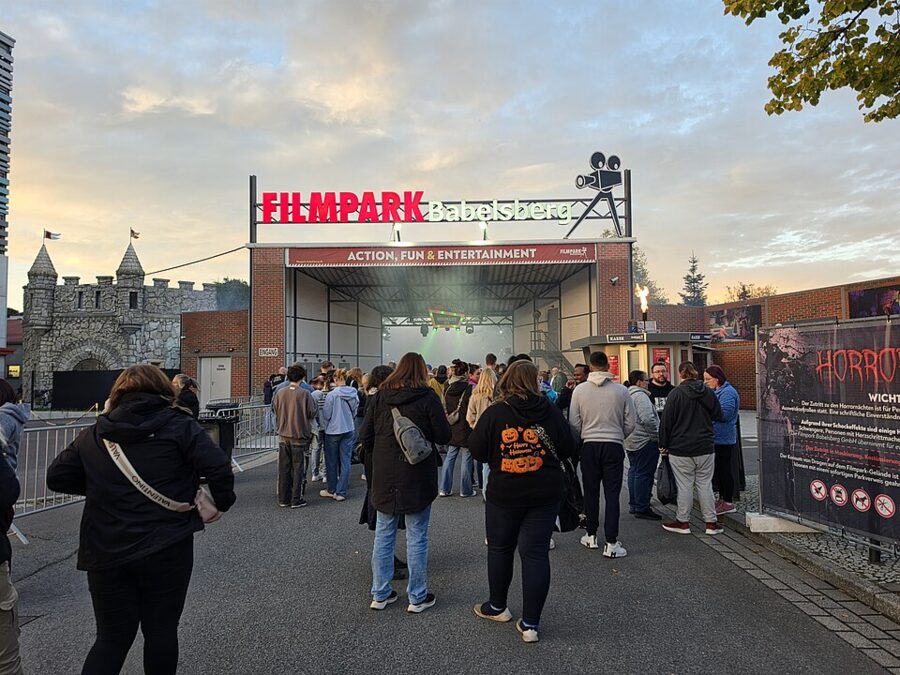
Opening days are where people get caught out: going by the 2026 opening calendar, the park was open every day through the Brandenburg Easter holidays and Tuesday to Sunday through most of the summer holidays. Outside the holidays it kept a Tuesday-to-Thursday-plus-weekend rhythm, closed on Mondays and Fridays, and in October it closed on Sundays too. Hours were 10:00–17:00 on most days and 10:00–18:00 on Saturdays and in the holiday weeks. A few dates go to special events with separate tickets, such as the Anime Messe in July.
These were the 2026 ticket prices:
| Ticket | Online | At the gate |
|---|---|---|
| Adult | €25 | €30 |
| Reduced (students, pensioners, with proof) | €22 | €25 |
| Child, 4–16 | €18 | €22 |
| Family (2 adults and up to 3 children, or 1 adult and up to 4) | €84 | €93 |
| Children up to 3 | Free | Free |
Buy online: it is cheaper, and the park cannot guarantee tickets at the gate on busy days. Online tickets are dated and cannot be cancelled, so check the forecast first. There is also a late “taster” ticket at the gate, valid from three hours before closing, for €15 for adults and €10 for children, and anyone with a birthday between 4 and 99 gets in free on the day with proof.
The ticket includes all shows and attractions. The extras that cost money are the gold panning, the arcade machines in Flimmy’s Gamezone and the Hologate VR game. Allow four to five hours, which is the park’s own estimate, and a full day if you have children who want the playground twice.
In winter: the ice rink in the Metropolis-Halle
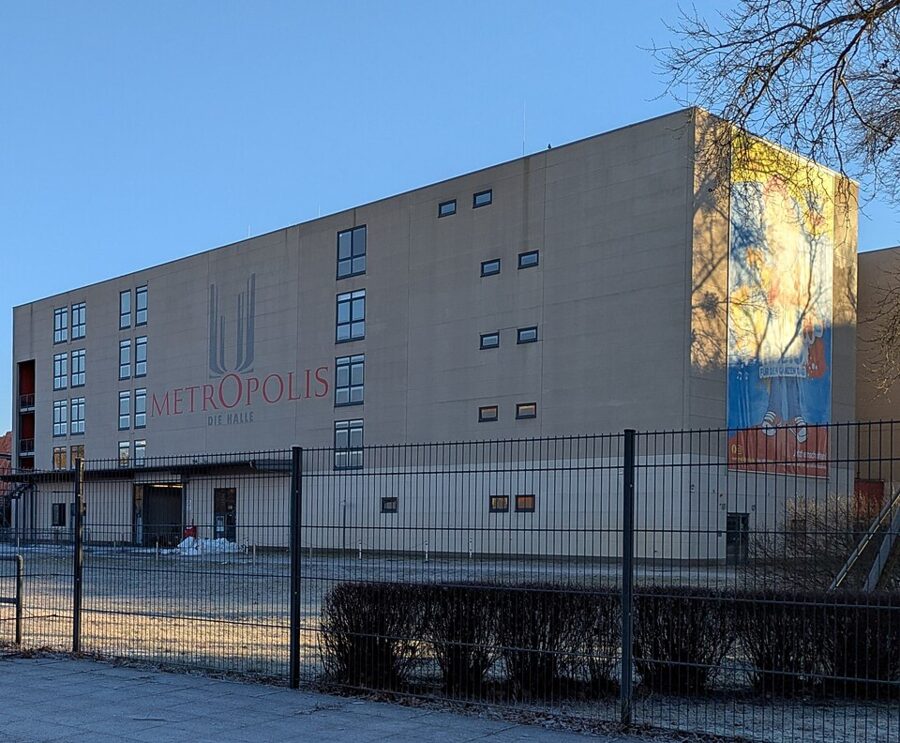
From December 6, 2026, to February 6, 2027, the action moves to the Metropolis-Halle, the event hall beside the park, which becomes an indoor ice rink with 650 square meters of real ice. Skating is sold in two-hour slots at €10 for adults and €7 for children, students and over-60s, skates rent for €7, and people who come along without skating get in free. The hall opened in 2008 and takes its name from Lang’s film, but it is not the historic stage where Metropolis was made, which stands inside the studio grounds.
Eating, prams, rain and getting around the park
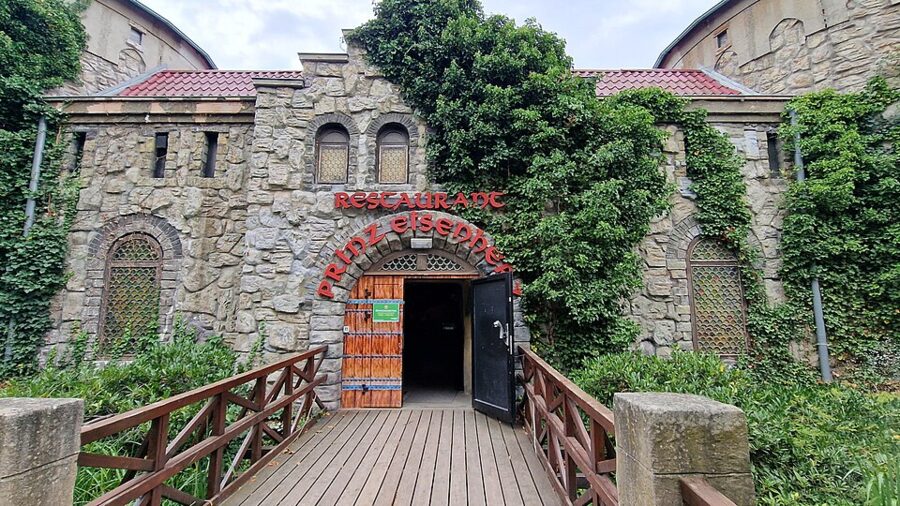
The Prinz Eisenherz restaurant is the centerpiece, a medieval hall built in 1998 from the sets and props of the 1997 film Prince Valiant; the Hudson Bay in the western town grills steaks, sausages and ribs; the Film Foodcourt sells burgers and fries; the Tigerenten Restaurant next to Panama is aimed at small children; and Sweet Dreams, beside the playground, does coffee and cake. Since October 1, 2026, Potsdam has charged a tax on disposable cups and boxes, which the park passes on.
You can bring your own food and drink, as long as you do not eat it in the restaurants and leave glass bottles at home. The only dedicated picnic area is in Panama, and the park itself warns that a heavy picnic bag makes the day harder. I agree: a light bag and one meal inside is the easier day. Lockers at the entrance take a €20 deposit at the info point.
Prams and buggies are fine everywhere; bikes, scooters and boards stay outside the gate. Baby changing rooms are in the Prinz Eisenherz, the medieval town, the Caligari Halle and the Tigerenten Restaurant. Dogs on a lead are welcome on the grounds, but not in indoor attractions or the action cinema.
Rain is less of a problem than you might expect: both shows have covered seating, and the Caligari Halle, Stage 69, the Snapshot Factory, the action cinema and the Sandmann house are all indoors. A wet day spoils the playground, the gardens and the boat ride, and little else.
Most of the park is accessible, with two exceptions: the Panama boat ride and some of the play stations. Wheelchair users can watch the action cinema from outside the moving seats, both shows have dedicated places, and accessible toilets are at the entrance, the Prinz Eisenherz, the medieval town, the Vulkan and the Tigerenten Restaurant. A wheelchair can be borrowed from the info point, without a deposit, if you email ahead.
Getting there
The public entrance is at Großbeerenstraße 200, in the Medienstadt (media city) in the south of Babelsberg, and there are three good ways in from Berlin. The one thing to get right is the station name. Potsdam Medienstadt Babelsberg, the regional station by the park, is a different station from Potsdam-Babelsberg, the S-Bahn station in the old town center of Babelsberg, and people mix them up.
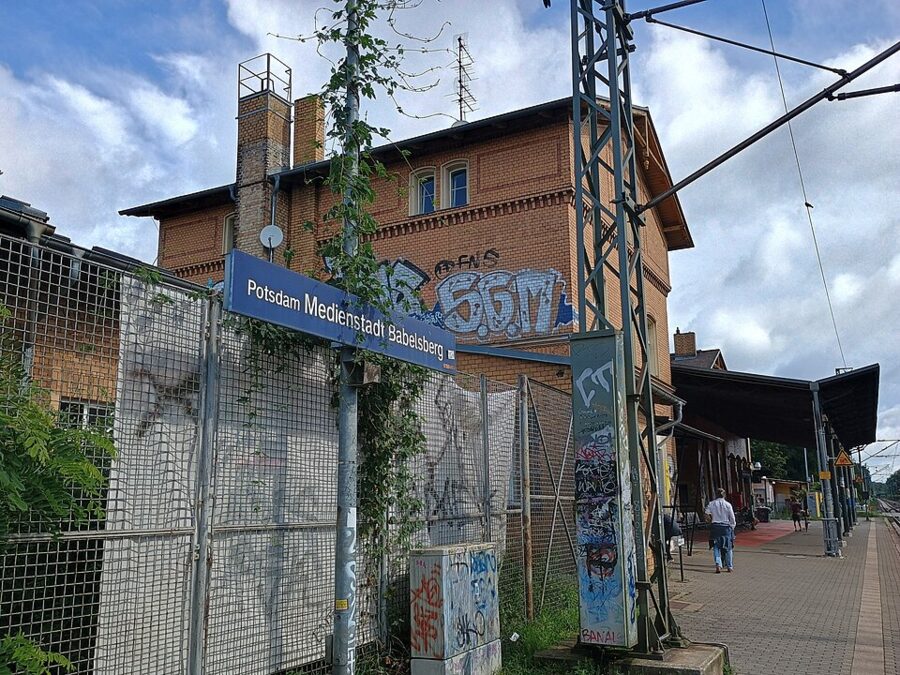
- Regional train: the RE7 or RB33 to Potsdam Medienstadt Babelsberg, then about 5 minutes on foot to the gate.
- S-Bahn and bus: the S7 to Potsdam-Babelsberg, or to Potsdam Hauptbahnhof (main station), then bus 601 or 690 to the stop Filmpark, which is right at the entrance.
- S-Bahn and walk: the S7 to Griebnitzsee, then about 15 minutes on foot.
From central Berlin the fare is a single ticket Berlin ABC at €5 each way, or the 24-hour ticket Berlin ABC at €12.90 if you will use buses and trams in Potsdam as well; the Deutschlandticket covers all of it. By car, take the A115 exit Potsdam-Babelsberg and the Nuthe-Schnellstraße to the Medienstadt exit, then follow the signs. The multistory car park entrance is on Lotte-Loebinger-Straße, parking costs €9 a day for Filmpark guests, and the height limit is 1.95 meters.
Combining it with Park Babelsberg and the Filmmuseum
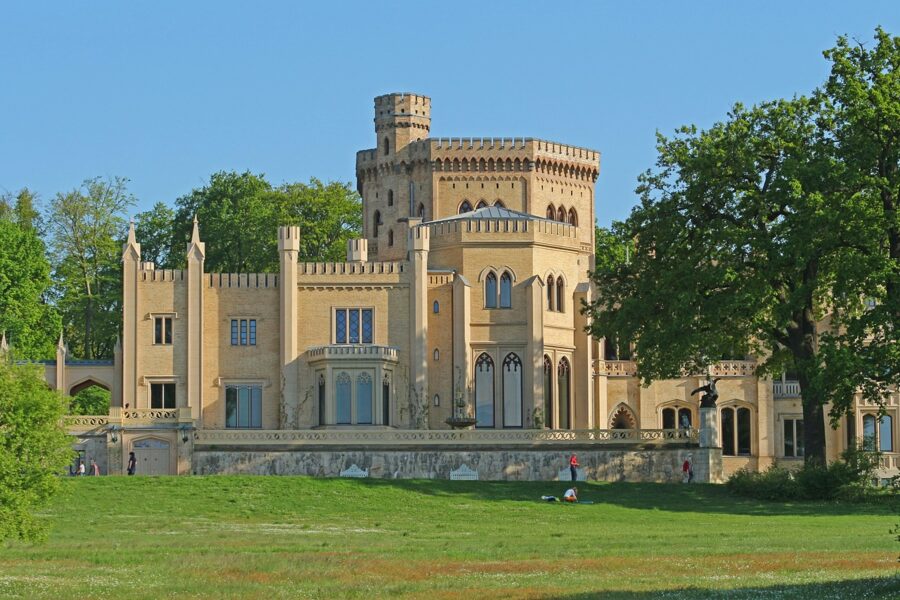
Without children, the Filmpark pairs well with the rest of Babelsberg, and the obvious second half is Park Babelsberg, the hillside landscape park above the Havel with Babelsberg Palace. Between the studio and the park lie the villa colony where the UFA stars lived and the weavers’ houses of old Nowawes.
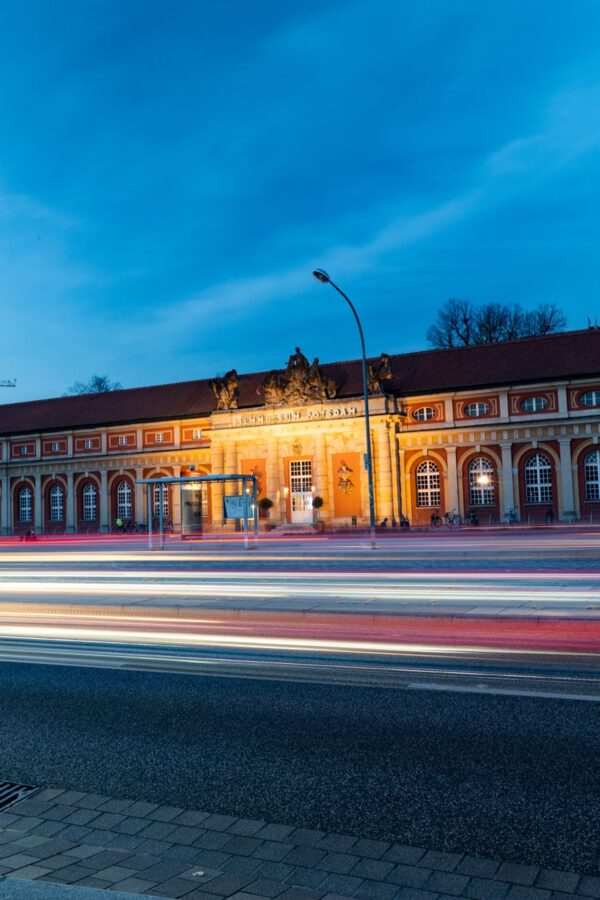
For film history, the Filmmuseum Potsdam is in the city center, in the Marstall, the former royal stables by the Lustgarten. Its permanent exhibition, The Dream Factory: 100 Years of Film in Babelsberg, takes seven rooms through the making of a film, first idea to premiere night, with objects from UFA, DEFA and the studio’s recent productions. It is open Tuesday to Sunday, 10:00–18:00, and admission is €12 for adults, €8 reduced and free under 18. The museum’s cinema runs films every day except Monday, often from the studio’s own back catalog.
If you have one day in Potsdam and no children, I would make it the classic day trip from Berlin instead: Sanssouci and the old town, with an hour in the Filmmuseum in place of the Filmpark. Save the Filmpark for a second day, or for a trip with children, when the rest of the things to do in Potsdam can wait.
Who it suits, and who should skip it
Families with children from about four to twelve will get the most from it: the playground, the boat ride, the stunt show and a day someone else has organized, with enough film history in the Caligari Halle to keep the parents interested. For that group, I would call it the best day out in Potsdam that does not involve a palace.
German speakers who grew up with the Sandman, Löwenzahn and the DEFA fairy tales will enjoy it more than anyone else, because a fair part of the park is built on nostalgia for their childhood television. The park’s information and programs are in German only, so expect the commentary to be German too: the stunt show needs no language, the Caligari Halle tour does.
Serious film fans without children should think twice. The park is not a studio tour, the working stages are closed, and an hour in the Filmmuseum will tell you more about Metropolis and The Blue Angel than a day here. Toddlers will love the playground and hate the volcano.
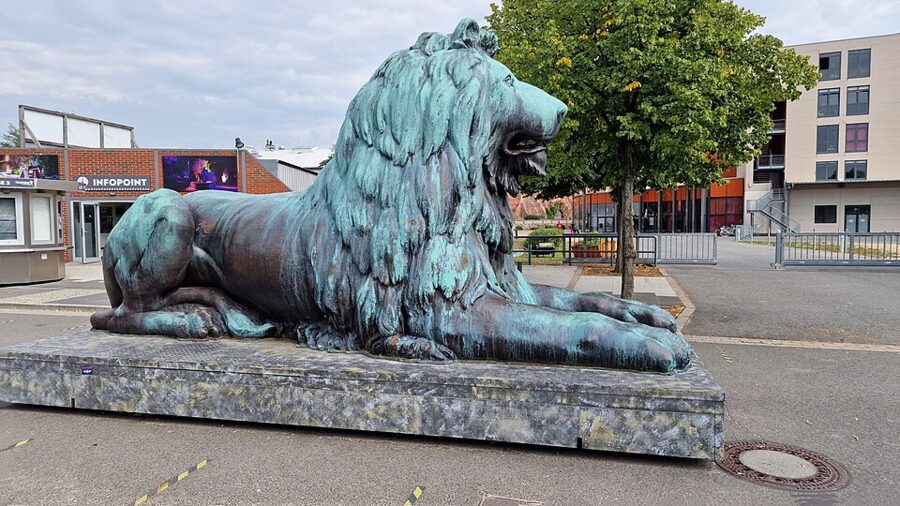
If you do go, finish at the Caligari Halle in the late afternoon, when the crowds have drained toward the exit, and look over the boundary for the Marlene-Dietrich-Halle. A hundred years on, it is still rented out to whoever needs a city built indoors. Then walk out past the lion and catch the 601 or the 690 at the gate, and you will be back at Potsdam Hauptbahnhof in time for dinner in the old town.