

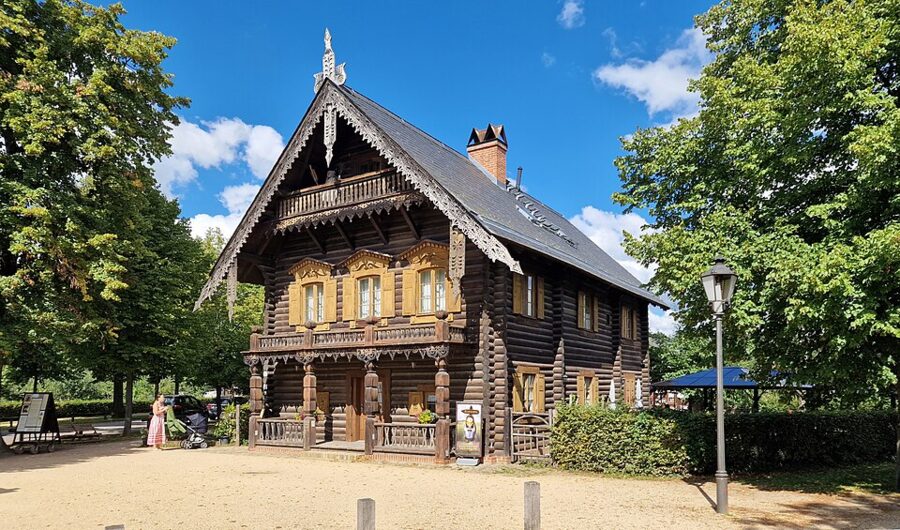
Stand where the two diagonal avenues of Alexandrowka cross and every house in sight looks as if a village carpenter stacked it from whole pine logs somewhere outside St. Petersburg. None of them was built that way. Prussian army engineers put them up in 1826 as ordinary timber frames, then nailed half-round logs to the outside so the frames would pass for Russian log cabins, and the disguise has held for two hundred years.
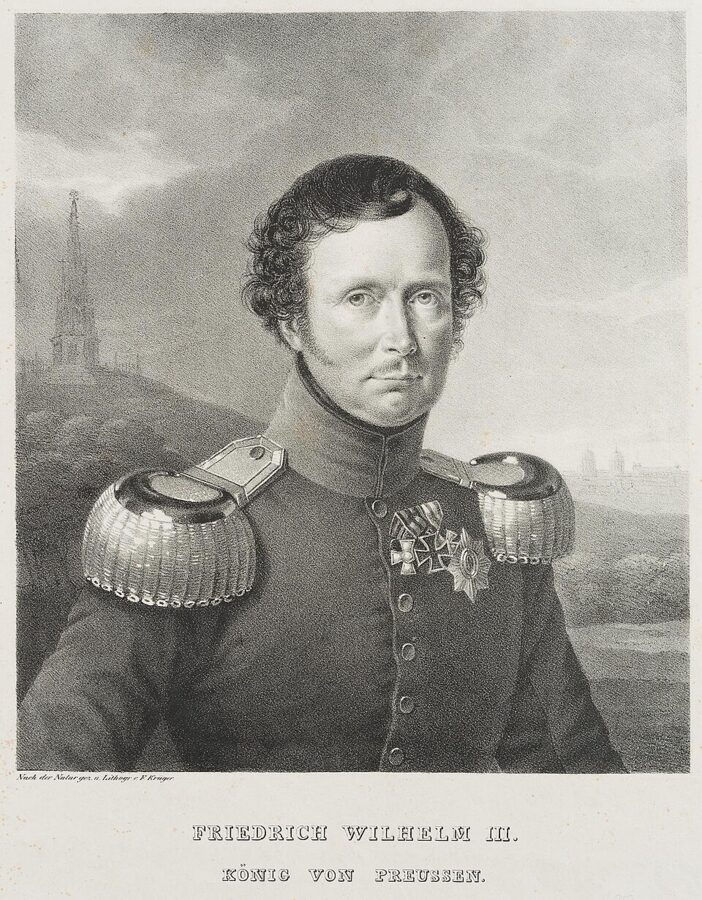
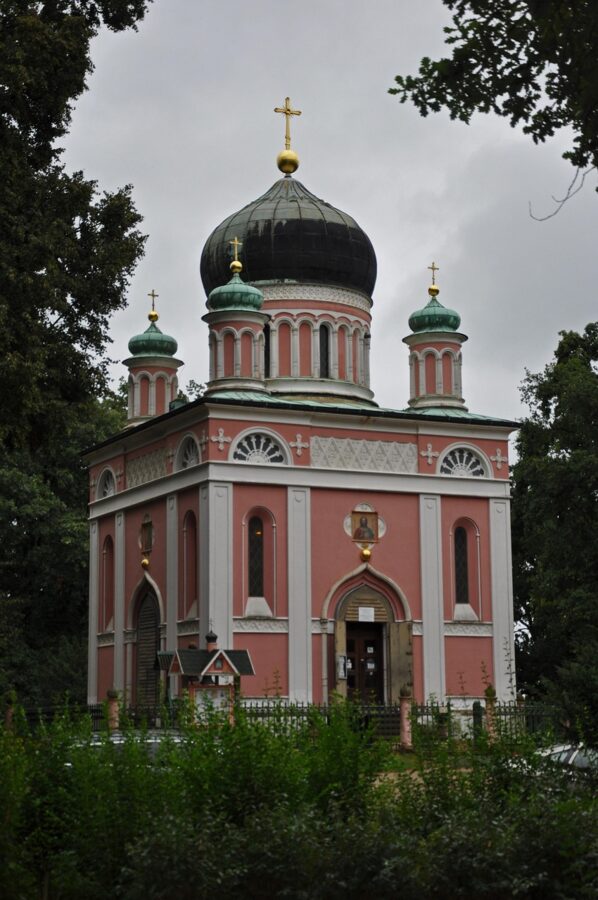
The village was a king’s memorial to a dead friend, and its first residents were soldiers who sang. Frederick William III of Prussia (Friedrich Wilhelm III) built it for the last twelve men of a Russian choir that had followed his army since 1812, gave each of them a furnished house, an orchard and a cow, and named the place after Tsar Alexander I. On the hill behind the houses he added an Orthodox church, which still holds services every weekend.
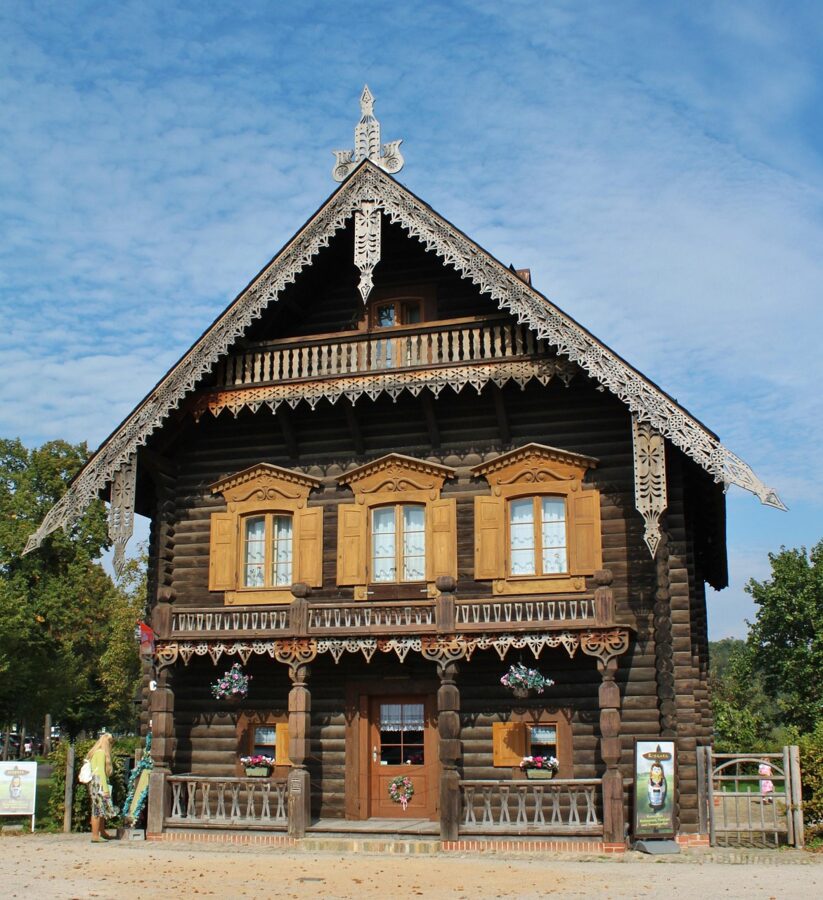
Today Alexandrowka is a quiet residential corner ten minutes by tram from Potsdam Hauptbahnhof (the main station), with a small museum in house 2, a Russian restaurant in house 1 and the onion domes of the Alexander Nevsky Memorial Church (Alexander-Newski-Gedächtniskirche) above the trees to the north. It has been part of the World Heritage site of the Potsdam palaces and parks since 1999, and in 2026 it turned 200. I’d give it a morning, then walk on up the Pfingstberg.


Contents8 parts
- Why a Prussian king built a Russian village
- Lenné's plan: a cross inside an oval
- The houses: timber dressed as log cabins
- The colonists, 1827 to today
- The Alexander Nevsky Memorial Church on the Kapellenberg
- Museum Alexandrowka in house 2
- The walk: Nauener Tor to the Neuer Garten
- Getting there, tickets and timing
Why a Prussian king built a Russian village
The story starts with a defeat. After Jena and Auerstedt in 1806, Prussia was a beaten client of Napoleon, and in 1812 it had to send troops with him into Russia. More than a thousand Russian soldiers were taken prisoner on that campaign, and by October 1812 sixty-two of them were in Potsdam.
Frederick William III had an idea that tells you a lot about him. He picked singers from among the prisoners and formed them into a choir, formally attached to the First Regiment of Foot Guards, the elite Potsdam regiment. Within months the politics turned over. The Convention of Tauroggen on December 30, 1812, took Prussia out of Napoleon’s alliance, and by the spring of 1813 Prussia and Russia were fighting him together.
The singers of the Foot Guards
The choir did not go home. It marched with the Prussian army all the way to Paris, entertaining the king’s camp, in the museum’s lovely phrase, “with song and tambourine and little bells.” When men died, Tsar Alexander I sent replacements: in 1815 he transferred seven grenadiers from one of his own regiments to the king’s guards. The singers were, in effect, a gift from one monarch to another, and they stayed at the Prussian court in Potsdam after the war.
The friendship behind the gift was real and it was dynastic. The two monarchs had sworn their friendship at the coffin of Frederick the Great (Friedrich II) in Potsdam in 1805, and in 1817 the king’s eldest daughter Charlotte married Alexander’s brother Nicholas, the future Nicholas I. She became Empress Alexandra Feodorovna of Russia, and her father visited her at Pavlovsk in 1818, a trip that matters later in this story.
A memorial for a dead friend
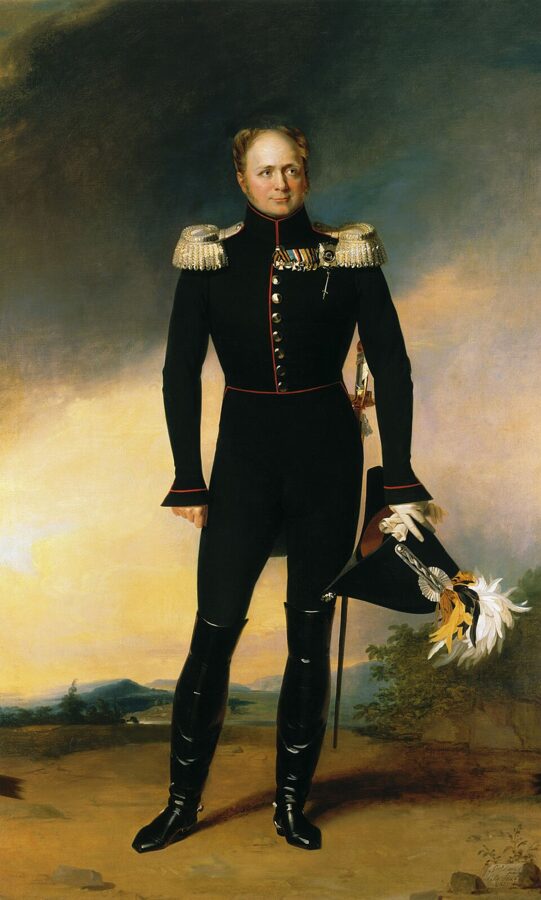
Alexander I died in December 1825. By then only twelve of the Russian singers were still alive in Potsdam. On April 10, 1826, the king issued a cabinet order that reads, in my translation, that it was his intention “as a lasting memorial of the bonds of friendship between Me and His late Majesty the Emperor Alexander of Russia, to found a colony near Potsdam, which I will settle with the Russian singers His Majesty left to Me, as colonists, and name Alexandrowka.”
The name simply means “Alexander’s place.” The singers got the houses and the dead tsar got the memorial. The king got a Russian village scene on the road north out of town, no small thing in a city where every royal building was also stage design.

Lenné’s plan: a cross inside an oval
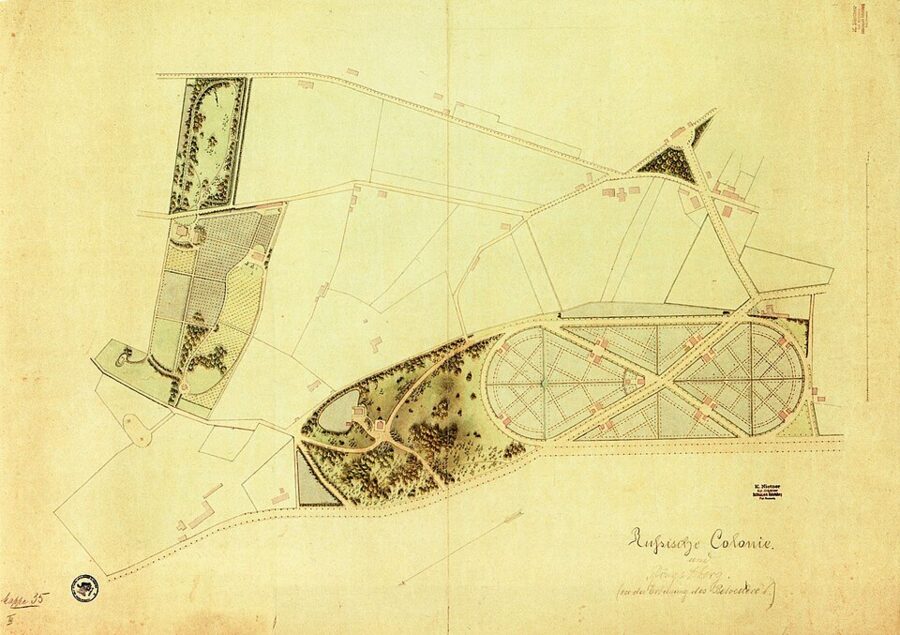
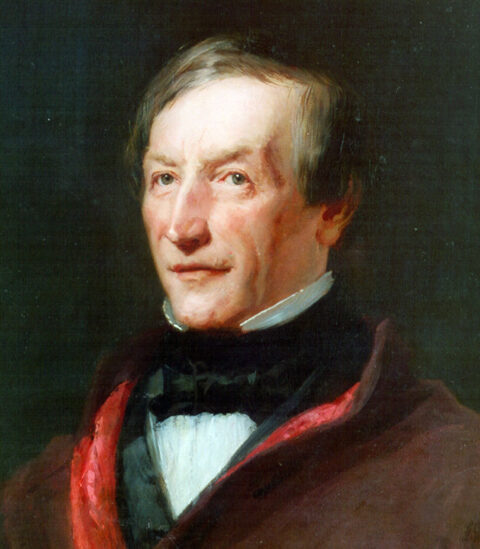
Peter Joseph Lenné, the royal garden director who shaped most of the parks in this town, drew the layout. He went through two quite different designs before settling on the one you walk today: an elongated oval, shaped like a hippodrome, with two avenues crossing diagonally through it in an X. The court gardener Johann Georg Morsch the Elder carried it out on the ground.
The X is usually read as a Saint Andrew’s cross: Andrew the Apostle is the patron saint of Russia, and the Museum Alexandrowka presents the layout as a homage to him. The royal order says nothing about saints, so treat it as the likeliest explanation rather than a documented instruction. Some writers also find a political meaning in the hippodrome shape. I find the Andrew reading convincing and the rest a stretch.
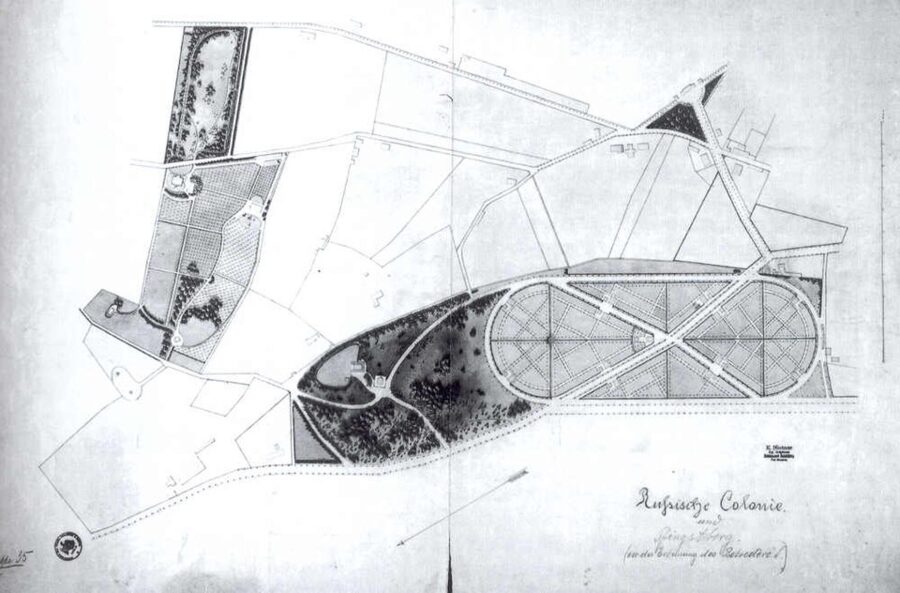
Inside the oval Lenné laid out twelve homesteads, one for each singer, each house in its own large plot of garden and orchard. A thirteenth house, without a large garden, was for the overseer, a sergeant, because the regiment ran the colony. A fourteenth went up beside the church. That is why sources count twelve, thirteen or fourteen houses, and all three are right depending on what you count.
The orchards
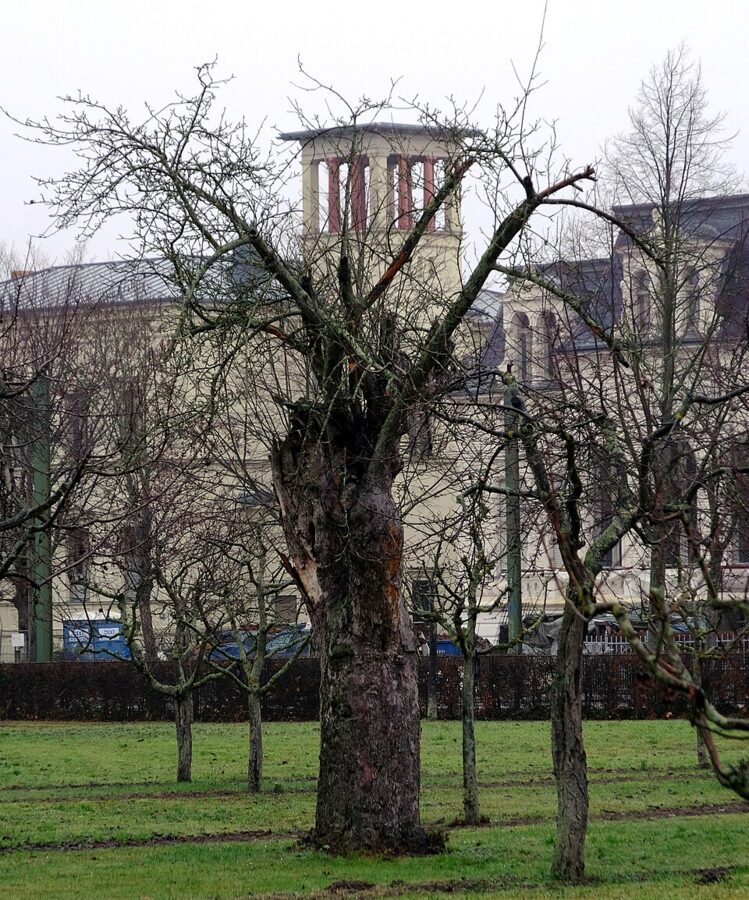
The gardens were not decoration. Lenné stocked them from his own Potsdam tree nursery with apples, pears, cherries and plums, and they doubled as a model orchard while the Prussian reforms were trying to modernize farming: a demonstration of the king’s agricultural policy, set out where anyone could see it.
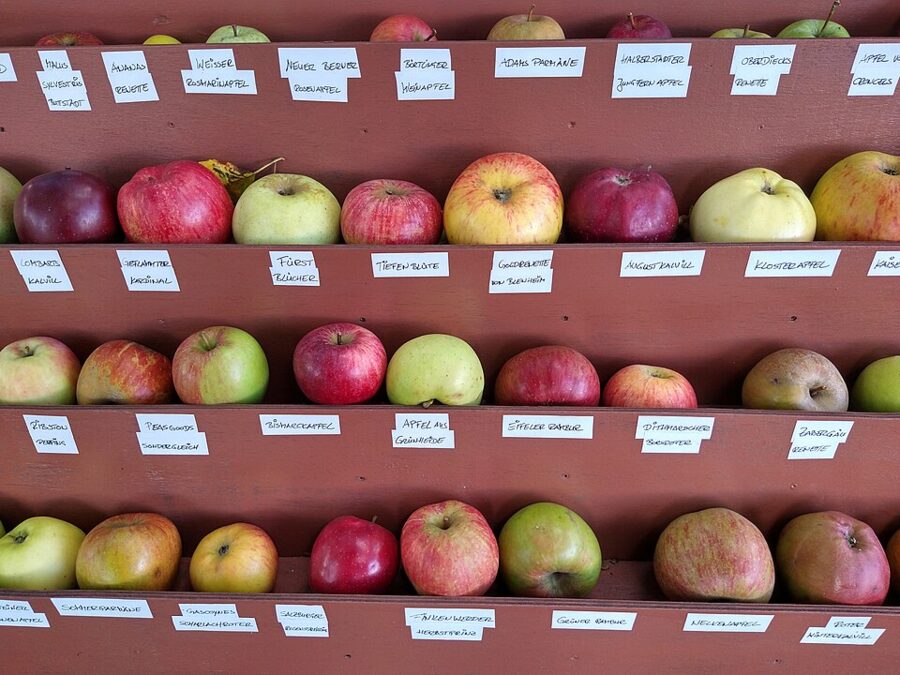
By 1989 the colony was in poor shape, and its orchards needed replanting. The garden layout was reconstructed for the Federal Garden Show (Bundesgartenschau, BUGA) of 2001, and since then the city has collected and replanted around 600 historic fruit varieties along Lenné’s paths. The city’s page on the colony links to a pomological atlas of the trees, if you want to identify the pear you are standing under.


The houses: timber dressed as log cabins
The look of the houses came from Russia by way of a sketch. In 1815 the Italian-Russian architect Carlo Rossi designed a “typically Russian” village, Glasowo, for the dowager empress’s park at Pavlovsk, and when Frederick William III visited his daughter there in 1818 he came home with a drawing of one of Rossi’s houses. Glasowo is the model usually named for Alexandrowka, though a 2003 study by Anja Hecker of the Technical University of Berlin put a question mark after that claim. Glasowo itself no longer exists.
The king had already used Rossi’s drawing once. In 1819 he built Blockhaus Nikolskoe, a real log house above the Havel near Peacock Island (Pfaueninsel), named for his son-in-law Nicholas. The man in charge of that job was Captain Adolf Snethlage, commander of the Guards engineer battalion, and in 1826 the king gave him Alexandrowka too.
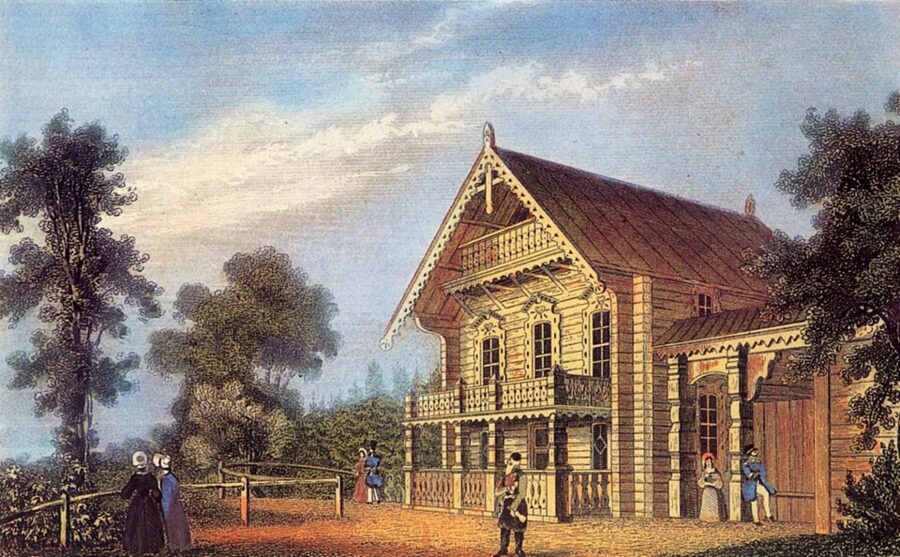
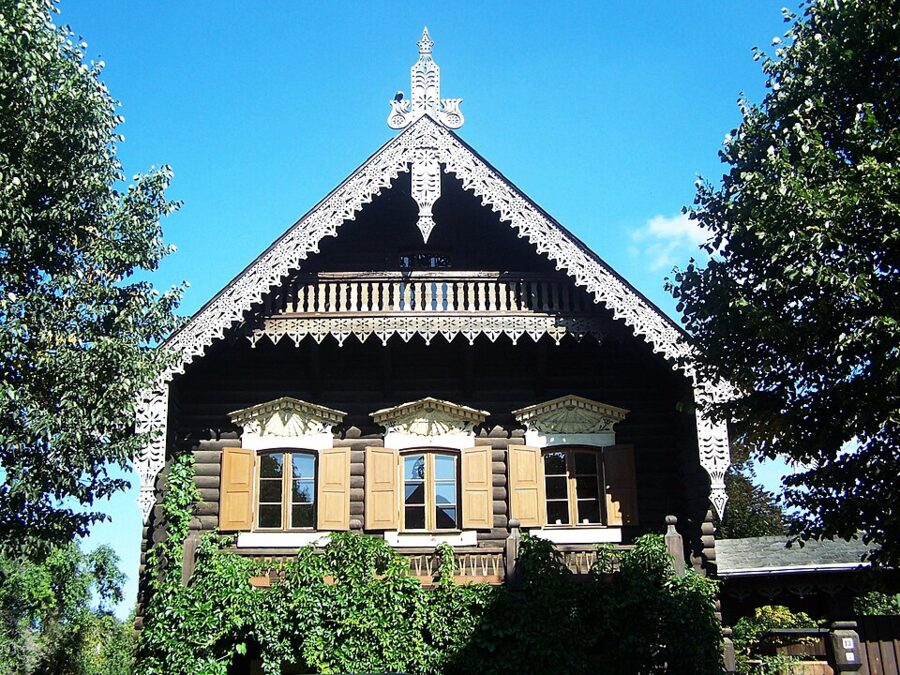

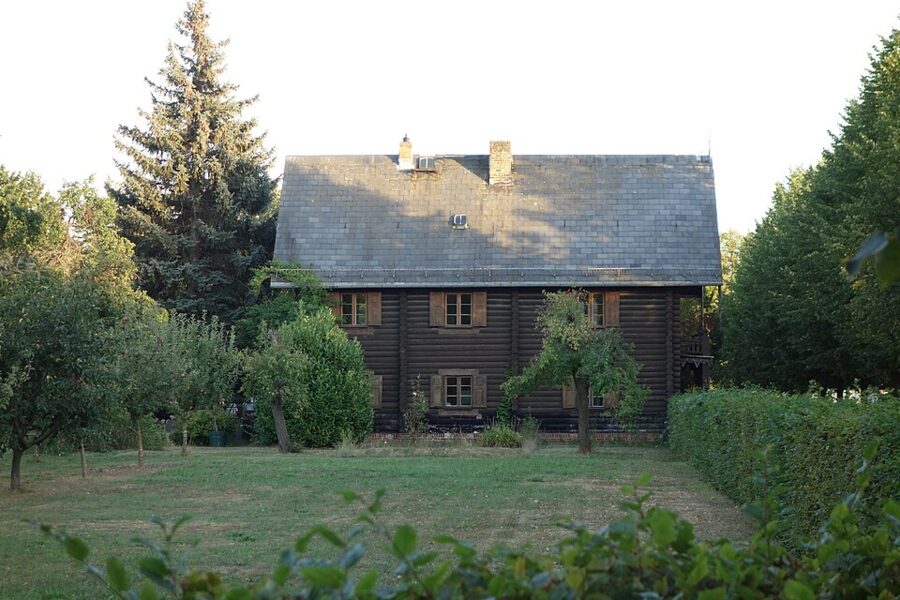
Snethlage had learned what real log construction cost, and for Alexandrowka he proposed a saving. Military craftsmen from all the Guards regiments, about a hundred of them by the museum’s count, built half-timbered houses and faced them with half-round logs, so that from the street they read as Russian log cabins. The work went fast: the houses were finished by the end of 1826.
The Russian model called for thatched roofs. Prussia settled for wooden boards, which were replaced with the slate you see now at the end of the nineteenth century. Each homestead is the same kit of parts: a gabled house with a balcony and a covered loggia in front, joined by a roofed gateway to a small stable. Some houses have one storey, some two.

Reading a gable
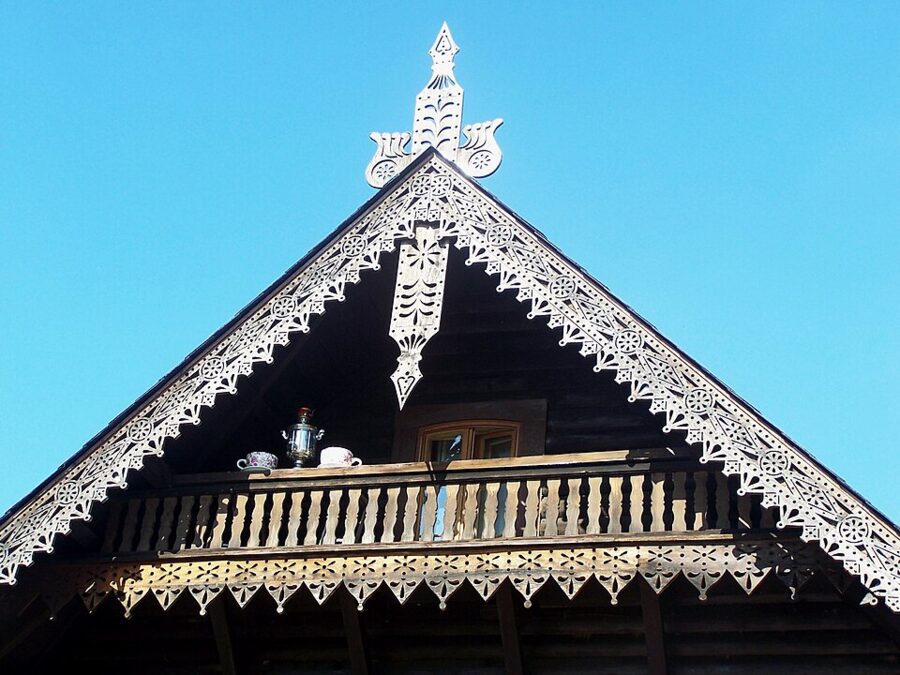
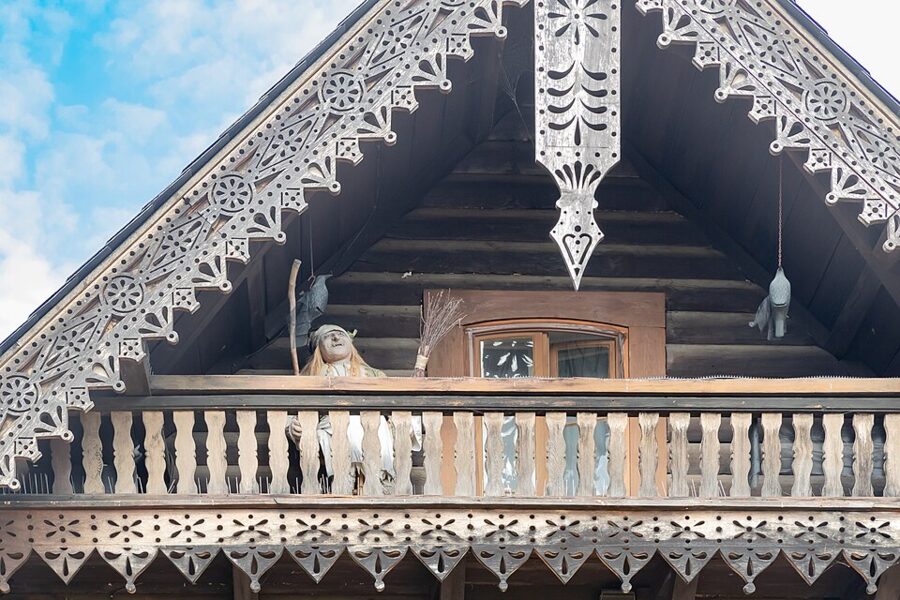
The carving is where the houses earn their Russian look. Fretwork boards run along the roof edges, the balcony rails are cut into patterns, and the window frames carry carved surrounds. Some houses also had painted shutters; the royal country house on the hill had shutters painted with scenes from Russian folklore, according to the description of its original decoration.

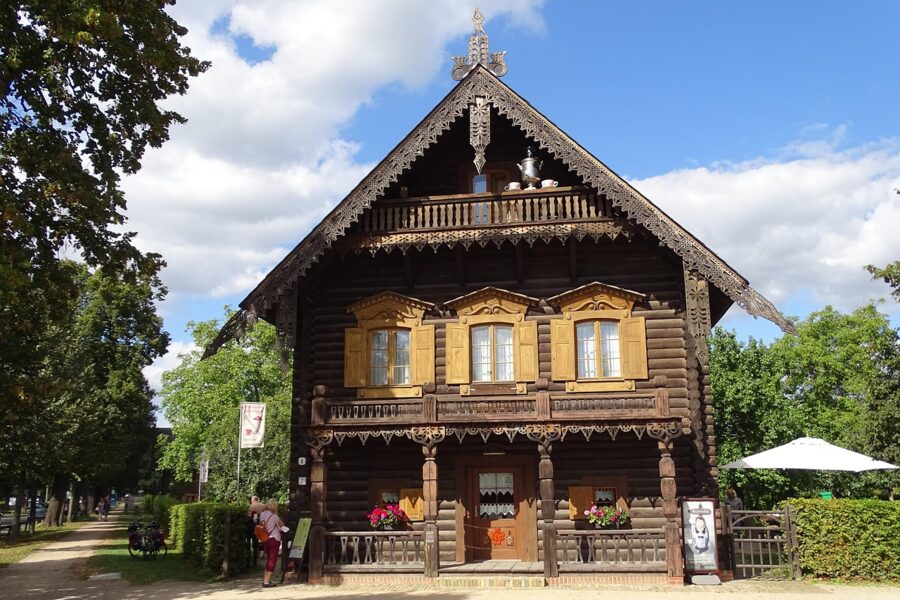
Domestic details survive in the records too. The museum’s research on house 2 found that its first tenant, a non-commissioned officer named Wolgin, moved in with his wife in 1827 and had a second chimney put in, because the main stove could not heat every room and Mrs. Wolgin was cold.
Who lives in the houses now
Since German reunification most of the houses have been privately owned, and they are homes, not exhibits. Owners, conservators and the monument authorities have spent three decades restoring them one at a time. Please treat the fences as you would any front garden.

The colonists, 1827 to today
The king attached a condition: a singer could move in only if he was married. Some had found wives on the campaigns in France, others married Potsdam women. On April 2, 1827, the colonists moved in, according to the museum’s account with dancing, games and song. Every household found its house furnished, its garden planted and a cow in the stable.
The gift came with a leash. A colonist could not sell, lease or mortgage his house, and it passed only to male heirs in a direct line. Families that ran out of sons lost their homes to the crown, and the king then gave the empty houses to deserving sergeants of the regiment. The last of the original singers died in 1861.
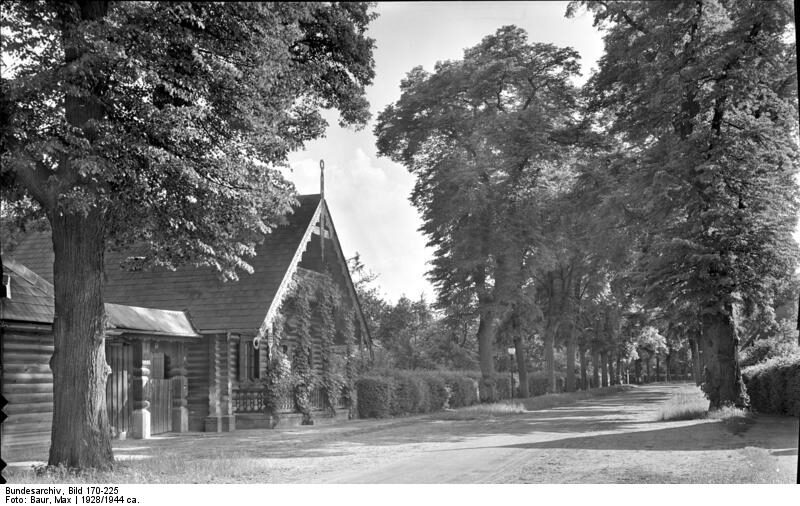

The colony belonged to the House of Hohenzollern but was run by the First Foot Guards until the regiment was dissolved after the First World War. After the 1926 settlement between the state and the former royal family, it passed to the Prussian state on April 1, 1927. By then only four houses were still held by descendants of the singers, and the royal inheritance rules stayed in force until 1945.
After the Second World War, Red Army soldiers were quartered in the houses until 1949. The Soviet occupation and then the German Democratic Republic changed the legal status of the colony, and the land reform cut the number of founding families further. There was little money for wooden houses that needed constant care, and by the fall of the Wall many were in a bad state.
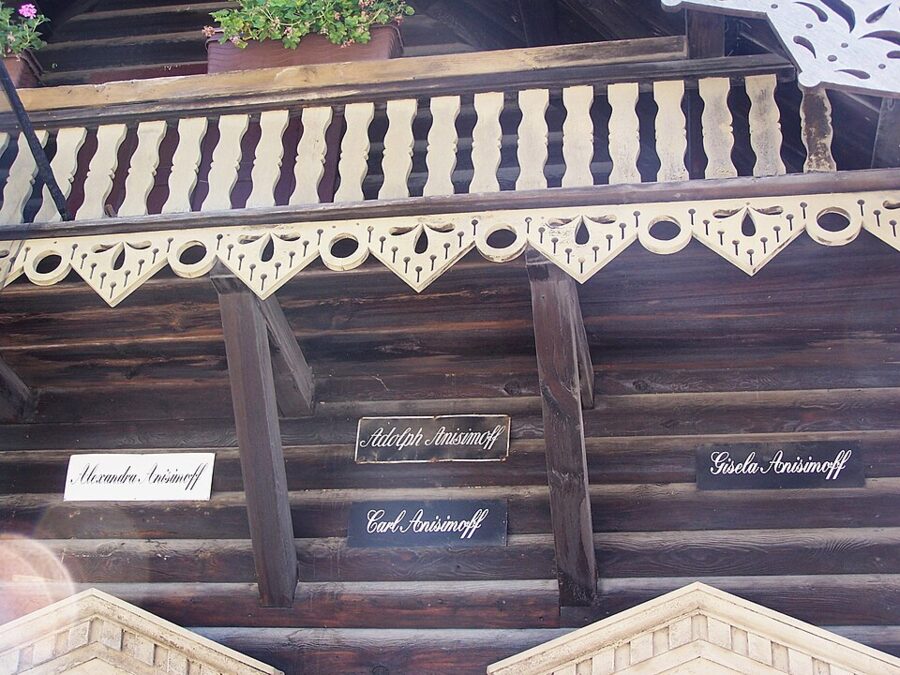
On the descendants, the sources disagree. The account repeated in most German reference works says only two founding families survived the land reform and that the last direct descendant, of the Schischkoff family, died in the colony in 2008. The Museum Alexandrowka, writing in 2013, names three families still there in their sixth and seventh generations: the Grigorieffs in house 7, the Anisimoffs in house 9 and the Jablokoffs in house 10. Both may be right, depending on whether you count only the male line the king insisted on.
In 1999 UNESCO extended the World Heritage site of the Palaces and Parks of Potsdam and Berlin to take in the Russian colony Alexandrowka with the Kapellenberg, along with the Pfingstberg and the Italian and Swiss model villages Potsdam’s kings built in the same spirit. The bicentenary in 2026 brought lectures, guided walks and an open monument day, in a year when anything labeled Russian carried a second meaning.
The parish answered plainly. Above its notices of help for refugees from Ukraine it puts the words “We pray for peace! No to war!”
The Alexander Nevsky Memorial Church on the Kapellenberg
The colonists were Orthodox, and they needed a church. Lenné proposed two sites, one on the north edge of the colony and one right at the crossing of the avenues. The king wanted it higher. He chose the low hill just north of the oval, known as the Minenberg because the army had practiced blasting there, renamed it the Alexanderberg, and it has been the Kapellenberg, the chapel hill, ever since.
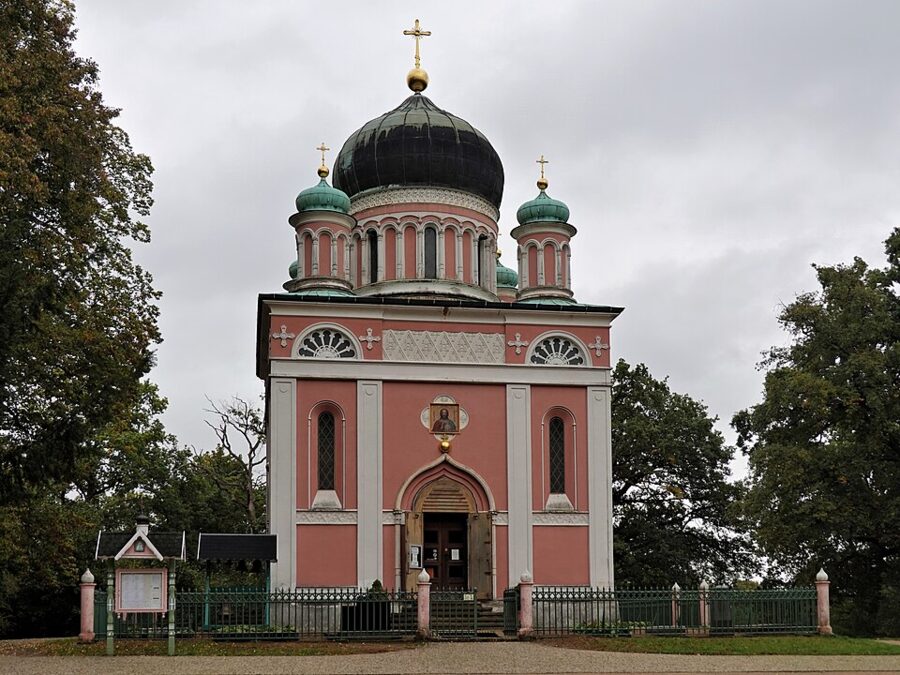

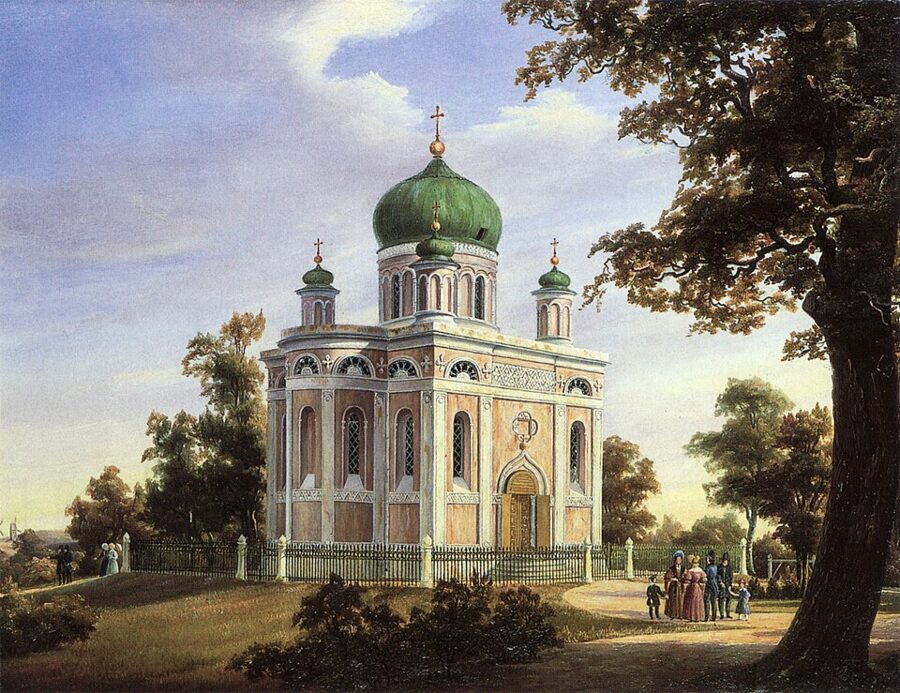
The design came from St. Petersburg in May 1826: a reduced version of the court architect Vasily Stasov’s Tithe Church in Kyiv, itself since destroyed. The foundation stone was laid in September 1826 on the feast of Alexander Nevsky, the thirteenth-century prince and saint who was Tsar Alexander’s patron, and the church commemorates the tsar through his saint.
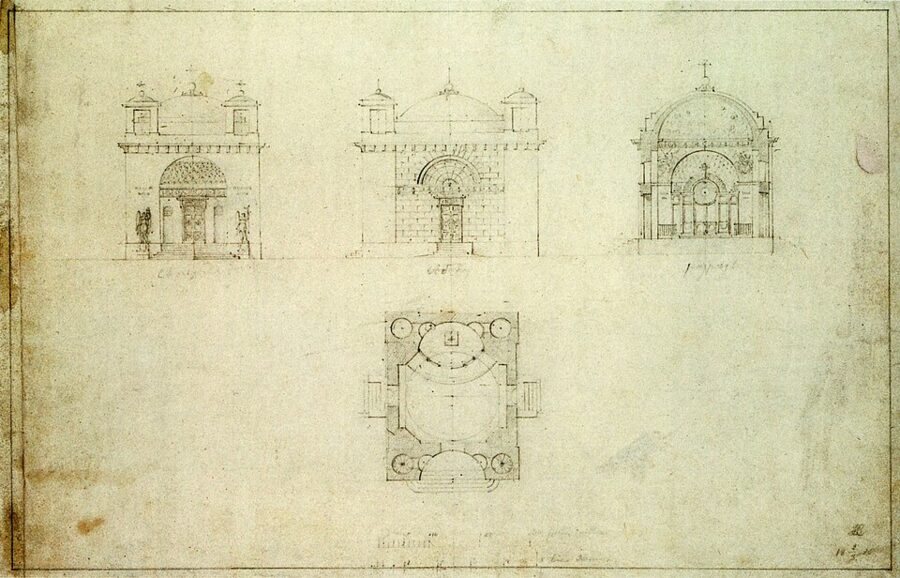
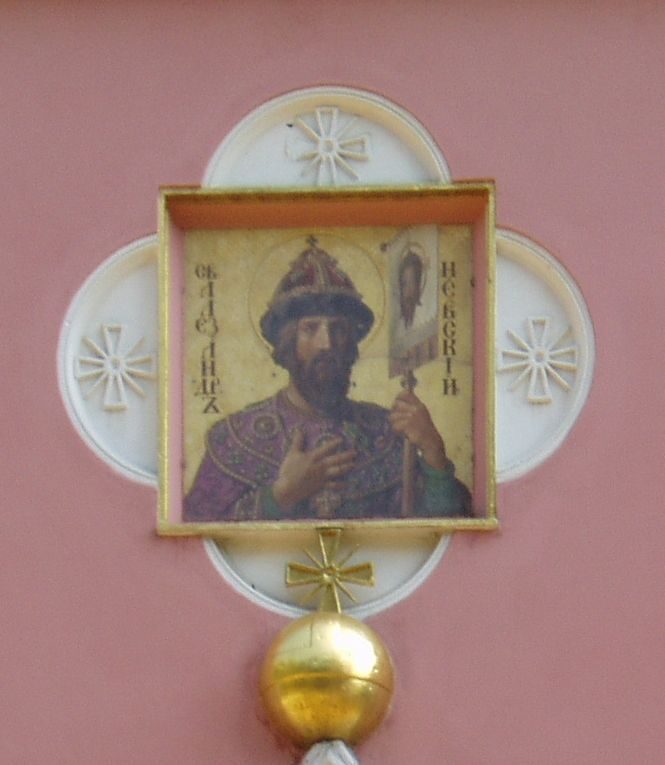

By tradition the foundation stone goes under the altar, at the east end. The ground there turned out to be too poor to build on, so the church was moved a few meters east, and the stone, with its inscription in Russian and German about the friendship of the two courts, now lies under the entrance on the west side. You walk over it on your way in.
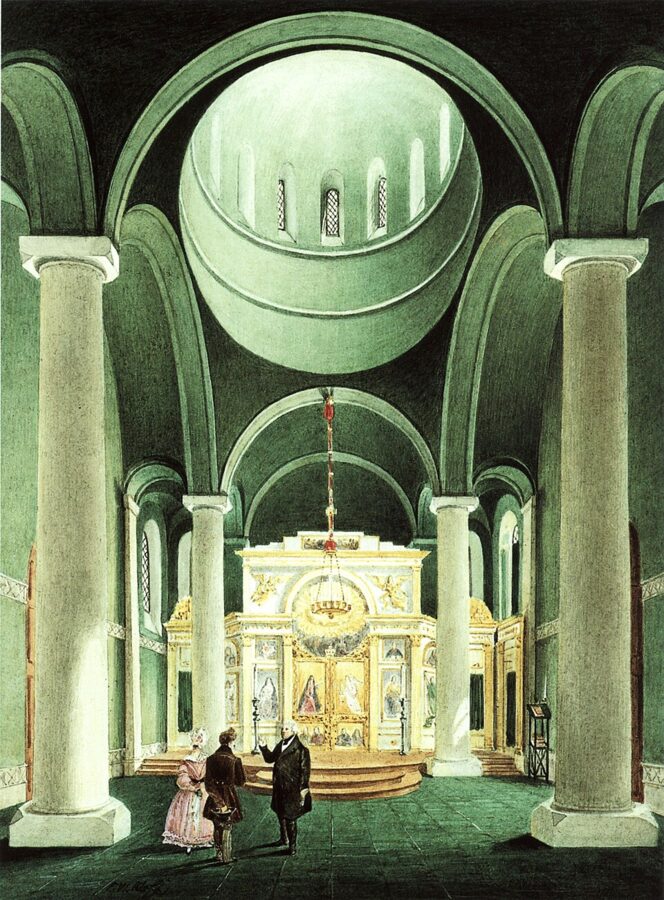
Snethlage ran this building site too. In 1828 Karl Friedrich Schinkel, the leading architect in Prussia, reviewed the Russian artists’ plans for the interior and added classical ornament to the Byzantine scheme. The first service was held on June 10, 1829, before Nicholas I and Alexandra Feodorovna, in Prussia for the wedding of the king’s son Wilhelm. The consecration waited until September 11, 1829, the saint’s day again.
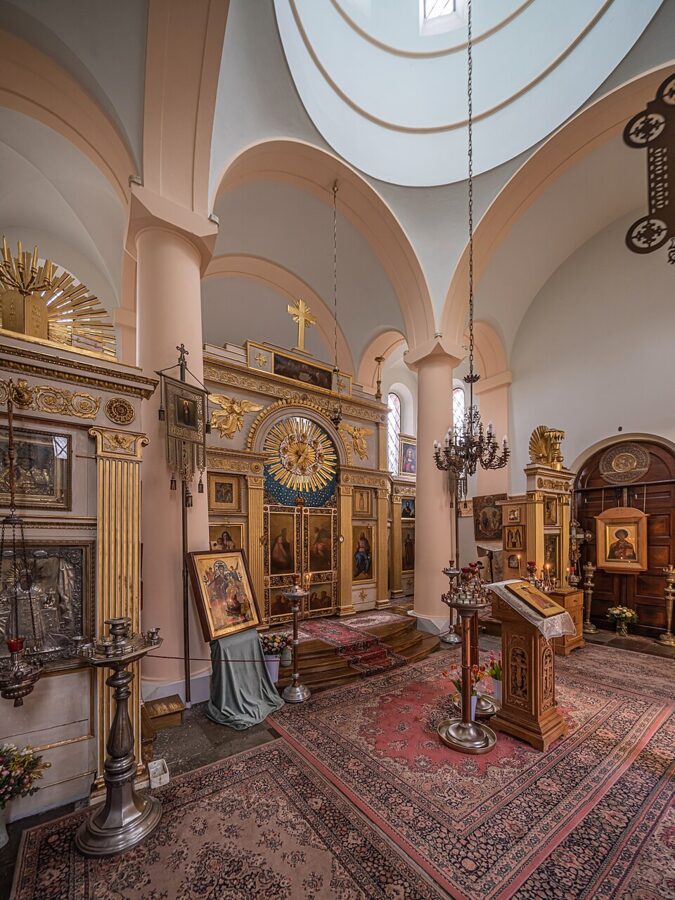

Schinkel kept the room plain on purpose. Instead of the painted walls usual in a Russian church, he had them done in pale green, with columns and arches in soft white, and on the iconostasis he swapped the planned half-columns for fluted pilasters in leaf gold on white. The room holds about fifty people, standing, as is usual in Orthodox worship. Russian and Prussian campaign medals from 1813 to 1815 hang beside the iconostasis in memory of the singer-soldiers.
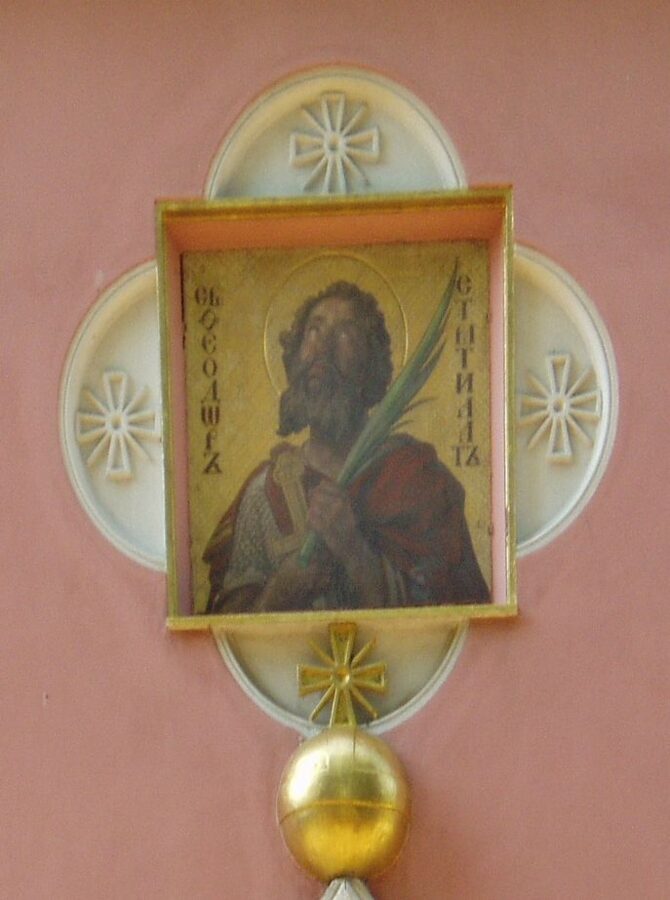

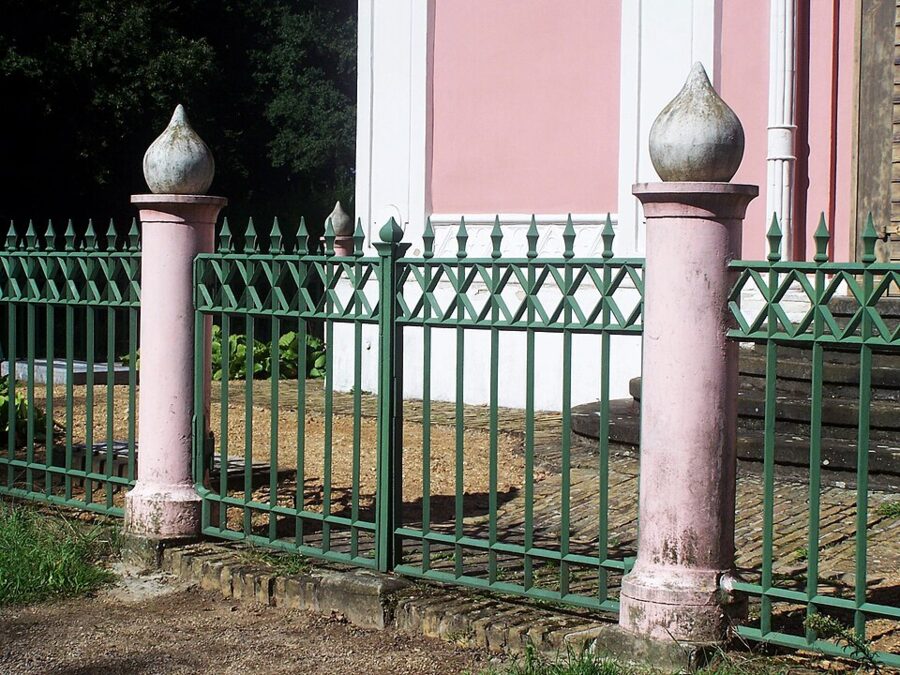
Outside, look at the fence. In 1830 Schinkel designed a cast-iron railing for the little churchyard, with four gates and sandstone posts, and he topped each post with a small stone onion dome to echo the roof. The priests are buried here, including the first, Archpriest Johannes Tschudowski, whose tomb slab is set into the outside wall of the apse. The colonists themselves were buried in Potsdam’s Old Cemetery, and their graves are lost.

The royal country house
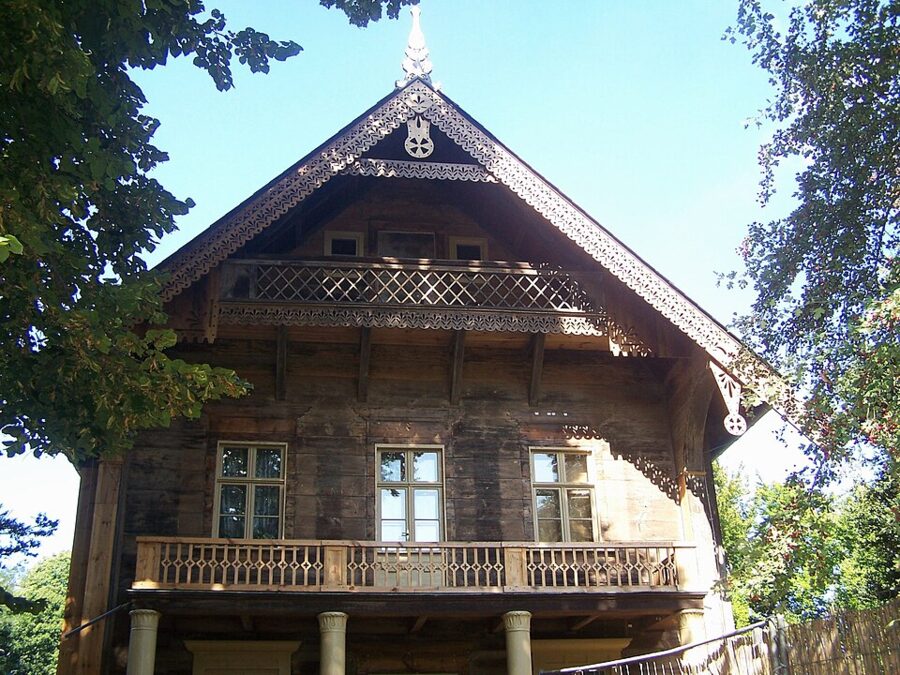
A few meters north of the church stands house 14, built by Snethlage’s engineers and finished in February 1827 for the church warden. It is clad in plain boards rather than half logs, because its design came from a different scheme: an unbuilt model village near Tsarskoye Selo by the French architect Auguste de Montferrand. It became known as the royal country house (Königliches Landhaus) because the king kept a tea room on the upper floor.
The room was furnished in Biedermeier style, with a samovar from Tula and a tea service painted with folk scenes, a present from Nicholas I to his father-in-law. After services the king would sit up there while the colony’s choir sang for him outside. His last visit was on September 26, 1839, the year before he died. Since 1986 the house has been the home of the parish priest, Archpriest Anatolij Koljada, and his family; it is not open to visitors.

The parish today
The church never stopped being a church, and it came through the Second World War undamaged. Since 1945 it has belonged to the Berlin diocese of the Russian Orthodox Church under the Moscow Patriarchate. The archpriest serves around a thousand Orthodox faithful of many nationalities, and the parish lives on voluntary contributions, since it levies no church tax.
Visitors are welcome to look in quietly. The parish publishes its service times and opening hours: in late 2026 the vigil was on Saturdays at 17:00 and the Divine Liturgy on Sundays at 10:00, and the church was open for private prayer Monday to Friday 11:30–15:30, Saturday 10:00–19:00 and Sunday 09:30–17:00. The parish asks you to call ahead because hours change. December 6 is the feast of Alexander Nevsky in the Orthodox calendar, and the colony’s church keeps it with a liturgy.

Museum Alexandrowka in house 2
The museum is a private venture. Dr. Hermann Kremer, a gynecologist from Haltern am See in North Rhine-Westphalia, restored houses 8 and 2, set up a foundation in 2001 and opened the museum in house 2 in January 2005, after architectural historians from the Technical University of Berlin had surveyed the building. It is small, and it is the only way to see inside one of these houses.
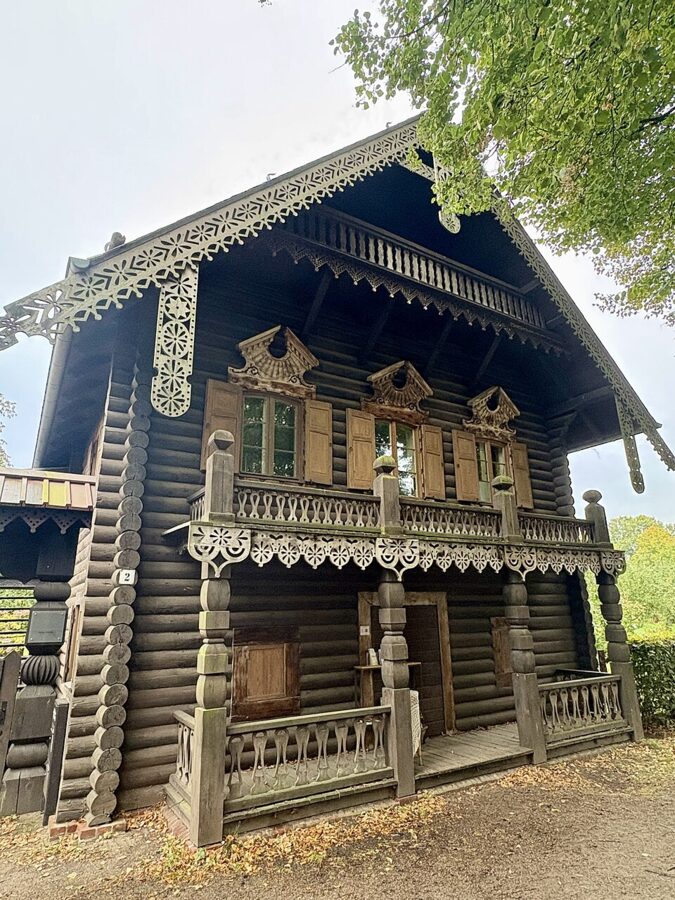
Six rooms are furnished in Biedermeier style with panels on the colony’s history, the singers and the family ties between the Romanovs and the Hohenzollerns. The objects are few but specific: a fire bucket, the nameplate of the Jablokoff family from house 8, an engraving of the church. Two 30-minute films run on a loop, and the ground floor shows how plainly the colonists lived, with the kitchen and the one heated parlor.
Behind the house is a garden of nearly 2,000 m² planted with old fruit varieties, and a café with about forty seats in the former stable and yard. It serves drinks, cake and ice cream during museum hours, and you can sit there without a museum ticket. The museum’s toilets are wheelchair accessible, and the restaurant in house 1 points wheelchair users to them.
For 2026 the museum opened April 1 to October 31, daily 10:00–18:00 except Wednesdays, and it was closed on two Saturdays in August for private events. Hours differ in winter and are announced by the museum, so check before a visit between November and March. Admission is €3.50, reduced €3.00, and children under 14 with their parents go free. If it is your birthday, so do you.
Guided tours cost €11 for 45 minutes or €15 for 90 minutes per adult, and English or Russian tours start at €60 by arrangement. Between April and October a combined ticket with the Belvedere on the Pfingstberg costs €10.50, reduced €7.50, the cheapest way to do both halves of this walk.
Eating in the colony
House 1, near the southern end of the colony, has held a Russian restaurant since April 1, 2003. The menu at Alexandrowka1 covers the borscht, soljanka, pelmeni and blini you would expect, plus kvass, birch sap and tea from the samovar.

On the 2026 menu, a bowl of Ukrainian borscht or meat soljanka costs €7.50 and Siberian pelmeni in broth with sour cream €15.40, with mains running to just under €20. The restaurant is open all year, Tuesday to Sunday 12:00–21:00, with the last food orders at 19:45; it closes on Mondays unless a public holiday falls on one. Strollers cannot come inside because of the escape-route rules, and the old house has steps and narrow toilet doors, so mention a wheelchair when you book.
From November 11, 2026, to January 3, 2027, it also runs a Christmas menu, and groups of six to twelve can book the full samovar ceremony on weekdays. Reservations are taken by phone and through its booking form.
The walk: Nauener Tor to the Neuer Garten
Alexandrowka sits on a very good walk, about 5 km from the old town to the lake in the Neuer Garten. You start among the Baroque streets, cross into Lenné’s Russian village, climb to a Russian church, keep climbing to an Italian villa, and come down through an English landscape garden to the house where the Allies settled Germany’s postwar fate in 1945. Allow three to four hours with stops.
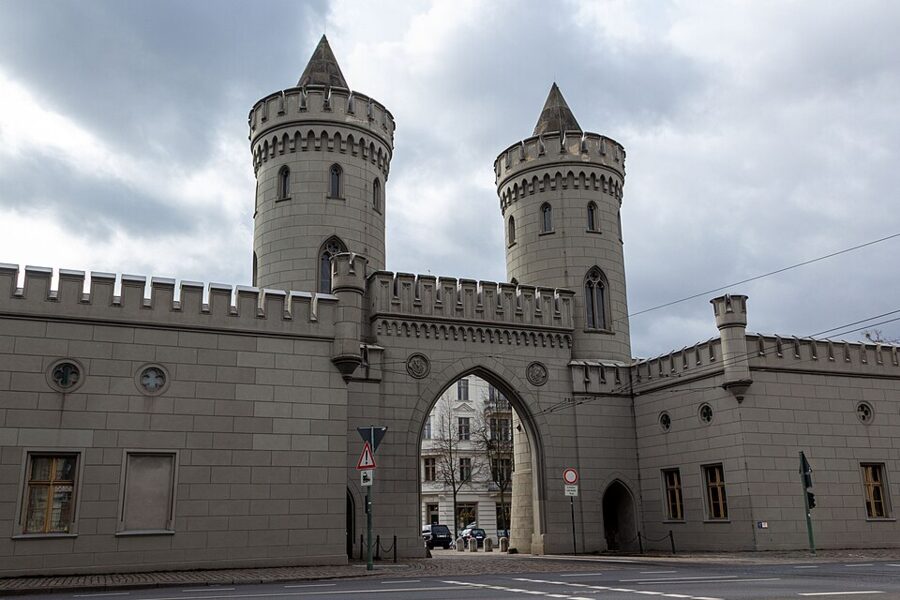

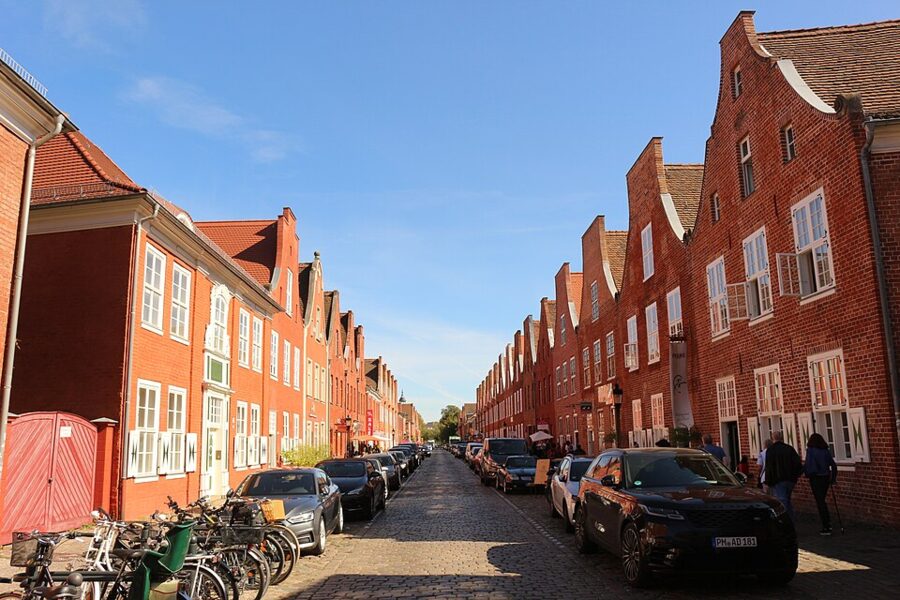

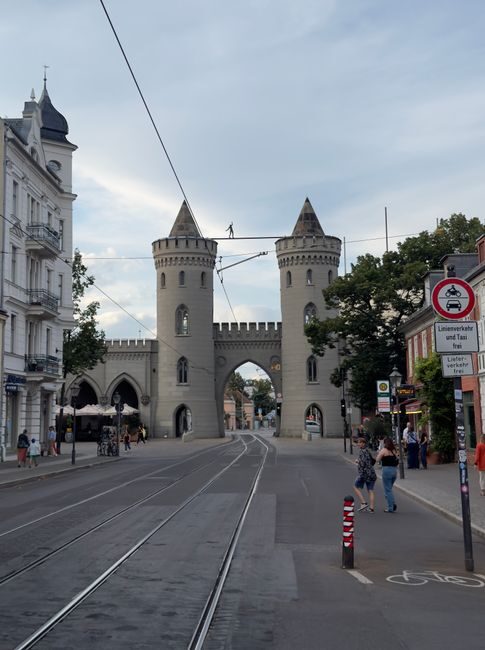
Start in the Dutch Quarter (Holländisches Viertel), the grid of red-brick gabled houses that Frederick William I (Friedrich Wilhelm I) built for Dutch craftsmen in the 1730s. Its north side runs up to the Nauener Tor, the city gate Frederick the Great first drew as a vignette for his own writings. Walk through it, with the trams using the same arch, then north along Friedrich-Ebert-Straße.
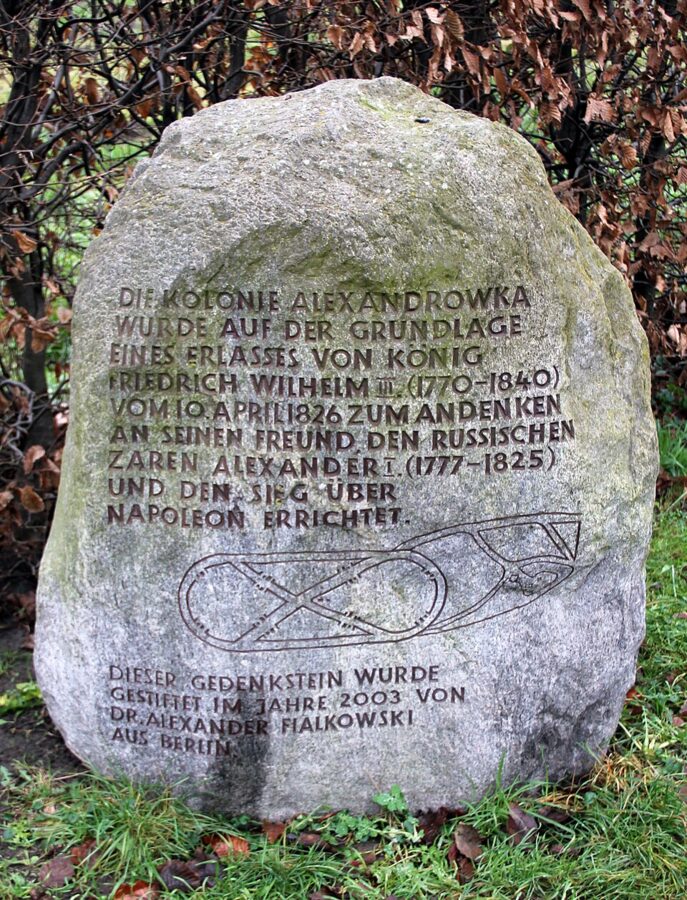
After about 1 km, the memorial stone marks the southern tip of the colony. Walk into the oval, follow a diagonal avenue to the crossing at its center, and continue north to the museum in house 2. From the top of the oval a path climbs the Kapellenberg to the church, a five-minute walk.
Up the Pfingstberg to the Belvedere
From the church, carry on uphill to the Pfingstberg, at 76 m one of the highest points in Potsdam, ten to fifteen minutes on foot. Its crown is the Belvedere, a twin-towered viewing palace Frederick William IV sketched after the Villa Farnese at Caprarola. Ludwig Persius, Friedrich August Stüler and Ludwig Ferdinand Hesse built it between 1847 and 1863, and the king died before it was finished; only the towers and courtyard of a much bigger scheme were built.
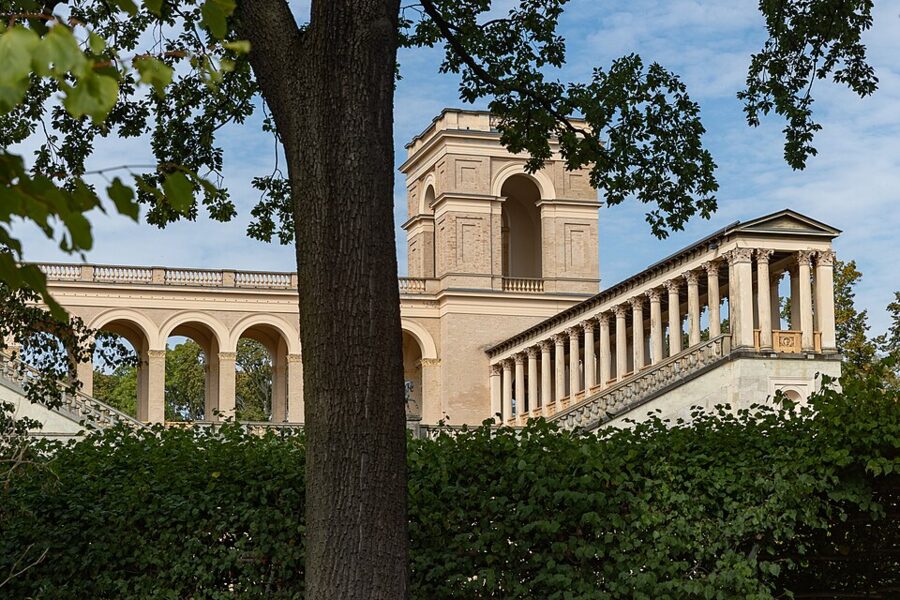

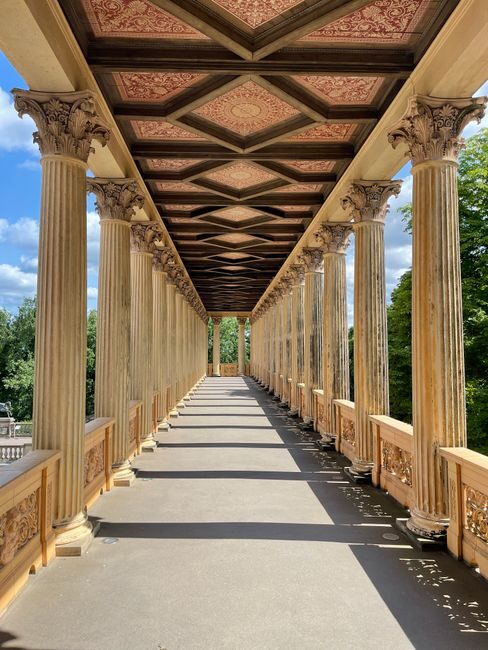
Now the reveal. The pool in the middle of the Belvedere’s courtyard is a reservoir. It is filled from the pump house at the dairy in the Neuer Garten below and still feeds the fountains down there, so the king’s Italian fantasy is, structurally, a water tower dressed as a Renaissance villa. Potsdam does this a lot.
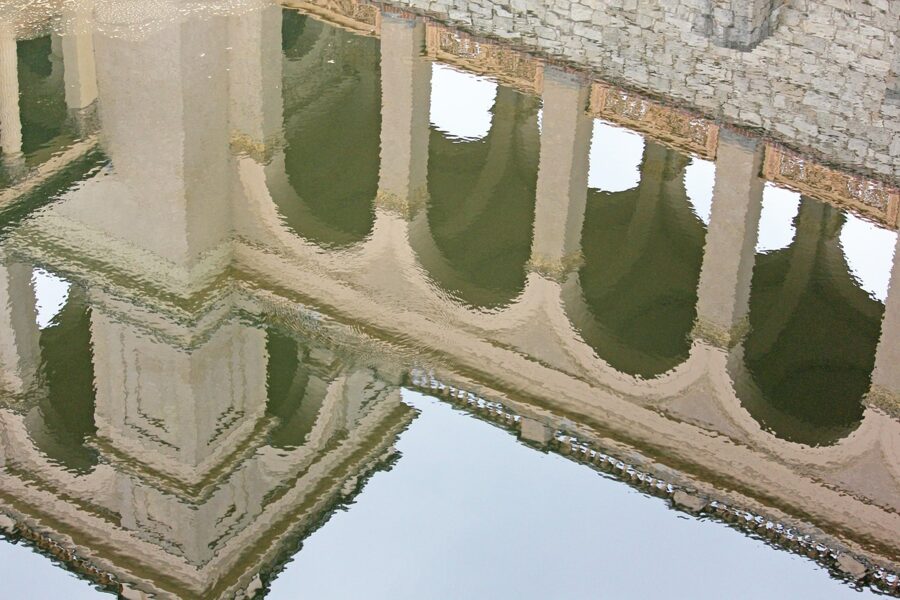
The Belvedere fell into ruin after 1945, and in the Cold War the hill sat beside a closed Soviet military zone. A citizens’ association founded in the late 1980s, still in GDR times, saved it and runs it today, the only monument in the World Heritage ensemble operated by a private society.
The Belvedere’s season runs from March (weekends only, 10:00–16:00) to October, closed on Mondays, with longer weekend hours in summer. Admission is €8, reduced €6. After October it shuts for the winter, opening in 2026 only for an Advent weekend on December 12 and 13 and a New Year’s concert on January 1, 2027.
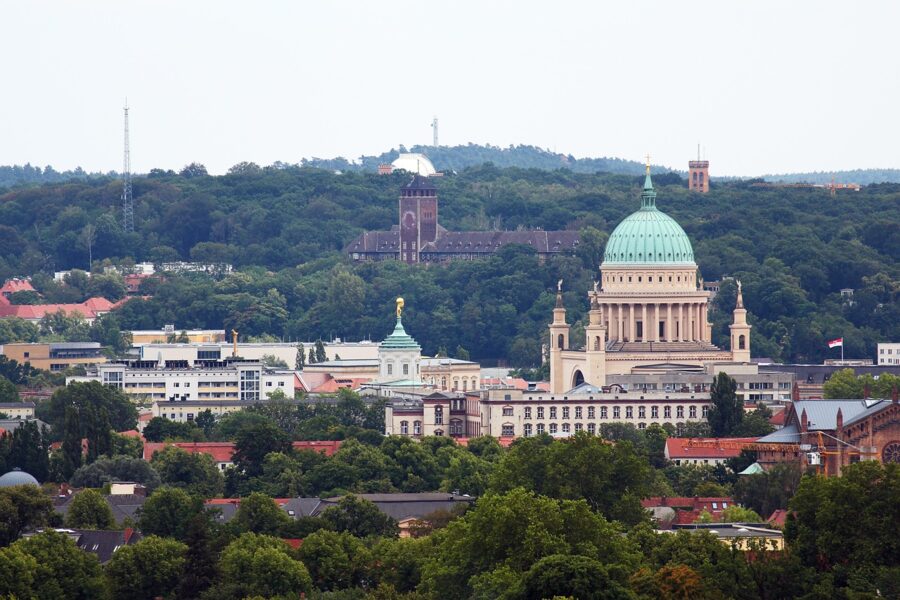
On the slope just below the Belvedere stands the Pomonatempel of about 1800, the first building by the nineteen-year-old Karl Friedrich Schinkel, which opens on weekend afternoons during its exhibitions. If you have the Sanssouci+ ticket from Sanssouci in your pocket, the Belvedere lets you in at the reduced price.
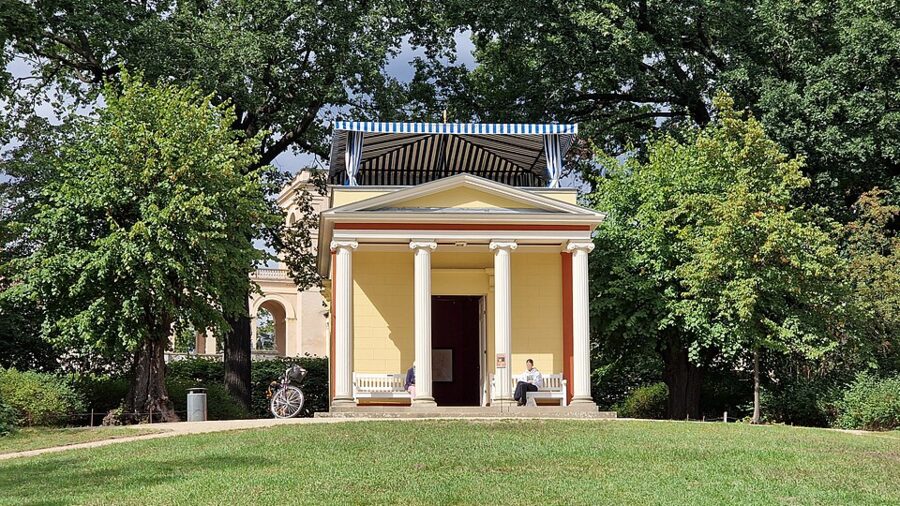

Down to the Neuer Garten
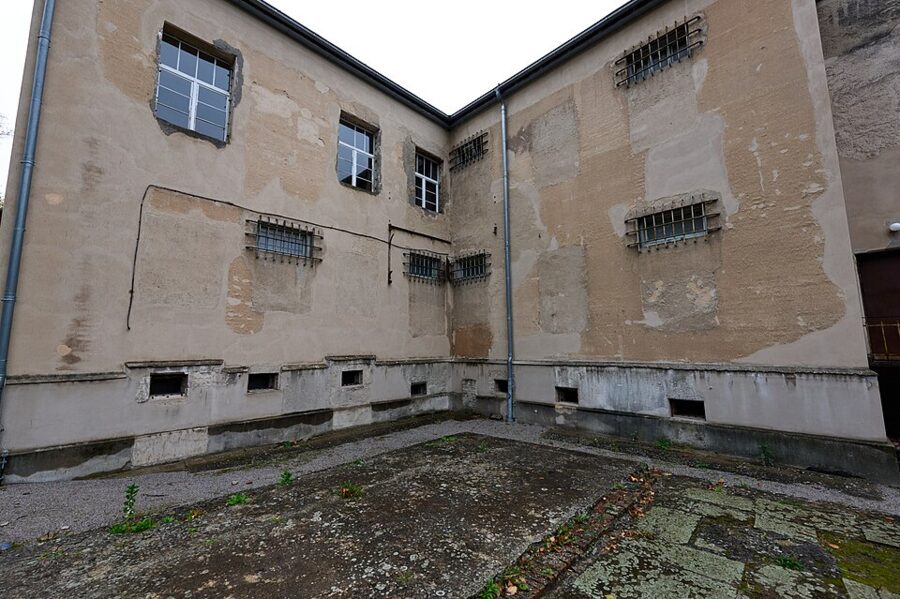
From the Pfingstberg, walk east and downhill toward the Neuer Garten. A short detour on the way takes you to Leistikowstraße, where a former parsonage served the Soviet military counterintelligence as its central remand prison from 1945 to 1991, inside the closed KGB town known as Military Settlement 7. The memorial there opens Tuesday to Sunday 13:00–17:00 and is free. It is a sober counterweight to the morning’s royal friendship, and it belongs on the same walk.
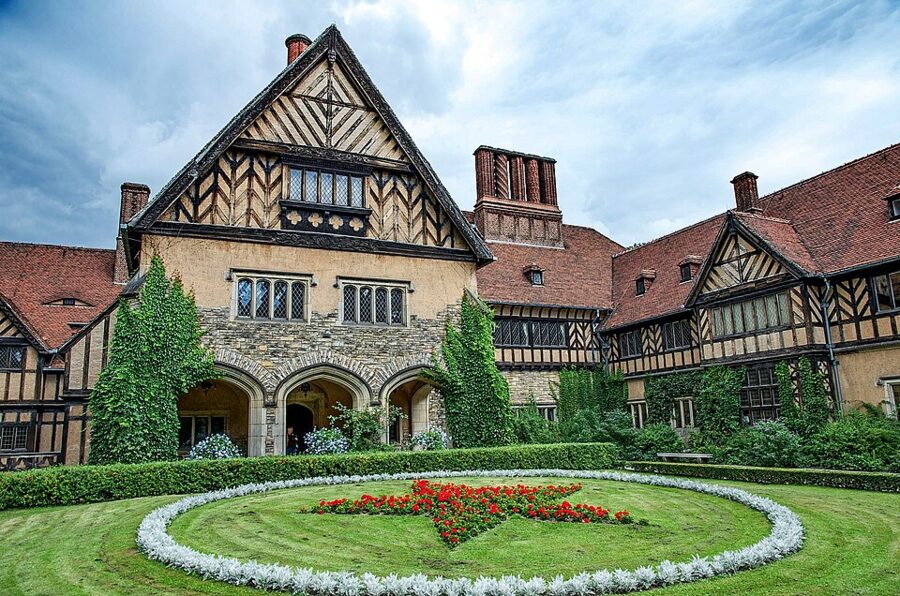
The Neuer Garten is open daily from 08:00 until dusk, free, and it is run by the Prussian Palaces and Gardens Foundation (Stiftung Preußische Schlösser und Gärten, SPSG). At its north end is Cecilienhof Palace (Schloss Cecilienhof), the last palace the Hohenzollerns built and the setting of the Potsdam Conference in the summer of 1945. Be warned that the foundation lists Cecilienhof as closed for renovation until further notice; the park around it stays open.

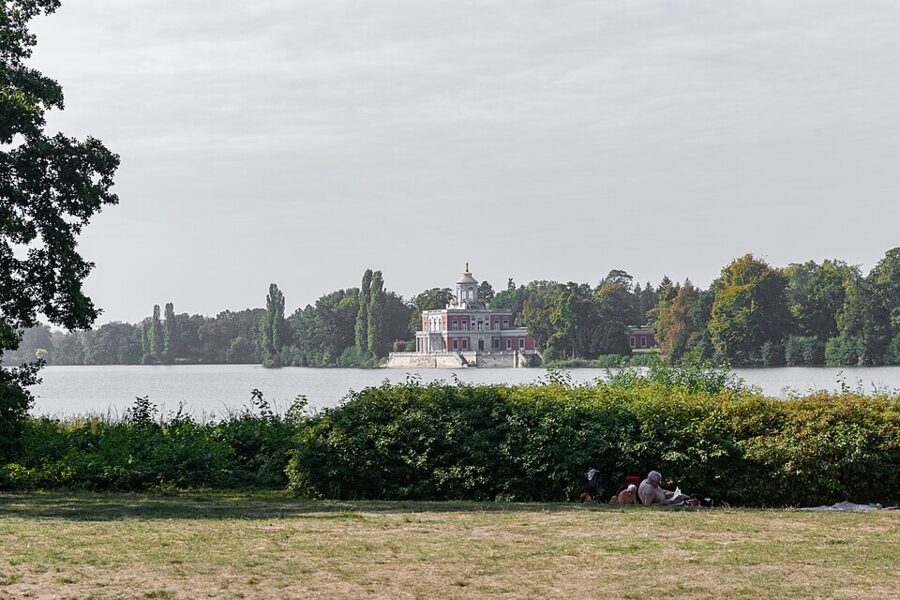
Farther south along the Heiliger See stands the Marble Palace (Marmorpalais) of Frederick William II (Friedrich Wilhelm II). From November to March it opens only on weekends, 10:00–16:00, and from April to October Wednesday to Sunday 10:00–17:30, with admission at €8 in 2026 and €9 in 2027. Bus 603 from the Schloss Cecilienhof stop takes you back to the center when your legs are done.

Getting there, tickets and timing
From Potsdam Hauptbahnhof, trams 92 and 96 reach the Puschkinallee stop at the eastern edge of the colony in about ten minutes. A second stop on the west side, Am Schragen/Russische Kolonie, is served by the same trams and by buses 604, 609 and 638, and bus 603 stops at Höhenstraße for the Belvedere.
Inside Potsdam a single ticket Potsdam AB costs €3.00 in 2026 and €3.10 from January 1, 2027. From Berlin, the single ticket Berlin ABC costs €5.00 in 2026 and €5.20 from 2027, and the Deutschlandticket covers everything; more in my guide to Potsdam as a day trip from Berlin.
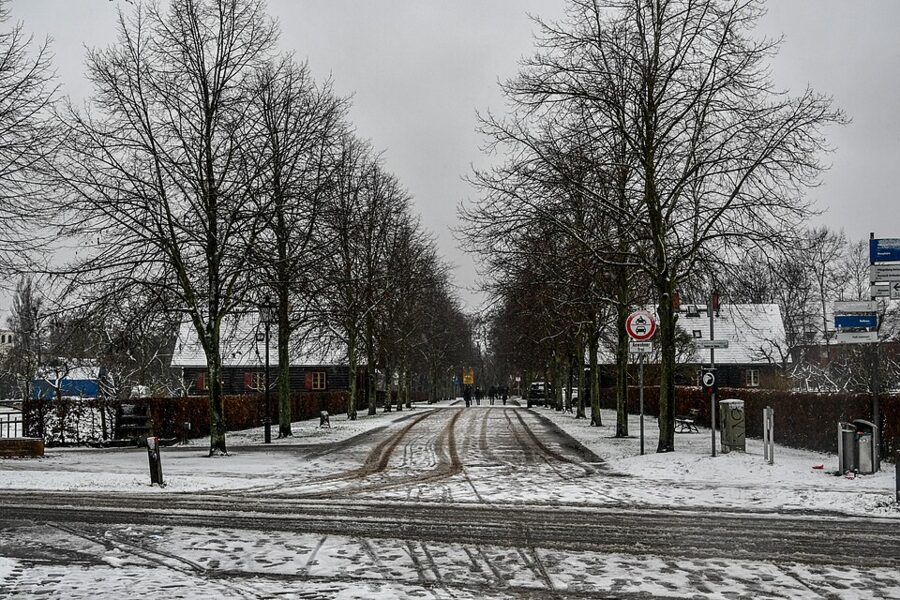

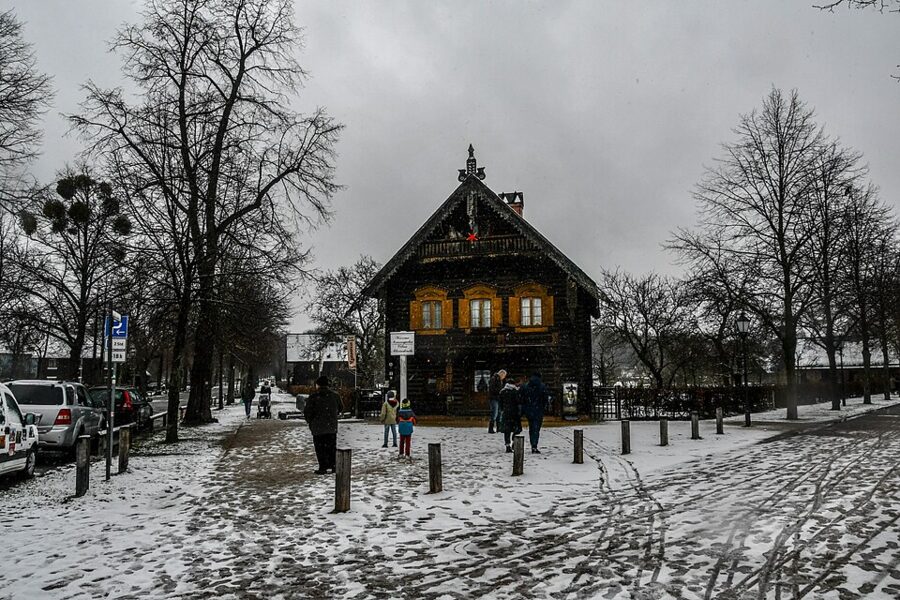
With one day, pair Alexandrowka with the Neuer Garten rather than Sanssouci, which is on the other side of town. The colony is a public street, open at all hours, but the museum, the café and the Belvedere are seasonal, so April to October is the time for the whole route. Come in spring for the blossom or September for the apples, and keep the winter for the restaurant, the church and snow on the gables. For the rest of the town, see my list of things to do in Potsdam.
Before you take the tram back, return to the crossing of the avenues and look again at the nearest gable. The logs are cladding, the cow is long gone, and the singers’ names survive on nameplates by some of the doors. The memorial worked anyway. Two hundred years on, the tram from Puschkinallee is ten minutes from the station, and a king’s grief for a friend is still standing in the orchards, dressed as a Russian village.