

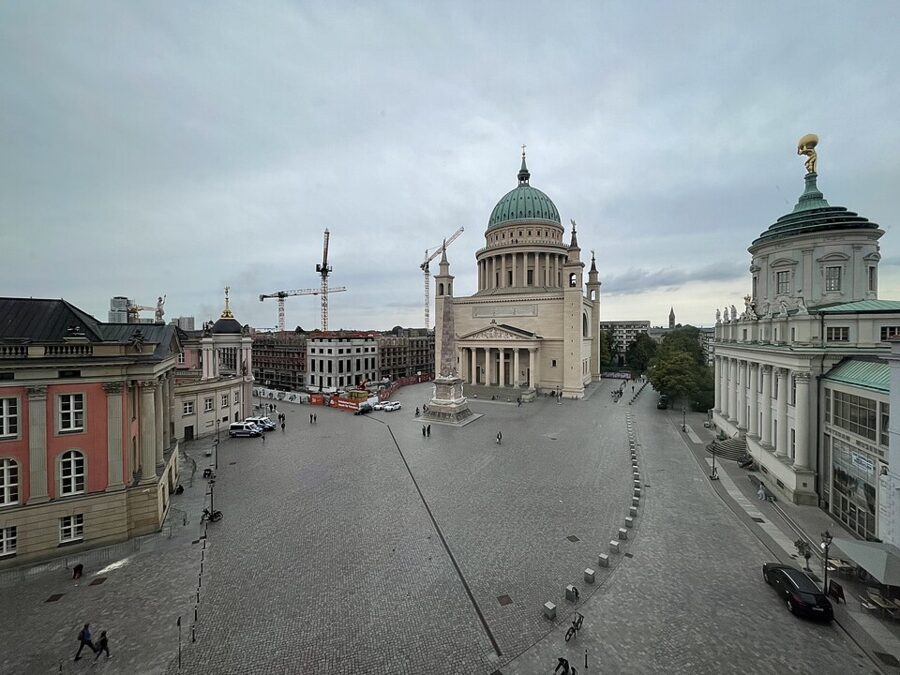
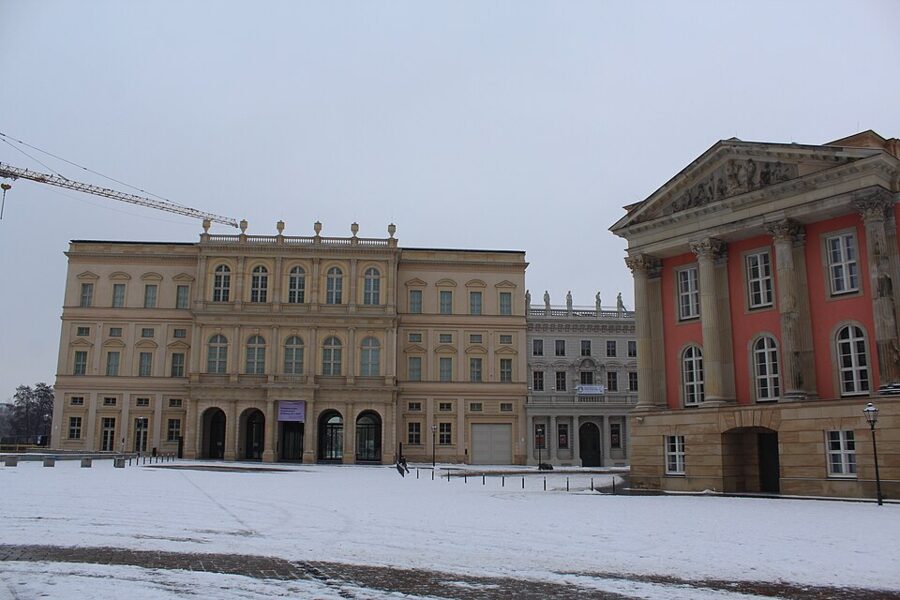
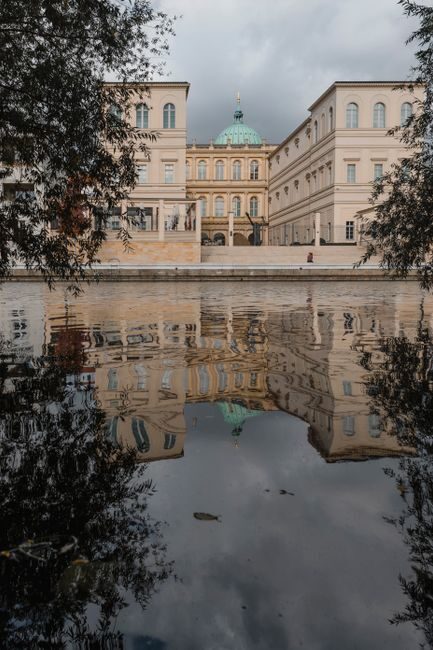
Stand by the obelisk in the middle of the Alter Markt and face the pale palace on the south-east side of the square, the one with columns stacked three orders high and a balcony carried on two free-standing pillars. It looks as if it has stood there since Frederick the Great‘s builders finished it in 1772. The facade is about ten years old. For most of the second half of the twentieth century this side of the square was a lawn and a car park, and today the rooms behind it hold 40 paintings by Claude Monet, more than any museum in Europe outside Paris.
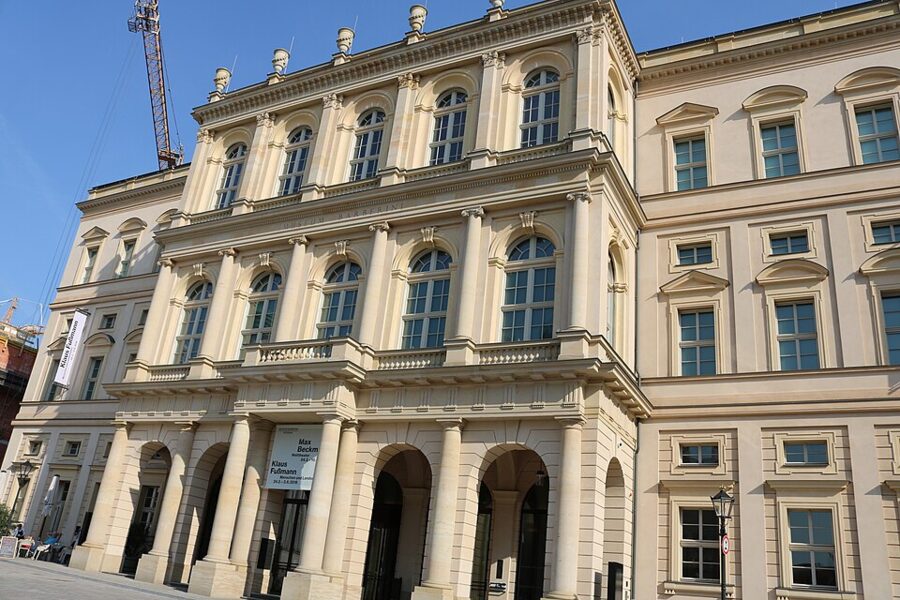
That is the Museum Barberini: a reconstructed eighteenth-century townhouse on Potsdam’s old market square, paid for by the software billionaire Hasso Plattner, filled with his French Impressionist landscapes and with three loan exhibitions a year that pull in paintings from Washington, Tokyo and Paris. It is the one art museum in Potsdam that people come out from Berlin for, and it sits ten minutes’ walk from the station.
The numbers are small and the reputation is large: 17 galleries, 115 paintings in the permanent collection, and about 350,000 people through the door in 2025. The building’s own story, a Roman palace copied for a Prussian square, burnt out in 1945, blown up in 1948 and rebuilt in 2016, is half the reason the place feels the way it does. It is worth knowing before you look at a single Monet.
Contents7 parts
A Roman palace for a Prussian square
Frederick the Great (Friedrich II) rebuilt the middle of Potsdam the way he rebuilt his palaces, from books. From 1748 he had the plain houses around the City Palace (Stadtschloss) torn down and replaced at royal expense with grander fronts copied from Italian, English and French models, many chosen from engravings in his library. The tenants had no say in the matter, and often could not afford to heat what the king had built for them.
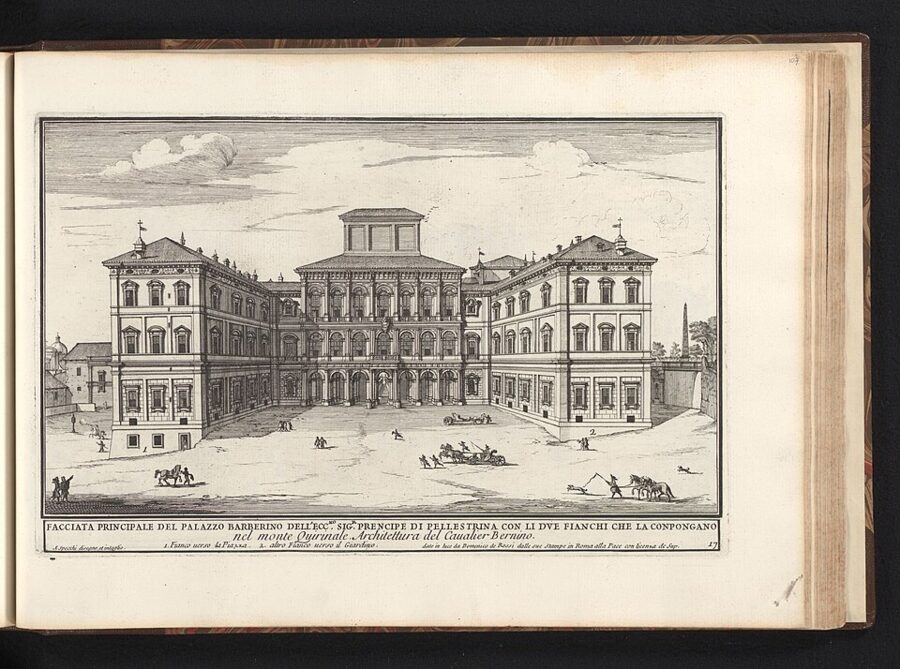
The Barberini came late. By 1771 the other sides of the Alter Markt were long finished, and the south-east side still needed a centerpiece. The model chosen was the Palazzo Barberini in Rome, the Baroque palace that Carlo Maderno, Gian Lorenzo Bernini and Francesco Borromini built for the family of Pope Urban VIII from 1625.
The design is usually credited to Carl von Gontard, with Georg Christian Unger possibly involved; the museum names both. What they built in 1771 and 1772, for a master carpenter and an innkeeper, was a trick of scale. Behind one monumental facade of thirteen window bays stood two separate three-story townhouses, with low mezzanine floors slipped in behind the side wings to use the oversized volume and save on heating.
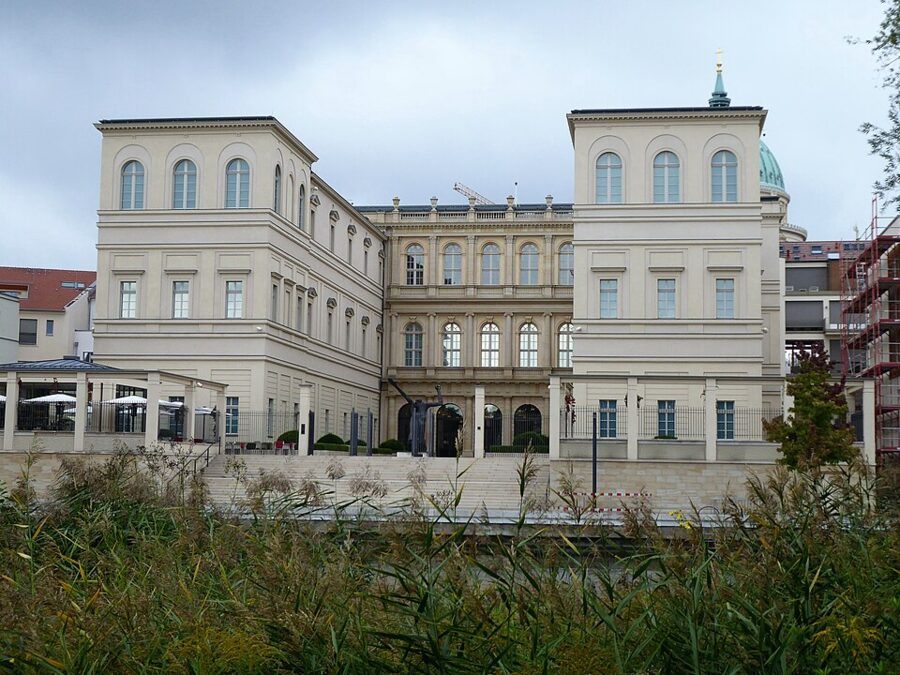
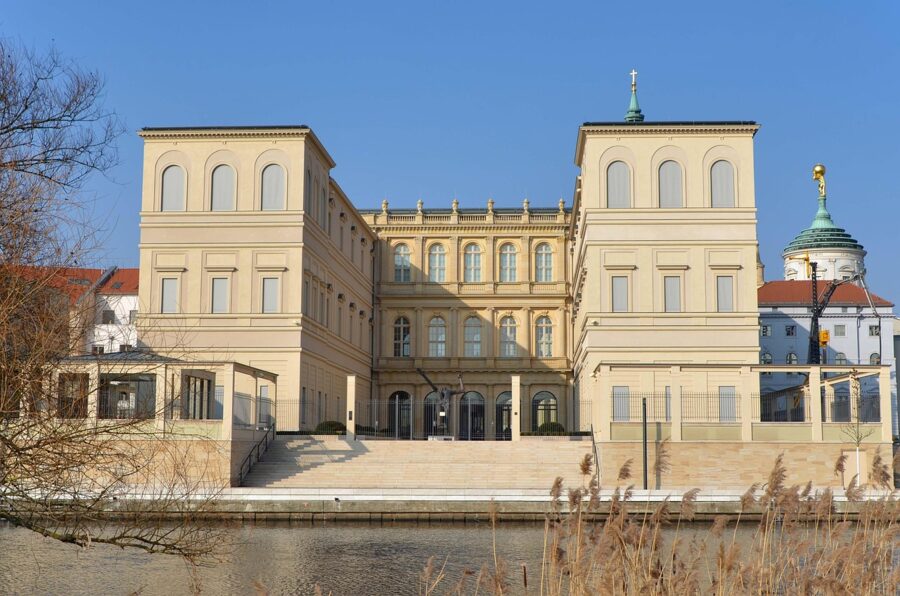
The five middle bays stepped forward and carried the Roman orders one above the other, Tuscan, Ionic, Corinthian. Rome’s palace stands free with two wings around a court of honor; Potsdam’s was pressed flat into a street front. The back, facing the river, was left plain, because only stables and sheds stood there.
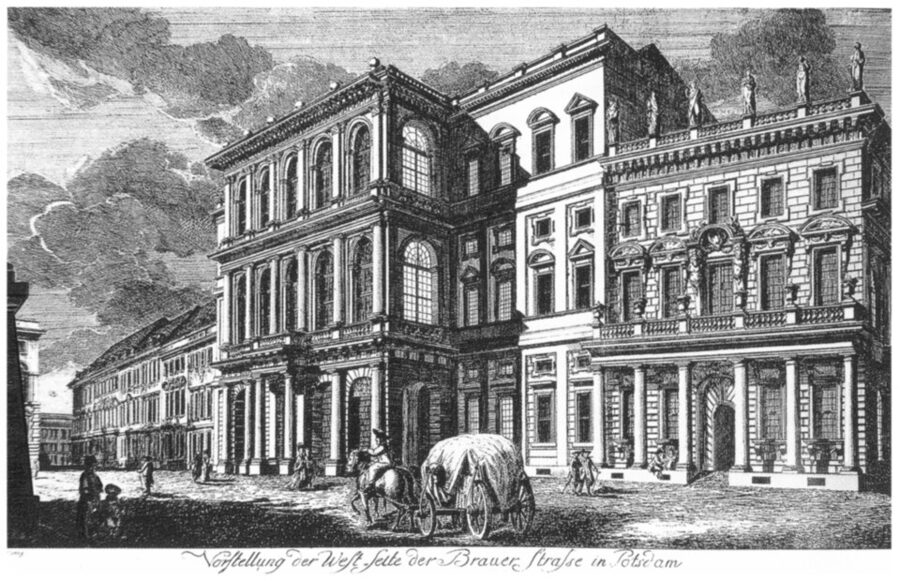
The building did not go up smoothly. Heinrich Ludwig Manger, whose architectural history of Potsdam appeared in 1789, records that part of one house collapsed during construction through careless work, killing several men. The name was muddled from the start: Friedrich Nicolai described it in 1786 as a copy of the Palazzo Borghese, and the side wings do borrow from that palace.
Potsdam settled the question by calling it the Palast Barberini for the next 170 years. “Palais Barberini,” the form you will see on posters, turns up only in twenty-first-century publicity.
A house for concerts, clubs and the first cinema
The building’s second life began with Frederick William IV (Friedrich Wilhelm IV), the king who wanted every riverbank in Potsdam to look like a painting. In 1845 he backed two local master masons with 80,000 thalers to buy the house and remodel it to plans by Ludwig Persius. The two townhouses were joined, a columned carriage passage was cut through the ground floor, and two long wings were added at the back, framing a garden court with steps down to the Havel.
After Persius died suddenly in 1845, Ludwig Ferdinand Hesse finished the decoration of the two grand halls on the upper floors. The owners agreed to let the city’s art and science society use them free of charge “for eternity.”
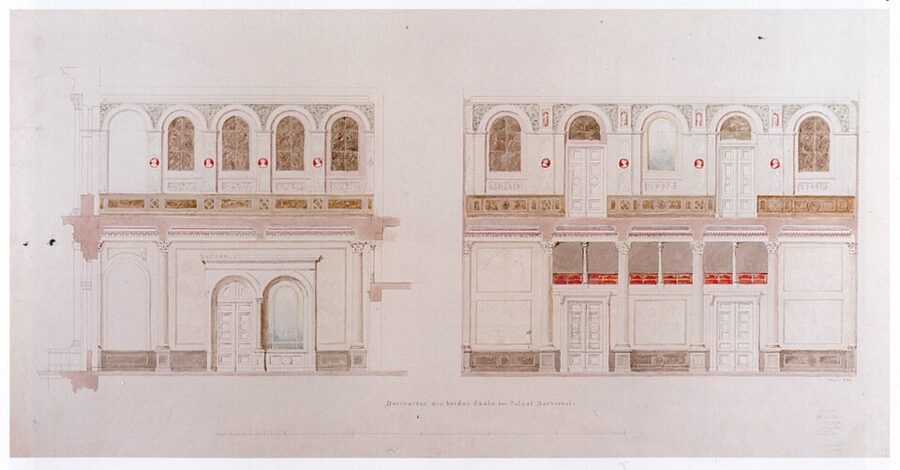
For a century the Barberini was where Potsdam went out. Clara Schumann, Anton Rubinstein and Wilhelm Furtwängler gave concerts here, and the city’s first cinema showed films in it. The owners lost money on the whole venture. The city bought the building in 1912, and by the 1930s it held offices, a youth hostel, a library and a registry office.
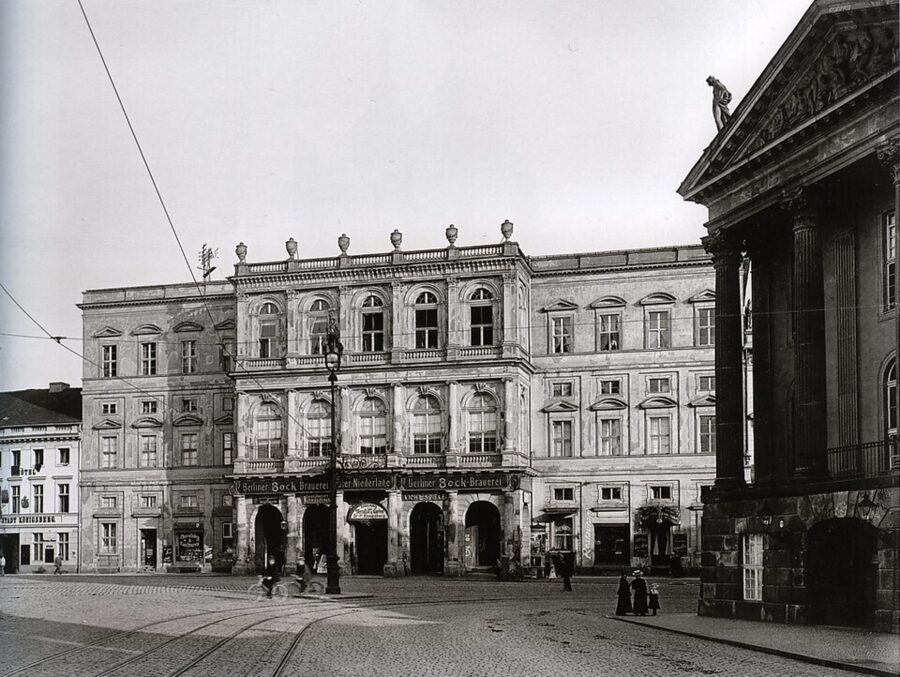
1945, the empty lot and the tin can
On the night of April 14, 1945, from 22:16, about 490 Royal Air Force Lancasters dropped some 1,700 tonnes of bombs on Potsdam. Around 1,600 people died, and much of the old center was destroyed. The Barberini was gutted, then damaged again in the fighting with the Red Army, and on March 24, 1948, the ruin was blown up together with the neighboring Palasthotel.
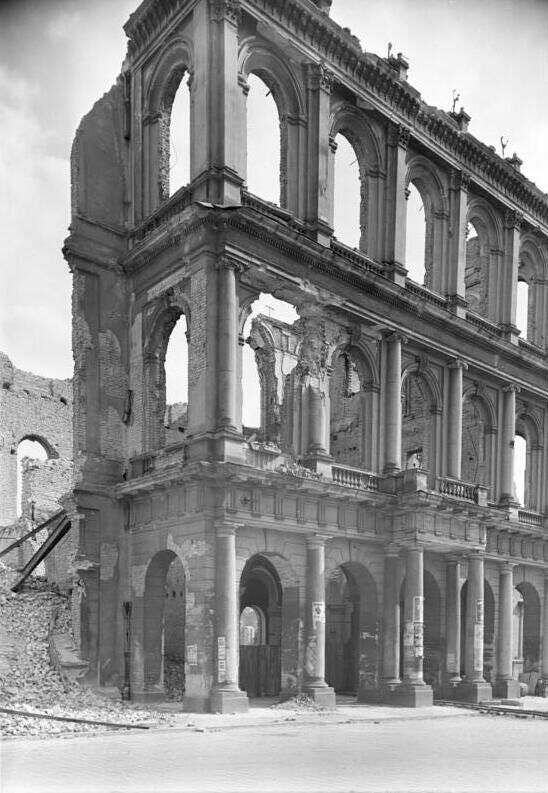
Forty years of an unfinished square followed. Through the GDR years the land was a lawn and a car park, with a promenade along the river behind it. In 1989, still under the East German government, work began on a new municipal theater on the site; after the Wall fell, the city council had the concrete shell torn down in 1991.
A provisional theater clad in aluminum went up in its place, and Potsdam nicknamed it the Blechbüchse, the tin can. Meant to last five years, it housed the Hans Otto Theater until 2006, when the company moved to its new house at Schiffbauergasse.
The rebuilding, 2013–2016
The decision that brought the palace back was really a decision about the square. In 2005, after a citizens’ vote, Brandenburg’s state parliament chose to rebuild the City Palace as its new home, and the city committed to restoring the historic center around it. A 2010 plan named a handful of “lead buildings” to be rebuilt as close to the originals as possible, and the Barberini was one. The plot went to the Berlin developer Abris Lelbach in partnership with Plattner’s foundation, with Thomas Albrecht of Hilmer Sattler und Albrecht as architect.
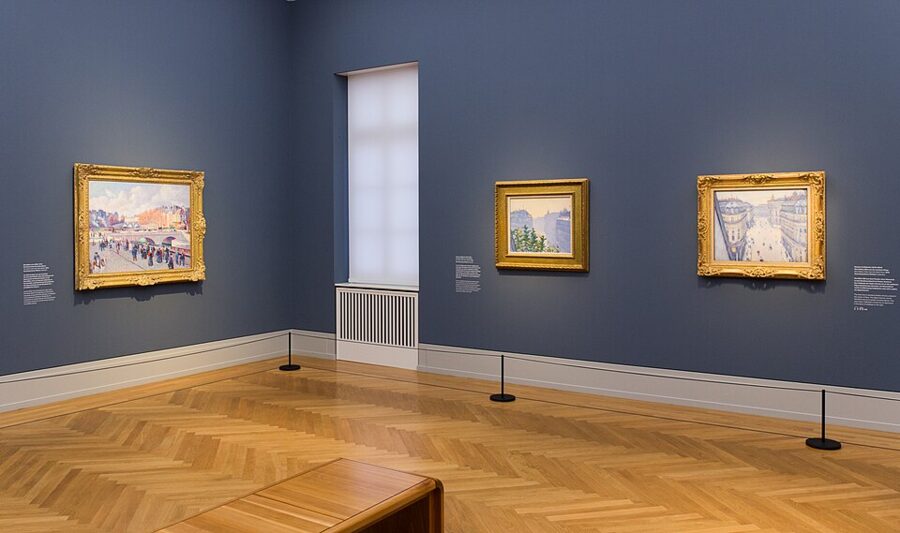
The rules were strict outside and loose inside. The square facade, the court facade of the middle block and the original volume had to match the old building, and the columns and ornament were cut from Elbe sandstone quarried, like the originals, in Saxony and Bohemia. Behind the facade, five old floor levels became three tall gallery floors with coved ceilings and oak parquet: 17 galleries, 2,200 square meters.
Ground was broken in August 2013, and the museum opened on January 20, 2017, with Angela Merkel and Bill Gates among the guests. The public came in three days later.
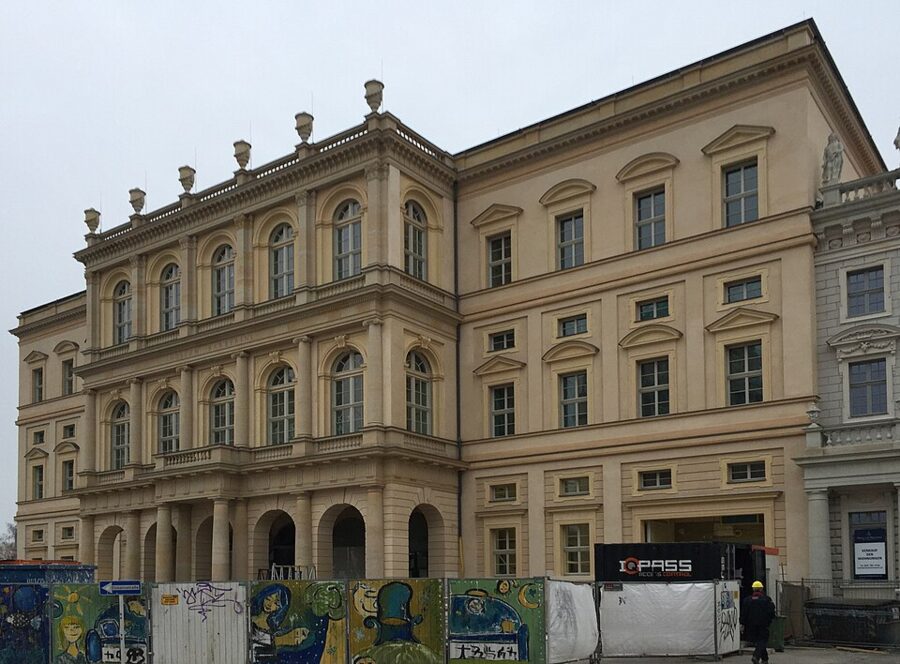
I think the plain interior is the right call. Hesse’s halls survive only in a few drawings, and the high rooms with their deep window reveals suit paintings made to be seen in daylight. The Barberini’s history of the building includes a photograph of the empty square in May 1985, worth a look before you go.
Hasso Plattner and the collection
Hasso Plattner was born in Berlin in 1944 and co-founded the software company SAP in the early 1970s. In 2007 he gave €20 million toward the baroque facades of the City Palace, which settled whether the new Landtag would look like the old palace. In 2012 he announced that he wanted to give the city a gallery for changing exhibitions, and the Barberini is what that idea became; Potsdam made him an honorary citizen in 2017.
He started buying Impressionists in 2000. The museum says his first purchases followed his love of sailing, coasts, harbors and boats on the Seine, before his taste spread to Paris streets, orchards, fields and snow. In the fall of 2020 he moved 103 works to the museum on permanent loan, and ten more arrived in 2022 and 2023, among them one of Monet’s views of the Houses of Parliament in London.
The Hasso Plattner Collection now stands at 115 paintings by 23 artists, 40 of them by Monet. They hang in nine themes that follow French landscape painting from the 1850s into the twentieth century: Impressionism first, then the dotted color of the Neo-Impressionists, then the flat, loud color of the Fauves.
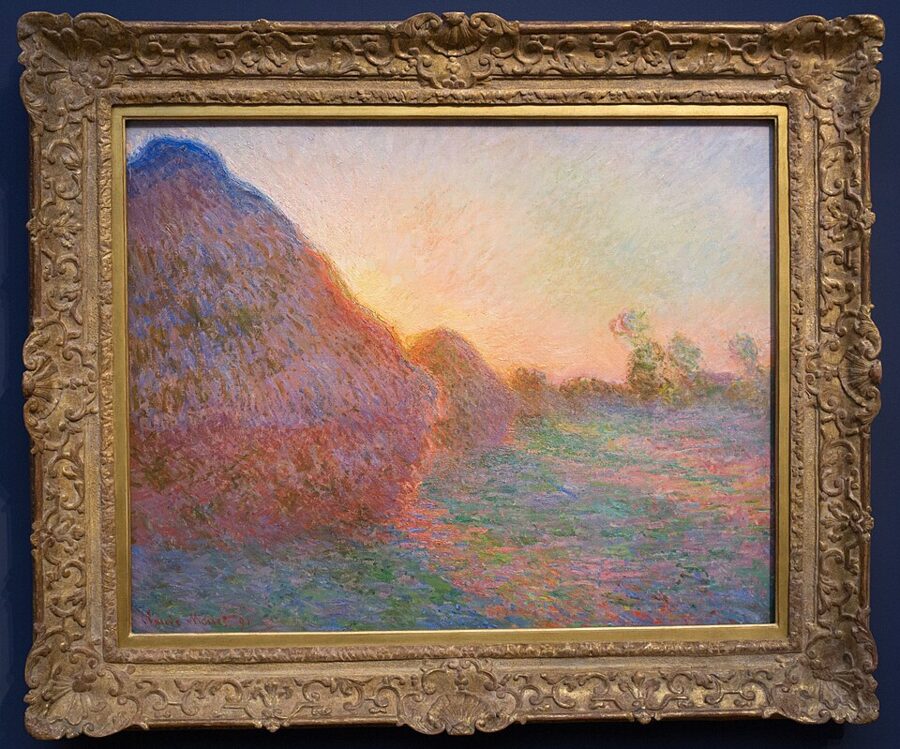
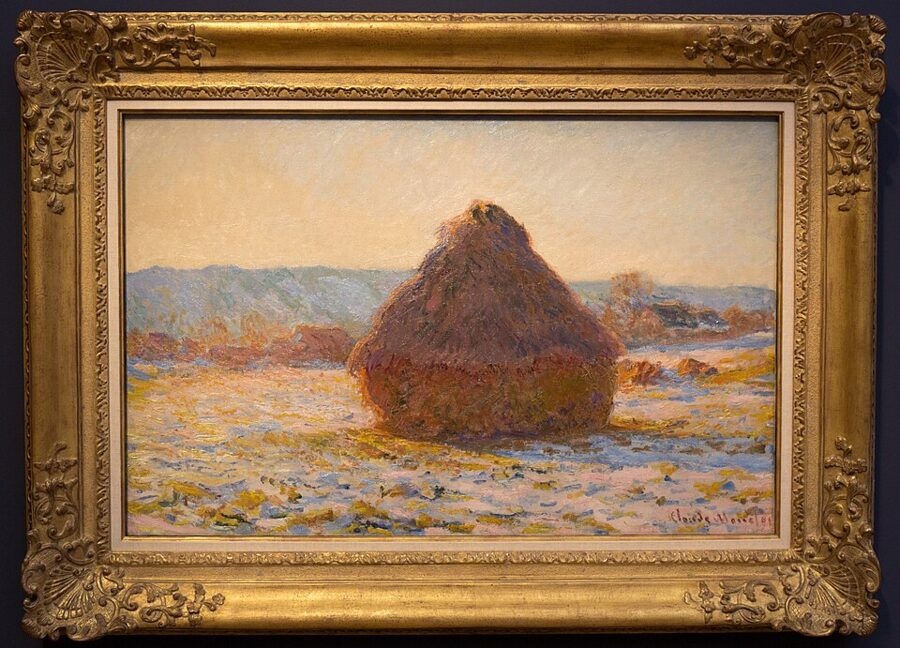
The most famous canvas is Monet’s Grainstacks of 1890, from the series he painted near his house at Giverny. Plattner bought it at Sotheby’s in New York in May 2019 for a record price for any Monet, the first Impressionist painting to break the nine-figure mark at auction. On October 23, 2022, two climate activists threw mashed potatoes at it and glued themselves to the wall below. The glass in front of it held, and the painting was unharmed.
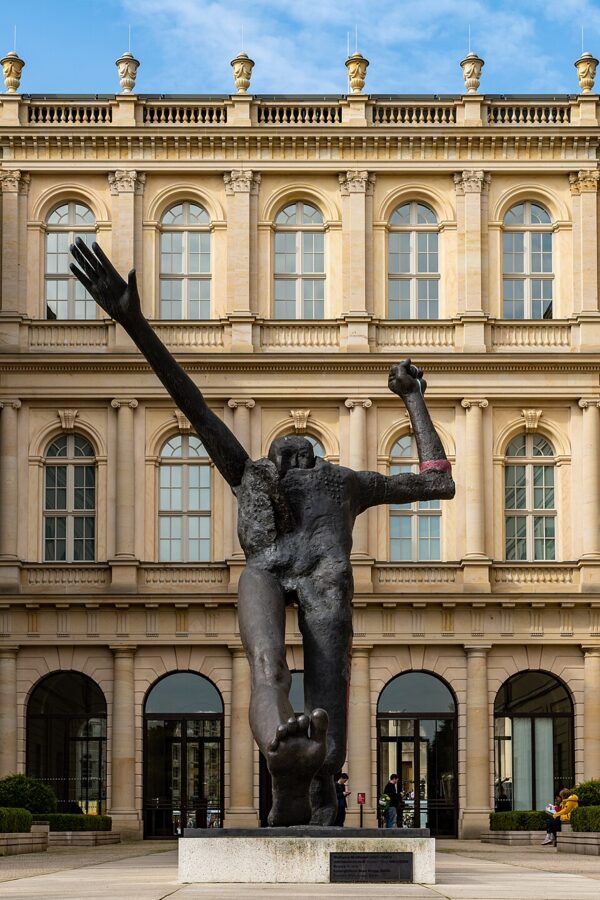
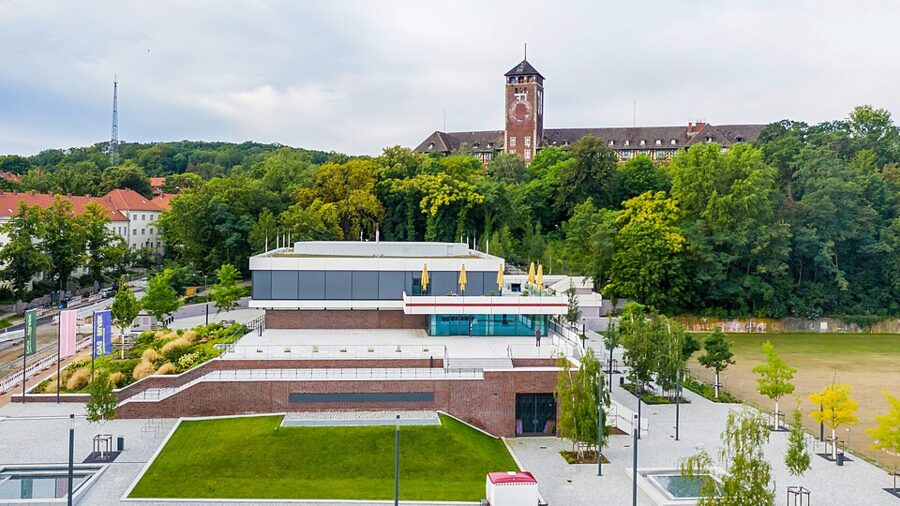
Plattner’s other enthusiasm, art from the former GDR, lives across the river. The 2017 show Behind the Mask: Artists in the GDR started a national argument about where that art belongs, and since 2022 it has had its own house, DAS MINSK Kunsthaus, a 1970s terrace restaurant on the Brauhausberg. One piece stayed behind. A 5-meter bronze of Wolfgang Mattheuer’s Der Jahrhundertschritt (The Century Step), a striding figure with one arm in a Nazi salute and the other raised in a clenched fist, has stood in the Barberini’s courtyard since the opening.
What is always on view, and what changes
The collection is permanent, which is the most useful thing to know before you buy a ticket. Whatever the special exhibition is, the Monets are in the building every opening day, and one ticket covers both. The exhibitions change up to three times a year, and between shows the museum closes for a few days to rehang (in 2026 it shut from November 2 to 6).
Over ten years the program has ranged widely: Max Beckmann and Gerhard Richter in 2018, late Picasso and Caravaggio’s Narcissus in 2019, Edvard Munch in 2023, Modigliani in 2024, unicorns from the Musée de Cluny into February 2026. The Impressionist thread keeps coming back, and in 2026 it took over, with Max Liebermann in the spring, Paul Signac in the summer and the tenth-anniversary show since November.
What to see: a route through the paintings
The hang changes with every exhibition, so I won’t promise you a room number. During the anniversary show, collection paintings are woven through it as the starting points of its stories; afterwards the collection returns to its own sequence. Either way, these are the canvases I would build a visit around, roughly in the order the collection tells its story.
Monet before he was Monet
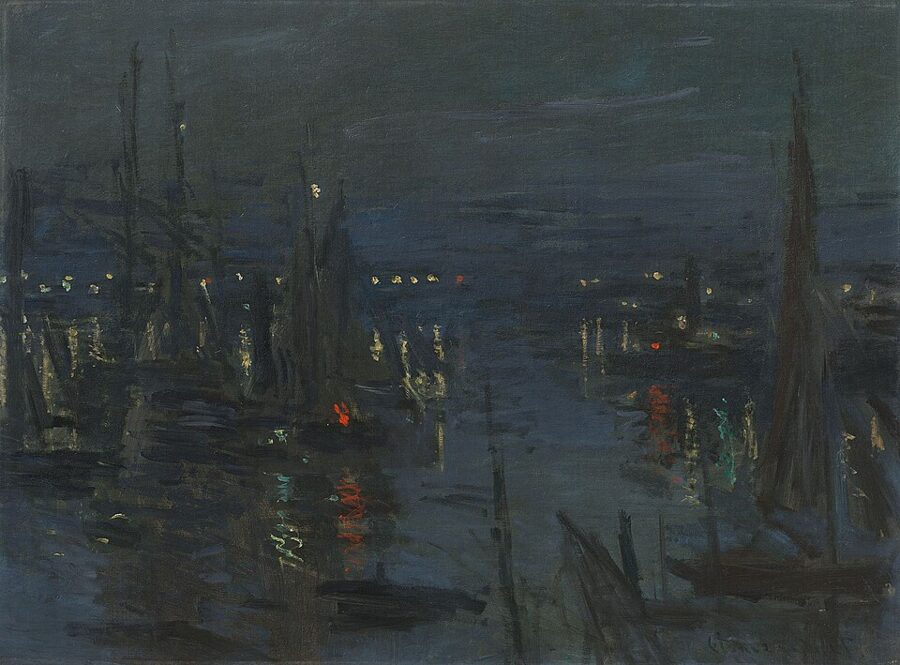
Start with the harbors. The Port of Le Havre, Night Effect is from 1872, the same year and the same port as Impression, Sunrise. The Port of Zaandam and Boats at Zaandam, both 1871, come from Monet’s months in Holland after he fled the Franco-Prussian War. They are darker and tighter than the Monet you know, and you can watch him loosen up from one wall to the next.
Caillebotte’s bridge and his view down Rue Halévy
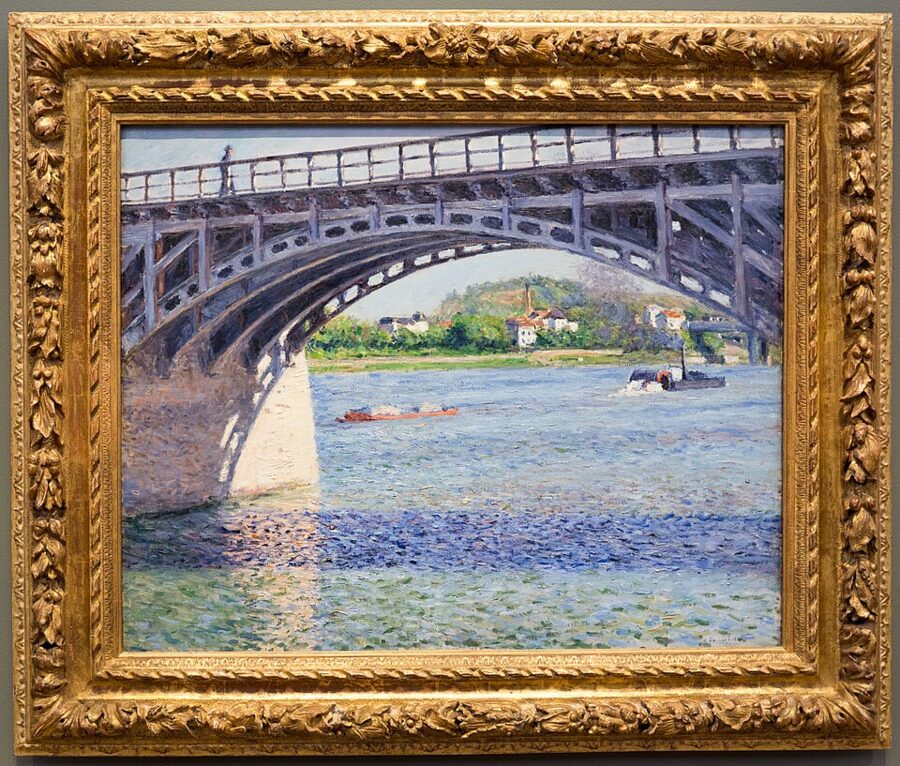
Gustave Caillebotte is the painter the Barberini makes you take seriously. The Argenteuil Bridge and the Seine, from about 1883, is one of the museum’s signature pictures: a cast-iron bridge cutting across the canvas, the river blazing blue beneath, the world cropped like a photograph. Look for his two Paris street views too, Rue Halévy, View from a Balcony of 1877 and Rue Halévy, View from the Sixth Floor of 1878, both looking down on Baron Haussmann’s new boulevards.
Morisot on the Thames
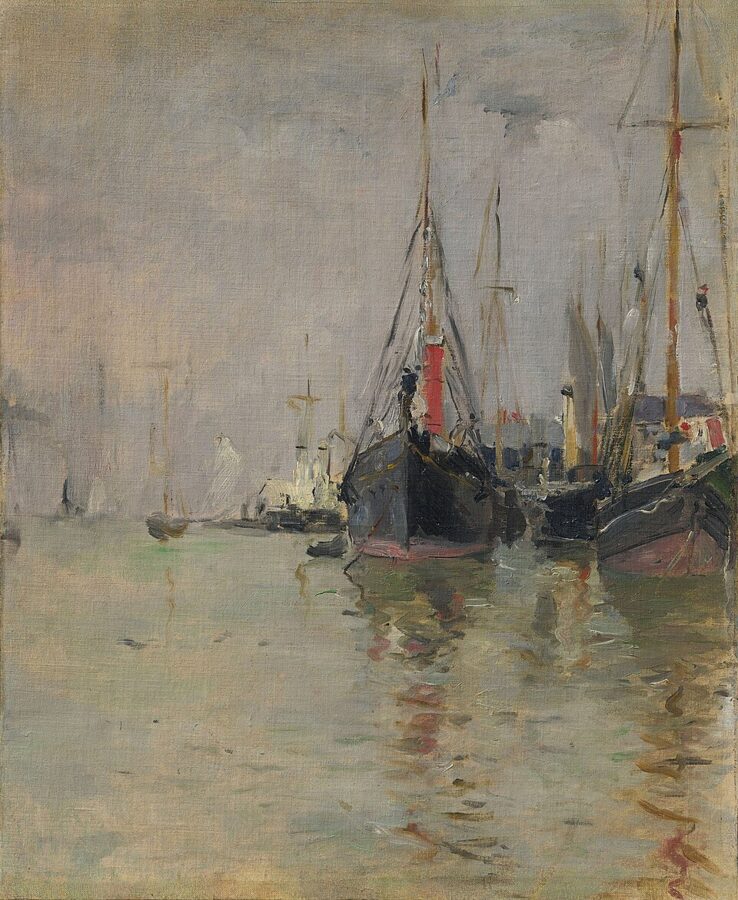
Berthe Morisot showed at the first Impressionist exhibition in 1874, and her The Thames of 1875 is the small picture most likely to stop you mid-stride: masts and grey water in a handful of strokes. The anniversary show makes a point of her, borrowing her The Steamboat of 1875 and Édouard Manet’s 1873 portrait of her reclining from the Musée Marmottan Monet in Paris.
Grainstacks and snow
The collection holds two of Monet’s grainstacks: the 1890 canvas and Grainstack in the Sunlight, Snow Effect of 1891. If both are on the walls, stand between them. The subject is a heap of wheat sheaves; the real subject is what the hour and the weather do to it.
The winter scenes deserve a slow walk: Frost at Giverny, Snow Effect at Limetz, Skaters at Giverny of 1899, and Alfred Sisley’s Snow at Louveciennes of 1874. In November, with the Havel grey outside, they make sense in a way they don’t in July.
Venice, London and the water lilies
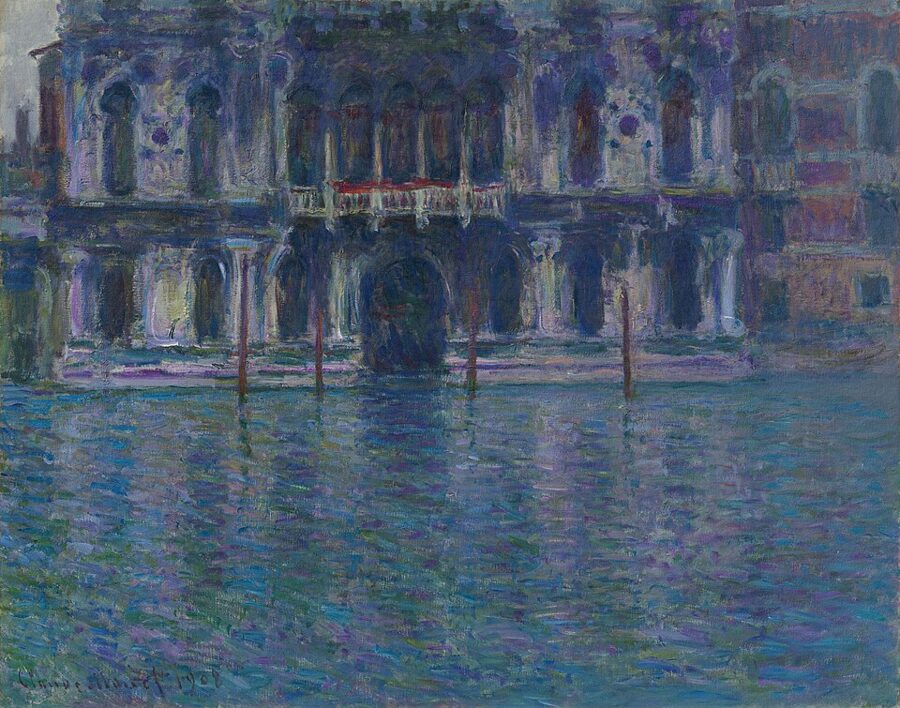
Monet went to Venice once, in the fall of 1908. The Barberini has three of the results: The Palazzo Ducale, The Rio della Salute and The Palazzo Contarini, a Gothic palace front on the Grand Canal dissolved into blue and gold. There is a pleasing echo in finding Venetian palaces inside a Prussian copy of a Roman one, and nearby Houses of Parliament, Sunset puts Westminster behind a sheet of orange fog.
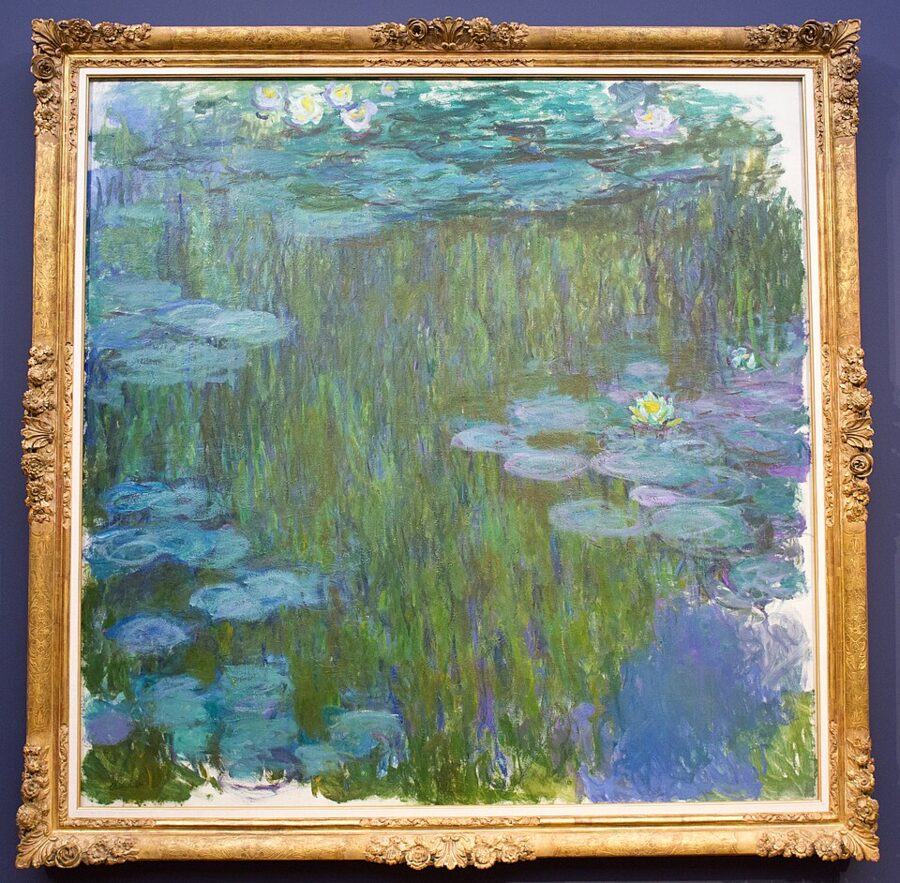
The late Monet is the Giverny garden: Water Lilies of 1914–1917 and The Water-Lily Pond of about 1918, painted when his eyesight was failing and the surface of the pond had become the whole world. Up close they are scrubbed and thick; at four meters the lilies float.
Signac’s harbor, and the dotted aftermath
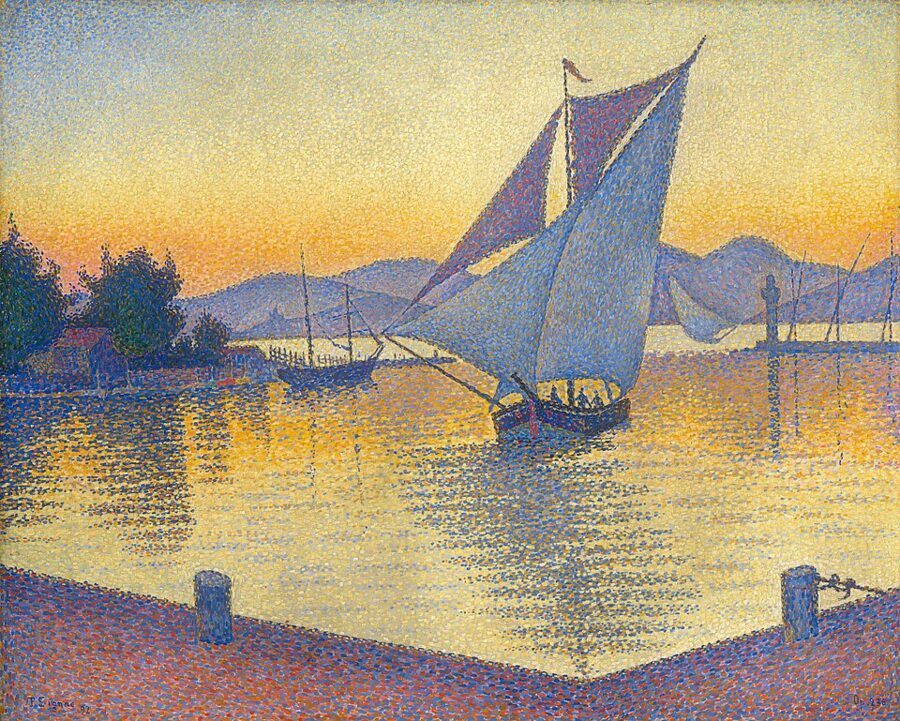
Paul Signac painted The Port at Sunset, Opus 236 (Saint-Tropez) in 1892 in separate dabs of unmixed color meant to blend in your eye. From across the room the harbor glows; from a meter away it falls apart into confetti. Henri-Edmond Cross carried the method to the Riviera, and then the Fauves, Maurice de Vlaminck and André Derain, threw the dots away for slabs of pure color.
Look out too for one small surprise: Pablo Picasso’s Boulevard de Clichy of 1901, painted when he was barely twenty and still half an Impressionist. The museum’s online collection lists every work if you want to plan your own route.
The view from the upper floors
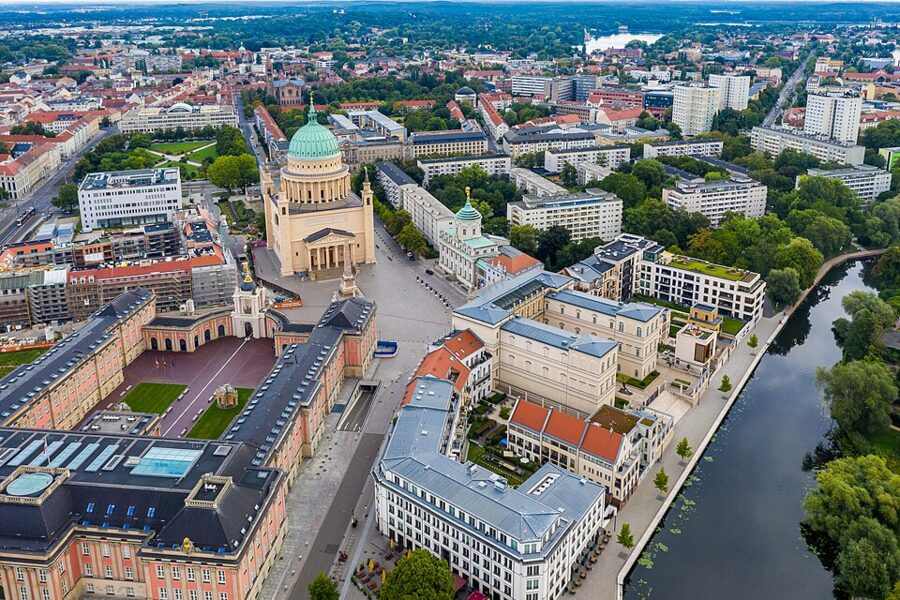
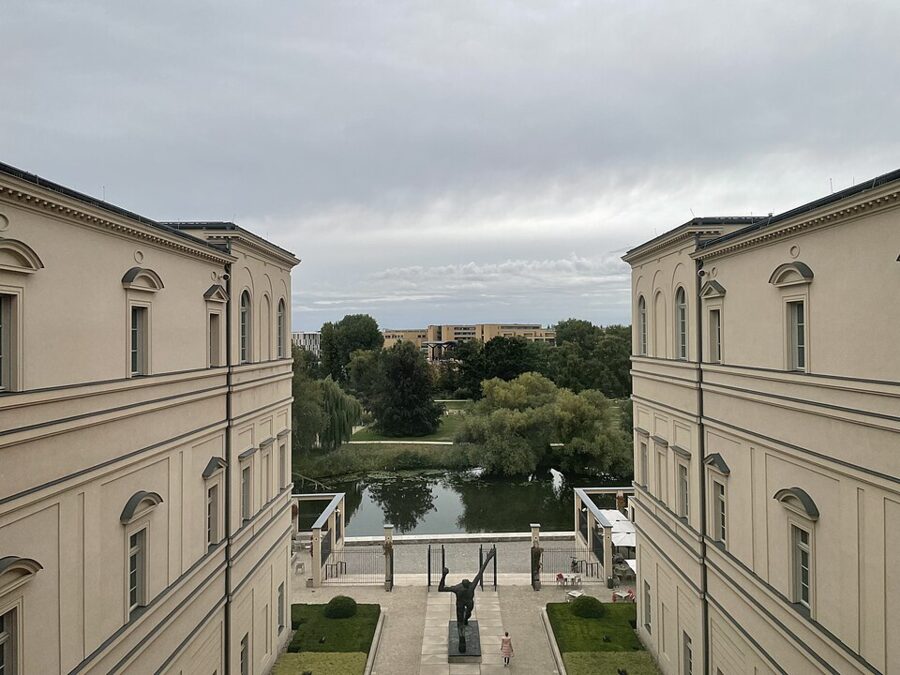
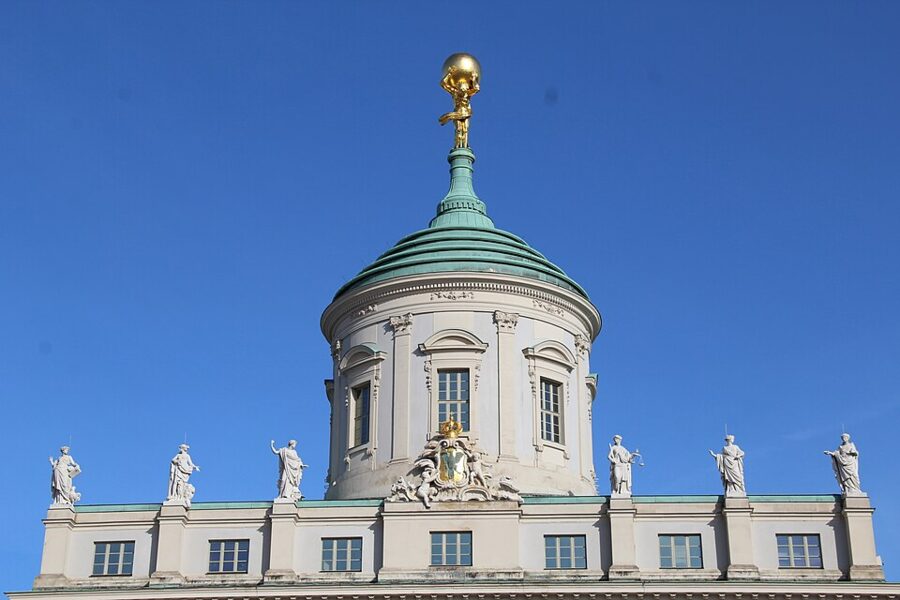
Every so often the route brings you to a window, and the windows are part of the visit. On the square side the deep reveals frame the Alter Markt as if from inside a palace: the obelisk in the middle, the Nikolaikirche dome ahead, the Old Town Hall with its gilded Atlas to the right, and the pink corner of the City Palace, now the Landtag, to the left.
On the river side the view runs down the courtyard between Persius’s wings to the Alte Fahrt, the old arm of the Havel, with the trees of the Freundschaftsinsel on the far bank and Mattheuer’s bronze striding toward them below you.
The exhibitions, 2026 and 2027
The show on now is The Impressionists: Monet, Morisot, Renoir, and Their Network, open from November 7, 2026, to February 21, 2027, for the museum’s tenth anniversary. Instead of a chronology it tells ten stories, each starting from a painting in the Plattner collection and following it to the friends, dealers, collectors and critics who carried Impressionism out of Paris to Chicago, Berlin, London and New York.
More than 100 works are on view, and with the collection’s own canvases the building holds 61 Monets for the run. Look for Monet’s Bazille and Camille of 1865 from the National Gallery of Art in Washington, his Rouen Cathedral of 1894 from Weimar, Caillebotte’s Le Pont de l’Europe of 1876 from Geneva, Manet’s Boy in Flowers from Tokyo and Renoir’s The Bay of Naples from the Metropolitan Museum in New York. One quieter discovery is the self-portrait of Winnaretta Singer, the sewing-machine heiress who brought artists, writers and composers together around 1900.
The show ends with Fragments, a digital installation that breaks the 115 collection paintings into more than 74,000 small squares and reassembles them across a seven-meter screen that reacts as you approach.
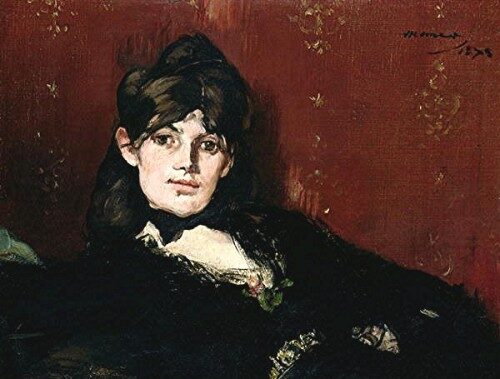
One date to mark: Monet died on December 5, 1926, and on December 5, 2026, the museum holds a day of free events for the centenary, with half-hour tours of the exhibition on the hour from 11:00 to 17:00, short lectures and an open studio. Places are limited and cannot be reserved, so expect a crowd.
The 2027 program is already on the museum’s exhibition pages:
- Barcelona Moderna: From Gaudí to Picasso, March 20–June 20, 2027: Catalan modernism from about 1880 to 1914, with Antoni Gaudí and Picasso alongside Ramon Casas and Santiago Rusiñol.
- Marie Laurencin: Setting the Scene, July 24–October 24, 2027: the painter and set designer of 1920s Paris, with loans from the Musée Marie Laurencin in Tokyo shown in Germany for the first time.
- Félix Vallotton: Longing and Seduction, November 20, 2027–February 20, 2028: the Swiss outsider among the Nabis, his paintings and his woodcuts.
Single admissions are sold as timed tickets whichever show is on, because the museum limits how many people are inside at once, and that applies even if you get in free. Changeovers close the building for a few days, so check the dates around mid-March, mid-July and mid-November 2027.
The Alter Markt around the museum
The Barberini is one wall of a set piece, and the square is worth twenty minutes. The obelisk in the middle dates from 1755. When it was restored in 1979, the medallions of four Hohenzollern rulers on its shaft were swapped for four of Potsdam’s architects, Knobelsdorff, Gontard, Schinkel and Persius, so the man credited with the Barberini looks at it from the middle of the square.
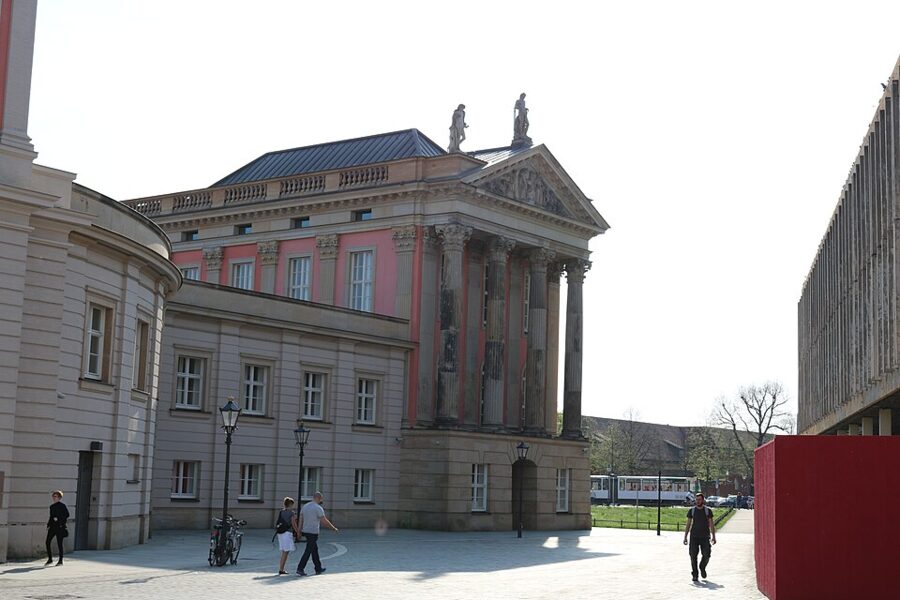
The Landtag in the City Palace. The long building on the south-west side is the Stadtschloss, the royal town palace that Georg Wenzeslaus von Knobelsdorff remodeled for Frederick, burned out in 1945 and demolished by the GDR in 1959 and 1960. It was rebuilt from 2010 to 2013 to plans by Peter Kulka, with historic facades outside and Brandenburg’s state parliament inside, and opened in January 2014.
The Landtag’s courtyard is open daily 08:00–20:00. On weekdays you can go up to the roof terrace through the parliament’s canteen between 08:00 and 18:00 for a view straight across at the Barberini. On days when parliament sits, you need photo ID to enter.
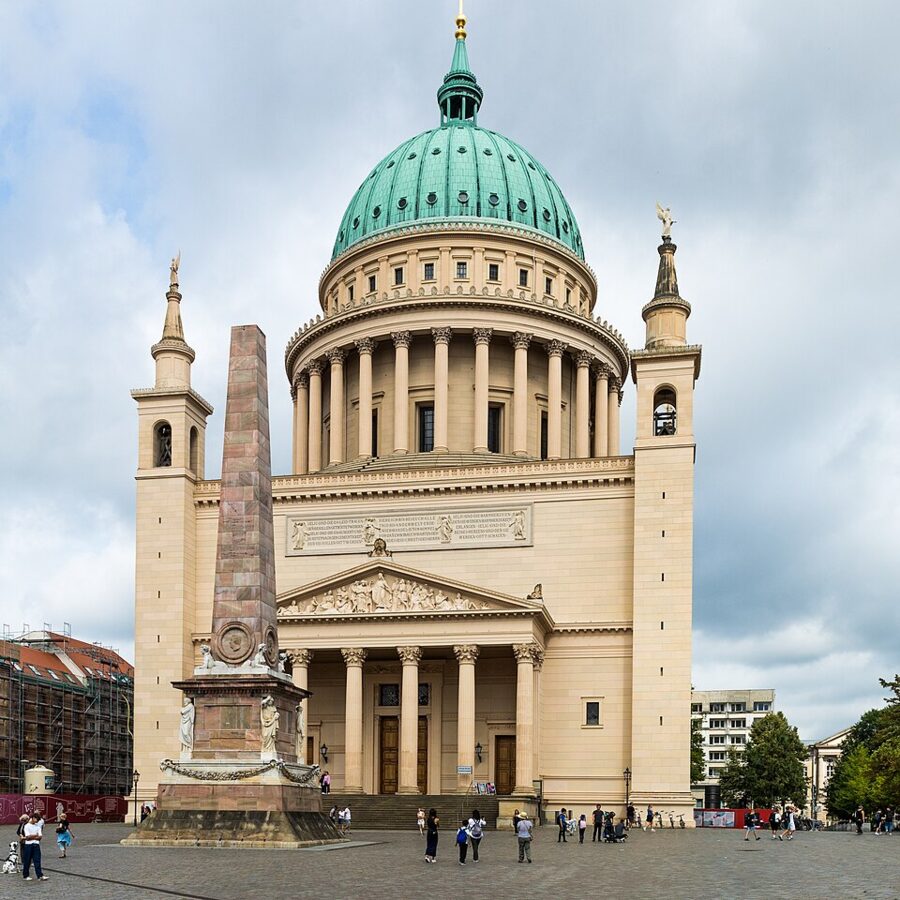
St. Nicholas’ Church (Nikolaikirche). The church was built from 1830 to 1837 to Karl Friedrich Schinkel’s design, and its 77-meter dome was added from 1843 to 1850. Sources disagree about what it imitates: the museum’s city tour pairs it with Saint Peter’s in Rome, while architectural historians point to Soufflot’s Panthéon in Paris and St Paul’s in London.
You can climb 223 steps to a gallery at 42 meters. The church and tower are open daily 09:30–17:30, the tower only from 12:00 on Sundays, for €7 (children €3), and the tower stays shut in ice, storms and thunder.
The Old Town Hall (Altes Rathaus) and the Potsdam Museum. On the east corner, the town hall of 1753–1755 by Johann Boumann and Carl Ludwig Hildebrandt copies an unbuilt Palladio design and adds a gilded Atlas carrying the globe. Since 2012 it has housed the Potsdam Museum, whose city history exhibition is free; two special shows about the square itself run until January 3, 2027 (€6 each, €9 for both).
The Potsdam Museum opens Tuesday to Sunday 10:00–18:00 and closes on December 24 and 31. If you have time for one extra stop on the square, make it this one: the free exhibition explains what you have just seen from the Barberini’s windows.
Planning the visit
Opening hours
The museum opens 10:00–19:00 on Monday and Wednesday to Sunday, and it is closed every Tuesday. The ticket counter shuts at 18:15. Over the holidays it opens 10:00–15:00 on December 24 and 31, normal hours on December 25 and 26, and 13:00–19:00 on January 1, 2027.
The hours stay the same all winter, which makes the Barberini the obvious indoor stop on a cold day. Being open on Mondays matters too, since that is the day many interiors of the Prussian Palaces and Gardens Foundation (SPSG) are closed.
Tickets, timed entry and the cheaper hours
The museum’s visit page sets the 2026 prices, which cover the collection and the current exhibition together:
| Ticket | Price |
|---|---|
| Monday, Wednesday–Friday | €16 |
| Saturday, Sunday, public holidays | €18 |
| Any open day from 17:30 | €10 |
| Reduced (students, trainees, disability from 50%) | €10 |
| Under 18 and school pupils | €0 (timed ticket still needed) |
| Combined with DAS MINSK | €20 (reduced €12) |
Buy online for a date and a time slot. The €10 ticket from 17:30 is the best deal in the building: ninety minutes is enough for the collection, and the galleries empty out. Everyone under 25 gets in free on Thursdays from 14:00, students are free until November 30, 2026, and there is no pensioners’ discount.
The combined ticket with DAS MINSK covers both houses on two consecutive opening days and needs no time slot. A Barberini ticket also gets you the reduced price on the SPSG’s Sanssouci+ ticket for the palaces, and a Sanssouci+ ticket gets you the €10 rate here, as long as the visits fall within a day of each other. The Berlin WelcomeCard gets the reduced price, and the WelcomeCard All Inclusive gets you in free.
Tours, the app and the audio guide
The audio guide is the free Barberini app on your own phone, in German and English, with a children’s version. The museum does not lend devices, so bring earphones; free Wi-Fi (“Barberini Gast”) covers the building. The app also carries three city walks, “Italy, France and Holland in Potsdam,” narrated by Günther Jauch.
Public tours cost €4 on top of admission (€5 from January 1, 2027) and last 50 minutes, but they are almost all in German. The tours in other languages run on selected Saturdays, and the only English date listed this winter is December 5 at 12:00. For English speakers, the app is the tour.
Bags, the café and how long to allow
Security checks every bag at the door, and bags, backpacks, jackets and umbrellas all go into the free cloakroom or lockers. Photography for private use is allowed unless a sign says otherwise.
The Barberini Café & Restaurant serves quiches, salads, light meals and cake, takes no reservations during opening hours, and in summer puts tables out in the courtyard facing the Freundschaftsinsel. It is a pleasant place to sit, not a lunch destination. On weekdays the Landtag’s canteen across the square is open to the public from 11:30 to 14:00.
Allow two hours for the collection and the exhibition, three if you read everything; the 61 Monets of the anniversary show slow everyone down. Weekends and school holidays are busy, and weekday mornings at 10:00 and the last ninety minutes of the day are quiet.
Access
The whole building is step-free from the main entrance on the Alter Markt, with talking lifts, Braille buttons, a lowered ticket desk, accessible toilets, and wheelchairs, walkers and folding stools to borrow. The museum’s accessibility page lists tours for blind and partially sighted people and tours with sign language interpreting. Potsdam Hauptbahnhof and the Alter Markt/Landtag tram stop are step-free.
Getting there
From Berlin, take the S-Bahn S7 to its terminus at Potsdam Hauptbahnhof (main station): every ten minutes, about 35 minutes from Berlin Hauptbahnhof. Potsdam is in fare zone C, so you need a single ticket Berlin ABC (€5.00 in 2026, valid 120 minutes) or a 24-hour ticket Berlin ABC for €12.90, which also covers Potsdam’s trams and buses. The Deutschlandticket (€63 a month) covers everything, and the day trip from Berlin has the trains and timings in full.
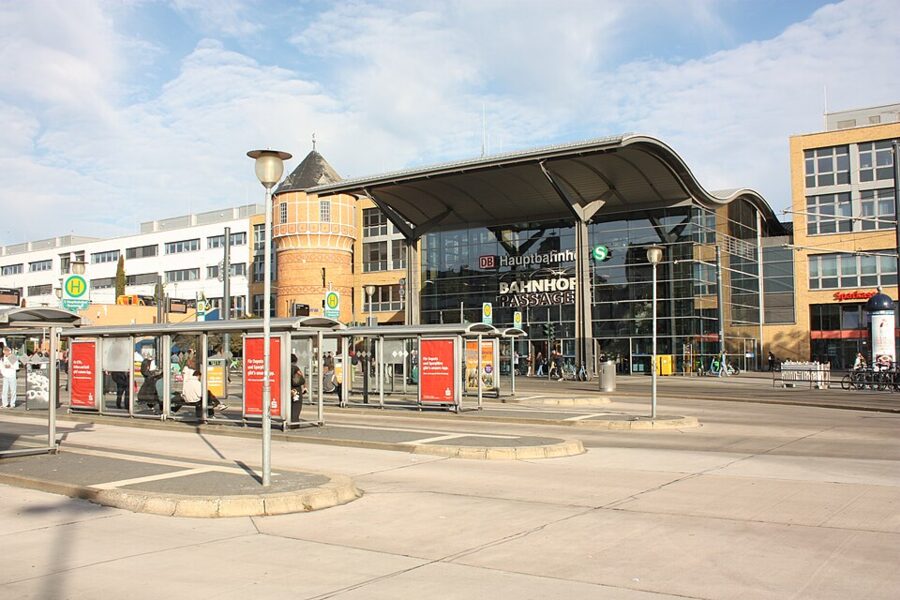
From the station the walk takes about ten minutes. Head for the city center over the Lange Brücke, with the Landtag ahead and the Freundschaftsinsel below you on the right, and the Barberini is on your right as you reach the Alter Markt. Or ride: trams 91, 92, 93, 96 and 98 all run one stop, two minutes, to Alter Markt/Landtag.
Putting it into a day
The Barberini sits at the start of everything. The baroque streets of the old town run north from the square, and the gabled brick houses of the Dutch Quarter are a fifteen-minute walk away. Tram 93 runs from Alter Markt/Landtag out to the Glienicke Bridge, and Cecilienhof, scene of the Potsdam Conference, is a short ride north. Sanssouci is a bus ride or about half an hour’s walk west.
My plan for a winter day: one of Potsdam’s palaces in the morning, then the Barberini for the afternoon, when the light outside has gone and the Monets glow under the gallery lighting. On a Monday, reverse it. A second day takes DAS MINSK, Babelsberg and the Filmpark, or the rest of what to do in Potsdam.
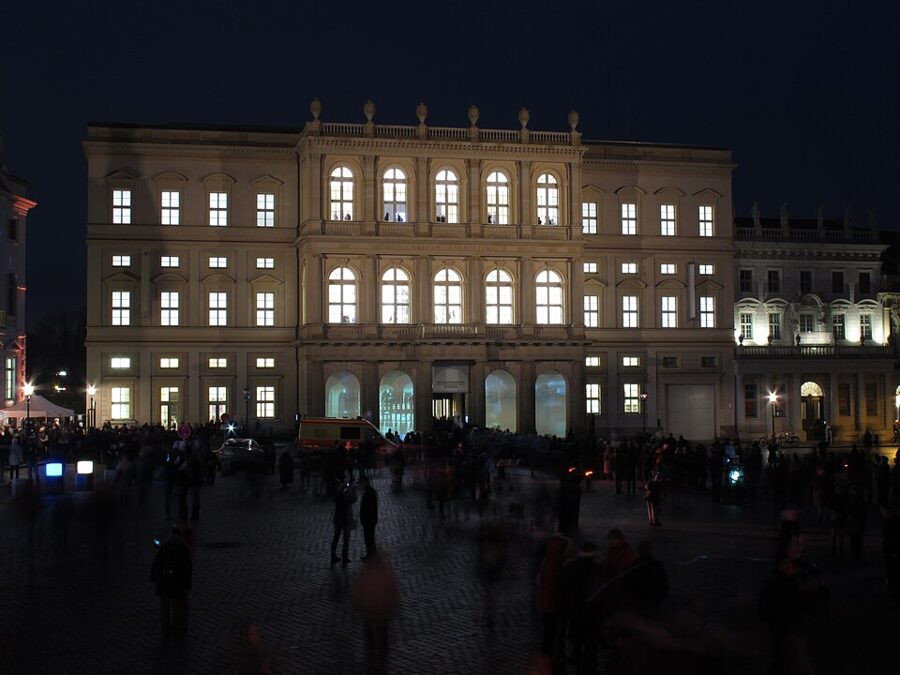
Come out at closing time and stand by the obelisk again. The facade is lit, the square has emptied, and you know what you are looking at now: a Roman front that Frederick ordered from a book, a hall where Clara Schumann played, a ruin, a car park, a tin-can theater, and the rebuild. Behind those windows the grainstacks are still holding the last of the day, and the station is ten minutes away over the Lange Brücke.